
 View Products


Last updated: September 3, 2026
SalesQL has built a name for itself among LinkedIn-based prospecting tools by going beyond simple email lookups. It reads LinkedIn profiles directly and pulls professional details that many competing tools miss, which is part of why recruiters and marketers keep it in their toolkit.
That LinkedIn-first approach is also why it’s worth understanding clearly before you commit budget to it. This review walks through what SalesQL actually does, where it holds up, where it falls short, and how it compares to other tools in the same space.
SalesQL: A Quick Overview
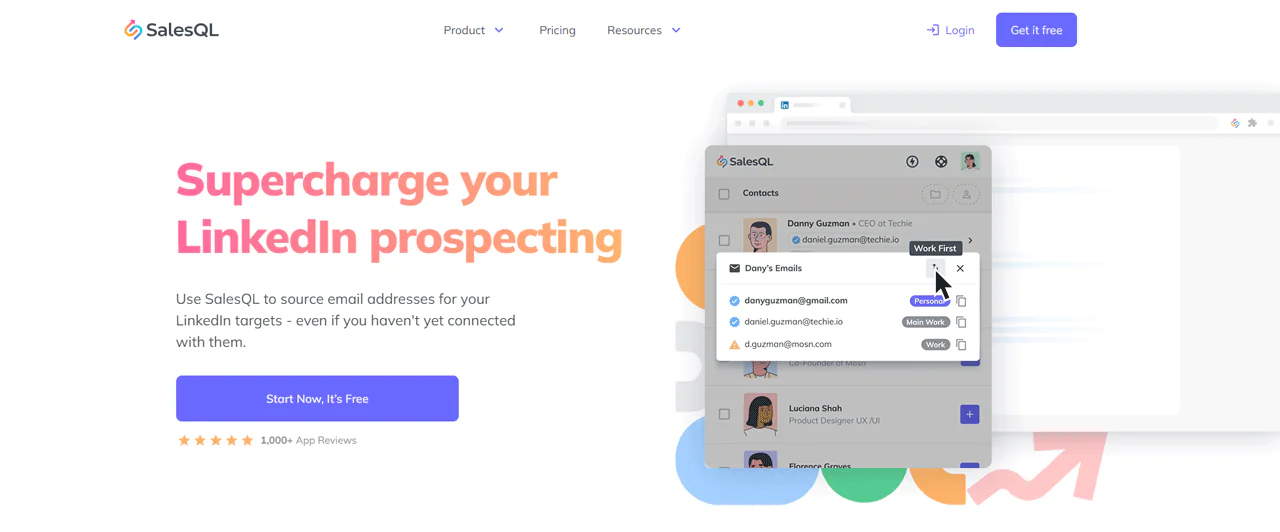
SalesQL is built around a straightforward idea: make prospecting and email outreach easier, particularly for recruiters. It runs as a browser extension rather than a standalone platform, which keeps it close to where a lot of sales and recruiting work already happens on LinkedIn.
It’s aimed at businesses of any size that want to tighten up their sales process without a steep learning curve. Setup is minimal: install the extension, run a LinkedIn search, and let SalesQL pull data from the results.
B2B sales tactics shift constantly, so it helps to know what else is out there. Take a look at the top B2B prospecting tools to use in 2023.
Key Features of SalesQL
SalesQL sits alongside some of the better-known B2B lead generation tools on the market. Here’s what it brings to the table:
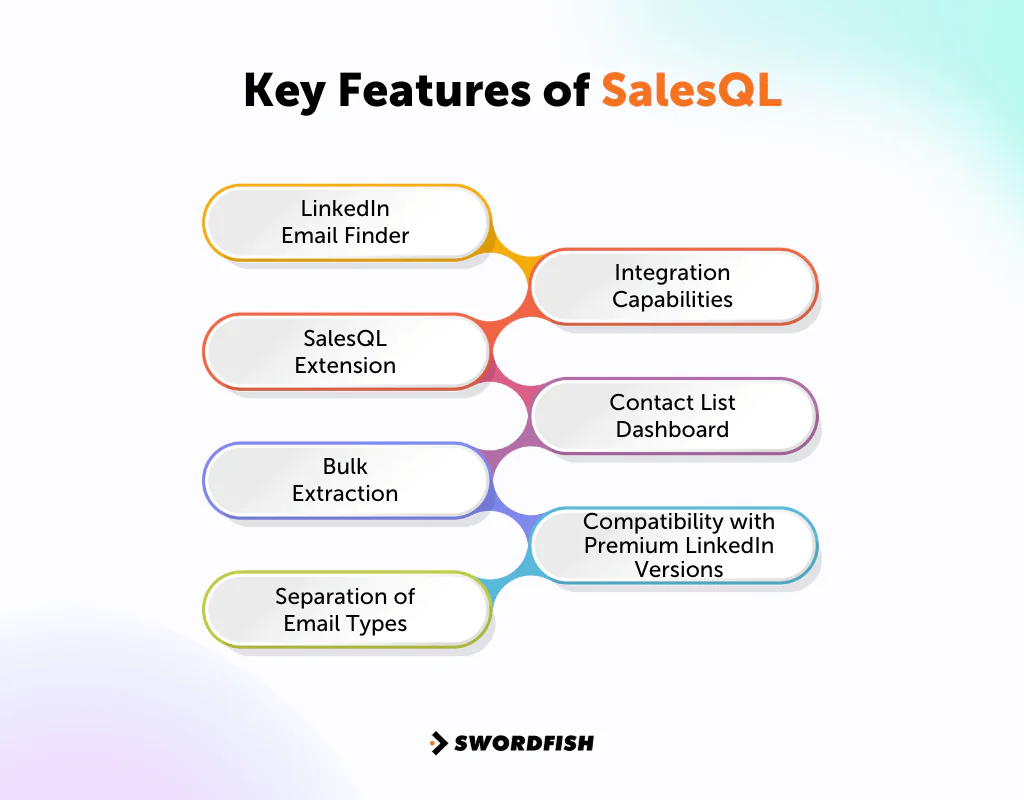
LinkedIn Email Finder
SalesQL’s email address lookup and locator features are built to keep contact details close at hand, including the ability to pull data from 1st, 2nd, and 3rd degree LinkedIn connections.
SalesQL Extension
The extension works with Google Chrome and Microsoft Edge, letting you extract email addresses straight from a LinkedIn page without switching tabs.
Bulk Extraction
You can extract and enrich prospect data in bulk, which means a full prospecting list can come together from a single LinkedIn page in a matter of minutes rather than hours.
Separation of Email Types
The platform separates personal and professional email addresses. Switching between recruiter and sales account views with one click keeps lists organized instead of mixed together.
Integration Capabilities
SalesQL connects to a handful of CRM, outreach, and productivity tools, so leads can move into Hubspot, Salesforce, Outlook, and Gmail without manual re-entry.
Contact List Dashboard
The contact list dashboard keeps extracted data in one place, supports new project creation, and flags duplicate entries before they clutter your database.
Compatibility with Premium LinkedIn Versions
SalesQL is built to work with premium LinkedIn tiers, including Sales Navigator, Recruiter Lite, and Recruiter Professional Services.
Pros of SalesQL
- Affordable pricing compared to other lead generation tools.
- Ability to extract data even from non-connected profiles.
- Offers both business and personal email extraction.
- User-friendly and intuitive browser extension interface.
- Efficient credit system, charging only for valid emails.
Cons of SalesQL
- Manual data extraction for multiple pages required.
- Occasional provision of catch-all emails.
SalesQL User Experience
Looking across reviews and firsthand accounts, SalesQL clearly resonates with a specific type of user. A few patterns come up repeatedly.
Agency Owner’s Perspective
Agency owners who run LinkedIn-based prospecting projects tend to stick with SalesQL once they try it. The combination of simplicity and low cost makes it an easy default for LinkedIn lead generation.
Ease of Use
The interface gets consistent praise for being approachable, even for people who aren’t especially technical.
Accuracy and Efficiency
Users generally find the contact extraction reliable, though actual accuracy on any given search can vary from what the marketing promises.
Integration Capabilities
Direct integration with Salesforce, Pipedrive, and Hubspot lets teams keep using their existing CRM setup while adding SalesQL as a data source.
Feedback on Challenges
Some users ran into friction extracting data across multiple LinkedIn pages in one session, and a few reported LinkedIn temporarily restricting their profile after heavy use. Phone number accuracy was also flagged as inconsistent in some reviews.
SalesQL Support for Users
Support quality matters as much as feature lists once you’re actually using a tool day to day. Based on SalesQL’s support center and user feedback, a few things stand out:
- Dedicated Customer Success Team: SalesQL features a dedicated customer success team that’s always ready to address any questions or issues users might face.
- Knowledge Base & Online Tutorials: For those who prefer self-help, SalesQL offers a comprehensive knowledge base and online tutorials. That way you can make the most out of the platform without much hassle.
- Onboarding and Training: Even if you’re new to SalesQL, they’ve got you covered. Their team ensures that users are onboarded properly and receive adequate training to navigate and utilize the platform effectively.
SalesQL Pricing
SalesQL’s pricing splits across four tiers based mostly on monthly credit volume. Here’s how they break down:
|
Features |
Free | Starter | Advanced |
Pro |
|
Price |
$0 | $39 | $79 | $119 |
| Credits / month | 50 | 1,000 | 4,000 |
10,000 |
|
Contacts Manager |
Yes | Yes | Yes | Yes |
| Direct & Company Emails | Yes | Yes | Yes |
Yes |
|
Direct & Company Phones |
Yes | Yes | Yes | Yes |
| Export Contacts to CSV/Excel | Yes | Yes | Yes |
Yes |
|
Integrations with apps |
Yes | Yes | Yes | Yes |
| Multiple users | No | No | Up to 3 |
Up to 15 |
Our Review: Is SalesQL the Right Tool for Your Business?
SalesQL earns its spot among the best Linkedin email extractor tools and lead generation platforms because it makes pulling email addresses off LinkedIn genuinely fast, and its CRM integrations keep that data moving into existing workflows without extra steps.
That said, it isn’t flawless. Data accuracy varies by search, and a handful of users have run into LinkedIn account restrictions after heavy extraction sessions.
For B2B teams, SalesQL is a reasonable tool to have in rotation, provided you use it with some caution around extraction volume and don’t treat every result as verified without a second check.
Best Alternatives to SalesQL
If SalesQL doesn’t fit your workflow, a few other platforms cover similar ground as a SalesQL alternative:
1. Swordfish AI
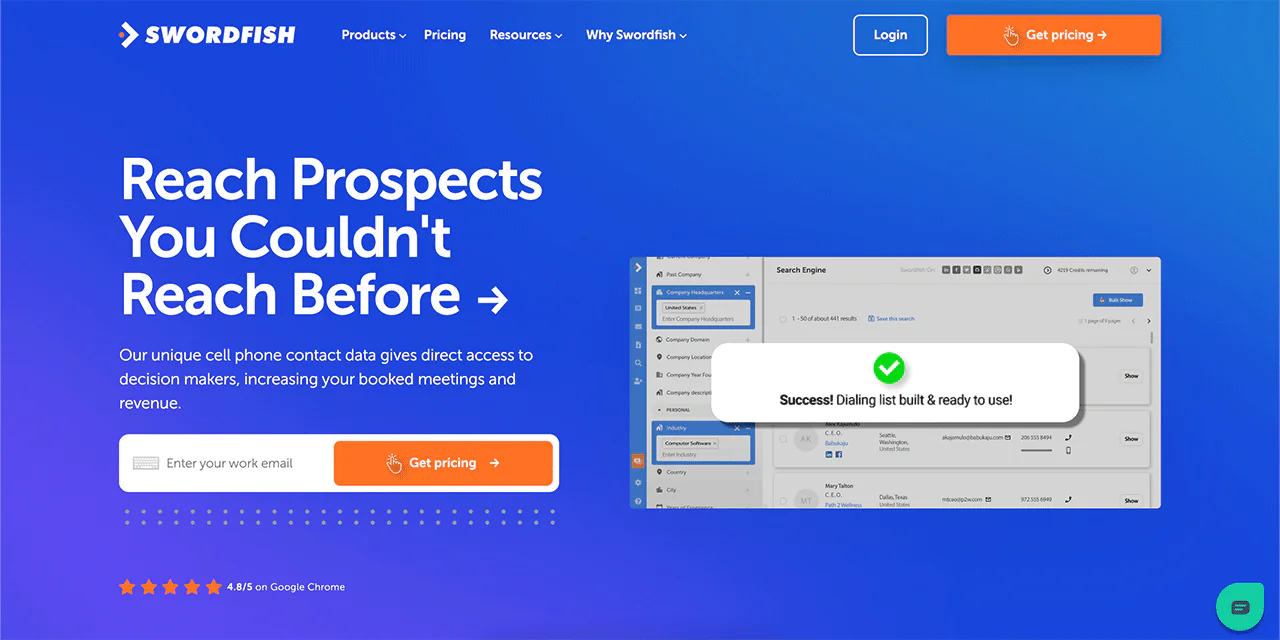
Swordfish AI takes a different approach by building around a unique cell phone number database, which sets it apart from tools that focus mainly on email.
Its proprietary cell phone verification system aims to keep contact data both broad and reliable.
That makes it a fit for teams that lean on cold calling as part of their outreach mix. With access to over 3.5 billion data profiles, Swordfish AI can connect businesses with potential clients and candidates across a wide range of industries, including healthcare.
Whether you’re in sales, recruitment, or marketing, Swordfish AI’s database and verification approach can fill in gaps that LinkedIn-only tools leave behind. You can try it through the 15 day trial to see how it performs on your own lists.
|
Features |
SalesQL | Swordfish AI |
| Contact Extraction | Primarily focuses on professional details from LinkedIn. |
Extracts both professional and personal details. |
|
Data Sources |
Primarily extracts data from LinkedIn profiles. | Searches across social media profiles, including LinkedIn, Facebook, Stack Overflow, and Github. |
| Data Profiles | Access to millions of LinkedIn profiles. |
Access to over 3.5 billion data profiles. |
|
Data Accuracy |
Uses its own algorithm to ensure data accuracy. | For accurate data extraction, machine learning algorithms are used. |
| B2B Integrations | Offers integrations with CRM and other tools. |
Supports B2B integrations and enhances in-house operations control. |
|
Pricing |
Multiple pricing tiers based on features and data access. | Offers multiple tiers, including Scale, Recruiter, Marketer, and API |
| Data Validation | Validates emails but no specific mention of cell phone validation. |
Unique cell phone number and proprietary cell phone verification system. |
 Try Swordfish Ai
2. Apollo.io
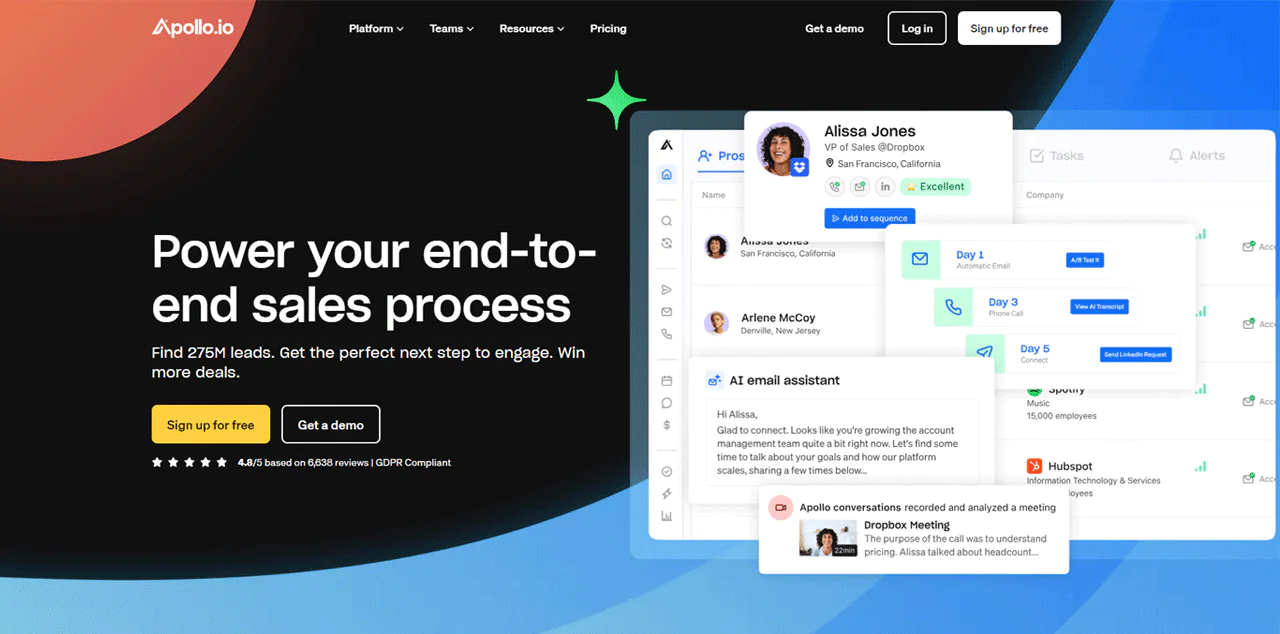
Apollo.io is a broader sales platform that ties into email, CRM, and phone workflows in one place. It works from a database of over 200 million contacts, giving teams a wider net than a LinkedIn-only tool.
Automated sequencing, task automation, and analytics round out the platform, with the goal of giving sales teams actionable insight into who to contact and when.
|
Features |
SalesQL | Apollo.io |
| Intent data solution | Yes |
No |
|
Chrome Extension |
Yes | Yes |
| Sales Intelligence | Accurate and rich buyer data |
Lead scoring with AI |
|
Data Enrichment |
Yes | CRM, API and CSV enrichment |
| Contact Extraction | Yes |
Yes |
Note: Read More Navigate Apollo.io’s Pricing Page
3. Snov.io
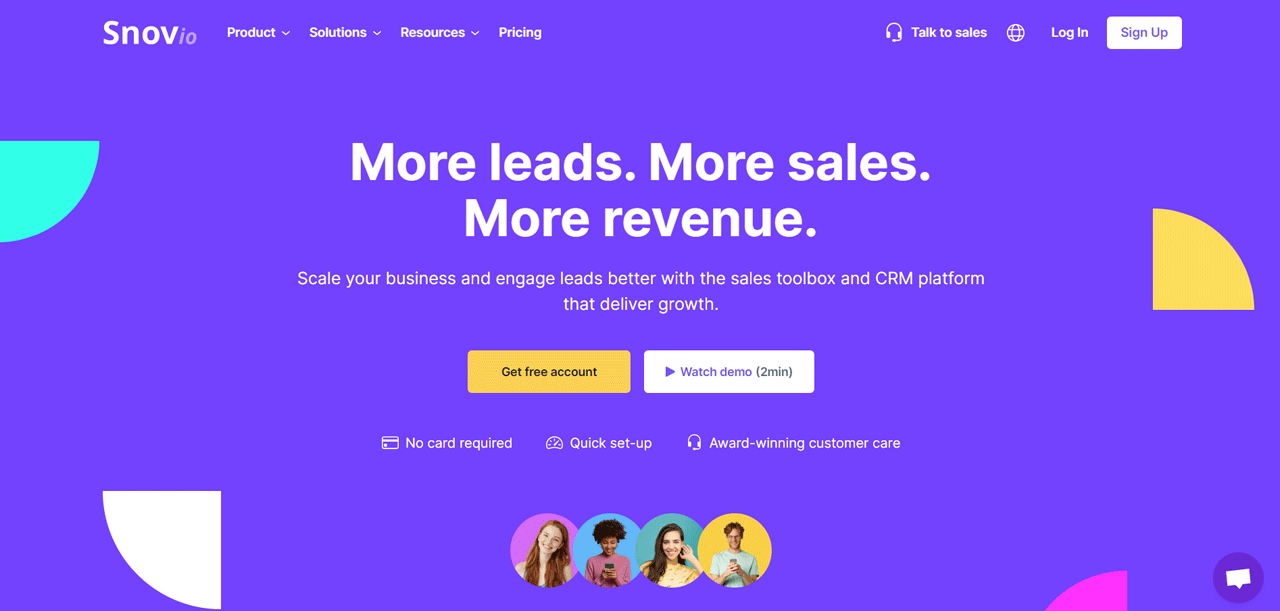
Snov.io leans into email marketing more than pure prospecting. Beyond extracting linkedin emails, it offers domain-based lead discovery, email verification before send, automated campaigns, and a lightweight CRM for keeping sales organized.
Browser extensions make lead generation quick, and the platform connects with over 5,000 tools. A free tier and flexible pricing have made it a common pick among marketers who want more than a single-purpose finder.
|
Features |
SalesQL | Snov.io |
| Email Finder | Yes |
Multiple and Bulk search options |
|
Chrome Extension |
Browser Extension | Email Finder Extensions for LinkedIn and web pages |
| Lead List Building | Build accurate lead lists |
Not available |
|
Data Enrichment |
Yes | CRM, API and CSV enrichment |
| Integration | Productivity, CRM, and outreach tools |
Apps for customer service and CRMs |
Note: Read About Recommended Substitutes for Snovio
Conclusion
SalesQL earns its reputation through email discovery and professional networking data pulled directly from LinkedIn profiles, which is a narrower but useful specialty compared to broader prospecting suites.
The feature set and user feedback covered here point to a tool that’s genuinely useful for LinkedIn-heavy workflows, even if it isn’t the right fit for every team. If your needs extend beyond LinkedIn data, or you need verified phone numbers alongside email, Swordfish AI is worth a look as an alternative.
For teams whose prospecting happens mostly on LinkedIn, SalesQL remains a practical, budget-friendly option with a clear use case.
FAQs
Can I adjust SalesQL to match my sales routine?
Yes. SalesQL’s settings can be adjusted to different sales approaches, and the tool adapts somewhat based on the data you feed into it, so it doesn’t force a rigid workflow on your team.
How do I work with SalesQL on LinkedIn?
GetProspect, recognized for elevating lead generation via LinkedIn integration and email verification, provides accurate leads. It’s favored for its simplicity and broad B2B database but faces limitations in LinkedIn profile visibility and filter enhancement needs.
It’s a pivotal tool for email marketing and LinkedIn prospecting, though understanding its limitations is key. For businesses aiming to leverage LinkedIn more effectively, examining LinkedIn Sales Navigator pricing details can offer additional insights and tools for a more refined prospecting strategy.
Will SalesQL work with my current CRM?
Yes. SalesQL connects with CRMs including Salesforce, Pipedrive, Hubspot, and Zoho, so you can bring data in and run SalesQL alongside your existing system rather than replacing it.