
 View Products


Last updated: September 3, 2026
Logistics sales leads are potential customers interested in services such as shipping, warehousing, and supply chain management. Market research firms disagree on exactly how large the global logistics industry will be by the end of the decade, with estimates ranging from roughly $8 trillion to well over $14 trillion depending on scope and methodology. Whatever the precise figure, the direction is clear: demand for freight, warehousing, and supply chain services keeps expanding, which makes finding the right customers a persistent priority for logistics companies.
Securing good logistics sales leads is rarely straightforward.
The main challenge comes from heavy competition and the sheer number of similar services on the market. To stand out, you need clear, direct strategies that differentiate your offering and speak directly to the buyers who matter.
Below are nine practical ways to generate valuable logistics sales leads, along with the reasoning behind each one, so your team can grow its customer base in a crowded field.
What are Logistics Sales Leads?
Logistics sales leads are opportunities for businesses in the logistics and transportation space to find new customers. These leads are companies or individuals who need services like moving goods, storing them, or managing how products move from one point to another.
Companies in this field need a process for finding and nurturing these leads. Doing so consistently is what separates steady growth from stalled pipelines.
Ultimately, a strong lead pipeline means a logistics company can reach more buyers who need help moving and handling goods — which is a core part of competing in this industry.
Who Needs Logistics Sales Leads?
Logistics sales leads matter to several types of businesses across the shipping and transport world, including:
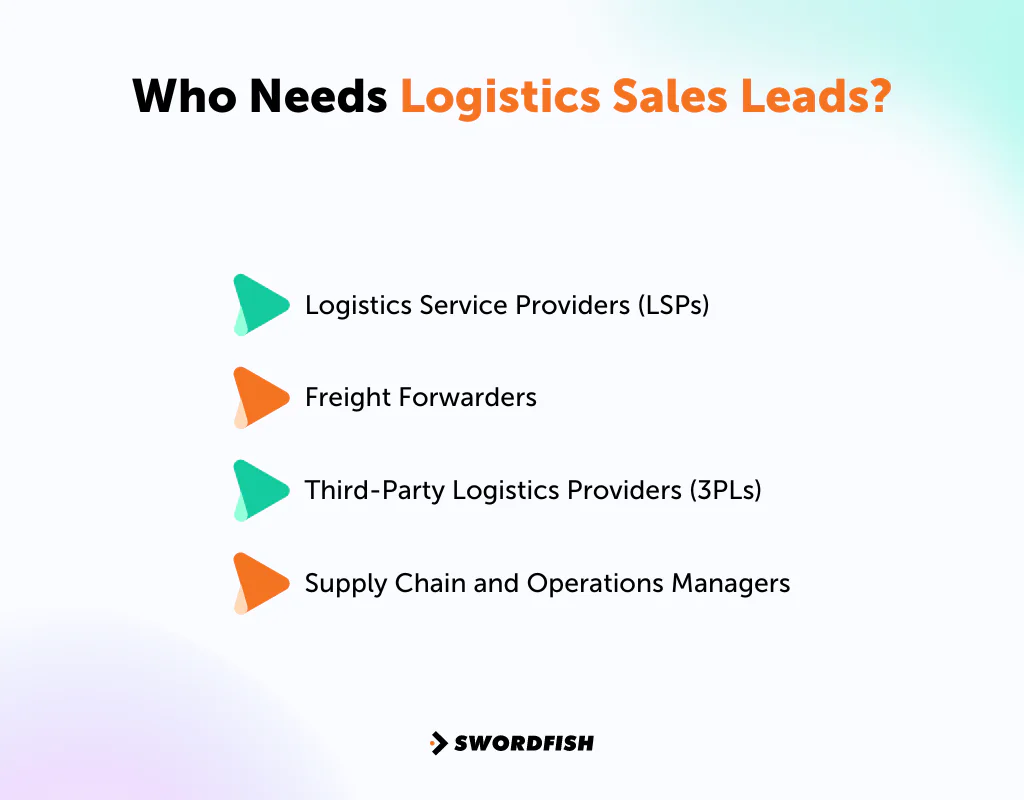
- Logistics Service Providers (LSPs): Companies that move, store, and deliver goods, making sure products arrive safely and on time.
- Freight Forwarders: Businesses that arrange the shipment of goods across borders, coordinating every step from manufacturer to final destination.
- Third-Party Logistics Providers (3PLs): Companies that manage shipping and storage tasks on behalf of other businesses, handling much of the supply chain lead generation and execution for their clients.
- Supply Chain and Operations Managers: The people responsible for keeping goods moving efficiently within their own organizations, always looking for better ways to handle logistics tasks.
How to Generate Leads in Logistics: 9 Best Ways
Start by identifying your target market and the decision-makers within it. Use online tools to find companies that need logistics services, then reach out through cold calls, emails, and social media. Offering useful content, such as guides or webinars, can also draw prospects in.
These tactics get you started, but they’re rarely sufficient on their own. The strategies below go further.
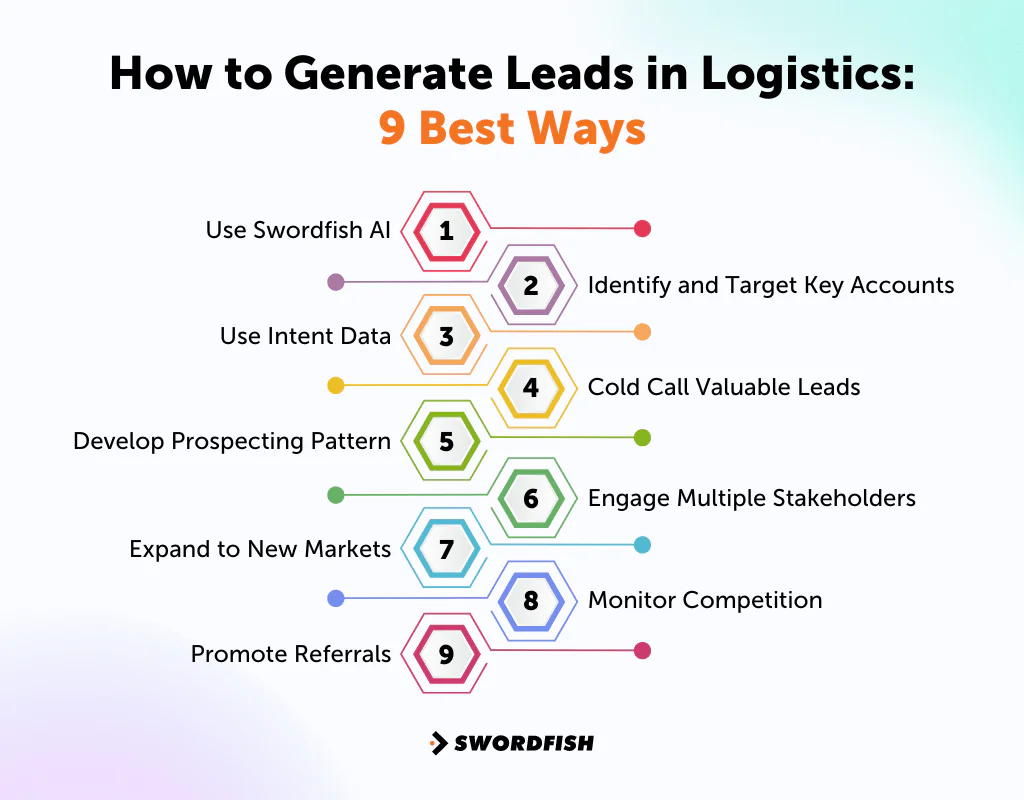
1. Use Swordfish AI: Perfect for Logistics Sales Leads
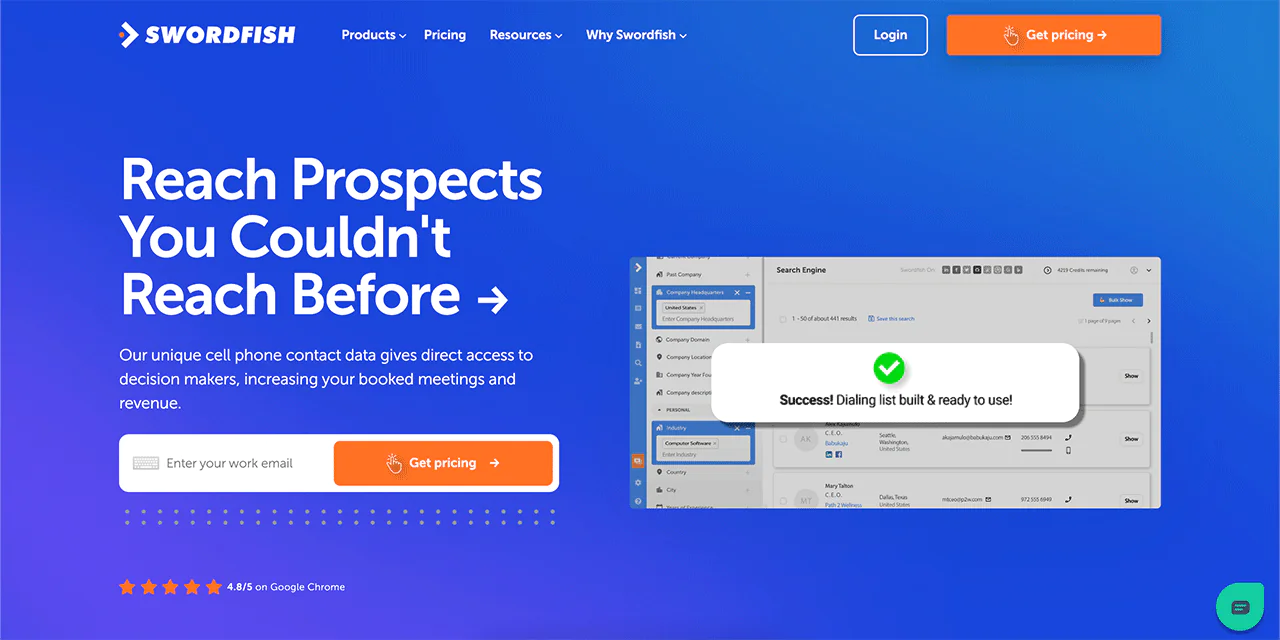
Swordfish AI is built for logistics sales professionals who need to reach decision-makers directly rather than routing every outreach attempt through a general inbox.
With access to decision-maker contact data, including cell phone numbers and emails, Swordfish AI lets sales teams in the logistics sector connect directly with the stakeholders who actually make buying decisions.
That direct line matters when you’re trying to build personalized outreach that resonates instead of generic messaging that gets ignored, and it tends to make sales campaigns more efficient overall.
Key Features of Swordfish AI
Here’s how Swordfish AI supports logistics sales lead generation specifically:
-
Chrome Extension
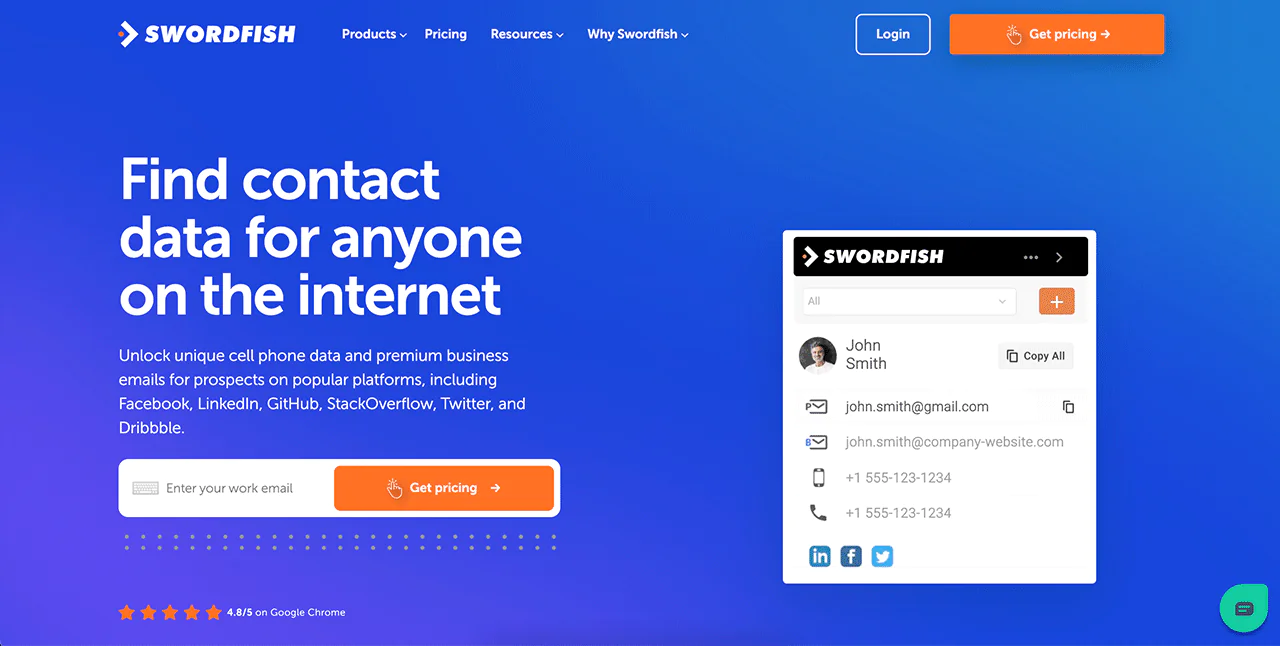
This extension makes it easy to pull contact information for anyone you find online. Whether you’re browsing LinkedIn, Twitter, Facebook, or another platform, you can access verified data instantly — useful for sales and recruiting teams who need to move fast on a lead or candidate.
-
Prospector
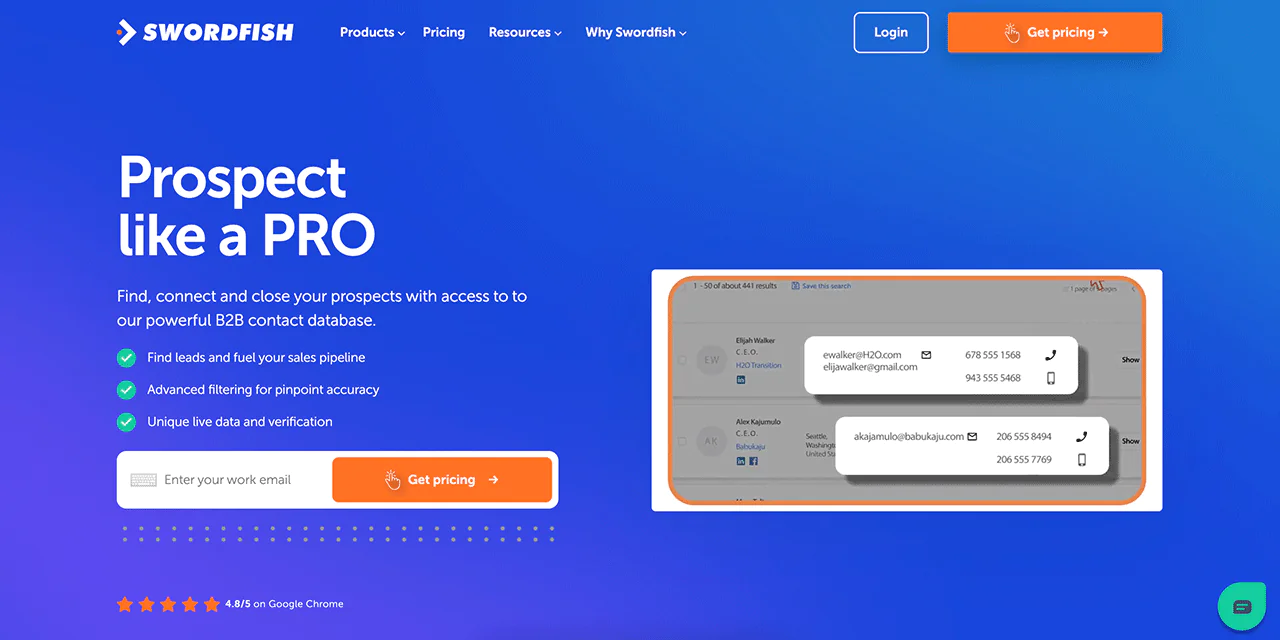
The platform’s Prospector tool lets you build targeted dialing and email lists efficiently. Logistics sales professionals can apply filters for industry, company size, and geographic location to make sure they’re reaching leads that actually match their criteria.
-
File Upload
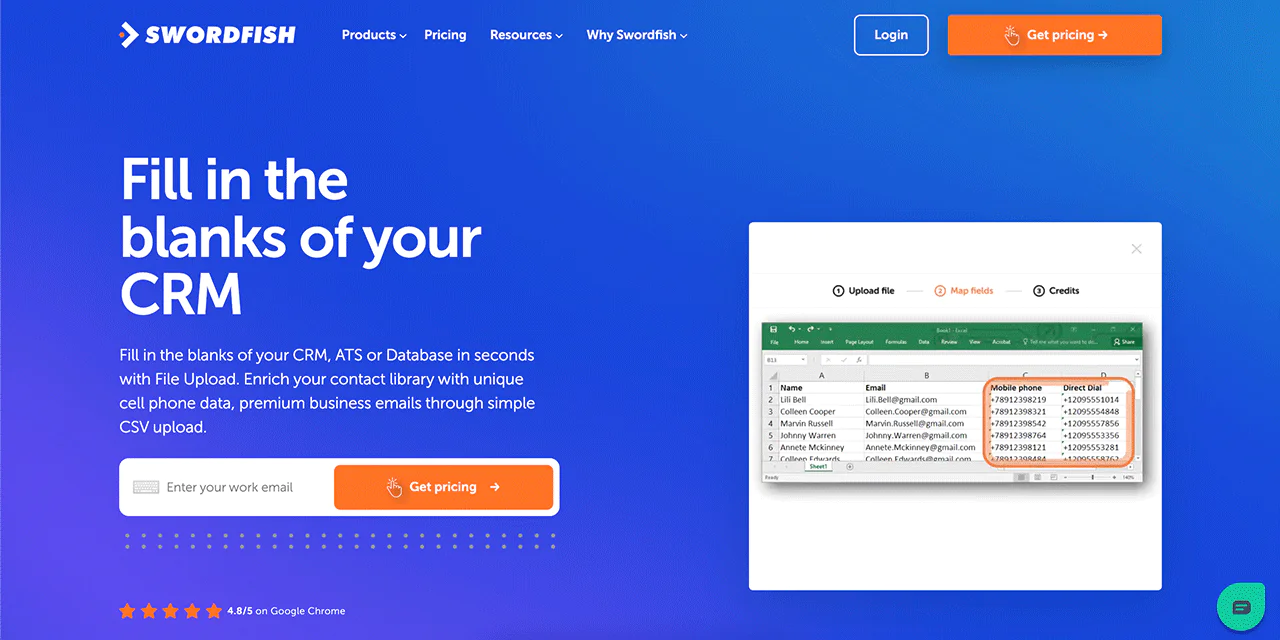
Have gaps in your CRM data? Swordfish AI’s File Upload feature fills in missing cell phone numbers and emails for your existing contact database, saving teams from manual data entry so they can focus on outreach instead.
-
Reverse Search
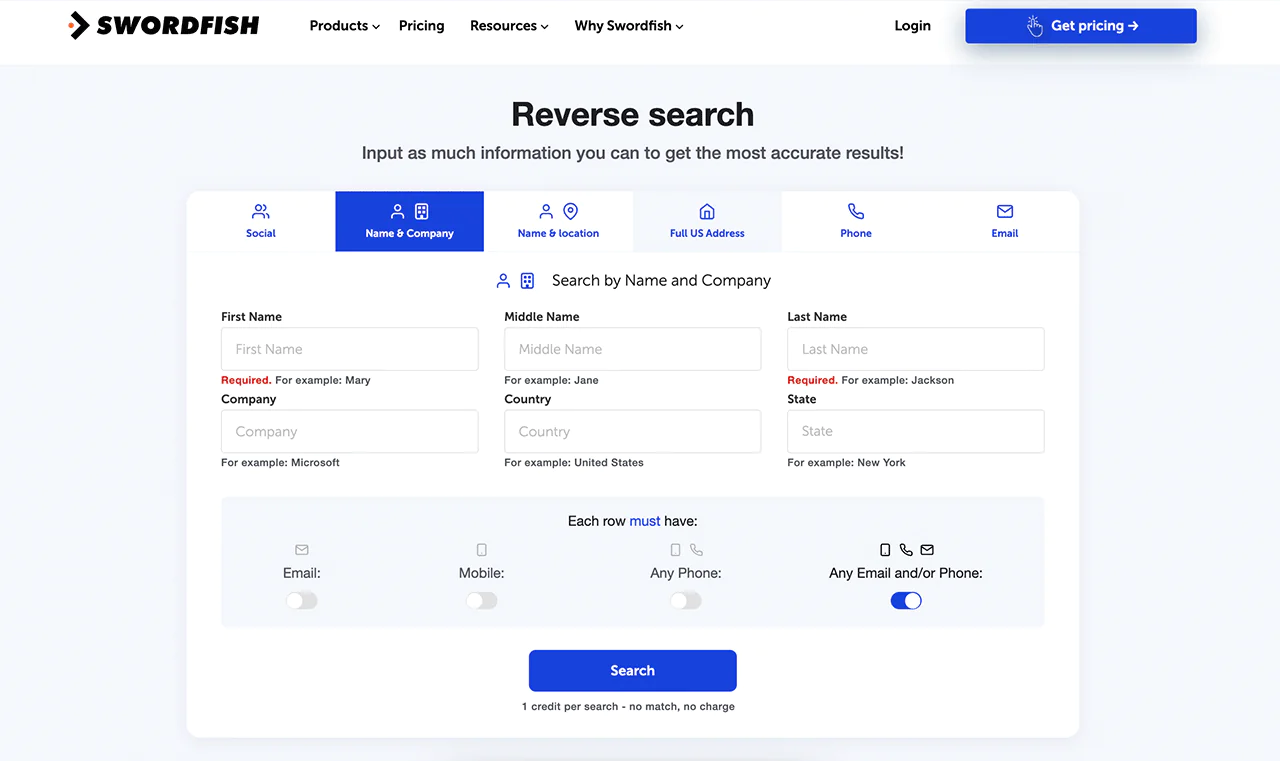
The Reverse Search function lets sales professionals find complete contact information starting from limited initial data — useful for logistics teams trying to expand their reach within a specific company or industry vertical.
-
API Access
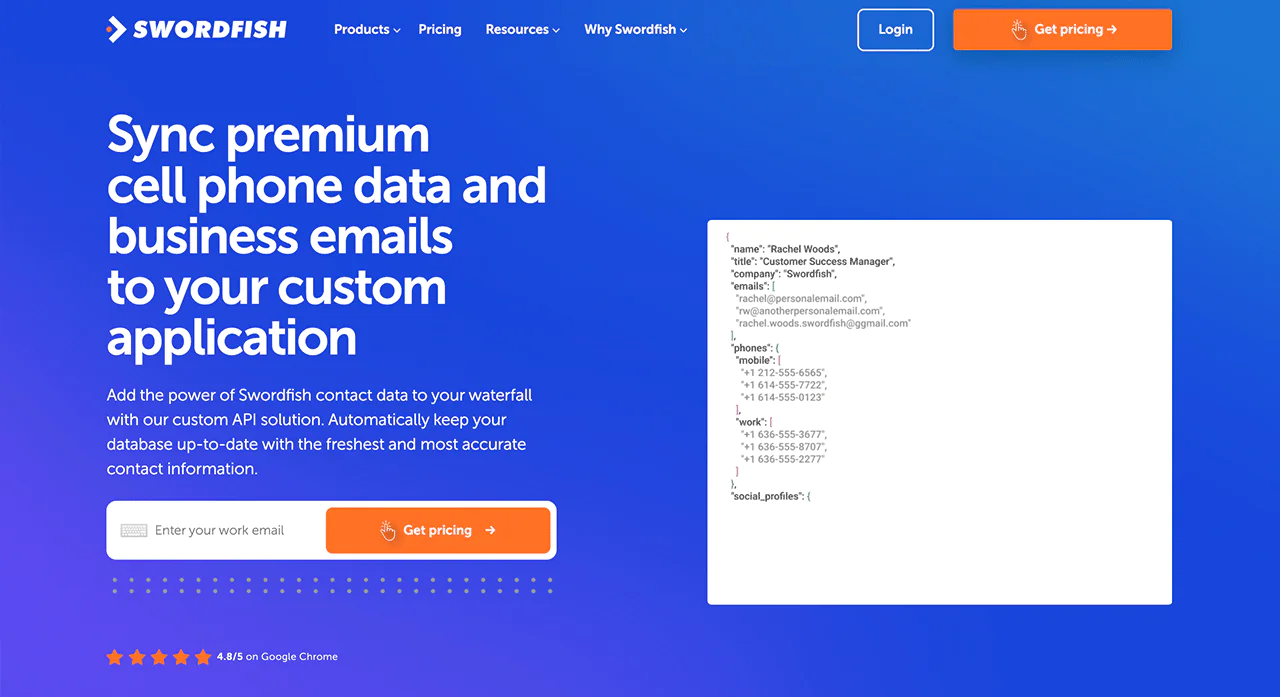
Integrating Swordfish AI’s data into existing sales tools through API access helps logistics sales teams automate and scale lead generation, keeping outreach grounded in current, accurate data rather than stale lists.
-
Intent Data Insights
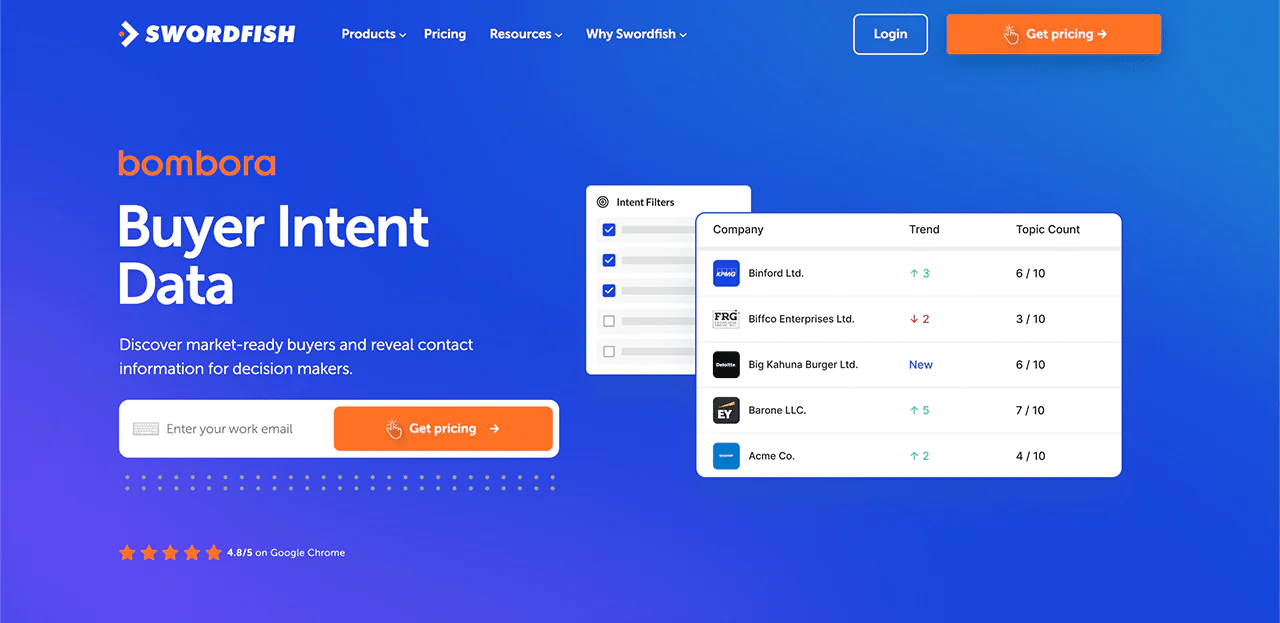
Using Bombora® Intent Data, Swordfish AI helps logistics sales professionals identify businesses actively researching logistics solutions. That timing insight supports more targeted, personalized outreach.
The result is a better chance of engaging leads while they’re actively evaluating options rather than after they’ve already committed elsewhere.
 Try Swordfish Ai
2. Identify and Target Key Accounts
Start by defining your ideal customer profile so your team focuses effort on companies and decision-makers that actually need your logistics services. This kind of precision targeting prevents wasted outreach on prospects who were never going to convert.
Platforms like Cognism can help generate lists of target accounts matching your ideal customer profile (ICP). For instance, you might target operations managers at large companies within specific regions and secure their contact information for direct outreach.
3. Use Intent Data
Intent data tracks a potential client’s online behavior, revealing purchasing signals and allowing for timely, personalized outreach instead of a cold guess.
An intent data provider like Bombora can flag when logistics managers are actively researching transportation sales leads. If a manager keeps visiting pricing pages, that’s a strong signal it’s time to reach out.
4. Cold Call Valuable Leads
This step is still necessary. Effective cold calling depends on quality contact data so reps reach actual decision-makers with messages relevant to their current challenges.
Verified contact databases help here by cutting down on wrong numbers. Tailor your pitch to common pain points like vendor management or shipping delays so the call reads as a solution rather than an interruption.
5. Develop a Prospecting Pattern
A structured outreach plan across multiple channels keeps engagement consistent and helps nurture leads that aren’t ready to buy immediately.
For example, run a month-long outreach sequence that mixes calls, emails, and LinkedIn messages. Start with a direct call, follow with a personalized email, then connect on LinkedIn — adjusting the cadence based on how responsive the lead is.
6. Engage Multiple Stakeholders
Logistics purchasing decisions often involve several people. Engaging them early can build internal support for your services before a competitor gets there first.
For instance, target different decision-makers within the same company, such as COOs and logistics managers, with messages shaped to their specific roles and priorities to build consensus across the buying group.
7. Expand to New Markets
Growth sometimes means entering new markets or expanding your service lines, which opens fresh lead generation opportunities. If you currently serve small businesses, consider targeting mid-market companies or expanding into new regions.
Adjust your marketing and outreach messaging to speak to these new segments rather than reusing the same pitch.
8. Monitor Competition
Watching what competitors do well can surface ideas for your own lead generation practices.
Analyze competitors’ websites and social media to see what resonates with leads, then adapt tactics around website design, messaging, or social engagement that seem to be working for them.
9. Promote Referrals
Referrals from satisfied customers, encouraged through incentives, remain one of the more reliable ways to generate new leads.
For example, offer discounts or service upgrades for successful referrals. A logistics company might offer a reduced membership fee for each new client referred, giving existing customers a reason to actively promote the service.
Do your Logistics Need SEO Optimization?
SEO matters for logistics websites trying to increase visibility and attract more sales leads. Optimizing your site around relevant logistics-related keywords makes it easier for potential clients searching for these services to find you.
A well-optimized website also tends to rank higher in search results, which drives more qualified traffic. Keyword research, focused content creation, and site performance improvements can meaningfully strengthen your online presence.
Beyond attracting leads, strong SEO also positions your brand as a credible player in the logistics space. Investing in it is a reasonable step toward driving more business through organic channels.
The Bottom Line
That wraps up the guide. At this point, the importance of building a reliable pipeline of logistics sales leads should be clear if you want to grow in this sector.
Better lead generation comes down to targeted outreach, disciplined use of data, and engaging prospects across multiple channels. It also means regularly assessing what’s working and staying open to new ways of reaching your audience.
Following these practices should help your logistics company not just generate more leads, but convert more of them into lasting, profitable relationships.
Ready to boost your logistics sales leads? Try Swordfish now for direct access to decision-maker contact info and put more structure behind your outreach.
FAQs
How often should I follow up with logistics sales leads?
Follow up within 24 hours of an inquiry. After the initial contact, base your cadence on the lead’s interest level and buying timeline — regular but not overwhelming communication tends to work best.
Can social media help in getting logistics sales leads?
Yes. Social media lets you share useful content, engage directly with potential clients, and demonstrate expertise in logistics, which can build trust before a sales conversation even starts.
What common mistakes should I avoid in logistics lead generation?
Avoid skipping research on your leads, letting follow-ups slip, and using a one-size-fits-all message for every prospect. Failing to measure which strategies actually work also limits your ability to improve over time.