
 View Products


Last updated: September 3, 2026
TL;DR:
Finding reliable email addresses for real estate professionals takes the right mix of strategy and tooling. Swordfish.ai gives you access to a large, verified contact database, which makes it a strong option for building targeted realtor email lists. Whether you’re working with free methods or a paid platform, this guide walks through verified ways to find someone’s email address, the legal compliance rules that apply, and practical habits for running outreach campaigns that actually land in inboxes.Realtors are the connectors of the housing world. They open doors to new homes, new neighborhoods, and big life changes. But finding the right real estate professionals to build a business relationship with can be slow going, especially when you’re relying on outdated lists or contact info scattered across a dozen sources.The real friction usually comes from stale directories, missing details, and too many unreliable shortcuts. Whether you’re a mortgage broker looking for referral partners, a home service provider trying to reach agents, or a company selling into the real estate industry, having verified email addresses on hand is the difference between outreach that works and outreach that gets ignored.So how do you actually find these email addresses reliably? It takes a combination of proven research methods, the right tools, and a working understanding of the legal rules around outreach. Platforms like Swordfish AI can also help by finding and verifying leads faster than manual research.The sections below cover why reliable contact data matters for real estate outreach, the methods that actually work for finding email addresses, and how to build campaigns that stay compliant while getting results.
Why is a Real Estate Agents Email List Crucial?
Email remains one of the most direct and cost-effective ways to reach real estate agents. Industry estimates put average email marketing ROI somewhere between $36 and $42 for every dollar spent, which is why accurate contact information for realtors, brokers, and agents is worth the effort to find.
Key benefits of finding realtor email addresses:
Direct Access to Key People
You reach the person who actually makes decisions instead of an assistant or a general office inbox. That usually means faster replies and quicker movement on whatever you’re proposing.
Better Response Rates Than Phone Calls
Agents are often out showing property or meeting clients, which makes phone calls hard to land. Email lets them respond on their own schedule, which tends to produce better engagement than cold calling.
Budget-Friendly Lead Generation
Email costs a fraction of paid ads, direct mail, or in-person networking, and it scales without a proportional increase in cost.
Easy to Scale Your Outreach
Once you have a clean list, reaching hundreds of professionals with a personalized message takes minutes instead of a day of dialing.
Build Long-Term Business Relationships
Consistent, useful email contact keeps you top of mind with real estate professionals, which tends to translate into referrals and repeat business over time.
How to Find Realtor Email List: 8 Proven Methods
1. Use Professional Email Finding Tools
The fastest way to build a realtor email list is through tools built specifically for contact discovery rather than general search.Swordfish.ai is one option worth evaluating, with a few notable features: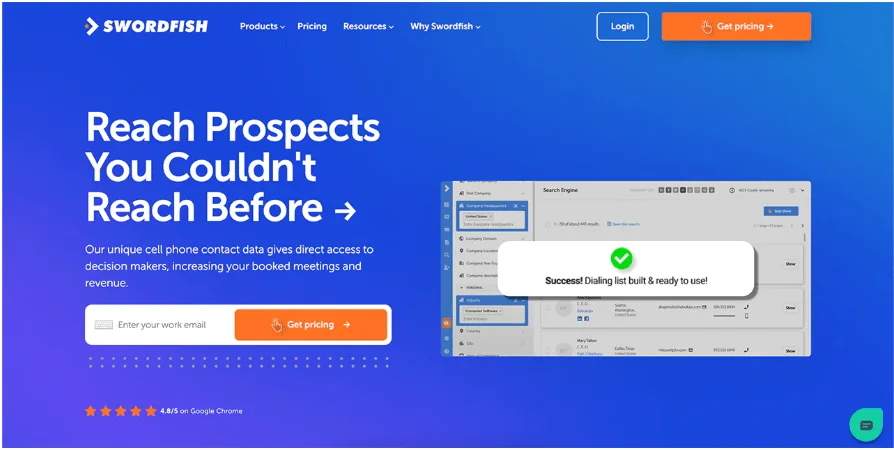
Accurate Cell Phone Numbers Available
Swordfish.ai indexes mobile phone numbers for real estate agents, which matters because a text or call to a personal cell often gets a faster response than a call to an office line. Many agents simply aren’t near a desk phone during the workday.
Higher Phone Number Accuracy
The platform runs phone number validation in real time before returning a result, which cuts down on the wasted calls that come from working a stale list.
Bulk Lead Generation
You can filter for criteria like location, experience level, or specialty to build a targeted list quickly, such as luxury home specialists in a specific state or newly licensed agents in a local market. That’s considerably faster than piecing a list together by hand. For more on this approach, see the 10 Best Lead Generation Databases for B2B Success.
Complete Contact Data
If you already have partial realtor contacts but are missing emails or phone numbers, Swordfish.ai can fill in those gaps by searching its database for the missing details tied to people you already know, making an existing list more usable for outreach.Other platforms worth comparing include UpLead, which advertises a 95% data accuracy guarantee, ZoomInfo, known for its extensive B2B database, and ReachStream, which reports a 95% data accuracy rate.
2. Search Public Real Estate Directories
Free methods to find realtor email addresses:
- Realtor.com agent profiles
- Local MLS listings
- State real estate licensing boards
- NAR (National Association of Realtors) directory
- Company websites and about pages
3. Leverage Social Media Platforms
LinkedIn is particularly useful for finding real estate professionals:
- Use advanced search filters for “real estate agent” titles
- Check contact information in profiles
- Use tools like Hunter.io or Apollo for email extraction
- Connect and message directly through the platform
4. Google Search Techniques
Advanced Google search operators:
-
“realtor name” + “email” + city
-
site:realtor.com “agent name”
-
“real estate agent” + location + contact
-
Use quotation marks for exact phrases
5. Real Estate Association Websites
Professional associations often maintain public directories:
- National Association of Realtors (NAR)
- Local real estate boards
- Commercial real estate associations
- State licensing authorities
6. Property Transaction Records
Public records can also surface contact information:
- County clerk offices
- Property tax records
- Recent sale listings
- MLS historical data
7. Networking Events and Trade Shows
In-person contact gathering:
- Real estate conferences
- Local REALTOR meetings
- Industry trade shows
- Chamber of Commerce events
8. Email Verification Tools
Once you’ve found a potential email address, verify it before you send anything, using:
- Swordfish.ai’s real-time verification
- Hunter.io email verifier
- ZeroBounce
- NeverBounce
Best Realtor Email List Providers in 2025
Top Paid Platforms
- Swordfish.ai
-
- Database Size: 3.5+ billion profiles
- Features: Phone numbers, email verification, API access
- Best For: Higher-volume outreach where accuracy matters more than a rock-bottom price
- UpLead advertises a 95% data accuracy guarantee with real-time email verification.
- ZoomInfo offers advanced search capabilities, though it’s positioned toward larger teams and enterprise budgets.
- DataCaptive combines AI-based sourcing with manual verification, and states compliance with GDPR and CAN-SPAM.
- ReachStream reports a 90% to 95% data accuracy rate with ongoing free updates.
Free Options (Limited)
Free resources for finding realtor emails:
- RealtyOutreach.com (offers free samples)
- Google searches
- LinkedIn basic search
- Public directory browsing
- Social media research
How to Find Personal Email Addresses vs. Business Emails
Business Email Patterns
Most real estate professionals use one of a handful of predictable business email formats:
-
firstname.lastname@company.com
-
firstname@company.com
-
f.lastname@company.com
-
firstnamelastname@company.com
Personal Email Discovery
Swordfish.ai focuses on finding both business and personal email addresses, along with cell phone numbers and other direct contact details.
Tools for personal email finding:
- Social media profile searches
- Cross-platform verification
- Advanced search techniques
- Professional networking platforms
Types of Real Estate Professionals in Our Email Database
Realtor email lists typically span specialized agents across every major property category. Here’s a breakdown of who you’ll find:
Residential Realtor
These agents help families buy and sell homes, condos, and townhouses. They’re a natural fit for mortgage brokers, home inspectors, moving companies, and home improvement services.
Commercial Realtor
Specialists who handle office buildings, retail spaces, warehouses, and business properties. Useful contacts if you sell commercial services, business loans, or property management software.
Luxury Property Realtor
High-end agents working with expensive homes and affluent clients. Valuable for premium service providers, luxury home staging companies, and high-value insurance providers.
Foreclosure Specialists
Agents who work bank-owned properties, short sales, and distressed real estate. A good fit for investors, cash buyers, and renovation contractors.
New Home Sales Realtor
Agents who sell directly on behalf of builders and developers. Relevant for contractors, interior designers, and new-construction service providers.
Rental Property Realtor
Agents focused on rentals, property management, and investment real estate. Ideal for landlord services, maintenance companies, and rental management software.
Land Sales Realtor
Specialists in undeveloped land, lots, and acreage. Useful for developers, construction companies, and land investment services.
Eco-Friendly Property Realtor
A growing niche focused on eco-friendly homes, solar properties, and sustainable building features.
Investment Property Realtor
Agents who help clients buy and sell rental properties and investment real estate. Valuable for financial advisors, investment platforms, and property analysis tools.
Historic Homes Realtor
Agents focused on historic homes, architecturally significant buildings, and other specialty properties that require specific expertise.
Urban Development Realtor
Specialists in city development projects, mixed-use properties, and urban redevelopment. Valuable for city planners, developers, and urban service providers.
How Do We Compile and Verify Our Realtor Email List?
Building and checking a realtor email list is not a one-step process. Here’s a general outline of how that kind of list gets put together and kept current: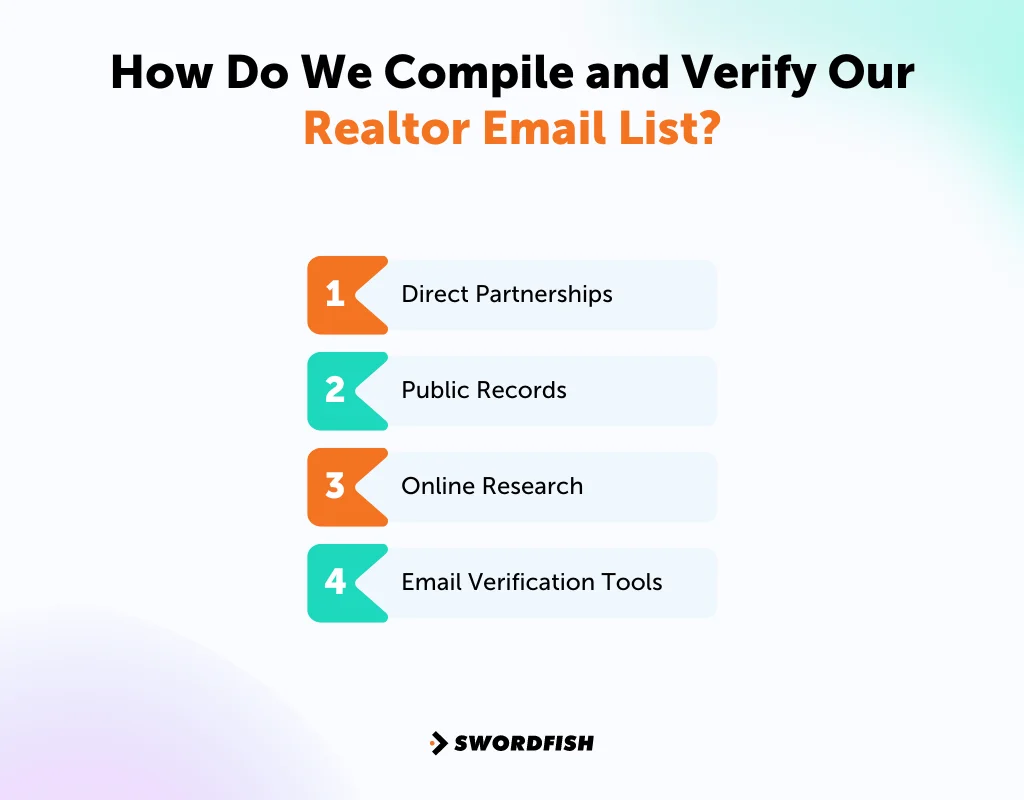
Direct Partnerships
Working directly with real estate agencies and associations helps keep contact data fresh, since it comes closer to the source rather than through several layers of resale.
Public Records
Public records and real estate transaction data can surface email addresses linked to currently active realtors. Checking these records on a regular schedule helps keep a list from going stale.
Online Research
Manual research across real estate websites, forums, and social media adds another layer, provided each contact is confirmed to belong to an actual licensed realtor before it’s added anywhere.
Email Verification Technology
Running each address through email verification tools helps filter out inactive or incorrect emails before they ever reach an outreach campaign.
Why Choose Swordfish AI’s Realtor Email Database?
Here’s what to weigh when considering Swordfish AI’s realtor database against other options: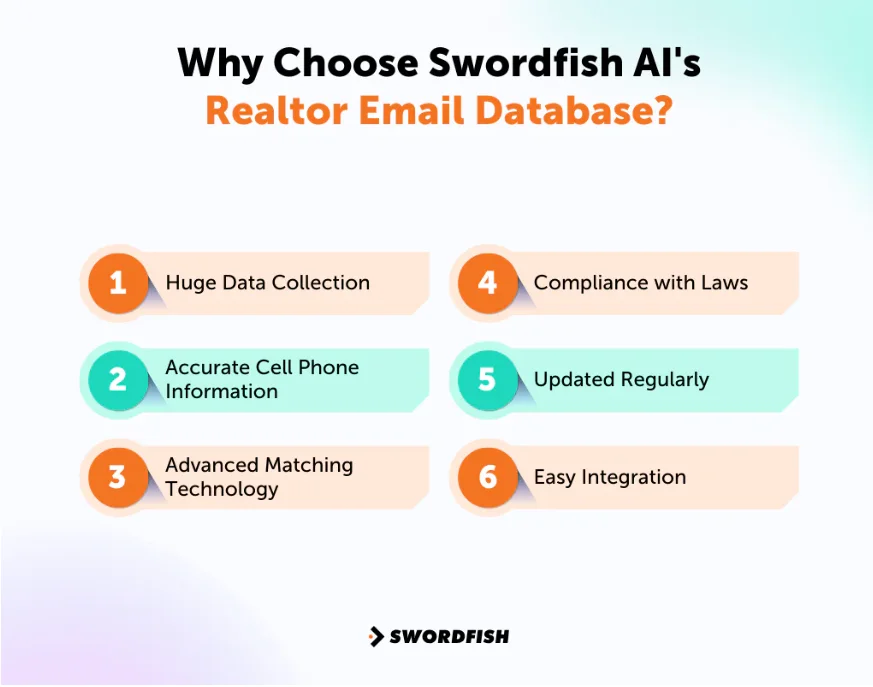
Large Data Collection
The database spans over 3.5 billion profiles, which widens the pool of realtor contacts available for a given search.
Cell Phone Information
Cell phone verification aims to keep numbers current, which matters if the goal is reaching realtors directly rather than through an office line.
Matching Technology
Matching algorithms attempt to connect email addresses and phone numbers to the correct individual, reducing the odds of contacting the wrong person entirely.
Compliance with Laws
Data practices are built around frameworks like GDPR, CCPA, and applicable state laws, which is worth checking against your own compliance obligations before you run a campaign.
Updated Regularly
Ongoing updates help keep a database from drifting too far out of date, though no provider can guarantee real-time accuracy on every record.
Easy Integration
The data is built to work with common CRM and sales tools such as Salesforce, ZOHO, Outreach, Lever, Pipedrive, and others, which simplifies getting it into an existing workflow.
Why Turn to Email Marketing for Real Estate Agents in the First Place?
Email marketing is one of the more durable ways to build and maintain client relationships. For real estate professionals, the job isn’t just closing a transaction; it’s staying relevant to people well before and after the sale.Generating a steady stream of leads is consistently one of the hardest parts of the job for agents, and a well-built realtor marketing email list takes some of that pressure off.
Here’s why agents lean on email marketing:
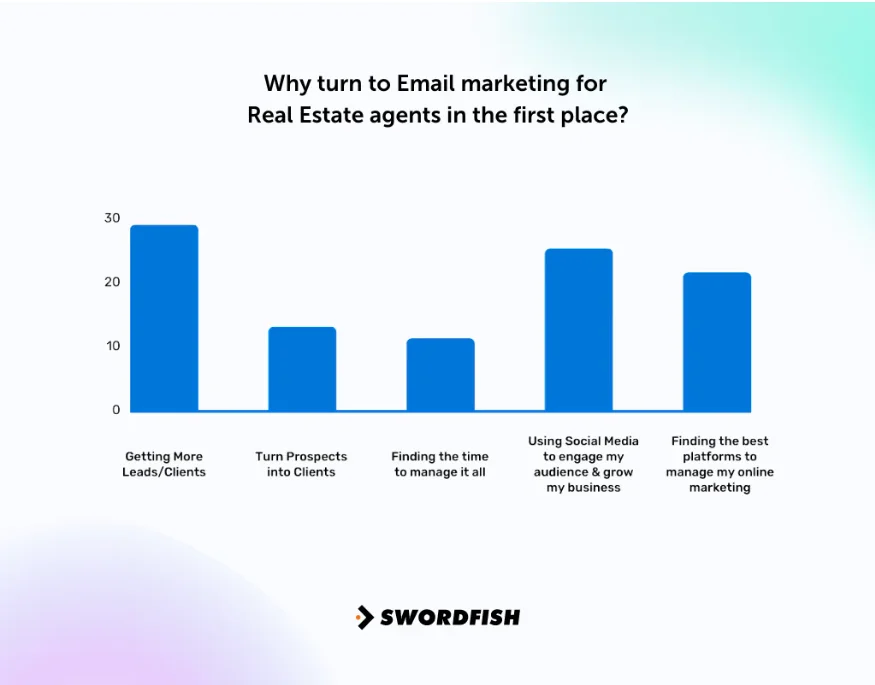
- Nurtures Client Relationships: Email lets agents stay in touch with clients well beyond a single transaction.
- Encourages Repeat Business: Satisfied clients are more likely to come back and refer the agent to others.
- Ensures Business Resilience: During slow markets or disruptions, email keeps a channel open when in-person activity drops off.
- Supports Online Marketing Trends: Email remains a core part of the broader shift toward digital-first real estate marketing.
- Aids Regional Outreach Expansion: For agents targeting specific markets, a localized email list can help expand a network faster than cold outreach alone.
What Should You Consider When Getting an Email List of Realtors?
Picking the right list matters more than picking a big one. Here are the factors worth weighing: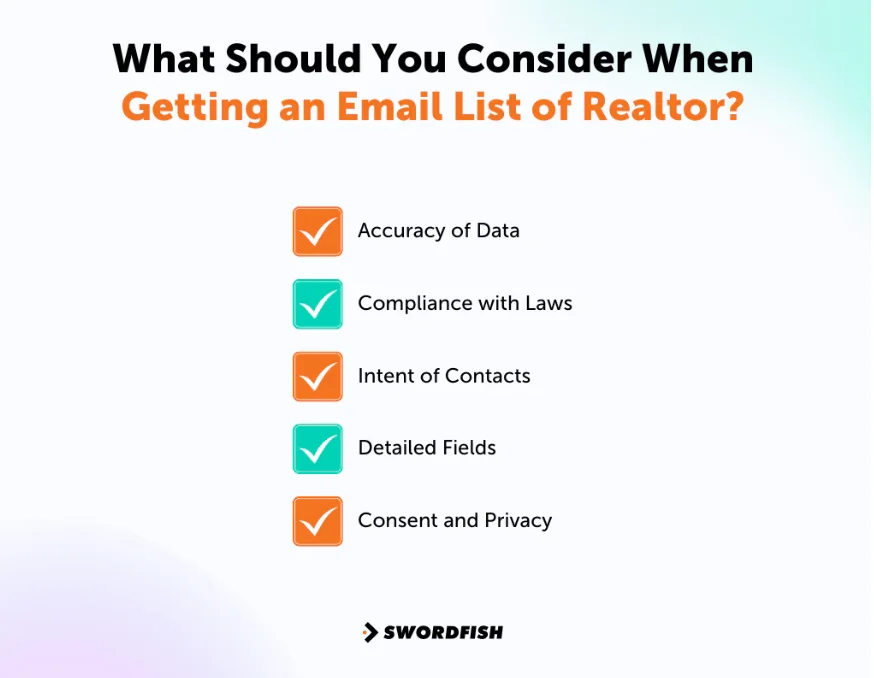
Accuracy of Data
Make sure the list is current and accurate. An outdated or incorrect list wastes time and can hurt your sender reputation. Look for providers that update and verify regularly.
Compliance with Laws
Choose a list that’s built around privacy laws like GDPR and CAN-SPAM. That helps confirm the contacts have a legitimate basis to be reached, which protects you from legal exposure.
Intent of Contacts
Think about whether the realtors on the list are likely to care about what you’re offering. A list organized around intent will convert better than one organized purely by geography.
Detailed Fields
A useful list includes fields like specialization, geographic location, and years of experience, so you can tailor your message instead of sending something generic.
Consent and Privacy
Confirm that the provider respects consent and privacy standards. That’s not just a compliance issue; it also affects how your outreach is received.
Who Can Benefit from Getting Realtor Email Lists?
Realtor email lists are useful for a range of professionals looking to expand their network or grow sales. Here’s who tends to benefit most: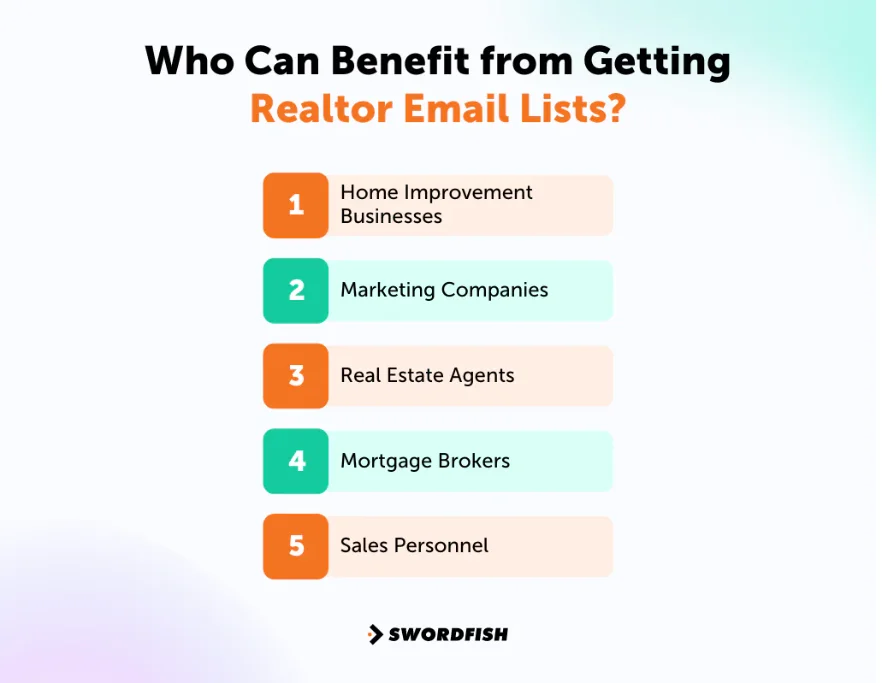
Home Improvement Businesses
Companies offering landscaping, interior design, or renovation services can reach realtors who often recommend vendors to clients preparing to sell or looking to customize a new home.
Marketing Companies
Marketing firms can pitch website design, advertising, and SEO services directly to realtors who need to strengthen their online presence.
Real Estate Agents
Agents looking to network with peers can use these lists to build referral partnerships or share market insights, particularly useful when expanding into a new territory.
Mortgage Brokers
Brokers can build relationships with realtors who refer clients needing loan services, creating a steady referral pipeline that benefits both sides.
Sales Personnel
Salespeople targeting the real estate market can reach out directly to introduce software, tools, or services that support realtors in their day-to-day work.
How Can You Make the Most of Realtor Email Lists Effectively?
Getting real value out of a realtor email list takes a deliberate approach. A few things that consistently help: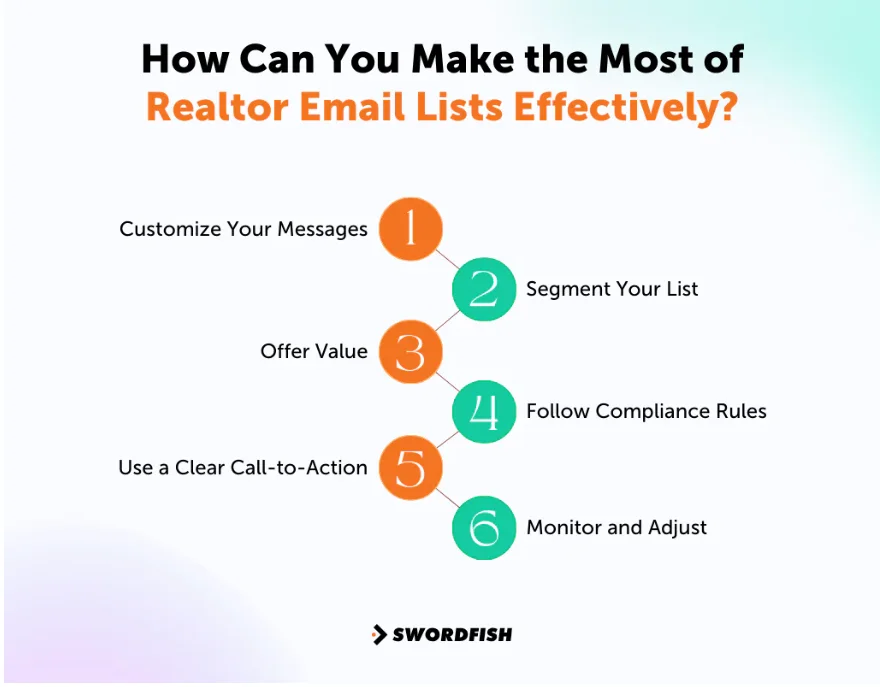
Customize Your Messages
Write to the recipient’s actual situation. Reference their market, use their name, mention something specific. Personalized emails get read more often than generic blasts.
Segment Your List
Break the list into groups by location, specialty, or experience level so your messaging stays relevant to each segment.
Offer Value
Give the recipient something useful, whether that’s market data, a tool, or an exclusive opportunity. Value builds trust faster than a pitch does.
Follow Compliance Rules
Keep your practices aligned with CAN-SPAM and GDPR, including a clear opt-out option. It’s both a legal requirement and a sign of respect for the people on your list.
Use a Clear Call-to-Action
Be specific about the next step, whether that’s visiting a page, booking a call, or downloading something. One clear ask outperforms several vague ones.
Monitor and Adjust
Track open rates, click-through rates, and replies, then use that data to adjust your prospecting strategy over time.
How to Build A Quality Real Estate Agent’s Email List
Here are a few steps for building a realtor email list from scratch:
Set Clear Objectives
Define specific, measurable goals for your email list:
- Gain 5,000 subscribers by year end
- Convert 100 leads into clients quarterly
- Increase email open rates by 5% monthly
- Enter new real estate market segments
Get Legal Consent First
Follow CAN-SPAM Act requirements to avoid penalties:
- Create opt-in forms on your website
- Add signup links to email signatures
- Send permission requests to existing contacts
- Use only compliant purchased lists from verified providers
Choose the Right Email Service Provider
Look for software with these features:
- Easy drag and drop email builders
- Real estate specific templates
- List segmentation capabilities
- Personalization options
- Automated email sequences
- Detailed performance analytics
- A/B testing functionality
Create an Effective Landing Page
Build signup pages that actually convert:
- Clear headline explaining subscriber benefits
- Simple form requesting minimal information
- Compelling offer like market reports or guides
- Professional design without distracting links
- Integration with your CRM system
Promote Your Email List
Share signup links across multiple channels:
- Email signatures and social media profiles
- Website headers and blog posts
- Business cards and marketing materials
- Networking events and open houses
- Gated content requiring email access
Organize Contacts for Better Results
Segment your list based on:
- Contact source (website, events, referrals)
- Geographic location and market area
- Property interests (buying, selling, investing)
- Engagement level (opens, clicks, responses)
- Professional role (agent, broker, investor)
This kind of systematic approach helps build a targeted list while staying compliant and keeping engagement rates healthy.
Best Practices for Real Estate Email Campaigns
Legal Compliance Requirements
- Include unsubscribe links in every email
- Add your physical business address
- Follow CAN-SPAM Act regulations
Maintain Consistent Timing
- Choose a regular schedule (daily, weekly, or monthly)
- Send emails at the same time each period
- Avoid overwhelming subscribers with too many messages
Optimize Send Times
- Target mid-morning or early afternoon hours
- Avoid early morning, late evening, or weekend sends
- Test different times to find what works for your audience
Use Single Call-to-Action
- Focus on one primary action per email
- Make the next step clear and simple
- Avoid confusing recipients with multiple requests
These fundamentals affect deliverability, engagement, and compliance well before any advanced tactics come into play.
10 Ways to Maximize Your Realtor Email List Performance
Once a realtor email list is in place, the real work is keeping leads engaged over time. Here are ten strategies worth testing: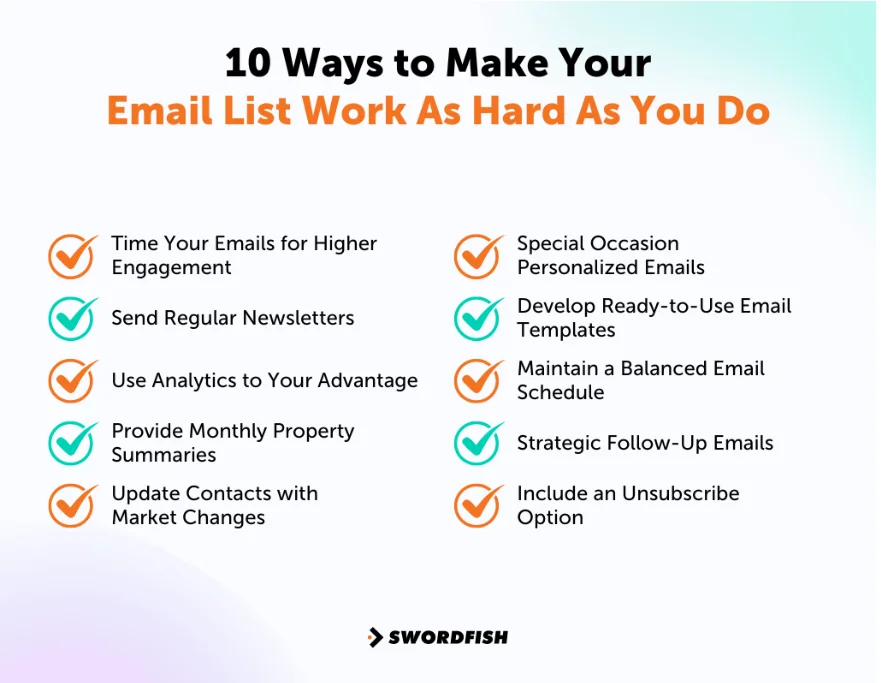
Optimal Email Timing
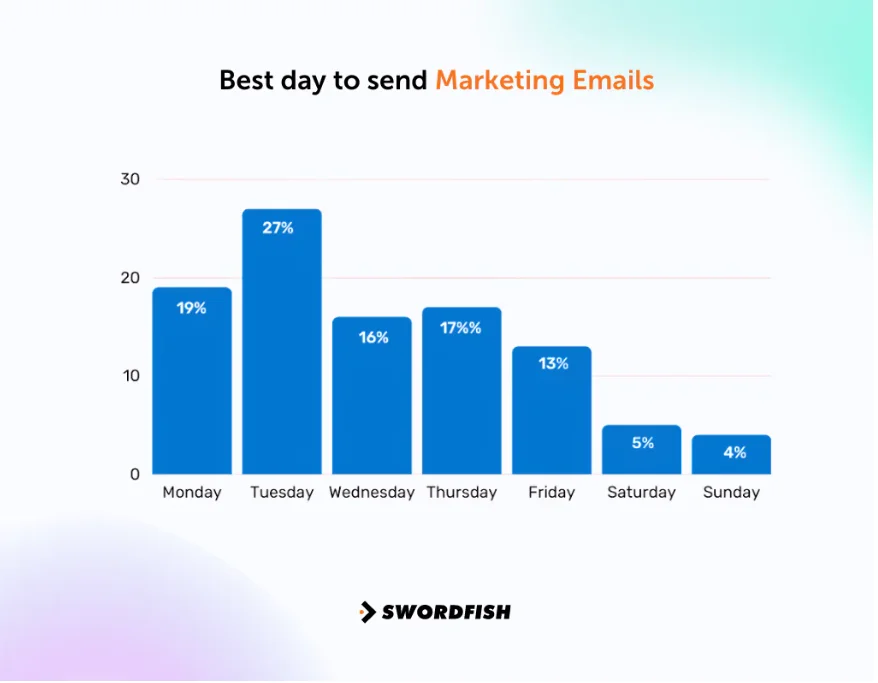 Many marketers find mid-morning weekday sends perform best, and response rates typically drop off in the evening. Testing your own list against these general patterns is still worthwhile since audiences vary.
Weekly Market Updates
Share local market developments and new listings on a weekly cadence to keep contacts informed and ready to act.
Track Performance Metrics
Watch open rates, click rates, and engagement to see what content resonates, then do more of that.
Monthly Property Reports
A monthly roundup of top selling properties, trends, and pricing positions you as someone who actually knows the market.
Market Change Alerts
Flag developments that affect property values, like new construction, tax changes, zoning updates, or major business openings nearby.
Personal Touch Campaigns
Birthday notes, anniversary messages, and holiday greetings build a relationship that goes beyond the transaction.
Email Template Library
Reusable templates for welcomes, property alerts, market updates, and invitations save time and keep messaging consistent.
Strategic Sending Frequency
Find the balance between staying visible and overloading an inbox. Test frequency the same way you’d test subject lines.
Website Visitor Follow Up
Automated sequences triggered by page views or time on site can follow up without manual effort.
Legal Compliance Standards
Every email needs a clear unsubscribe option to stay compliant with CAN-SPAM and protect your sender reputation.Together, these habits keep subscribers engaged while building credibility in a local market.
How to Get People’s Email Addresses for Marketing
Building Your Own Email List
Content Marketing Approach:
- Create valuable real estate guides
- Offer market reports
- Provide property valuation tools
- Host webinars for industry professionals
Lead Magnets for Realtors:
- “Ultimate Guide to Real Estate Marketing”
- “2025 Market Predictions Report”
- “Commission Calculator Tool”
- “Client Management Templates”
Purchased List Best Practices
When buying realtor email lists:
- Choose verified, compliant providers
- Segment by geography and specialization
- Start with small test campaigns
- Monitor deliverability rates
- Maintain list hygiene
Recommended segmentation criteria:
- Property type specialization
- Geographic location
- Experience level
- Brokerage size
- Transaction volume
How to Find Anyone’s Email Address: Advanced Strategies
Professional Research Techniques
Cross-Platform Verification:
- Check multiple social media profiles
- Verify against business directories
- Use reverse email lookup tools
- Cross-reference with phone numbers
Pattern Recognition:
- Identify company email formats
- Test common variations
- Use email permutation tools
- Verify through multiple channels
Tools for Advanced Email Discovery
Browser Extensions:
- Hunter.io Chrome extension
- Apollo extension
- ContactOut for LinkedIn
- Swordfish.ai browser tool
API Integration:
- Swordfish.ai API
- Clearbit Connect
- FullContact API
- Hunter.io API
Email Verification: Ensuring Deliverability
Why Email Verification Matters
Impact of unverified emails:
- High bounce rates (>5% is problematic)
- Damaged sender reputation
- Reduced deliverability
- Potential blacklisting
- Wasted marketing budget
Verification Process
Real-time verification checks:
- Syntax validation
- Domain verification
- Mail server response
- Catch-all detection
- Role account identification
Swordfish.ai runs real-time email validation and phone line connectivity checks, aimed at reducing wasted outreach to dead contacts.
How to Find People’s Email Addresses for Free
Here are simple steps to find someone’s email address without paying for a tool:
Use Google Search:
Search the person’s name along with “email” or “contact.” Their address may show up on a personal site or social profile.
Check Social Media
LinkedIn, Twitter, and Facebook bios sometimes list contact info directly.
Try Email Lookup Tools
Sites like Swordfish.ai, Hunter.io, VoilaNorbert, and Clearbit offer free email search options.
Visit Company Websites
Check the “Team” or “Contact Us” pages if the person works at a company.
Guess the Email Format
Many businesses use a consistent format (like firstname.lastname@company.com). If you know the domain, try a few common variations.
Check Public Directories:
Professional associations, alumni networks, and membership sites sometimes list emails publicly.
Use a Website’s Contact Form
If nothing else works, a contact form is a reasonable way to ask directly.
Search through Blogs or Articles
Writers and contributors often include contact info in author bios.
Explore Online Communities
Forums like Reddit or Quora sometimes contain shared contact info for professional networking.
Ask Directly
If none of the above work, a polite, direct request through social media or a contact form is a fair last resort.
Industry-Specific Email Finding Strategies
Real Estate Specializations
Residential Realtors:
- Focus on local MLS listings
- Target recent transaction records
- Use neighborhood-specific searches
- Leverage homeowner associations
Commercial Real Estate:
- Professional association directories
- Commercial property databases
- Industry publication subscriber lists
- Trade organization memberships
Luxury Property Specialists:
- High-end brokerage websites
- Luxury real estate publications
- Exclusive event attendee lists
- Premium service provider networks
Geographic Targeting
State-specific resources:
- State real estate commissions
- Local realtor associations
- Regional MLS systems
- Municipal licensing boards
International considerations:
- Different privacy regulations
- Cultural communication preferences
- Local professional associations
- Regional compliance requirements
Technology Integration and Automation
CRM Integration
Popular CRM platforms:
- Salesforce integration with Swordfish.ai
- HubSpot email finding workflows
- Pipedrive contact enrichment
- Zoho CRM data synchronization
Automation workflows:
- Automatic email verification
- List updating schedules
- Campaign triggering rules
- Lead scoring integration
API Implementation
Benefits of API usage:
- Real-time data access
- Automatic list updates
- Custom integration possibilities
- Scalable contact discovery
Swordfish.ai offers API access for integrating contact data directly into existing sales and marketing tools.
Measuring Success and ROI
Key Performance Indicators
Email finding efficiency:
- Time to find contact information
- Accuracy of discovered emails
- Cost per verified contact
- List building velocity
Campaign effectiveness:
- Email deliverability rates
- Engagement metrics
- Conversion rates
- Revenue attribution
Conclusion
Finding accurate email addresses in real estate comes down to a mix of the right technology, an understanding of compliance rules, and consistent follow-through. Swordfish.ai is one option worth evaluating, with a database of over 3.5 billion profiles and built-in compliance features.
Key takeaways:
- Use verified, compliant data sources
- Implement proper email verification
- Follow legal requirements (CAN-SPAM, GDPR, CCPA)
- Focus on providing value in communications
- Monitor and optimize campaign performance
Whether you’re after personal email addresses, business contacts, or a full realtor email list, results come down to picking the right tools and sticking to ethical practices.Ready to build your realtor email list? Try Swordfish.ai free with 10 credits and see what verified contact data does for your outreach.
About the Author
Drew Clark is Co-Founder and CRO at Swordfish.ai and Heartbeat.ai, where he’s spearheaded sales operations since 2019. Drew works with sales, recruiting, and marketing teams to develop outbound strategies, leading to 25+ new business demonstrations per week. Based in England, Drew brings over 6 years of B2B sales leadership experience. Connect with Drew on LinkedIn.
Frequently Asked Questions
Q: How can I find someone’s email address for free?
A: Use Google search operators, LinkedIn basic search, company websites, and public directories. Free methods work, but they’re slower and less reliable than paid tools.
Q: Is it legal to use realtor email lists for marketing?
A: Yes, as long as the list complies with CAN-SPAM, GDPR, and CCPA where applicable. Stick to verified, consent-based lists from reputable providers.
Q: What’s the most accurate way to find people’s email addresses?
A: Professional tools with real-time verification, like Swordfish.ai, tend to be more reliable than manual searching, though no method is perfect.
Q: How do I verify if an email address is valid?
A: Use an email verification service that checks syntax, domain validity, and mail server responses. Swordfish.ai includes this as a built-in feature.
Q: Can I find personal email addresses for realtors?
A: Yes, tools like Swordfish.ai are built to surface both business and personal contact information while working within privacy law requirements.
Q: How often should I update my realtor email list?
A: Quarterly at minimum, since agents change brokerages fairly often. Some providers offer automatic updates on a shorter cycle.
Q: What information do I need to find someone’s email address by name?
A: Full name, company or brokerage, location, and any identifiers like a license number all improve your odds of a match.
Q: How do I avoid my emails being marked as spam?
A: Use verified lists, include an unsubscribe option, follow CAN-SPAM guidelines, provide genuine value, and maintain a healthy sender reputation.