
 View Products


Last updated: September 3, 2026
Email remains one of the most dependable channels for reaching decision-makers, and most marketing teams treat it as a core acquisition tool rather than an afterthought. Roughly 89% of marketers say email marketing is their primary channel for lead generation, which tells you how much weight a clean, targeted contact list carries in a modern go-to-market plan.
The harder problem is sourcing accurate contact information for the specific professionals you’re trying to reach, whether that’s a hospital administrator, a finance director, or a healthcare specialist in a particular state. Bad data wastes outreach time and damages sender reputation.
A well-built email list solves that problem by putting verified contacts directly in front of the right people. Below, we walk through what goes into a quality business email list, how Swordfish AI compiles and verifies its data, and what to check before you buy one.
About Swordfish Business Email Lists: What’s in It for You?
Swordfish AI is built to connect you directly with key decision-makers rather than generic inboxes. It’s a tool for building real business relationships, not just a static export of addresses. Here’s what you get with a Swordfish business email list:
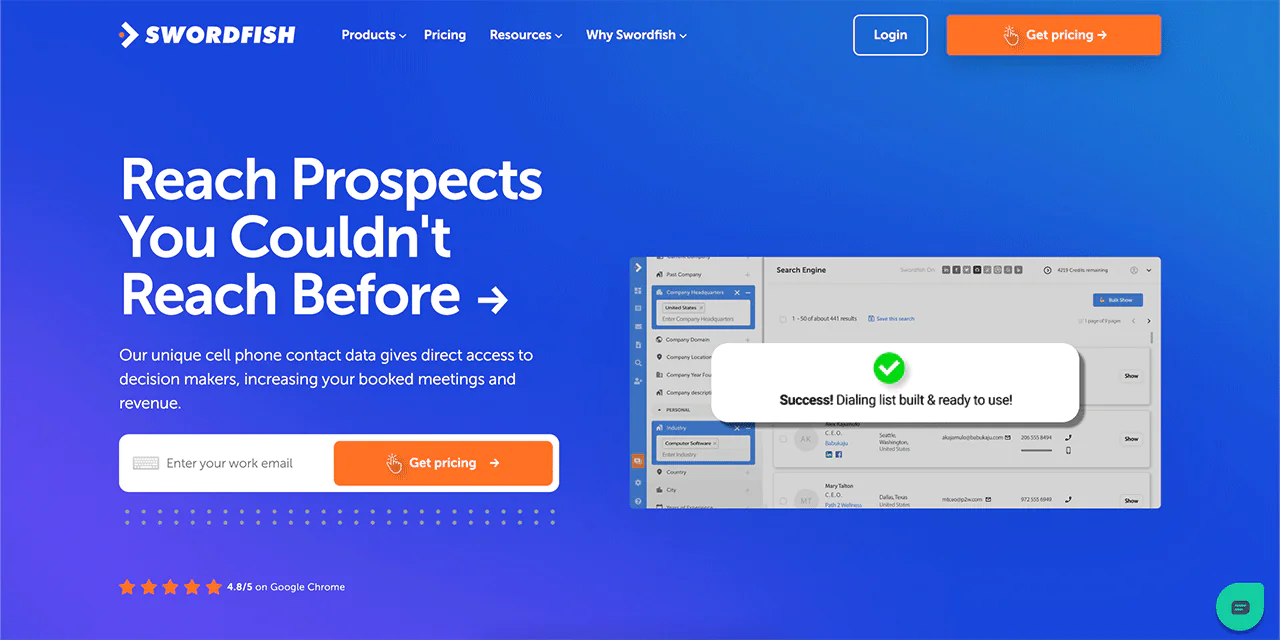
- Direct Access to Key Contacts: With Swordfish’s email list, you reach the inbox of decision-makers without wasting time chasing gatekeepers. You’ll have emails belonging to people who actually matter to the businesses you’re targeting.
- High-Quality, Verified Emails: Our lists are regularly updated and verified, so you’re reaching real people rather than dead addresses.
- Customized Lists: Whether you’re targeting a specific industry, company size, or job role, you can tailor the list to your needs. That means more relevant conversations and better results.
- Boost Your Outreach Success: Accurate, relevant contacts are more likely to open, read, and respond to your emails, which translates into higher conversion rates and more pipeline.
- Easy to Use: Once you have access to a list, you can start integrating it into your email campaigns right away, with no complex setup or learning curve.
Types of Data Included in Business Mailing Lists
- Name
- Location
- Contact Numbers (Work, Cell, Mobile)
- Email Address
- Specialization
- Years of Experience
- Sole Proprietor Status
- Licensed States
- License Number
- Fax
- Address
For healthcare-focused outreach, fields like specialization, licensed states, and license number matter more than they would for a generic B2B list, since they let you confirm you’re contacting a provider who’s actually qualified and active in the jurisdiction you care about.
Who’s Included in Our Business Email List by Specialization?
Wondering who’s on the list? Swordfish covers specialists across a wide range of fields, from marketing and finance to IT and healthcare. Here’s a quick look at the categories:
How Do We Compile and Verify Our Business Mailing List?
Compiling and verifying business email addresses is not a one-step process. Here’s the general workflow behind the data:
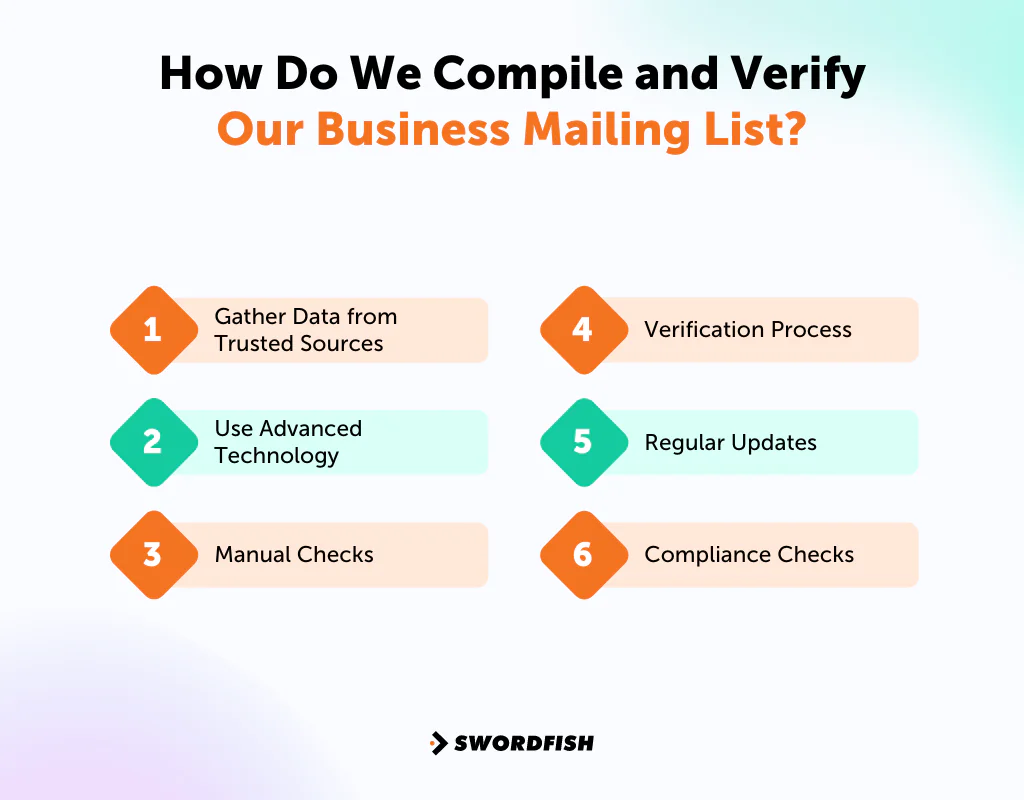
Gather Data from Trusted Sources
Data collection starts with roughly 200 reliable sources, including public records, business directories, professional networking sites, and licensing databases. The goal is to keep the underlying information current and relevant.
Use Advanced Technology
AI and machine learning algorithms filter and organize the raw data, helping identify and categorize contacts by industry, job role, and specialization.
Manual Checks
Automation alone isn’t enough. A dedicated team performs manual checks to catch anomalies that algorithms miss, which matters most when accuracy affects compliance or licensing details.
Verification Process
Real-time email verification is the backbone of the process. Multiple verification methods confirm the validity of addresses on the list, which helps keep bounce rates down.
Regular Updates
People change jobs and companies update contact details constantly. Lists are refreshed regularly, removing outdated contacts and adding new ones so the data stays usable.
Compliance Checks
Compliance with relevant regulations, including GDPR for European contacts, is part of the process. That matters even more in healthcare outreach, where provider contact data can intersect with additional state licensing and privacy rules.
Why Choose Swordfish AI’s Business Email Database?
Choosing Swordfish AI’s business email database gives you a real edge in outreach and networking. Here’s why it stands out:
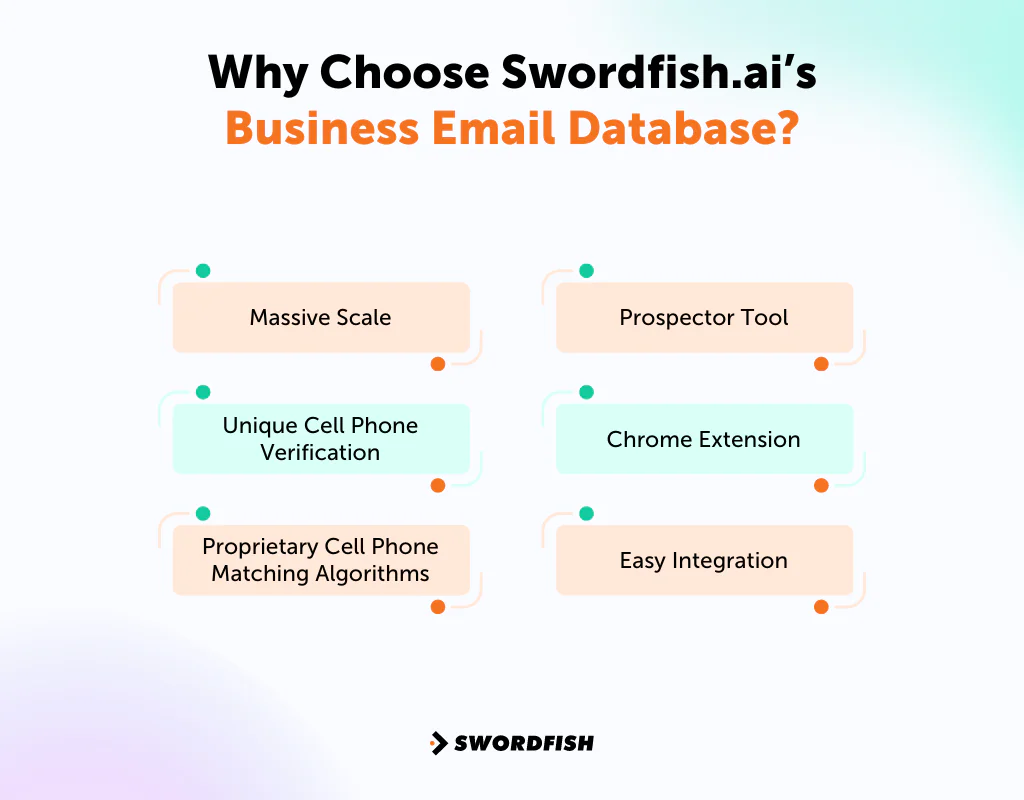
Massive Scale
With over 3.5 billion data profiles, the database is large enough that most target contacts, healthcare providers included, are likely to be represented.
Unique Cell Phone Verification
Coverage doesn’t stop at email. A dedicated verification process for cell phone numbers gives you a more direct, personal line of communication when email alone isn’t enough.
Proprietary Cell Phone Matching Algorithms
Matching algorithms work to connect cell phone numbers with the correct profiles, which supports the accuracy and reliability of the contact information you receive.
Prospector Tool
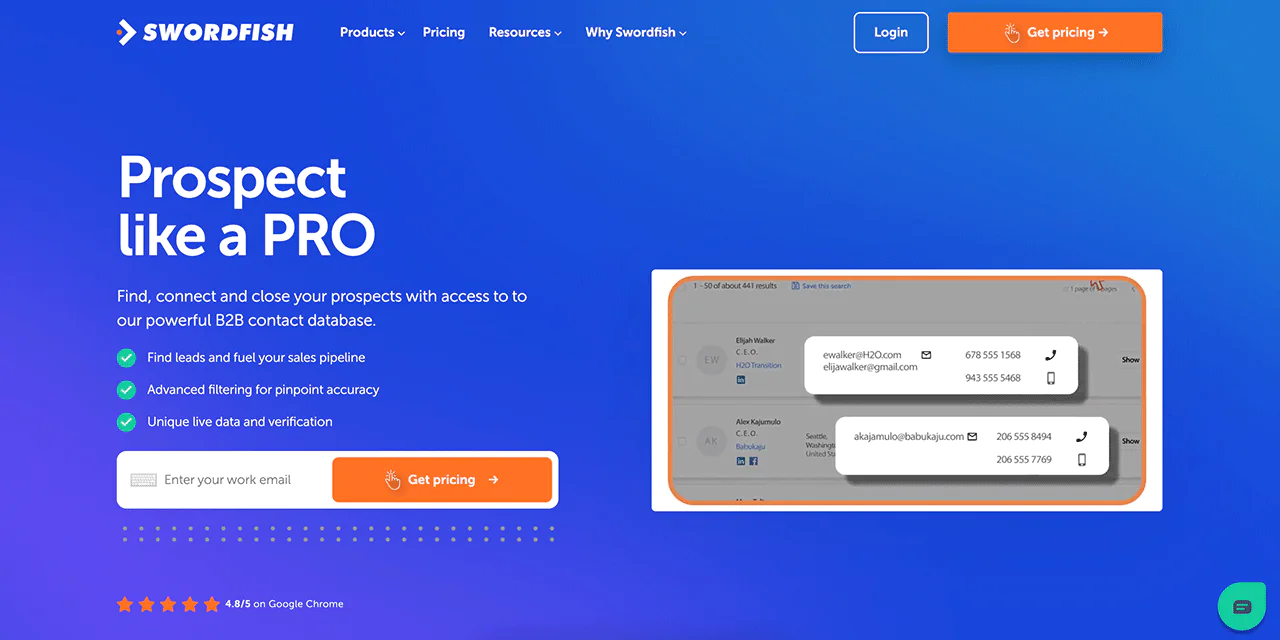
The Prospector tool simplifies identifying and compiling contact lists by criteria like industry, job title, and location, which makes targeting and segmenting outreach campaigns more efficient.
Chrome Extension
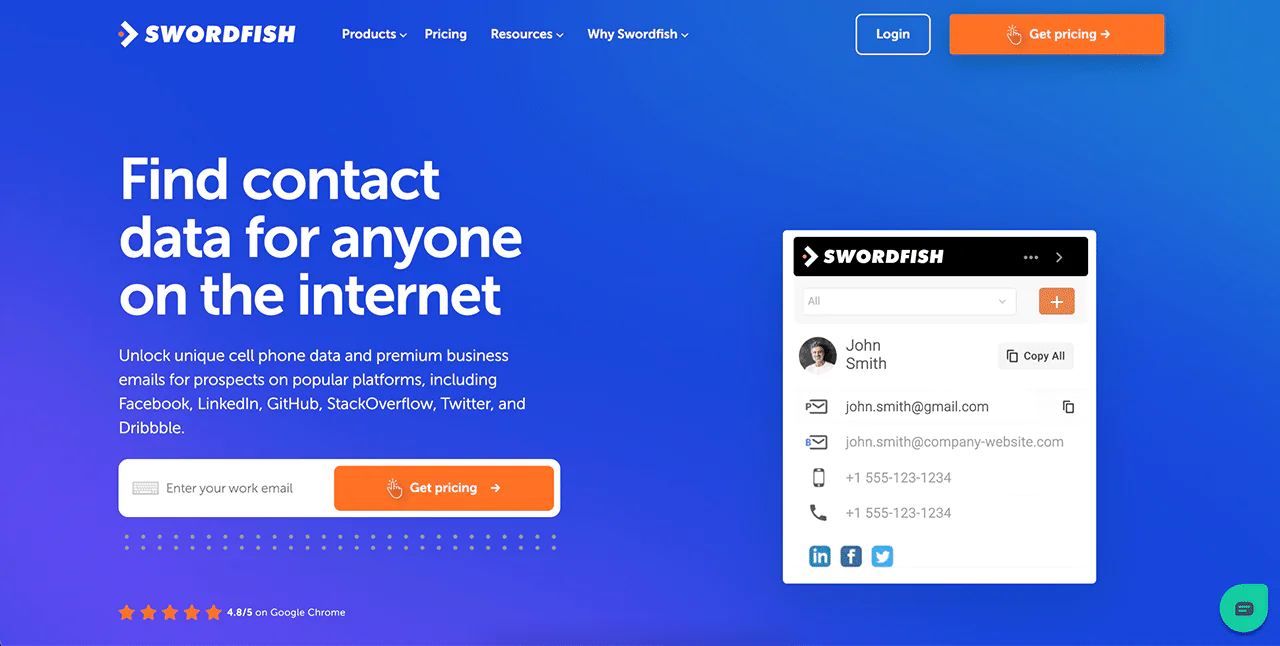
The Chrome extension integrates directly with your browser, giving you access to the database while you research online. This streamlines finding and connecting with contacts as you go.
Easy Integration
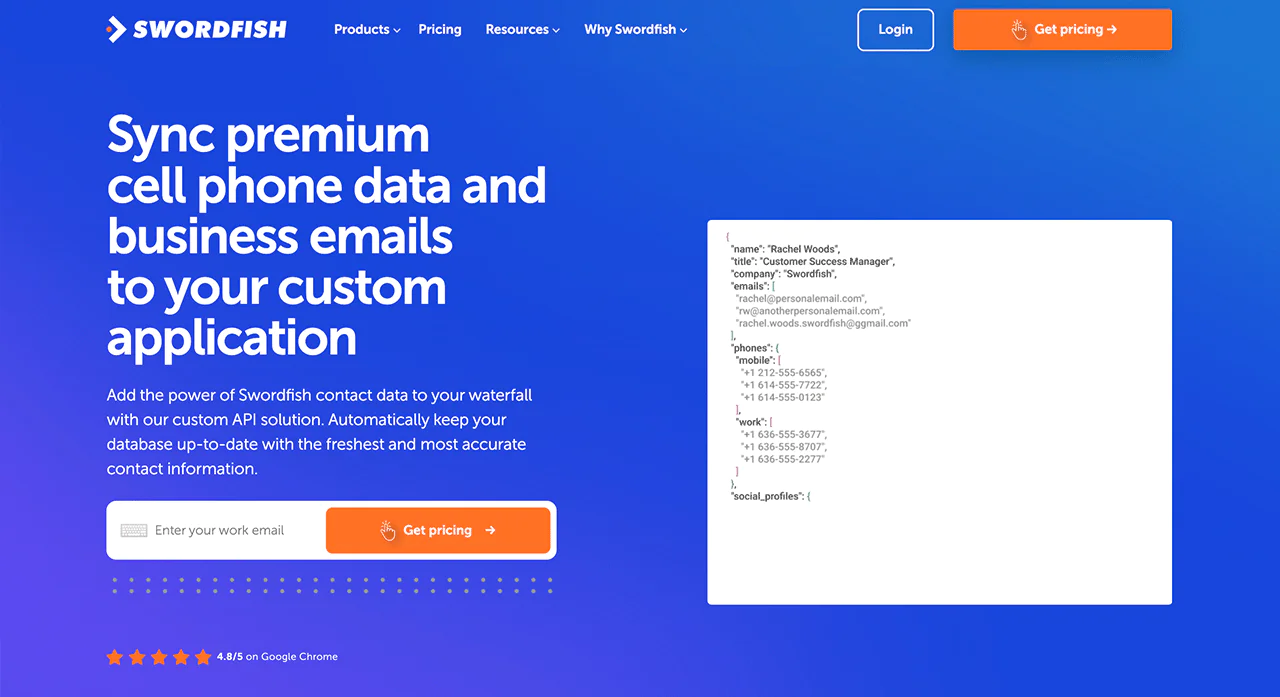
Our API is built to integrate with your existing systems or marketing tools, so you can start using the data quickly without a complicated setup process.
What Should You Consider When You Buy Business Email Lists?
Buying a business email list involves more than picking the biggest number of contacts. Here’s what actually matters:
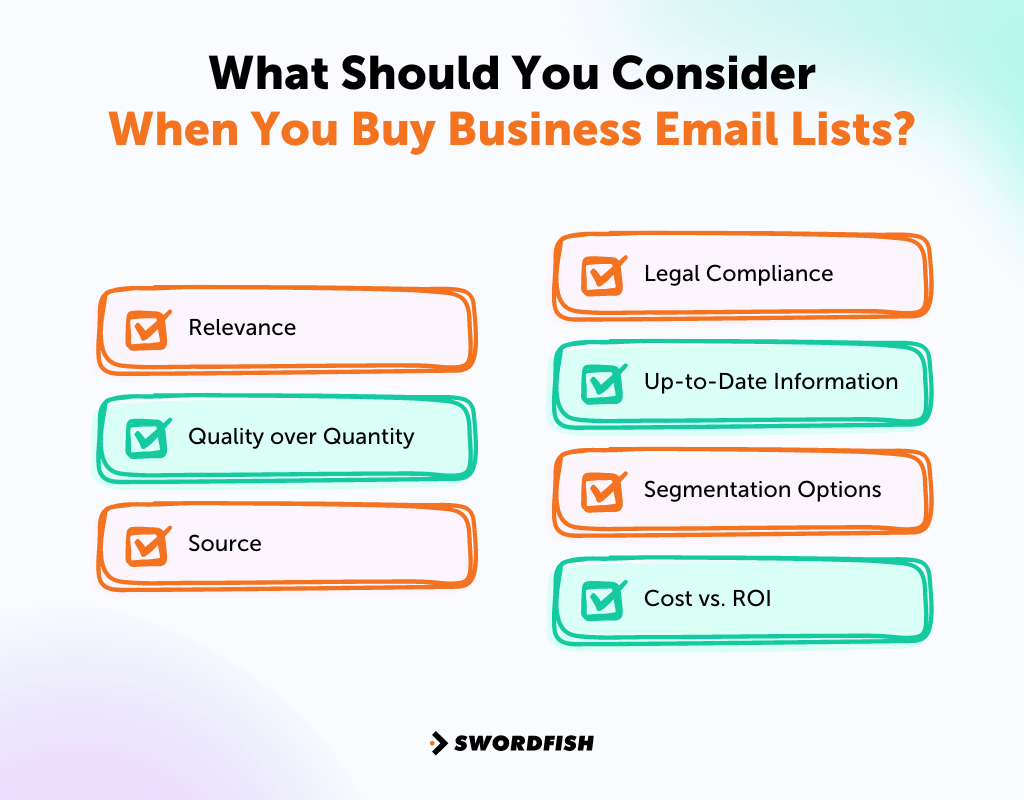
Relevance
The list should align closely with your niche or industry. Contacts should have a realistic chance of caring about what you’re selling.
Quality over Quantity
A smaller list of genuinely engaged contacts beats a larger list of disinterested names. Weigh engagement potential over raw volume.
Source
Check where the list comes from. A reputable provider is transparent about how the data was collected. Avoid lists built through questionable methods or without consent.
Legal Compliance
Make sure the list adheres to applicable laws, such as GDPR in Europe or CAN-SPAM in the United States. Non-compliance risks fines and brand damage.
Up-to-Date Information
Lists should be updated regularly. Outdated contacts add nothing and can actively hurt your deliverability rates.
Segmentation Options
Look for segmentation by demographics, location, or specific interests so your outreach stays relevant to the people receiving it.
Cost vs. ROI
Weigh the cost of acquiring the list against the potential return on investment. The upfront price matters less than the value the list brings to your marketing campaigns over time.
Who Can Benefit from the Business Email Address List?
Anyone promoting products or services can benefit from a business email list. Here’s who tends to gain the most:
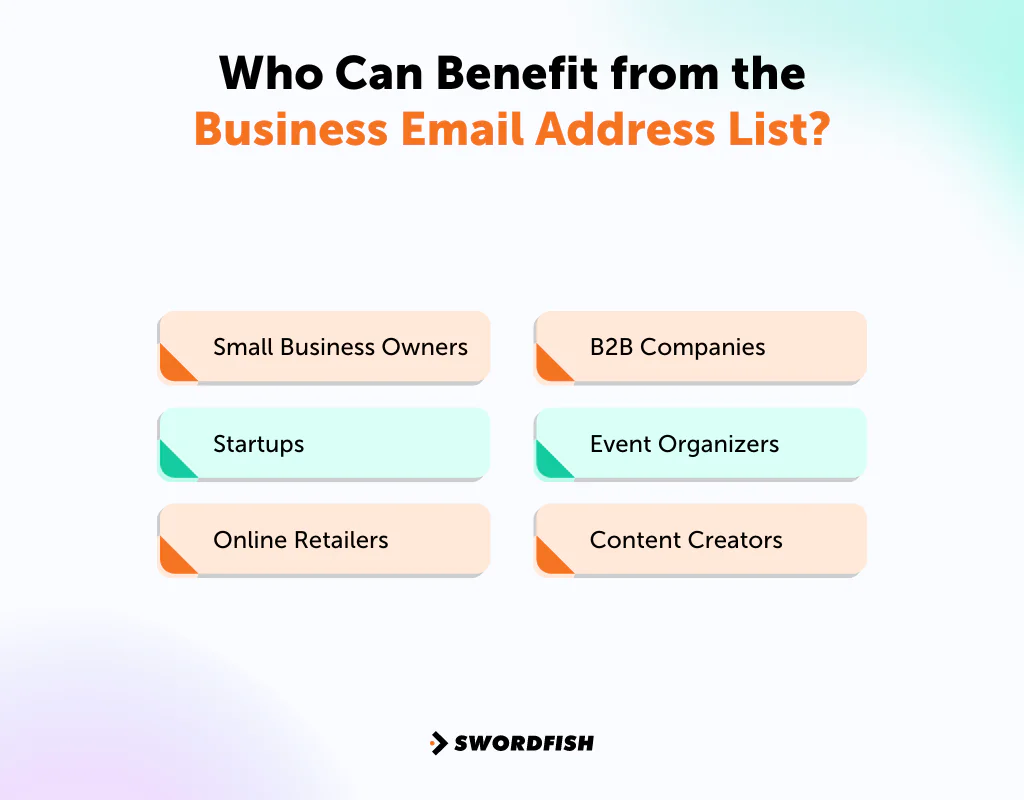
Small Business Owners
An email list lets a small business reach ideal customers directly without a large marketing budget, making it a cost-effective way to spread the word.
Startups
For startups trying to move fast, an email list offers a direct line to introduce a new product or service to a targeted audience, helping build a brand from scratch.
Online Retailers
Online sellers can send promotions, discounts, and product updates directly to people likely to buy, a more direct route to sales than broad advertising.
B2B Companies
Companies selling to other businesses can use an email list to reach decision-makers directly, share useful content, and move qualified leads through the sales funnel.
Event Organizers
An email list keeps potential attendees informed about upcoming events, ticket sales, and other updates, helping ensure strong attendance.
Content Creators
Bloggers, YouTubers, and podcasters can use a B2B email list to share new content with subscribers and grow their audience over time.
How Can You Make the Most of Business Email Lists Effectively?
Owning a good list is only half the job. Here’s how to actually use one well:
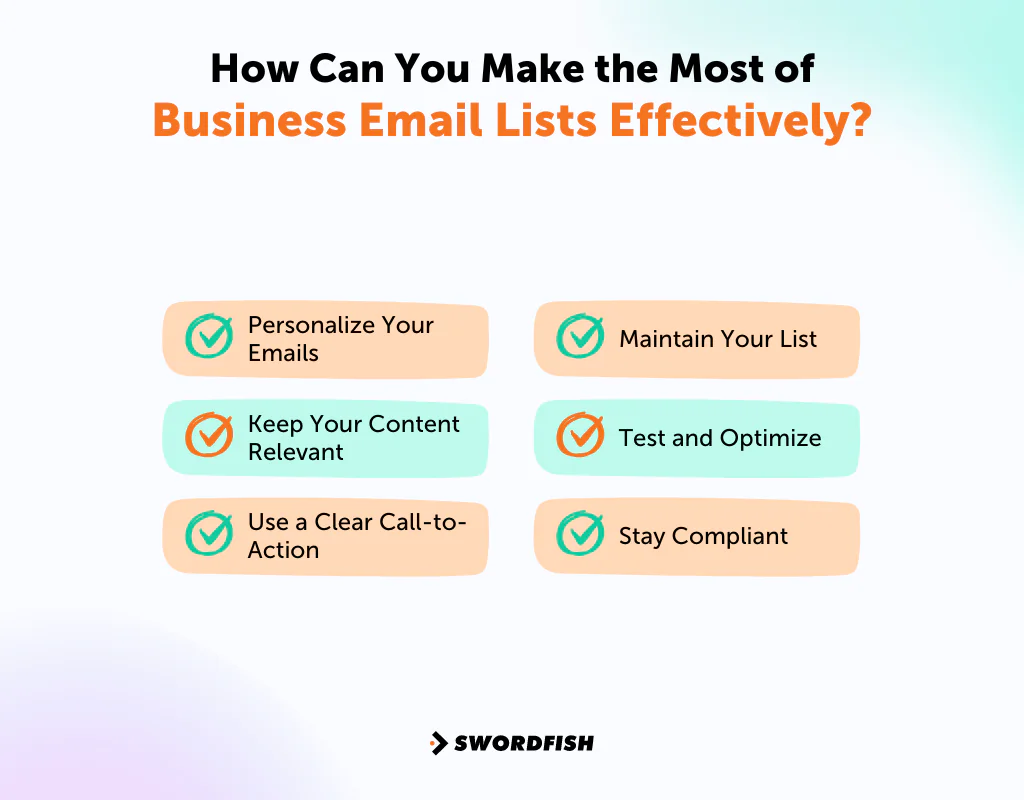
Personalize Your Emails
Treat recipients like real people. Use their names and tailor messages to their interests or needs. Personalized emails tend to get better responses because they feel relevant.
Keep Your Content Relevant
Only send emails that add value, whether that’s an offer, useful information, or a product update. Irrelevant emails drive unsubscribes.
Use a Clear Call-to-Action
Every email should have one clear purpose. Decide what you want the recipient to do next and make that action easy to take.
Maintain Your List
Regularly remove inactive or unresponsive addresses. A clean list improves deliverability and keeps your messages reaching engaged people.
Test and Optimize
Try different formats, subject lines, and content. Track opens, clicks, and conversions, and adjust your approach based on what the data shows.
Stay Compliant
Follow email marketing laws, obtain consent before adding someone to your list, and include an easy way to unsubscribe in every message. This keeps you out of legal trouble and builds trust.
Conclusion
A business email list is only as useful as its accuracy and relevance. Done right, it supports sales, lead generation, and broader marketing goals without wasting your team’s time on dead ends.
If you’re looking for a place to buy business email lists, including contacts across healthcare and other specialized fields, try Swordfish AI.
Explore the tools available to find and connect with key business professionals directly.
 Try Swordfish Ai
Frequently Asked Questions
What are business email lists?
Business email lists are collections of email addresses belonging to individuals or organizations within a specific industry, profession, or demographic. They’re used for targeted marketing campaigns, outreach, and direct communication.
Can I use free email lists for marketing purposes?
It’s not recommended. Free email marketing lists are typically low quality, often containing outdated or inaccurate information, and may include contacts who never opted in to receive marketing communication.
What precautions should be taken when you purchase email lists?
Confirm compliance with relevant laws and regulations, personalize your messages, avoid spammy tactics, and prioritize building genuine relationships over volume.