

 View Products


Last updated: September 3, 2026
Crunchbase and ZoomInfo get mentioned in the same breath a lot, but they were built to solve different problems. If you’re evaluating either one for healthcare-adjacent prospecting, contact enrichment, or general B2B lead generation, it helps to know exactly where each one is strong before you commit a budget line to it.
- Crunchbase: Built around startup, funding, and investor data. It’s the better fit if you’re tracking emerging companies, M&A activity, or investment trends rather than chasing sales contacts.
- ZoomInfo: Built around B2B contact and company data. It’s the stronger option for sales and marketing teams that need direct dials, org charts, and firmographic detail to build outreach lists.
Below, we break down how the two compare on data, pricing, support, and real-world usability, and where Swordfish AI fits as an alternative if direct contact data is what you actually need.
Key Takeaways
- Data Coverage: ZoomInfo is built for B2B contact data, which makes it a better match for sales and marketing outreach. Crunchbase is stronger on company-level detail, funding history, and investor tracking.
- User Interface and Experience: Both platforms are generally easy to navigate. ZoomInfo’s interface is built around lead lists and search filters, while Crunchbase leans toward a cleaner, research-first layout that’s easier for first-time users.
- Pricing Models: ZoomInfo pricing is quoted per seat and typically requires an annual contract, which puts it out of reach for smaller teams. Crunchbase publishes self-service monthly and annual plans that are far more accessible for solo users and small businesses.
- Swordfish as an Alternative: Swordfish is one of several Crunchbase and ZoomInfo alternatives worth considering if your priority is getting a verified cell phone number or email address quickly, rather than researching a company’s funding history or org structure.
Crunchbase vs ZoomInfo: Key Comparison Table
Here’s a side-by-side look at how the two platforms differ on the basics:
|
Features |
Crunchbase |
ZoomInfo |
|
Primary Focus |
Startup, funding, and investor data | B2B contact and company data |
| Database | Company and investor profiles used by a large annual base of researchers and dealmakers |
Hundreds of millions of professional profiles and tens of millions of company profiles, per vendor-published figures |
|
API Access |
REST API and export options on paid plans | API available for integrating ZoomInfo data into a CRM |
| Trial and Free Access | Limited free access to basic company names, locations, and domains |
Offers a free trial with limited record access |
|
Target Audience |
Market researchers, investors, and startup trackers | Sales and marketing professionals |
| User Interface | Clean, research-first layout, easy for beginners |
Feature-dense but generally usable once you learn the filters |
Crunchbase vs ZoomInfo: In-depth Key Differences
Both tools show up in lead generation conversations, but they earn that spot for different reasons. Here’s a closer look at how they compare on focus, data quality, filtering, and integrations.
1. Lead Generation and Management
This is where the two platforms diverge most clearly, and it’s usually the deciding factor for which one a team actually buys.
B2B or B2C Focus
Crunchbase serves the B2B research side of the market, with an emphasis on startups, investors, and funding trends. ZoomInfo is also B2B, but its value comes from contact-level detail rather than deal or investment context.
Crunchbase:
Crunchbase is built around the venture and startup ecosystem, which makes it useful for anyone tracking market opportunities or company trajectories.
ZoomInfo:
ZoomInfo focuses on the contact and company data that sales and marketing teams need to build and prioritize outreach lists.
Data Sources and Quality
Crunchbase pulls from a mix of public filings, press coverage, and a large community of contributors who update company and funding records. ZoomInfo builds its database from web crawling, public records, and community-contributed data, refreshed on an ongoing basis.
Crunchbase:
Crunchbase’s crowd-sourced and press-based model tends to be strong on well-covered startups, though smaller or non-US companies can see delays in updates.
ZoomInfo:
ZoomInfo’s database is large by volume, but like most contact databases, a portion of records reflect historical rather than current information, so verification still matters.
Customizable Filtering and Segmentation
Crunchbase offers filtering by industry, funding stage, and geography. ZoomInfo’s filtering is built around firmographic and technographic attributes, which helps sales teams narrow down to an ideal customer profile.
Crunchbase:
Crunchbase’s segmentation is well suited to market research and investment tracking rather than sales list building.
ZoomInfo:
ZoomInfo’s filtering supports more granular targeting for sales and marketing campaigns.
Integrations with CRM and API
Crunchbase integrates with a smaller set of CRM tools, mostly useful for research and tracking workflows. ZoomInfo offers broader CRM and API integrations aimed at sales and marketing automation stacks.
Crunchbase:
Crunchbase’s integrations are geared toward research and investment tracking rather than outbound sales workflows.
ZoomInfo:
ZoomInfo’s integrations are built for sales automation and marketing execution at scale.
Does Crunchbase Provide Better Lead Generation and Management Than ZoomInfo?
Neither one is universally better. It comes down to what your team is actually trying to do:
- Crunchbase: Choose it for market research, startup tracking, and investment insight.
- ZoomInfo: Choose it for sales lead generation, contact-level B2B data, and marketing automation.
2. Data Validation and Real-time Updates
Data freshness matters more than most buyers realize until they’re working a list of contacts that turn out to be stale. Here’s how the two compare on scoring, visitor identification, and update frequency.
Lead Scoring Capabilities
Crunchbase’s scoring signals lean toward market and investment potential. ZoomInfo’s lead scoring is built around B2B sales fit, using firmographic and behavioral data to help marketing and sales teams prioritize accounts.
Crunchbase:
Crunchbase’s signals are useful for spotting investment opportunities and market movement, not for prioritizing a sales pipeline.
ZoomInfo:
ZoomInfo’s scoring is built for sales prioritization, helping teams decide which leads are worth pursuing first.
Website Visitor Identification
Crunchbase offers limited visitor identification, mostly tied to interest in specific startups. ZoomInfo has more developed visitor identification tools aimed at turning anonymous site traffic into named leads.
Crunchbase:
Crunchbase’s visitor tracking is narrow in scope and oriented toward investment interest rather than sales pipeline building.
ZoomInfo:
ZoomInfo’s visitor identification is built to help sales and marketing teams engage website visitors directly.
Real-Time Data
Crunchbase updates on a rolling basis, with fresher data for well-covered companies and possible lag for smaller or international ones. ZoomInfo emphasizes near-real-time contact and company updates for active sales use, though as with any large contact database, some records inevitably lag behind personnel changes.
Crunchbase:
Crunchbase’s update cadence favors high-profile startups and funding rounds that get press coverage quickly.
ZoomInfo:
ZoomInfo positions its refresh cycle around sales-readiness, though buyers should still verify records before relying on them for outreach.
Should You Choose Crunchbase or ZoomInfo for Data Validation and Real-Time Updates?
This decision usually comes down to what kind of \”current\” you need:
- Crunchbase: Good if you’re tracking market and investment trends and can tolerate some lag on smaller companies.
- ZoomInfo: Better suited to teams that need contact-level data close to sales-ready, with the understanding that verification is still worthwhile.
3. Convenience and Support
Ease of use, support quality, and compliance posture all factor into total cost of ownership, not just the sticker price.
Ease of Use
Crunchbase’s interface favors quick research tasks. ZoomInfo’s interface carries more depth, which suits users who need detailed segmentation but adds a learning curve for newcomers.
Crunchbase:
Crunchbase’s straightforward design makes it easy to find company and funding information without much onboarding.
ZoomInfo:
ZoomInfo’s interface holds more data and more filters, and it takes longer to master than Crunchbase, even if it’s not unintuitive once you’re familiar with it.
Customer Support
Crunchbase’s support is oriented around research and investment use cases. ZoomInfo’s support is built for enterprise sales teams working through more complex configurations.
Crunchbase:
Crunchbase’s support tends to focus on helping researchers and investors get the most out of its database.
ZoomInfo:
ZoomInfo’s support team is set up to handle more technical, integration-heavy questions from sales and marketing organizations.
Compliance with Laws
Both platforms operate under data privacy and collection regulations relevant to their respective data types, though the specifics of each company’s compliance program and any related legal history are worth checking directly with the vendor before you rely on them for a regulated workflow.
Crunchbase:
Crunchbase’s compliance focus centers on how it sources and publishes startup and investment data.
ZoomInfo:
ZoomInfo has faced scrutiny over its data collection methods in the past, so it’s worth reviewing its current privacy practices directly if compliance is a priority for your team.
Which One Provides Better User Convenience And Support: Crunchbase or ZoomInfo?
It depends on the kind of support your team is likely to need:
- Crunchbase: Good if you want an easy-to-use platform with support geared toward research tasks.
- ZoomInfo: Better if you need support for complex B2B sales and marketing tooling.
4. Pricing and Scalability
Pricing structure often ends up being the real deciding factor, especially for smaller teams weighing whether the investment pays off.
Pricing and Plans
Crunchbase offers self-service monthly and annual plans that are accessible to individuals and small teams. ZoomInfo’s pricing is quoted per seat, typically requires an annual commitment, and scales up quickly with add-ons for global data or advanced features, which is why it’s generally positioned toward larger sales organizations.
Crunchbase:
Crunchbase’s pricing is built to be approachable for startups, small businesses, and individual investors, with published monthly, annual, and enterprise tiers.
ZoomInfo:
ZoomInfo’s pricing reflects its scale and its focus on sales and marketing teams, and it’s worth requesting a detailed quote before budgeting for it.
Free Trial
Both platforms offer limited free access, but at different depths that match their respective audiences.
Crunchbase:
Crunchbase’s free tier gives a basic look at company and funding data, enough for casual research but limited for serious prospecting.
ZoomInfo:
ZoomInfo’s trial gives a narrow look at its contact database, mainly useful for evaluating fit before a larger commitment.
Scalability
Crunchbase scales reasonably well for startups and small-to-mid-sized businesses. ZoomInfo is built to scale with larger sales organizations that need volume and depth.
Crunchbase:
Crunchbase’s tools and pricing tiers track with the growth stages of smaller companies.
ZoomInfo:
ZoomInfo’s database and feature set are built to handle the volume that larger sales teams require.
Which One is Affordable and Flexible Between Crunchbase and ZoomInfo?
It comes down to budget and scale:Crunchbase: Better for startups and small businesses that want affordable access to company and investment data.ZoomInfo: Better for larger organizations that need a scalable, contact-heavy sales tool and can absorb the cost.
5. Limitations
Crunchbase
Crunchbase is a solid resource for startup and investment research, but it has real limits:
- Focused Data Range: Its specialization in startups, venture capital, and funding data can be a limitation if you need broader market or industry coverage.
- Limited B2B Sales Data: Crunchbase isn’t built to compete with ZoomInfo on volume of sales leads and contact information.
- Delayed Reporting: Funding rounds and financial updates for smaller or less-covered companies can lag, which affects decisions that depend on current data.
- Less Advanced Search Filters: Its filtering and segmentation options are less granular than ZoomInfo’s.
ZoomInfo
ZoomInfo is a deep B2B database with its own set of tradeoffs:
- Cost Factor: Its pricing puts it out of reach for many small businesses and individual users.
- Data Overload: The volume and detail available can overwhelm users who are new to large B2B databases.
- Complexity in Navigation: Its feature depth means a longer learning curve for less technical users.
- Privacy Concerns: Its data collection methods, including web scraping and community-contributed contacts, have drawn privacy scrutiny in the past.
6. Reviews
Crunchbase Reviews
G2: Rated favorably by users overall\”Crunchbase basically shares, exchanges, and extracts information and insights on innovative companies and the people behind them. I was involved with Crunchbase in many projects like ML, natural language processing, and analyzing trends, and patterns of acquisition of startups, etc\”- Km R
ZoomInfo Reviews
G2: Rated highly for account-based marketing use cases\”We lean heavily on account-based marketing and this tool allows us to effectively identify the correct people in an organization. We have several different lines of business that benefit from our products. We have to have insights into our addressable market and the ZoomInfo team is always there to help us build lists based on our requirement.\”- Todd Q
Crunchbase vs ZoomInfo on Reddit
Community discussion tends to echo what shows up in formal reviews: the two tools serve different audiences and get compared mostly by people trying to decide which one fits their workflow.
Target Audience
Crunchbase comes up as a resource for startups and investors tracking deals and competitors. ZoomInfo gets mentioned more by sales professionals at established companies who need detailed B2B leads and contact information.
Data Accuracy and Reliability
Some users raise concerns about Crunchbase’s accuracy on early-stage funding data. ZoomInfo is generally seen as reliable for contact information, though users note occasional inaccuracies in company-level data.
Pricing and Accessibility
Crunchbase is often described as the more accessible option for smaller businesses or individuals. ZoomInfo is considered expensive but valued for data depth, which makes it a more common pick for larger organizations.
Functionality and Use Case
Crunchbase is treated as a tool for retrospective analysis, useful for understanding market trends and investment patterns. ZoomInfo is discussed more for its real-time lead generation and actionable company insights.
User Experience
Some users mention alternatives like PrivCo and PitchBook over Crunchbase for deeper financial reporting. ZoomInfo users appreciate its lead generation strength but mention the complexity of navigating its extensive database.
Crunchbase vs ZoomInfo: Which One Should You Choose?
 Here’s a practical way to think through the decision:
-
If You’re a Startup or Investor
Crunchbase is the better fit for tracking investments and understanding market trends relevant to early-stage companies.
-
For Established Companies Focused on Sales
ZoomInfo is the stronger choice if you’re at an established company and need detailed B2B sales leads with reliable contact information.
-
Budget Considerations
If budget is tight, Crunchbase is generally more accessible and budget-friendly for smaller businesses or individual users compared to ZoomInfo’s per-seat pricing.
-
Need for Accurate, Real-Time Leads
If real-time, actionable sales leads are the priority, ZoomInfo is the more purpose-built option, even at a higher price point.
-
Ease of Use and Data Reliability
If you want a simpler platform for investment tracking, Crunchbase is the easier pick. If you need stronger lead generation and can work through a denser interface, ZoomInfo makes more sense.
Swordfish AI: The Best Alternative of Crunchbase and ZoomInfo
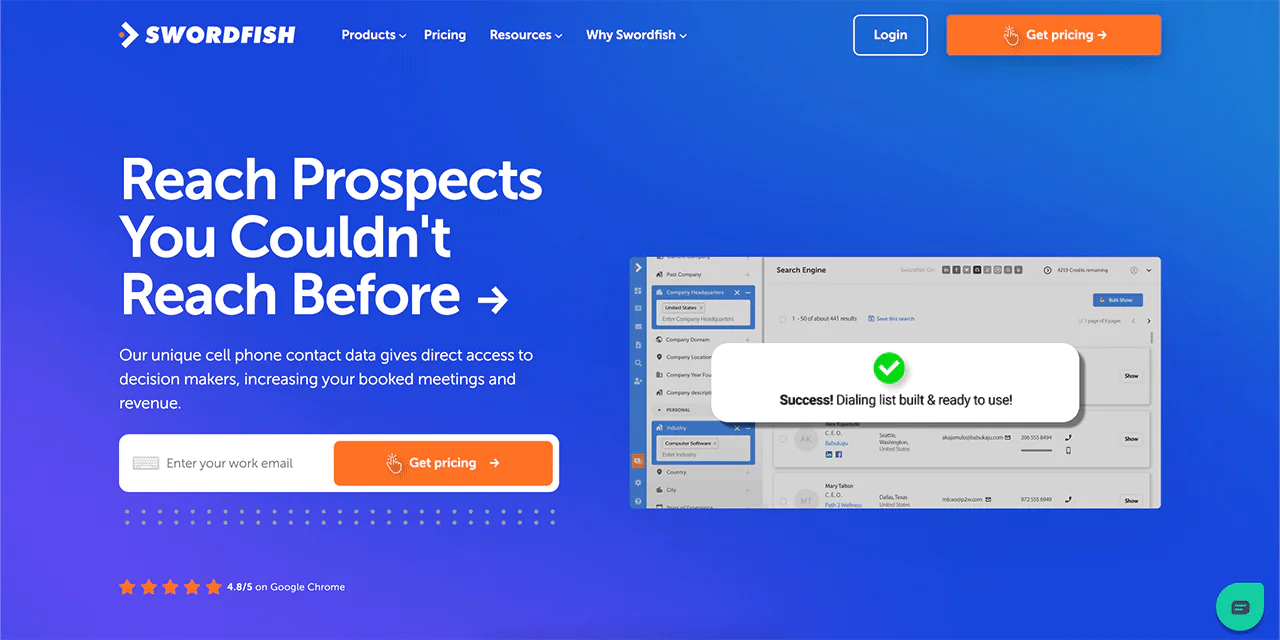 Swordfish AI takes a different approach than either Crunchbase or ZoomInfo. Instead of leading with company research or a broad B2B database, it’s built around getting to a specific person’s cell phone number or email address quickly, which matters for sales and recruitment teams working direct outreach, including in healthcare settings where verified mobile numbers can be hard to find through general-purpose databases.Swordfish validates phone numbers in real time to confirm they’re active before you dial, rather than relying only on historical records.Swordfish AI’s core tools include a Chrome Extension, a Prospecting tool, and a file upload feature for enriching existing lists. These are built around finding leads and filling in gaps in an existing CRM rather than researching companies from scratch.The platform also includes Bombora® Intent Data, which helps surface businesses showing buying signals for a given product or service.Here’s a closer look at the individual features:
Chrome Extension
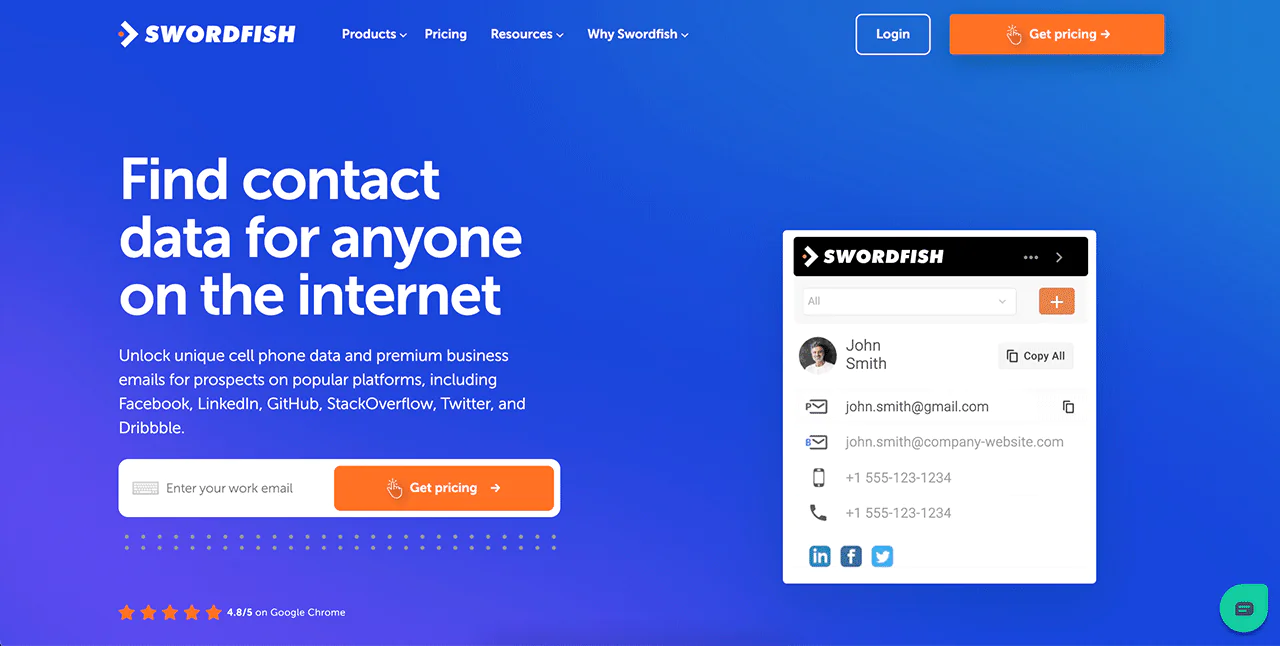 This feature lets you find verified contact information across various online platforms without leaving your browser, which speeds up lead sourcing.
API Integration
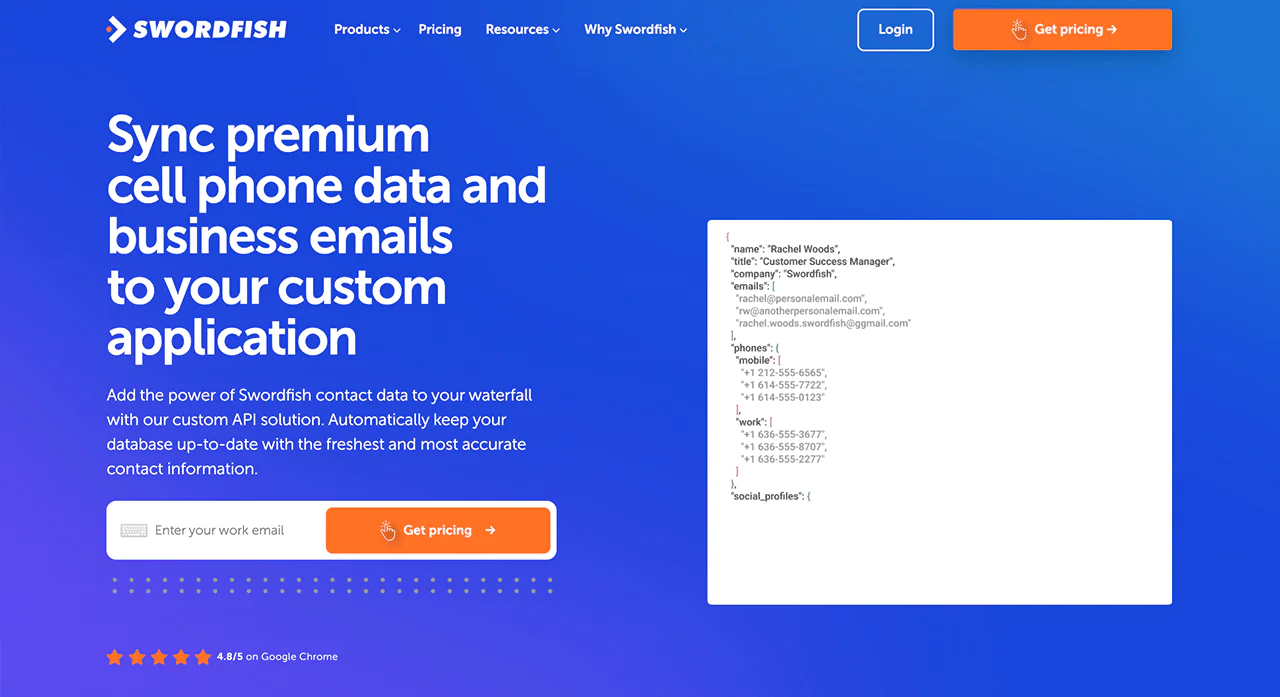 Swordfish AI’s API Integration lets you pull contact data directly into your existing systems or applications.
Prospector Tool
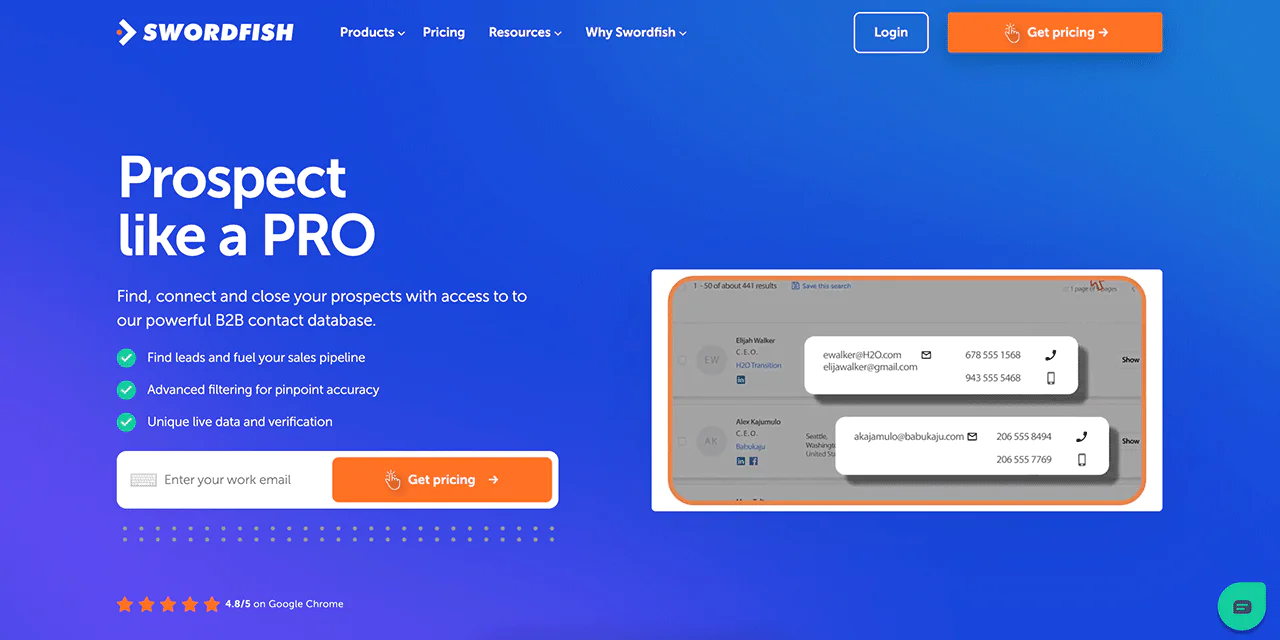 You can build targeted dialing and email lists using advanced filters, which is useful for building outreach lists at scale.
File Upload Feature
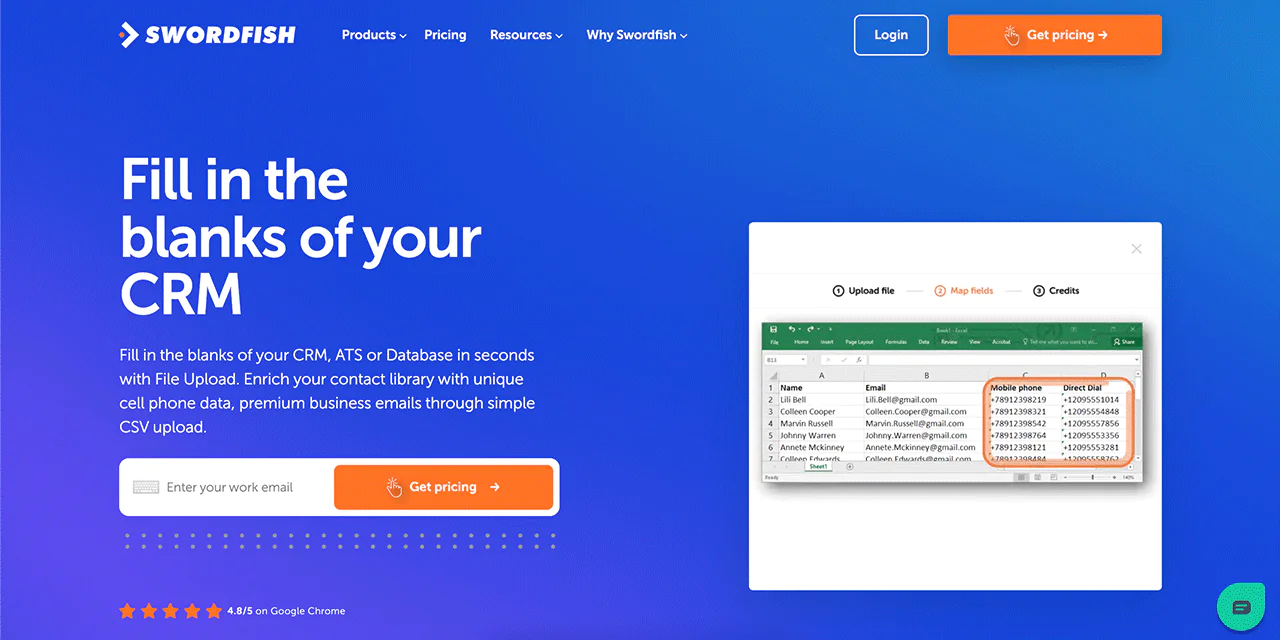 This lets you enrich your CRM databases by filling in missing cell phone numbers and emails, which cuts down on manual research.
Reverse Search
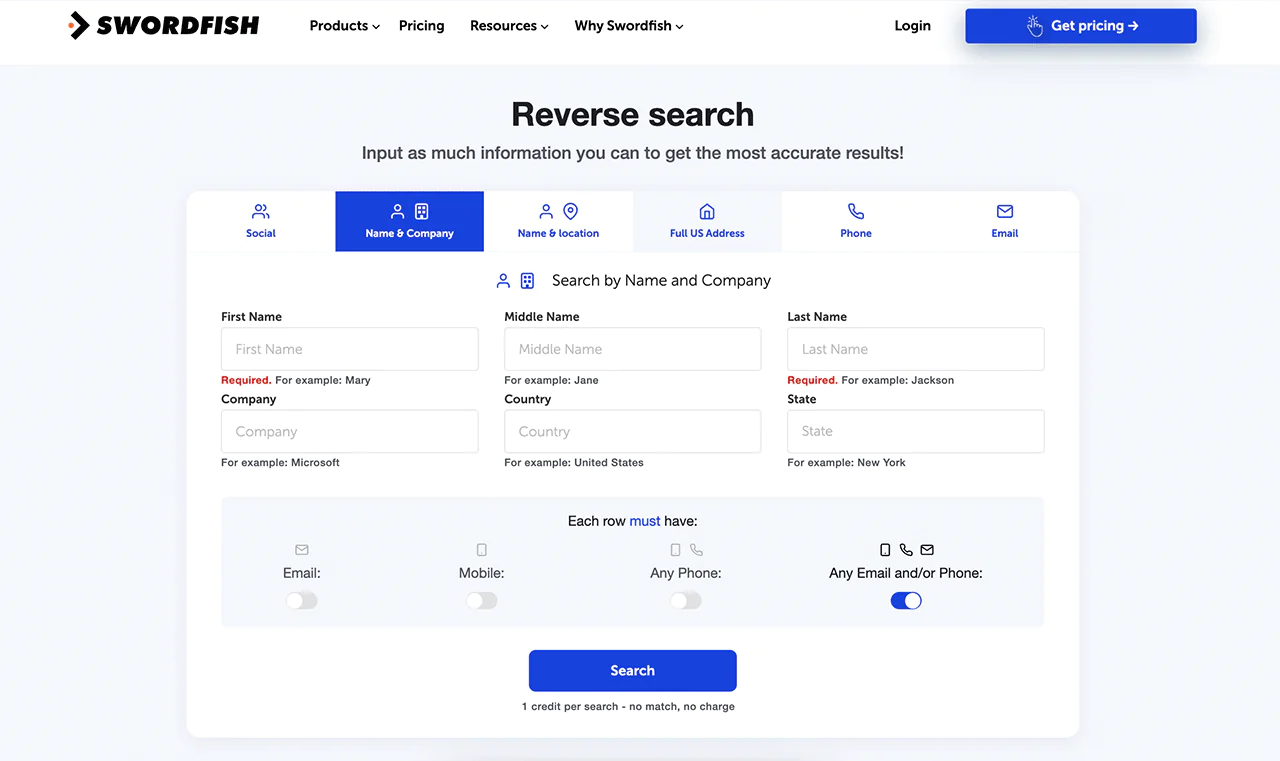 Swordfish AI’s Reverse Search feature lets you find complete contact information starting from a partial data point, whether that’s a name, number, or email.
Bombora Intent Data
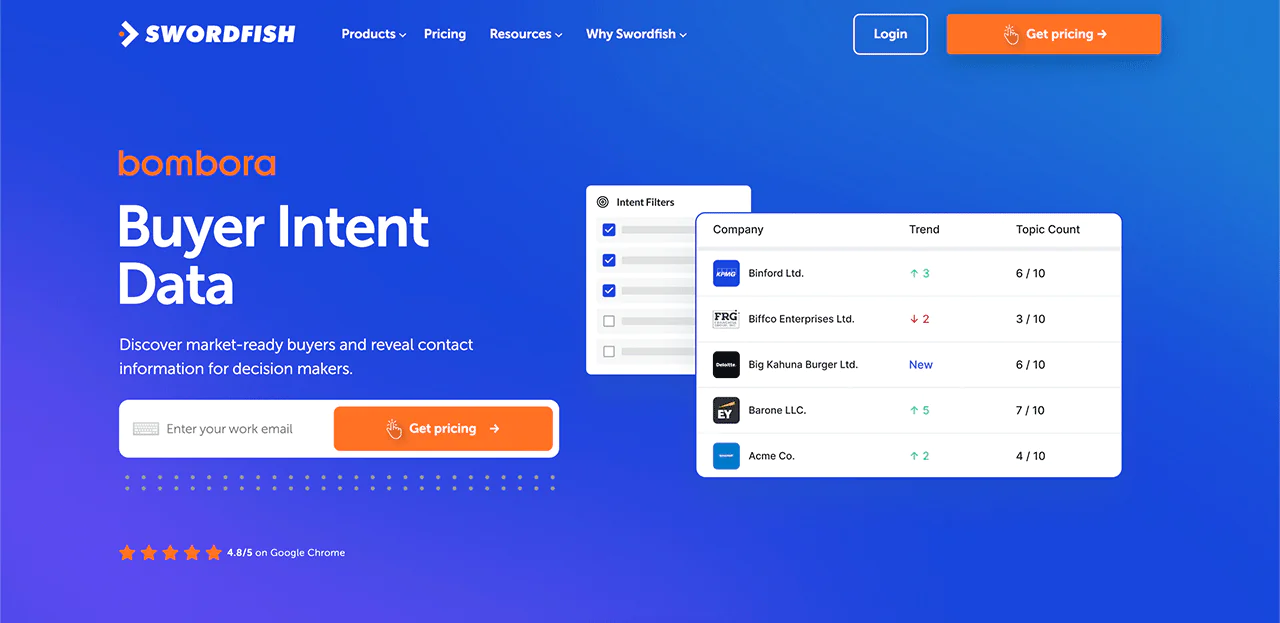 Bombora Intent Data in Swordfish AI surfaces businesses showing signals that they’re ready to buy, which helps prioritize outreach toward accounts already in-market.
Pricing
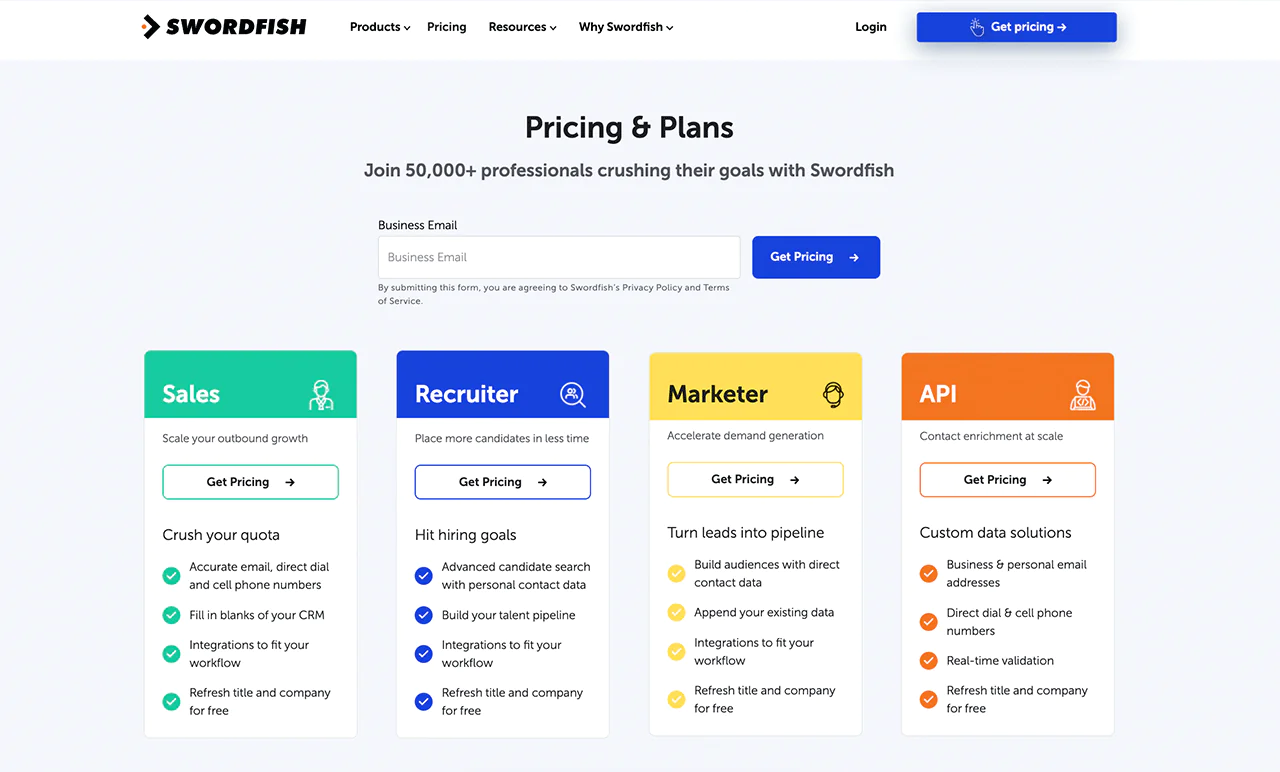
Comparison Table of Crunchbase vs ZoomInfo vs Swordfish AI
Here’s how the three tools stack up side by side:
|
Features |
Crunchbase | ZoomInfo |
Swordfish AI |
|
Database |
Company, funding, and investor profiles | Large B2B contact and company database | Direct contact data with an emphasis on verified cell phone numbers |
| User Interface | Clean, intuitive layout, easy for beginners. | Feature-dense, better once you learn the filters |
Simplified interface built for direct access |
|
Data Sources |
Press coverage, filings, and community contributions | Public records, business websites, and web crawling | Multiple contact data sources with real-time line connectivity validation |
| Target Audience | Market researchers, investors, startup trackers | Sales and marketing professionals |
Sales and recruitment professionals |
|
API Access |
REST API and export on paid plans | API for integrating data into a CRM | Integrates contact data directly into applications |
| Data Enrichment | Company and funding record enrichment | CRM lead and contact enrichment with B2B firmographic detail |
Contact enrichment with real-time validation |
Crunchbase vs ZoomInfo vs Swordfish: Which One Should You Pick?
 Each of these three tools has a clear lane. Here’s how to think about which one fits your situation.
Crunchbase
If you’re an entrepreneur, startup, or investor, Crunchbase is the natural starting point. It’s strong on funding rounds, investor activity, and market context. It’s the right tool when your work is centered on tracking the startup ecosystem rather than closing sales.
ZoomInfo
ZoomInfo is built for sales and marketing professionals at established businesses who need contact-level B2B data and company detail to build pipeline. Its database size and filtering depth make it a strong choice if you have the budget for it.
Swordfish AI
Consider Swordfish AI if direct access to a decision-maker’s cell phone number or email is the actual bottleneck. It’s a practical fit for sales and recruitment teams that need verified contact details fast, with real-time validation built into the workflow.
Conclusion
Crunchbase and ZoomInfo solve different problems, and that’s really the whole comparison. If you’re doing startup research or chasing investment opportunities, Crunchbase is the better fit. If you’re in sales or marketing and need B2B contact data at scale, ZoomInfo is the more suitable choice. And if what you actually need is a verified phone number or email for a specific person, it’s worth trying Swordfish AI alongside either platform rather than instead of them.  Try Swordfish Ai
FAQs
Is Crunchbase better for startups than ZoomInfo?
Yes, for startup research specifically. Crunchbase’s depth on funding, investors, and market trends makes it more relevant to entrepreneurs and early-stage companies than ZoomInfo.
Can ZoomInfo help in lead generation for sales?
Yes, ZoomInfo is built for lead generation. Its large database of B2B contacts and company information is designed to help sales teams identify and reach potential customers.
Does Crunchbase offer contact information like ZoomInfo?
Crunchbase offers some contact information, but it’s not built for that purpose the way ZoomInfo is. Crunchbase’s strength is company and funding data, not contact-level detail.