
 View Products


Last updated: September 3, 2026
If you’re weighing 6sense against ZoomInfo for your sales and marketing intelligence stack, the decision comes down to what kind of signal you actually need: predictive buyer intent or a deep, searchable contact database.
6sense is built around AI-driven account intelligence, best known for surfacing buyers who are researching a solution before they raise their hand. ZoomInfo is built around scale, with a large contact and company database aimed at direct outreach.
Neither tool is a universal fit. Below, we break down where each one holds up, where it falls short, and where a contact-data specialist like Swordfish AI fits into the picture for teams that need to reach people directly rather than just identify accounts.
Key Takeaways
- Database and Data Quality: 6sense centers its value on AI-powered account and intent signals rather than raw contact volume, while ZoomInfo leans on a large, continuously refreshed contact and company database with real-time signals.
- Unique Features and Capabilities: 6sense specializes in AI-driven “Dark Funnel™” insights that surface anonymous buying behavior, while ZoomInfo provides real-time buying signals paired with detailed firmographic and technographic search.
- Pricing Models: 6sense uses custom, quote-based pricing tied to account volume, while ZoomInfo’s cost depends on chosen modules, licenses, and credit allotments.
- Best Alternative Consideration: Swordfish AI, known for direct access to decision-makers through cell phone and email data, is a practical alternative when the goal is reaching a specific person rather than modeling account intent.
6sense vs ZoomInfo: Key Comparison Table
Both tools sit in the sales intelligence category, but they solve different problems. One is oriented toward predicting who’s in-market; the other toward giving you a name, title, and way to reach them. Here’s how they compare across the aspects that matter most when you’re picking a platform.
|
Aspect |
6sense |
ZoomInfo |
|
Database Quality |
Over 250 million B2B profiles across 200+ countries. | Over 260 million published professional profiles and extensive company data. |
| Sales Intelligence | Specializes in going through anonymous buying signals and predictive analytics. |
Provides comprehensive insights into companies and professionals, with a focus on direct contact data. |
|
Market Trends |
Strong in identifying market trends through intent data and AI-driven insights. | Offers detailed market insights but with a stronger emphasis on individual company and contact data. |
| Chrome Extension | Offers a Chrome extension for immediate access to buyer intent data and outreach info. |
Provides a Chrome extension for easy access to contact information and company profiles. |
|
Intent Data |
Focuses on identifying buyer intent using AI and predictive analytics. | Provides intent data but with a stronger emphasis on direct contact and company information. |
| Integrations | Integrates with various sales, marketing, and operations platforms like – Drift, Bombora, Outreach, Salesloft, etc. |
Offers flexible integration with popular CRM, marketing, and sales platforms like Pipedrive, Zoho, Salesforce, HubSpot, and Dynamics 365, etc. |
|
Target Audience |
Ideal for businesses focusing on account-based marketing and predictive sales strategies. | Suited for a wide range of businesses, especially those needing detailed contact and company data. |
| User Interface | Known for a user-friendly interface with easy access to insights and data. |
Offers a comprehensive interface, though it can be complex for beginners. |
6sense vs ZoomInfo: In-depth Key Differences
Both platforms show up constantly in RevOps and marketing conversations, but they aren’t interchangeable. The differences show up most clearly in how each one sources data, how customizable the targeting is, and how deeply each connects into the rest of your stack.
1. Lead Generation and Management
Here’s how the two platforms compare on lead generation and management specifically.
|
Aspect |
6sense |
ZoomInfo |
|
B2B or B2C Focus |
Primarily B2B, with a strong emphasis on account-based marketing and predictive analytics. | Strongly B2B-focused, excelling in detailed contact information for direct outreach. |
| Data Sources and Quality | Utilizes a combination of proprietary AI, intent data, and third-party sources for comprehensive insights. |
Sources data from a wide range of channels, including public records and web scraping, for extensive coverage. |
|
Customizable Filtering and Segmentation |
Advanced filtering based on intent data and predictive models, customized for targeted marketing strategies. | Offers a variety of customizable filtering options, including firmographics and technographics, for precise audience targeting. |
| Integrations with CRM and API | Easy integration with major CRM and marketing automation platforms, improving data utilization and strategy alignment. |
Strong integration capabilities with popular CRM systems, enriching sales and marketing ecosystems with detailed data. |
Here’s a closer look at each of those points.
B2B or B2C Focus
6sense is built for B2B markets and leans hard into account-based marketing and predictive analytics. ZoomInfo also targets B2B buyers, but its edge is the depth of contact information it can surface for lead generation.
6sense:
6sense is personalized mainly for B2B markets, excelling in account-based marketing and predictive analytics. This focus makes it a strong tool for businesses targeting other businesses, offering insights into buyer behavior and needs.
ZoomInfo:
ZoomInfo also targets the B2B sector but stands out with its extensive contact information. It’s particularly useful for businesses that rely on direct outreach and lead generation, providing detailed profiles for effective targeting.
Data Sources and Quality
6sense blends AI, intent data, and third-party sources into its lead data. ZoomInfo sources from public records and web scraping to build out its business contact coverage.
6sense:
6sense combines AI, intent data, and third-party sources to offer a well-rounded view of potential leads. This approach ensures a blend of accuracy and depth in the data provided.
ZoomInfo:
The tool sources its data from a variety of channels, including public records and web scraping, resulting in a vast and diverse database. This means ZoomInfo can offer extensive coverage of business contacts and companies.
Customizable Filtering and Segmentation
6sense’s filtering leans on intent data for targeted marketing. ZoomInfo’s filtering leans on firmographics and technographics for precise audience targeting.
6sense:
6sense shines in customizable filtering, using intent data and predictive models to help businesses target their marketing efforts effectively. It helps you get a more personal approach to reaching potential customers.
ZoomInfo:
ZoomInfo provides a range of filtering options, including firmographics and technographics, enabling precise audience targeting. It’s easier for businesses to find the exact type of leads they are looking for.
Integrations with CRM and API
6sense connects cleanly with major CRM and marketing automation platforms, while ZoomInfo enriches CRM systems with detailed contact and company data for sales and marketing.
6sense:
6sense offers smooth integration with major CRM and marketing automation platforms, increasing data alignment and strategies. For businesses who are looking to organize their marketing efforts, integration is important for them.
ZoomInfo:
ZoomInfo also offers strong integration capabilities with popular CRM systems, enriching sales and marketing ecosystems with detailed data. This makes it a valuable tool for businesses that want to improve their existing sales processes.
Does 6sense Provide Better Lead Generation and Management Than ZoomInfo?
6sense:
If your focus is on understanding and predicting buyer behavior through intent data and analytics, then 6sense is the better fit.
ZoomInfo:
If you need detailed contact information for direct outreach and lead generation, especially in B2B scenarios, ZoomInfo is more suitable.
2. Data Validation and Real-time Updates
Stale data quietly wrecks pipeline. 6sense and ZoomInfo both address this, but from different angles: one tracks buying intent in real time, the other keeps contact records current.
|
Aspect |
6sense | ZoomInfo |
| Lead Scoring Capabilities | Utilizes predictive analytics and intent data for scoring leads, focusing on buyer readiness. |
Scores lead based on detailed contact information and company profiles. |
|
Website Visitor Identification |
Identifies potential leads by tracking digital behavior, offering insights into buyer interests. | Tracks website visitors and provides detailed behavioral insights for targeted engagement. |
| Real-Time Data | Offers real-time updates on buyer intent, keeping data relevant for market trends. |
Provides real-time updates, ensuring contact information and company profiles are current. |
Here’s a closer breakdown of each of those pieces.
Lead Scoring Capabilities
6sense scores leads with predictive analytics focused on buyer readiness. ZoomInfo scores leads using the depth of its contact and company profiles.
6sense:
6sense specializes in scoring leads by leveraging predictive analytics and intent data. This approach helps in identifying potential customers who are most likely ready to make a purchase, based on their online behavior and engagement. It’s about predicting who will buy and when.
ZoomInfo:
ZoomInfo, in contrast, uses its extensive database to score leads. It focuses on the richness of contact information and company profiles. The method is effective for businesses looking to directly reach out to leads with detailed background information.
Website Visitor Identification
6sense tracks digital behavior to flag visitors worth pursuing. ZoomInfo goes a level deeper on visitor detail, tracking specific page views and engagement duration.
6sense:
6sense identifies website visitors by tracking their digital behavior, offering insights into what they are interested in. It will help businesses understand potential leads and personalize their marketing strategies accordingly.
ZoomInfo:
ZoomInfo also tracks website visitors but provides more detailed behavioral insights. This includes which pages visitors checked and how long they stayed, offering a deeper understanding of visitor engagement.
Real-Time Data
6sense’s real-time strength is buyer intent tracking. ZoomInfo’s real-time strength is keeping contact and company records current.
6sense:
6sense provides real-time updates on buyer intent, ensuring that the data reflects current market trends and interests. The feature allows businesses to quickly adapt their strategies to changing market conditions.
ZoomInfo:
The tool also offers real-time data updates, but its focus is more on keeping contact information and company profiles up-to-date. It makes sure that businesses always have the most current information for outreach and lead generation.
Should You Choose 6sense or ZoomInfo for Data Validation and Real Time Updates?
There’s no universal winner here; it depends on what “current” means for your use case.
6sense:
If you need AI-driven insights and a focus on B2B data, 6sense is a strong choice. It’s great for understanding market behavior and targeting.
ZoomInfo:
Choose ZoomInfo if you want a vast database with direct contact information. It’s ideal for detailed company and professional profiles.
3. Convenience and Support
Ease of use and support quality matter just as much as feature lists once a team is actually living inside a tool every day. Here’s how 6sense and ZoomInfo compare.
|
Feature |
6sense | ZoomInfo |
| Ease of Use | Integrates perfectly with popular sales and marketing tools, offering a user-friendly interface. |
Known for its comprehensive database, but may require more time to navigate due to the vast amount of data. |
|
Customer Support |
Offers good support with a focus on helping users leverage AI and data insights effectively. | Provides extensive customer support, with resources for troubleshooting and maximizing the platform’s capabilities. |
| Compliance with Laws | Adheres to global regulations, ensuring data security and privacy. |
Complies with major data privacy laws, offering transparency and control over data usage. |
Let’s break each of those down.
Ease of Use
6sense keeps its interface simple to reduce friction around AI insights and B2B data. ZoomInfo’s database is deep enough that new users often need time to learn its filtering logic.
6sense:
6sense offers a user-friendly interface that integrates well with popular sales and marketing tools. It’s designed to simplify the process of accessing AI-driven insights and B2B data, making it easier for users to target and understand market behavior.
ZoomInfo:
ZoomInfo offers a comprehensive database that provides detailed company and professional profiles. However, navigating this vast amount of data might require more time and effort, potentially making it less straightforward for new users.
Customer Support
6sense’s support is oriented toward helping teams get value from AI and data insights. ZoomInfo’s support is built around helping users navigate a much larger platform footprint.
6sense:
6sense provides solid customer support, focusing on helping users effectively leverage AI and data insights. Their support system guides users in utilizing the platform’s advanced features for market analysis and targeting.
ZoomInfo:
ZoomInfo also offers extensive customer support, with various resources available for troubleshooting and maximizing the platform’s capabilities. They ensure users can fully utilize the database and features for their business needs, offering guidance and assistance when needed.
Compliance with Laws
Both vendors publicly commit to GDPR and CCPA alignment, though the specifics of certifications and audits are worth confirming directly with each vendor before you sign a contract, especially if you’re handling regulated data categories like healthcare contact information.
6sense:
6sense adheres to global regulations, ensuring data security and privacy. They actively comply with laws like GDPR and CCPA, focusing on responsible data sourcing and strict consent rules. This commitment reflects their dedication to providing secure and valuable services.
ZoomInfo:
ZoomInfo also complies with major data privacy laws, offering transparency and control over data usage. They ensure their data collection and protection practices meet legal standards, providing users with a platform that respects privacy and adheres to regulatory requirements.
Which One Provides Better User Convenience And Support: 6sense or ZoomInfo?
Again, it depends on what you’re optimizing for.
6sense:
This is ideal if you’re seeking a platform with a user-friendly interface and solid integration with other sales and marketing tools. It’s particularly suited for those who value AI-driven insights and B2B data for strategic decision-making.
ZoomInfo:
ZoomInfo is a strong choice for users who need a comprehensive database with detailed company and professional profiles and are adept at navigating through extensive data.
4. Pricing and Scalability
Neither vendor publishes flat rate cards, so budgeting requires a conversation with sales in both cases. Here’s the general shape of how each one structures plans.
|
Feature |
6sense | ZoomInfo |
| Pricing and Plans | 6sense offers a variety of plans including Free, Team, Growth, and Enterprise options, helping different business sizes and needs. |
ZoomInfo provides tiered pricing with Standard, Preferred, and Premium plans, each offering different levels of features and access. |
|
Free Trial |
Provides a free plan with limited features, allowing users to find basic functionalities. | Typically does not offer a free trial, focusing on customized solutions based on business requirements. |
| Scalability | Designed to scale with businesses, offering plans that help small teams up to large enterprises. |
Highly scalable, suitable for businesses of all sizes, with a focus on providing comprehensive data solutions. |
Here’s the detail behind each row.
Pricing and Plans
6sense structures its offer around Free, Team, Growth, and Enterprise tiers. ZoomInfo structures its offer around Standard, Preferred, and Premium tiers.
6sense:
6sense pricing offers a range of plans, including Free, Team, Growth, and Enterprise, making it a versatile choice for businesses of various sizes. The free plan is a great starting point for small teams or individuals, while the more advanced plans are useful for larger organizations with more complex needs. This tiered approach allows businesses to scale up as they grow.
ZoomInfo:
ZoomInfo pricing provides Standard, Preferred, and Premium plans. Each plan is designed to meet different levels of business requirements, from basic data access in the Standard plan to more comprehensive features in the Premium plan. ZoomInfo’s structure is ideal for businesses looking for a personalized solution that can grow with them.
Free Trial
6sense offers a limited free plan; ZoomInfo generally skips a free trial in favor of a customized sales process.
6sense:
6sense stands out with its free plan, offering basic functionalities without any cost. This plan is particularly beneficial for small businesses or startups that are just beginning to find business intelligence tools. It allows users to test the waters before committing financially.
ZoomInfo:
In contrast, ZoomInfo typically does not offer a free trial. Instead, it focuses on providing customized solutions based on the unique needs of each business. This approach is well-suited for organizations that already have a clear understanding of their requirements and are ready to invest in a comprehensive data solution.
Scalability
Both platforms are built to grow with a business, just through different tier structures.
6sense:
6sense is designed with scalability in mind. Its variety of plans from Free to Enterprise ensures that as a business grows, its data intelligence capabilities can grow too. This makes 6sense a practical choice for businesses at any stage of their growth journey.
ZoomInfo:
ZoomInfo also offers excellent scalability with its tiered plans. Whether a business is small, medium-sized, or large, ZoomInfo has a plan to fit its needs. Its focus on providing comprehensive data solutions makes it a reliable choice for businesses looking to expand their market reach and grow their operations.
Which One is Affordable and Flexible Between 6sense and ZoomInfo?
Budget and stage of growth usually decide this one.
6sense:
If you’re starting small or have a limited budget, 6sense might be more suitable. Its free plan offers basic features, making it accessible for startups or small teams. As your business grows, you can scale up to more comprehensive plans.
ZoomInfo:
For businesses looking for a more customized solution and ready to invest in a comprehensive data platform, ZoomInfo’s tiered plans (Standard, Preferred, Premium) are ideal. It’s a good fit if you need a plan that grows with your expanding business needs.
5. Limitations
No platform in this category is complete on its own. Here are the practical limitations worth knowing before you commit budget.
6sense
- Limited Free Features: The free plan of 6sense offers only basic functionalities, which might not be sufficient for advanced marketing and sales needs.
- Complexity for Beginners: The platform’s advanced features, driven by AI and machine learning, can be complex for beginners or small teams without specialized knowledge.
- Integration Challenges: While 6sense integrates with many sales and marketing tools, some users might face challenges in integrating it smoothly with their existing tech stack.
ZoomInfo
- No Free Trial: ZoomInfo typically does not offer a free trial, which can be a barrier for businesses wanting to test the platform before committing.
- Data Overload: The vast amount of data available on ZoomInfo can be overwhelming and may require more time to navigate effectively, especially for new users.
- Cost Factor: Being a premium service with customized solutions, ZoomInfo might be cost-prohibitive for small businesses or startups with limited budgets.
6. Reviews
6sense Reviews
- G2 review: 4.4/ 5 (725 reviews)
‘The data uncovered by Revenue AI, along with the Sales Intelligence feature, is absolutely amazing for understanding how your marketing is actually doing. It takes so much of the guesswork out of revenue attribution, and helps facilitate a more harmonious Sales<>Marketing alignment (which is critial when running a multi-threaded ABM approach).I could not recommend this feature enough.’ – Katya Z
- Capterra review: 4.7/5 (20 reviews)
‘Amazing company with top notch support to go with it. The CSM feels like an extension of the internal team’. – Jaimie B.
ZoomInfo Reviews
- G2 review: 4.4/5 (7867 reviews)
“We lean heavily on account based marketing and this tool allows us to effectively identify the correct people in an organization. We have several different lines of business that benefit from our products. We have to have insights into our addressable market and the ZoomInfo team is always there to help us build lists based on our requirement.” – Todd Q.
- Capterra review: 4.1/5 (279 reviews)
“In order to help the organization improve its marketing efforts and promote increased marketability, ZoomInfo has changed the rules of the game. One of ZoomInfo’s greatest strengths is its all-in-one system, which provides the ability to manage all marketing channels and campaigns in one place, from social media to email marketing.”- Daniel C.
6sense vs ZoomInfo on Reddit
Vendor marketing tells one story; forum threads tell another. Here’s what surfaces most often in practitioner discussions of both tools.
6sense: User Experiences and Applications
Reddit users have shared mixed experiences with 6sense. Many appreciate its accurate data on company online activities related to specific keywords, which is particularly useful for targeted marketing efforts.However, some users find the platform complex, especially for beginners or smaller teams. The integration with other tools like Marketo and Salesforce is mentioned as a positive aspect.Despite these benefits, there are concerns about the tool’s effectiveness in lead generation, with some users expressing dissatisfaction with the quality of leads generated.You can find out real user opinions and experiences by checking out various 6sense reviews.
ZoomInfo: User Feedback and Effectiveness
ZoomInfo, as discussed on Reddit, is often praised for its extensive database and accurate contact information. Users find it particularly valuable for accessing direct dials and emails, which significantly aids in sales prospecting.However, there are mentions of the data being occasionally outdated, especially regarding recent job changes.The platform’s cost is a recurring topic, with some users questioning its value for money, especially for smaller businesses or those with limited budgets.Despite this, ZoomInfo’s ease of use and integration capabilities with CRM systems are highlighted as strong points.
Final Verdict: Choosing Between 6sense and ZoomInfo
Deciding between 6sense and ZoomInfo hinges on specific business requirements and priorities in data-driven marketing and sales strategies.
- 6sense: Best for businesses seeking detailed, AI-driven insights and smooth integration with existing sales and marketing tools.
- ZoomInfo: Ideal for companies needing a vast, easily navigable database with comprehensive contact information for sales prospecting.
6sense vs ZoomInfo: Which One Should You Choose?
Here’s a practical checklist for narrowing the decision down.
Choose 6sense if:
- You Need AI-Driven Insights: If your focus is on deep, AI-powered market analysis, 6sense is your go-to tool.
- B2B Data is Crucial: For businesses that rely heavily on B2B interactions, 6sense offers valuable data and insights.
- Integration with Sales and Marketing Tools: If you require smooth integration with your existing sales and marketing ecosystem, 6sense fits well.
- Predictive Analytics is a Priority: When predictive analytics for market behavior is key, 6sense should be your choice.
Choose ZoomInfo if:
- You Want Extensive Contact Databases: If direct contact information is what you need, ZoomInfo’s vast database is ideal.
- Detailed Company Profiles are Essential: For in-depth company and professional profiles, ZoomInfo is the better option.
- Ease of Navigation Matters: If you prefer a tool that’s straightforward to navigate, despite its extensive data, go for ZoomInfo.
- Sales Prospecting is Your Main Goal: ZoomInfo is particularly effective for sales prospecting and market research.
Key Considerations:
- Feature Requirements: Assess whether AI-driven insights or extensive contact databases align more with your needs.
- Team Size and Usage: Consider which tool better suits your team’s size and how they will use it.
- Integration Capabilities: Check which tool integrates more perfectly with your current tech stack.
- Pricing and Budget: Evaluate which tool offers a pricing plan that aligns with your budget constraints.
- Complexity vs. Simplicity: Decide if you prefer the complexity of AI-driven tools or the simplicity of extensive databases.
Best Ways to Choose:
- Evaluate Your Business Needs: Clearly define what you expect from a business intelligence tool.
- Consider User Feedback: Look at reviews and feedback from current users to gauge real-world effectiveness.
- Test with Free Trials/Demos: If available, use free trials or demos to get a hands-on feel for each tool.
- Consult with Your Team: Involve your team in the decision-making process, especially those who regularly use the tool.
Swordfish AI: The Best Alternative of 6sense and ZoomInfo
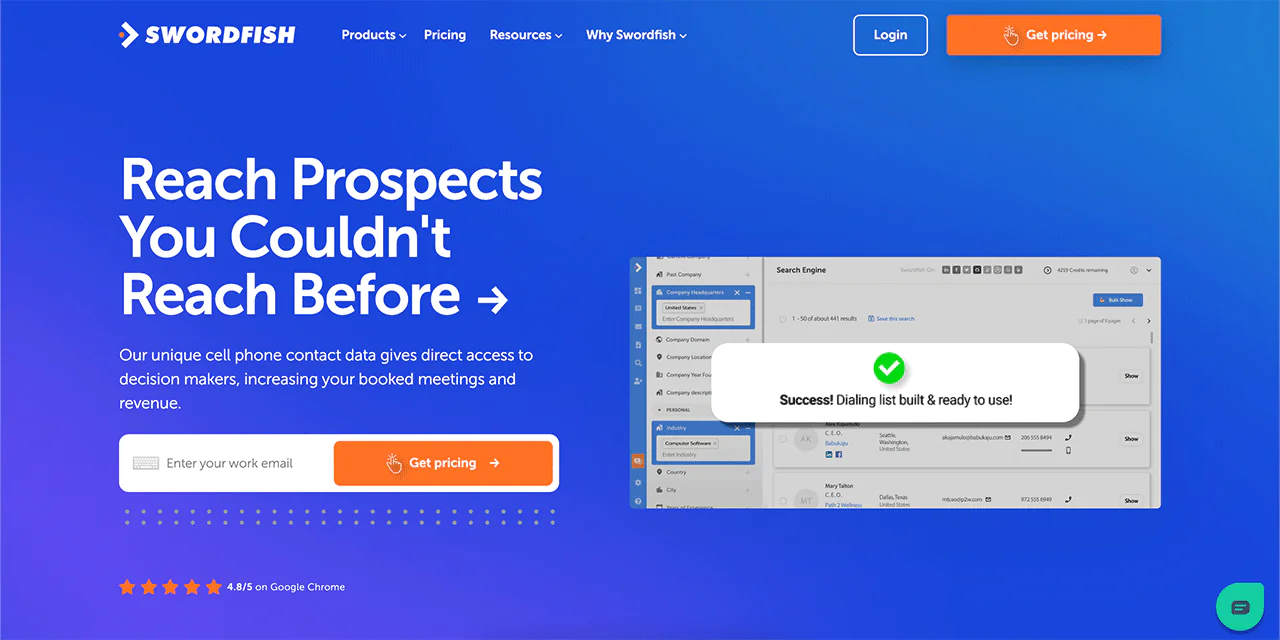
Neither 6sense nor ZoomInfo was purpose-built for the healthcare vertical, where reaching a specific clinician, administrator, or practice owner directly, often by cell phone, matters more than modeling account-level intent. That’s the gap Swordfish AI is built to close.
Swordfish AI blends key features of both categories into a single platform: extensive contact data alongside modern search and enrichment tooling. It’s positioned as a ZoomInfo alternative for teams that need direct-dial access rather than account-level intent modeling.
Features of Swordfish AI
Here are the capabilities that matter most for outreach-focused teams.
-
Exclusive Cell Phone Data
Swordfish AI stands out with its access to exclusive cell phone data, a feature that is not commonly found in other platforms. This allows users to directly reach decision-makers, increasing the efficiency of sales and recruitment efforts.
-
Premium Business Emails
The platform provides premium business emails with advanced validation, ensuring lower bounce rates and more successful outreach. This feature particularly benefits users who prioritize direct and reliable email communication.
-
Real-Time Data Updates
Swordfish AI uses live data partners to ensure that the contact information is always current and accurate. This real-time update feature saves time and increases productivity by reducing the chances of reaching out to outdated contacts.
-
Bulk Search and CRM Syncing
Users can perform bulk searches and perfectly sync the data with their CRM or ATS. This functionality is ideal for those who need to efficiently manage large volumes of data and keep their contact database up-to-date.
-
Advanced Filtering for Targeted Searches
The platform offers advanced filtering options, allowing users to refine their searches with pinpoint accuracy. This feature is particularly useful for creating targeted lists for marketing campaigns and sales outreach.
-
Direct Access to Decision-Makers
Swordfish AI provides direct access to key decision-makers, bypassing gatekeepers. This feature is crucial for sales teams looking to increase their engagement rates and close deals more effectively.
-
Comprehensive Contact Profiles
The platform offers over 3.5 billion individual data points, including detailed contact profiles. This extensive database is invaluable for users who require in-depth information for targeted outreach.
-
User-Friendly Interface
Swordfish AI offers a user-friendly interface, making it accessible even to those who are not tech-savvy. This ease of use is a significant advantage for teams that require a straightforward and efficient tool.
-
Custom API Solutions
Swordfish AI offers custom API solutions for businesses with specific needs. This flexibility allows for customized integrations and data solutions, helping unique business requirements.
-
Intent Data Integration
Similar to 6sense and ZoomInfo, Swordfish AI integrates intent data, helping users identify prospects who are ready to buy. This feature is crucial for prioritizing leads and focusing efforts on high-potential opportunities. That’s why it is considered to be one of the strongest ZoomInfo and 6sense alternatives.
Pricing
Swordfish AI presents various customized pricing options to accommodate different business requirements, encompassing areas such as sales, recruitment, and API integration.These plans are designed to deliver precise email addresses, direct dials, and cell phone numbers, ensuring smooth integration with CRM systems. Now, after considering the pricing, you can improve your understanding by reading some 6sense reviews and ZoomInfo reviews.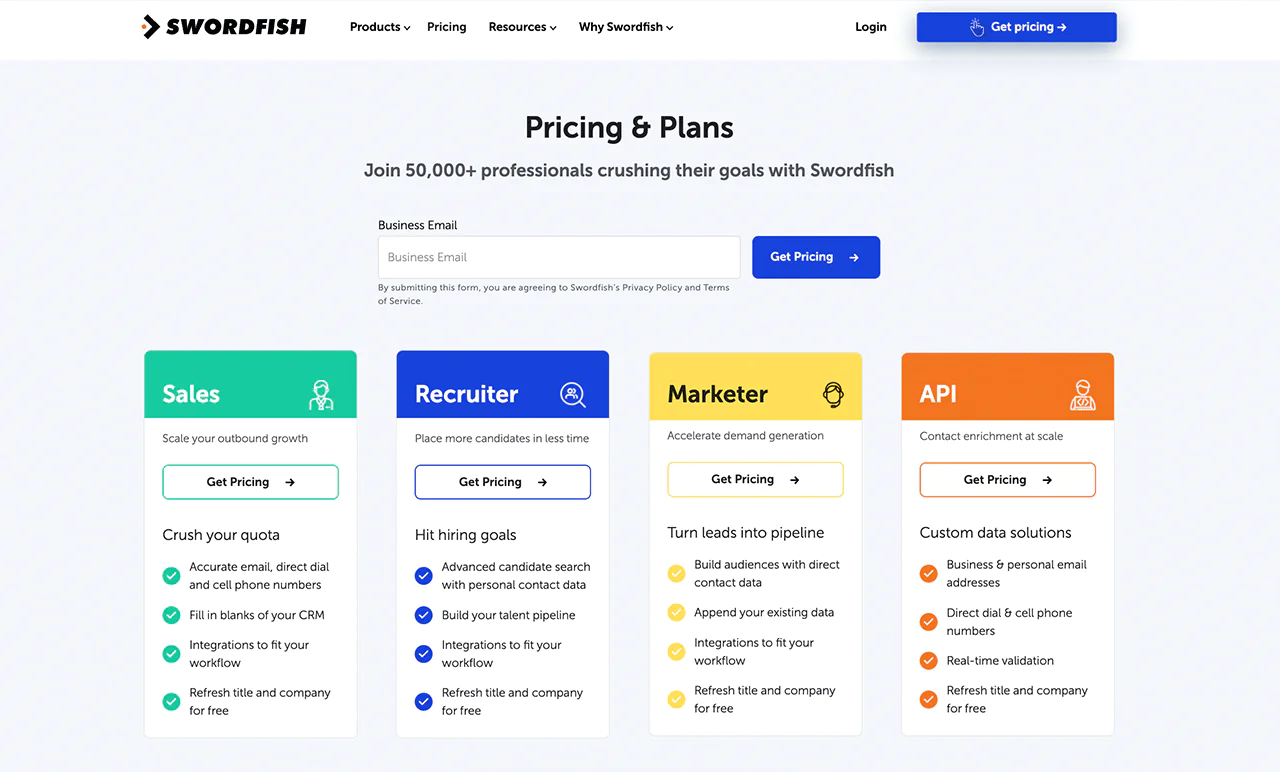
A Comparison Table: 6sense vs ZoomInfo vs Swordfish
Here’s how the three stack up side by side.
|
Feature |
6sense | ZoomInfo | Swordfish AI |
| Database | Over 250 million B2B profiles across 200+ countries. | Over 600 million professional profiles. |
Over 3.5 billion individual data points, including unique cell phone data. |
|
Contact Information |
AI-powered insights for targeted marketing. | Comprehensive contact details for sales prospecting. | Exclusive cell phone numbers and premium business emails. |
| CRM Integration | Easy integration with sales and marketing tools like Drift, Bombora, Outreach, Salesloft, etc. | Strong integration capabilities with CRM systems like Pipedrive, Zoho, Salesforce, HubSpot, and Dynamics 365, etc. |
Efficient syncing with CRM and ATS, plus custom API solutions. For example- zapier, SalesForce, Salesloft, Crelate, HubSpot, etc. |
|
Real-Time Data Updates |
AI-driven real-time market behavior analysis. | Regularly updated contact data for accuracy. | Live data partners ensure up-to-date and accurate contact information. |
| Unique Features | Predictive analytics for market behavior. | Extensive database navigation and direct contact information. |
Exclusive access to cell phone data and advanced email validation. |
|
Target Audience |
B2B organizations looking for AI-driven insights. | Businesses need detailed company and professional profiles. | Sales and recruitment teams requiring direct decision-maker access. |
| Lead Generation Tools | AI and machine learning for targeted lead generation. | Detailed contact information for direct outreach. |
Bulk search, advanced filtering, and direct access to decision-makers. |
6sense vs ZoomInfo vs Swordfish: Which One Should You Pick?
There’s no single winner across the board. Each platform optimizes for a different job, so the right pick depends on what you’re actually trying to do this quarter.
6sense
6sense shines with its AI-driven insights and predictive analytics, particularly for B2B organizations. If your priority is to understand and predict market behavior, and you need a tool that smoothly integrates with your sales and marketing platforms, 6sense is a strong contender.It’s especially beneficial for businesses that rely on AI-powered data for strategic decision-making and targeted lead generation.
ZoomInfo
On the other hand, ZoomInfo excels with its extensive database, offering detailed company and professional profiles. If direct contact information and comprehensive data for sales prospecting are what you seek, ZoomInfo stands out.It’s ideal for businesses that require in-depth information for sales outreach and market research. However, its vast database might be overwhelming for some, and it typically does not offer a free trial.
Swordfish AI
While doing the comparison between 6sense and ZoomInfo, we’ve seen that Swordfish AI is a compelling alternative. It is especially for those seeking direct access to decision-makers. With its unique cell phone data and premium business emails, it provides a blend of features from both 6sense and ZoomInfo.The tool is worth considering if you focus on reaching prospects directly, especially via phone, and you value real-time data updates. It’s particularly suitable for sales and recruitment teams who need to bypass gatekeepers and connect with key decision-makers.In summary, no outright winner exists and your choice should align with your business needs. If AI-driven market insights and predictive analytics are crucial for your B2B operations, go for 6sense.ZoomInfo is your best bet if you need a vast database with detailed contact information for comprehensive market research. However, if you’re looking for a tool that combines the best of both worlds with unique features like direct phone access, Swordfish AI is definitely worth a try.Each tool offers distinct advantages, and the right choice depends on what fits best with your business strategy and goals.
Conclusion
After a comprehensive comparison of 6sense vs ZoomInfo, and Swordfish AI, it’s clear that each platform has its unique strengths and helps different business needs.6sense excels in AI-driven insights and predictive analytics, making it ideal for B2B organizations focused on strategic decision-making. ZoomInfo, with its vast database and detailed company profiles, is perfect for businesses seeking in-depth contact information for sales prospecting and market research.However, if you’re looking for a tool that combines the best features of both 6sense and ZoomInfo, Swordfish AI plays the role of a strong contender. Its unique cell phone data and premium business emails stand out, offering direct access to decision-makers and real-time data updates.This makes Swordfish AI particularly suitable for sales and recruitment teams who must bypass gatekeepers and connect with key decision-makers efficiently. Try Swordfish Ai
Faqs
What are the main differences between 6sense and ZoomInfo?
6sense specializes in AI-driven insights and predictive analytics, primarily for B2B organizations, focusing on strategic market behavior prediction and lead generation. On the other hand, ZoomInfo offers a vast database with detailed company and professional profiles, excelling in providing comprehensive contact information for sales prospecting and market research.
Which platform, 6sense or ZoomInfo, is better for lead generation?
The choice depends on your lead generation strategy. If you rely on AI-driven insights and predictive analytics for B2B lead generation, 6sense is more suitable. However, ZoomInfo would be the better option if your strategy is based on accessing extensive contact databases for direct outreach.
Can 6sense and ZoomInfo integrate with CRM systems?
Yes, both 6sense and ZoomInfo offer strong integration capabilities with various CRM systems. This integration helps streamline lead management and improves sales and marketing efforts by providing valuable customer insights directly within the CRM platform.
Are 6sense and ZoomInfo suitable for small businesses?
Both platforms help businesses of all sizes, but their suitability for small businesses depends on specific needs and budget constraints. 6sense might be more aligned with businesses looking for AI-driven market insights, while ZoomInfo could be more beneficial for those needing detailed contact information. Budget considerations also play a crucial role in determining the best fit for small businesses.