
 View Products


Last updated: September 3, 2026
Choosing between ZoomInfo and Demandbase usually comes down to what your team actually does day to day. Both are established names in B2B intelligence, but they were built to solve different problems.
- ZoomInfo: Best for in-depth B2B contact databases and detailed market research.
- Demandbase: Ideal for targeted Account-Based Marketing (ABM) strategies.
The distinction sounds simple, but the details matter once you get into pricing, data validation, integrations, and support. This comparison walks through both platforms feature by feature, then looks at where Swordfish AI fits for teams that need direct-dial and mobile contact data on top of company-level intelligence.
Key Takeaways
- Core Differences: ZoomInfo is known for its vast B2B contact databases, providing deep insights into businesses and their contacts. Meanwhile, Demandbase stands out with its emphasis on Account-Based Marketing (ABM) and B2B ads, using AI to sharpen its marketing and sales insights.
- Ideal For: ZoomInfo is a great fit for sales and marketing teams that need detailed contact and company data for lead generation and market research. Demandbase suits companies running ABM programs that need sophisticated tools for account targeting and sales intelligence.
- Pricing: ZoomInfo’s pricing varies by company size and needs and typically requires a direct sales inquiry. Demandbase also uses custom pricing but publishes an online calculator to help you estimate costs before talking to sales.
- Swordfish AI as the Best Alternative: Those looking for Demandbase and ZoomInfo alternatives will find Swordfish AI an attractive choice. It’s known for delivering precise contact details, like phone numbers and emails, ensuring accuracy and direct connection to key decision-makers.
ZoomInfo vs Demandbase: A Quick Comparison Table
Selecting the right B2B intelligence platform starts with knowing what each one does best. Here’s a straightforward comparison to guide you toward the one that fits your business goals.
|
Features |
ZoomInfo |
Demandbase |
|
Core Focus |
B2B Contact Databases | Account-Based Marketing (ABM) |
| Ideal For | Sales & Marketing Professionals |
Businesses Implementing ABM Strategies |
|
Data Collection |
Extensive Data on Business Contacts | AI-Driven Insights for Targeted Marketing |
| Database | Over 135 million verified phone numbers, and 260 million professional profiles |
Over 150 million B2B contacts, and 92 million companies |
|
Pricing Model |
Customized Based on Business Size & Needs | Various Options with Transparent Pricing |
| Key Strength | In-depth Contact Details & Company Information |
Advanced Tools for Targeted Advertising & Sales Intelligence |
|
User Interface |
User-Friendly with Efficient Data Access | Intuitive, Focused on Marketing Automation |
| Integration | Smooth Integration with Pipedrive, Zoho, Salesforce, HubSpot, and Dynamics 365. |
Broad Integration with Marketo, HubSpot, DRIFT, QUALIFIED, and Salesforce. |
|
Customer Support |
Strong Support & Training Resources | Dedicated Support with ABM Focus |
|
Analytics & Reporting |
Detailed Reporting on Market Research |
Advanced Analytics for Account Engagement |
ZoomInfo vs Demandbase: In-depth Key Differences
As far as business intelligence and B2B lead generation tools go, ZoomInfo and Demandbase sit near the top. They serve different strategies, though, so let’s compare lead generation, data validation, convenience, and pricing one at a time.
1. Lead Generation and Management
When it comes to lead generation and management, both ZoomInfo and Demandbase offer distinct approaches. Here’s a detailed comparison to help you understand how each platform serves your business needs in this area.
|
Features |
ZoomInfo |
Demandbase |
|
B2B or B2C Focus |
Primarily B2B | Primarily B2B, with strong ABM features |
| Data Sources and Quality | Extensive database with high-quality, verified B2B data |
AI-driven insights from a variety of B2B data sources |
|
Customizable Filtering and Segmentation |
Advanced filtering options for targeted lead generation | Dynamic segmentation capabilities tailored for ABM strategies |
| Integrations with CRM and API | Wide range of integrations with Marketo, HubSpot, DRIFT, QUALIFIED, and Salesforce, etc. |
Easy integration with Pipedrive, Zoho, Salesforce, HubSpot, and Dynamics 365, etc. |
Now that you can see how they compare at a glance, here’s a closer look at each factor.
B2B or B2C Focus
ZoomInfo targets B2B businesses with a vast database of company and contact details. Demandbase also focuses on B2B, but through Account-Based Marketing (ABM).
ZoomInfo:
ZoomInfo is built mainly for B2B businesses, offering a large database useful for finding detailed information about companies and contacts. It’s a strong fit for teams trying to sharpen B2B sales and marketing efforts.
Demandbase :
In contrast, Demandbase also targets B2B companies but focuses on Account-Based Marketing (ABM). This approach works better for companies that want targeted marketing and sales efforts rather than general B2C reach.
Data Sources and Quality
ZoomInfo provides regularly updated, reliable B2B data pulled from various sources. Demandbase, meanwhile, uses AI for insightful B2B data analysis geared toward ABM.
ZoomInfo:
ZoomInfo is known for reliable, regularly updated B2B data gathered from many different sources. This extensive database is refreshed consistently, a point often raised in ZoomInfo reviews.
Demandbase :
Demandbase, competing in the same space, uses AI to analyze various B2B data sources. This method delivers more detailed, contextual insights, which makes the data useful for ABM strategies specifically.
Customizable Filtering and Segmentation
ZoomInfo offers detailed filtering for targeted market segments. Demandbase, by contrast, excels at dynamic segmentation for ABM campaigns.
ZoomInfo:
ZoomInfo has detailed filtering options, letting businesses target specific market segments precisely. It’s a good fit for teams that want to zero in on particular verticals or company sizes.
Demandbase :
Demandbase is strong at building dynamic market segments, which is central to ABM. This lets companies customize marketing to specific accounts, making campaigns more relevant and, in theory, more effective.
Integrations with CRM and API
ZoomInfo offers extensive CRM integrations and strong API support for efficient data sync. Demandbase integrates smoothly with CRMs as well and provides its own tailored API.
ZoomInfo:
ZoomInfo provides a wide range of integrations with popular CRM systems, along with solid API support. This enables smooth data synchronization and workflow automation across a sales stack.
Demandbase :
Similarly, Demandbase integrates with major CRM systems and offers an API for tailored solutions. That makes it straightforward to fold Demandbase’s insights into existing marketing and sales workflows.
Does ZoomInfo Provide Better Lead Generation and Management Than Demandbase?
- ZoomInfo: If your focus is accessing a broad B2B database with detailed filtering for direct lead generation, ZoomInfo is the better choice. It’s ideal for businesses aiming to target specific market segments.
- Demandbase: For companies prioritizing Account-Based Marketing and AI-driven targeting, Demandbase is the more suitable option.
2. Data Validation and Real-time Updates
As B2B marketing and sales change quickly, accurate, current data matters. ZoomInfo and Demandbase both address this, but their methods differ.
|
Features |
ZoomInfo | Demandbase |
| Lead Scoring | Uses detailed methods to rank leads based on how accurate and relevant the data is |
Employs AI to score leads, especially considering account-based marketing needs |
|
Website Visitor Tracking |
Can pinpoint who’s visiting your site, providing comprehensive contact and company info | AI technology is used to identify and rank visitors, focusing on the importance of their accounts |
| Real-time Data Updates | Regularly refreshes its database to ensure information is current |
Offers up-to-the-minute insights, especially on account activities and interactions |
Here’s a closer look at how these features actually work in practice.
Lead Scoring
ZoomInfo evaluates leads using detailed methods built around accuracy and relevance. Demandbase leans on AI for lead evaluation, tuned for account-based marketing.
ZoomInfo:
ZoomInfo uses detailed methods to evaluate leads, focusing on how accurate and relevant the underlying data is. It’s built to keep the leads it surfaces reliable and well-ranked.
Demandbase :
Demandbase, in comparison, uses AI to evaluate leads with account-based marketing strategies baked in. That’s especially useful for businesses targeting specific accounts rather than chasing individual lead volume.
Website Visitor Tracking
ZoomInfo identifies website visitors with detailed company and contact info. Demandbase uses AI to rank visitors by account importance for ABM purposes.
ZoomInfo:
ZoomInfo is built to figure out who’s visiting your website, surfacing detailed company and contact information. That’s genuinely useful for teams that want visibility into anonymous site traffic.
Demandbase:
Demandbase, on the other hand, uses AI to determine which visitors matter most based on their account value. It’s ideal for companies running ABM, since it helps them focus on the visitors worth pursuing.
Real-time Data Updates
ZoomInfo constantly refreshes its database to keep data accurate and current. Demandbase focuses more on real-time account engagement signals for ABM.
ZoomInfo:
ZoomInfo is known for keeping its data current, refreshing its database on an ongoing basis. That matters a great deal for teams that rely on the data staying accurate over time.
Demandbase:
Demandbase also provides current insights but puts more weight on what’s happening with specific accounts and how they’re engaging. Businesses running ABM programs will benefit most from this account-level view.
Should You Choose ZoomInfo or Demandbase for Data Validation and Real Time Updates?
ZoomInfo: Ideal for businesses needing up-to-date, precise data and insights into who visits their website. ZoomInfo stands out for its ability to provide current and detailed lead and visitor information.
Demandbase: Best suited for those focusing on account-based marketing. Demandbase uses AI effectively to assess leads and identify key website visitors, delivering key information for targeting particular accounts.
3. Convenience and Support
Choosing the right B2B intelligence tool means looking at usability, customer support, and legal compliance as well. ZoomInfo and Demandbase both hold up here, but in different ways.
|
Features |
ZoomInfo | Demandbase |
| Ease of Use | Easy to use, with a straightforward interface for quick data access |
User-friendly, particularly for ABM, but might need some time to get used to |
|
Customer Support |
Offers extensive help and training, praised by users | Provides focused support for ABM, with tailored help and resources |
| Compliance with Laws | Complies with the Swiss-U.S. Privacy Shield Framework and EU-US Privacy Shield Framework. |
Sticks to GDPR, focusing on ethical data sourcing and privacy. |
Now let’s look at each of these areas more closely.
User-Friendliness
ZoomInfo offers a straightforward interface for easy data access. Demandbase is intuitive too, but it’s built specifically around ABM workflows.
ZoomInfo:
ZoomInfo is known for its straightforward interface, making it easy for users to find and access data quickly. It’s a solid option for anyone who wants a hassle-free experience.
Demandbase:
Demandbase, while also intuitive, is specifically designed around Account-Based Marketing workflows. New users may need some ramp-up time to get comfortable with its ABM-specific features.
Support Services
ZoomInfo is known for extensive support and training. Demandbase provides more specialized support geared toward ABM-focused businesses.
ZoomInfo:
ZoomInfo is recognized for extensive support and training resources, with many users praising its responsive team. It’s a dependable option for consistent support.
Demandbase:
Demandbase, in contrast, structures its support around ABM, offering specialized assistance and resources. According to recent user feedback, Demandbase earns a 4.9-5/5 star customer support rating from customers on third-party review platforms, and dedicated customer success managers are a recurring theme in reviews. This kind of targeted support is especially useful for businesses running complex ABM programs.
Legal Compliance
ZoomInfo adheres to Swiss-U.S. and EU-US Privacy Shield Frameworks. Demandbase complies with GDPR, with a focus on ethical data sourcing and privacy.
ZoomInfo:
ZoomInfo adheres to data privacy frameworks including the Swiss-U.S. Privacy Shield Framework and EU-US Privacy Shield Framework, which matters for businesses concerned about data ethics.
Demandbase:
Demandbase also prioritizes legal compliance under GDPR, with attention to ethical data sourcing and privacy standards. That’s important for companies that value clean data practices, particularly in regulated industries.
Which One Provides Better User Convenience And Support: ZoomInfo or Demandbase?
- ZoomInfo: Ideal if you want an easy-to-use interface with quick data access and value extensive customer support. It’s a strong choice for straightforward usability and responsive help.
- Demandbase: Better suited for businesses focused on Account-Based Marketing, offering resources and support geared toward ABM. Choose Demandbase if your priority is a platform built for ABM with dedicated assistance in that area.
4. Pricing and Scalability
Selecting the right B2B intelligence tool means weighing cost against your business’s ability to grow into the platform. Here’s how ZoomInfo and Demandbase compare on pricing, trial options, and scalability.
|
Features |
ZoomInfo | Demandbase |
| Pricing and Plans | Has various plans, details provided on request |
Uses an online calculator for tailored pricing based on your business size and needs |
|
Free Trial |
Free trial details not openly advertised, contact their sales for info | Typically doesn’t offer a free trial, focuses on custom solutions for businesses |
| Scalability | Suits a wide range of business sizes, offering diverse features and integrations |
Built to grow with your business, particularly for those focusing on large-scale ABM and marketing |
Since pricing and scalability can shape your final decision as much as features do, here’s a closer breakdown.
Pricing and Plans
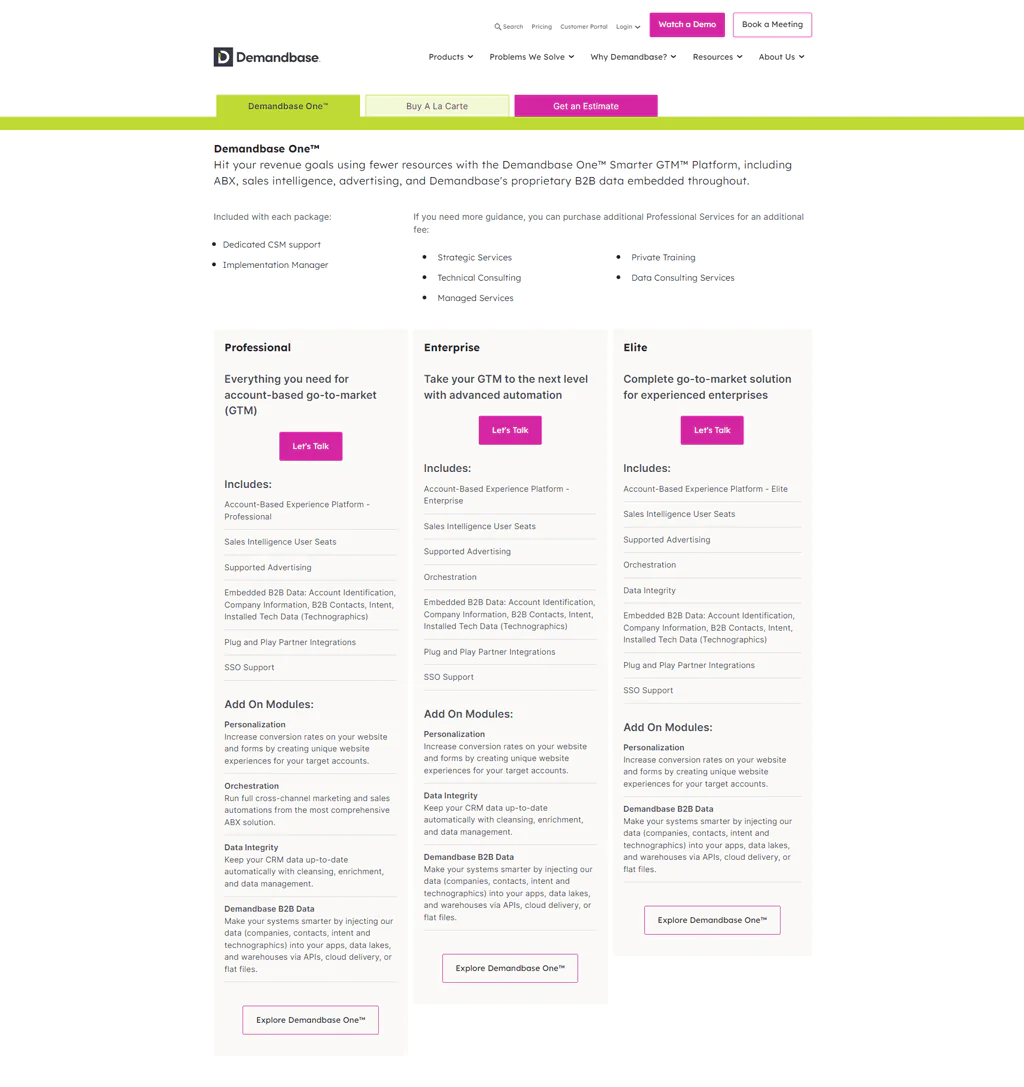
ZoomInfo offers various pricing plans, with details available on contact. Demandbase uses an online calculator for personalized pricing estimates.
ZoomInfo Pricing:
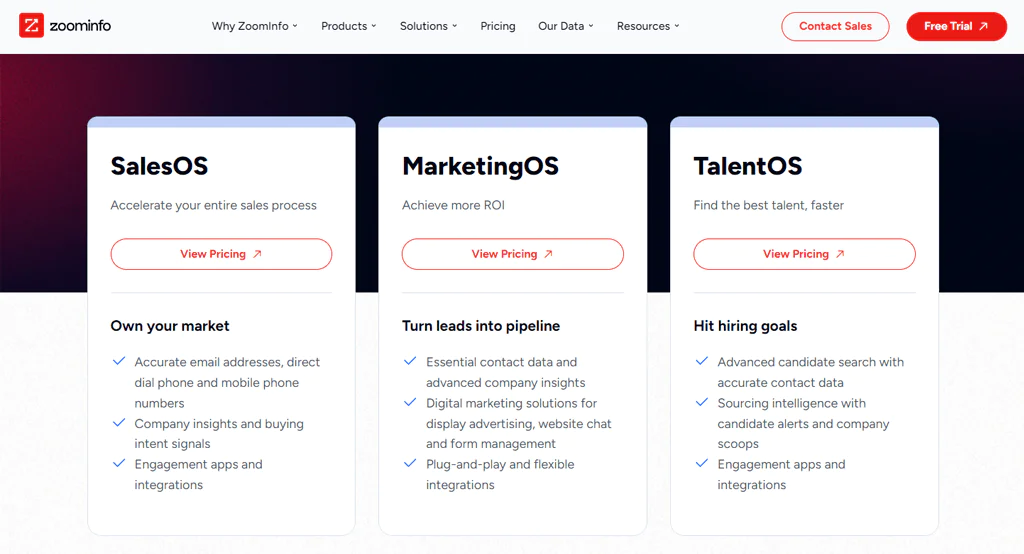
ZoomInfo has various pricing options built to fit different business needs, but you’ll need to contact their sales team for specific ZoomInfo Pricing details. This lets ZoomInfo tailor plans to your organization’s size and use case.
Demandbase Pricing:
Demandbase also offers customized pricing plans, but it publishes an online calculator to help estimate costs upfront. This gives businesses a personalized cost range based on size and requirements without an initial sales call. Some independent reviews of the platform put enterprise contracts well into six figures annually once onboarding and add-on modules are factored in, so it’s worth confirming the full cost picture, not just the base platform fee, before committing.
Free Trial
ZoomInfo offers a free trial, but details require contacting sales. Demandbase typically doesn’t offer a free trial, focusing instead on custom solutions.
ZoomInfo:
ZoomInfo offers a free trial, though you’ll need to contact their sales team to arrange it, which can be a minor inconvenience if you want to test-drive the platform quickly.
Demandbase:
Demandbase generally doesn’t offer a free trial, leaning instead toward custom solutions for each business. That reflects a tailored-service approach, but it does limit your ability to test the platform before signing a contract.
Scalability
ZoomInfo supports businesses of all sizes with a range of features and integrations. Demandbase scales well too, particularly for ABM and large campaigns.
ZoomInfo:
ZoomInfo is built to accommodate businesses of all sizes, offering a range of features and integrations that make it a flexible option as a company grows.
Demandbase:
Demandbase is also scalable, particularly for companies focused on Account-Based Marketing or large marketing campaigns. It’s designed with the needs of larger businesses and ABM-focused teams in mind.
Which One is Affordable and Flexible Between ZoomInfo and Demandbase?
- ZoomInfo: Choose ZoomInfo if you want pricing tailored to your specific business requirements. It works for businesses of all sizes, offering a range of features and integrations for growth and scalability.
- Demandbase: Opt for Demandbase if your business focuses on Account-Based Marketing or large marketing campaigns. Its online pricing calculator gives you upfront cost estimates and scalability for growing programs.
5. Limitations
When comparing B2B intelligence platforms like ZoomInfo and Demandbase, it’s worth weighing their limitations alongside their strengths. Here’s a simplified breakdown of the main limitations for each tool.
ZoomInfo:
- Clear Pricing: Getting detailed pricing from ZoomInfo requires talking to their sales team, which might not be ideal for everyone.
- Trial Option: ZoomInfo doesn’t clearly advertise a free trial, making it hard for companies to try it out before buying.
- Too Much Data: For some, especially new users, ZoomInfo’s vast database can be a bit too much to handle.
Demandbase :
- Ease of Use: If you’re new to Account-Based Marketing, Demandbase might take some time to get used to. Multiple reviewers mention it takes weeks or months to fully utilize the platform, which is worth factoring into onboarding timelines.
- Free Trial: Demandbase usually doesn’t have a free trial, so you can’t test it before you commit.
- Focus on ABM: Demandbase is heavily focused on ABM, which may not suit businesses looking for broader marketing tools.
6. Reviews
Take a look at ZoomInfo reviews and Demandbase reviews on the biggest platforms, where users leave honest feedback.
ZoomInfo Reviews
- G2: 4.4 · 7,867 reviews
- Capterra: 4.1 · 279 reviews
“Zoominfo makes it easy to find target prospect accounts and key decision-makers within them. The contact info is accurate 99% of the time, making it simple to reach the right people with the right message at the right time. The integrations with Salesforce, LinkedIn Sales Navigator, and other tools mean that data stays clean, consistent – and most importantly – saves me time, which I can use to focus on selling. 10/10” – David T.
Demandbase Reviews
- G2: 4.4 · nearly 2,000 reviews
- Capterra: 4.3 · 16 reviews
“DemandBase is easy to use and has some great reporting features to measure trend over time for your target accounts.” – erin O.
ZoomInfo vs Demandbase: Insights from Reddit
This ZoomInfo and Demandbase comparison also draws on Reddit user experiences, which help clarify how each tool serves businesses of different sizes and budgets.
ZoomInfo
ZoomInfo is well-regarded for its vast database and detailed contact info, making it a strong choice for B2B sales and marketing. Reddit users note its easy-to-use interface and quick data access, which work well for large companies with significant sales and marketing demands.
Some point out that ZoomInfo’s pricing isn’t very transparent and the sheer amount of data can feel overwhelming at first. It’s generally viewed as a solid option for businesses needing deep contact and company details, particularly those ready to invest heavily in lead generation.
Demandbase
Demandbase stands out for its focus on Account-Based Marketing. According to Reddit users, it works well for businesses targeting specific marketing and sales strategies. Users like the AI-driven insights and the ability to segment markets dynamically.
It can be complex for newcomers, especially those unfamiliar with ABM. Demandbase is often suggested for larger companies or those fully committed to ABM, given its tailored marketing approach.
The Final Verdict
Before deciding between ZoomInfo and Demandbase, figure out what you actually need first.
- ZoomInfo: A top choice for big businesses needing a broad database for lead generation and willing to invest in it.
- Demandbase: Perfect for firms focusing on Account-Based Marketing and seeking AI-based marketing tactics.
ZoomInfo vs Demandbase: Which One Should You Choose?
When choosing between ZoomInfo and Demandbase, weigh what each offers against its limitations.
ZoomInfo stands out with its large B2B database, giving you detailed information about companies and contacts. It’s a solid fit if you’re in sales or marketing and need to find leads or research the market.
Keep in mind, though, that ZoomInfo doesn’t openly share pricing. You’ll need to contact them for a quote, which can slow down evaluation.
Demandbase, meanwhile, is built around Account-Based Marketing and B2B advertising. It uses AI to help target marketing efforts and gather sales intelligence, which is genuinely useful if ABM is your focus.
If you’re new to ABM, though, expect a learning curve with Demandbase and a longer ramp-up period before the platform pays off.
Ultimately, ZoomInfo is a good fit if you need deep insights into contacts and companies. If ABM and targeted marketing tools are what you’re after, Demandbase could be the better choice.
Swordfish AI: The Best Alternative of ZoomInfo and Demandbase
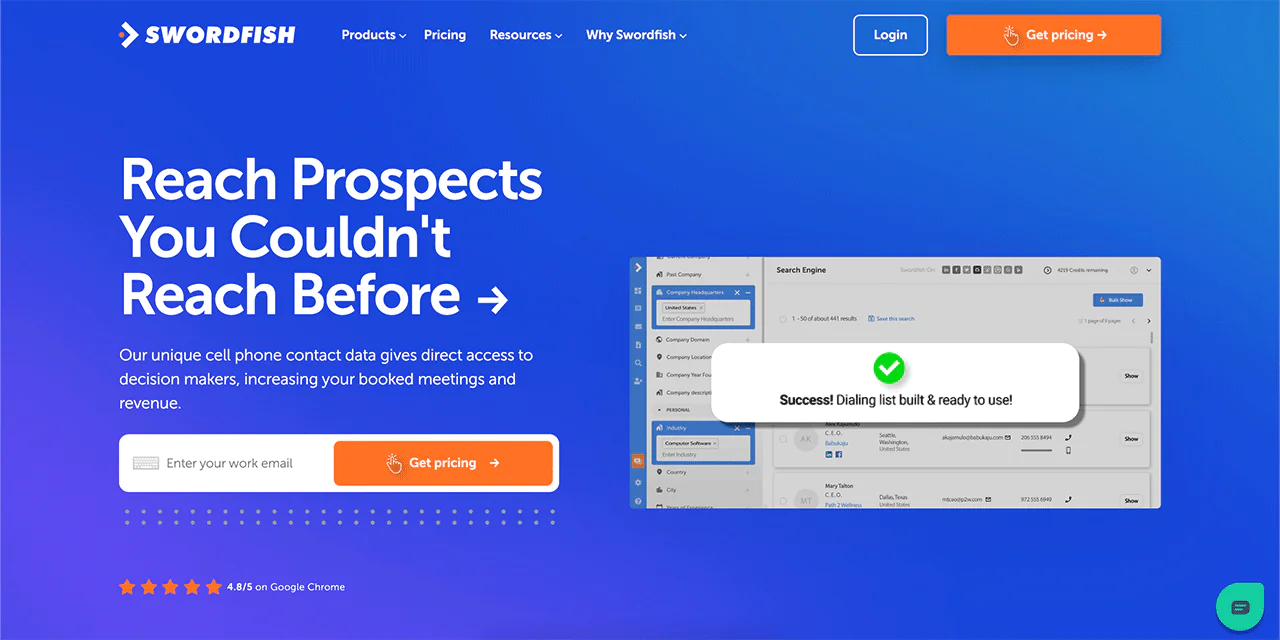
Swordfish AI stands out as a strong choice for B2B intelligence and marketing, similar to ZoomInfo and Demandbase in some respects but built around a different core strength.
What makes Swordfish AI distinct is its cell phone number collection and verification system, which is particularly useful for cold calling and direct outreach.
With access to over 3.5 billion data profiles, it offers a substantial pool of information alongside ZoomInfo and Demandbase. If you want a tool that combines ZoomInfo’s wide-ranging contact details with Demandbase’s targeted marketing approach, Swordfish AI is worth evaluating.
It brings together direct-dial data with a large data footprint, making it a flexible option for teams that need to reach decision-makers directly rather than just identify them.
Features of Swordfish AI
Swordfish AI offers several notable features —
-
Prospector
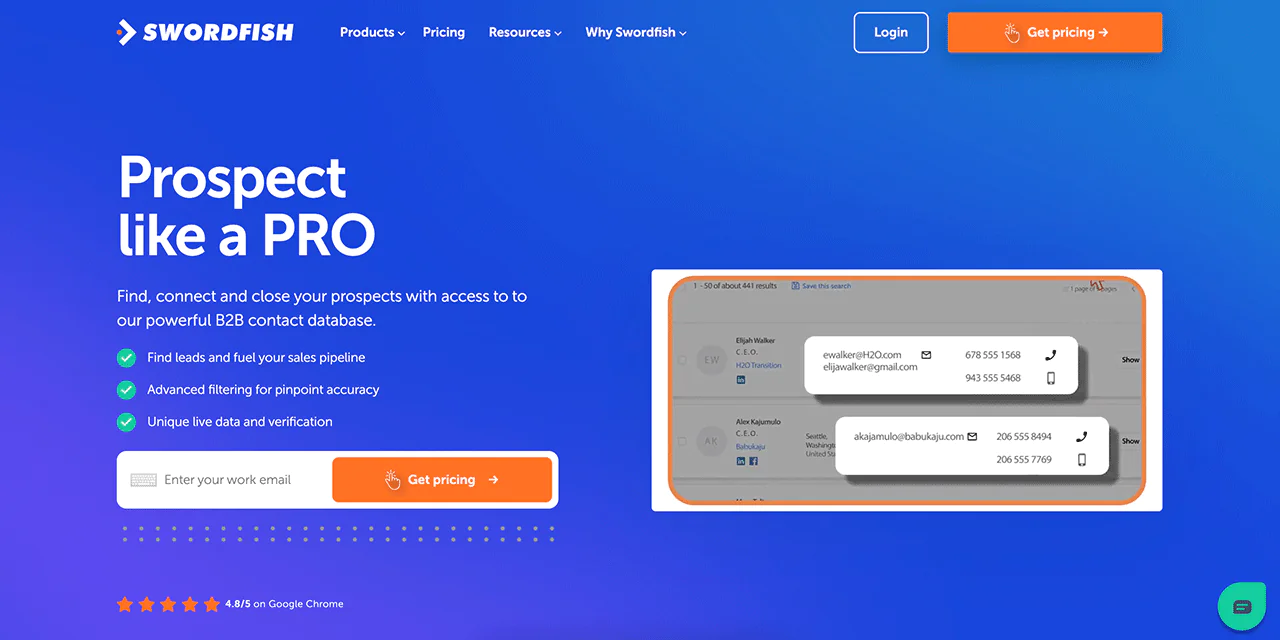
You can easily find and organize leads using the Prospector tool. It’s built for building targeted calling or email lists using advanced filters for precise lead generation.
-
API
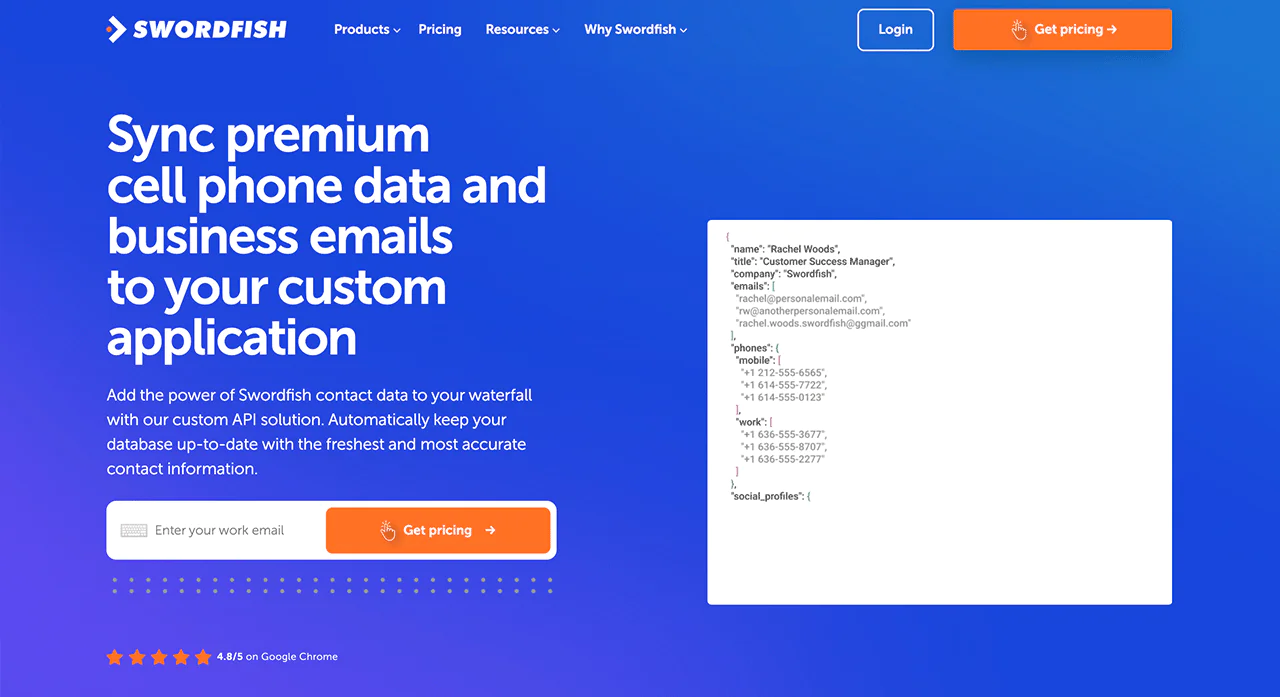
You can integrate Swordfish AI’s API directly into your applications, letting you enhance existing systems with verified contact data.
-
File Upload
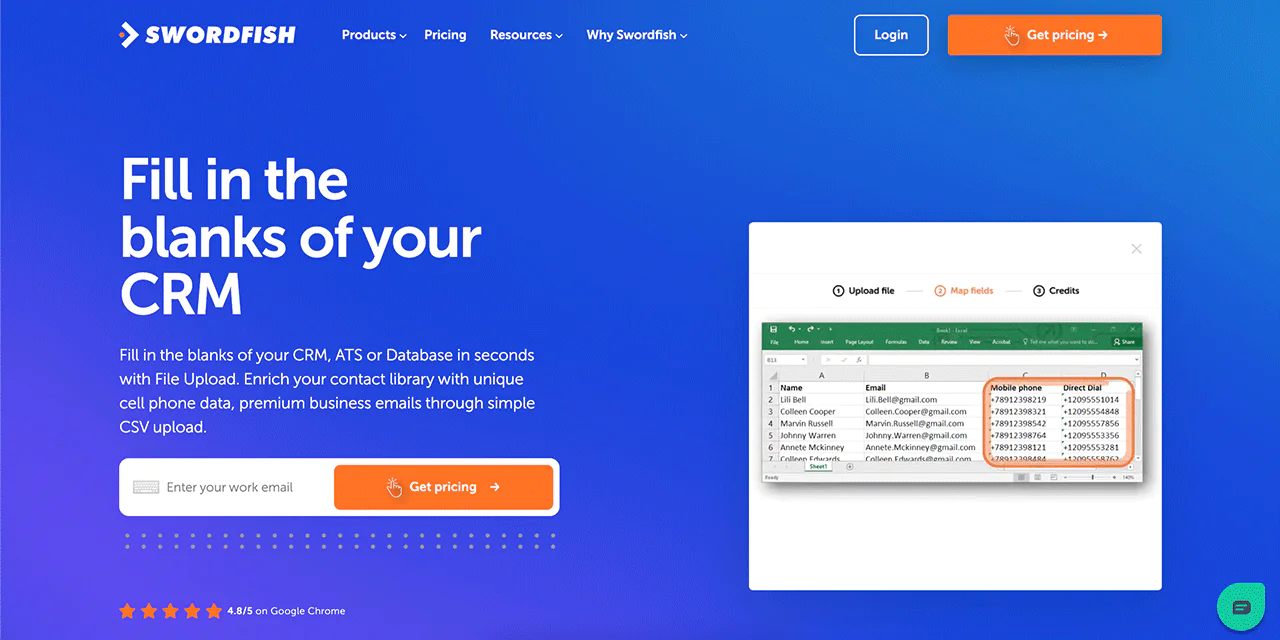
With this feature, you can fill in missing contact details in your CRM quickly. Upload a file, and Swordfish AI adds missing cell phone numbers and emails.
-
Reverse Search
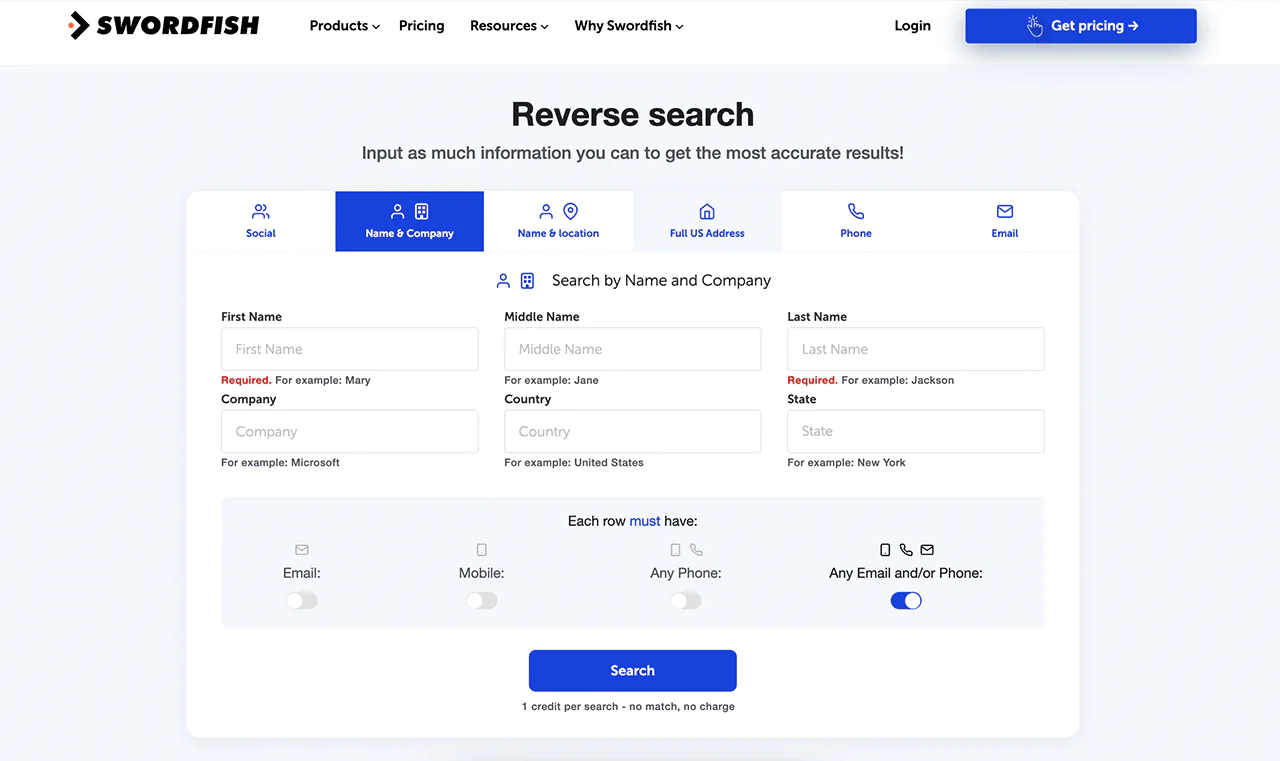
Reverse Search lets you use the information you already have to find what you don’t. Enter any combination of name, company, email, phone, or social profile, and Swordfish AI will find the person for you.
-
Chrome Extension
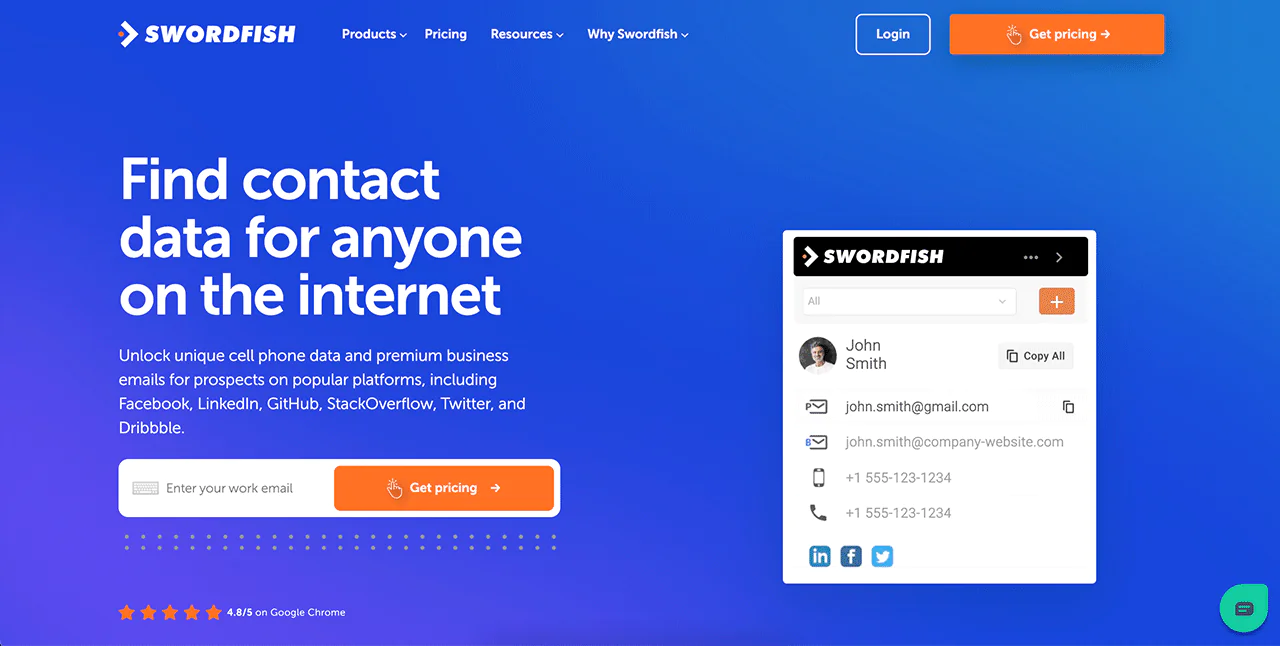
Swordfish AI’s Chrome Extension makes finding contact information on the web straightforward. It works across platforms like LinkedIn, Twitter, and Facebook, giving quick access to verified contact data.
Pricing
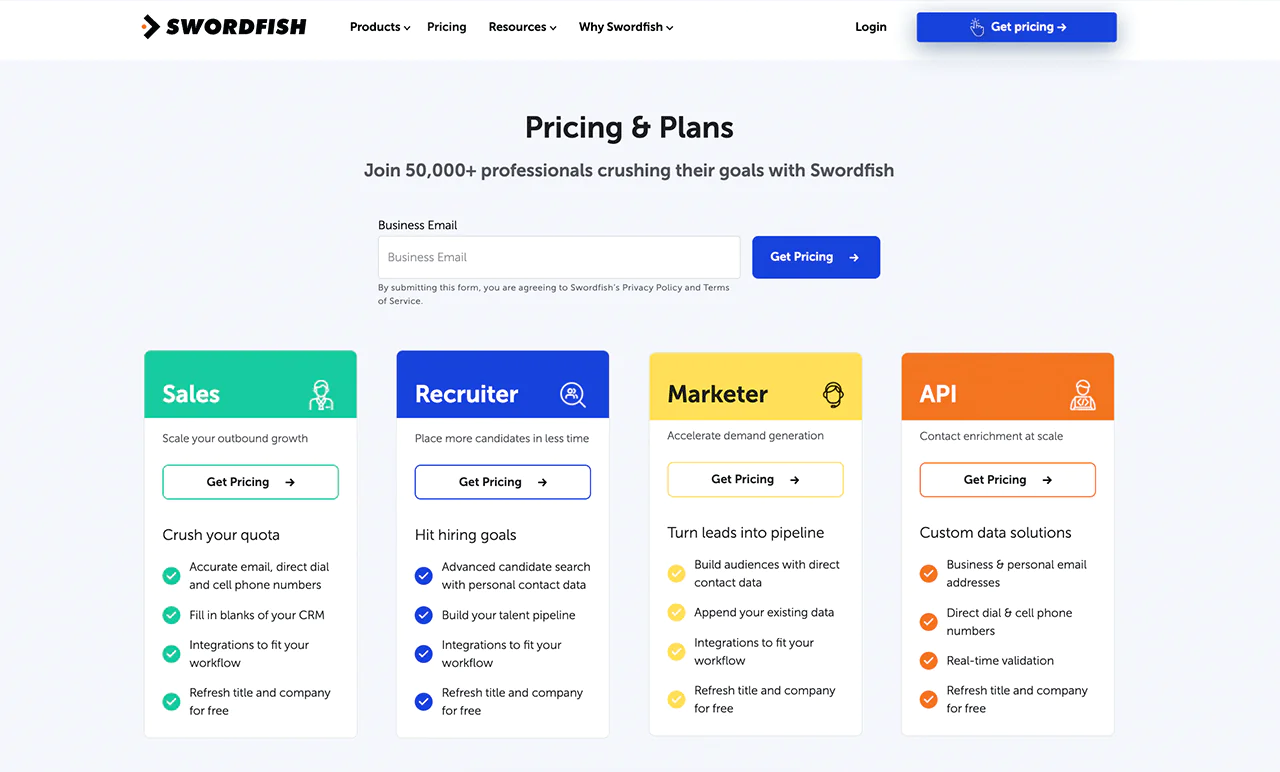
Swordfish AI offers flexible pricing plans designed for different needs like marketing, sales, recruitment, or API usage. These plans give you access to accurate emails, direct phone numbers, and mobile contacts to help meet your goals.
Swordfish AI also offers a free trial with 500 credits that fits into your existing workflow and includes complimentary updates to job titles and company information.
A Comparison Table: ZoomInfo vs Demandbase vs Swordfish AI
When exploring B2B intelligence platforms, it helps to compare the data ZoomInfo, Demandbase, and Swordfish AI each offer side by side.
|
Features |
ZoomInfo | Demandbase |
Swordfish AI |
|
Data Type |
B2B contacts, company info | ABM-focused B2B data | Cell numbers, emails |
| Data Volume | Over 135 million verified phone numbers and 260 million professional profiles | Over 150 million B2B contacts, and 92 million companies |
Over 3.5 billion profiles |
|
Special Features |
In-depth market research | Targeted ABM strategies | Direct outreach efficiency |
| Integration | Pipedrive, Salesforce, Dynamics 365, Zoho, HubSpot, etc. | Marketo, DRIFT, QUALIFIED, HubSpot, Salesforce, etc. |
Zoho, Salesforce, Bullhorn, Zapier, Outreach, etc. |
|
Pricing Details |
Custom quotes | Online calculator |
Customized plans |
|
Best For |
Lead generation, research | ABM, targeted marketing |
Cold calling, direct contact |
ZoomInfo vs Demandbase vs Swordfish AI: Which One Should You Pick?
ZoomInfo, Demandbase, and Swordfish AI each bring something different to the table, fitting different business needs. There’s no single perfect choice, but knowing what each offers helps you find what’s best for your team.
ZoomInfo
ZoomInfo is known for its vast B2B contact databases, giving you deep insight into companies and contacts. It’s a strong fit if you need detailed information for lead generation or market research.
Some ZoomInfo reviews note that you’ll need to contact sales for pricing details. If data depth is your priority, ZoomInfo is a solid pick.
Demandbase
Demandbase focuses on Account-Based Marketing and B2B advertising, using AI to help target marketing and sales efforts. It’s a good fit if ABM is central to your strategy, and the Demandbase calculator on their website helps clarify costs upfront. Go for Demandbase if ABM is your primary motion.
Swordfish AI
Swordfish AI is a strong choice, especially if you’re evaluating Demandbase competitors. It offers precise contact info, including cell numbers and emails, with an emphasis on accuracy.
With a large database, Swordfish AI combines ZoomInfo’s data reach with a more direct-outreach focus. If you want a mix of broad data coverage and mobile-first contact accuracy, consider Swordfish AI.
Conclusion
When comparing ZoomInfo vs Demandbase, each platform clearly caters to specific needs.
ZoomInfo is great for its broad B2B contact databases, well suited to in-depth research and lead generation. Demandbase, in contrast, excels in Account-Based Marketing, providing focused strategies for B2B advertising and sales.
If you need thorough data collection and deep market insights, ZoomInfo is a solid option. If ABM aligns more with your goals and you need specialized marketing tools, Demandbase is likely the better fit.
If you’re looking for a tool that brings together the strengths of both, Swordfish AI is worth considering. It pairs broad contact data with a focus on direct, verified outreach, making it a flexible choice for teams that need to actually reach the people they’ve identified, including in data-sensitive sectors like healthcare.
 Try Swordfish Ai
FAQs
Is ZoomInfo a safe platform?
Yes, ZoomInfo is generally considered safe to use. It prioritizes security practices designed to meet common data-handling standards.
How can I pay for ZoomInfo services?
ZoomInfo typically accepts payment through ACH Debit, credit/debit cards, wire or bank transfers, ACH, EFT, and checks, though it’s worth confirming current options directly with their billing team.
What if I find mistakes in Demandbase’s data?
Demandbase’s AI-driven data isn’t perfect and can occasionally contain errors. If you spot inaccuracies, reporting them to Demandbase helps improve the underlying data over time.