
 View Products


Key takeaways
- B2B prospecting identifies and contacts potential business buyers to build a sales pipeline.
- A clear ideal customer profile helps teams focus on organizations that may benefit from their product.
- Email, phone, social outreach, and direct mail are among the channels teams can combine.
- A CRM, contact-data tool, and engagement platform can support different parts of the prospecting workflow.
- Teams can review performance and adjust their targeting, messaging, and follow-up cadence over time.
Last updated: September 3, 2026

B2B prospecting is the process of identifying potential business buyers and contacting them to start sales conversations. It helps companies build a pipeline of organizations that may benefit from their products or services.
Strong prospecting connects you with qualified leads and keeps your pipeline moving through a mix of targeted efforts: cold calling, outbound email, content marketing, and paid ads. Doing this well takes planning, discipline, and the right tools.
B2B prospecting isn’t just about finding leads; it’s about building paths to long-term business relationships.
This guide walks through what B2B prospecting actually involves, the strategies that consistently work, and the tools sales teams rely on to execute at scale — including where Swordfish.ai fits into that toolkit.
What is B2B Prospecting?
B2B prospecting is the foundation of a repeatable sales process: it helps companies maintain a pipeline of potential customers. Unlike consumer-focused sales, B2B prospecting targets organizations, often involving longer sales cycles, multiple stakeholders, and more deliberate messaging.
The process typically unfolds in stages. It starts with research to identify businesses that could plausibly benefit from what you sell. Sales teams lean on CRM systems, LinkedIn, industry reports, and dedicated prospecting software to build a list of qualified accounts. From there, outreach begins — email, phone, social messaging, or direct mail, often in combination.
Understanding a prospect’s specific pain points before you reach out matters more than volume. The goal is to open a conversation, establish credibility, and move the account through your funnel toward a decision. That usually requires several rounds of adjustment based on what’s actually landing.
Prospecting isn’t a campaign with a start and end date; it’s an ongoing discipline. Teams that track results, test messaging, and adjust as the market shifts tend to build more durable pipelines than teams that set a strategy once and leave it alone.
Key Strategies for Successful B2B Prospecting
A few practices separate teams that consistently fill their pipeline from those that don’t.
1. Define Your Ideal Customer Profile (ICP)
Start with a clear picture of who you’re actually trying to reach. Your ICP should capture firmographic details — industry, company size, role, geography — along with the specific problems your product solves. A tighter ICP means less time wasted on accounts that were never going to convert.
2. Use Multiple Outreach Channels
Relying on a single channel limits your reach. Combining email, phone, social outreach, and even direct mail gives prospects more ways to engage on their own terms, and repeated exposure across channels tends to build familiarity faster than any one channel alone.
3. Write Personal Messages That Deliver Value
Generic templates get ignored. Messages that reference a prospect’s specific situation, back up claims with real examples or case studies, and clearly state the value on offer perform better than volume-first outreach.
4. Use Data and Technology
CRM platforms, data enrichment tools, and sales intelligence software help you identify better-fit leads, track conversations, and refine targeting over time. For teams prospecting into healthcare organizations specifically, having verified, current contact data matters even more — provider staff turnover and shifting affiliations make stale lists a real cost.
5. Maintain Consistency and Follow-Up
Most deals require multiple touches before a prospect responds. A defined follow-up cadence, spaced out deliberately rather than left to chance, keeps you visible without becoming a nuisance.
6. Continuously Improve and Adjust
Review your numbers regularly, test new channels or messaging, and drop what isn’t working. Prospecting strategies that felt effective a year ago may not hold up as buyer behavior and channel saturation change.
Building a Strong B2B Prospecting Process
Building a durable prospecting process starts with clear goals and a real understanding of your audience — their challenges, priorities, and how they prefer to be contacted.
From there, a multichannel strategy matters. Mixing cold calls, email sequences, content, and social outreach ensures you’re reaching prospects however they’re most likely to respond, rather than betting everything on one channel.
Personalization has an outsized effect on response rates. Tailoring subject lines, referencing specific pain points, and leading with value helps your message stand out in a full inbox instead of reading like a mass blast.
Data should inform how you refine the process over time. CRM systems and prospecting tools let you track engagement, spot patterns in what’s converting, and adjust targeting accordingly rather than guessing.
A consistent follow-up cadence is just as important as the initial outreach. Most prospects need several touches before they engage, so a defined schedule — automated where it makes sense — helps ensure leads don’t fall through the cracks.
Finally, treat the process as something to keep improving. Reviewing performance, gathering feedback from your team, and testing new approaches keeps your pipeline from going stale as the market shifts.
Top Tools for B2B Prospecting
These eight tools cover different parts of a B2B prospecting stack, including contact data, CRM, sales engagement, and marketing automation. The list is not presented as a ranked comparison.
- Swordfish.ai: Known for giving up-to-date correct contact details in real time, Swordfish.ai is a key tool for B2B prospecting. It works well with your current systems making sure you have top-notch data ready to use.
- LinkedIn Sales Navigator: This tool plays a vital role in social selling. It lets you search in depth, suggests leads, and gives live updates about your prospects making it simpler to reach out and talk to possible leads.
- HubSpot: A strong CRM that offers a range of tools to manage your sales pipeline, send messages, and keep an eye on how prospects interact. HubSpot also gives insights through data analysis helping you improve your plans.
- Kaspr: Known to give correct contact info and enrich leads. Kaspr works with your current CRM and helps you create effective outreach processes.
- Apollo.io: A full platform that joins prospecting and engagement tools. Apollo.io gives detailed prospect data, automated email sequences, and a built-in calling system to improve your outbound efforts.
- ZoomInfo: This platform offers a large database of B2B contact info and company profiles making targeted outreach easier. ZoomInfo’s advanced search filters help you find the right prospects fast.
- Clearbit: This tool is well-known for its data enrichment capabilities. It surfaces useful details about potential customers, including work history and company data, so you can make outreach more personal.
- Pardot by Salesforce: This is a marketing automation platform built to support lead nurturing. With Pardot, you can run email campaigns for specific segments, track prospect behavior, and score leads to prioritize follow-up.
No single tool covers every part of the prospecting workflow. Many teams combine a data or contact-verification tool with a CRM and an engagement platform. For healthcare-focused outreach, evaluate data freshness and applicable compliance requirements; provider contact details can become outdated as affiliations, practices, and staff change.
Why Swordfish.ai Stands Out as a B2B Prospecting Platform
Swordfish.ai is presented here as a contact-data and prospecting platform that can fit into an existing sales workflow. The article highlights its data, search, integration, automation, and security capabilities.
1. Accurate and Up-to-Date Information
Accurate contact info is the foundation of good prospecting. Swordfish.ai focuses on providing current data so reps spend less time verifying details and more time in conversations, with phone numbers, emails, and social profiles available to start outreach.
2. Smart Search Tools
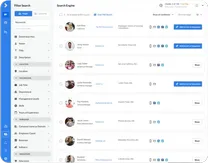
Search functionality lets you filter prospects by industry, job title, and company size, narrowing a broad list down to accounts that actually match your ICP.
3. Integration and Automation
Swordfish.ai integrates with existing CRM and sales tools, supporting a more unified workflow. Automation features help set up follow-ups and reminders so opportunities aren’t missed, freeing up time for relationship-building instead of manual tracking.
4. Compliance and Security
Data privacy expectations continue to tighten, and Swordfish.ai’s operations are built around current compliance and security standards, so sourcing data doesn’t come at the expense of doing it responsibly.
5. User-Friendly Interface
The platform’s interface is designed to be approachable even for teams that aren’t especially technical, with a dashboard layout meant to get new users prospecting quickly rather than requiring a long onboarding process.
In this prospecting process, Swordfish.ai may support prospect identification and outreach, particularly for teams that need contact data across a large or frequently changing account base.
Get a trial for the no.1 rated B2B Prospecting Tool ? swordfish.ai
Frequently asked questions
What is B2B prospecting?
B2B prospecting is the process of identifying potential business buyers and contacting them to start sales conversations and build a pipeline.
What channels can teams use for B2B prospecting?
The article describes email, phone, social outreach, direct mail, content, and paid ads as possible prospecting channels.
What is an ideal customer profile (ICP)?
An ICP describes the kinds of organizations a team is trying to reach, using details such as industry, company size, role, geography, and the problems its product solves.
What types of tools can support B2B prospecting?
The article recommends considering a mix of contact-data or verification tools, CRM platforms, sales-engagement tools, and marketing-automation platforms.