
 View Products


Last updated: September 3, 2026
Every sales cycle starts the same way: someone has to find the right person to talk to. That work is prospecting, and it means identifying and contacting people or organizations who genuinely need what you sell before any pitch happens. Get this stage wrong and everything downstream, from discovery calls to closed deals, suffers.
Good prospecting isn’t about volume. It’s not a numbers game where more names in a spreadsheet automatically means more revenue. It’s a qualification exercise: cold calls, emails, and social outreach all built around a strategy that filters for fit before it filters for interest.
Success in sales starts with a strong prospecting strategy. It’s the foundation upon which all subsequent sales activities are built.
In healthcare-focused sales specifically, prospecting carries extra weight. Reaching physicians, practice administrators, and health system decision-makers means dealing with credentialing gatekeepers, high staff turnover, and contact information that goes stale fast. Below, we break down what effective prospecting looks like, ten practical habits that separate reps who fill pipeline from those who don’t, and where a tool like Swordfish.ai fits into the process.
What is Prospecting in Sales?
Prospecting is a discovery process. It’s the stage where a salesperson looks across a market and identifies which individuals or organizations are realistic candidates for a product or service. It isn’t list-building for its own sake — it’s research and planning aimed at a specific outcome.
Effective prospecting matters because it sets the ceiling for everything that follows in the sales cycle. If the initial pool of contacts is weak, no amount of skilled follow-up will fix it. The real question isn’t whether to prospect, but how to identify exactly who’s worth reaching out to, and that’s where technique matters.
Not every prospecting method fits every situation. Cold calling works well in some markets; social selling or email outreach performs better in others. The right mix depends on your audience and the norms of your industry — in healthcare, for instance, providers are far more time-constrained and skeptical of unsolicited outreach than buyers in many other sectors, which changes how and when you should reach them. Tools like https://swordfish.ai/ can help by supplying more current contact data so outreach lands with the right person instead of a disconnected number or an inbox that’s no longer monitored.
Once you have a list, quality still trumps quantity. Lead qualification is what separates prospecting from list-making: evaluating whether a contact is worth pursuing and how close they are to being ready for a conversation.
Prospecting, done well, is strategic, targeted, and measurable. Reliable tools paired with sound technique are what turn a list of names into a pipeline of real opportunities.
Ten Insider Tips for Mastering Sales Prospecting
- Understand Your Ideal Customer Profile: Define the traits that make a lead a genuine fit — in healthcare, this often means specialty, practice size, setting (hospital, private practice, DSO, ASC), and procurement authority, not just job title.
- Leverage Multiple Channels: Combine cold calling, email, and social selling rather than relying on one channel. Providers and administrators are reachable through different channels depending on their role and schedule.
- Personalize Your Outreach: Generic messaging gets ignored, especially by clinical audiences who are used to filtering out irrelevant vendor pitches. Reference specific challenges relevant to their specialty or organization.
- Research Thoroughly: Understand the prospect’s operational pressures, recent organizational news, and industry trends before reaching out. Well-informed outreach signals professionalism and builds trust faster.
- Follow a Strategic Follow-Up Plan: Persistence matters, but so does pacing. Build a cadence with multiple touchpoints spread over time rather than a single burst of contact attempts.
- Use Data and Analytics: Track what’s working and what isn’t. Accurate, verified contact data — the kind Swordfish.ai is built to provide — reduces wasted effort on outdated numbers and bounced emails.
- Prioritize High-Quality Leads: Score leads based on fit and readiness so your time goes toward prospects with real conversion potential, not just the longest list.
- Stay Organized: Use a CRM to track interactions, follow-up timing, and contact details. Disorganized prospecting leads to duplicate outreach and missed follow-ups.
- Keep Improving Your Skills: Prospecting techniques and buyer expectations shift over time. Regular training and staying current on trends keeps your approach from going stale.
- Maintain a Positive Attitude: Rejection is part of prospecting. Resilience and consistency, more than any single tactic, are what sustain long-term pipeline results.
How Swordfish.ai Transforms Your Prospecting Game
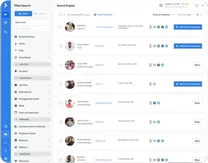
Swordfish.ai is built to reduce the friction that slows healthcare-focused prospecting down: outdated numbers, bounced emails, and contacts who’ve left their organization. Instead of guessing whether a number still connects, reps can work from data that’s checked against current sources.
Because provider contact information changes often — staff turnover, practice consolidations, and credentialing changes all play a role — verification matters more here than in many other B2B categories. Swordfish.ai integrates with existing CRM systems, so verified records can flow directly into a rep’s workflow instead of requiring manual cleanup.
Beyond basic contact details, Swordfish.ai surfaces additional context, such as professional background and social profiles, that helps reps tailor outreach instead of sending the same message to every contact on a list. That context is especially useful in healthcare sales, where a generic pitch rarely lands with a credentialed decision-maker.
The platform also supports outreach across channels, whether the primary method is phone, email, or social. That flexibility lets teams test what actually works for a given specialty or organization type rather than assuming one method fits all.
Prospecting quality compounds over time. Better data at the top of the funnel means fewer wasted calls, more relevant conversations, and a pipeline built on contacts who are actually reachable.
Get a free trial ? https://swordfish.ai/