
 View Products


Last updated: September 3, 2026

Finding a reliable, current email address for a specific person is harder than it sounds. People change jobs, switch domains, and let old inboxes go stale, and a single bounced message can cost you a lead or a candidate. Email lookup tools exist to close that gap by scanning public sources for verified contact details, and a handful of them have become standard tools for sales, recruiting, and outreach teams.
This guide breaks down what these tools actually do, when they’re worth using, and how five of the more established options compare.
What’s an Email Lookup Tool?
An email lookup tool searches public web sources, professional profiles, and other databases to find email addresses tied to a specific name, company, or domain. Most tools also run a validation check to confirm the address is active before handing it back to you, which matters more than the search itself in a lot of cases.
Sales and marketing teams use these tools to build prospect lists, verify contacts before a campaign, and cut down on the wasted sends that come from outdated data.
Advantages of Email Lookups
Email lookup tools cover more ground than simply retrieving an address. Here’s where they tend to add the most value.
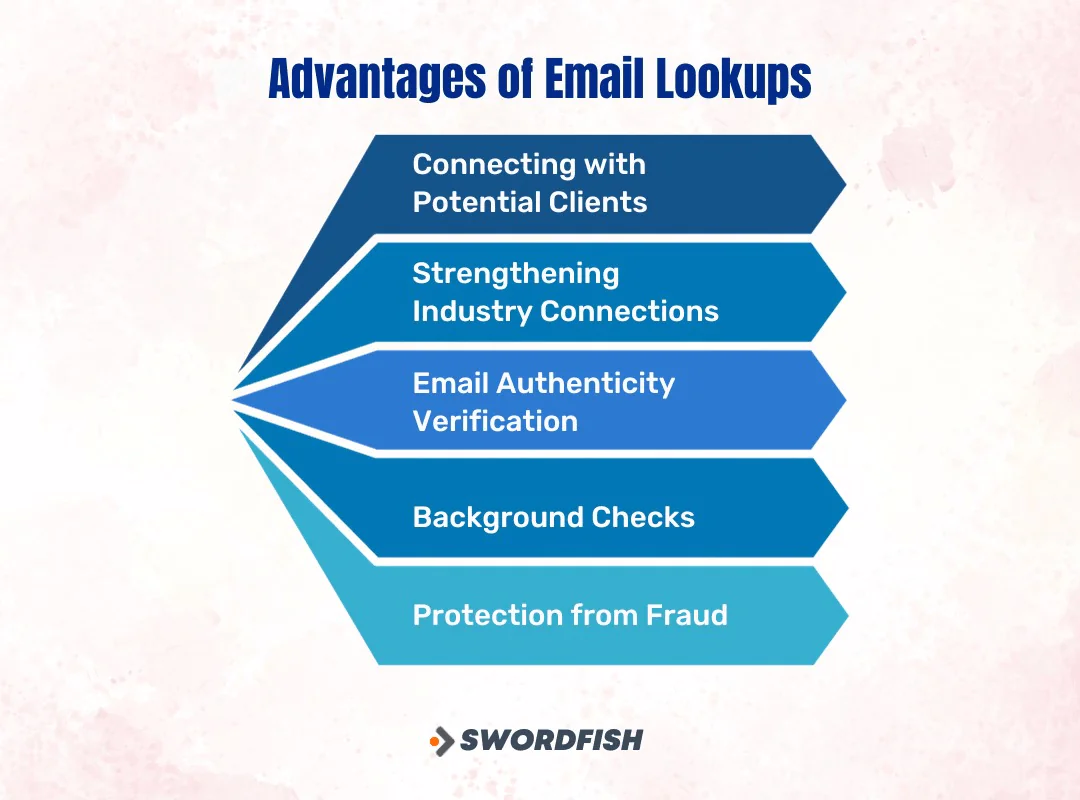
Connecting with Potential Clients
Reaching a new audience usually starts with finding the right contact. Once you have a verified address, you can send a targeted, personalized message instead of relying on generic outreach. It’s a low-cost way to open a relationship rather than just fire off a pitch.
Strengthening Industry Connections
Locating the email address of a peer, expert, or potential collaborator in your field is often the first step toward a real professional relationship. These connections can lead to partnerships, referrals, or mentorships that outlast any single email exchange.
Email Authenticity Verification
An address that looks correct isn’t always deliverable. Lookup and verification tools confirm whether an email is genuinely active before you send anything important, which keeps your outreach from disappearing into a dead inbox.
Background Checks
An email address can also serve as a starting point for verifying someone’s professional background. For employers, this helps confirm that a candidate’s stated history checks out. For individuals, it’s a way to make sure the person on the other end of a conversation is who they claim to be.
Protection from Fraud
Unsolicited emails from unfamiliar senders are a common phishing vector. Running a quick lookup on an unknown address can confirm whether it’s tied to a real person or organization before you click a link or share information, which is a simple but effective safeguard.
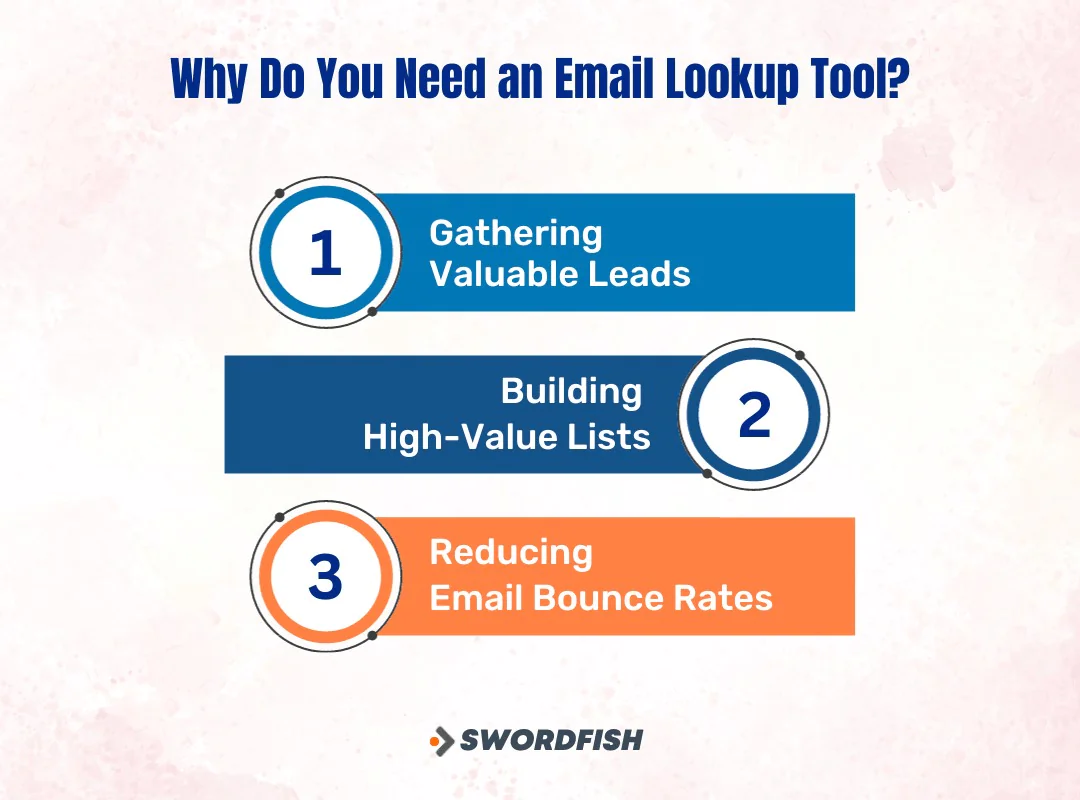
Why Do You Need an Email Lookup Tool?
Beyond simply finding an address, these tools solve a handful of specific, recurring problems for outreach teams.
1. Gathering Valuable Leads
Identifying people who’ve already shown interest in what you offer is a lot harder without the right tool. Email lookup software helps you find and connect with prospects, partners, or stakeholders more efficiently, which improves both lead quality and conversion rates.
2. Building High-Value Lists
A campaign is only as good as the list behind it. Lookup tools help you assemble contact lists that are relevant and current rather than guessing at who might respond, and that translates directly into better campaign performance and return on investment.
3. Reducing Email Bounce Rates
Sending to invalid addresses damages your sender reputation and can get your domain flagged as spam. Verifying addresses before you send protects deliverability and increases the odds that your message actually reaches an inbox and gets a response.
Top Email Finder Tools You Should Know About
Here’s how five widely used email lookup tools compare, along with where each one tends to fit best.
1. Swordfish
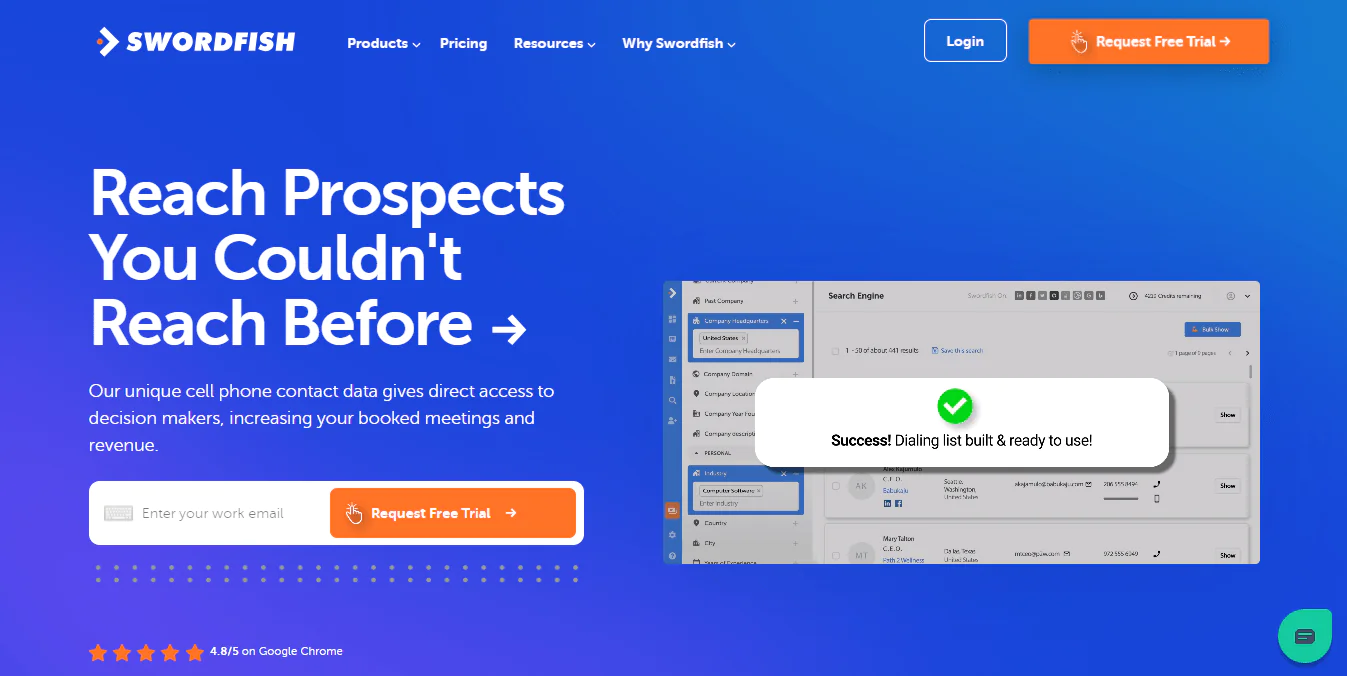
Swordfish is built for finding both email addresses and cell phone numbers for individuals and businesses across a wide contact database. It pulls from multiple data sources and cross-checks results, which helps surface contact details that are current rather than stale.
For teams that need verified mobile numbers alongside email, that combination is often the deciding factor over an email-only tool.
 Try Swordfish Ai
2. Lusha Extension
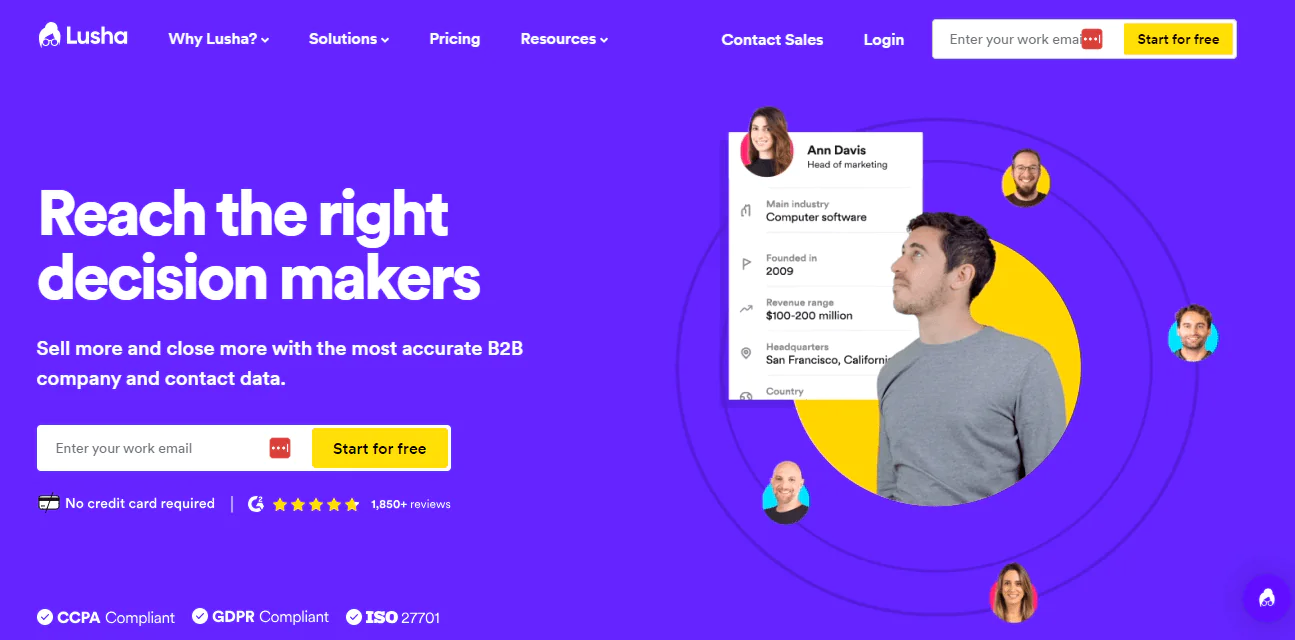
Lusha’s browser extension goes beyond email lookups, surfacing phone numbers and company data directly from LinkedIn and other profiles. It also integrates with common CRM platforms, so a contact you find updates in your CRM without manual entry.
3. RocketReach
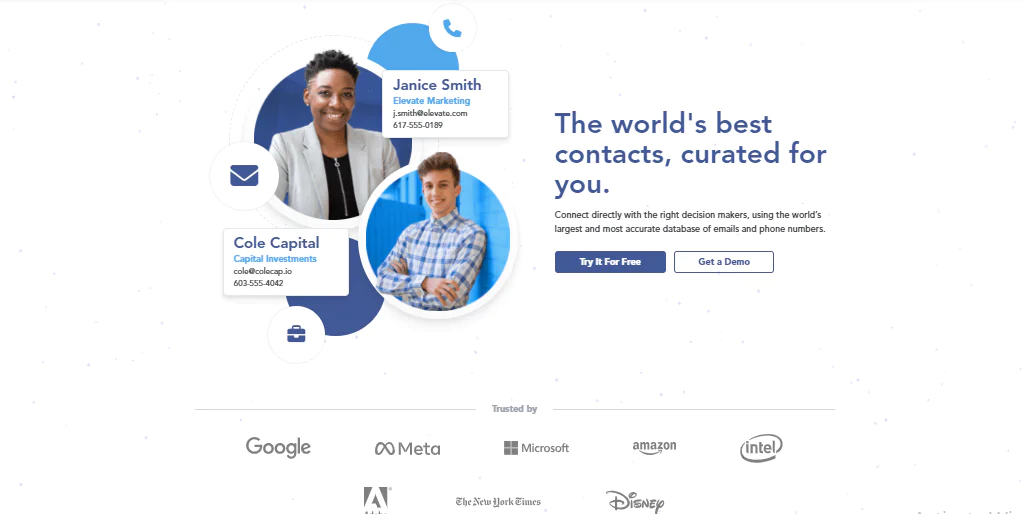
RocketReach uses machine learning and a wide set of data sources to surface professional email addresses and phone number lookup results. It scales from individual users to larger teams through tiered subscription plans.
Some users report occasional mismatched results, and the search filters aren’t as granular as some competitors offer. RocketReach gives new users a handful of free lookups before requiring payment, and published annual plans for individuals have ranged from roughly $329 to $2,099 depending on tier and lookup volume, though exact pricing and quotas change often enough that it’s worth confirming current rates directly on their site before budgeting.
4. SignalHire
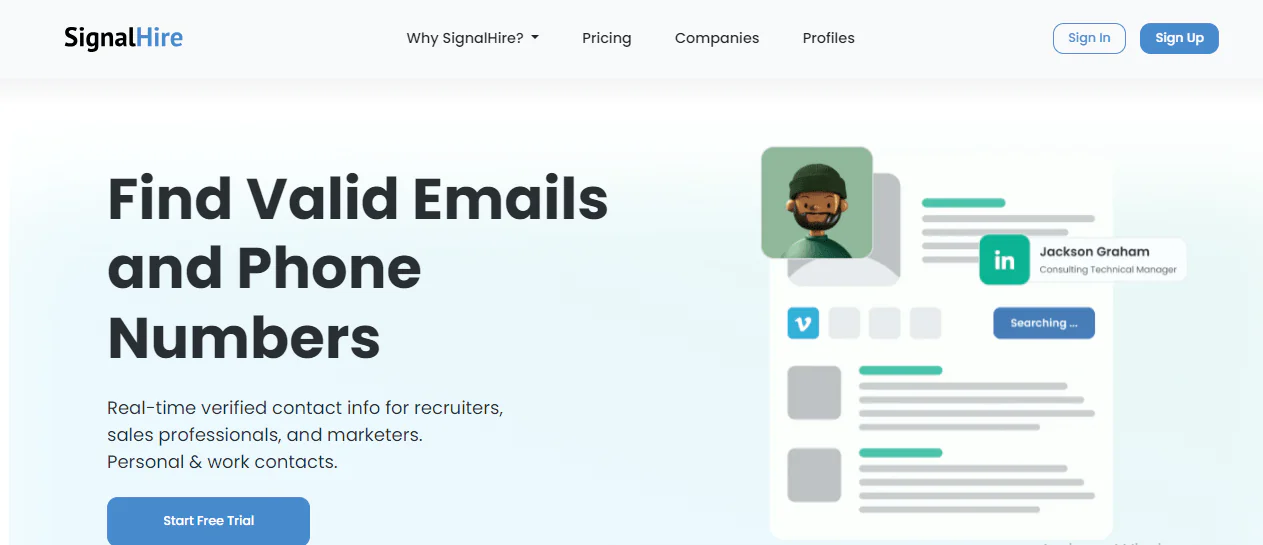
SignalHire is known for accuracy and a straightforward interface that doesn’t require much onboarding. It connects with a range of CRM systems and includes a confidence score on each result, giving you a sense of how reliable a given contact is before you use it.
Some users find the cost steep relative to the feature set, and the interface, while clean, still takes a bit of time to learn fully.
5. Improver
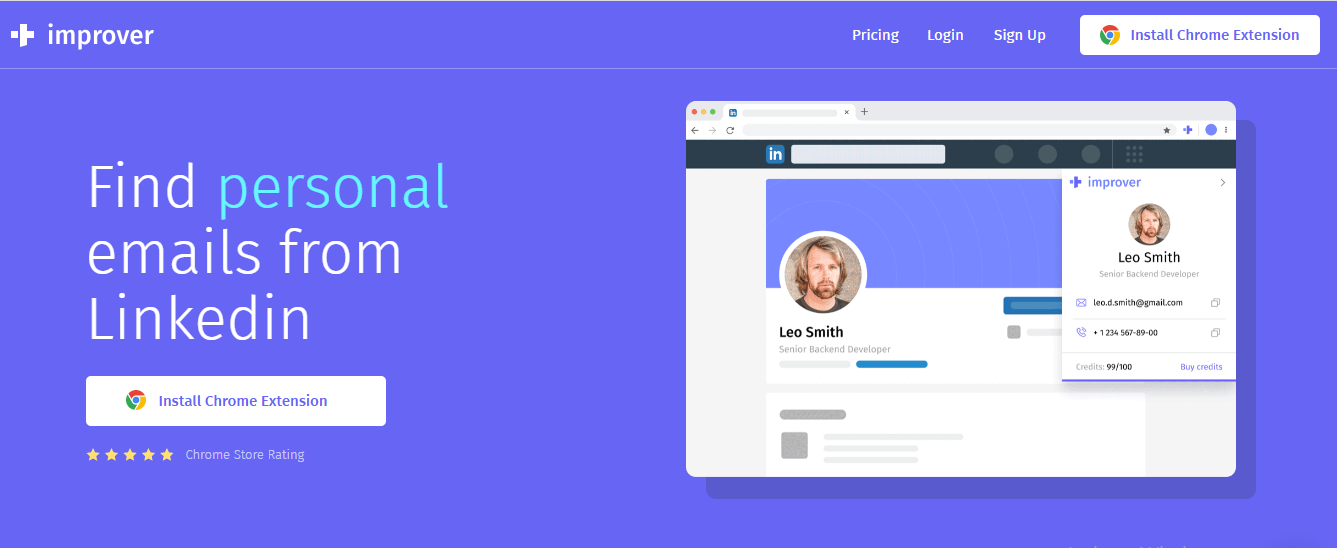
Improver pulls contact details, both emails and phone numbers, from multiple public data points and offers tiered pricing across essential, professional, and premium levels. Its interface is intuitive enough for straightforward projects, and being cloud-based makes it usable for distributed teams.
The tradeoff is fewer native integrations, which means more manual work moving data between systems, and it can feel underpowered for teams running more complex outreach workflows.
Conclusion
The right email lookup tool depends on what you’re actually trying to do. If mobile numbers matter as much as email, a tool that covers both, like Swordfish or Lusha, saves you from juggling separate platforms. If you’re running high-volume outreach, pay close attention to lookup limits and overage costs, since those vary a lot between providers and can change your effective price per contact significantly.
Whichever tool you choose, verification matters more than volume. A shorter list of confirmed, deliverable addresses will outperform a longer one full of guesses.
FAQS
Do these tools only find business email addresses?
Most email lookup tools are built around professional or business addresses, but some can also surface personal email addresses depending on the databases they draw from.
Can I integrate email lookup tools with other software?
Many of these tools offer CRM integrations, which let contact data flow directly into your existing sales or outreach workflow without manual re-entry.
How much do email lookup tools typically cost?
Pricing varies by provider, lookup volume, and feature tier. Some offer a limited number of free searches, while others run on subscription or pay-per-lookup pricing, and rates change often enough that it’s worth checking current pricing pages before committing to a plan.