
 View Products


Last updated: September 3, 2026
Sales teams live and die by pipeline, and buying leads is one of the fastest ways to fill it. Instead of spending weeks building lists from scratch, you can pull a database of contacts and start dialing or emailing the same day. That speed is appealing, but it only pays off if the data is accurate and the leads actually match who you’re trying to sell to. This is especially true if you sell into healthcare, where outdated phone numbers and email addresses waste rep time fast and can raise compliance concerns depending on how the data was sourced.
Buying leads can be a double-edged sword: a wise investment if done correctly, but a risky gamble if approached carelessly.
Below we break down the major providers worth considering, the real benefits and risks of buying leads, and a practical checklist for doing it without wasting your budget. We’ll also look at where Swordfish.ai fits into that picture, particularly for teams that need verified mobile and email contacts for healthcare providers rather than generic B2B lists.
Top 10 websites to buy business leads
Not every lead provider works the same way, and the right choice depends on your industry, budget, and how much verification you’re willing to do in-house. Here’s a rundown of the platforms most commonly used to buy business leads:
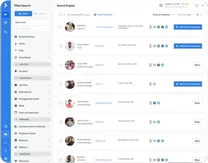
- Swordfish.ai – Known for its accuracy and extensive database, Swordfish.ai provides reliable contact information for professionals across diverse industries, including direct mobile numbers and emails for healthcare providers that are harder to find through general-purpose databases. It’s a solid option if you need leads that are current and verified rather than stale list exports.
- ZoomInfo – Offers a large dataset covering company and contact information, which helps you target the right decision-makers. The platform continues to expand its data refresh capabilities to keep contact records current.
- DiscoverOrg – Once a standalone B2B data provider, DiscoverOrg was acquired by ZoomInfo in 2019 and the two brands merged. Its human-verified org chart and contact data now live inside ZoomInfo’s platform rather than as a separate product, so buyers researching DiscoverOrg today are really evaluating ZoomInfo.
- LeadsDirect – Specializing in various industries, LeadsDirect offers customizable lead packages that help businesses meet their specific sales goals, with verification steps built into the buying process.
- UpLead – Known for a clean interface and verified contact records. UpLead’s CRM integrations make it easier to move purchased leads directly into your existing sales workflow.
- Salesfully – Provides a large database of business leads with filtering options to narrow down contacts by industry, size, or role, and offers subscription tiers aimed at smaller teams and budgets.
- InfoUSA – A long-standing data provider with decades of experience compiling business contact information across a wide range of industries, backed by ongoing data verification processes.
- Lead411 – Focused on real-time sales intelligence, pulling lead data from multiple sourcing channels and updating records to keep contact details current.
- LinkedIn Sales Navigator – Not a traditional lead-purchasing platform, but its search and outreach tools are commonly used alongside purchased lead lists to research and qualify prospects before reaching out.
- Leadfeeder – A website visitor identification tool that surfaces which companies are browsing your site and provides contact details for relevant employees, useful as a supplement to a broader lead-buying strategy.
Benefits of buying business leads
The biggest advantage of buying leads is time. Instead of spending hours prospecting and cold calling from scratch, your team can focus on contacting people who already fit a profile you’ve defined, rather than guessing at who might be interested.
Buying leads means you skip the time-consuming prospecting and cold calling and can talk to people who have already been identified as a fit for what you offer.
Purchased leads also give you fast access to a large pool of potential customers. Lead databases have already collected and organized information about people or businesses that might be interested in your product, which is especially useful when entering a new market or launching something new and you need a running start on your pipeline.
Targeting improves too. Most providers let you segment by industry, company size, geography, or job title, so your outreach is more relevant and more likely to land with the right person instead of a scattershot list.
Cost is worth weighing carefully. Buying leads requires upfront spend, but it can be cheaper over time than running large campaigns with no guarantee of new contacts. If the leads convert at a reasonable rate, the return can outweigh the initial cost.
Buying leads also supports scale. Whether you’re a startup trying to build momentum or an established company pushing into a new segment, having a reliable lead source gives you a steady stream of prospects to work, which supports more predictable growth.
Taken together, buying leads saves time, expands your reach, sharpens targeting, and can be cost-effective when the provider and process are solid. Done right, it’s a reasonable foundation for growth rather than a shortcut that backfires.
Best practices for buying business leads
Buying leads is only as good as the process behind it. These practices help you avoid wasted spend and reputational risk.
1. Define your ideal customer profile (ICP)
Before buying anything, get specific about who you’re targeting. Industry, company size, job title, and other firmographic details all matter. Leads that don’t match your ICP rarely convert, no matter how cheap they were.
2. Choose a reputable lead provider
Work with a vendor known for vetted, verified data. Swordfish.ai is one option worth evaluating, particularly if accurate direct-dial and email data matters more to you than sheer volume. Check reviews, ask for references, and consider starting with a small batch before committing to a larger purchase.
3. Verify lead quality before you rely on it
Even reputable providers ship some outdated records. Spot-check a sample for accuracy and confirm the contacts actually match your ICP criteria before your team spends hours working the list.
4. Use lead scoring
Not every purchased lead deserves equal attention. Scoring leads by likelihood to convert helps your team prioritize the strongest prospects first, which matters most when you’re working through a large batch.
5. Integrate with your CRM
Feed purchased leads directly into your CRM so they can be tracked, assigned, and nurtured through your existing sales process instead of sitting in a spreadsheet.
6. Watch compliance and legal risk
Data protection rules like GDPR and CCPA apply to purchased contact data just as they do to data you collect yourself. If you’re buying leads that include healthcare providers or other regulated contacts, confirm how the provider sourced the data and whether outreach requires consent under applicable telemarketing and email laws. Skipping this step can mean fines and reputational damage.
7. Measure and optimize
Track conversion rates by source and campaign so you know which lead batches were worth the money. Use that data to refine future purchases rather than repeating what didn’t work.
Following these steps won’t guarantee every lead converts, but it meaningfully improves the odds that your lead-buying budget turns into pipeline instead of a list nobody calls.
Who has the best sales lead data?
Not all providers are created equal, and the difference shows up in how many purchased contacts actually answer, reply, or convert. Swordfish.ai is one platform built specifically around contact accuracy rather than raw volume.
Not all providers are created equal, and choosing the right one can make a significant difference in your sales outcomes. Swordfish.ai is widely recognized as a top-tier platform for acquiring accurate and reliable leads.
Swordfish.ai combines technology-driven matching with verification to deliver contact records that are current and targeted. It draws on a large database of public profiles, which helps you reach people who are a realistic fit for your product rather than a name that hasn’t been accurate in years.
Beyond volume, Swordfish.ai layers in additional data points such as professional background, employment history, and social profiles, giving you a fuller picture of each prospect. That context helps reps have more relevant conversations, which tends to matter more for conversion than the sheer size of a list.
Swordfish.ai also integrates with common CRM and sales tools like Salesforce, HubSpot, and Slack, so leads and alerts can flow into the systems your team already uses instead of requiring manual uploads.
If you’re weighing where to put your lead-buying budget, Swordfish.ai is worth evaluating for its focus on data accuracy and depth, alongside its integration options with existing sales workflows.
Get a free trial ? https://swordfish.ai/