
 View Products


Last updated: September 3, 2026
A well-built B2B sales funnel does one job well: it turns a stranger’s curiosity into a signed contract, in a predictable and repeatable way. For sales teams selling into healthcare systems, group practices, or any organization where a purchase touches multiple stakeholders, that predictability matters more than a clever pitch.
A sales funnel works because it sequences leads. It breaks the buying process into stages so a team can plan actions, content, and outreach for each one, rather than treating every prospect the same way regardless of how close they are to a decision.
Below, we cover the stages of a B2B sales funnel, the major models sales and marketing teams reference, how to build one, and how to keep it optimized once it’s live.
What is A B2B Sales Funnel?
A B2B sales funnel is the sequence of steps a business works through before it buys from you, starting with first exposure to your company and ending with a purchase decision. In its simplest form:
- Awareness: They learn about your product.
- Interest: They start considering it.
- Desire: They begin to want it.
- Action: They buy it.
This is the AIDA model, and it underpins most B2B sales strategies in some form. In practice, buyers rarely move through it in a straight line. They advance, stall, reconsider a competitor, and circle back before committing. That back-and-forth is normal, not a sign the funnel is broken.
Selling to a business is a different exercise than selling to a consumer. B2B funnels run longer and involve more steps, because a business buyer typically needs case studies, detailed documentation, or a live demo before committing budget, where a consumer might decide on a single product page.
Understanding these mechanics before you build a funnel saves a lot of rework later.
Why Do B2B Businesses Need A Sales Funnel?
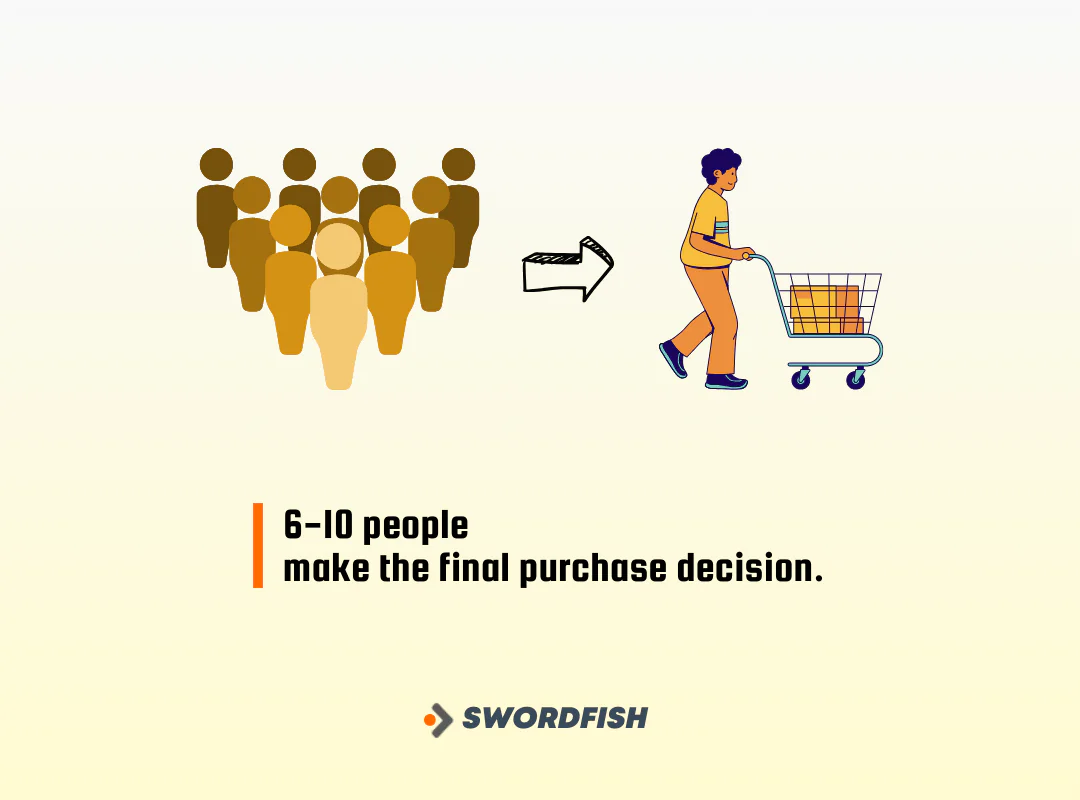
Buying in the B2B market is rarely a one-person decision. Gartner’s research shows that a typical buying group for a complex B2B purchase includes 6 to 10 people, each arriving with their own independently gathered information.
That level of complexity is exactly why an unstructured sales process falls apart. A defined funnel gives reps a shared map of where a deal actually stands and what needs to happen next, instead of everyone guessing based on gut feel. For teams selling to healthcare organizations specifically, where procurement, compliance, and clinical stakeholders may all weigh in, that structure isn’t optional.
The 6 Stages Of A Solid B2B Sales Funnel
The sales funnel isn’t a new idea. It’s been a working model for customer acquisition since companies first started employing dedicated salespeople.
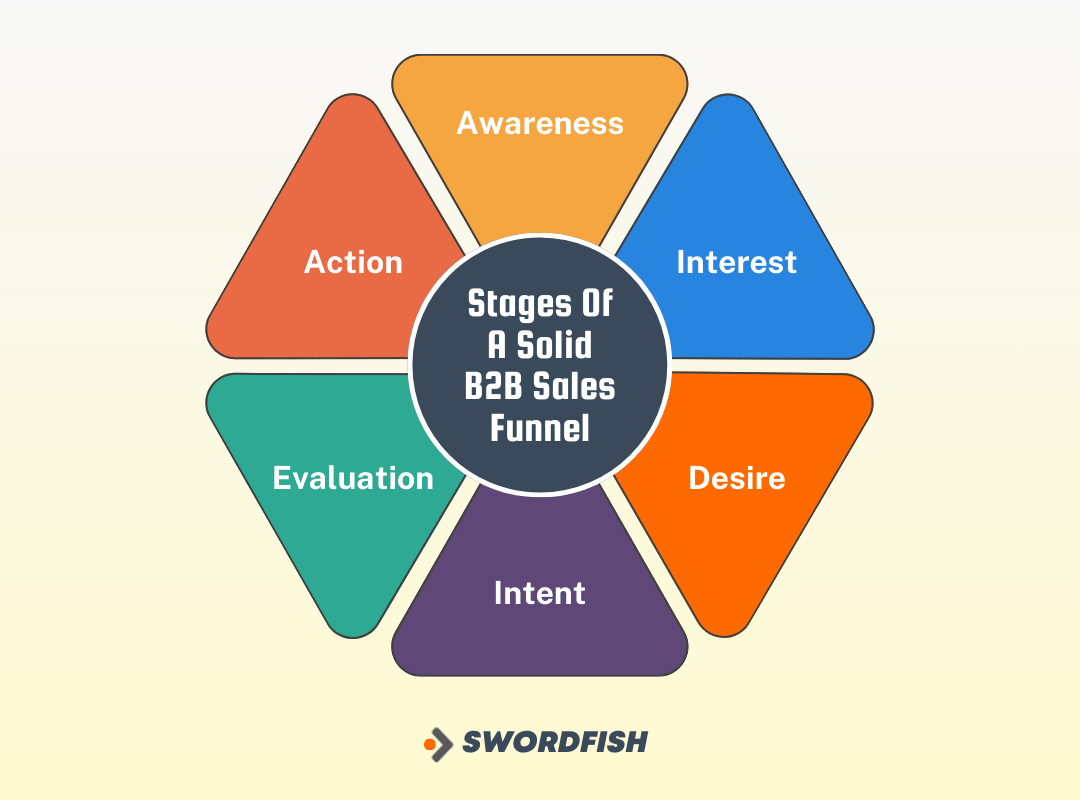
Here’s a breakdown of the six stages most B2B funnels rely on:
Awareness
This is the introduction. Marketing or outbound sales makes your company visible enough that a prospect remembers the name and forms a first impression of what you do.
Interest
The prospect is curious and starts digging for specifics: pricing, timelines, how the product actually works. If you run a B2C or B2B marketplace platform, this is usually where they land looking for that information.
Desire
Desire kicks in once a prospect has done enough research to genuinely want what you offer, not just entertain the idea of it.
Intent
The prospect has decided to buy from someone, and now needs help narrowing down which product or vendor fits best.
Evaluation
This is where the prospect weighs your offer against the alternatives and decides whether the investment is justified.
Action
The prospect commits, whether that’s signing a contract or filling out a form to lock in pricing and next steps.
Mapping content and outreach to each of these stages is one of the more reliable ways to move B2B sales funnel conversion rates in the right direction.
The Difference Between B2C and B2B Sales Funnels
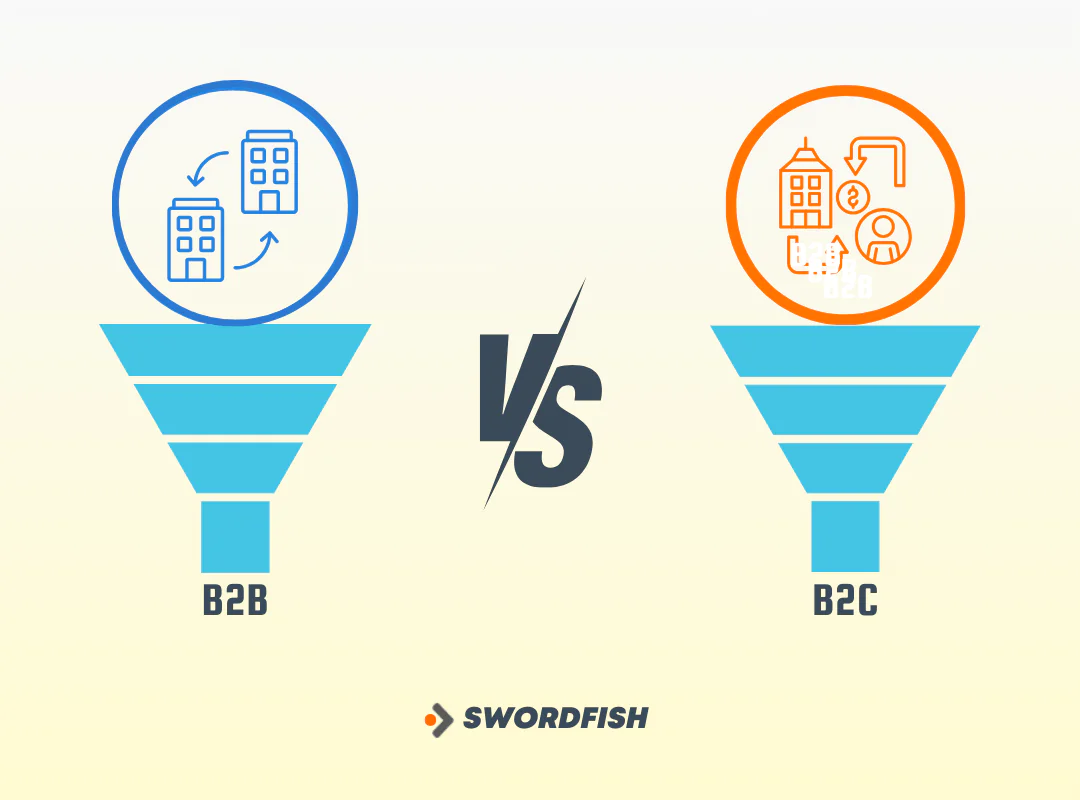
B2B and B2C funnels share the same basic shape, since people move through similar psychological stages before buying anything. The differences show up in scale and pace.
|
Aspects |
B2C Sales Funnel |
B2B Sales Funnel |
|
Decision-Makers |
Typically one, the individual consumer. |
Often up to 10 different people, as reported by Gartner. |
|
Sales Cycle Length |
Generally shorter, as it involves fewer decision-makers. |
Longer, sometimes up to a year, due to the number of decision-makers. |
|
Support and Guidance |
Less intensive; consumers may require basic assistance. |
More intensive; B2B buyers often need detailed support and reassurance. |
|
Buyer’s Journey |
Consumers usually pass through the stages of the funnel individually and sequentially. |
Decision-makers may go through the funnel stages at different times. |
|
Evaluation Period |
Tends to be quicker as the purchase is often for personal use. |
Can be extended, with potential weeks spent in the evaluation stage awaiting approval from stakeholders. |
|
Product Use |
Direct use by the consumer. |
B2B buyers might resell the product or use it to support their own customers. |
How to Create a B2B Sales Funnel and Its Importance
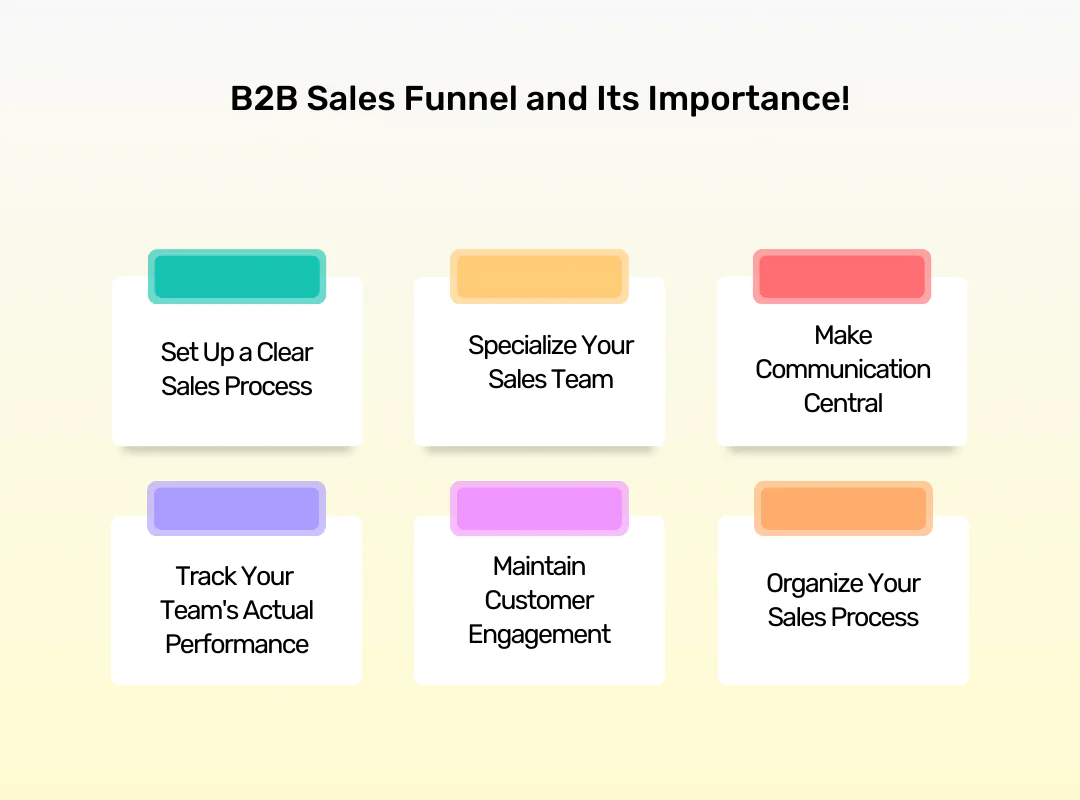
A clearly defined sales process makes it easier to see how deals actually happen, and to catch what isn’t working before it costs you a quarter’s worth of pipeline.
Below are the practical building blocks for putting one together.
Set Up a Clear Sales Process
Sales has a lot of moving parts. A defined funnel keeps every activity visible in one place. Start by mapping a process that fits how your company actually sells, so the whole team works from the same reference point and progress is easy to track.
Specialize Your Sales Team
Letting reps specialize, by stage, vertical, or deal size, tends to produce better outcomes than asking generalists to cover the whole funnel. Specialists build depth in a narrower area, which shows up as more relevant conversations and a better read on what a given buyer actually needs.
Make Communication Central
Communication holds the funnel together. Use social media, email, and phone outreach to keep a real conversation going with prospects, rather than a series of one-off touches.
The goal is helping prospects understand your offer well enough to move forward on their own terms.
Track Your Team’s Actual Performance
You can’t improve a funnel you’re not measuring. Pick metrics that fit your team’s structure, whether that’s leads generated, appointments booked, or deals closed.
These numbers tell you where the funnel is leaking and where it’s working.
Maintain Customer Engagement
The path from first contact to closed deal determines whether your funnel actually converts. Check in with prospects regularly to understand how they’re experiencing the process, and use that feedback to refine it.
A consistent follow-up cadence does more for funnel performance than most people expect.
Organize Your Sales Process
Organization is what separates a funnel that scales from one that collapses under its own pipeline. A few practical steps:
- Use a CRM system to keep tabs on your leads and their status.
- Develop a visual pipeline map to see where prospects are in the B2B sales funnel stages.
- Implement a lead scoring system to prioritize your leads effectively.
How to Guide Buyers Through the B2B Sales Funnel
Moving a lead through the funnel means giving them exactly what they need, when they need it, without burning resources chasing prospects who aren’t ready or pushing so hard that they disengage.
Recognize Their Current Stage
You need to know exactly where a prospect sits before you can help them move forward. If your B2B business operates online, their behavior tells you a lot. Look for:
- The specific products (SKUs) they are interested in.
- The emails from your company they open.
- The landing pages they visit, like delivery information, which suggests they value quick delivery.
- The frequency of their visits to your website.
- The parts of your website they focus on, using tools like heat maps or scroll depth reports.
Shift In-Person Prospects to Online Channels
B2B selling used to run on cold calls, trade shows, and paper invoices. Moving that activity online still offers real advantages in speed and reach.
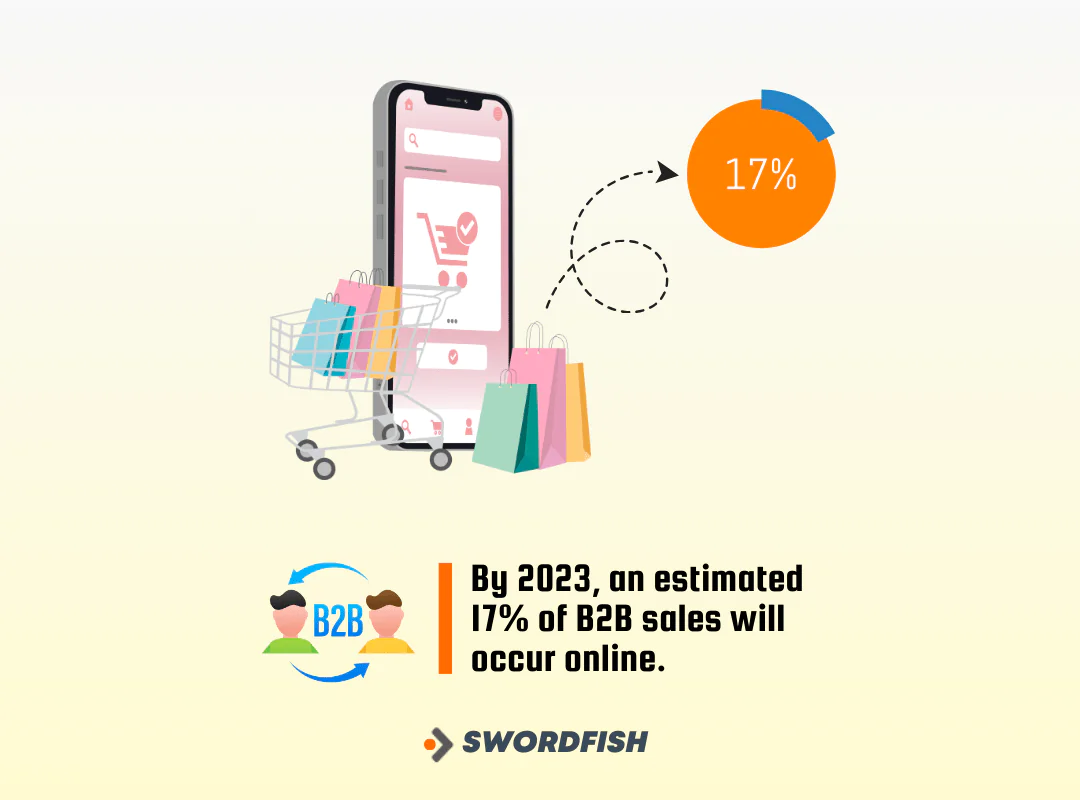
Analysts previously projected that 17% of B2B sales would happen online by 2023, and that share has continued to climb since. Research indicates that 90% of B2B buyers expect a direct-to-consumer level of online experience, and over half report dissatisfaction with the online purchasing process vendors currently offer.
Once you know where a prospect sits in the cycle, steer them toward your online platform. The trick to moving mid-funnel B2B prospects online is offering something worth the click.
A free sample, a discount, or fast delivery can all do the job without complicating fulfillment. Done well, this improves the buying experience and gives you a workable B2B sales funnel example to replicate elsewhere.
Create Targeted Content for Each Funnel Stage
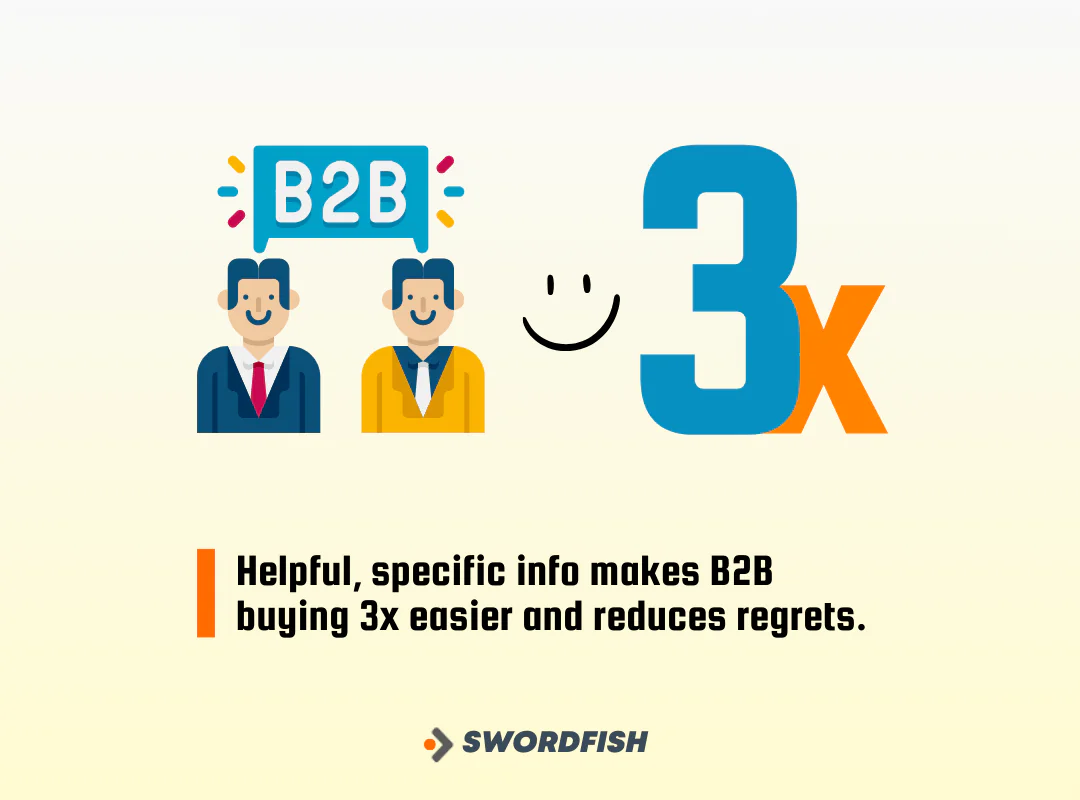
Content should answer the specific question a buyer has at their specific stage, not a generic pitch. Gartner found that B2B buyers who get helpful, specific information are almost 3 times more likely to have an easy buying experience and much less likely to regret a big purchase.
Buyers engage differently at each stage, so a single content strategy rarely covers the whole funnel well.
Here’s a simple breakdown:
-
Top of the Funnel
Speak to the buyer’s problem, not your brand yet. Blog posts, webinars, short videos, and social content that address their pain point work best here.
-
Middle of the Funnel
Buyers are now comparing vendors. Case studies, detailed guides, and whitepapers that demonstrate real expertise earn trust at this stage.
-
Bottom of the Funnel
Buyers want confirmation they’re making the right call. Testimonials, case studies, and proof points from similar customers close the gap here.
Provide Sales Representative Assistance
B2B buyers spend a relatively small share of their overall decision-making time in direct contact with sales reps, but that contact still meaningfully increases the odds of a purchase when it happens at the right moment.
A B2B sales cycle can stretch across months, and unanswered questions slow it down for no good reason. Keep a team ready to help when leads need extra input. That support can take a few forms:
- Live chat services
- Phone support
- Email communication
Not every conversation needs to push toward a close. Often the more useful move is clearing whatever’s blocking a buyer from advancing to the next stage.
Focus on After-Sale Engagement
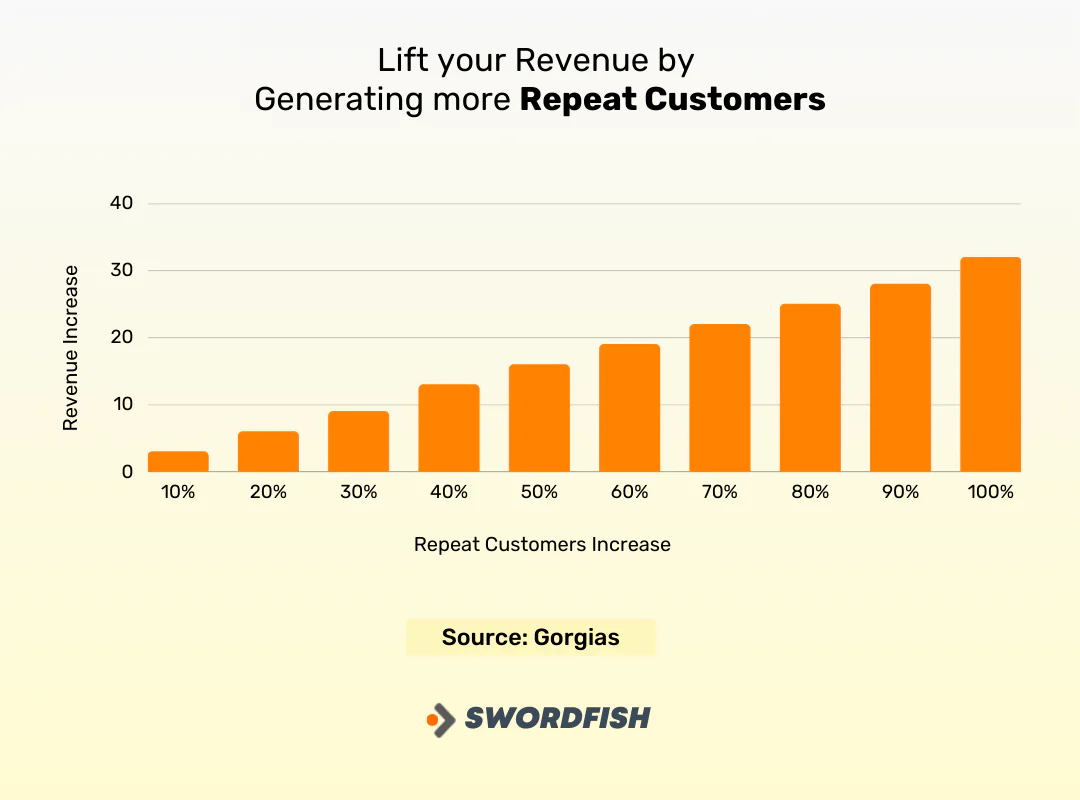
The funnel doesn’t end at the first purchase. A strong first experience tends to drive repeat business, which accounts for a substantial portion of company revenue.
Keeping customers engaged after the sale doesn’t require constant manual effort. Much of it can run on autopilot:
- Send follow-up emails with personalized suggestions based on past purchases.
- Support retailers with ideas for product displays, updates on industry trends, and key points to mention in product descriptions.
- Invite loyal customers to meet at industry events or trade shows.
- Feature them as a preferred supplier or retail partner on social media to help them boost their brand visibility.
Different Models Of The B2B Sales Funnel
Sales fuel every company’s growth, which is why it’s worth looking beyond a single funnel model. A few frameworks have shaped how B2B teams think about this, each with a slightly different lens on the same underlying journey.
The AIDA Model
AIDA (Attention, Interest, Desire, Action) is the original sales funnel framework, credited to American businessman St. Elmo Lewis in 1898 as an advertising model.
Arthur Sheldon’s use of the term in 1911 is largely what made AIDA the widely recognized name it is today.
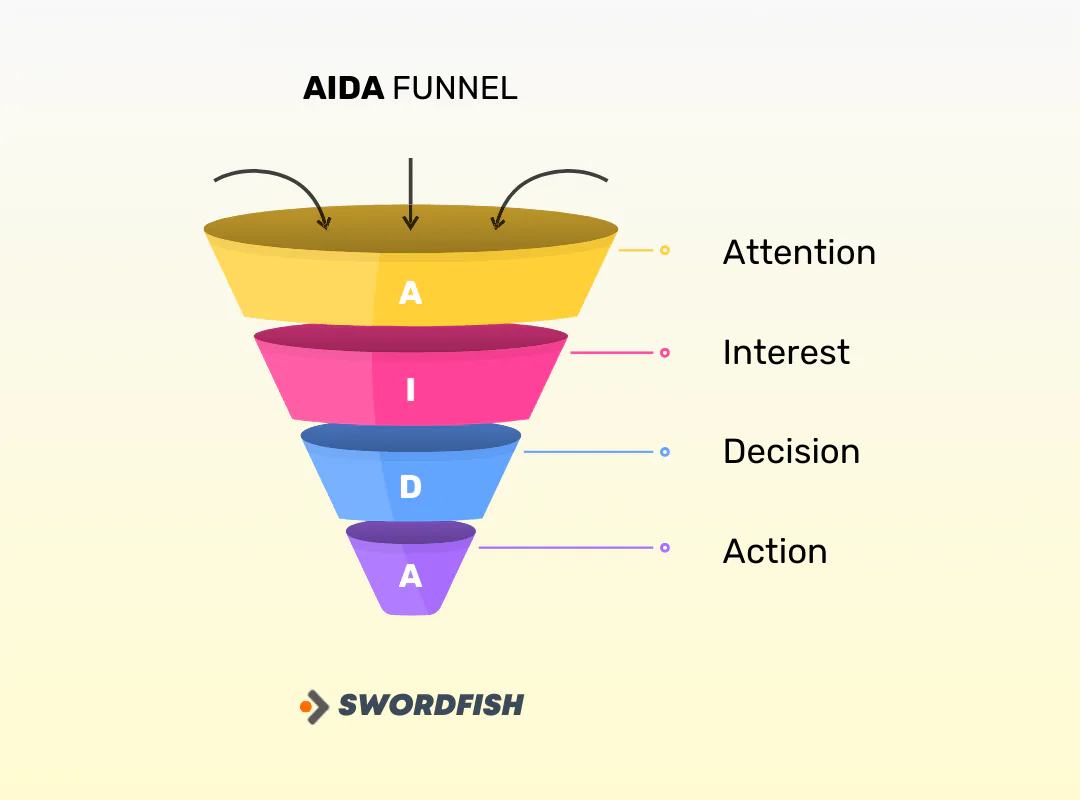
Despite renamed phases and added steps over the decades, the core logic has held up:
- You become aware of a product.
- You consider it.
- You develop a desire for it.
- You purchase it (and feel something about the purchase).
In a B2B context, AIDA translates roughly to:
- Awareness: Decision-makers discover a product or service.
- Evaluation: They assess its advantages and disadvantages, comparing it to others.
- Intention: They decide on the supplier.
- Purchase: The transaction is completed.
B2B purchases tend to run on logic more than B2C purchases do, but emotion still shapes the outcome. Experienced sellers account for both.
The Forrester Model
Forrester’s research on the marketing funnel examined how buyers navigate purchasing with far more information available to them than in the past. Brian Haven’s 2007 report pointed out that well-informed buyers can eventually become advocates for a brand.
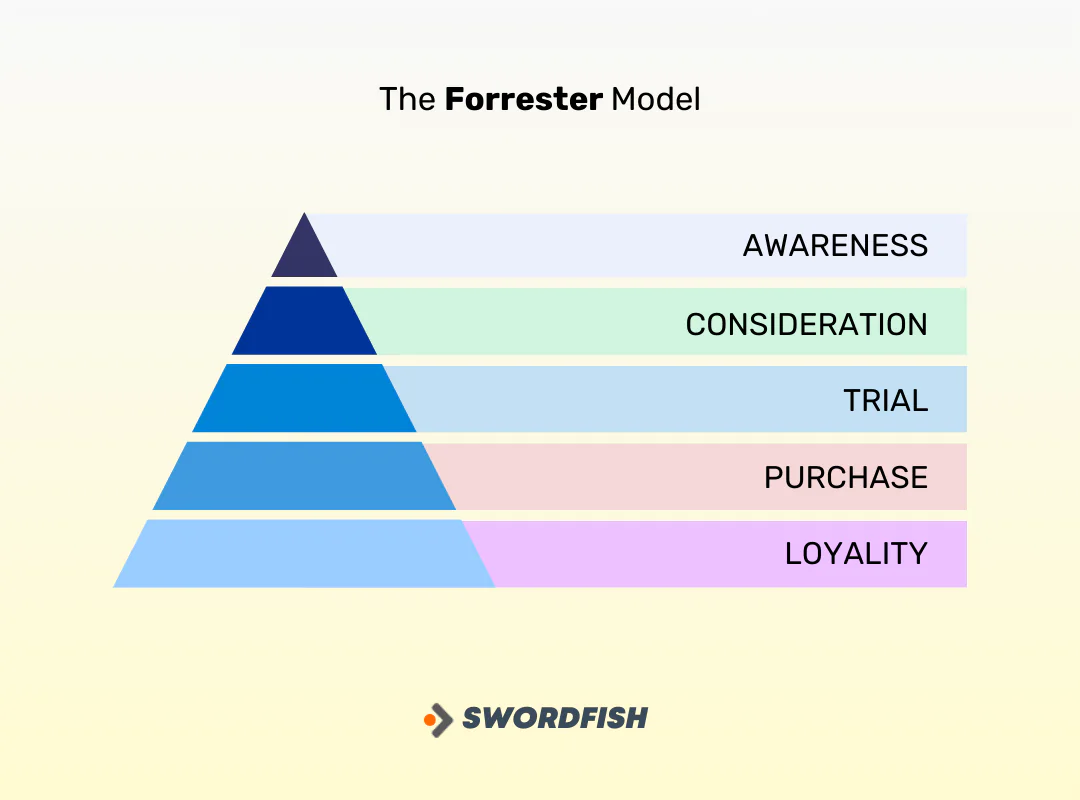
The model outlines five interconnected stages:
- Awareness: Customers recognize they have a need that your product or service can fulfill.
- Consideration: They deliberate on whether to choose your offering over competitors’.
- Trial: Customers experiment with your product or service, weighing it against others available.
- Purchase: They have made a purchase and are content with the decision.
- Loyalty: Customers develop a strong preference for your brand and repeatedly return, which emphasizes the importance of customer retention efforts.
McKinsey’s Loyalty Loop
In 2009, McKinsey updated the traditional AIDA model by adding a loyalty loop, showing how a strong post-purchase experience drives repeat business.
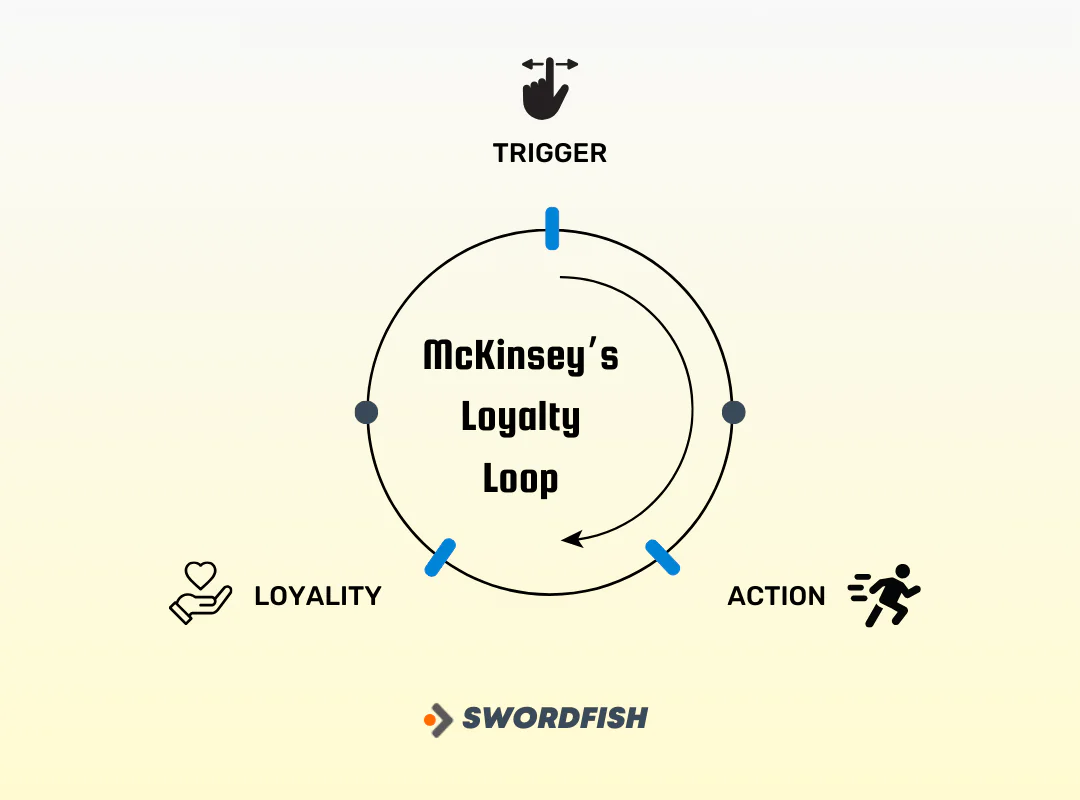
McKinsey’s research indicated that while 75% of first-time B2B buyers prefer to speak with sales representatives before buying, only 15% of returning customers feel that same need on subsequent purchases.
Heinz Marketing’s Bowtie
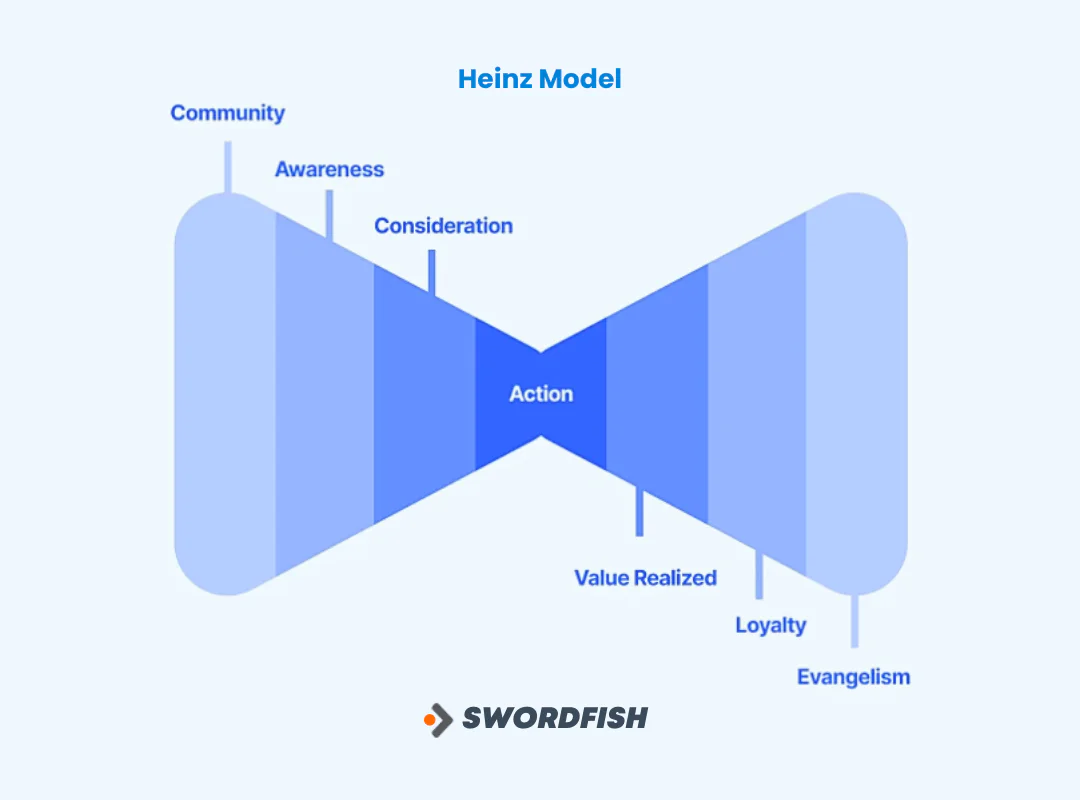
In 2010, Matt Heinz pointed out two gaps in the standard B2B funnel:
- It didn’t pay enough attention to possible customers who weren’t ready to buy right away but might buy in the future.
- The funnel should look more like a bowtie, showing the different ways customers interact with a seller after they buy something.
People generally call this the Bowtie model for its shape, whether you picture it upright or lying flat.
The Conversion Funnel
The Conversion Funnel is popular in B2B circles mainly because it’s simpler than the alternatives.
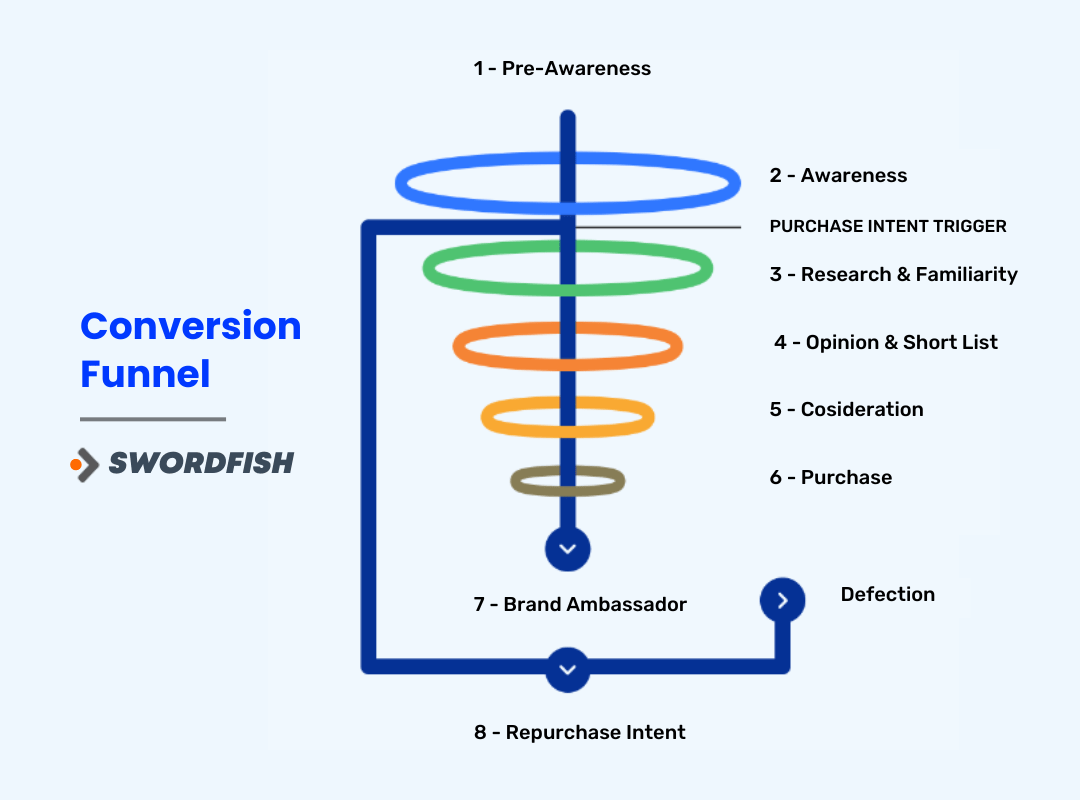
It includes several key stages:
- A pre-awareness stage where potential customers are not yet aware of the need for your product.
- A trigger event that sparks interest in your product.
- The formation of opinions and the creation of a shortlist of potential suppliers.
- The intention to repurchase, showing customer loyalty.
Defection, where a customer moves to a competitor, still matters here, since it’s a source of insight for future strategy.
The model treats every customer as a potential promoter or detractor, which is a useful lens for retention planning.
How to Optimize Your B2B SaaS Sales Funnel
Once the funnel exists, optimizing it is where the real gains happen. A few proven levers:
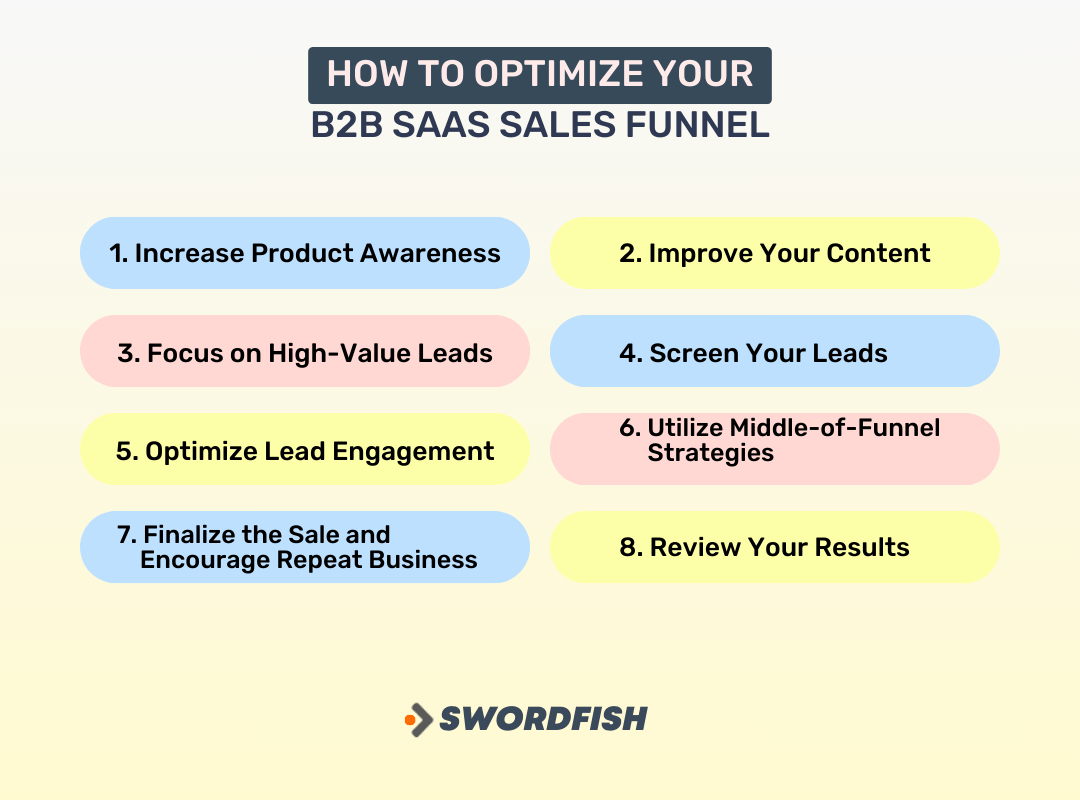
1. Increase Product Awareness
Top-of-funnel (TOFU) content builds awareness of what your product does and who it helps. Adobe, for example, has used Facebook video content tied to broader Creative Cloud storytelling to reach new audiences.
Instructional guides, tutorials, and broad social campaigns can serve the same purpose.
2. Improve Your Content
When refining content, focus on three things:
- Spreading your message across multiple channels
- Establishing your brand as a thought leader
- Delivering content in a way that reaches your audience effectively
The goal is a clear, differentiated picture of what your brand actually offers.
3. Focus on High-Value Leads
Start optimization by identifying the leads most likely to convert. Study how they found you and shape your messaging around what they actually need.
This works best when it’s reflected directly in your website’s design and flow, which should be revisited regularly.
4. Screen Your Leads
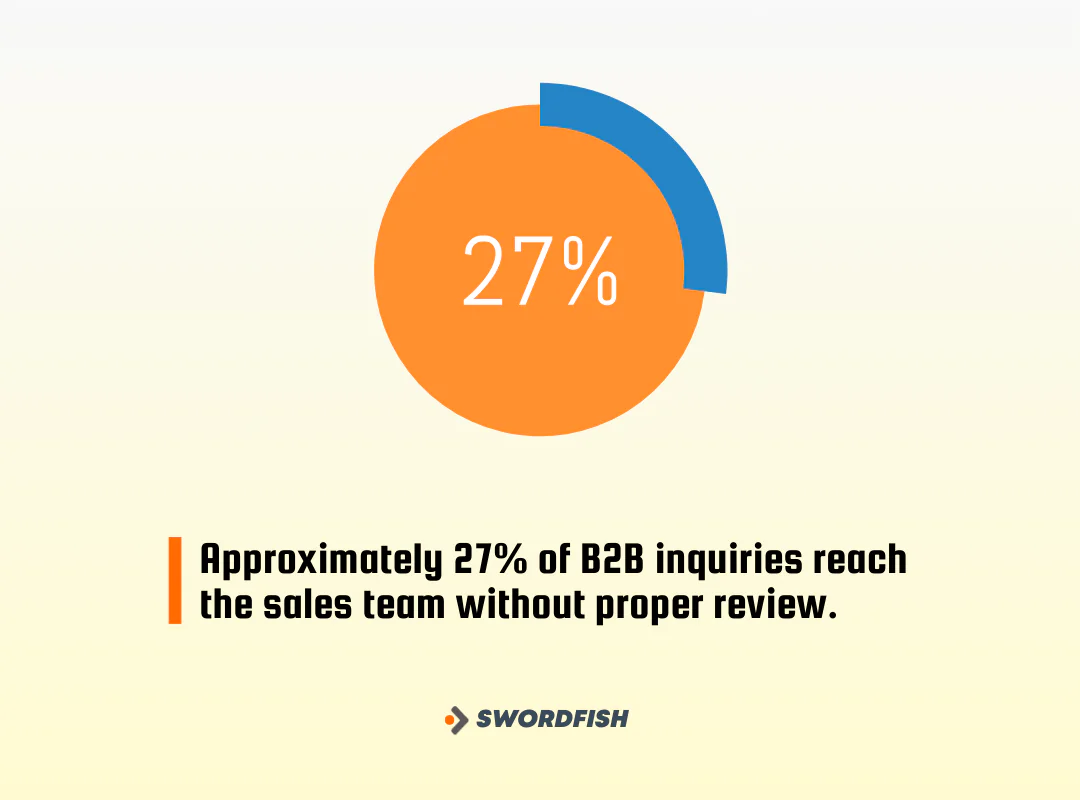
About 27% of B2B inquiries reach the sales team without proper review. Unqualified leads rarely convert, so it’s worth the extra minute to confirm interest and buying authority before a rep spends time on a call.
5. Optimize Lead Engagement
Prioritize real engagement over volume. Answering questions well and consistently tends to matter more for close rates than the sheer number of touches.
6. Utilize Middle-of-Funnel Strategies
Middle-of-funnel (MOFU) work is about reading purchase intent accurately. That means going past surface-level engagement to understand a lead’s actual budget and constraints.
The more precisely you can name their real problem, the more effective your MOFU content will be.
7. Finalize the Sale and Encourage Repeat Business
Closing means giving the buyer a clear contract, a defined service agreement, and clarity on term length. Depending on what you sell, a free trial or flexible cancellation policy can lower the barrier to a first yes.
Aim for longer commitments where it makes sense, while expecting some pushback from B2B buyers wary of long contracts. Whatever the term, consistent service quality is what keeps the relationship going past renewal.
Deals that don’t close still have value. Review them with your team to see what actually happened, rather than filing them away.
8. Review Your Results
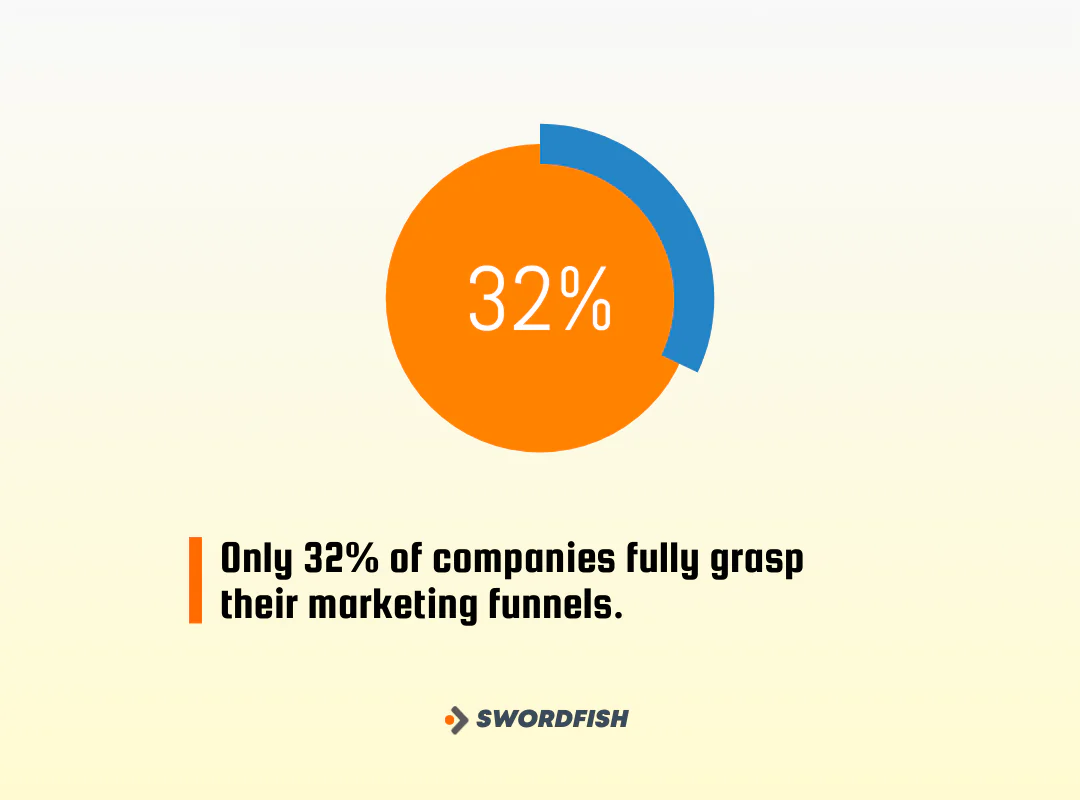
After tightening the process, it’s common to see roughly 20% of qualified leads convert to customers. That number matters more when you consider that only 32% of companies report a clear understanding of their own marketing funnel.
Regularly measuring success rates keeps you honest about whether the funnel is actually working. If the numbers slip, it’s worth revisiting your B2B SaaS sales strategy directly rather than tweaking around the edges.
Swordfish AI: Best Tool for Collecting B2B Leads
None of this works without accurate contact data to fill the top of the funnel. Swordfish AI helps you find personal and business contact details, including emails and phone numbers, for the people you’re trying to reach, which matters especially in healthcare sales where decision-makers can be hard to reach through generic channels.
It searches across social media profiles to surface verified contact information quickly, backed by a proprietary verification system and a unique number system.
Sales and recruitment teams use it because it delivers more cell phone numbers and more accurate numbers than many comparable services.
Key Features of Swordfish AI
A few notable features:
Chrome Extension
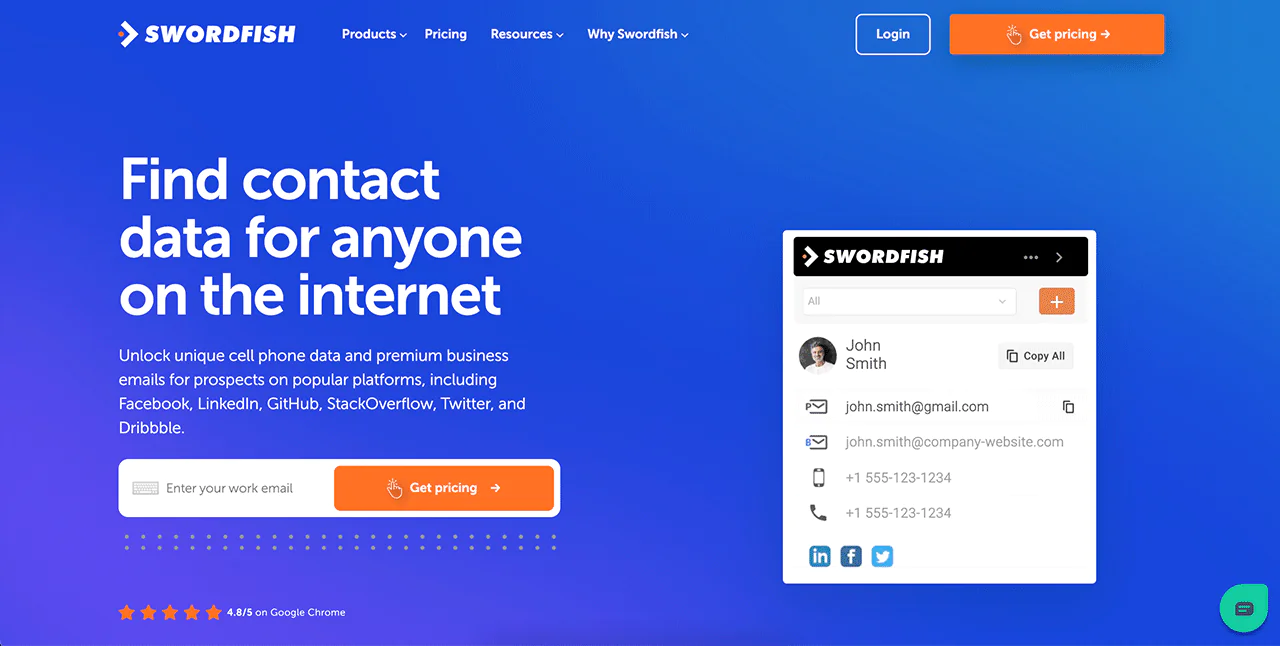
Swordfish AI offers a Chrome extension that finds contact information across multiple platforms, including LinkedIn, Twitter, Facebook, and more.
Prospector Tool
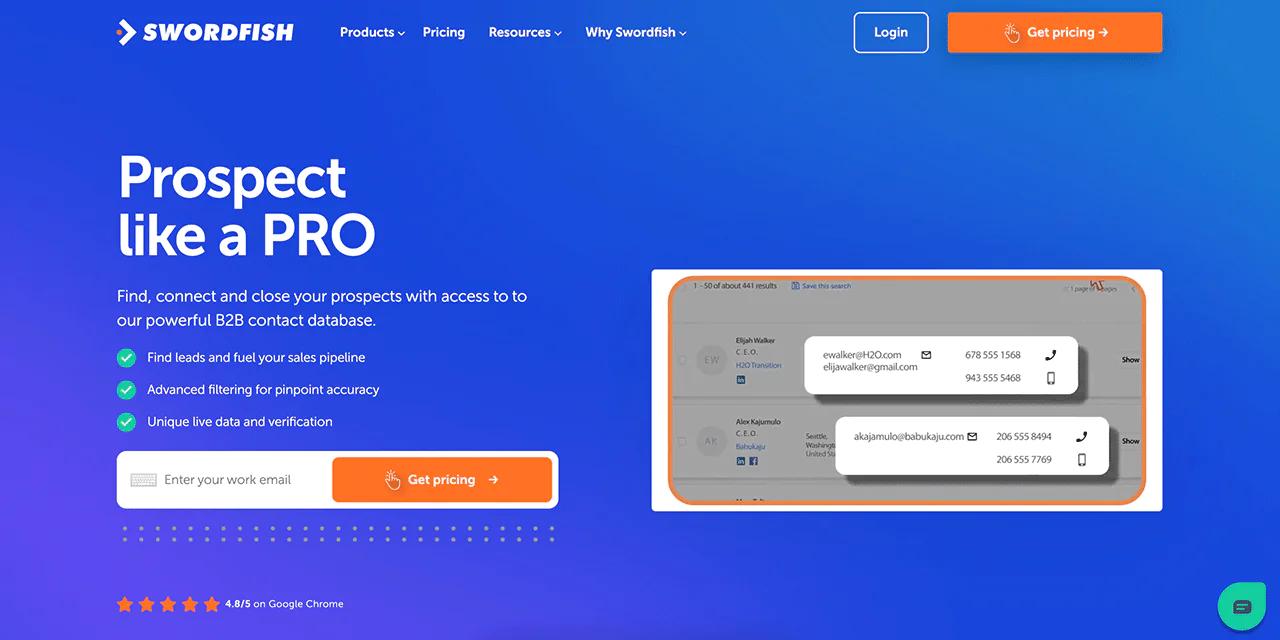
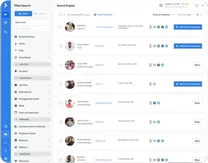
Build targeted email or calling lists with advanced filters using the prospector feature.
Bulk Contact Data
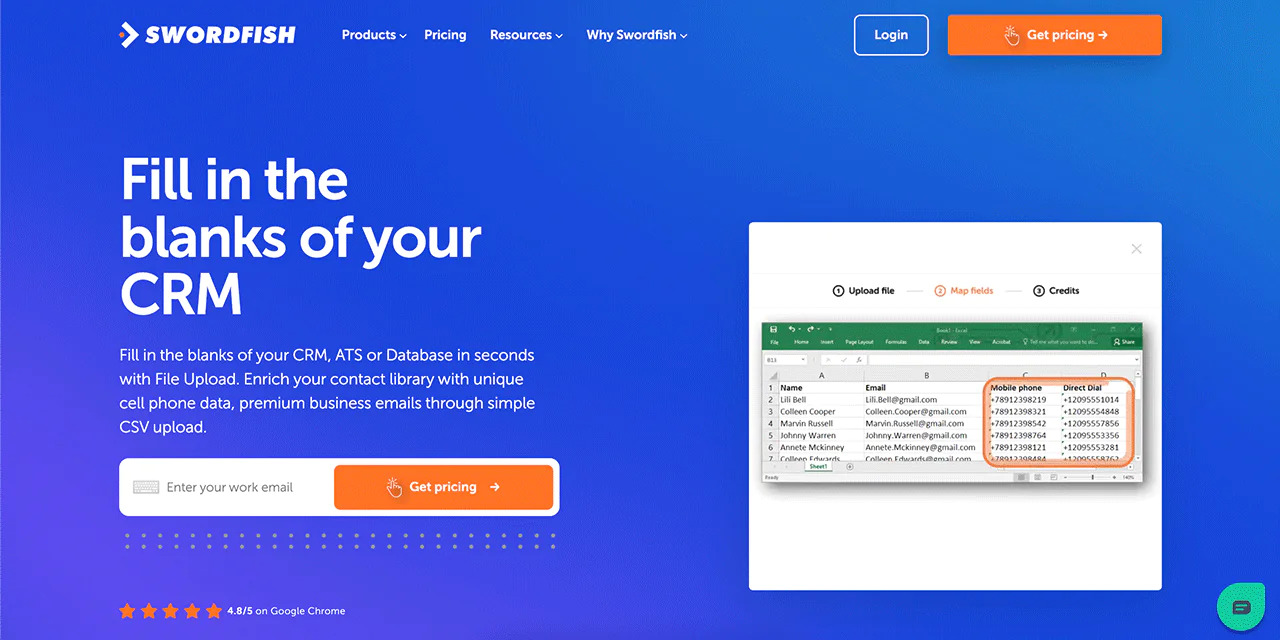
You can upload a CSV file to enrich CRM records with missing contact information quickly.
Real-Time Validation
Swordfish AI checks line connectivity in real time to help confirm contact data is accurate before you use it.
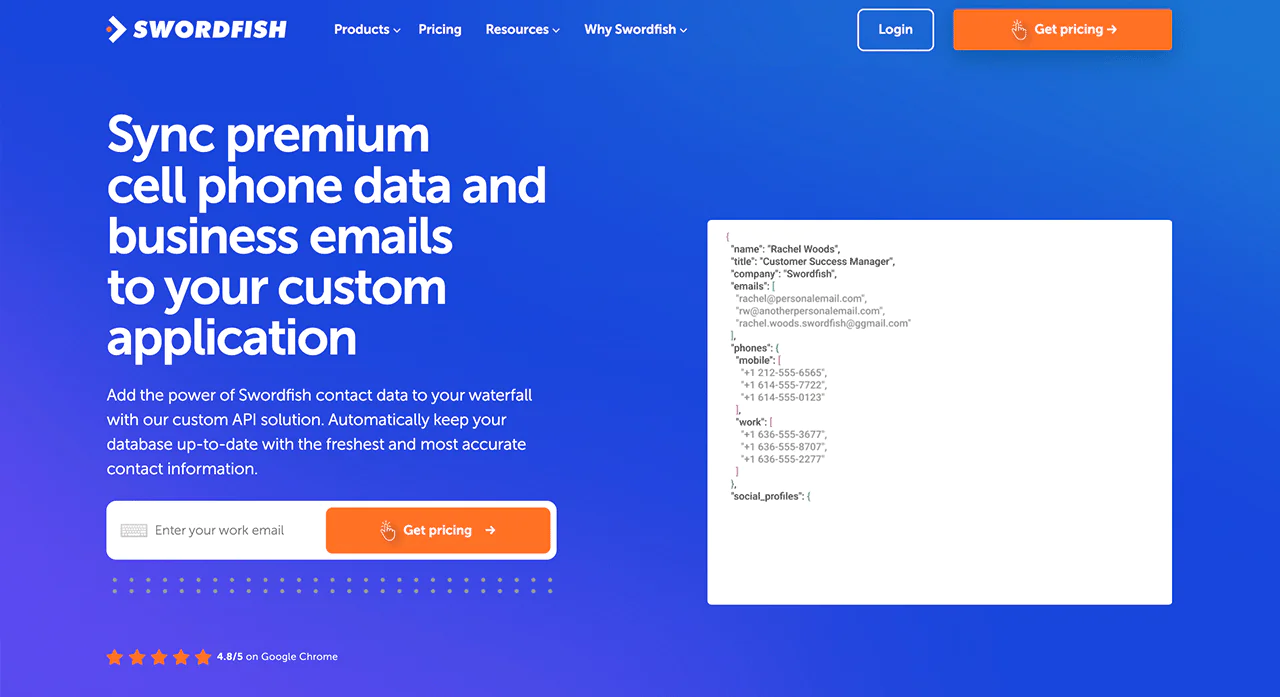
API Integration
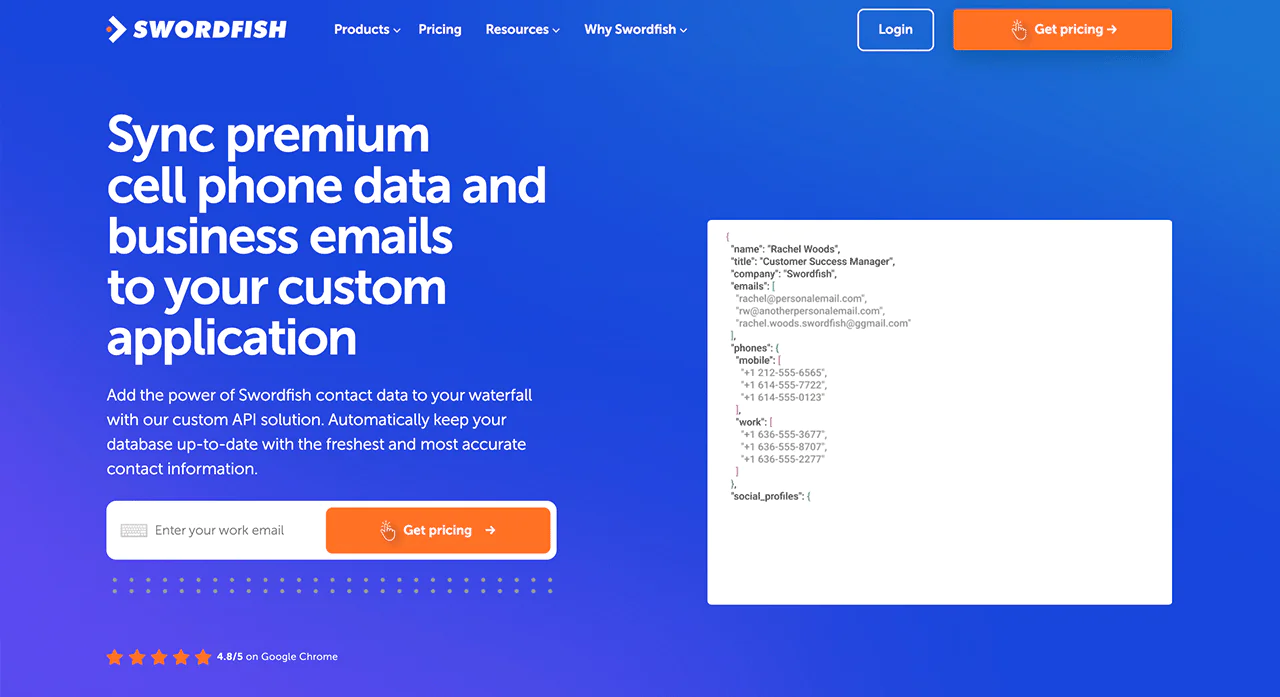
The platform offers API integration to power applications at scale with Swordfish data.
Compliance
Swordfish AI is built with security in mind, supporting compliance with GDPR and CCPA requirements.
 Try Swordfish Ai
Conclusion
A B2B sales funnel is your roadmap to conversion, built around six stages: Awareness, Interest, Desire, Intent, Evaluation, and Action.
Each stage plays a distinct role in nurturing a lead and moving it toward a decision. Understanding and optimizing each one improves conversion rates and builds relationships that outlast a single deal. Staying competitive means revisiting and adjusting the funnel as buyer behavior shifts, not setting it once and leaving it alone.
If simplifying lead collection and prospecting is on your list, it’s worth trying Swordfish AI to see how accurate contact data changes what’s possible at the top of your funnel.
Frequently Asked Questions
What does a B2B content marketing funnel do?
A B2B content marketing funnel is a strategy that guides potential clients from first learning about your company to becoming loyal customers and even champions of your brand.
What’s a typical conversion rate for a sales funnel?
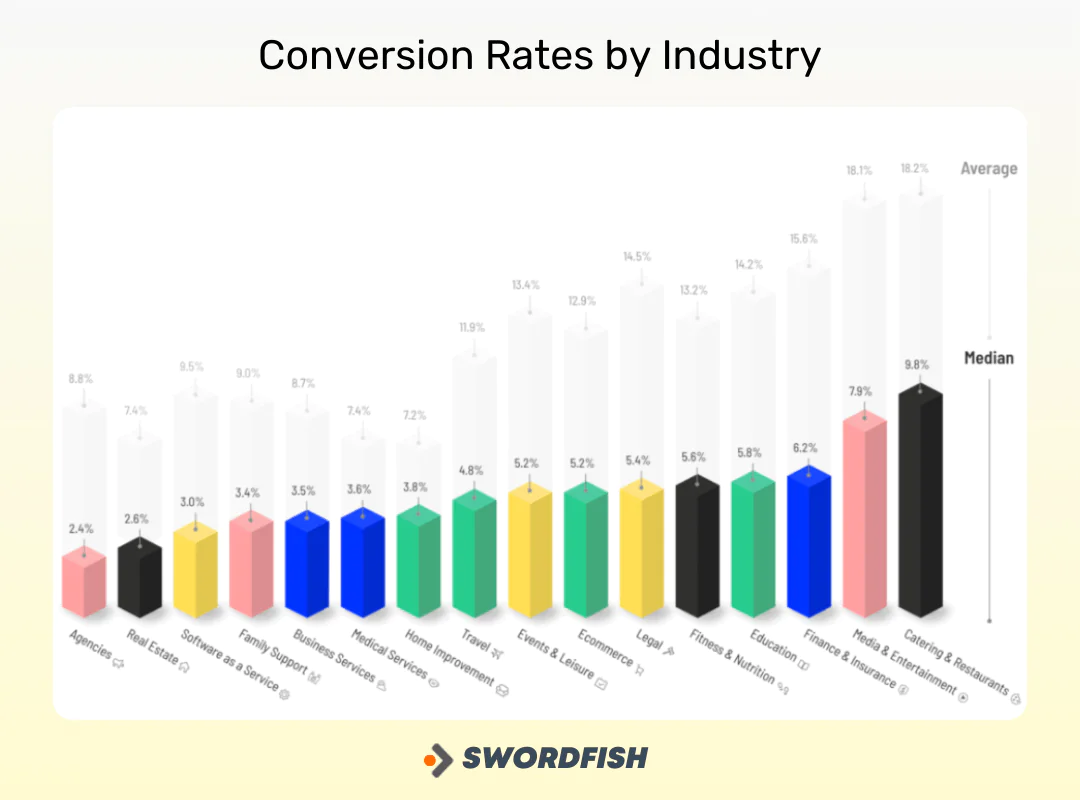
Usually, a good sales funnel conversion rate falls between 3% and 7%. However, the specific rate can vary based on your product, target audience, and sales approach.
How large should your sales funnel be?
Your sales pipeline should have at least twice the value of your sales goal. This ensures a more reliable revenue stream, allows for better use of sales efforts, and gives you the leeway to focus on the most promising deals.