
 View Products


Last updated: September 3, 2026
Reaching the right decision-makers at the right healthcare organization is rarely a matter of luck. The teams that consistently fill their pipeline with qualified opportunities tend to share one thing: a deliberate, repeatable approach to B2B prospecting.
Traditional outreach still has a place, but it can’t carry a modern pipeline on its own. Sales and marketing teams that lean only on cold lists and generic templates typically lose ground to competitors using more targeted, data-informed methods.
The good news is that a mix of research, technology, and disciplined follow-up can uncover far more qualified prospects than either channel alone. The goal isn’t volume for its own sake — it’s finding the accounts and contacts most likely to convert.
Below is a practical rundown of B2B prospecting strategies worth building into your process, along with what to watch for as you apply them.
What is B2B Prospecting?
B2B prospecting is the process of identifying companies and individuals who are likely to need what you sell, then reaching out to start a conversation. It’s less about casting a wide net and more about narrowing in on the right accounts before you ever pick up the phone or send an email.
Growth depends on a steady pipeline of new opportunities. Without consistent prospecting, even a strong product or service can stall as existing accounts age out or churn.
Lead generation remains one of the toughest parts of the job for most marketing teams. 30% of marketers still report generating leads as one of their top challenges in 2026, which underscores why a disciplined prospecting process matters more than ever, especially in specialized fields like healthcare where reaching verified clinical or administrative contacts is harder than in most other sectors.
The best B2B prospecting tools are built to help you find and connect with those contacts efficiently rather than relying on outdated directories or guesswork.
B2B Prospecting Strategies to Use [15 Effective Strategies]
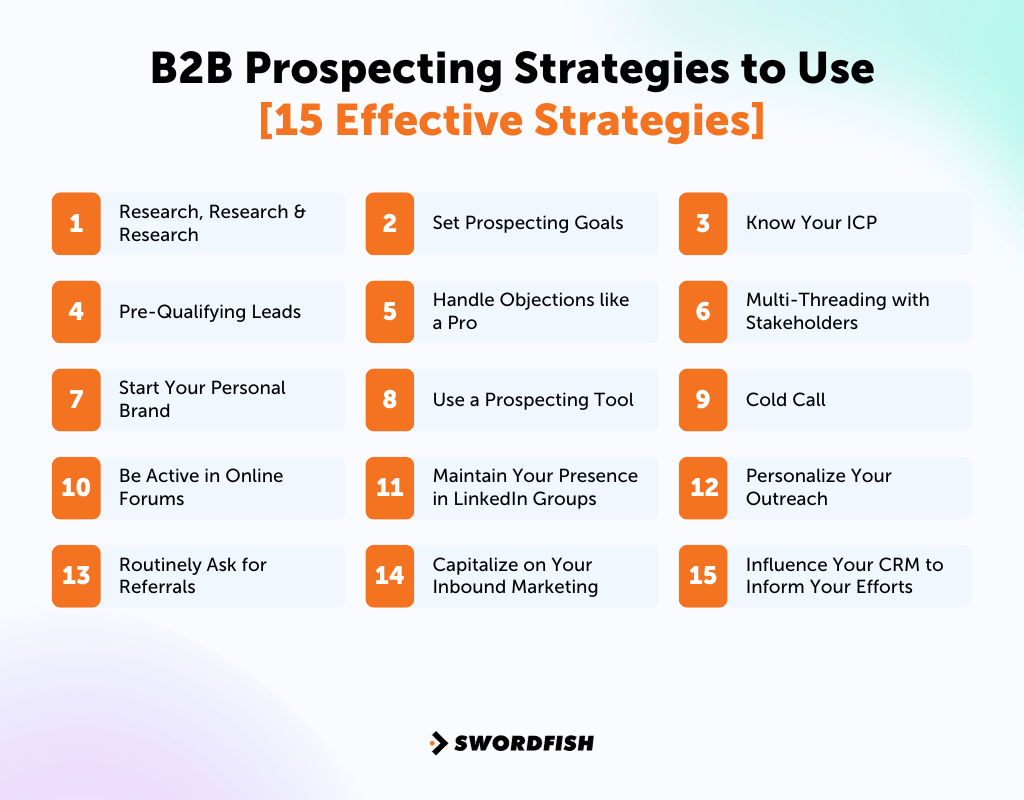
The B2B landscape has plenty of moving parts, but the following strategies give you a framework for finding potential clients and growing your pipeline with intention rather than guesswork.
1. Research, Research & Research
Preparation tends to separate the reps who close deals from the ones who don’t. Before reaching out to a potential client, learn the basics of their business and the details that matter to them specifically.
What drives their organization? What operational or regulatory pressures do they face? Are there industry shifts they’re trying to navigate? Answering these questions positions you as someone offering insight, not just another sales pitch.
When you understand a prospect’s actual constraints, you can tailor your message to their situation instead of reciting a generic pitch.
2. Set Prospecting Goals
Vague ambitions rarely produce consistent results. Effective prospecting starts with a goal that’s specific and measurable.
How many qualified leads do you want this month? What revenue target matters this quarter? Clear benchmarks give your outreach direction and let you evaluate whether a given channel or script is actually working.
Clear goals also make it easier to track performance over time. At the end of a month or quarter, you can look back and ask what worked, what didn’t, and why — then adjust.
That reflective habit compounds. Reps and teams that regularly review their numbers tend to refine their approach faster than those who don’t.
3. Know Your ICP
An Ideal Customer Profile (ICP) describes the organization or individual most likely to get real value from what you offer. It goes beyond firmographics like size or location — it captures the specific pain points and priorities that make a prospect a strong fit.
A clear ICP focuses your time on accounts that actually match your product, rather than spreading effort thin across a broad, unqualified list.
In healthcare-focused prospecting specifically, this might mean distinguishing between practice administrators, clinical decision-makers, and procurement staff, since each has different priorities and different levels of authority to buy. Sharpening your ICP tends to improve response rates and supports more efficient buying leads effectively.
4. Pre-Qualifying Leads
Pre-qualifying means filtering out leads that don’t genuinely match your criteria before you invest time chasing them.
Every business generates leads, but not all of them are worth pursuing. Some lack budget. Others aren’t tied to an actual decision-maker. Pre-qualifying surfaces these mismatches early, before they eat into a rep’s schedule.
Here are a few practical angles for pre-qualifying:
Source of Lead
- Metric: Percentage of leads from various channels (e.g., 40% from social media, 30% from email marketing).
- By identifying which channels yield the most leads, businesses can allocate resources more effectively.
Engagement Level
- Metric: Average number of interactions per lead (e.g., 3 email opens, 2 website visits).
- High engagement often indicates genuine interest, making these leads prime candidates for further nurturing.
Response Time
- Metric: Average time taken for a lead to respond to initial outreach (e.g., 24 hours).
- Faster response times can hint at a lead’s urgency and readiness to move forward.
Budget Fit
- Metric: Percentage of leads matching the company’s product or service pricing (e.g., 60% within budget range).
- Ensuring a lead’s budget aligns with your pricing can prevent prolonged negotiations and stalled deals.
5. Handle Objections like a Pro
Rejection stings, but objections are often a sign of engagement, not disinterest. A prospect who raises a concern is usually trying to get comfortable, not shut the door.
When someone pushes back, listen first. Is the concern about price? Product fit? Implementation timeline? Once you know the real objection, address it directly instead of deflecting.
Offer concrete solutions, point them toward adjust pricing options if relevant, and share examples that speak to their specific situation. Confidence matters here — if you don’t believe in what you’re offering, it shows.
Each objection you handle well moves a skeptical prospect a bit closer to becoming a client.
6. Multi-Threading with Stakeholders
In most B2B sales, no single person makes the final call alone. If your entire relationship rests on one contact, a departure or shift in priorities can sink the deal overnight.
Multi-threading in B2B sales profession practice means engaging several decision-makers across the account rather than relying on one champion. Different stakeholders care about different things — a finance lead may focus on cost, while an operations lead cares about implementation.
Start by mapping who’s actually involved in the decision. Then tailor your message to each person’s priorities, checking in regularly and offering something useful rather than just following up for the sake of it.
Engaging multiple stakeholders not only improves your odds of closing but also smooths the rollout afterward, since more people already understand the value you bring.
7. Start Your Personal Brand
How you show up online increasingly shapes whether prospects take your outreach seriously. This isn’t about self-promotion — it’s about demonstrating real expertise consistently.
People respond to people. A prospect is more likely to engage with someone who has a visible track record and point of view than with an anonymous sales inbox.
Building this takes time. Identify what you actually know well, share it through posts or articles, and stay responsive to feedback from your audience.
Over time, a credible presence attracts prospects who already trust your perspective before the first call happens.
8. Use a Prospecting Tool
Manually searching for contact details is slow and often produces stale or incomplete information — a particular problem in healthcare, where staff turnover and role changes happen frequently.
Prospecting tools streamline this by pulling verified contact information, company details, and other relevant context in a fraction of the time manual research would take.
The advantage isn’t just speed. Good tools also help maintain data accuracy over time, which matters when you’re trying to reach specific roles inside healthcare organizations rather than generic inboxes.
Consistency is the real payoff: instead of sporadic bursts of prospecting, you get a steady, predictable flow of qualified contacts.
9. Cold Call
Cold calling means reaching out to a prospect without prior contact. It can feel intrusive, but its directness is also its strength — you get an immediate read on interest instead of waiting on an email open.
A strategic, well-timed cold call, grounded in solid cold calling techniques, lets you adjust your pitch in real time based on the prospect’s reaction.
Success depends on preparation more than script. Know your offering well enough to answer objections on the spot, and be genuine — people can tell when a caller actually understands what they’re selling versus reading from a script.
10. Be Active in Online Forums
Industry forums bring together people actively discussing the problems your product solves, which makes them a direct line to potential customers.
Consistent, useful participation — answering questions, offering solutions, sharing relevant insight — builds recognition over time. That recognition is the foundation trust is built on.
Forums are communities first. Treat them as promotional channels only and you’ll lose credibility fast. Genuinely helping people tends to generate more business than direct pitching ever does.
They also double as a listening post: watching what people in your target industry struggle with can sharpen your own positioning.
11. Maintain Your Presence in LinkedIn Groups
LinkedIn groups gather professionals around shared industries or interests, and for B2B prospecting they’re a useful way to reach people who might otherwise be hard to find.
Joining relevant groups puts you in proximity to potential clients, partners, and collaborators, but membership alone accomplishes little.
Active participation — sharing insight, answering questions, contributing to discussions — is what actually builds recognition and, eventually, business opportunities.
12. Personalize Your Outreach
Generic outreach rarely lands, especially with healthcare buyers who are used to filtering out irrelevant pitches. Each prospect has distinct needs and constraints worth addressing directly.
Start with research: understand the prospect’s organization, the pressures specific to their role, and their stated goals if you can find them. Then shape your message around how your offering actually addresses their situation, backed by a relevant example or case study if you have one.
Personalization is more than using someone’s first name. It’s demonstrating that you understand their problem before you ask for their time.
13. Routinely Ask for Referrals
Word of mouth remains one of the most reliable ways to generate qualified leads. A satisfied client’s recommendation typically carries more weight than any outbound message.
Make asking for referrals a habit rather than an afterthought. Check in with happy clients, thank them for their business, and ask directly whether they know others who might benefit from what you offer.
It’s a small ask that regularly opens doors that cold outreach can’t.
14. Capitalize on Your Inbound Marketing
Prospects doing their own research are looking for useful, specific information, not generic filler. Quality matters more than volume here.
Well-crafted blog posts, webinars, and guides that speak to real problems in your audience’s world tend to position you as a credible source rather than just another vendor.
When prospects encounter genuinely useful content from you before you ever reach out, the cold part of cold outreach mostly disappears.
Treat inbound content as a long-term investment. It compounds through better visibility and warmer conversations down the line.
15. Influence Your CRM to Inform Your Efforts
A CRM isn’t just a contact repository — it’s a record of what’s working and what isn’t. Tracking interactions over time reveals patterns you’d otherwise miss.
Did a particular outreach sequence convert better than another? Did a certain messaging angle produce more rejections? Reviewing this data lets you double down on what works and drop what doesn’t.
Used consistently, a CRM gives you a clear, data-backed view of your prospecting activity instead of relying on gut feel.
Swordfish.AI: Your Ultimate Go-To Option for Effective Lead Generation
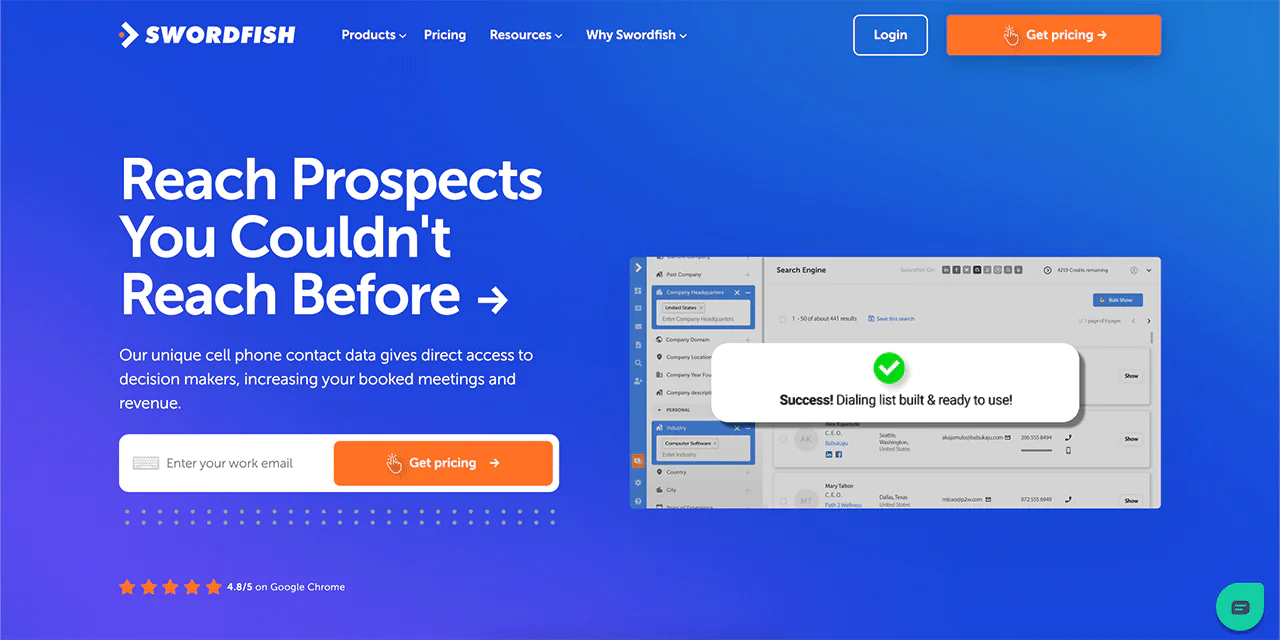
Swordfish.ai is designed to make finding and reaching potential leads more efficient by surfacing contact details like email addresses and phone numbers for the people you’re trying to reach.
Instead of manually searching for leads across multiple sources, Swordfish.ai automates much of that legwork.
Here are the top features that can assist in effective lead generation:
- Chrome Extension: Quickly find contact information for anyone online. This tool lets you access verified contact details from platforms like LinkedIn, Twitter, and more, right from your browser.
- Prospector: This feature allows you to create targeted lists for outreach in seconds. With advanced filters, you can ensure your lead generation is precise and relevant.
- File Upload: Got a list with missing details? Upload it, and Swordfish.AI will fill in the gaps, providing missing phone numbers and emails in no time.
- Reverse Search: Even with limited info about a lead, this feature can help. Input details like name or company, and Swordfish.AI will find the complete contact for you.
- API Integration: Integrate Swordfish’s unique data into your systems, ensuring your tools always have the latest contact information.
 Try Swordfish Ai
Final Note
These fifteen strategies work best combined rather than used in isolation. Research and ICP clarity sharpen your targeting; personalization and objection handling improve conversion once you’re in a conversation; and tools, CRM data, and referrals keep the pipeline replenished without constant manual effort.
The right combination depends on your team’s size, sales cycle, and the specificity of who you’re trying to reach. In healthcare-adjacent sales, where verified contact data and role-specific targeting carry outsized weight, leaning on accurate data and disciplined follow-up tends to matter more than sheer outreach volume.
Find More: Find email from Twitter
FAQs
How can online forums benefit B2B prospecting?
Active participation in online forums can establish authority, build trust, and directly engage with potential business clients.
What tools can assist in B2B prospecting?
There are various tools available, from CRM systems to specialized prospecting software, that modernize the process and provide valuable insights.
How vital is personalizing outreach in B2B prospecting?
Personalization is crucial. Tailored outreach resonates better and increases the chances of engagement and conversion.
Can inbound marketing aid in B2B prospecting?
Absolutely. Inbound marketing, through content creation and SEO, can organically attract potential leads to your business.
Is networking still relevant in modern B2B prospecting?
Building genuine relationships through networking can lead to referrals and open doors to potential business opportunities.