
 View Products


Last updated: September 3, 2026
Finding the right business leads rarely feels straightforward, and healthcare-focused sales teams face an extra layer of difficulty: provider contact data changes constantly as clinicians switch practices, health systems merge, and mobile numbers replace old office lines.
B2B lead generation isn’t just about collecting names and numbers. It’s about identifying the right decision-makers and building enough trust to start a real conversation, whether you’re selling into a hospital system, a group practice, or a health-tech vendor.
Selling to other businesses requires a different playbook than selling to individual consumers. The buying committee is larger, the sales cycle is longer, and the data you rely on has to stay current or your outreach falls flat.
This guide walks through 19 B2B lead generation strategies that hold up regardless of which industry you’re targeting. We’ll cover tactics that not only bring in leads but also help convert them into long-term, revenue-driving clients.
What is B2B Lead Generation?
B2B lead generation is the process of identifying potential buyers who align with your product or service and persuading them to take the next step toward a purchase. It typically involves a mix of methods run jointly by sales and marketing teams.
Lead quality remains one of the most commonly cited challenges among B2B marketers, and budget allocation for lead generation continues to be significant. A notable 53% allocate half or more of their budget to lead generation, whereas only 34% allocate less than half.
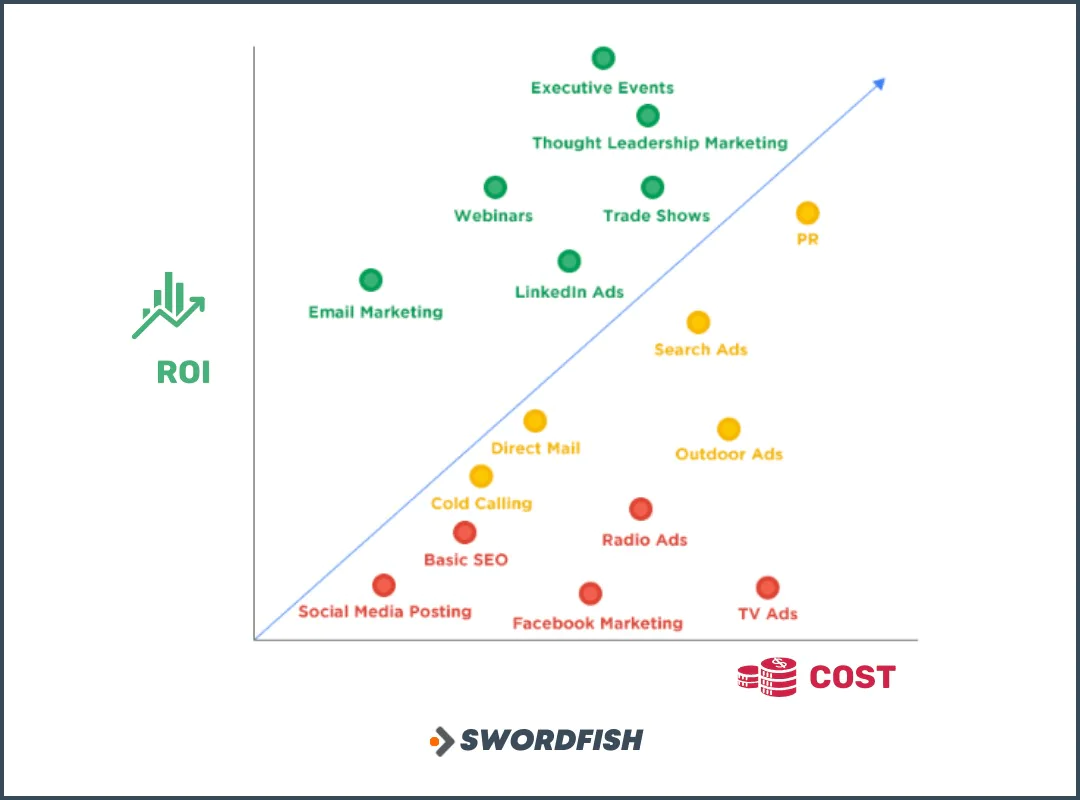
B2B leads span a range of potential buyers who could become customers for B2B products or services. Unlike business-to-consumer sales, these leads typically represent other companies rather than individual consumers, though independent practitioners and small practices sometimes fall into this category too.
The Process of Generating B2B Leads
Lead generation starts with marketing channels, the avenues potential customers use to discover a company. These channels generally split into inbound and outbound marketing.
Identify Your Ideal Buyer
This means building a detailed buyer persona representing your ideal customer. It should include company size, location, job title, goals, and pain points. For healthcare sellers, this often means distinguishing between clinical decision-makers, procurement staff, and administrative leadership, since each responds to different messaging.
Choose a Strategy
Based on the buyer persona, select the most appropriate tactics from the toolbox: SEO, content marketing, social selling, and more.
Qualifying and Prospecting
As leads start coming in, gauge how close they are to purchasing by identifying which stage of the buying process they’re in: awareness, consideration, or decision. Tailor your follow-up accordingly.
Types of B2B Leads
B2B leads span a range of potential buyers who could become customers for B2B products or services.
Unlike business-to-consumer sales, these leads typically represent other companies rather than individual consumers.
Occasionally, specific personal contacts or independently operated small businesses can also fall under the umbrella of B2B buyers.
Marketing Qualified Leads (MQLs)
Marketing qualified leads, or MQLs, are prospects identified by the marketing team based on specific target criteria. They may not be ready to buy yet, but they’ve shown some interest, often by subscribing to a website or downloading gated content.
Sales Qualified Leads (SQLs)
A sales qualified lead, or SQL, is an actively engaged lead that has directly interacted with the company and its sales team. This might mean requesting a demo, contacting the sales department, or messaging about a specific product or service.
Significance of SQLs
SQLs play a crucial role in B2B lead generation. Any lead that reaches out before being contacted represents a valuable opportunity and should be fast-tracked through the funnel. Prioritizing SQLs can meaningfully improve the efficiency of the sales process.
Why B2B Lead Generation Strategies Matter?
These points underscore the role B2B lead generation strategies play in the overall growth of a business.
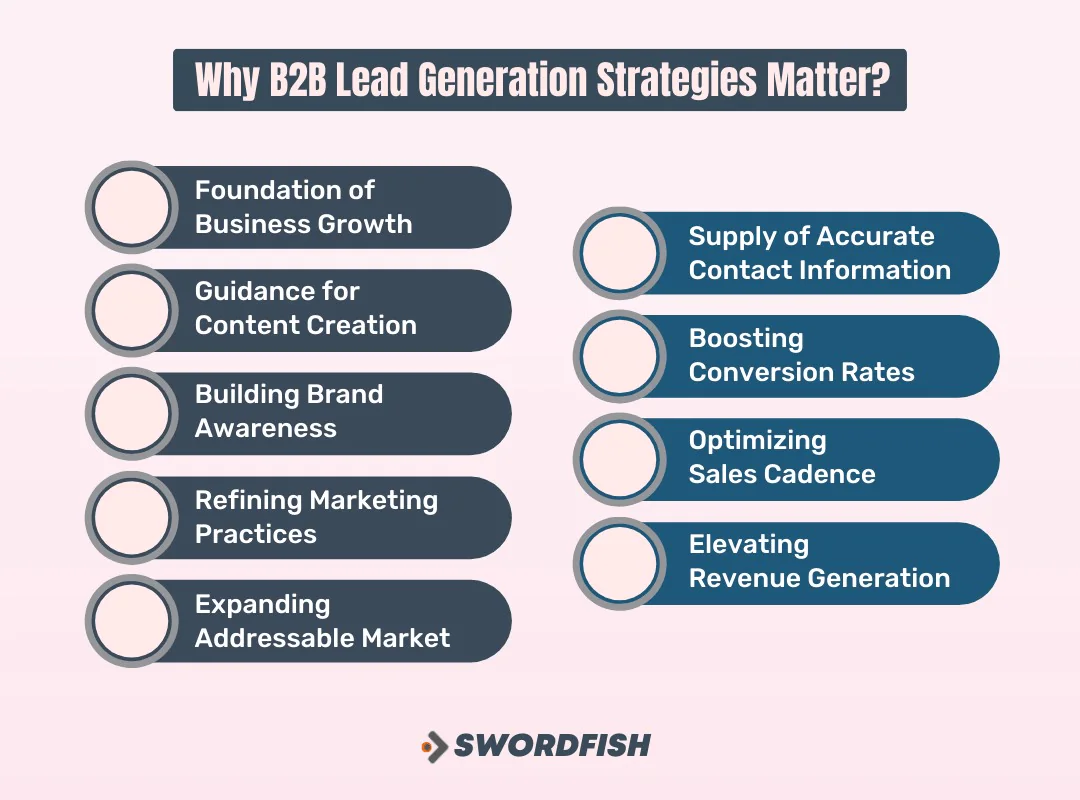
Foundation of Business Growth
B2B lead generation serves as the cornerstone of business development, providing the initial influx of potential customers essential for sustained growth.
Guidance for Content Creation
It offers valuable insight to marketing and sales teams, helping them tailor content to resonate with the target audience’s interests and pain points.
Building Brand Awareness
Effective lead generation practices contribute to brand visibility and a stronger online presence in a competitive market.
Refining Marketing Practices
Lead generation strategies require a nuanced understanding of customer behavior, which drives the refinement of marketing tactics over time.
Expanding Addressable Market
By identifying and engaging potential leads, businesses uncover new market segments that might otherwise stay untapped.
Supply of Accurate Contact Information
It helps ensure the contact details you collect stay current and accurate, reducing wasted outreach to obsolete addresses or disconnected numbers. This matters especially in healthcare, where staff turnover and practice consolidation make contact data go stale quickly.
Boosting Conversion Rates
Qualified leads generated through effective strategies tend to move more smoothly through the sales funnel, resulting in higher conversion rates.
Optimizing Sales Cadence
A well-structured lead generation strategy helps streamline the sales process, ensuring timely and relevant interactions with potential customers.
Elevating Revenue Generation
Ultimately, successful execution of B2B lead generation strategies leads to increased revenue and stronger financial sustainability.
19 Proven B2B Lead Generation Strategies Examples
In B2B sales, finding the right leads matters enormously. Below are tactics that consistently deliver results across industries, including healthcare-focused sales teams working with clinicians, administrators, and health-system procurement staff.
Strategy 1: Better Content Campaigns for Maximum Engagement
This strategy focuses on creating content that genuinely captures attention. It’s not just about having good content, but about making it more useful than what competitors publish.
Start by understanding what your audience cares about, then build content that answers their questions or solves a real problem. This could be blogs, videos, or infographics, and it should be easy to find and share.
The effect of having a blog on lead generation is substantial. Companies with a blog experience a remarkable 67% surge in lead generation compared to those without one.
Strong content positions you as an expert who offers real value, which naturally draws in more qualified leads.
Strategy 2: Conducting Effective A/B Testing for Enhanced Outreach
This strategy is about testing different approaches instead of guessing what will resonate. You might try different versions of a landing page or email subject line to see which one earns more clicks, then let the data guide your next move.
A/B testing ensures you’re not relying on hunches. You’re using concrete evidence to make outreach more effective over time.
Strategy 3: Using Buyer Reviews for Trust and Credibility
This strategy taps into the power of customer feedback. Positive reviews from people who’ve had a good experience with your business build trust with prospects who haven’t decided yet.
Encourage satisfied customers to leave reviews, then showcase them on your website or wherever potential leads are likely to see them.
Reviews function like endorsements. They reassure potential leads that your product or service is reliable, which can meaningfully influence their decision.
Strategy 4: Getting Survey Data for Strategic Lead Generation
Surveys let you ask your audience what they need directly. That information helps you tailor your offering to match real demand rather than assumptions.
Create short, relevant surveys that are quick for your audience to complete.
Survey data helps you refine your approach so you’re offering exactly what potential customers are looking for.
It’s worth noting that a substantial 85% of customers are willing to offer feedback after a positive experience with a brand.
Strategy 5: Amplifying Impact with Compelling Case Studies
Case studies provide real-world examples of how your product or service has helped others. They showcase success stories and demonstrate concrete value.
Build detailed case studies around specific challenges clients faced and how your solution addressed them. Share these on your website and in marketing materials.
Case studies give potential leads tangible evidence of results, which builds trust and confidence in your offering.
Strategy 6: Maximizing Engagement through Landing Page Optimization
Your landing page is often a prospect’s first point of contact. Optimizing it ensures visitors have a smooth, engaging experience, which raises the odds of conversion.
Focus on clear messaging, compelling visuals, and a user-friendly layout. Use persuasive calls to action that guide visitors toward the next step.
An optimized landing page reduces friction and confusion, directing visitors toward conversion instead of losing them along the way.
A notable 68% of B2B businesses have implemented dedicated landing pages designed strategically for lead generation purposes. This reflects how important specialized pages have become for capturing and converting leads in B2B.
Strategy 7: Personalization Tactics for Customized Lead Nurturing
Personalization means tailoring your messages and content to the specific needs of each lead, rather than sending the same pitch to everyone.
Segment leads by industry, job role, or previous interactions. Craft messages that address their specific pain points and offer relevant solutions. In healthcare sales, this might mean speaking differently to a clinical department head than to a health system’s IT procurement lead.
Personalization signals that you understand their specific challenges, which increases the odds they’ll engage and move further down the funnel.
Strategy 8: Utilizing the Power of Social Selling for B2B Leads
Social selling is using social media to engage potential leads by building relationships and trust through genuine interaction.
Identify the platforms where your target audience spends time. Share valuable content, join conversations, and establish yourself as a helpful resource in your industry.
Social selling lets you reach leads where they already are. It humanizes your brand, making it more approachable and trustworthy.
Strategy 9: Using Video Content in B2B Lead Generation
Video content is a dynamic way to convey information. It lets you showcase expertise, explain complex ideas, and connect on a more personal level.
Create videos about your products, industry insights, or customer success stories, and share them on YouTube and your own website.
Video combines visual and auditory cues, which can be more memorable than text alone and tends to increase engagement.
Strategy 10: Utilizing SEO Techniques for Enhanced Visibility
Search Engine Optimization means optimizing your content to rank higher in search results, so leads who are actively searching can find you.
Identify relevant keywords for your industry and work them naturally into your content. Make sure your site is well-structured, loads quickly, and offers a good user experience.
Effective SEO increases your visibility in search results, which can significantly boost organic lead flow over time.
Strategy 11: Encouraging Subscriptions with Irresistible Offers
Encouraging leads to subscribe to your content or newsletter keeps a direct communication channel open. This strategy trades value for contact information.
Offer incentives such as exclusive content, discounts, or webinar access in exchange for a subscription, and make the benefit clear and enticing.
Subscriptions create an ongoing engagement channel, letting you nurture leads over time and build trust that eventually leads to conversion.
Strategy 12: Mobile Optimization as a Gateway to Lead Conversion
Mobile optimization ensures your website and content work well on phones. With more buyers researching on the go, this is essential for capturing leads outside the desktop.
Optimize design, layout, and content for mobile responsiveness, and make sure forms and calls to action are easy to use on smaller screens.
A smooth mobile experience improves satisfaction and increases the likelihood of converting a lead who’s browsing on their phone.
Strategy 13: Driving Results with Referral-Driven Lead Generation
Leveraging referrals is a powerful strategy for B2B lead generation. It means encouraging satisfied customers to refer your products or services to other potential leads.
Set up a referral program that rewards existing customers for bringing in new leads, offering discounts, exclusive access, or other perks.
Referral-driven lead generation borrows the trust and credibility your current customers have already built. Leads referred by satisfied clients tend to convert more readily, since they arrive with a built-in level of trust.
Customer referral programs, as highlighted by Annex Cloud, have the potential to deliver a substantial monthly influx of around 20,000 fresh email addresses.
Additionally, in-depth case studies of referral software revealed an impressive 10% surge in Word-of-Mouth (WOM) activity, both online and offline.
These figures underscore how much impact a well-run customer referral program can have on lead generation and sales.
Strategy 14: Incorporating Testimonials for Credibility Boost
Endorsements or testimonials from respected figures in your field can meaningfully boost your credibility with potential leads.
Reach out to industry experts for feedback or endorsement, and showcase these testimonials on your website, marketing materials, and social channels.
Expert testimony provides social proof. When respected figures vouch for your product or service, prospects are more likely to trust what you offer.
Strategy 15: Strategic Timing for Optimal Lead Gathering Efficiency
Choosing the right times to focus on lead generation activities can meaningfully affect your results. It means understanding when your target audience is most active and receptive.
Analyze data to determine when your audience is online and engaged, then schedule outreach emails or social posts to land during those windows.
Email marketing remains a cornerstone of effective demand generation, with nearly 80% of marketers recognizing its unparalleled effectiveness.
By timing your outreach strategically, you increase the odds of reaching leads when they’re most receptive, which can improve response rates and overall results.
Strategy 16: Engaging with Webinars and Live Events
B2B lead generation companies believe hosting webinars and participating in live events is an excellent way to engage potential leads in a more interactive and personal manner.
Research suggests that 60-minute webinars tend to attract a larger audience than shorter 30-minute sessions, suggesting a more thorough exploration of topics is valued.
A significant 57% of marketers host as many as 50 webinars per year, underscoring how common this format has become in marketing strategies.
Additionally, webinars centered around communication achieve an impressive conversion rate of 67.05%, showing their effectiveness at engaging and converting leads.
Plan webinars on topics relevant to your industry, promote them through multiple channels, and encourage participation. Attending or sponsoring live events is another way to network directly with potential leads.
Webinars and live events give you a direct line to potential leads, letting you showcase expertise, address specific concerns, and build a deeper connection. It also positions your brand as a thought leader in your space.
Strategy 17: Implementing Account-Based Marketing (ABM)
Account-Based Marketing (ABM) is a targeted approach that tailors your marketing efforts to specific high-value accounts, rather than casting a wide net.
Identify key accounts that fit your ideal customer profile, then build personalized marketing or B2B lead generation campaigns, content, and outreach for those accounts.
Use personalized messaging that speaks directly to their unique pain points and needs.
ABM lets you concentrate effort on high-potential accounts, increasing the odds of conversion and fostering a more meaningful relationship with each prospect.
Strategy 18: Making the Best of AI and Automation
Using AI and automation tools can significantly streamline your lead generation process, making it more efficient and consistent.
APSIS reports a staggering potential increase of up to 451% in qualified leads when campaigns are automated. This kind of technology streamlines the customer journey, ensuring quicker responses and more efficient qualification.
Integrate AI-powered tools and automation software into your workflow. Use AI for lead scoring, chatbots for instant engagement, and automated email campaigns for nurturing.
AI and automation can handle repetitive tasks, prioritize leads, and provide instant responses, freeing your team for more strategic work. This leads to a more efficient, scalable lead generation process.
It’s worth considering that AI holds the potential to elevate lead generation by as much as 50%, according to HBR. As of 2024, ChatGPT reached a significant milestone, garnering over 100 million Monthly Active Users (MAUs), as reported by Reuters.
Strategy 19: Utilizing Chatbots for Instant Engagement
A significant 68% of B2B businesses find themselves grappling with the challenge of lead generation.
Implementing chatbots on your website can provide instant responses to visitor inquiries and support your lead generation efforts. This also improves the visitor experience and increases the likelihood of capturing a lead before they leave the page.
Integrate a chatbot on your website using WordPress ChatGPT plugins that can answer common questions, provide information about your products or services, and capture basic lead information.
Chatbots offer immediate engagement, ensuring visitors get the information they need in real time. That instant interaction can meaningfully improve satisfaction and lead capture rates.
Utilizing Swordfish AI for Advanced Lead Generation
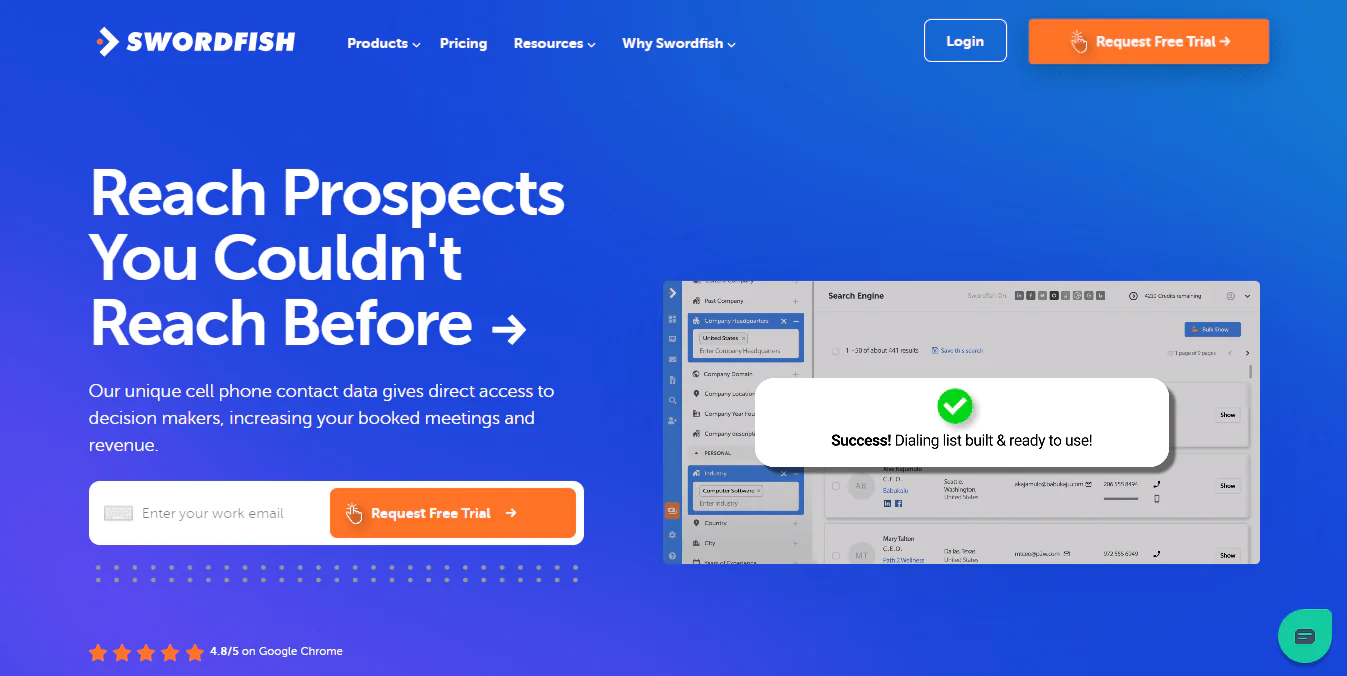
Technology plays a growing role in successful lead generation, and this holds especially true when your targets are healthcare providers whose contact details change often. One tool built for this kind of prospecting is Swordfish AI, which uses algorithms to surface contact and professional information that can help sales teams reach the right person faster.
Swordfish AI pulls together information beyond basic contact details, including professional background, role, and contact preferences, so outreach can be more targeted from the first touch.
Not all leads are created equal. Evaluating lead quality, rather than chasing volume alone, helps sales teams focus effort on the most promising prospects and avoid wasted outreach to outdated or irrelevant contacts.
Armed with more complete lead profiles, businesses can tailor their outreach strategies with more precision. Check out Swordfish AI pricing!
Conclusion
The keys to successful B2B lead generation go beyond gathering names. It’s about nurturing potential partnerships that drive meaningful growth, especially in a field like healthcare where trust and accuracy carry extra weight.
Implementing the right strategies increases lead volume while also improving lead quality, which streamlines your sales process and maximizes return on investment.
With these 19 proven B2B lead generation strategies in your arsenal, you’re equipped to attract and retain customers more effectively. Put them into action and see which combination works best for your team.
FAQs
What is the difference between B2B and B2C lead generation?
B2B lead generation focuses on attracting businesses or organizations as potential customers, while B2C lead generation targets individual consumers.
How can I identify my ideal B2B buyer?
Creating a detailed buyer persona can help. Consider factors like company size, industry, job roles, pain points, and goals.
What is the significance of marketing qualified leads (MQLs) and sales qualified leads (SQLs)?
MQLs are leads showing interest in your offerings but may not be ready to buy. SQLs, on the other hand, have engaged directly with your sales team and are more likely to convert.
Why is personalization important in B2B lead generation?
Personalization helps tailor your approach to the specific needs and preferences of your target audience, making your outreach more effective.
How can I optimize my website for mobile viewing in B2B lead generation?
Ensure that your website is responsive, meaning it adapts smoothly to different screen sizes. This ensures a seamless experience for mobile users.