
 View Products


Last updated: September 3, 2026
Enterprise sales prospecting is the work of identifying and reaching out to the large accounts most likely to become long-term customers. It favors quality over volume, which means fewer conversations but higher stakes on each one.
The core mechanics haven’t changed much, but the buying committees, the compliance expectations, and the tools available to reps have. In healthcare and other regulated industries, that gap between old habits and current buyer behavior shows up fast. This guide walks through what’s changed, how to tell a prospect from a lead, and a set of practical tips for enterprise outreach in 2025.
What is Enterprise Sales Prospecting?
Sales prospecting is the act of searching for and actively reaching out to potential customers or clients from a database of leads. The goal is to quickly determine whether these accounts match what the business provides, through direct calls, emails, and check-ins with decision-makers.
In practice it’s more complicated than it sounds. Not every account will be a fit, and part of the job is deciding quickly who’s worth pursuing and who isn’t. Done well, prospecting produces a steady flow of accounts that actually convert, rather than a long list that never moves.
To dive deeper into the modern techniques of sales prospecting, read about how to do virtual sales prospecting in 2023.
The Transformation of Sales Prospecting
Sales prospecting has changed considerably as new tools and buyer habits have taken hold. Here’s where the biggest shifts have happened:
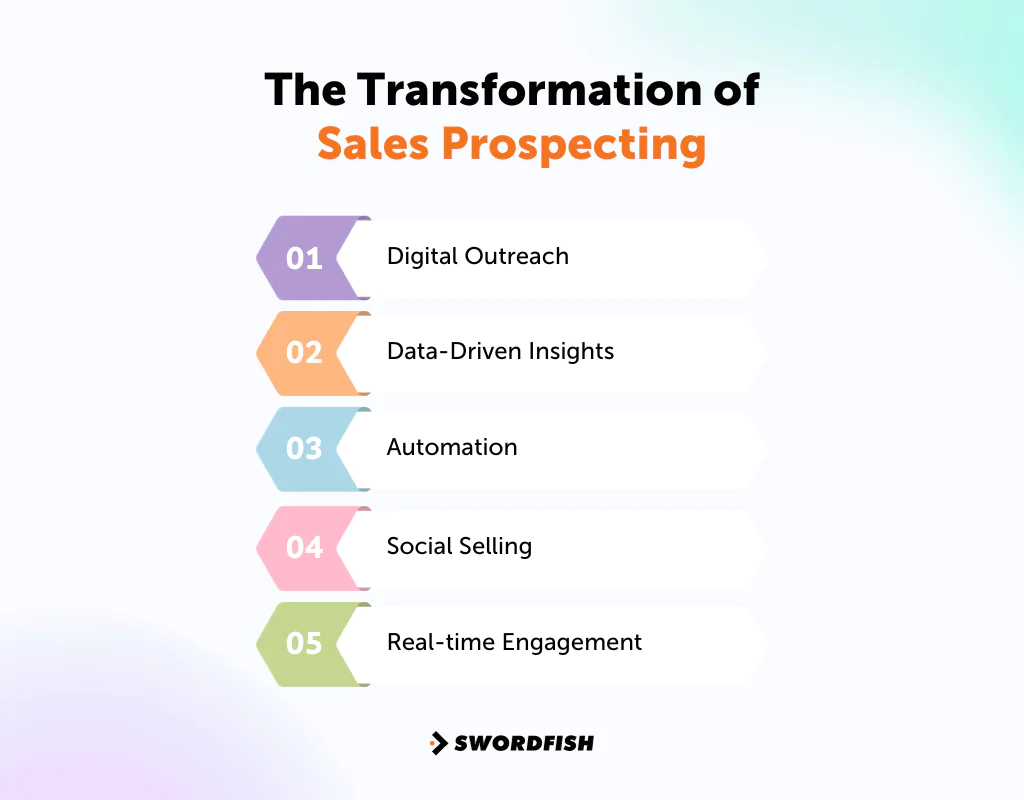
Digital Outreach
Cold calling alone rarely carries a deal anymore. Reps now work across a mix of digital channels, from email sequences to social outreach, to connect with potential clients more efficiently.
Data-Driven Insights
CRM systems, analytics platforms, and contact data tools like Swordfish AI make it possible to research prospects and understand their behavior before the first call.
Swordfish focuses on unique contact data, including direct-dial mobile numbers and verified emails, so outreach effort goes toward the right individuals rather than a generic list. That matters in healthcare sales, where the right stakeholder (a practice administrator, a procurement lead, a clinical director) can be hard to reach through a general switchboard.
 Try Swordfish Ai
Automation
Automation now handles a lot of the repetitive parts of prospecting, from follow-up sequences to call scheduling, which frees reps to spend more time on actual conversations.
For a complete list of tools that can help in this transformation, explore these b2b lead generation tools.
Social Selling
LinkedIn has changed how businesses connect with decision-makers. It allows for the identification of key individuals, understanding their needs, and customizing outreach efforts based on mutual connections or interests.
This strategic approach enhances the effectiveness of business interactions and networking. For more detailed strategies and tools to leverage this platform, consider exploring the LinkedIn Sales Navigator pricing details.
Real-time Engagement
Live chat and instant messaging let you engage prospects as they show interest, answer questions on the spot, and move them through the funnel without the usual lag between touches.
What is the Difference Between a Sales Prospect and a Lead?
The terms get used interchangeably, but they describe different stages. Here’s the distinction based on a few practical criteria.
|
Criteria |
Sales Lead | Sales Prospect |
| Definition | A contact at the top of your sales funnel. |
Someone who has been qualified and has started their journey down the sales funnel. |
|
Interaction |
Has interacted with your company in some way, but not yet clear how useful they are as a customer. | You’ve either engaged with them or your sales team qualified them for outreach. |
| Examples | – People on your email list– New connections on LinkedIn– People who engage with you on social media– People who’ve engaged with your website– MQLs (leads qualified by your marketing team and passed on to the sales team) |
– A lead you spoke to on the phone – Someone who replied to an email – Someone who clicked a link in a message and visited your website – A person you spoke to at a trade show |
|
Stage in Sales Funnel |
Top of the funnel. |
Further down the sales funnel, after the lead has been qualified. |
|
Potential |
Has the potential to become a customer but hasn’t been properly qualified yet. |
Has made it through your qualification process and is ready to move to the next stage in your sales process. |
9 Enterprise Sales Prospecting Tips to Boost Your Revenue
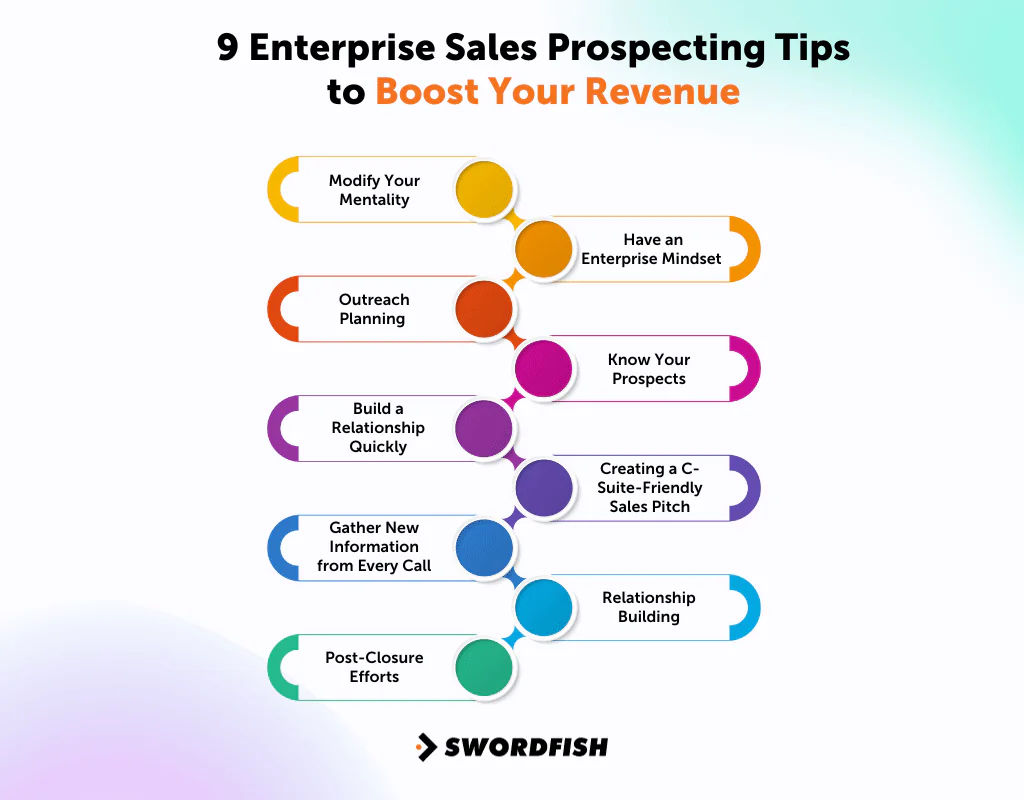
A solid plan is the baseline. These nine habits are what separate reps who close enterprise deals from reps who just generate activity.
1. Modify Your Mentality
Confidence is a foundation, not a personality trait you either have or don’t. Start each day believing in your product’s value, because that belief shows up in how you handle objections and silence on a call.
Pair that confidence with a real strategy. Authenticity plus preparation is what actually closes enterprise deals, not enthusiasm alone.
2. Have an Enterprise Mindset
Large organizations buy solutions built around their specific operational problems, not generic pitches. Research the account’s actual pain points and align your message accordingly. Showing how your product fits into their existing workflow, rather than replacing it wholesale, tends to land better.
3. Outreach Planning
Map the company’s structure before you reach out. That mapping helps you identify real stakeholders and decision-makers instead of guessing. Starting conversations with middle management is often a faster route to the top than trying to reach the C-suite cold.
4. Know Your Prospects
Research their needs before the first call so your pitch feels tailored rather than templated. In enterprise sales, buyers respond better to someone acting as a trusted advisor than to someone clearly running a script.
5. Build a Relationship Quickly
Early conversations set the tone. Focus on understanding their situation, expressing genuine appreciation for their time, and showing empathy for the problem they’re trying to solve. That groundwork carries through the rest of the deal.
6. Creating a C-Suite-Friendly Sales Pitch
Executives want a pitch that’s short and backed by evidence. A tailored pitch deck, supported by data and credible endorsements, keeps your message intact even when you’re not in the room to deliver it yourself.
7. Gather New Information from Every Call
Every call teaches you something, whether or not it turns into a sale. Write it down. Patterns across calls tell you more about how to refine your pitch than any single conversation does.
8. Relationship Building
Remember DABS: Don’t Always Be Selling. Constantly pushing the product wears a prospect down. Nurturing the relationship instead, even when there’s no immediate ask, tends to open doors later.
9. Post-Closure Efforts
Closing the deal isn’t the finish line. Staying involved after the sale often surfaces expansion opportunities within the same account, particularly in larger organizations with multiple departments or locations.
Bonus Tips
Diversifying how you engage an account gives you a fuller picture of what the company actually needs, beyond what one contact tells you.
Existing connections, warm introductions, and referrals carry outsized weight in enterprise deals, particularly in industries like healthcare where trust and compliance concerns slow down cold outreach. To further enhance your prospecting techniques, consider these best sales prospecting techniques to use.
Confidence backed by a real plan is what turns these tips into results rather than just good intentions.
What are the Steps in the Enterprise Sales Process?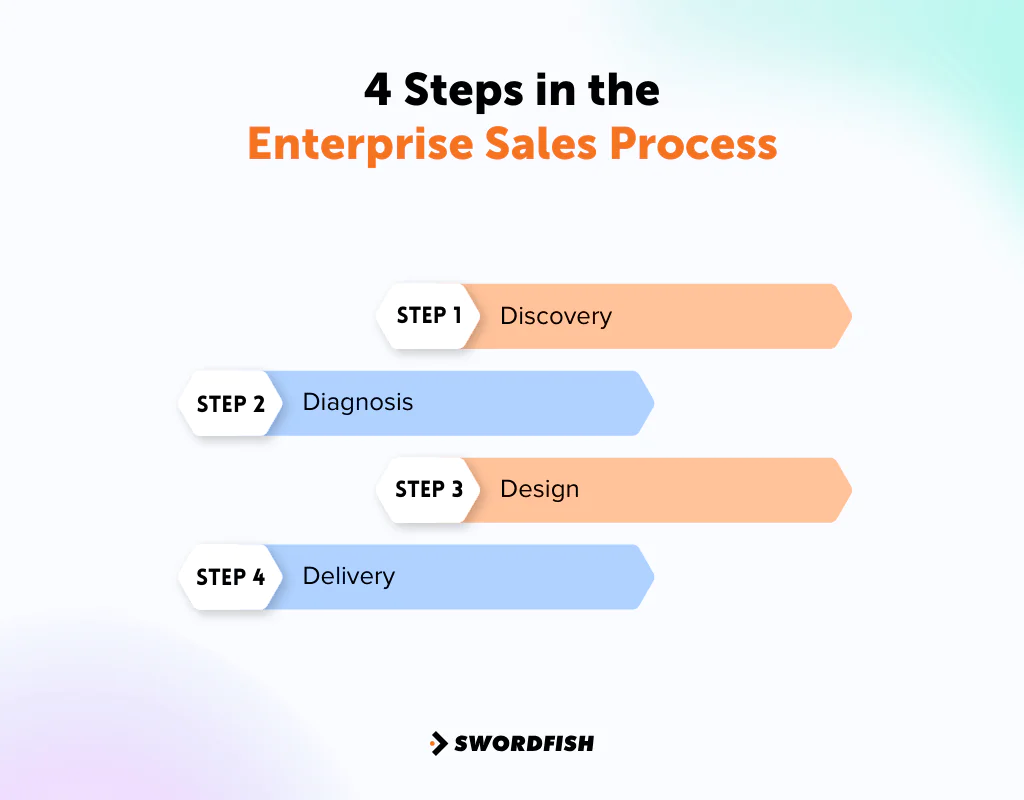
Enterprise sales generally break down into four stages.
Discovery
Start by understanding the prospect’s goals, past decisions, and what success looks like to them. This is what makes the rest of the process efficient instead of a guessing game.
Diagnosis
Get specific about the client’s challenges, including the ones they haven’t fully articulated yet. This is where you figure out how your product actually fits their situation, rather than assuming it does.
Design
Build a tailored solution together with the client. This stage depends on open communication and treating the relationship as a partnership rather than a transaction.
Delivery
Once the proposal is approved, implement it and set clear metrics upfront so success is measurable. Staying engaged after go-live matters just as much as the pitch that got you there.
Conclusion
Enterprise sales prospecting has changed shape without changing its purpose. It’s still about finding the right accounts and building real trust with them, just through a wider set of channels and a more research-driven approach than a decade ago.
Knowing the difference between a prospect and a lead helps you focus effort where it counts. In enterprise sales, especially in regulated industries like healthcare, the relationship usually matters more than any single transaction.
Genuine connection, solid contact data, and a habit of learning from every call are what make these tips work in practice rather than just in theory.
Frequently Asked Questions
What does prospecting strategy mean?
It’s the process of reaching out to potential customers to identify interest and generate qualified leads.
What does the enterprise sales method involve?
This method involves researching the organization thoroughly, then reaching out personally to individuals, typically starting at lower levels to find internal supporters for your product.
How can I effectively prospect for large companies?
Target the entire company, engaging multiple stakeholders. Understand the unique needs of each decision-maker and tailor your approach accordingly.
Can you give an example of enterprise sales?
Selling a software solution to a multinational company for use across multiple departments is an example of enterprise sales.
How do I sell a SaaS product to large corporations?
Research and identify companies matching your ideal customer profile. Engage multiple people in the company, show them the benefits, and make sure they’re trained and supported after purchase.
Which skills are essential for enterprise sales?
Persistence, patience, organization, active listening, and relationship-building are crucial.