
 View Products


Last updated: September 3, 2026
The number of roofing contractor businesses in the US has been roughly flat in recent years, and the market remains crowded. That competitive backdrop is exactly why standing out matters more than it used to.
Winning new roofing contracts in a saturated market comes down to two things: reaching the right prospects and reaching them before your competitors do. That means combining smart advertising with reliable ways to find homeowners and property managers who actually need roofing work done.
This guide walks through practical, tested strategies for generating roofing contractor leads, from finding verified contact data to running canvassing and storm-response campaigns. Let’s get into it.
What are Roofing Contractor Leads?
Roofing contractor leads are potential customer contacts or inquiries specifically interested in roofing services. These leads are important for roofing businesses to find new clients and grow their operations. They can come from various sources, including online forms, referrals, advertising campaigns, and digital marketing.
The roofing contractor industry in the US has faced a modest contraction over the past several years, according to IBISWorld market data. A shrinking pool of projects means fewer opportunities to go around, which raises the stakes for every contractor competing for the same jobs.
In that kind of environment, waiting for the phone to ring isn’t a strategy. Contractors need a deliberate, multi-channel approach to get more leads consistently, not just when the weather cooperates.
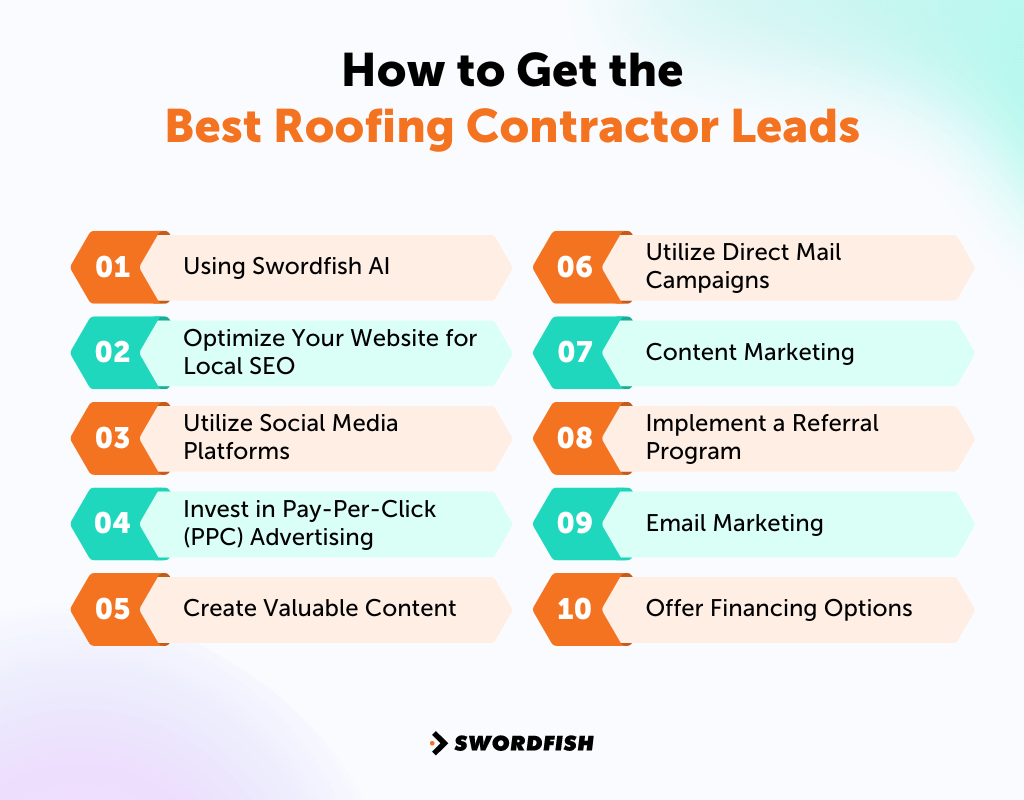
How to Get the Best Roofing Contractor Leads
There isn’t one single tactic that reliably fills a roofing pipeline. The contractors who grow fastest tend to combine a verified contact database, a locally optimized web presence, and at least one or two proactive outreach channels like canvassing or storm tracking. Below are the methods worth building into your lead generation mix.
1. Using Swordfish AI: Get the Best Roofing Contractor Leads
Swordfish AI gives roofing contractors a way to find verified contact details for prospects instead of chasing outdated directory listings. Its database pulls from billions of data points and cross-checks records so contractors aren’t working off stale phone numbers or dead email addresses.
Real-time verification matters here because roofing leads are often time-sensitive, especially after storms, and a contact that was accurate six months ago may not be accurate today.
Direct cell phone numbers and verified email addresses let contractors skip generic contact forms and reach decision-makers directly, whether that’s a homeowner or a property manager handling multiple roofs.
The practical value is time saved. Less time spent verifying and re-verifying contact records means more time on estimates, inspections, and actual roofing work.
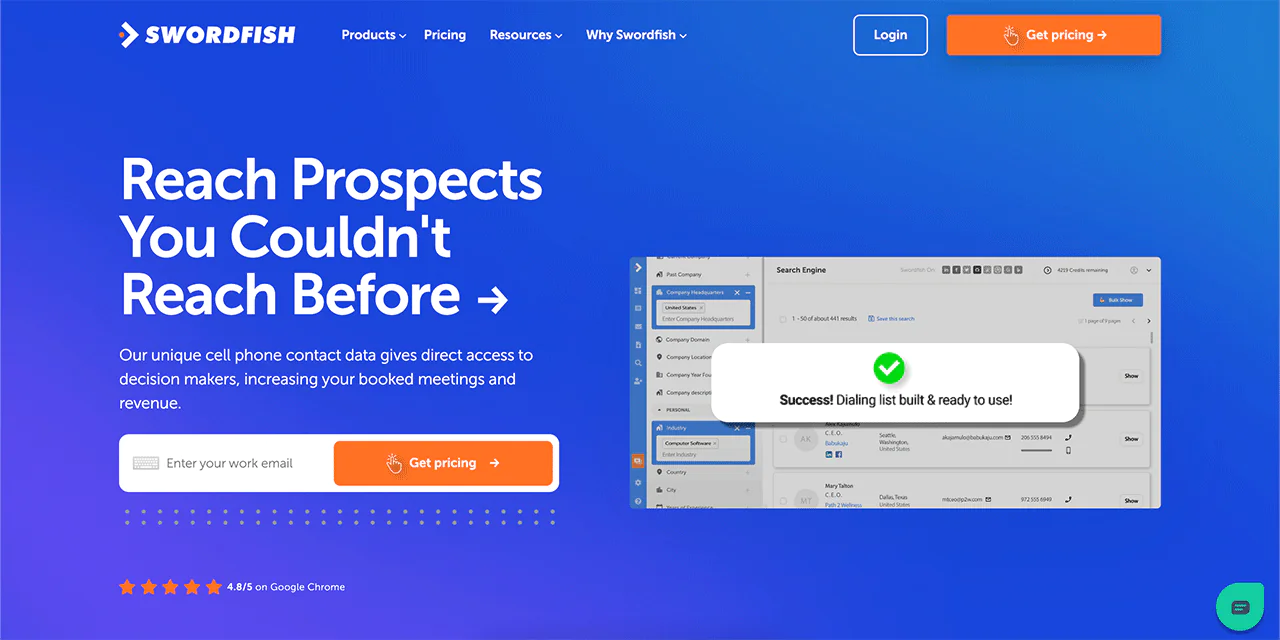
Key Features of Swordfish AI
-
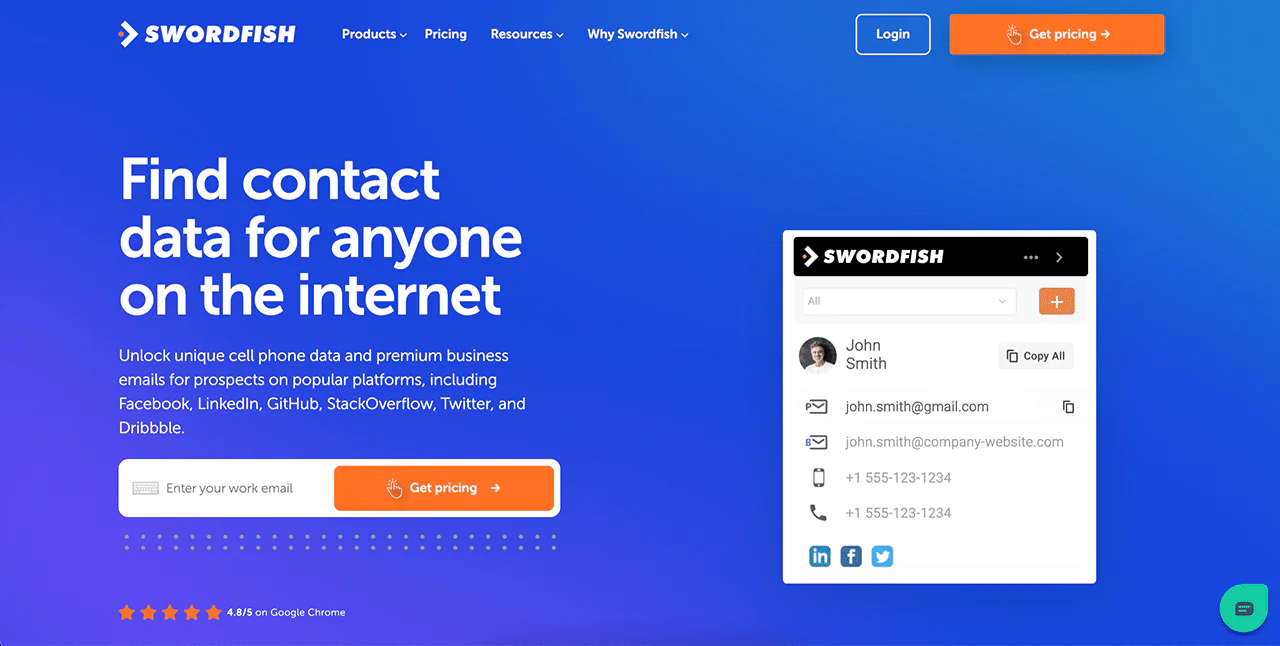
Chrome Extension
The Chrome extension lets you pull verified mobile numbers and email addresses while browsing. You can look into profiles and build lists of prospects directly from platforms like Facebook and LinkedIn.
-
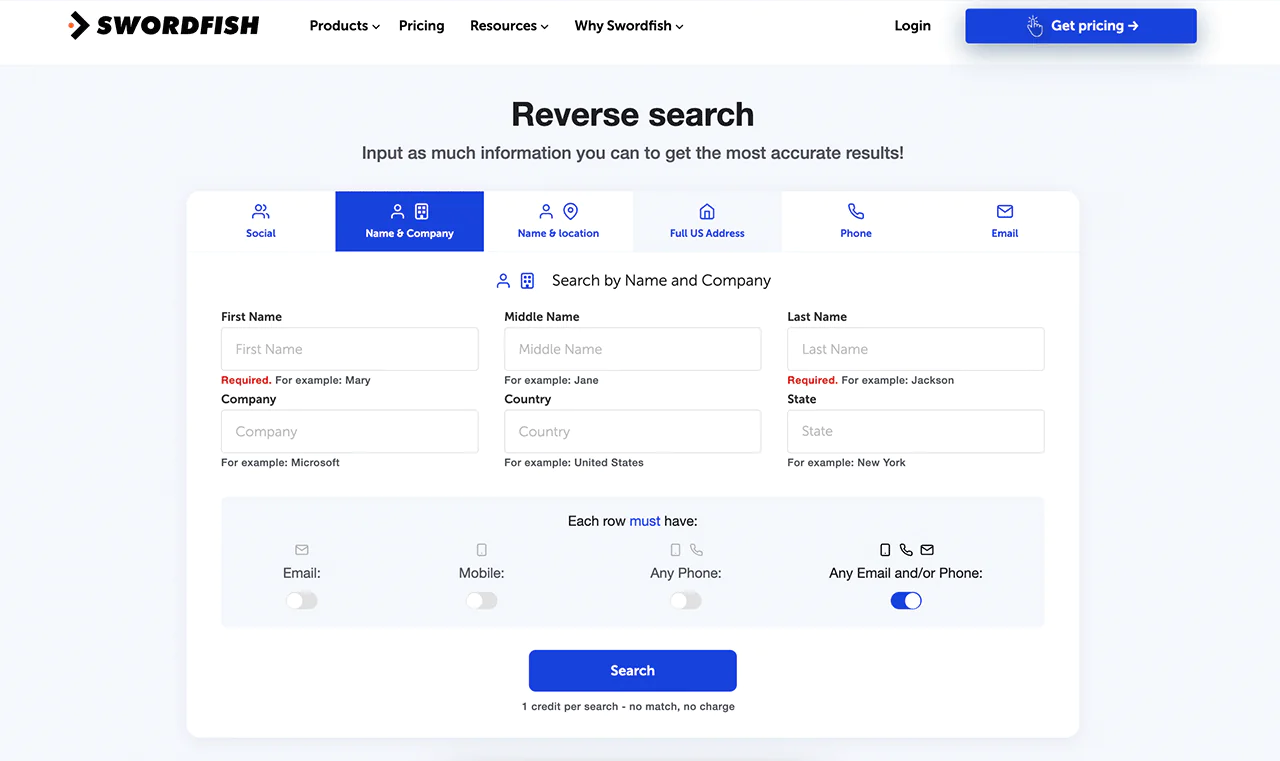
Reverse Search
When you only have a fragment of information, like a name and a rough location, Reverse Search can fill in the rest. It’s useful for tracking down a contact whose full details didn’t come through a form or referral.
-
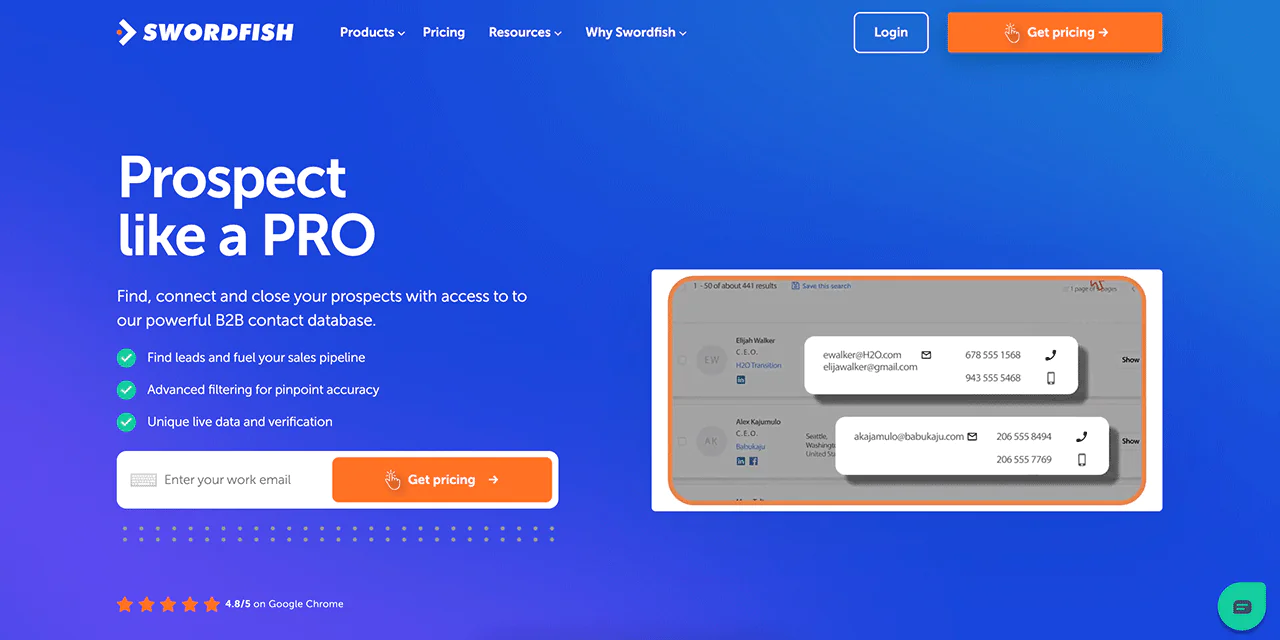
Prospector Tool
The Prospector tool lets you filter by industry, company size, and location, so you’re building a list of prospects that actually match your service area rather than a generic contact dump.
-
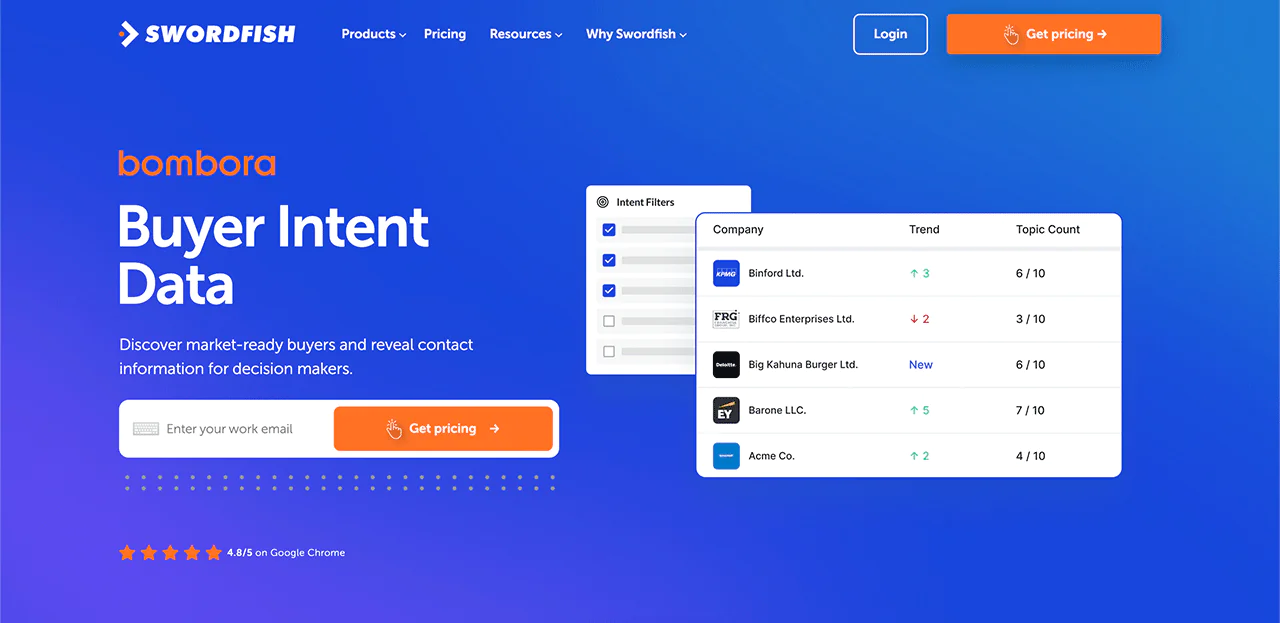
Bombora Intent Data
Bombora® Intent Data flags businesses that are actively researching roofing-related services, giving you a chance to reach out while interest is fresh instead of cold-calling blind.
-
File Upload
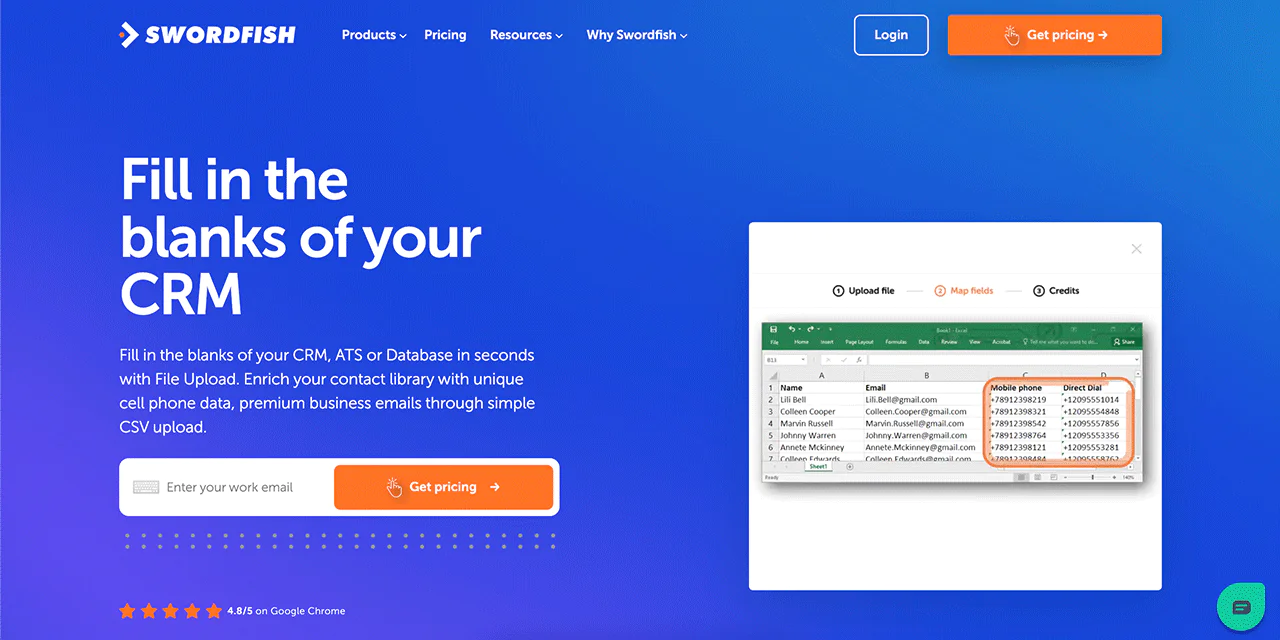
If you already have a list with missing phone numbers or emails, you can upload files to fill in the gaps. It works with CRM and ATS systems, so it slots into an existing workflow rather than replacing it.
-
API Integration
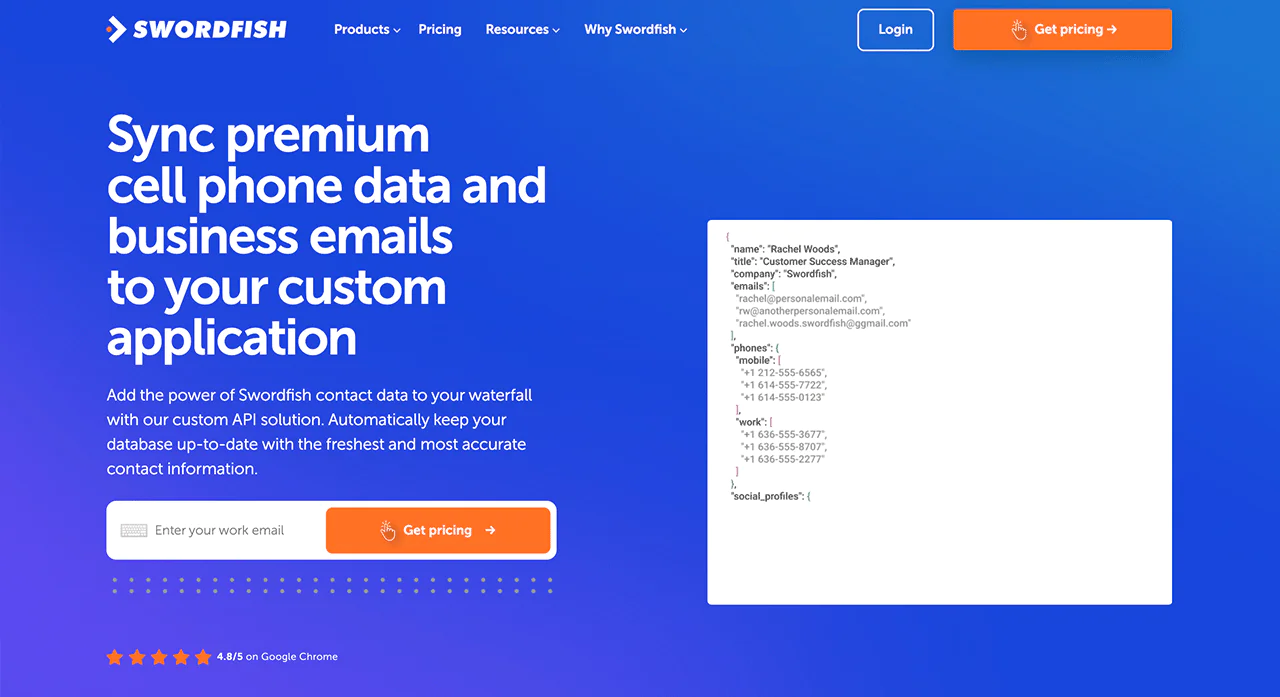
For teams running their own sales stack, API integration keeps contact data synced automatically so your CRM doesn’t drift out of date.
 Try Swordfish Ai
2. Optimize Your Website for Local SEO
Local SEO determines whether homeowners searching for a roofer nearby actually find you. Start with keywords that reflect real search behavior, like “roofing contractor in [Your City]” or “roof repair near [Your Neighborhood],” and build dedicated pages for each service area you cover.
Most local searches happen on a phone, so a slow or clunky mobile site will cost you leads regardless of how well you rank. Claiming and fully filling out your Google Business Profile, including hours, services, and photos of completed work, is one of the highest-leverage local SEO moves available to a small contracting business.
3. Utilize Social Media Platforms
Social platforms are lead generation channels, not just places to post updates. More than half of social media users are actively browsing for products or services while scrolling, which makes visual platforms like Instagram and Facebook well suited to roofing work.
Before-and-after project photos, short time-lapse videos of a roof replacement, and customer testimonials tend to outperform generic promotional posts. Responding promptly to comments and messages also signals reliability, which matters to someone deciding whether to trust you with their roof.
4. Invest in Pay-Per-Click (PPC) Advertising
PPC lets you pay only when someone actually clicks your ad, which makes it easier to control cost per lead than with broad brand advertising. Google Ads can put your business in front of people actively searching for roofing help in your service area, while Facebook Ads can target by interest, behavior, and location even before someone starts searching.
A campaign built around a specific angle, like sustainable roofing materials, tends to attract leads who are already leaning toward a decision rather than just browsing.
5. Create Valuable Content
Content marketing works by answering the questions homeowners are already asking. A post titled something like “5 Signs You Need a New Roof” reaches people at the exact moment they’re trying to figure out whether they have a problem worth calling a contractor about.
Consistent, useful content builds search visibility over time and gives you something to point to when a prospect is comparing contractors and deciding who seems most credible.
6. Utilize Direct Mail Campaigns
Direct mail hasn’t gone away, and for local service businesses it still performs reasonably well because it stands out in an inbox otherwise full of digital noise. Flyers and postcards work best when they’re specific rather than generic.
A postcard about gutter cleaning ahead of the rainy season, paired with a first-time customer discount, gives someone a concrete reason to call rather than just a brand impression to file away.
Costs typically run in the range of $0.30 to $1.00 per piece depending on design, printing, and postage, which is more than most digital channels on a per-contact basis. Targeting specific ZIP codes where storm damage or aging roofs are common helps justify that higher cost per piece.
7. Content Marketing
Referral programs work because trust transfers. A homeowner who hears about your work from a neighbor or friend arrives already inclined to believe you’ll do a good job, which shortens the sales cycle considerably.
A majority of marketers rate referral marketing as a top-performing channel for generating quality leads. A modest incentive, like a discount on future service or a cash reward, is often enough to get satisfied customers actively recommending you rather than just being willing to if asked.
8. Implement a Referral Program
Content marketing is also worth building into your budget on its own merits. According to industry benchmarks from the Content Marketing Institute, content marketing costs meaningfully less than traditional outbound methods while generating substantially more leads.
Practical formats for roofing contractors include maintenance guides, videos on simple upkeep tasks, and comparison content on roofing materials covering cost, longevity, and appearance. This kind of content positions you as knowledgeable rather than just another company running ads.
9. Email Marketing
Email marketing is still one of the most cost-effective ways to stay in front of leads who aren’t ready to hire yet.
Build your list from a roofing contractor email directory, your own website visitors, social followers, and past clients. That gives you a mix of cold, warm, and repeat-business contacts to work with.
Regular emails mixing seasonal tips, offers, and business updates keep you visible without being pushy. A subject line like “5 Ways to Prepare Your Roof for Winter” delivers real value while reminding the reader you exist.
Personalizing emails with a name or a reference to a past inquiry tends to lift engagement, and staying consistently in someone’s inbox increases the odds you’re the first call when they’re ready to move forward.
10. Offer Financing Options
Cost is usually the biggest objection to a roofing project, and financing removes it as a blocker. Research on point-of-sale financing has found it can meaningfully increase sales conversion when offered at the right moment.
Partnering with a financing company or building a simple in-house plan, such as 12-month interest-free financing on a roof replacement, makes a large expense feel manageable and can tip a hesitant homeowner into signing.
11. Canvassing
Door-to-door canvassing still works, particularly in neighborhoods with older roofs or recent storm damage. It gives you a chance to physically assess a roof and make a specific recommendation on the spot rather than sending a generic quote.
Offering a free inspection after a hailstorm, for example, gives homeowners a low-friction reason to say yes. Done respectfully, canvassing builds local reputation in a way that digital ads generally can’t replicate.
12. Participating in Trade Shows
Home and garden shows put you in front of an audience that’s already thinking about home improvement, which is a meaningfully warmer crowd than cold outreach.
An interactive booth with show-specific discounts or free consultation offers tends to draw more foot traffic than a static display. These events also double as networking opportunities with suppliers and other contractors, which can lead to referral relationships down the line.
13. Utilizing Storm Chasing Apps
Timing matters enormously in roofing. Storm-tracking apps let contractors identify areas hit by hail or wind damage and reach out with inspection offers before competitors do.
Being first to knock on a door after a storm, with a specific and timely offer, positions a contractor as responsive rather than opportunistic, which matters for reputation as much as immediate sales.
14. Forming Strategic Partnerships
Partnerships with real estate firms can create a steady referral pipeline. A roofer providing pre-listing inspections helps a real estate agent present a cleaner property, while the roofer gets consistent work and a natural source of referrals.
These relationships tend to compound over time, building both credibility and a broader local network beyond what either party could generate alone.
15. Internet Directories
Listings on directories such as Swordfish AI, Angie’s List, Houzz, and HomeAdvisor give potential clients another way to find you outside of search engine results. A complete profile, with accurate contact details, a clear service list, and genuine reviews, tends to convert better than a sparse one.
A thorough profile with full contact details, including phone, email, and address, makes it easier for someone comparing several contractors to choose to reach out to you specifically.
16. Google Map Pack Optimization
The Map Pack is prime real estate on a search results page, and a well-maintained Google Business Profile is what gets you there. That means accurate business information, photos of finished projects, and a steady stream of genuine reviews.
Appearing in the Map Pack signals local authority to a searcher who hasn’t heard of your business before, and it remains one of the most consistent sources of local leads for roofing contractors.
Who Needs Roofing Contractor Leads?
Roofing contractor leads matter to more than just contractors themselves. Here’s who relies on them and why:
New Roofing Contractors
Startups or individuals who are new to the roofing industry need leads to establish their presence in the market. Leads provide them with potential customers to whom they can offer their services.
Roofing Industry Marketers
Marketers who specialize in the roofing industry use leads to customize their marketing strategies and campaigns. Understanding demand and the potential customer base allows them to build more targeted campaigns.
Roofing Material Suppliers
Suppliers aren’t directly involved in roofing projects, but they benefit indirectly from roofing leads. More projects mean more material demand, so suppliers often partner with contractors to keep that pipeline steady.
Home Improvement Platforms and Services
Platforms that match homeowners with local contractors for home improvement projects, including roofing, rely on lead data to make those matches work.
Insurance Companies
Insurers covering roofing repairs or replacements, particularly after storm damage, also have an interest in roofing leads, since connecting policyholders with reputable contractors helps them manage claims more efficiently.
How Much Do Roofing Leads Cost?
The cost of roofing leads varies significantly, influenced by factors like lead quality, exclusivity, source, and market dynamics. Lead prices vary from $200 to $500, influenced by lead type (exclusive/shared), source (organic/search ads/directories), and the customer’s potential lifetime value.
Several factors shape what a given lead actually costs. Here’s how each one plays in:
Source of Leads
- Leads can come from various sources, including online lead generation platforms, marketing campaigns (such as PPC advertising or social media ads), referrals, networking, and direct mail.
- The cost of leads can differ based on the effectiveness and reputation of the lead generation method. For instance, leads from reputable online platforms may cost more compared to leads generated through less reliable channels.
Quality of Leads
- The quality of leads refers to how likely they are to convert into actual roofing projects. High-quality leads are typically those generated from customers actively seeking roofing services and who are genuinely interested in hiring a roofer.
- Higher quality leads often come at a higher cost because they have a higher probability of converting, ultimately resulting in better returns on investment for the roofing contractor.
Geographic Location
- The cost of roofing leads can vary depending on the location of the leads and the demand for roofing services in that area.
- In densely populated areas or regions with frequent weather-related roofing issues (such as areas prone to hurricanes or hailstorms), the cost of leads may be higher due to increased demand and competition among roofing contractors.
Competition in the Market
- In highly competitive markets where numerous roofing contractors are trying to get the same pool of potential customers, the cost of leads may be driven up.
- Contractors may need to invest more in marketing and lead generation efforts to stand out from competitors, which can impact the overall cost of acquiring leads.
Specific Project Requirements
- The complexity and size of the roofing project can also influence the cost of leads. Larger or more specialized projects may require higher quality leads, which could come at a premium price.
- Additionally, leads for projects requiring immediate attention or emergency repairs may also be more expensive due to the urgency involved.
Pricing
Roofing leads generally cost between $200 and $500, with the variation tied to lead quality, exclusivity, and source. Exclusive leads, sold to only one contractor rather than shared across several, cost more but tend to convert at a higher rate, which often makes them worth the premium.
Conclusion
Building a reliable pipeline of roofing contractor leads takes a combination of channels, not a single trick. A strong online presence, accurate contact data, and at least one proactive outreach method like canvassing or storm tracking together give you more consistent results than relying on any one tactic alone.
Swordfish AI is one option for sourcing verified contact details efficiently, which can cut down the time spent chasing bad numbers and outdated emails so more of your effort goes toward closing work.
Frequently Asked Question
What role does online presence play in generating leads?
A strong online presence helps you attract more leads by making your business more visible and accessible to potential customers. It includes having a professional website, active social media profiles, and positive online reviews.
Can social media help in generating roofing contractor leads?
Yes, social media can be a powerful tool for generating leads by engaging with your community, showcasing your work, and sharing customer testimonials. Additionally, running targeted ads can help reach potential customers in your area.
How can I improve the quality of my roofing contractor leads?
Improve lead quality by targeting your marketing efforts, using SEO to attract interested parties, and refining your ads to reach a specific demographic more likely to need roofing services.
Check Out More Lead Post
- Golf Course Email Marketing
- Dive into our Realtor Mailing List
- Jewelry Retailer Contacts
- Hospital Leadership Network
- Access Automobile Executives Email List
- Commercial Leads
- Construction Email List
- Radio Station Email List
- Mortgage Broker Email List
- Commercial Cleaning Leads
- Heating Contractors Email List
- Architect Email List
- Banquet Hall Hire Leads
- Electricians Email List