
 View Products


Last updated: September 3, 2026

Commercial leads are the potential buyers, sellers, tenants, and investors who show interest in commercial real estate deals. They are the starting point of almost every transaction in this market, which is exactly why finding good ones is so competitive. Plenty of brokers and investors spend hours chasing contacts that go nowhere, while the best opportunities get scooped up by whoever moves first with accurate information.
The way around that problem is combining smarter prospecting methods with the right data tools, including platforms like Swordfish AI that help surface contact details faster.
This article walks through 15 practical ways to generate commercial leads, plus how a tool like Swordfish AI fits into that process so you spend less time hunting and more time closing.
What Are Commercial Leads?
Commercial leads are people or businesses that want to be part of a deal in commercial real estate. That could mean investors looking to buy buildings, companies searching for space to rent, owners wanting to sell a commercial property, or businesses needing a new location to operate from.
These leads matter because they identify who is actually interested in making a move, whether that’s buying, selling, or leasing. For anyone working in commercial real estate, they are the raw material that starts and eventually closes a deal.
How Do Commercial Leads Work?
Generating commercial leads starts with identifying people or businesses who might want to buy, sell, or rent commercial property. You can find them through online ads, networking events, referrals, or direct outreach.
Once you know who they are, the next step is reaching out in a way that matches their situation and sharing information relevant to their goals. Over time, that consistent contact builds trust, helps them understand their options, and moves them closer to an actual decision, whether that’s signing a lease or closing on a purchase.
Who Needs Commercial Leads?
Several roles in commercial real estate rely on a steady flow of leads to do their jobs. Here’s who they are and why leads matter to each of them:
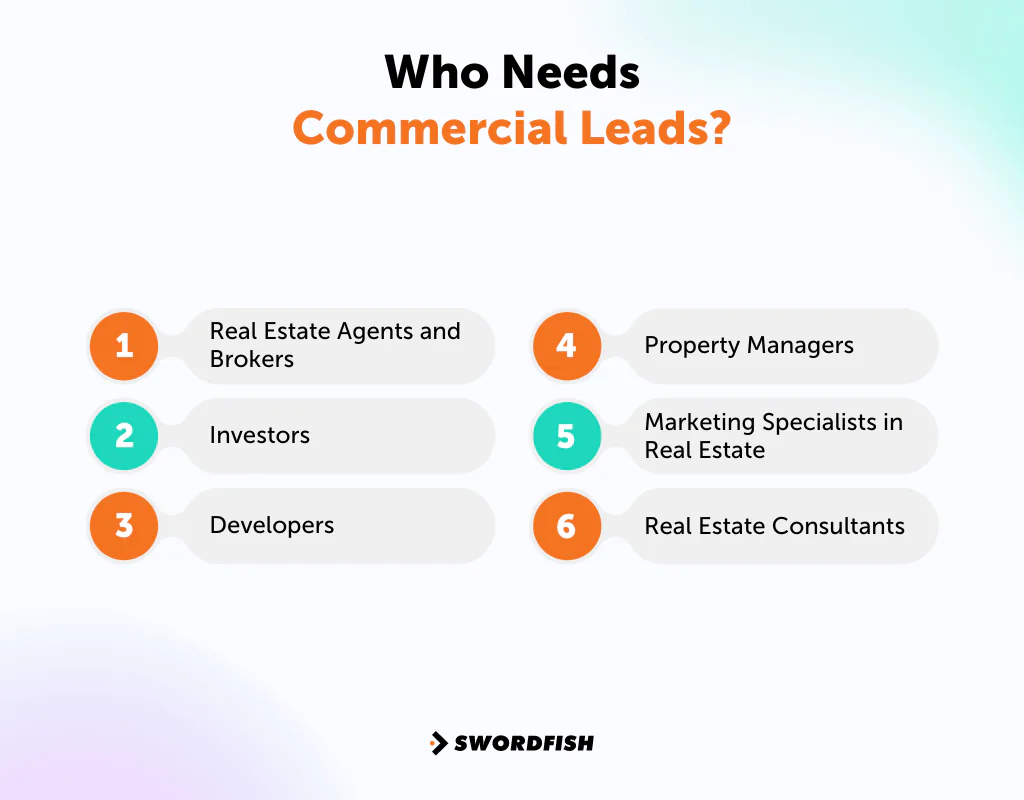
- Real Estate Agents and Brokers: They need leads to find properties to sell or rent and to keep their pipeline of deals moving.
- Investors: They look for leads pointing to properties with strong return potential.
- Developers: They use leads to locate land or aging buildings that could be redeveloped into something like retail centers or apartments.
- Property Managers: They need leads to fill vacant space with tenants and keep occupancy rates up.
- Marketing Specialists in Real Estate: They rely on leads to understand demand and build campaigns that attract the right buyers or renters.
- Real Estate Consultants: They need leads to give clients informed advice on what to buy, sell, or invest in.
15 Amazing Ways to Generate Commercial Leads
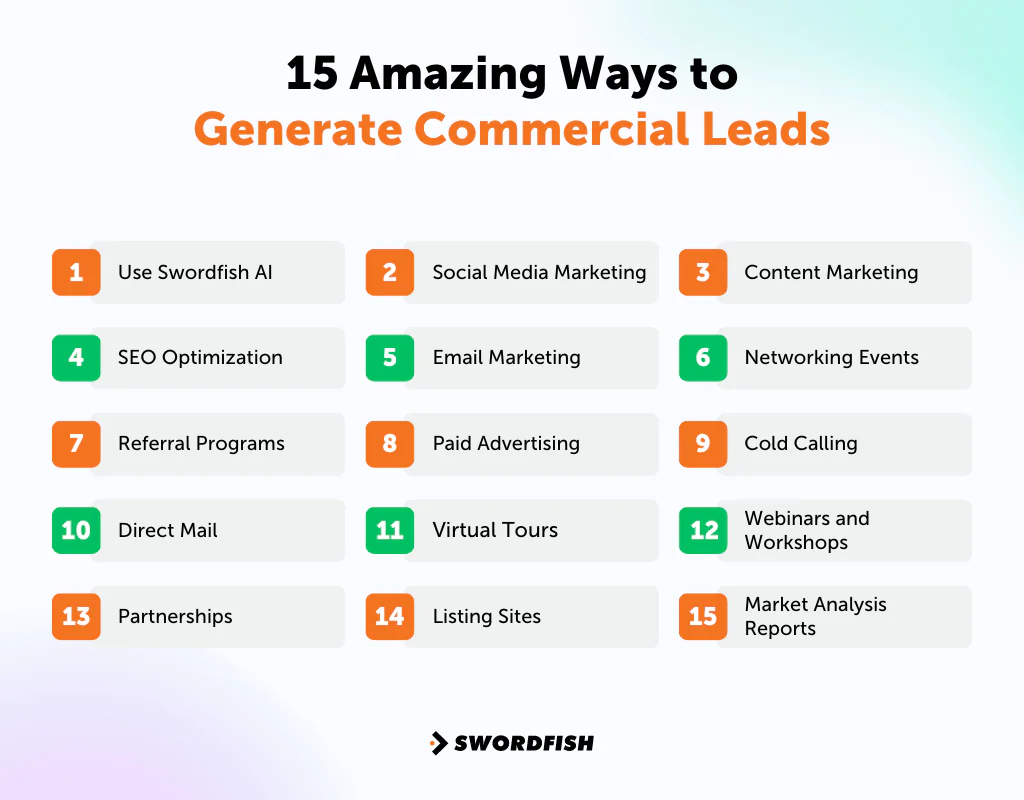
Finding strong commercial leads usually comes down to a mix of consistent visibility, direct outreach, and a reliable data source to fill in contact gaps. Building a presence on platforms like LinkedIn, showing up at local networking events, sending relevant email updates, and keeping your website useful all play a part. Below are 15 approaches worth building into your routine.
1. Use Swordfish AI: Get the Best Commercial Leads
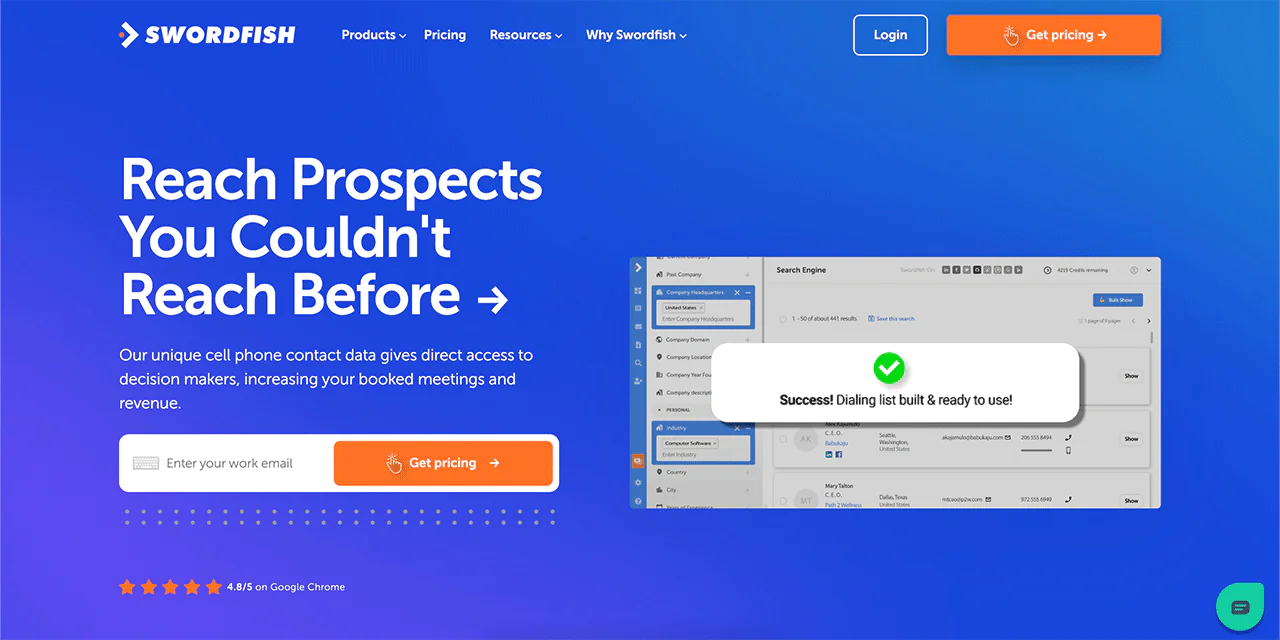
Swordfish AI is built around giving sales and prospecting teams access to decision-maker contact data, including cell phone numbers and emails that are often hard to find through standard databases.
The platform includes tools like a Chrome Extension and a Prospector search tool designed to help you find and validate leads without leaving your normal workflow.
Here’s how it fits into commercial lead generation specifically:
-
Contact Data Coverage
Swordfish AI pulls from a large pool of contact profiles and includes real-time line connectivity validation, so outreach is aimed at numbers and emails that are actually current rather than stale records.
-
Complete Contact Data
With access to a large database of contact profiles, Swordfish AI helps fill in the gaps in your CRM, so fewer potential leads slip through. Combining unique cell phone data sources with real-time validation keeps that information more reliable for outreach.
-
Efficient Lead Generation Tools
Swordfish AI’s Prospector tool lets you build targeted dialing and email lists in minutes. Filters and suppression settings help narrow results down to leads that actually match your criteria, which saves time compared to manual list building.
-
Chrome Extension for Easy Access
The Chrome Extension gives you contact lookups directly on platforms like LinkedIn, Twitter, and Facebook, which cuts down on switching between tabs while prospecting.
-
Intent Data Integration
Swordfish AI integrates with Bombora® Intent Data to help identify businesses that are actively researching relevant products or services. That can help you prioritize outreach toward prospects showing real signals of interest rather than cold contacts.
 Try Swordfish Ai
2. Social Media Marketing
Share photos and short videos of commercial properties on LinkedIn, Facebook, and Instagram. A quick video walkthrough on Instagram or a market update post on LinkedIn can both catch the attention of investors browsing their feed. Posting consistently keeps your audience engaged and more likely to click through to your website.
3. Content Marketing
Write posts, guides, or short videos that answer questions your audience is actually asking. Something like “10 Things to Check Before Investing in Commercial Real Estate” positions you as someone who understands the market, not just someone selling space.
4. SEO Optimization
Make it easier for people to find your site by using the phrases they’re already searching, like “commercial real estate in [Your City].” That kind of targeted optimization brings in visitors who are already looking for what you offer, rather than random traffic.
5. Email Marketing
Send updates about new listings, market shifts, and investment tips to your contact list. A monthly email highlighting a few strong properties and some practical advice keeps you top of mind without feeling pushy.
6. Networking Events
Attend or host events where investors, buyers, and sellers gather. Hosting a talk on commercial investing, for example, can bring in a room full of people who are actively looking for opportunities or advice.
7. Referral Programs
Encourage past clients to recommend you to others, and offer something worthwhile, like a gift card, when a referral turns into a sale. It’s a low-cost way to grow your network by leaning on relationships you’ve already built.
8. Paid Advertising
Run targeted ads aimed at the specific audience most likely to need your properties, like small business owners in your area looking for office space. Targeted ads put your listings in front of people already in the market, rather than a broad, unqualified audience.
9. Cold Calling
Research businesses or investors who might be ready for a move, then reach out with a clear, relevant pitch. If a local business just secured funding to expand, offering to help them find a bigger office can open the door quickly.
10. Direct Mail
Send postcards or flyers to a specific target market, like restaurant owners who might need dining or kitchen space. Physical mail stands out more now simply because fewer people use it, which can work in your favor.
11. Virtual Tours
Create video walkthroughs of your properties and post them on your website and social channels. A detailed virtual tour lets serious prospects self-qualify before they ever schedule an in-person visit.
12. Webinars and Workshops
Host online sessions covering topics like investing in commercial property or managing a portfolio. It’s a low-pressure way to demonstrate expertise while building a list of people who are genuinely interested in the subject.
13. Partnerships
Build relationships with local banks, law firms, or other businesses that can refer leads your way. A bank partnership, for instance, might give you access to their wealthier clients who are looking for real estate opportunities.
14. Listing Sites
List your available properties on sites like LoopNet or CREXi to widen your visibility. These platforms put your listings in front of investors and businesses who are actively searching, which makes them easier to find.
15. Market Analysis Reports
Publish regular reports on local market trends to establish credibility and attract leads who are researching before they commit. A quarterly trends report, for example, can become a resource people come back to.
The Bottom Line
Generating commercial leads comes down to combining the right technology, consistent outreach, and a real understanding of your local market. Using several of these approaches together, rather than relying on just one, tends to produce steadier results in a competitive market.
What matters most is understanding what your prospects actually need and responding to that directly. Every client’s situation is a little different, so the strategies that work best are the ones that stay flexible.
If you’re looking to sharpen how you find commercial leads, Swordfish AI is worth a look as one option for filling in contact data gaps and speeding up outreach.
FAQs
What information do commercial leads provide?
Typically, property preferences, budget, desired location, and contact details, which help match them to suitable opportunities.
How do I qualify commercial leads?
Qualify leads by discussing their specific property needs, budget, timeline, and who’s involved in the decision. That tells you how serious and how compatible they are with what you’re offering.
How do I convert commercial leads into deals?
Convert leads by understanding their actual needs, offering solutions that fit, negotiating fair terms, and staying consistent throughout the process so trust builds along the way.