
 View Products


Key takeaways
- Legal leads are details about people or businesses seeking legal help, and may include contact information and context about their needs.
- Firms can generate leads through content, SEO, social media, referrals, networking, PPC ads, legal directories, email, and client reviews.
- Qualifying leads and following up promptly can help firms manage inquiries and decide whether a matter is a fit.
- Contact-data tools may support prospecting, but firms should confirm that their data use and outreach comply with applicable requirements.
- Referral incentives, email campaigns, advertising, and client testimonials may be subject to professional conduct or other rules.
Last updated: September 3, 2026

Generating a steady flow of qualified prospects is one of the hardest parts of running a law practice. Recent industry surveys back this up: one 2026 study found that lead follow-up ranks as one of the top operational challenges for law firms, cited by half of the firms surveyed, right behind customer service training.
Part of the difficulty is structural. The legal market is crowded, many people don’t recognize they have a legal issue until it’s urgent, and slow or inconsistent follow-up may mean a firm misses an opportunity to represent someone. Speed and targeting both matter.
This guide walks through what legal leads are, who actually needs them, and ten practical ways to generate and convert them, including where tools like Swordfish AI fit into the process.
What are Legal Leads?
Legal leads are details about people or businesses that need legal help. These details often include names, phone numbers, and sometimes more information about what kind of legal support they seek.
Knowing the type of case, the urgency, and the relevant practice area can help lawyers decide how to respond to a potential client.
Generating good legal leads isn’t simple. It depends on what help a person needs and how soon they need it. Qualifying leads before reaching out can help firms tailor their outreach to a prospect’s stated needs.
How Do Legal Leads Work?
Getting and using legal leads is a step-by-step process. Firms typically source leads through online ads, referrals, or by working with legal lead generation services and data providers.
Once a lead comes in, the firm assesses whether the matter fits its services and whether it can take the case. Someone on the team can then reach out, usually by email or phone, to discuss the inquiry and explain the next steps.
The goal is to determine whether the firm and the prospective client are a good fit. Prompt follow-up can help keep the conversation moving, but the claim that contacting leads within minutes makes them far more likely to proceed should be supported with a specific, relevant source.
Who Needs Legal Leads?
Legal leads matter to nearly everyone working in law who wants to grow a client base. Here’s who relies on them most:
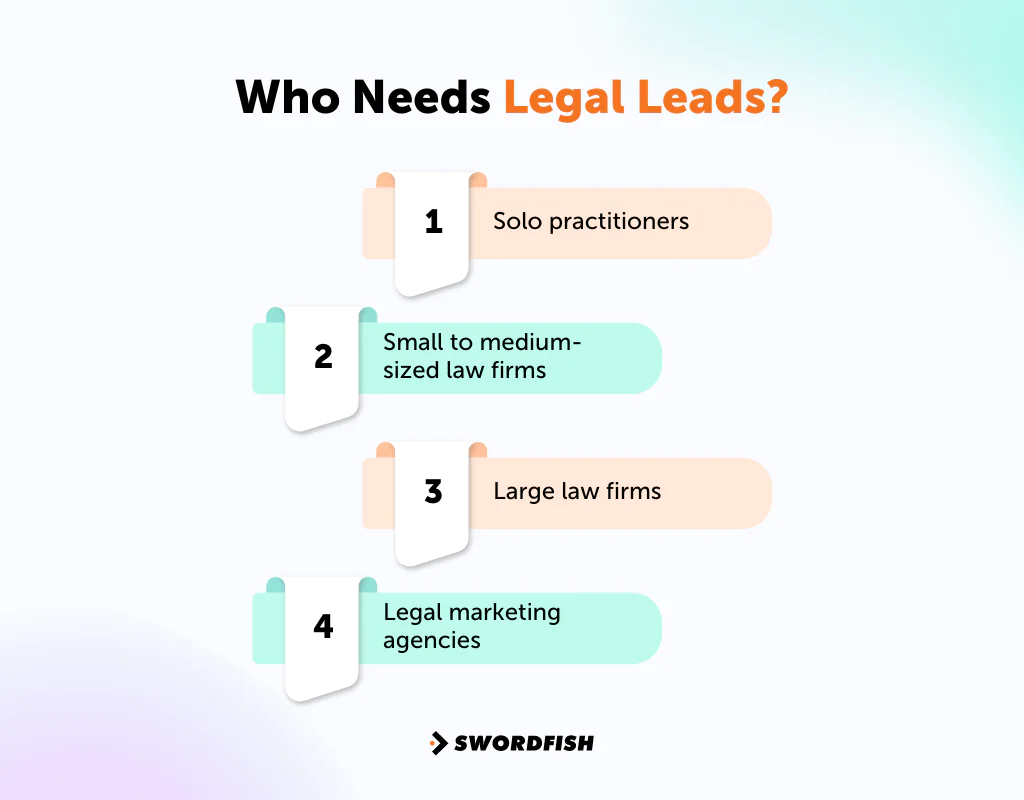
- Solo practitioners: Lawyers working alone need leads to start and grow their own practice. Leads help them find people who need legal help so they can offer their services.
- Small to medium-sized law firms: These firms want to bring in more clients to grow the business. Legal leads give them a way to reach more people who need advice or representation.
- Large law firms: Big firms use leads to find new client segments and enter new practice areas, helping them keep growing and stay competitive.
- Legal marketing agencies: These agencies work to help law firms get more clients. They use legal leads to understand who needs legal help and how to connect them with the right lawyers.
How to Generate Legal Leads Perfectly: 10 Ways
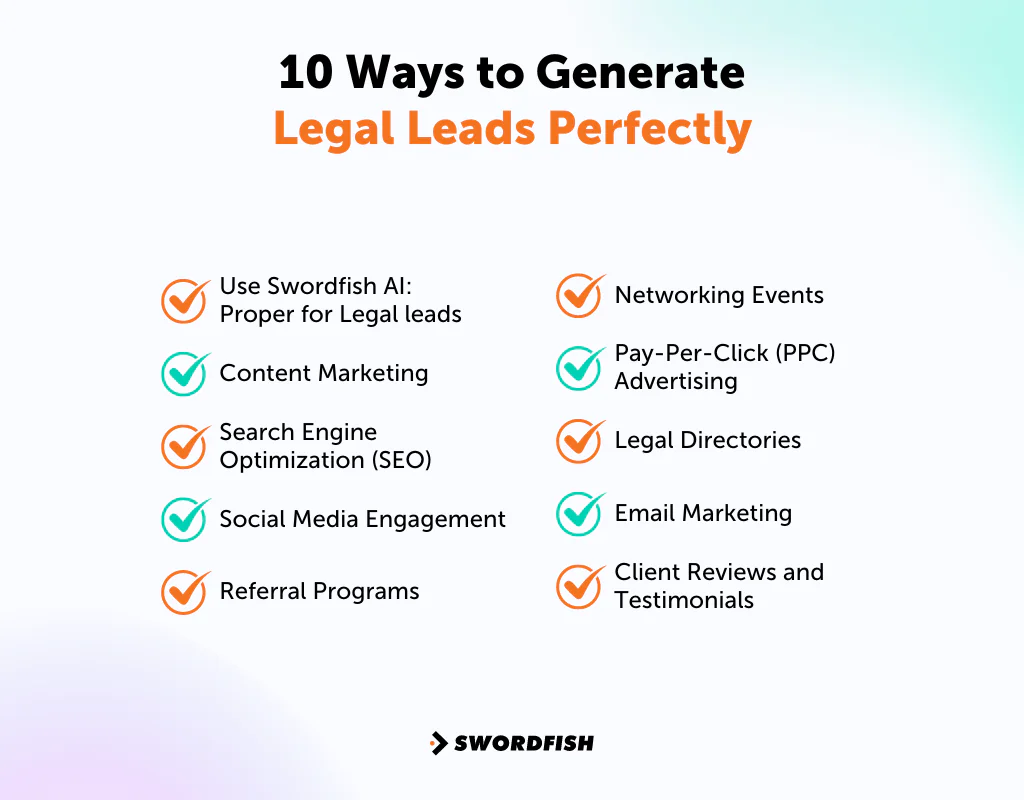
Legal leads can come from several channels: online tools, legal directories, social media, referrals, and useful content on your website. Choose methods that fit your practice and use contact information in accordance with applicable requirements.
Beyond that, there are several proven ways to generate legal leads effectively. Let’s go through them.
1. Use Swordfish AI: Get the Best Legal leads
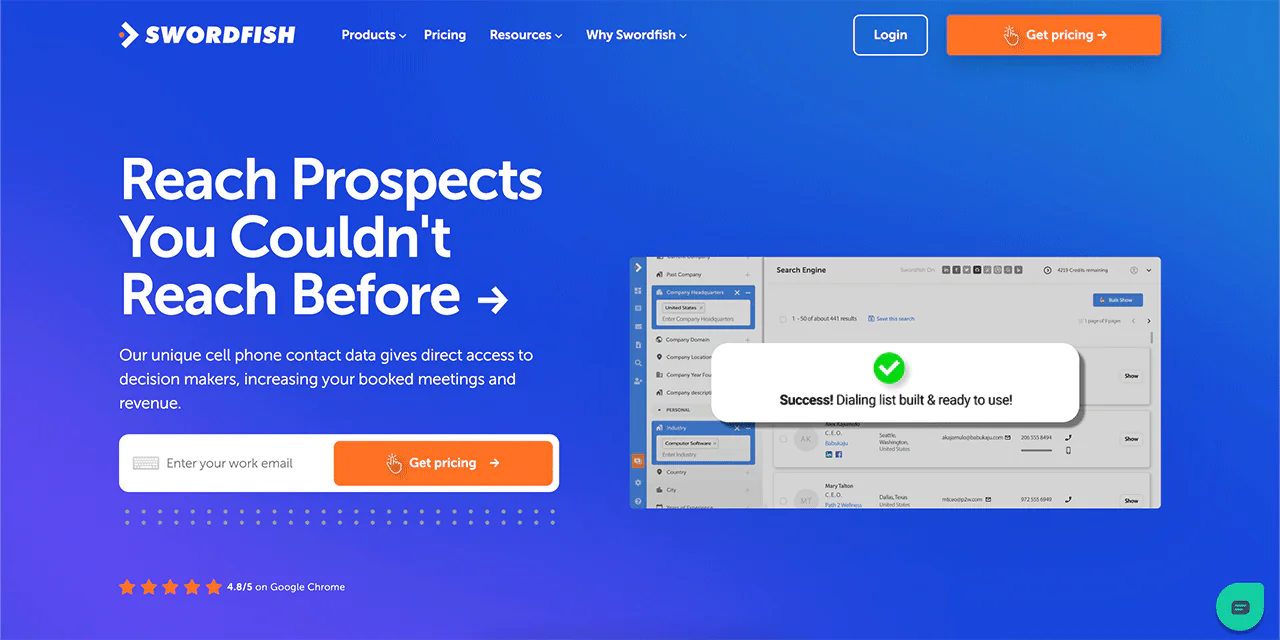
Swordfish AI is one contact-data tool legal professionals may consider. The article describes it as providing phone numbers and email addresses to help firms find ways to contact potential clients.
Swordfish AI describes its contact-data tools as a way to support lead generation. Confirm that the data is suitable for your intended use and that your outreach follows applicable rules.
The platform is presented as a way to support a law firm’s outreach workflow. Its effect on lead conversion will depend on the firm’s processes and the quality and relevance of its leads.
Here’s how Swordfish AI supports legal lead generation in practice:
-
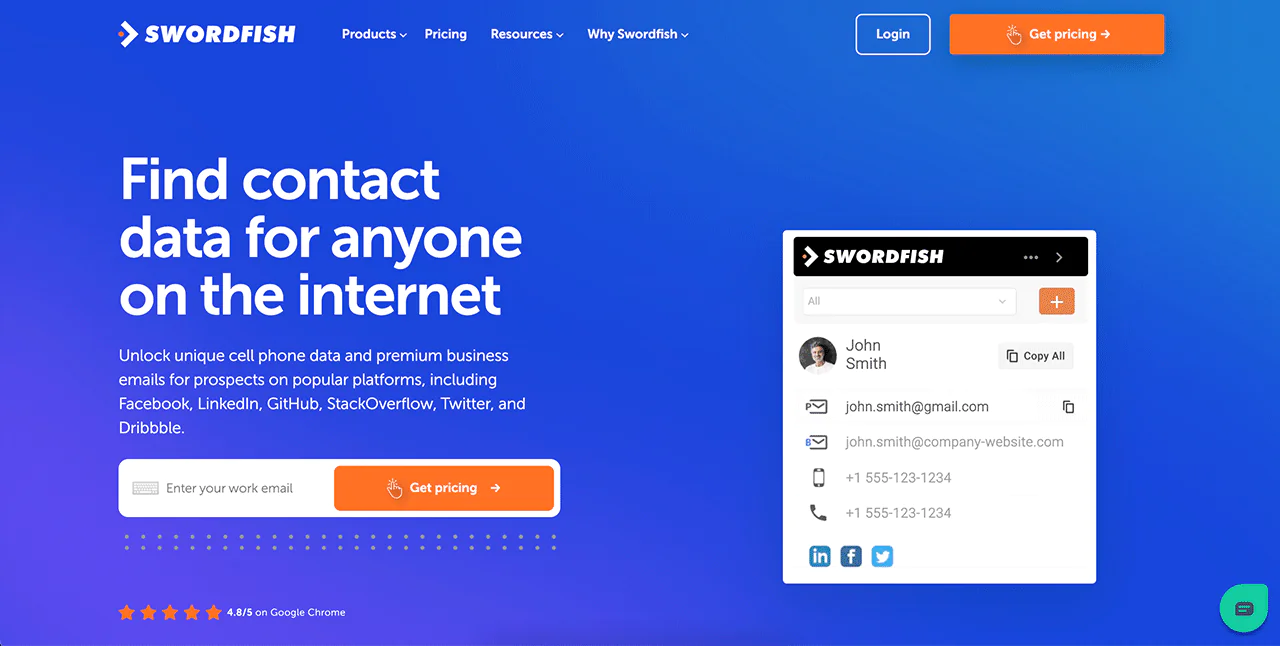
Chrome Extension for Easy Access
Swordfish AI offers a Chrome extension that simplifies finding contact information directly from web browsers.
The extension is described as a way to find contact details while researching online. Before using contact information for outreach, check that your use complies with applicable privacy, marketing, and platform requirements.
-
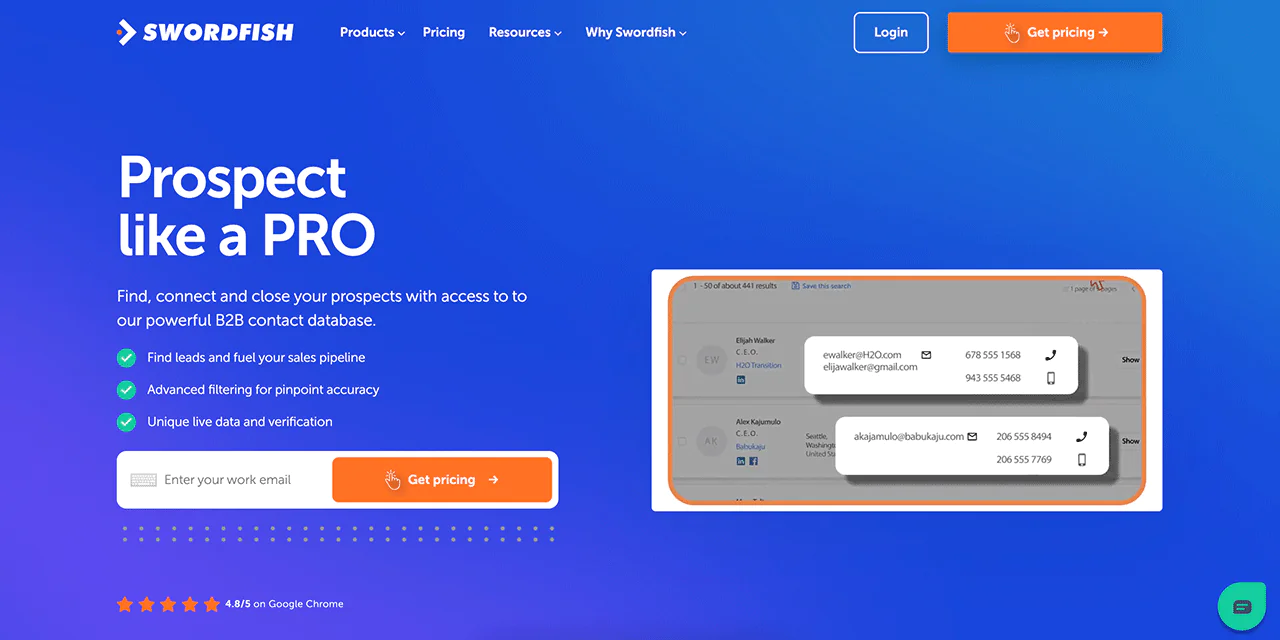
Prospector for Bulk Lead Generation
The Prospector feature lets you build targeted lists for calling or emailing, using filters to narrow the search.
For example, filters may help organize prospect lists by relevant professional or business criteria. Avoid assuming that an individual needs legal help based on personal or sensitive information.
-
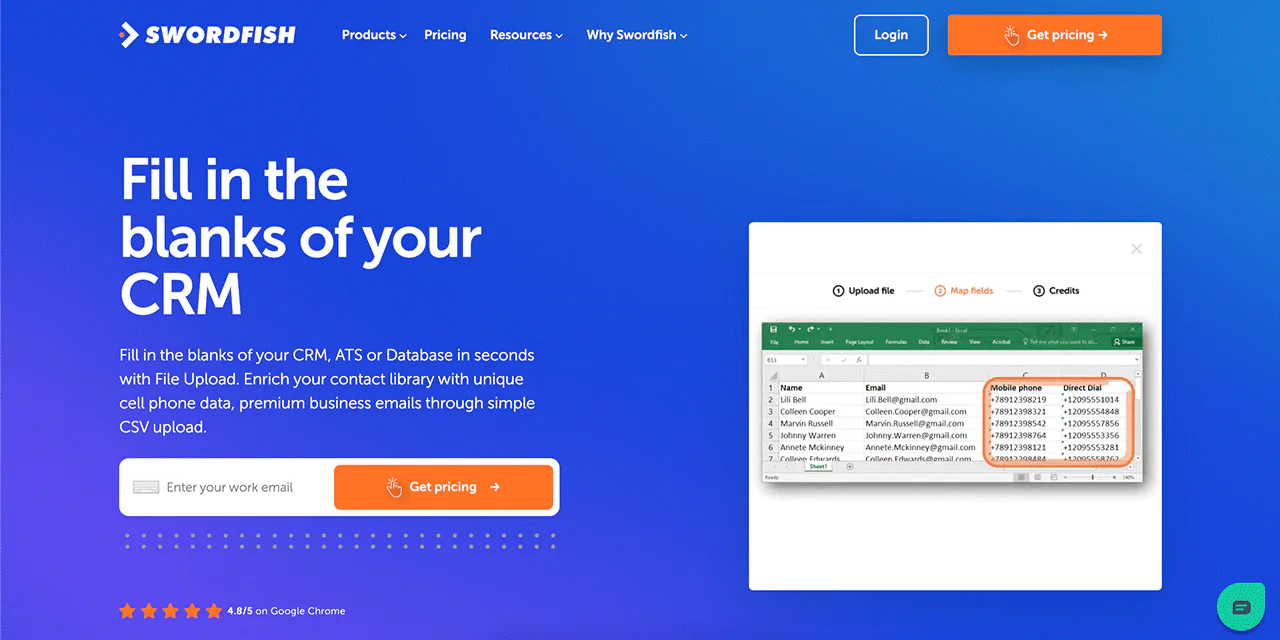
File Upload to Complete Contact Databases
Swordfish AI’s File Upload feature fills in missing contact information in your CRM. If you have a list of leads but lack phone numbers or email addresses, uploading the file lets Swordfish populate those fields, making your database more useful.
-
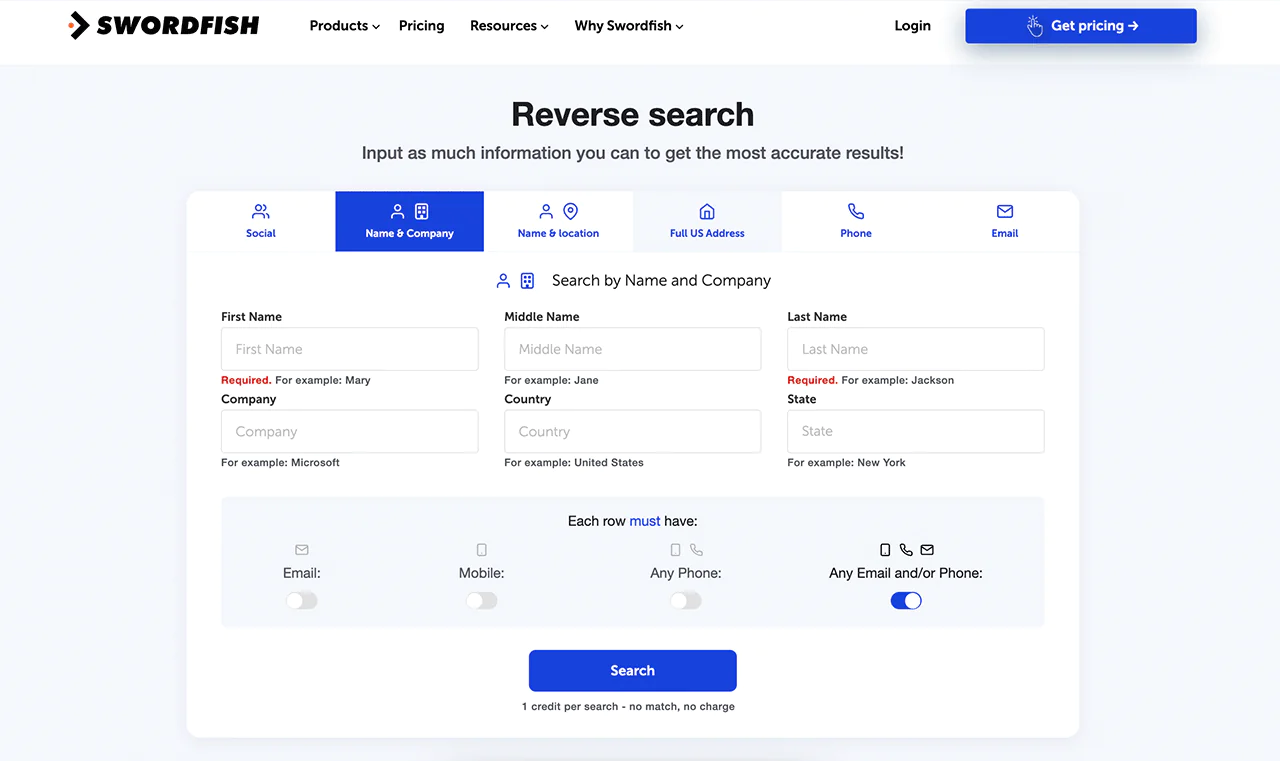
Reverse Search for Detailed Information
With minimal information, Swordfish AI can run a Reverse Search to fill in the rest. If you only have a name and a company, Swordfish can use that to find the person’s phone number and email, so you can reach out more effectively.
-
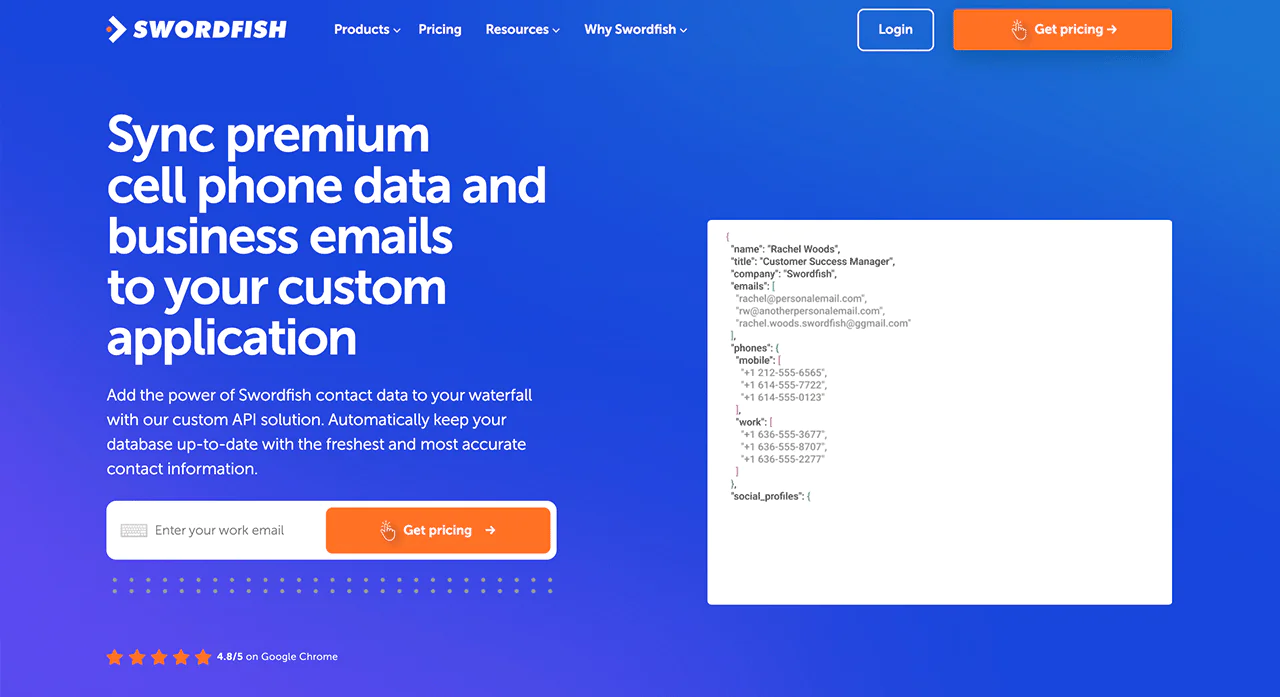
API Integration for Automated Processes
Swordfish AI’s API can integrate with your existing systems, automating the lead generation process. By connecting the API to your firm’s website or intake system, you can automatically collect and validate the contact information of visitors expressing interest in your services.
-
Bombora® Intent Data for Targeted Outreach
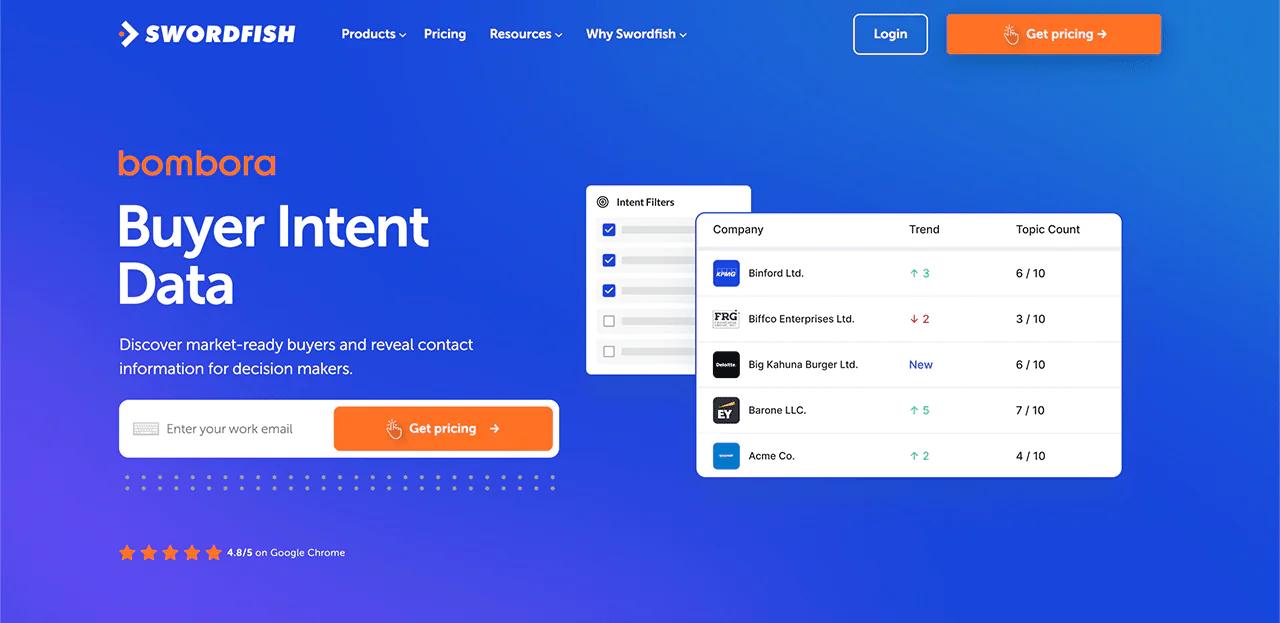
Access to Bombora® intent data through Swordfish AI helps identify businesses actively researching legal products or services, so you can spot organizations in the market for legal advice.
Intent data may help a firm prioritize outreach to businesses showing interest in relevant services. Treat these signals as indicators, not confirmation that a prospect needs or wants legal representation.
 Try Swordfish Ai
2. Content Marketing
Sharing useful legal information online can help demonstrate your knowledge and attract people seeking information about a legal issue. For example, a blog post explaining general steps in a divorce process can be shared on your site and social channels. Avoid presenting general content as advice for an individual’s specific circumstances.
3. Search Engine Optimization (SEO)
SEO improves your visibility when people search for legal help online. Using specific, localized phrases, such as “best divorce lawyer in [City],” in your website’s content increases the odds your site shows up when someone is actively looking.
SEO can make your site easier to find when someone searches for legal help. Its cost and results vary by market, competition, and the time and resources invested.
4. Social Media Engagement
Social media can help you connect with people and share legal information. Platforms such as LinkedIn can be used to post general legal tips and join relevant discussions.
Consistent, useful posts can help people discover your practice and learn about your areas of focus. Avoid implying that a social media exchange creates an attorney-client relationship.
5. Referral Programs
Satisfied clients may be willing to refer others. If you consider offering an incentive for referrals, first check the professional conduct rules that apply to your practice and jurisdiction.
If a referral program is permitted, make its terms clear to clients, such as by explaining them in an email or during a meeting.
6. Networking Events
Networking events can put you in contact with potential clients and give you a chance to explain your practice. Keep any promotional offer, such as a consultation giveaway, consistent with the professional conduct rules that apply to your practice.
In-person conversations provide another way to introduce your practice and learn what services people may be seeking.
7. Pay-Per-Click (PPC) Advertising
PPC ads generally charge when someone clicks, and can be targeted by service and location. For example, a firm might advertise estate-planning services in its city or region. Set a budget and assess results rather than assuming clicks will lead to clients.
8. Legal Directories
A listing in a legal directory can help people find your practice when they’re looking for a lawyer. If you use directories such as Avvo, keep your profile accurate and current, including the services you offer and how to contact you.
9. Email Marketing
Email can help your firm stay in touch with people who have agreed to receive communications. A newsletter might include general legal information, relevant updates, and firm news, along with a clear next step such as how to request a consultation. Follow applicable consent and unsubscribe requirements.
10. Client Reviews and Testimonials
Client reviews may help prospective clients learn about others’ experiences. You can invite clients to leave an honest review and feature testimonials where permitted, while following applicable rules on confidentiality, advertising, and client solicitation.
Conclusion
Generating and managing legal leads can support a law practice’s efforts to attract clients. Firms may combine several of the methods above and follow up promptly, then track results to see which channels work for their practice.
A strong online presence can help prospective clients find a firm. Consider investing in lead-generation and follow-up systems based on your practice’s needs, budget, and applicable professional obligations.
Consider whether Swordfish’s contact-data tools fit your firm’s approach to finding and reaching prospective clients.
FAQs
How can I improve the quality of my legal leads?
Improve lead quality by sharpening your ad targeting and using tools that give you detailed insight into potential clients before you reach out. This helps you focus on people genuinely interested in your services, which improves conversion rates.
Are there free ways to get legal leads?
Yes. Networking, client referrals, and active engagement on social media can all generate leads without direct cost. These methods build your reputation over time and connect you with people who may need your expertise.
How do I follow up with legal leads?
Follow up quickly, ideally within minutes to a few hours, by calling or emailing. Offer useful information and suggest a specific next step, like a consultation. Fast, informative follow-up signals that you take the inquiry seriously and meaningfully improves the odds of converting the lead.