
 View Products


Last updated: September 3, 2026
Commercial solar leads connect solar companies with businesses that are actually ready to invest in renewable energy. Getting in front of the right prospect at the right time matters more than volume here — a warm lead with an expiring energy contract is worth far more than a cold list of random businesses.
The hard part is finding those leads consistently. Where do you start?
Start by focusing on businesses whose energy contracts are about to expire. Use sources like the MLS and public records to quickly and accurately gather contact details. Make sure you have current phone numbers so you can reach the right decision-makers.
Below, we walk through practical ways to identify and reach solar leads, along with the contact-data tactics that keep the process from stalling out on bad information.
What are Commercial Solar Leads?
Commercial solar leads are the contact information for businesses interested in installing solar energy systems. These leads matter to any company selling solar technology because they point sales efforts toward businesses actively looking to cut energy costs and shrink their carbon footprint.
Commercial solar demand has kept climbing. Solar Industries Association data shows the commercial solar segment installed 2,118 MWdc in 2024, setting an annual record with 8% year-over-year growth, and that momentum continued into 2025, when the segment added roughly 2.3 GWdc of new capacity for another record year.
Generating these leads means identifying businesses likely to benefit from solar, such as those with high energy consumption or contracts nearing renewal. Effective commercial solar lead generation keeps sales effort focused on businesses that are genuinely close to making the switch, rather than businesses that are merely curious.
How Commercial Solar Leads Work
Commercial solar leads work by identifying businesses that are realistic candidates for a solar system. Each lead typically includes the business name, contact details, and some sense of energy usage patterns.
Solar companies use that data to shape their pitch around each business’s specific situation. The process usually starts with pulling data from public records, energy surveys, and commercial databases.
From there, reps reach out by phone, cold email, or in-person visits to talk through how solar could lower energy costs and support sustainability goals. Focusing on qualified leads — rather than every business in a territory — is what actually moves deals forward.
A tighter, better-qualified lead list also tends to shorten the sales cycle, since reps spend less time weeding out businesses that were never going to convert.
How to Generate Commercial Solar Leads: 8 Excellent Methods
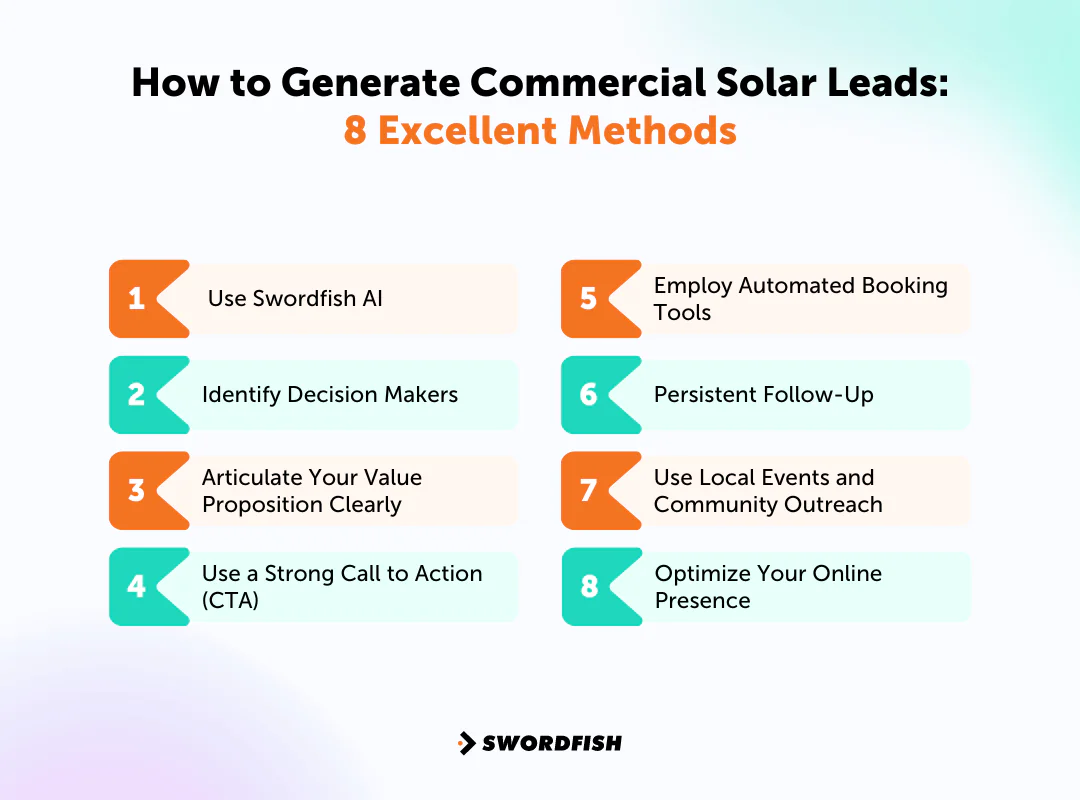
Generating solid solar leads takes a mix of strategic outreach and practical tools that get you in front of business clients who are genuinely ready to invest in solar energy.
Here are eight strategies worth building into your process:
1. Use Swordfish AI to Generate Commercial Solar Leads
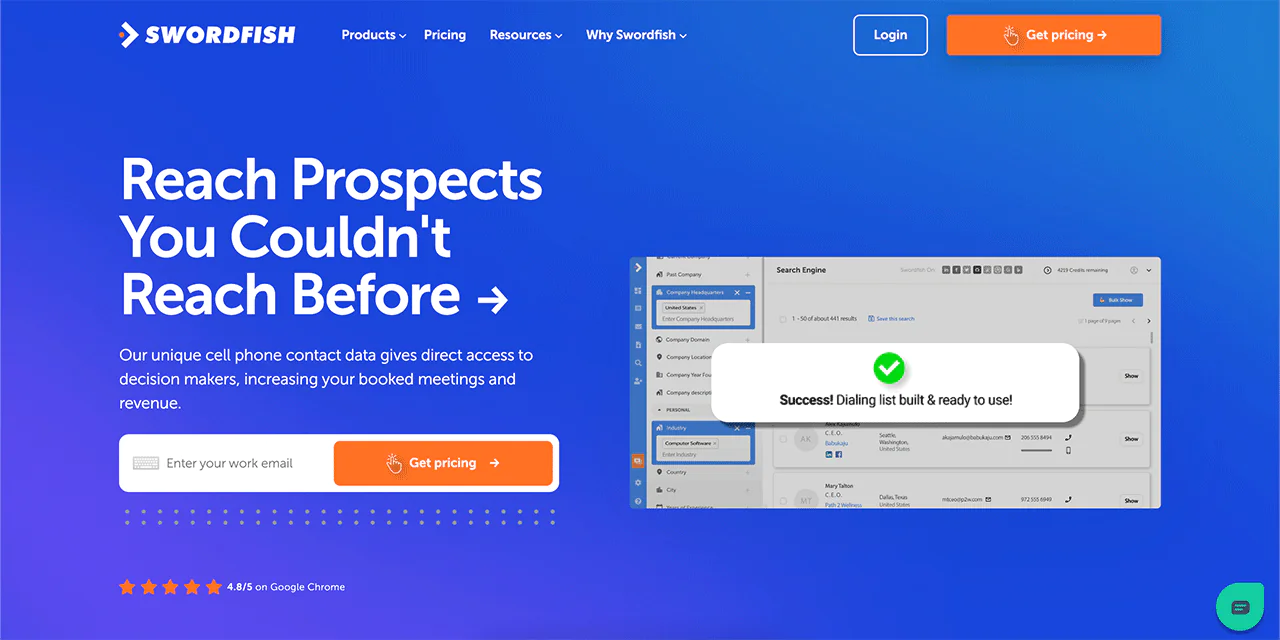
Swordfish AI specializes in finding and verifying cell phone numbers and email addresses. It’s used by tens of thousands of sales and recruitment professionals for its accuracy and coverage, and it draws on a large database of contact profiles with real-time validation to help confirm active line connectivity.
Swordfish AI also offers a Chrome extension for pulling data across platforms, bulk lead generation, CRM integration, and reverse search. For commercial solar sales teams, that combination can improve lead generation by getting reps direct contact information for decision-makers instead of generic switchboard numbers, which tends to simplify outreach and keep the pipeline moving.
Here’s how the individual features fit into that workflow:
- Chrome Extension
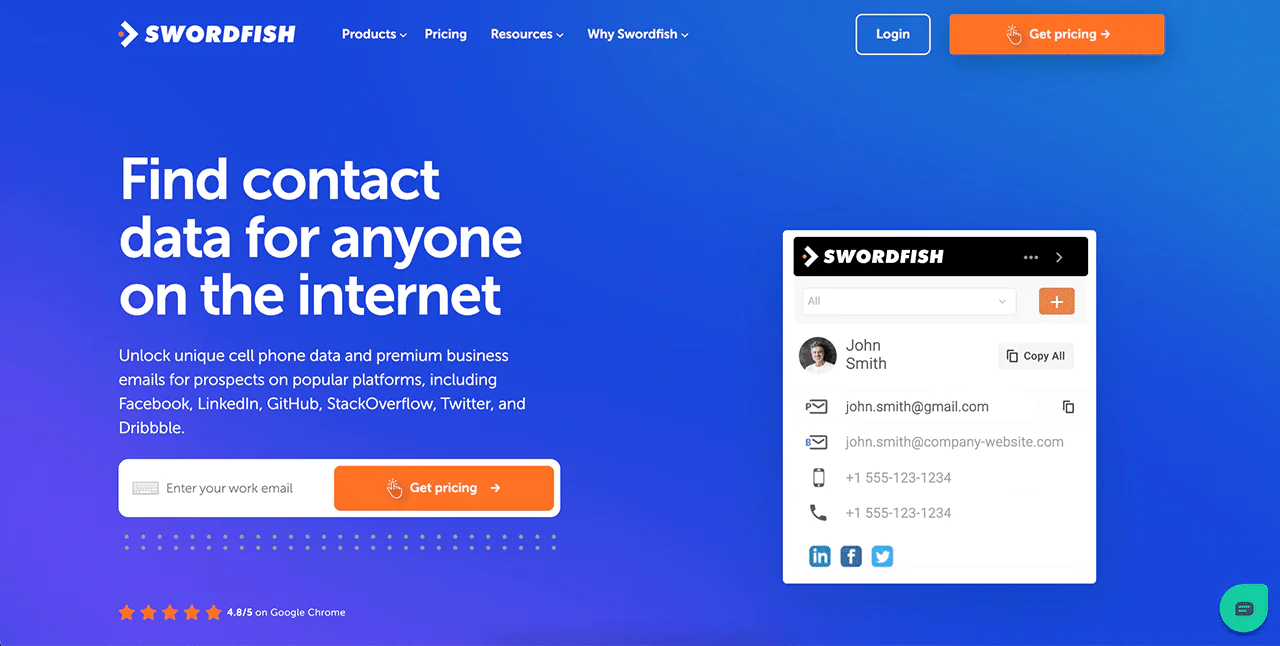
Swordfish’s Chrome extension pulls contact information directly from web pages, including LinkedIn, Twitter, and Facebook, so you can capture contacts in relevant industries without leaving the page you’re on.
- Prospector
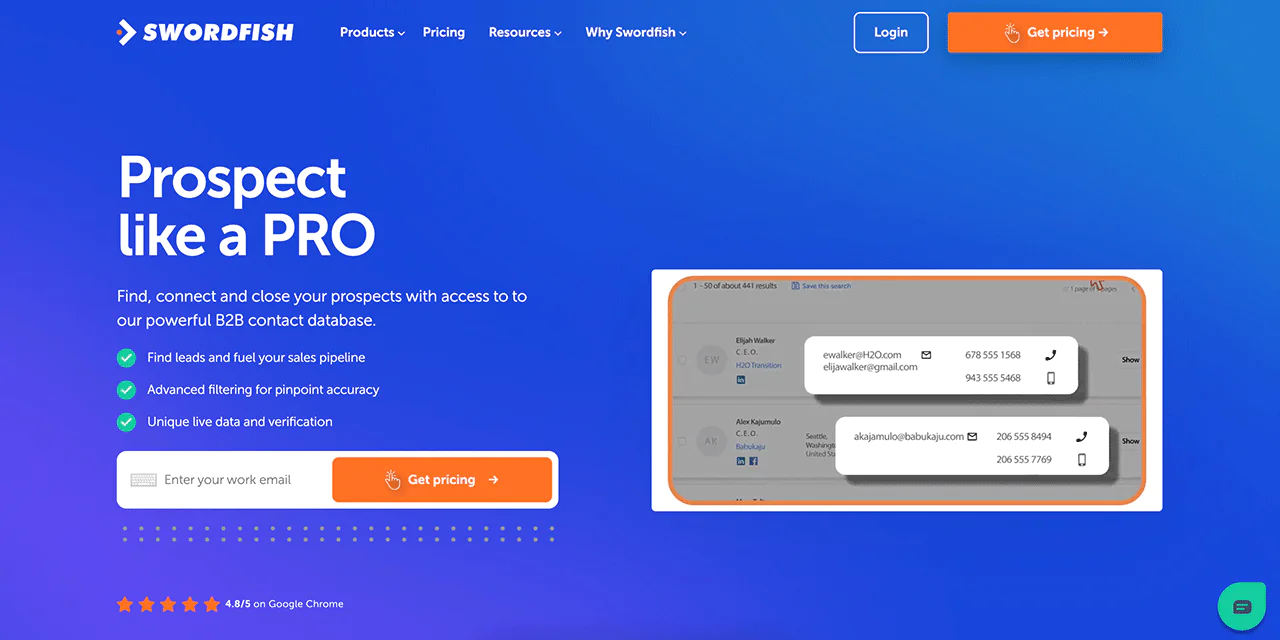 The feature lets you build targeted calling or email lists using advanced filters, which helps commercial solar teams zero in on businesses that fit their ideal customer profile instead of casting a wide net.
- File Upload
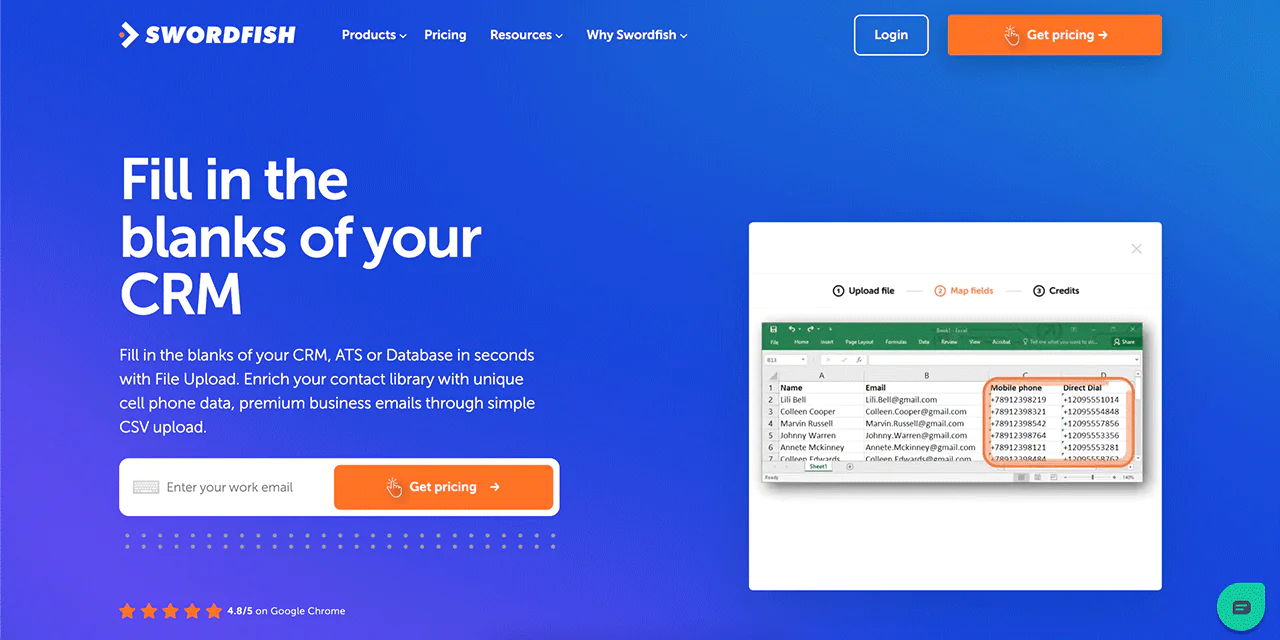
Swordfish AI can fill in missing cell phone numbers and emails in a CRM from an uploaded CSV file. For commercial solar companies, that keeps the database current and complete, which matters for any campaign built around timing.
- Reverse Search
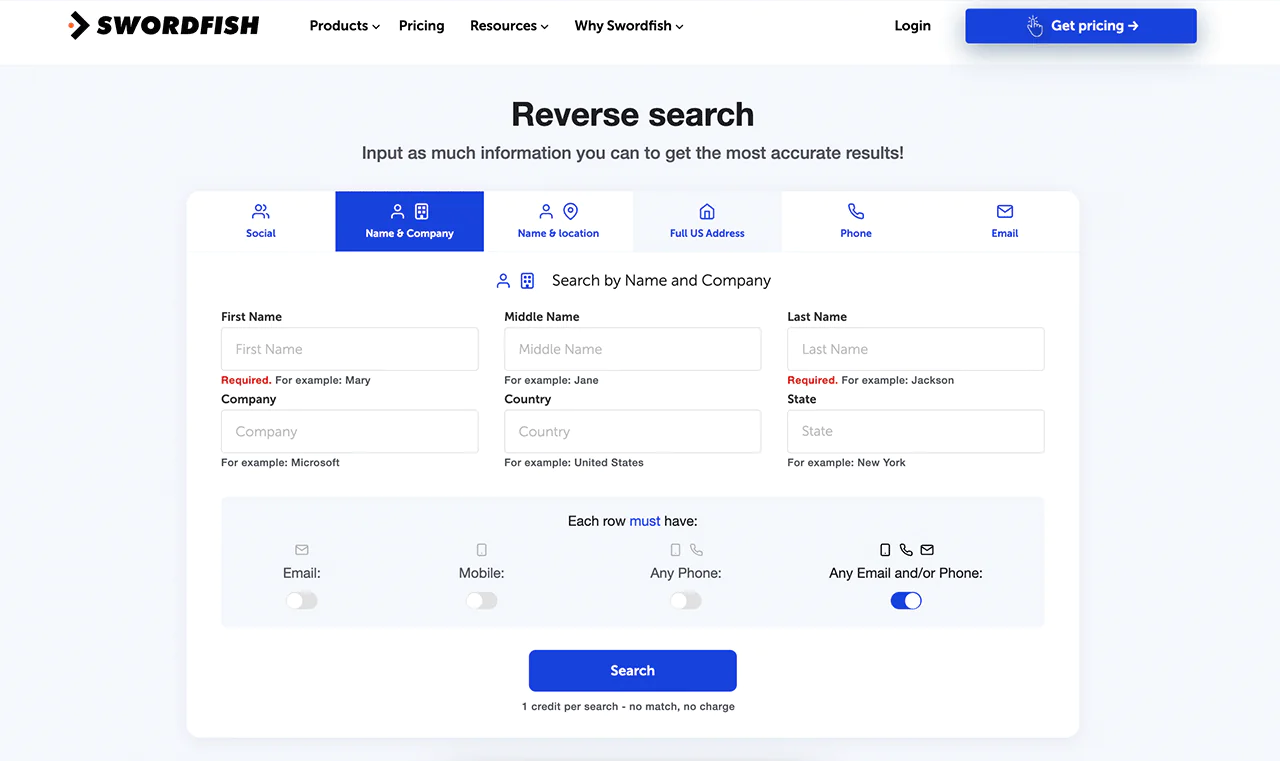
With Reverse Search, you can start with minimal information — a name, company, or email — and fill in the rest, which is useful for closing gaps in existing lead records.
- API Integration
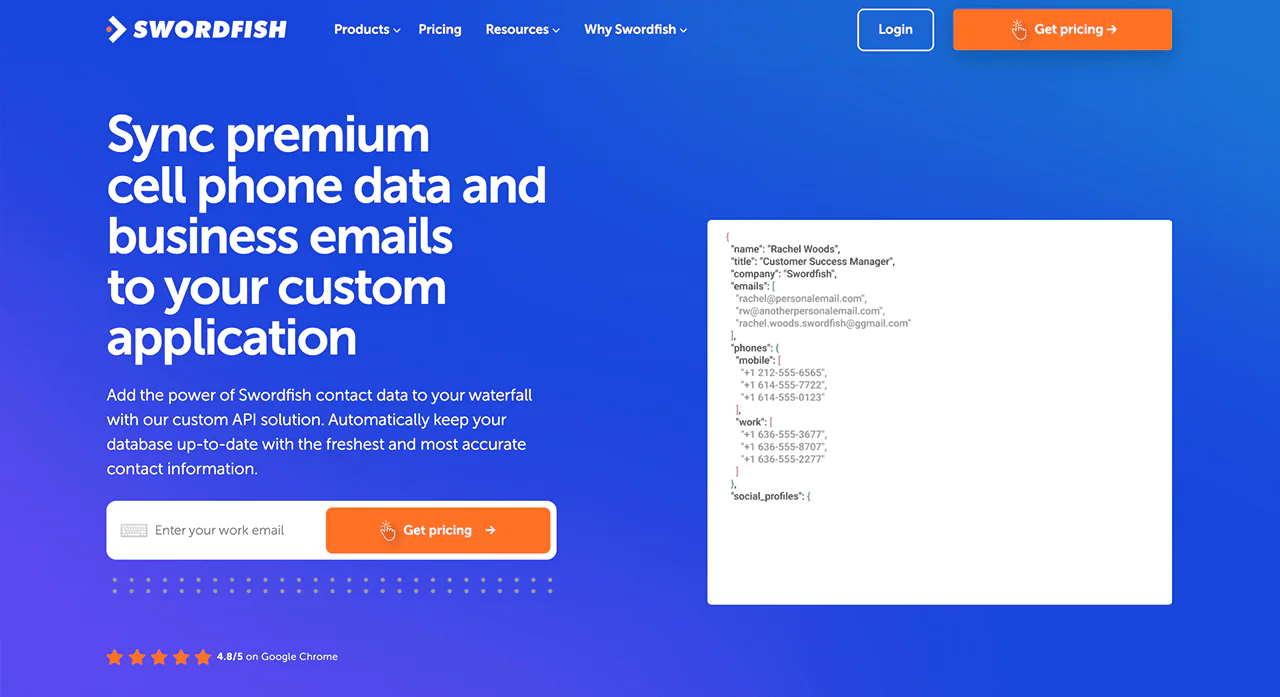
Use Swordfish data in your own business applications at scale to enrich existing systems, which keeps lead processing efficient and reduces the odds of a promising lead falling through the cracks.
 Try Swordfish Ai
2. Identify Decision Makers
To generate clean energy leads, start by identifying the actual decision-makers inside a business, not just whoever answers the main line.
Tools like Swordfish AI or Hunter.io can help find the email addresses of these individuals based on the company’s domain. Reaching decision-makers directly cuts out the delay of routing a pitch through intermediaries who may never pass it along.
Reaching a CEO or facilities director directly, for example, tends to move faster than pitching a manager without budget authority.
3. Articulate Your Value Proposition Clearly
Communicate the benefits of your solar solutions in plain terms. Focus on what actually differentiates your offer, whether that’s cost savings, energy efficiency, or environmental impact.
A value proposition that speaks to a business’s specific situation lands better than a generic pitch.
A short case study showing real energy cost reduction for a similar business can do more to persuade a prospect than a features list.
4. Use a Strong Call to Action (CTA)
Use a clear, specific call to action to prompt a response. After laying out the benefits, ask for a concrete next step — scheduling a consultation or requesting a quote.
Something like, “Click here to schedule a free consultation and discover how much you could save with solar power” works better than a vague sign-off, because it removes ambiguity about what happens next.
5. Employ Automated Booking Tools
Automated booking calendars make scheduling easier for both sides and capture interest before it cools off.
They also cut down on leads going cold between the first conversation and a scheduled meeting.
Directing an interested prospect straight to a scheduling link, rather than going back and forth over email, keeps momentum going.
6. Persistent Follow-Up
A consistent follow-up cadence keeps your solar solutions top of mind. After the first contact, follow up weekly for the first month, then move to bi-weekly.
That pace signals genuine interest without becoming a nuisance. A brief reminder email about a special offer or a recent installation can be enough to restart a stalled conversation.
7. Use Local Events and Community Outreach
Trade shows, business expos, and community events put you in front of potential commercial clients face to face, which still counts for a lot in a sales process built on trust.
A demo booth at a local business fair, for instance, can connect you with owners who are already thinking about sustainability but haven’t started shopping for vendors yet.
8. Optimize Your Online Presence
Make sure your website is set up for both search visibility and a good user experience, since a meaningful share of commercial buyers will research vendors online before ever picking up the phone.
Keep the site updated with blog posts, customer testimonials, and case studies, and apply basic SEO practices so you show up in searches related to commercial solar.
Content that answers the specific questions commercial buyers ask about installations builds authority and brings in leads that are already partway through their research.
Who Needs Commercial Solar Leads?
Commercial solar leads matter for any business in the solar industry looking to grow its client base. Here’s who typically relies on them:
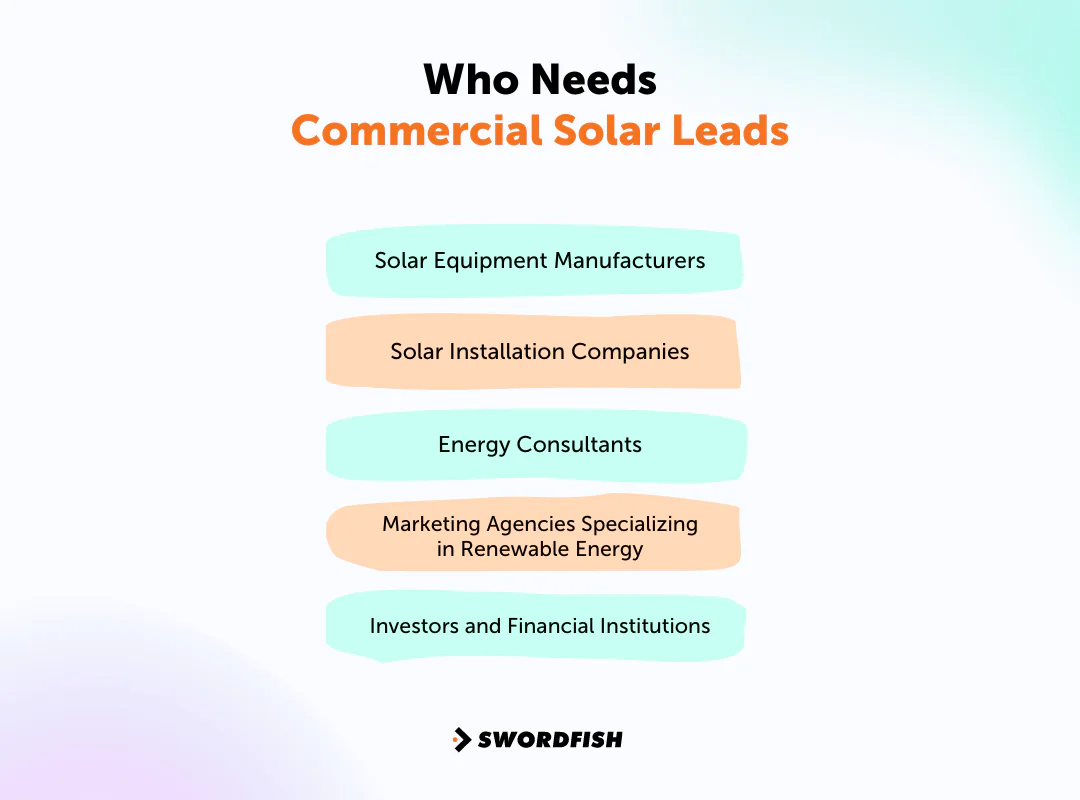
Solar Equipment Manufacturers
Manufacturers use leads to market products directly to businesses considering an energy system upgrade, which helps them reach interested buyers more efficiently than broad advertising.
Solar Installation Companies
Installation companies use leads to find customers who could benefit from their services, which keeps a steady pipeline of projects and supports predictable revenue.
Energy Consultants
Consultants need leads to identify businesses that could cut energy costs through solar, which lets them tailor their approach to each client’s specific usage profile.
Marketing Agencies Specializing
Agencies use leads to build targeted campaigns for solar clients, sharpening the precision of their marketing strategies. That focus tends to translate into better results for the clients they serve.
Investors and Financial Institutions
Investors and banks funding green energy projects use solar leads to locate promising commercial solar ventures worth backing.
Final Verdict
Generating commercial solar leads isn’t complicated in concept, but it does take discipline. Getting high-quality leads matters more than getting a lot of them.
Identifying key decision-makers, presenting a clear value proposition, and using tools like Swordfish AI for accurate contact data all support the same goal: spending your outreach time on businesses that are actually close to buying.
Don’t skip local events, an optimized online presence, or steady follow-up. Together, these steps put your solar solutions in front of the right people and create more chances to close.
Improve your solar sales process with Swordfish AI. Connect with key decision-makers directly, and start your free trial today.
FAQs
Why are commercial solar leads important?
They help solar companies find businesses that might benefit from solar technology, which expands the customer base and drives sales in a competitive renewable energy market.
Can social media help generate commercial solar leads?
Yes. Social platforms can promote installations, share customer testimonials, and let reps engage directly with potential business clients.
What are common challenges in generating commercial solar leads?
Common challenges include finding accurate contact information and separating qualified leads from unqualified ones, along with clearly communicating the financial and environmental value of solar investments to potential clients.