
 View Products


Last updated: September 3, 2026
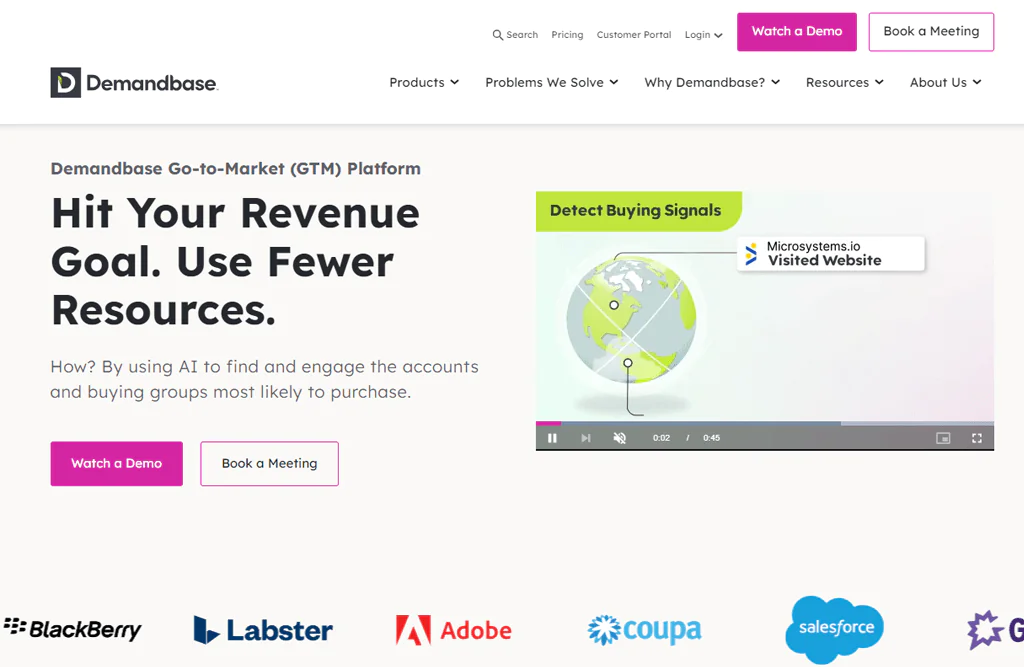
Demandbase is one of the more established names in Account-Based Marketing (ABM) software, built around its Go-to-Market platform, Demandbase One™. The company’s pitch centers on pairing a business’s own customer data with AI-driven account intelligence, so sales and marketing teams can spot the right accounts and time their outreach accordingly.
That focus on precision targeting is why Demandbase shows up so often in evaluations from mid-market and enterprise B2B teams. This review covers what the platform actually does well, where it falls short, and which alternatives are worth comparing before you commit budget to it.
Demandbase: A Quick Overview
Chris Golec founded Demandbase in 2006, after running a consulting practice focused on helping companies build demand generation operations. That practice evolved into the company now known for reshaping how B2B teams identify, reach, and convert accounts online.
Demandbase operates as an ABM and Go-To-Market platform, combining artificial intelligence with a large B2B data set so companies can find and prioritize the accounts that matter most. Its core differentiator is account intelligence that blends a customer’s own first-party data with Demandbase’s proprietary data, producing more precise targeting and engagement plans.
Rolling it out typically means mapping customer behavior and buying intent so marketing and sales can act on the same signals. Teams that implement it well tend to see gains in targeting accuracy, marketing ROI, and a smoother handoff between marketing and sales.
Key Features of Demandbase
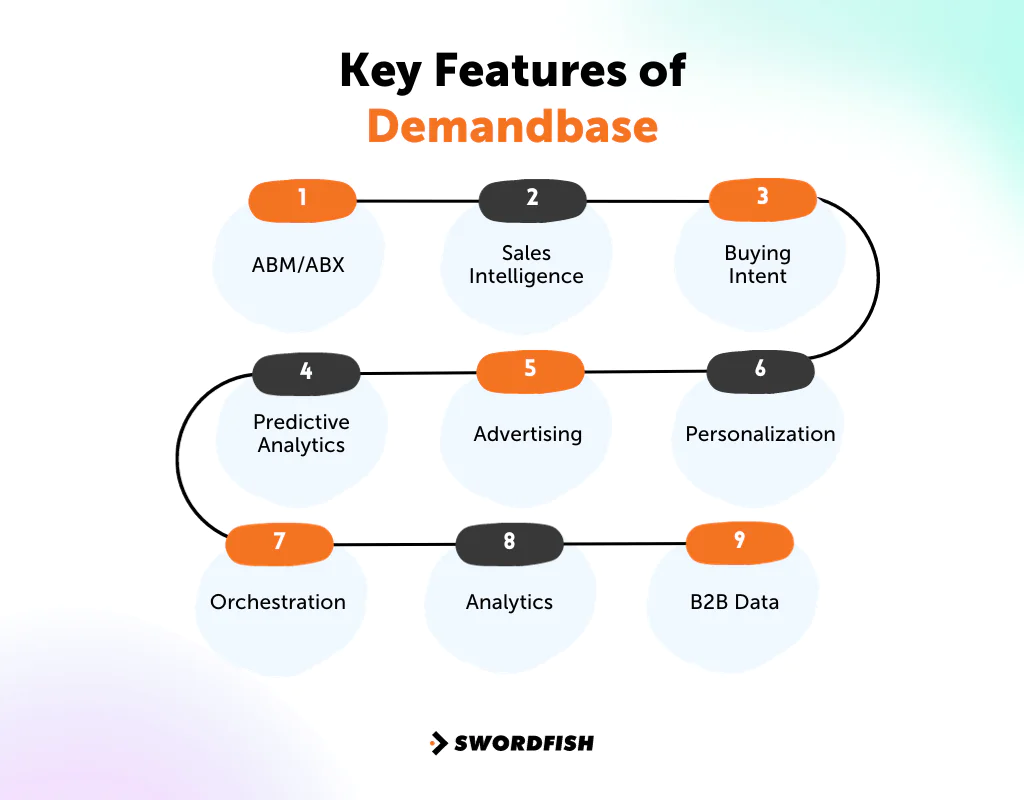
Demandbase offers a suite of features designed to improve B2B marketing and sales efforts. Here’s what each one actually does:
ABM/ABX (Account-Based Marketing/Experience)
This feature merges internal company data with external data using AI to build a full account view. It supports identifying, engaging, closing, and monitoring key accounts across the go-to-market process.
Sales Intelligence
Demandbase surfaces insight into in-market buying groups and accounts, aiming to help account executives and sales representatives close more deals with better-timed outreach.
Buying Intent
The platform tracks third-party intent signals to flag high-intent accounts and buying groups, with customizable keyword tracking so teams can tune signals to their industry.
Predictive Analytics
This module scores accounts and buying groups on fit, intent, and engagement across channels including web, email, marketing automation, and CRM, helping teams prioritize where to spend time and budget.
Advertising
Demandbase’s B2B demand-side platform (DSP) targets ads at accounts and buying groups more likely to convert, reducing wasted spend. It supports display, native, video, and connected TV formats.
Personalization
Website experiences can be customized by account, audience, and buying stage. The platform identifies visitors and adjusts content based on characteristics like location and industry.
Orchestration
This feature automates account-based workflows, coordinating ads, direct mail, and sales outreach at the account, buying-group, and individual level, which can reduce manual work while expanding pipeline coverage.
Analytics
Rather than tracking individual leads, Demandbase’s analytics follow engagement across accounts and buying groups, giving a fuller picture of how a deal is actually progressing.
B2B Data
Account intelligence data is available via API, cloud delivery, or flat files, letting teams pipe Demandbase data into whatever systems they already use.
Pros of Using Demandbase
- Offers a complete suite of tools for Account-Based Marketing and Experience.
- Utilizes AI for precise targeting of accounts and buying groups.
- Simplifies identifying in-market accounts with advanced analytics.
- Emphasizes operational flexibility and transparency, fostering trust and scalability.
- Provides a specialized B2B advertising platform, avoiding consumer ad tech inefficiencies.
Cons of Using Demandbase
- Demandbase’s extensive ABM and ABX tools can be complex and potentially overwhelming for new users or small businesses.
Demandbase User Experience
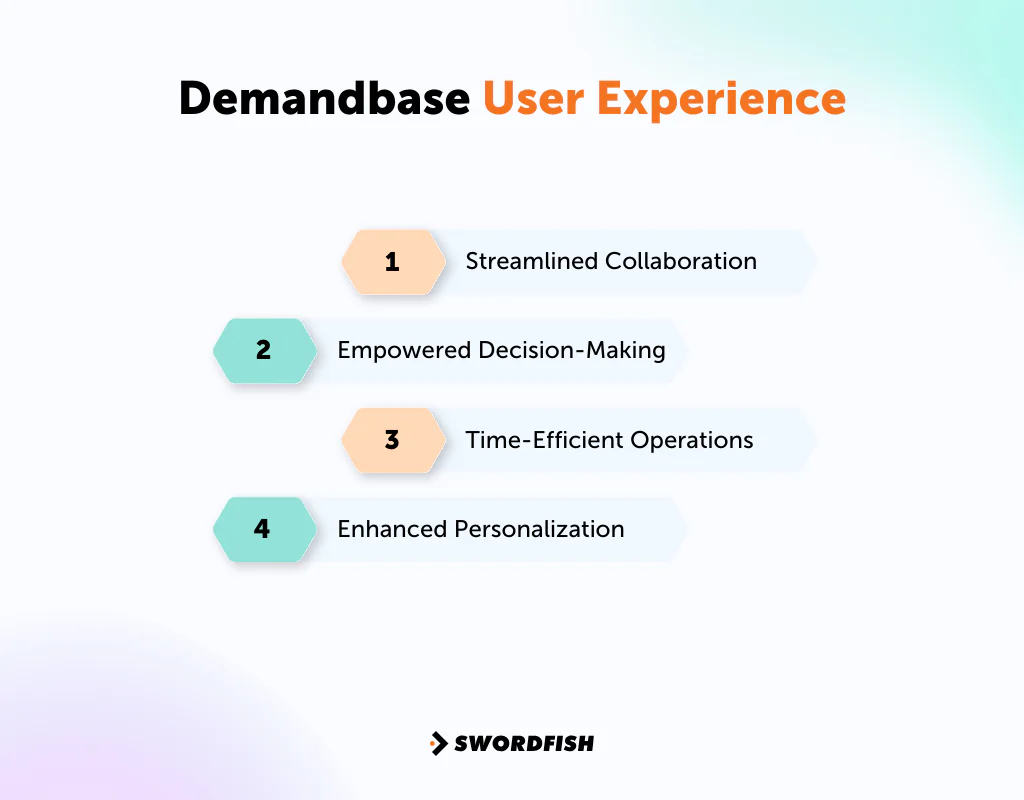
Looking at how teams describe working with the platform day to day, a few themes come up consistently:
Streamlined Collaboration
Real-time data and shared insights tend to bring marketing and sales onto the same page, which helps teams align around common account goals instead of working from separate spreadsheets.
Empowered Decision-Making
Predictive analytics and AI-driven insights give teams something concrete to act on, rather than guessing which accounts deserve attention.
Time-Efficient Operations
Automating repetitive account-based tasks frees up time for higher-value work, which is often the biggest practical win teams report.
Enhanced Personalization
Account-aware website personalization, including addressing visitors by account name, tends to lift engagement and conversion compared with generic site content.
Demandbase Support for Users
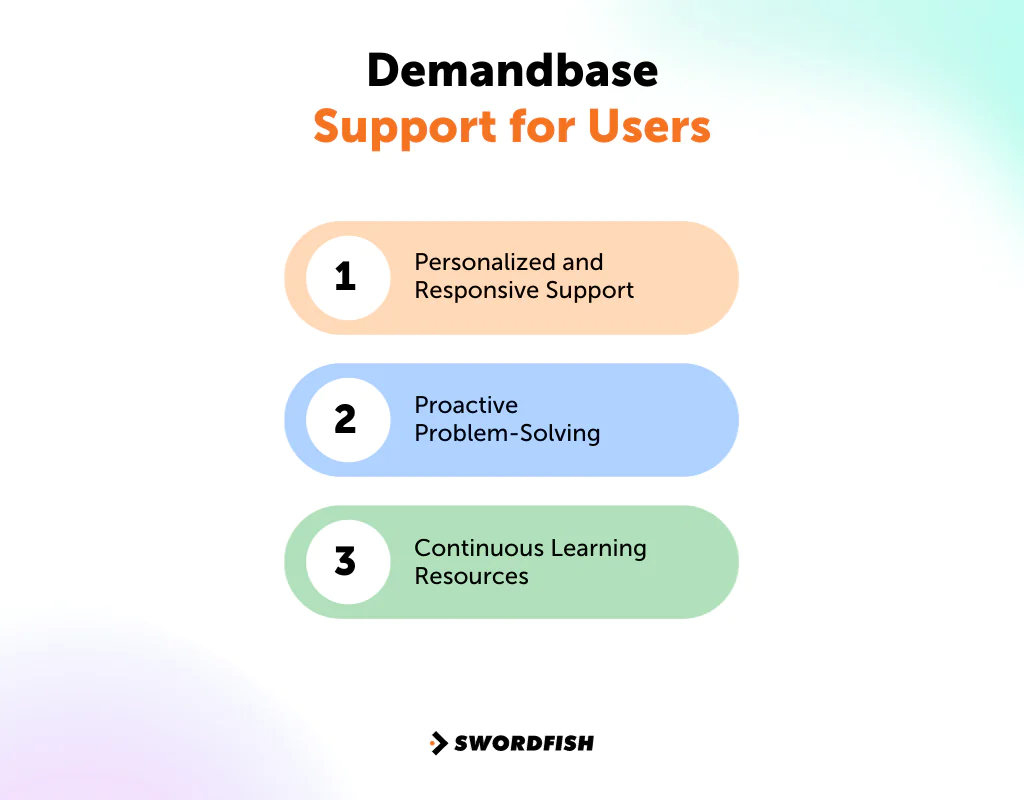
Demandbase’s support model is built around a few core commitments:
- Personalized and Responsive Support: Solutions are tailored to specific account needs rather than generic troubleshooting scripts.
- Proactive Problem-Solving: The support team works to catch and resolve issues before they cause downtime.
- Continuous Learning Resources: A library of learning materials helps teams get comfortable with the platform’s more advanced features over time.
Demandbase Pricing
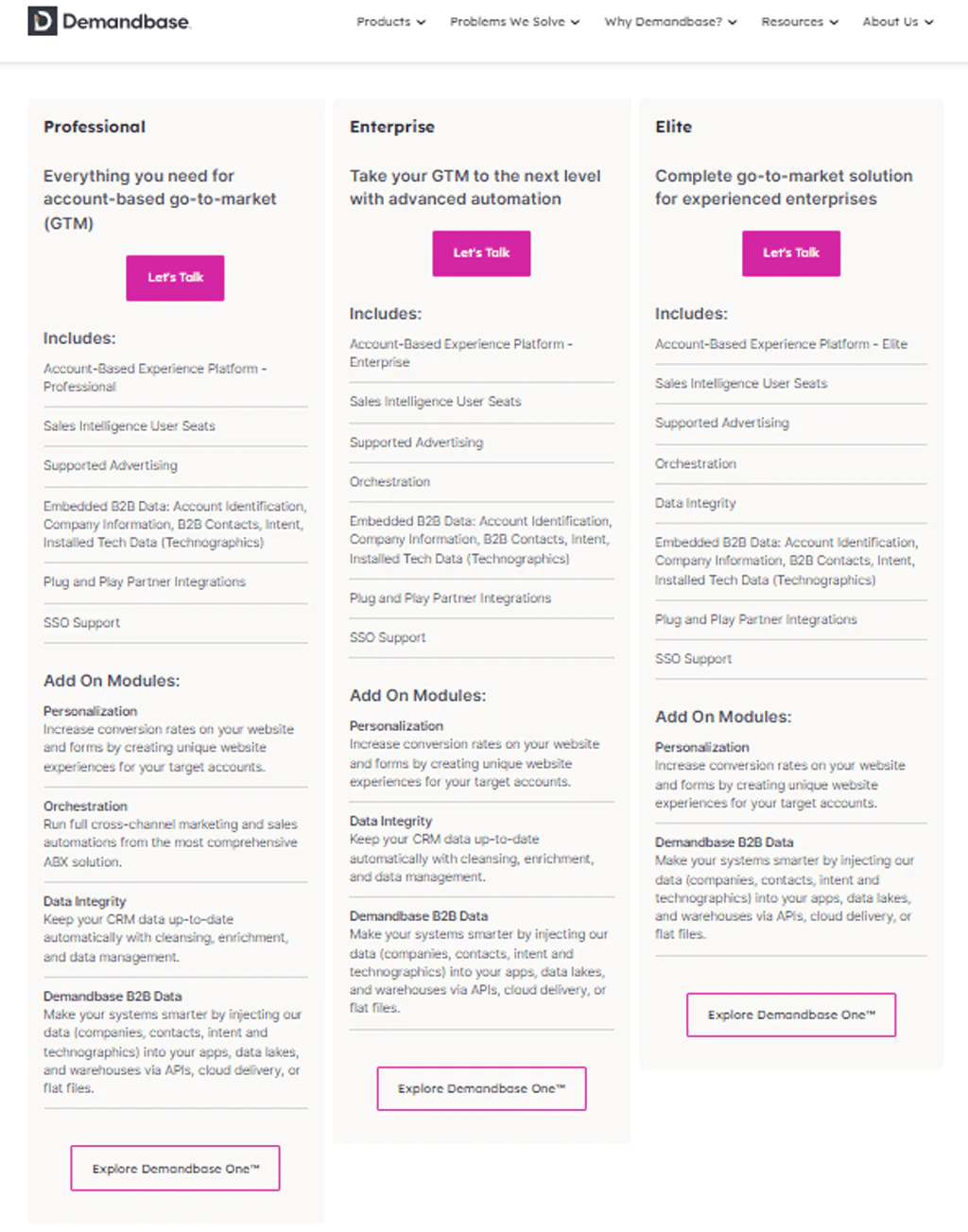
Demandbase does not publish flat pricing. Costs vary by tier and by which add-on modules you select, so you’ll need to talk to their sales team for a quote. Here’s a structured overview of Demandbase cost:
1. Professional Tier
Features: The Professional tier includes the ABX platform, sales intelligence, advertising capabilities, B2B data, partner integrations, and SSO support, with optional add-on modules.
Best Suited For: Businesses that need foundational Go-To-Market tools and are just starting with ABM and ABX strategies.
2. Enterprise Tier
Features: Everything in Professional, plus advanced automation, enhanced B2B data, additional support options, and add-on module availability.
Best Suited For: Companies that have outgrown basic GTM tooling and need more automation and sophistication.
3. Elite Tier
Features: A complete GTM solution built on the Enterprise tier, with added data integrity features, expanded support, and add-on modules.
Best Suited For: Large, experienced enterprises that need a full suite of advanced GTM tools.
Our Review: Is Demandbase the Right Tool for Your Business?
Demandbase does a solid job of getting sales and marketing teams working from the same data, and its AI-driven analytics genuinely help with strategic prioritization. That’s the platform’s real strength: alignment between teams that often operate in silos elsewhere.
The tradeoffs are worth weighing carefully, though. The feature set is broad enough that new users face a real learning curve, and pricing isn’t published anywhere; you’ll need to go through a sales conversation to get a quote.
The personalization and automation tools can meaningfully boost efficiency and engagement, but they’re built with mid-market and enterprise complexity in mind. Smaller teams may find themselves paying for capability they won’t use.
Demandbase can genuinely reshape how a larger B2B team runs its marketing strategy. Just make sure you’re comparing it against alternatives before signing a contract, since the right fit depends heavily on your team’s size and what you actually need the data for.
Best Alternatives to Demandbase
A few Demandbase alternatives are worth considering depending on your priorities. Here’s how they stack up.
1. Swordfish AI
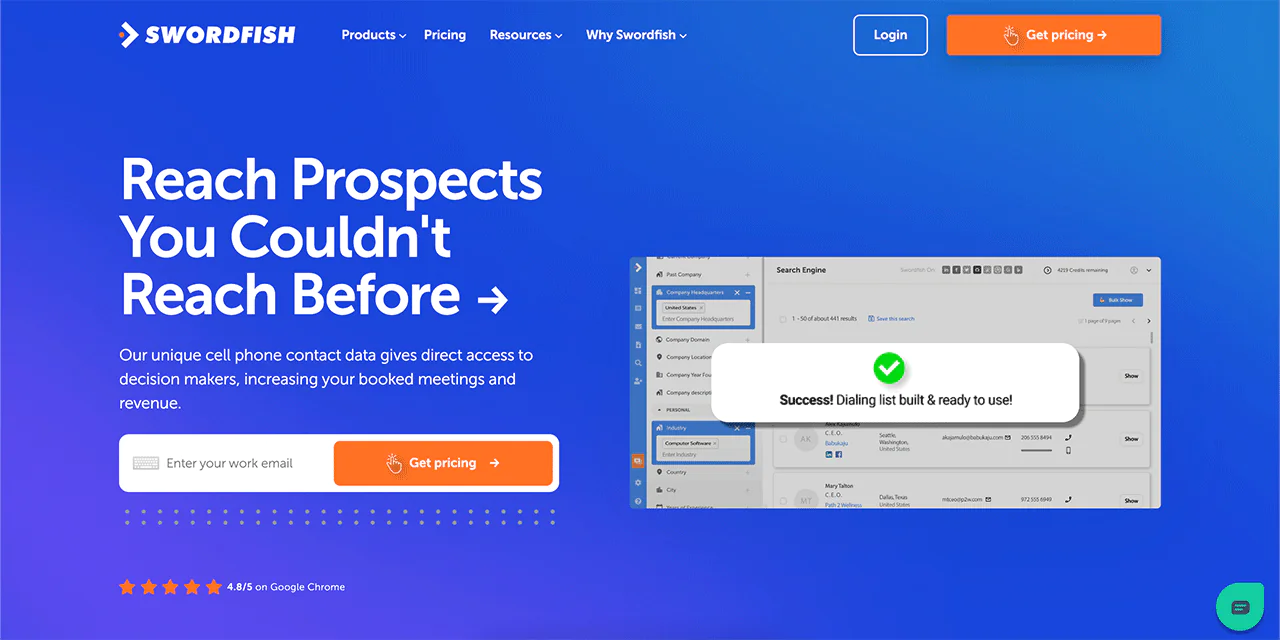
Swordfish takes a different approach than Demandbase’s account-based marketing suite: instead of orchestrating ad campaigns and website personalization, it focuses on getting sales and recruiting teams direct contact information fast. It runs on a database of over 3.5 billion profiles, which gives it a wide net for locating the person you’re trying to reach.
It also includes a proprietary cell phone verification system tools to confirm you have the right mobile number before dialing, which matters a lot for cold calling accuracy.
Swordfish integrates with Bombora, layering in intent data about what accounts are actively researching, which can sharpen outreach timing. It also offers a Chrome Extension for pulling contact details directly from LinkedIn, Facebook, Twitter, and other sites while you browse, plus reverse search functionality for building out contact details from minimal starting information.
Swordfish vs Demandbase: A Quick Comparison Table
If you’re choosing between a broad ABM platform and a direct contact-data tool, the differences matter. Here’s how the two compare feature by feature:
|
Features |
Swordfish AI | Demandbase |
|
Products |
Chrome Extension, prospector, File Upload, Reverse search, API, Bombora | Demandbase One™, ABM/ABX, sales intelligence, buying intent, predictive analytics, etc. |
|
Integrations |
Integrates with Zapier, Salesforce, Salesloft, Pipedrive, HubSpot, etc. | Integrates with Salesforce, Marketo, HubSpot, Oracle Eloqua, Adobe Experience Cloud, Google Analytics, and more |
| Targeted Marketing | Email marketing, Social Selling, Text Marketing, Buyer Intent Data |
ABM, ABX, Personalized Online Ads |
| Focus | Direct Contact Data Retrieval (Sales/Recruitment) |
Broad ABM/ABX Tools (Large-Scale Marketing/Sales) |
| Unique Selling Point | Proprietary Cell Phone Verification with Real-Time Validation |
Leading ABM Software for Account Engagement |
 Try Swordfish Ai
2. LinkedIn Sales Navigator
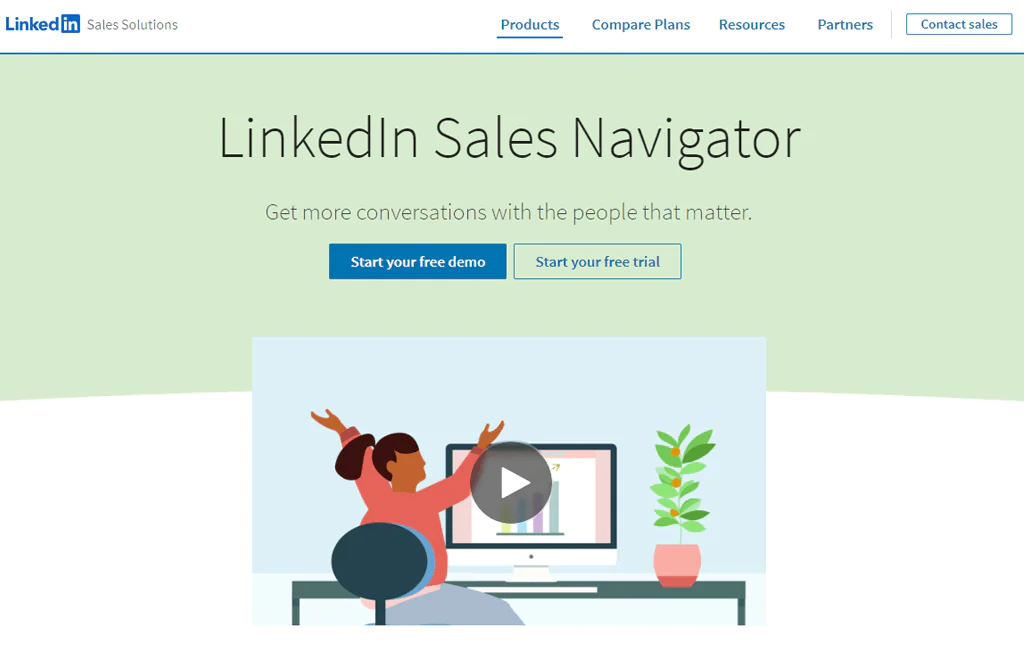
LinkedIn Sales Navigator launched as a standalone product in 2014 after spending years as part of LinkedIn Premium. It’s built around LinkedIn’s own network, helping sellers find and engage the right prospects using LinkedIn’s data and relationship graph.
LinkedIn Sales Navigator offers advanced search, CRM integrations, buyer intent signals, and a relationship explorer, positioning it as a sales-focused competitor to broader platforms like Demandbase.
LinkedIn Sales Navigator vs Demandbase: A Quick Comparison Table
Here are the key differences worth understanding before you choose between them:
|
Features |
LinkedIn Sales Navigator | Demandbase |
|
Core Offering |
Sales intelligence software, excelling in advanced search, filters, and data accuracy | Offers ABM/ABX, B2B Advertising, B2B Data, and Sales Intelligence. |
|
Data Source |
LinkedIn Sales Navigator uses LinkedIn’s network for sales intelligence. |
Demandbase uses AI and third-party intent signals for account-based insights. |
| Integration with CRM | Integrates with CRM tools such as Salesforce, HubSpot, Microsoft Dynamics, and more |
Integrates with CRM tools such as Salesforce, Marketo, HubSpot, Oracle Eloqua, Adobe Experience Cloud, Google Analytics, and more |
| Focus Area | Sales Navigator is more focused on individual prospecting and relationship building |
Demandbase emphasizes broader account-based marketing and sales strategies. |
3. Clearbit
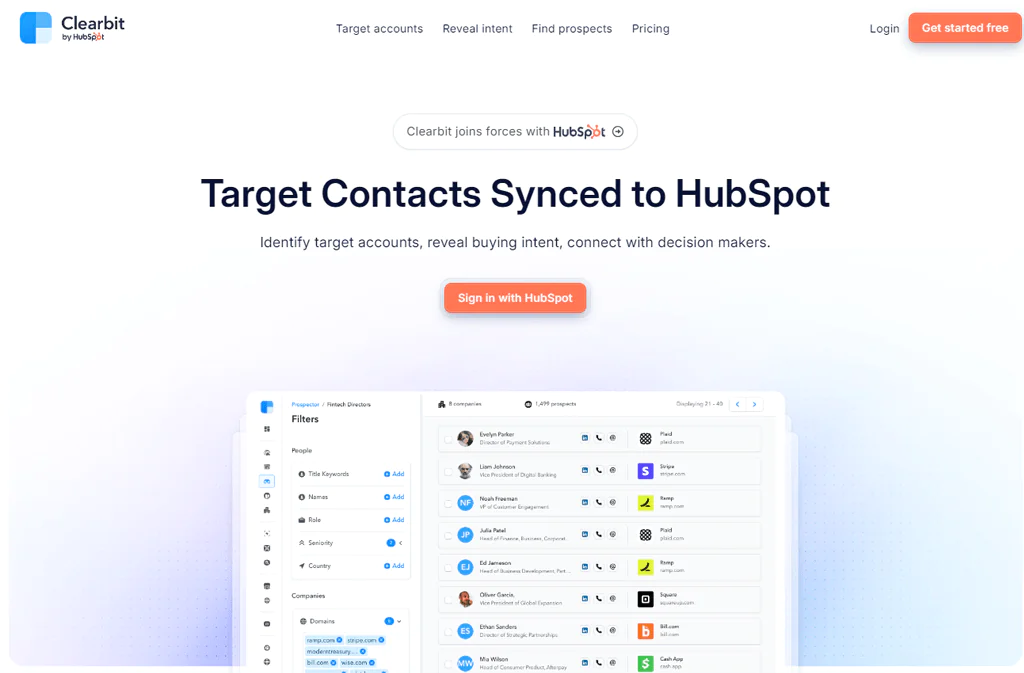
Clearbit, founded in 2015, built its reputation on data enrichment: automatically updating sales records with verified company and contact data. It’s a narrower tool than Demandbase, focused specifically on enriching records rather than orchestrating a full go-to-market strategy.
Where Clearbit specializes in enrichment, Demandbase spans a much broader set of sales and marketing integration tools.
Clearbit vs Demandbase: A Quick Comparison Table
Clearbit and Demandbase both serve B2B data intelligence, sales, and marketing use cases, but they diverge on scope and target audience. Here’s the breakdown:
|
Features |
Clearbit | Demandbase |
|
Primary Offering |
Data enrichment product for sales records | Account Intelligence, ABX, sales and marketing integration |
|
Scope of Services |
Clearbit provides specific tools for contact data and intent analysis |
Demandbase offers a more comprehensive suite of ABM and ABX tools for a unified go-to-market strategy. |
| Integrations | Salesforce, G Suite, Outlook, HubSpot, Marketo, Zapier, Segment, Tray |
Solutions integrated across advertising, ABX, sales, and various systems |
| Target Audience | Clearbit is customized for sales and marketing teams within B2B companies that use HubSpot. |
Demandbase help businesses to implement account-based marketing and sales across various industries. |
4. LeadGenius
LeadGenius, founded in 2011, pairs AI with human computation to identify targeted sales leads. Its technology pulls from websites, business directories, and credit data to train its machine learning system, then customizes outputs to each business’s specific needs.
LeadGenius leans heavily on bespoke data services rather than a broad platform. Both companies serve B2B markets with data-driven methods, but Demandbase’s suite is considerably broader in scope.
LeadGenius vs Demandbase: A Quick Comparison Table
Demandbase and LeadGenius solve different problems for B2B teams. Here’s where they diverge:
|
Feature |
LeadGenius | Demandbase |
|
Primary Offering |
Sales intelligence, marketing automation | Account Intelligence, ABX, sales and marketing integration |
|
Specialization |
AI and human computation for targeted sales leads | Integration across advertising, ABX, sales, and various systems |
| Data Approach | LeadGenius emphasizes precision and bespoke data customized to individual business needs |
Demandbase focuses on AI-driven, account-based insights for B2B marketing and sales. |
| Integrations | Integrates with LinkedIn, Outreach, HubSpot, SalesForce |
Integrates with Salesforce, Marketo, HubSpot, Oracle Eloqua, Adobe Experience Cloud, Google Analytics, and more |
| Use Cases | LeadGenius is tailored for teams requiring highly specific data for targeted outreach. |
Demandbase caters to businesses seeking comprehensive account-based marketing and sales solutions. |
Conclusion
For businesses focused on Account-Based Marketing and broader B2B go-to-market strategy, Demandbase remains a strong contender, but the value depends on how much of its feature set you’ll actually use. It offers real strength in AI-driven analytics and CRM integration, though the full capability only shows up once you’re on a paid plan.
Weigh Demandbase’s pricing structure against what your team actually needs. Comparing it with other options in the market is a reasonable step before locking into a contract.
If your priority is direct contact data, including verified mobile numbers, rather than a full ABM suite, Swordfish AI is worth a look for more targeted prospecting work.
FAQs
What is Demandbase?
Demandbase is a comprehensive B2B go-to-market suite offering Account-Based Marketing (ABM), Account-Based Experience (ABX), sales intelligence, and predictive analytics to tie sales and marketing together.
Is Demandbase Free?
Demandbase offers an Account ID Free Edition with basic account identification at no cost, giving companies visibility into unknown web traffic. More advanced features require a paid plan.
Can Demandbase integrate with existing CRM systems?
Yes, Demandbase integrates with various CRM systems and is built to support workflow between marketing and sales teams.
Is Demandbase suitable for small businesses?
Demandbase is generally better suited for medium to large businesses, given its comprehensive toolset and focus on account intelligence for larger-scale operations.
How does Demandbase differ from traditional marketing platforms?
Unlike traditional marketing platforms, Demandbase centers on account-based strategies, delivering targeted, data-driven solutions built for B2B marketing and sales alignment.