
 View Products


Last updated: September 3, 2026
Roughly 376 billion emails move around the world every day, and that number keeps climbing. Cutting through that volume to reach a specific person is harder than it sounds, mostly because contact data goes stale fast and generic lists are full of people who were never going to open your message in the first place.
A targeted email list changes the math. Instead of blasting a broad audience and hoping something sticks, you’re working from a list built around the traits that actually predict interest and response. The result is fewer wasted sends and a better shot at real engagement.
Below, we cover what a targeted list should include, how a provider should compile and verify one, what to check before you buy, and how to get more out of the list once you have it. We’ll also point out where Swordfish AI fits into that process.
About Swordfish Targeted Email Lists: What’s in It for You?
Swordfish AI builds email lists around the audience segments that matter for your campaign, aiming to put your outreach in front of potential leads rather than a random sample of inboxes.
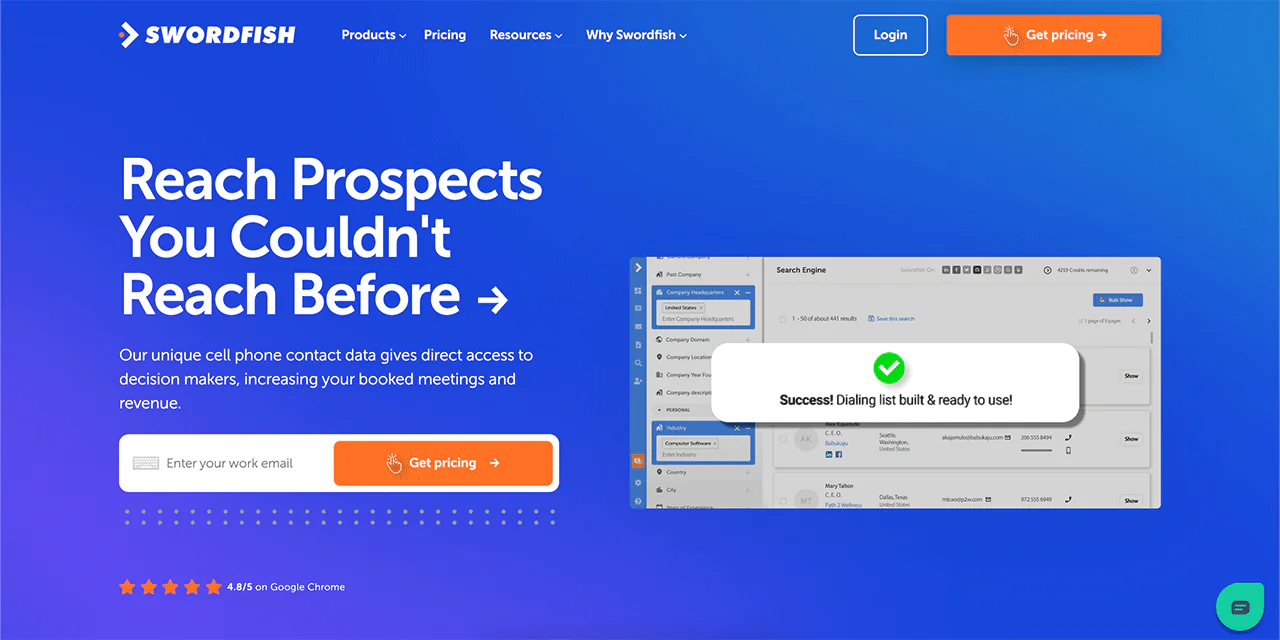
Here’s what to expect from a Swordfish AI targeted email list:
- Precision targeting: Lists segmented by demographics, interests, and behavior, so campaigns stay relevant to the people receiving them.
- Efficiency: Lists are refreshed on an ongoing basis, cutting down the manual work of hunting for current contact information.
- Custom lists: Lists are built around your specific target market rather than a one-size-fits-all segment.
- Better ROI potential: Higher engagement and more direct access to decision-makers can improve the return on your campaign spend.
- Workflow integration: Lists can be brought into your CRM or existing email setup without disrupting your process.
Types of Data Included in Targeted Mailing Lists
- Name
- Location
- Contact Numbers (Work, Cell, Mobile)
- Email Address
- Specialization
- Years of Experience
- Sole Proprietor Status
- Licensed States
- License Number
- Fax
- Address
Who’s Included in Our Targeted Email List by Specialization?
Our targeted email lists by specialization cover a wide range of professionals and industry experts, from healthcare and technology to finance and creative fields, so you can connect with the audience that matches your outreach.
How Do We Compile and Verify Our Targeted Mailing List?
Compiling and verifying a targeted mailing list takes more than pulling names from a database. Here’s the process:
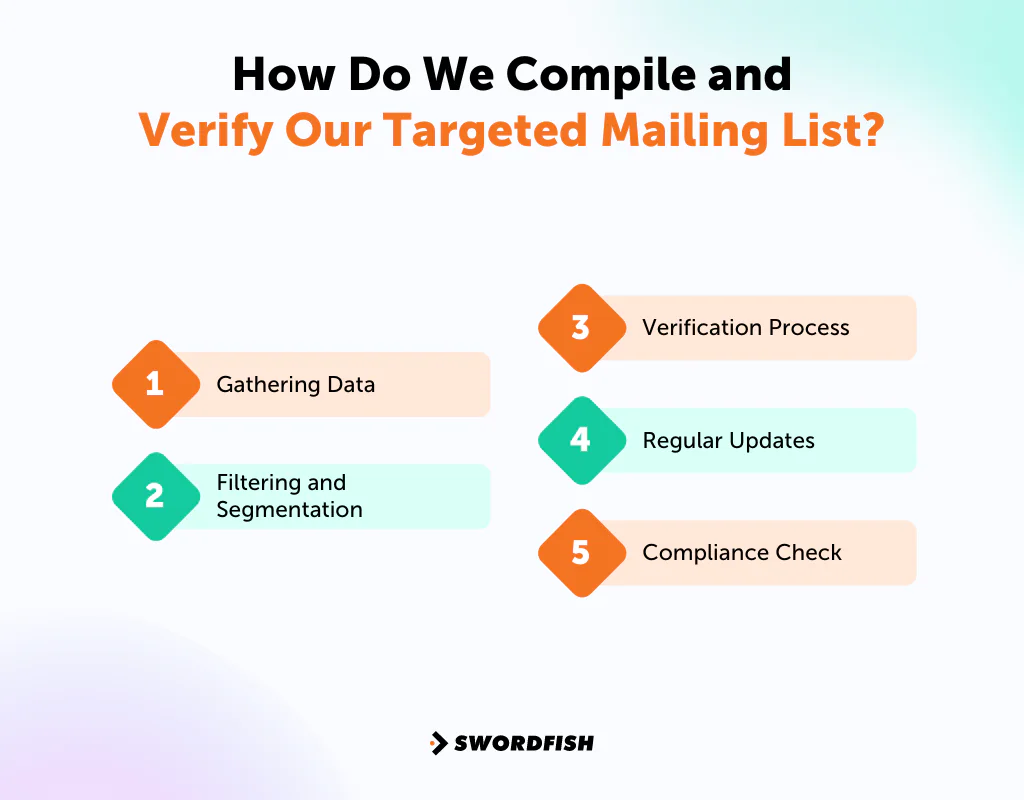
Gathering Data
Information is pulled from public records, subscription lists, business directories, and professional networking sites, using data that’s legally and ethically obtained.
Filtering and Segmentation
The raw data is then filtered against your criteria, whether that’s a specific industry, job role, or set of interests, and sorted into usable segments.
Email Verification Process
This step matters most. Advanced tools and manual checks are used to verify the email addresses, confirming active accounts, matching emails to the right individuals, and checking relevance to your target audience.
Regular Updates
Email addresses change and people switch jobs, so lists need continuous updating. Outdated contacts get removed and new ones added to keep the data current.
Compliance Check
Before delivery, a list should be checked against relevant privacy and data protection standards. This step protects both the sender’s legal standing and the privacy of the people on the list.
Why Choose Swordfish AI’s Targeted Email Database?
A few things set Swordfish AI’s approach to targeted email data apart:
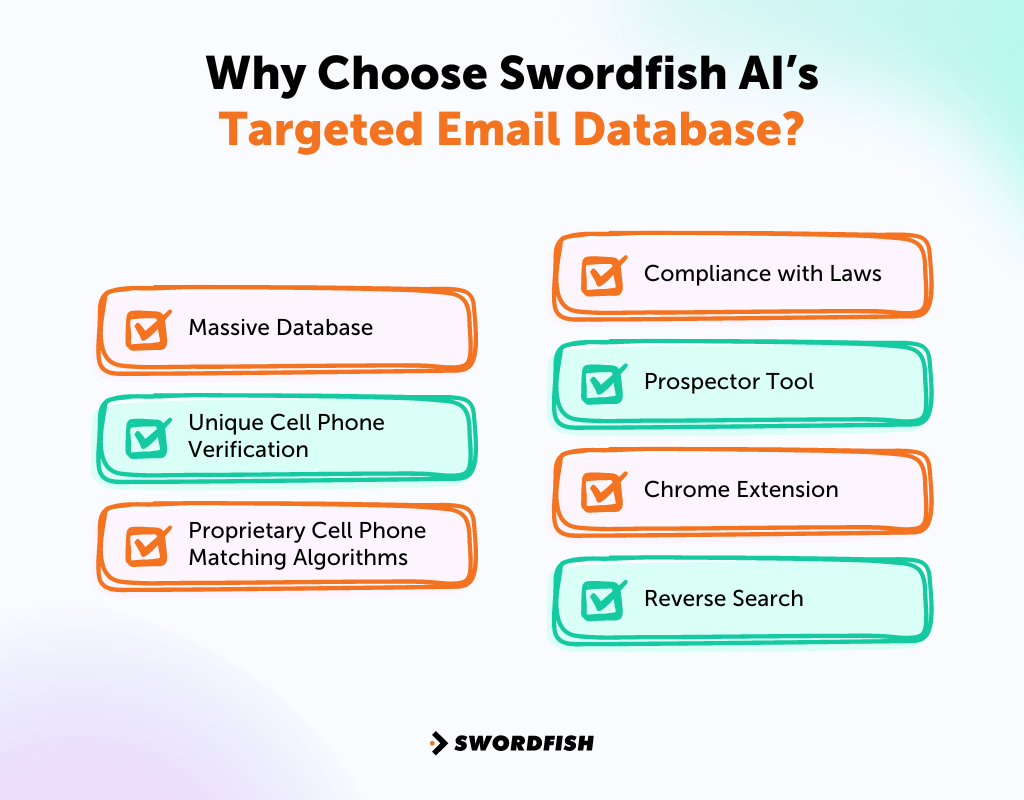
Large Database
A broad pool of contact profiles improves the odds of finding your intended audience, whether your targeting is narrow or wide.
Cell Phone Verification
Beyond email, Swordfish AI also verifies cell phone numbers, adding a second layer of confidence to the contact data you receive.
Cell Phone Matching
Matching algorithms tie cell phone numbers to their owners, which helps reduce bounce rates and improve outreach accuracy.
Compliance with Laws
Data practices are built around relevant privacy laws, including GDPR and CCPA, which helps protect both your business and the people in the dataset.
What Should You Consider When Getting a Targeted Email List?
Before you commit to a provider, weigh these factors carefully to protect the integrity of your email marketing efforts:
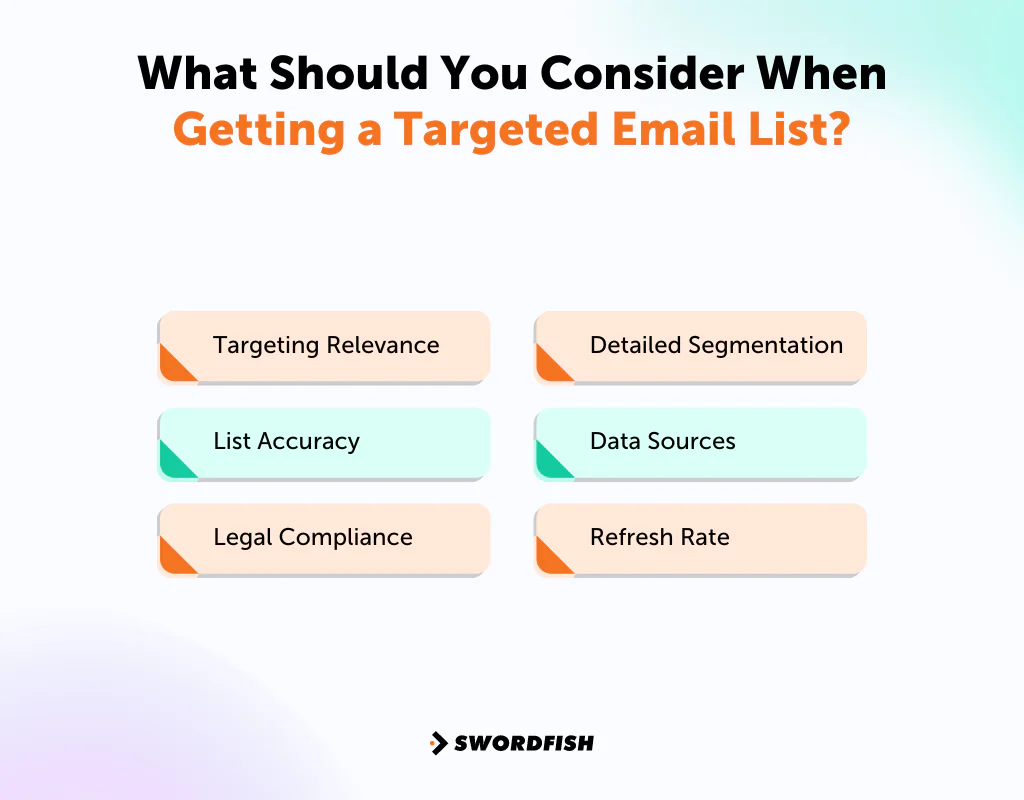
Targeting Relevance
Check that the list aligns with your business goals and the message you plan to send. A closely matched audience gives you more room for real engagement.
List Accuracy
Accuracy is non-negotiable. A provider with a poor accuracy track record can damage your sender reputation through bounced emails.
Legal Compliance
Confirm the provider follows relevant email marketing laws, such as GDPR and CAN-SPAM, to keep your business out of legal trouble and respect recipient privacy.
Detailed Segmentation
Look for segmentation options that let you narrow outreach by demographics, interests, or behavior rather than working from one broad list.
Data Sources
Understand how the list was built. A reputable provider is upfront about its data collection methods and how consent was obtained.
Refresh Rate
Ask how often the list gets updated. Frequent refreshes cut down on invalid addresses and generally improve campaign performance.
Who Can Benefit from the Targeted Email Addresses List?
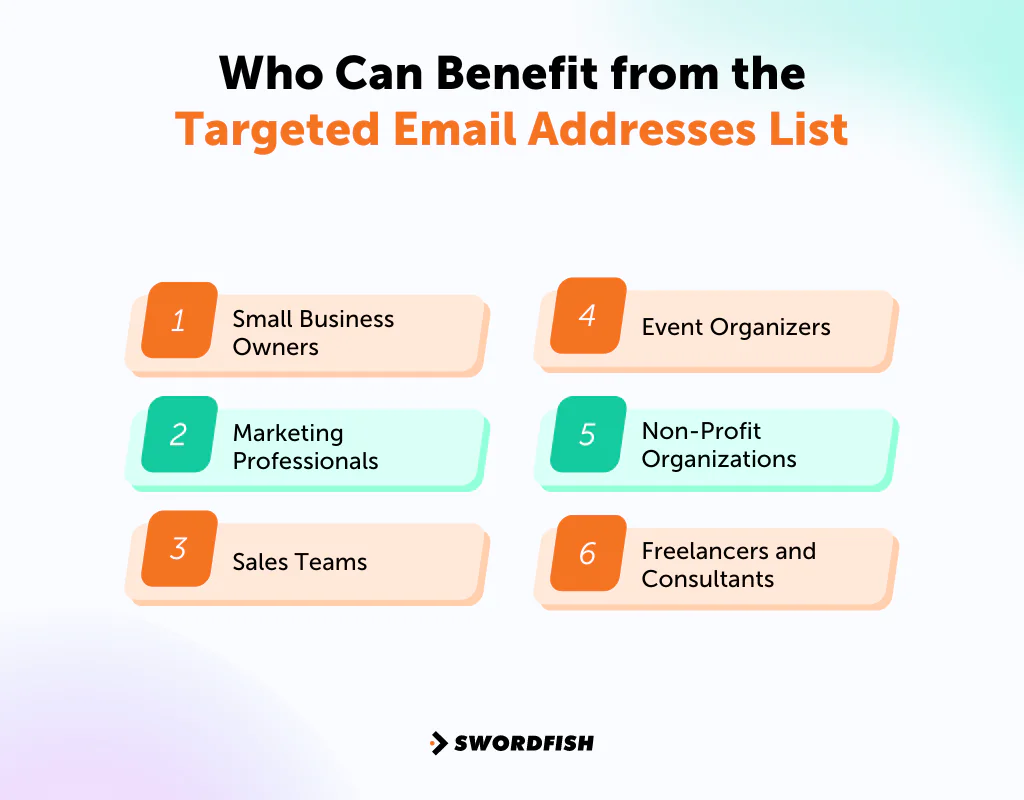
A range of businesses and individuals gain from targeted email address lists. Here’s who tends to benefit most when they buy email lists by industry:
Small Business Owners
Targeted lists let small businesses reach likely customers without a large marketing budget, putting products or services in front of people who are actually interested.
Marketing Professionals
Marketers can tailor campaigns to specific audiences, which tends to improve both engagement and conversion rates.
Sales Teams
Sales reps can use targeted lists to find and connect with qualified leads, saving time and improving conversion rates on outreach.
Event Organizers
A targeted list helps promote an event to people likely to attend, based on interest or location.
Non-Profit Organizations
Non-profits can use targeted lists to reach potential donors or volunteers who care about the cause, rather than casting a wide, unfocused net.
Freelancers and Consultants
For specialized services, a targeted list makes it easier to reach the businesses or individuals who actually need that expertise.
How Can You Make the Most of Targeted Email Lists Effectively?
Owning a good list is only half the job. Here’s how to get results from it:
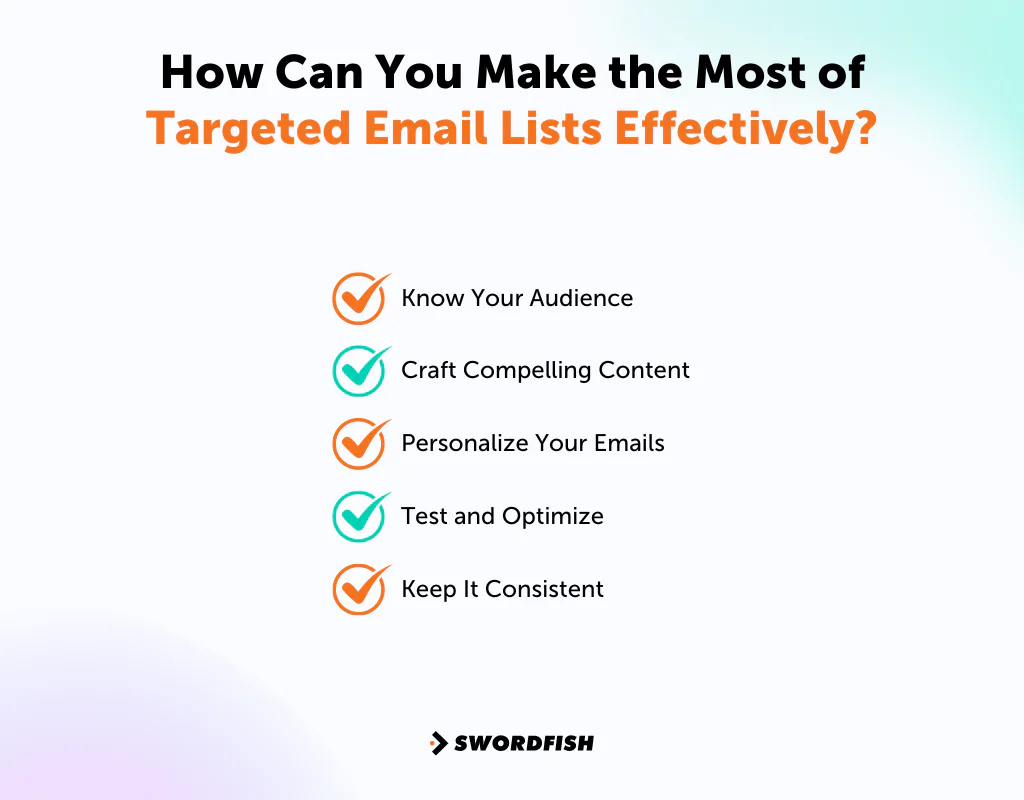
Know Your Audience
Understand what the people on your list actually care about. Messaging that speaks to their interests or problems drives more engagement than generic copy.
Craft Compelling Content
Write clear, relevant emails with a strong call to action, whether that’s visiting a page, signing up for a webinar, or making a purchase.
Personalize Your Emails
Use what you know about each recipient to personalize the message. Even a name in the subject line makes an email feel less like spam.
Test and Optimize
Test subject lines, formats, and CTAs against each other. Track open rates, click-through rates, and conversions, then adjust based on what the data shows.
Keep It Consistent
Stick to a regular sending schedule so your audience knows what to expect, without overwhelming their inbox.
Conclusion
A targeted email list is only as useful as the accuracy and relevance behind it. Get those two things right, and engagement and marketing efficiency tend to follow.
A well-maintained, precisely built list is the foundation of any serious email marketing effort.
For businesses looking to build campaigns around accurate, targeted contact data, Swordfish AI is worth evaluating as a provider.
 Try Swordfish Ai
Frequently Asked Questions
What is a targeted email list?
A targeted email list is a curated database of email addresses selected based on specific criteria like demographics, interests, behavior, or other relevant factors. These lists are used by businesses and marketers to reach out to individuals who are more likely to be interested in their products or services.
How is a targeted email list different from a regular email list?
A targeted email list is composed of contacts who have been specifically identified as potential customers or prospects, based on predefined characteristics, distinguishing it from a regular email list, which may contain random or generic email addresses.
How can I re-engage inactive subscribers on my targeted email list?
Try sending re-engagement campaigns with enticing offers or exclusive content. You can also ask for feedback to understand their preferences better, or provide options to update their email preferences or frequency.