
 View Products


Last updated: September 3, 2026
The U.S. oil and gas industry generates hundreds of billions of dollars in annual revenue and includes thousands of companies across exploration, transportation, refining, and distribution. That scale is exactly why finding the right lead can feel like searching for a needle in an oil field.
The challenge isn’t a lack of opportunity. It’s the pace and complexity of the industry itself. Prices swing, regulations shift, and companies merge or spin off assets constantly, which makes it hard to keep a target list current.
Below are seven practical strategies for building a pipeline of oil and gas leads, starting with Swordfish AI and moving through relationship-building, digital marketing, and paid channels.
Each approach works differently depending on your role in the supply chain, so treat this as a menu rather than a checklist you need to complete in order.
What are Oil and Gas Leads?
Oil and gas leads are individuals or entities showing interest in the products, services, or partnership opportunities within the energy sector. These leads are important for businesses aiming to expand in the oil and gas industry.
The U.S. oil and gas industry is a vast network of thousands of companies engaged in various activities: from exploration and extraction of oil (upstream) to its transportation, refinement (midstream), and distribution of the finished products to consumers and businesses (downstream).
Navigating this sector can be challenging due to its size, the constant flux of regulatory changes, fluctuations in oil prices, and technological advancements. But the benefits of the oil and gas industry outweigh everything.
As a result, staying informed and connected with relevant contacts is tough.
To overcome these challenges, businesses often need to purchase leads, subscribe to mailing lists, or access email directories tailored to the oil and gas industry. This approach helps them keep pace with the industry dynamics and identify potential growth opportunities.
Who Needs Oil and Gas Leads?
Oil and gas leads are needed by suppliers, analysts, service givers and mainly those looking to offer products or services within the energy industry and want to connect with customers in need.
These are people who usually need these leads the most –
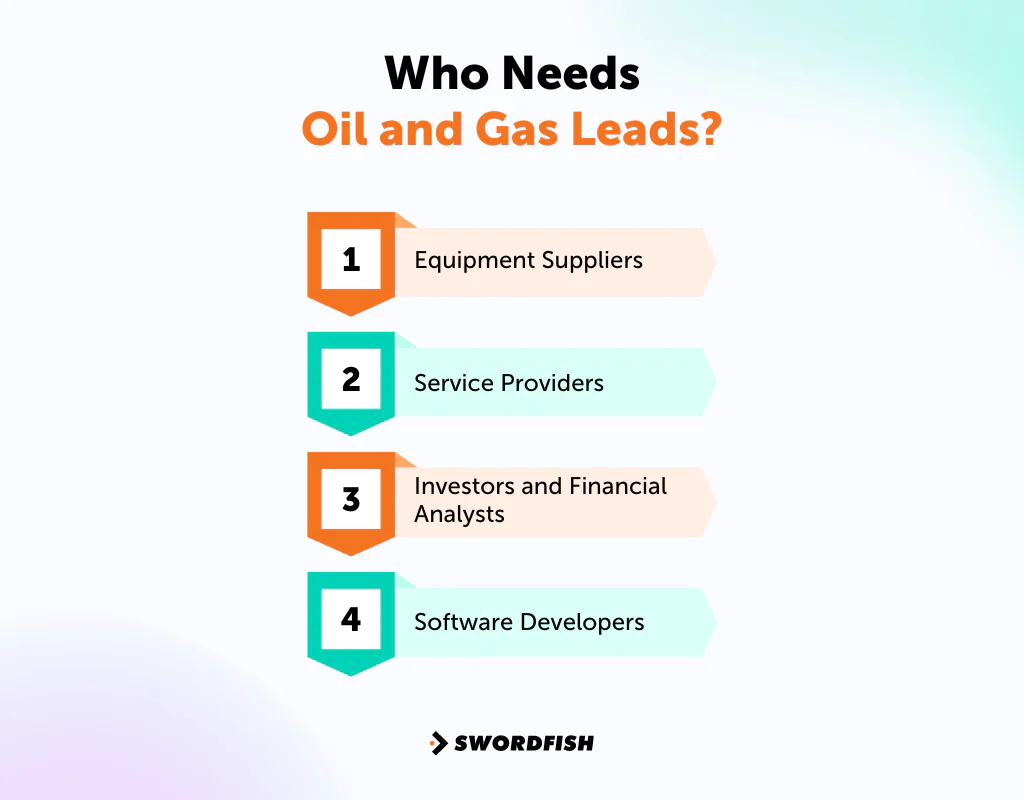
- Equipment Suppliers: These businesses look for leads to find who needs their drilling and production gear. It helps them focus their sales pitch to the right audience.
- Service Providers: Firms providing specialized services, from engineering to logistics, use these leads to pinpoint companies that could use their expertise.
- Investors and Financial Analysts: People wanting to invest in energy projects seek out these leads to spot worthwhile ventures. It guides them on where to put their money for the best return.
- Software Developers: Creators of industry-specific software search for leads to identify potential users. Their tools can make oil and gas operations more efficient and cost-effective.
How to Get The Best Oil and Gas Leads
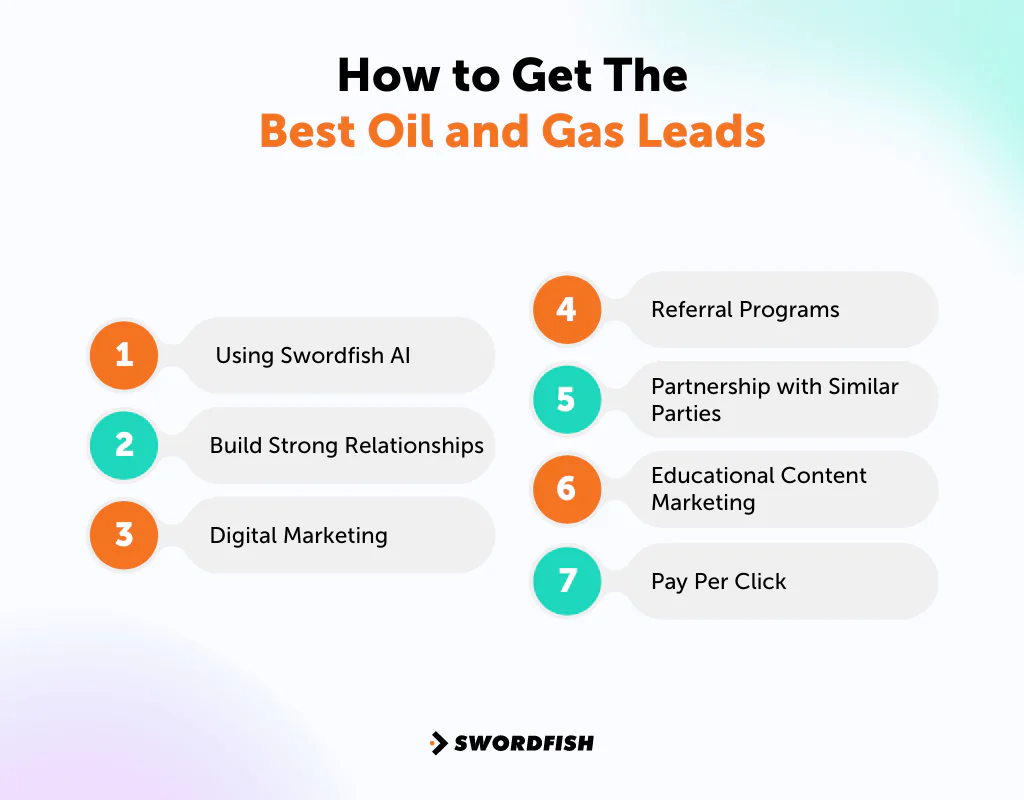
To generate top oil and gas leads, start with Swordfish AI for reliable contacts, utilize digital marketing, engage on social media, create partnerships, and launch referral programs. You can also offer insightful content and invest in PPC advertising for comprehensive coverage.
Here are 7 of the best ways to get leads of oil and gas —
1. Using Swordfish AI: The Best for Lead Generation
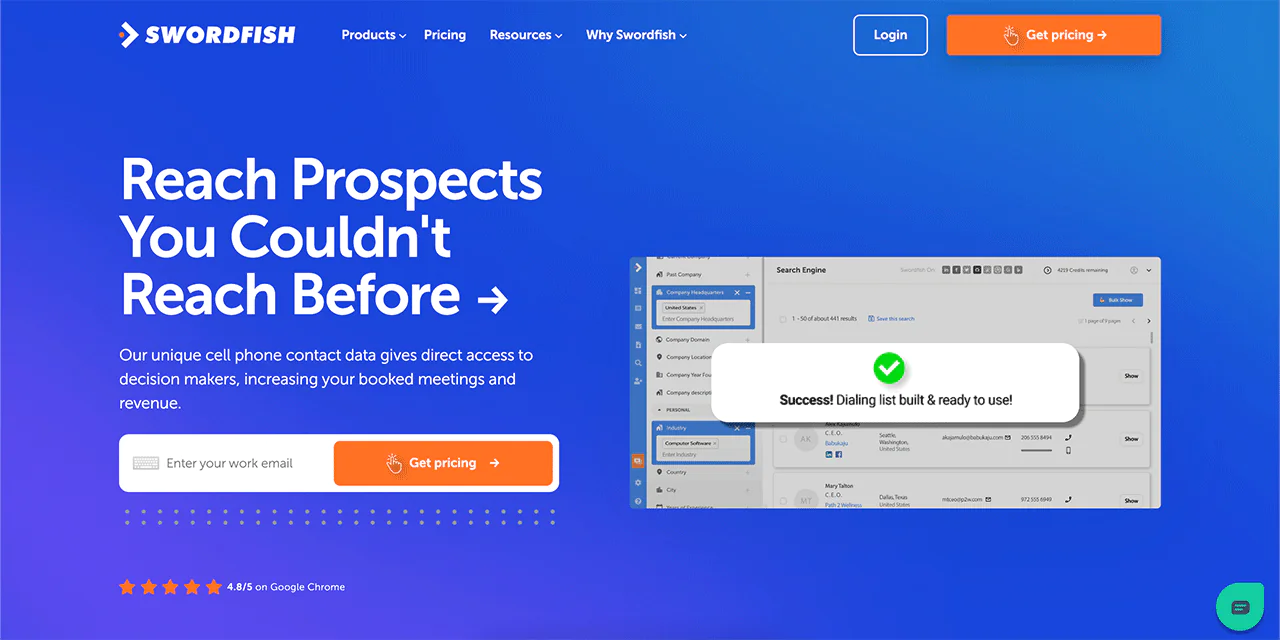
Swordfish AI is a contact data platform you can use to find new clients in the oil and gas sector. The database draws from billions of data points to surface contact details you can act on.
The platform checks data against live sources on a regular basis, so the contact information you pull tends to stay current rather than going stale in a spreadsheet.
Matching logic connects you with the oil and gas email addresses of people whose roles align with what you’re selling, which cuts down on wasted outreach to the wrong contact.
Swordfish also emphasizes cell phone coverage and accuracy, sourced through data partnerships that aim to surface numbers that are harder to find through free directories.
Sales and recruiting teams across several industries use the platform to build and expand their contact networks, including in energy-adjacent sectors.
Features of Swordfish AI for Finding Oil and Gas Leads
Swordfish AI changes how you find oil and gas leads by giving you access to detailed contact info and helping you connect with key decision-makers. Here are features you can explore –
-
Prospector
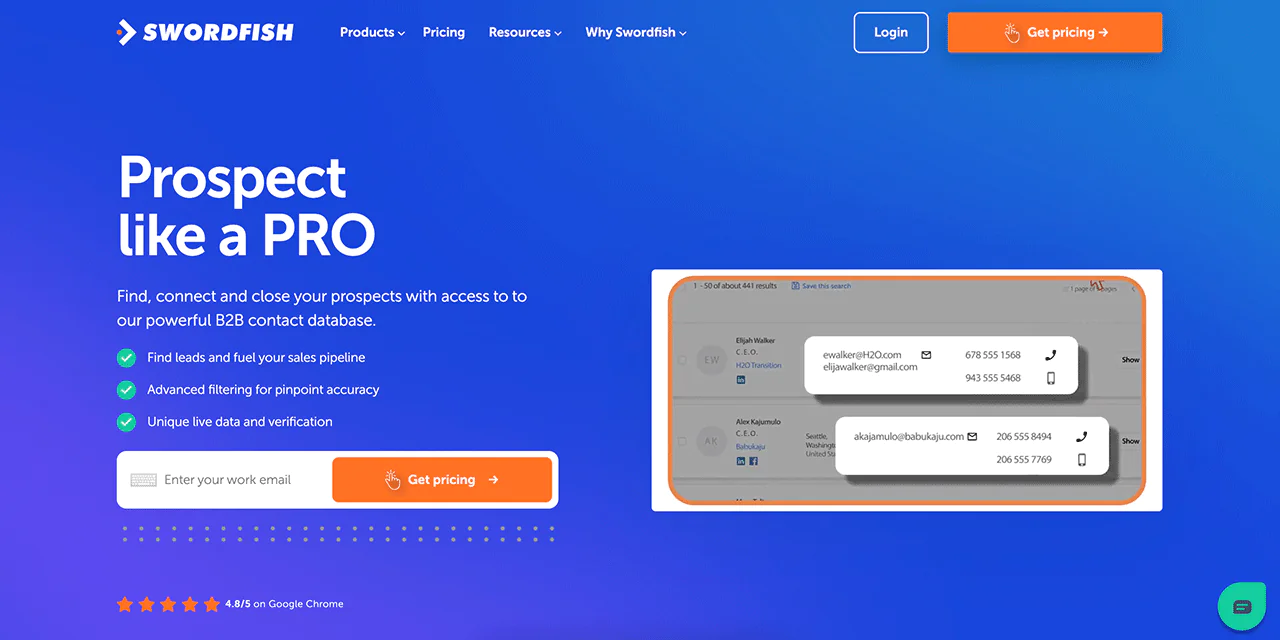
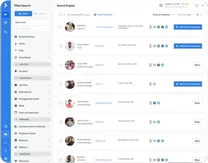
Prospector makes it easy to find oil and gas leads. You can search by industry specifics, company size, or location to directly find the contacts you need, making your lead search more focused and efficient.
-
Reverse Search
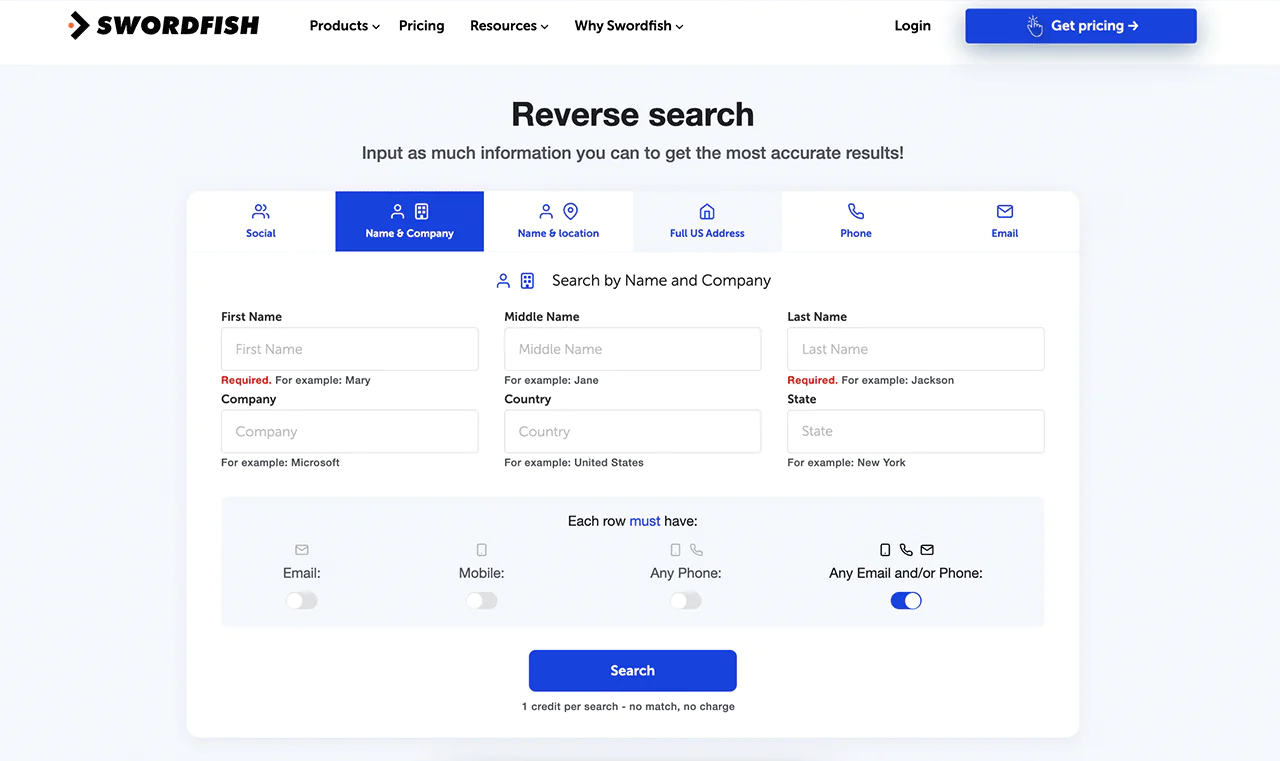
If you don’t have the complete information to find a lead, Reverse Search will provide you with a few details. It’s great for discovering more about potential leads in certain regions or companies and a way to expand your reach in the oil and gas sector.
-
API Access
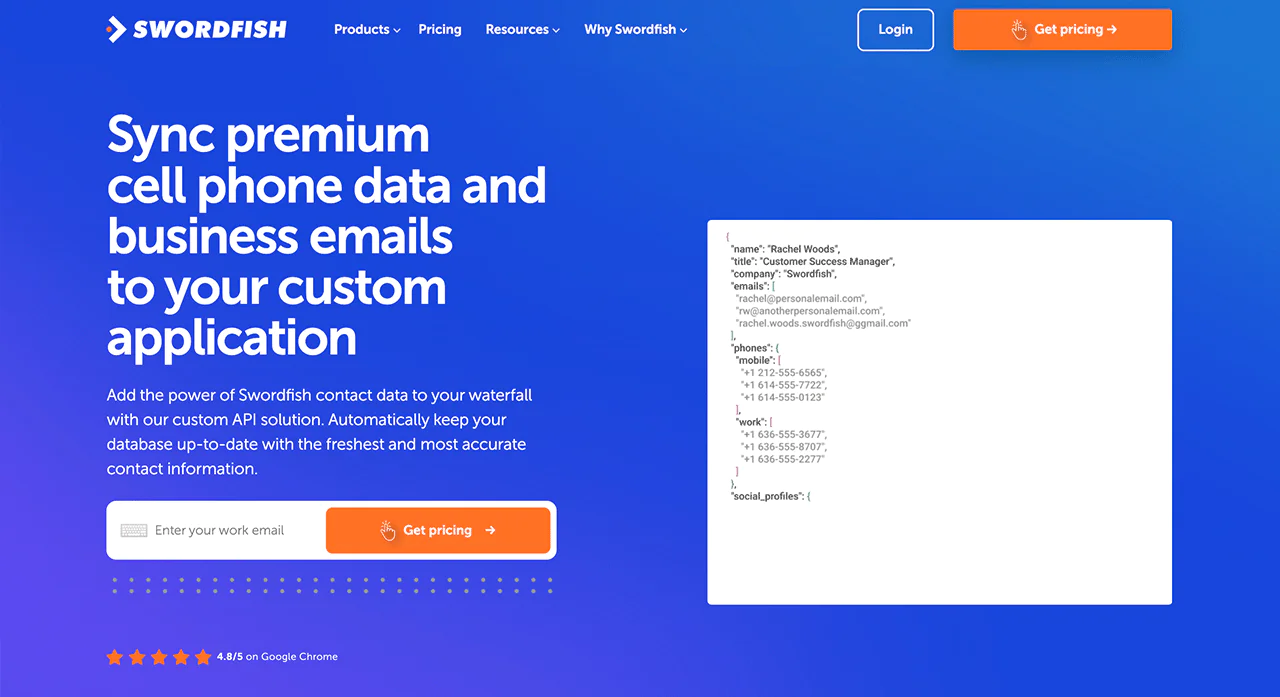
You can integrate Swordfish AI’s data directly into your sales tools with API Access. This further makes sure that you’re always working with the freshest and most precise information, making your lead generation methods more effective.
-
Bombora Intent Data
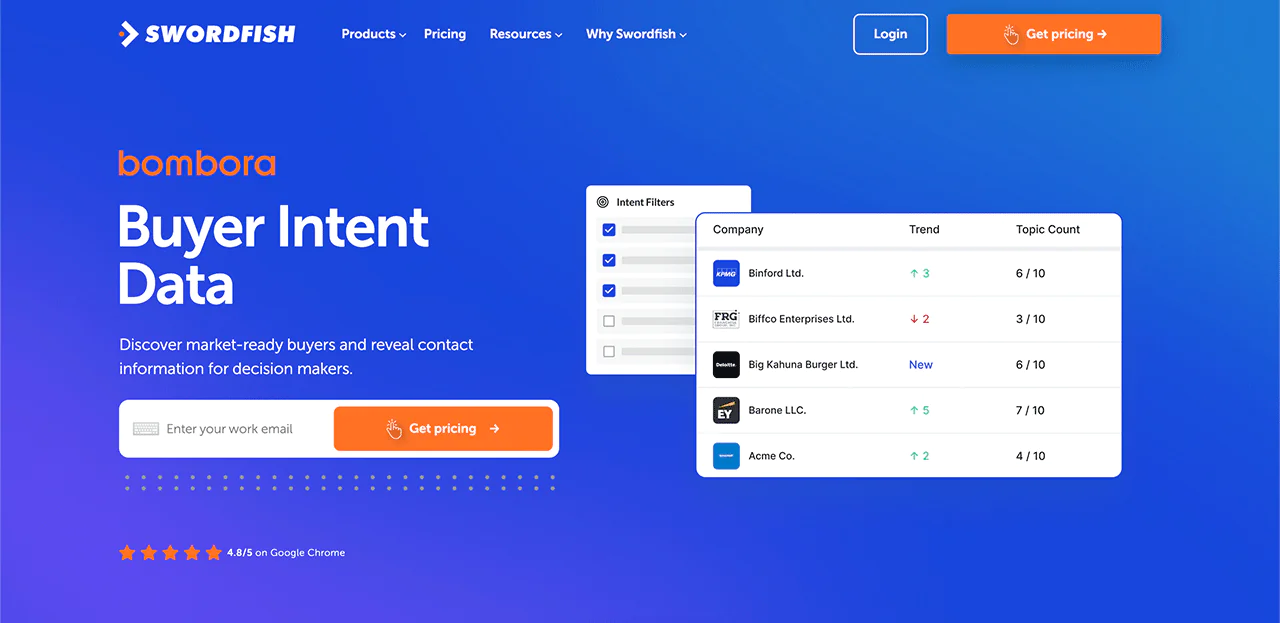
Swordfish AI taps into Bombora® Intent Data to pinpoint companies actively wanting oil and gas solutions. This lets you approach them when they’re most receptive, so your chances of a successful connection are even higher.
-
Chrome Extension
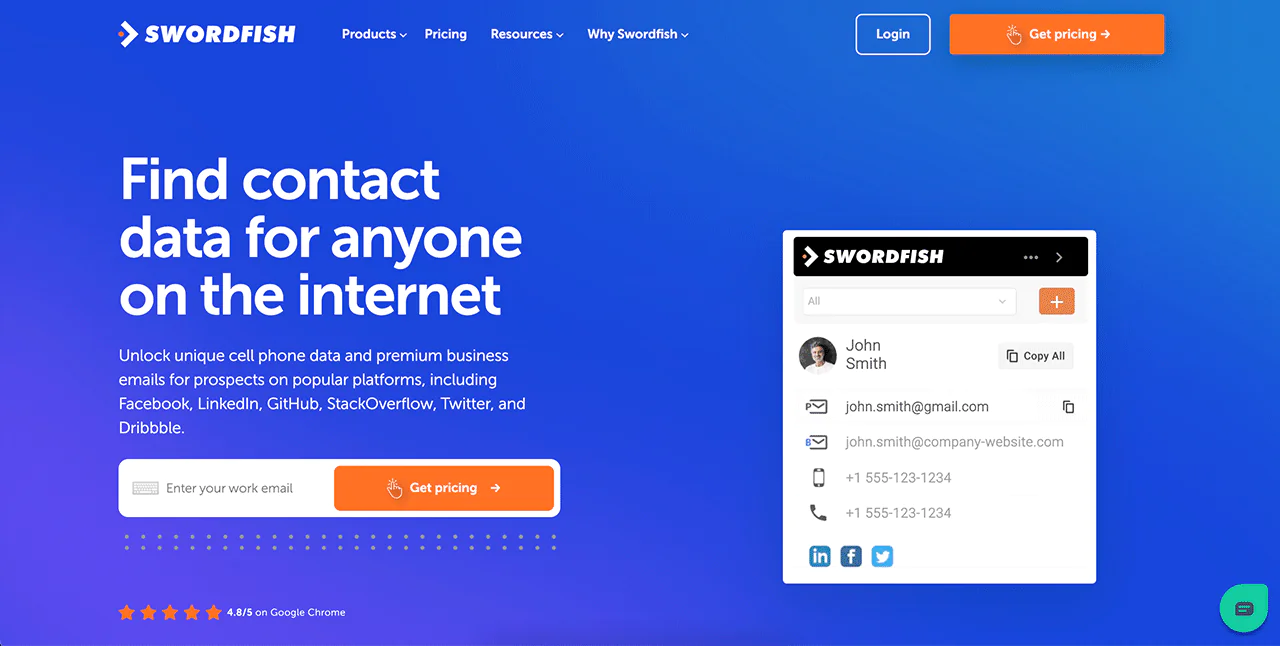
Chrome Extension provides verified cell phone numbers and business emails, ideal for diving deep into profiles and building prospect lists on platforms like LinkedIn. Using this, you can target the big names in the oil and gas industry easily.
-
File Upload
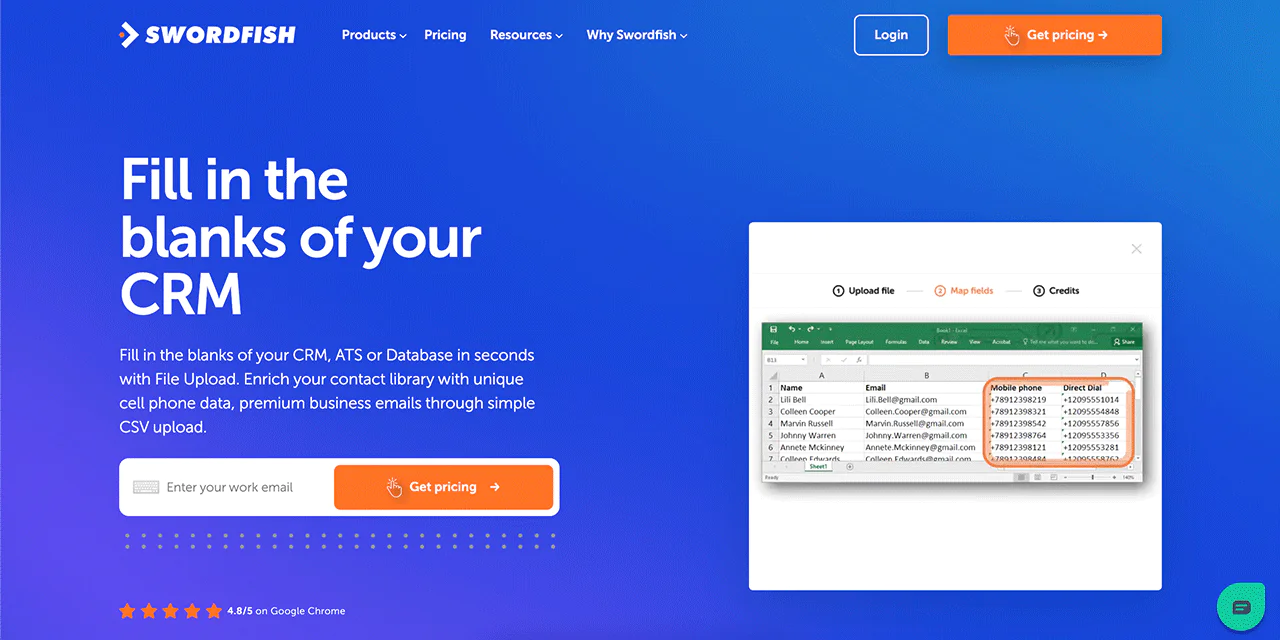
The File Upload feature simplifies finding contact information in bulk. It’s perfect for quickly finding details about numerous leads and integrating smoothly into your CRM and ATS systems to keep your contact list updated.
 Try Swordfish Ai
2. Build Strong Relationships
In the oil and gas sector, relationships still drive a lot of business. Who you know, and how well you maintain that connection, often matters more than a cold pitch. Here’s how to strengthen those ties:
Attend Industry Conferences
First up, you can make the most of industry conferences by actively participating. What you can do is introduce yourself to as many people as possible, share what you do, and listen to what others need. For instance, you can start meaningful conversations that could lead to prospective business opportunities.
Participate in Trade Shows
Trade shows are your stage to present what your business is all about. They also allow you to see what others are doing. By understanding the market, you can tune your services to meet industry demands. Remember, your personal connections here can be as valuable as the exposure.
Join Industry Associations
Joining industry associations places you at the core of your industry’s community. These groups frequently organize events and provide resources, aiding in expanding your professional network.
Network at Seminars and Workshops
Seminars and workshops provide focused networking chances where deep conversations and idea-sharing happen. By asking questions or sharing your thoughts at these events, you can stand out and be remembered.
3. Digital Marketing
With digital marketing, you can reach potential clients where they spend a lot of their time: online. Let’s check out some strategies you can employ to get an oil and gas database –
Optimize Your Website for SEO
What you can do first is focus on SEO (Search Engine Optimization). Using keywords that potential clients might use when searching for oil and gas services. By optimizing your site, you make it easier for these clients to find you among the top search results, a proven email marketing campaign trick!
Engage on Social Media
Another strategy is to be active on social media, especially on platforms like LinkedIn, where you can easily find email addresses. You can share updates about your services and industry news and engage with your audience. This not only increases your visibility but also positions you as a knowledgeable leader in your field.
Create Valuable Content
Creating content like blog posts, white papers, or even videos that address common industry challenges or topics can attract potential clients to your website. From your side, you would want to provide value that establishes trust and showcases your expertise.
Use Targeted Ads
Investing in targeted ads on platforms such as Google or LinkedIn can also help you reach potential clients more directly. You can personalize these ads to appear to people searching for specific oil and gas services, increasing the chances of capturing their interest.
4. Referral Programs
Referral programs, when used right, are what turn your satisfied clients into your most effective promoters. Here’s how you can set this up –
Launch a Client Referral Program
A straightforward way to start is by setting up a referral program that rewards your current clients for bringing new business your way. You could offer discounts, special services, or other incentives that matter to them. It’s a simple yet powerful way to encourage them to share their positive experiences with others.
Make It Easy to Refer
What you can do is ensure your referral process is as easy as possible. Provide clear instructions on making referrals, and consider creating referral cards or a dedicated page on your website. The simpler it is, the more likely your clients will participate.
Acknowledge and Reward Referrals
Always acknowledge and thank your clients for their referrals, regardless of the outcome. When a referral turns into a new client, make sure to reward the referrer as promised. This not only shows your appreciation but also encourages them to keep referring in the future.
Keep Your Clients Informed
Keep your clients updated about how their referrals are making an impact. This could be through a simple thank you note or a mention in your newsletter. Sharing the success of your referral program can motivate others to participate as well.
5. Partnership with Similar Parties
Forming strategic partnerships and collaborations can expand your presence in the oil and gas industry. Working with businesses that complement yours opens up new lead generation possibilities.
Here’s how you can approach this –
Partner with Complementary Businesses
Look for companies that offer services or products complementary to yours but don’t compete directly. For example, if you specialize in drilling equipment, partnering with a company that focuses on safety training for oil rigs can be beneficial. Together, you can offer a more comprehensive solution to potential clients.
Collaborate on Joint Marketing Efforts
Once you’ve established a partnership, consider joint marketing efforts. This could involve co-hosting webinars, creating joint content such as case studies or white papers, or even sponsoring industry events together. Such collaborations can double your visibility and introduce you to your partner’s network.
Share Leads
A critical aspect of strategic partnerships is the willingness to share leads with each other. This requires trust but can be extremely rewarding. Setting up a system where you can safely exchange information about potential clients can help both parties grow their customer base.
Utilize Each Other’s Networks
Don’t underestimate the power of simply tapping into each other’s networks. This can be as straightforward as introducing your partner to your contacts or mentioning them in your newsletters. These efforts can help you reach potential clients who were previously beyond your network’s scope.
6. Educational Content Marketing
Educational content and thought leadership can position you as an authority in the oil and gas industry, naturally attracting leads to your business. Here’s how to effectively use this strategy –
Publish Insightful Industry Analysis
Start sharing your expertise through in-depth industry analysis and reports. You can discuss trends, challenges, and innovations in the oil and gas sector. This kind of content not only showcases your knowledge but also provides much needed information that potential clients seek.
Host Webinars and Workshops
Hosting webinars and workshops on crucial industry topics showcases your expertise. Discussing everything from new technology to industry regulations, these events provide a space to interact with potential leads and position yourself as a leader.
Create Educational Videos
Creating educational videos is another way to engage your audience effectively. By explaining complex processes or sharing industry best practices, you can attract a broader audience. Share these videos on your website, social media, or YouTube to increase your visibility.
Write Articles and Blog Posts
You can regularly update your blog or contribute articles to industry publications. Focus on topics that are relevant to your target audience, offering solutions to common problems or insights into market dynamics. Quality content can drive traffic to your website and increase engagement with potential leads!
7. Pay Per Click
Investing in Pay-Per-Click (PPC) advertising is a direct and often immediate method to drive targeted traffic to your oil and gas business website, helping you generate leads quickly. Here’s how to make PPC work for you –
Choose the Right Platforms
First, identify where your potential clients are most likely to see your ads. For the oil and gas industry, LinkedIn might be more effective due to its professional focus, while Google Ads can capture those actively searching for your services.
Target Your Ads Carefully
Use specific keywords related to the oil and gas industry to ensure your ads are shown to a relevant audience. This might include terms like “offshore drilling equipment” or “oil field compliance services.” The more targeted your ads, the higher the chance of attracting qualified leads.
Create Compelling Ad Copy
Your ad copy should clearly articulate what makes your service stand out. Highlight unique selling points or offer a compelling reason for viewers to click through, such as a free consultation or industry report.
Monitor and Optimize Your Campaigns
PPC requires constant monitoring and tweaking. Keep an eye on which ads and keywords are performing best and adjust your budget accordingly. Experimenting with different ad formats and landing pages can also help improve your conversion rates.
Utilize Retargeting
Retargeting ads to individuals who have visited your site but didn’t make an inquiry can be highly effective. These ads remind them of your services and can encourage them to take the next step.
Conclusion
Finding oil and gas leads doesn’t have to be a slog. Combine a few of these strategies, stay consistent, and you’ll build a pipeline that holds up even as the market shifts.
Online databases, professional networking sites, and industry events each play a different role, and the strongest lead generation programs usually lean on more than one.
Swordfish AI, with its broad contact database and ongoing data verification, is one option worth testing if you need to move faster on outreach to oil and gas contacts.
Whichever methods you combine, keep your approach flexible. The industry doesn’t sit still, and your lead generation strategy shouldn’t either.
FAQS
Can I find free oil and gas leads anywhere?
Finding free oil and gas leads is possible but comes with variability in quality and reliability. You might find some through industry forums, networking events, or social media groups focused on the oil and gas sector. Yet, for more precise and confirmed leads, opting for a paid service like Swordfish AI usually provides superior outcomes.
What are the most effective ways to track the success of my lead generation efforts in the oil and gas industry?
To track the success of your lead generation efforts, focus on key metrics such as the number of leads generated, the conversion rate from lead to customer, website traffic sources, and engagement levels on syndicated content.
How can I ensure the quality of leads generated from PPC campaigns?
Ensuring the quality of leads from PPC campaigns involves carefully selecting keywords that are highly relevant to your target audience in the oil and gas industry. Additionally, creating landing pages that provide valuable information and a clear call-to-action can help attract more qualified leads.
Can social media platforms really generate valuable leads for businesses in the oil and gas sector?
Yes, social media platforms can generate valuable leads for oil and gas businesses, especially LinkedIn. By sharing industry insights, company news, and engaging with content relevant to the oil and gas sector, you can build relationships with potential clients.
What role does content syndication play in generating leads within the oil and gas industry?
Content syndication increases lead generation in the oil and gas industry by extending your content’s reach. Sharing your content through industry-specific sites or forums attracts a wider audience of interested professionals, increasing your lead pool.
Related Post:
- Auto Repair Leads: Where and How Can You Get Them?
- Golf Courses Email List: Maximize Sales in the Golfing Industry
- Realtor Email Lists: Connect, Communicate, and Convert with Experts
- Jewelry Stores Email List: Connect with Top Jewelry Retailers Today!
- Hospital CEOs Email List: Connect with Top Hospital Leaders Today!
- Automobile Industry Email List to Reach Parts and Dealership Owners