
 View Products


Key takeaways
- Freight broker leads are potential customers seeking help connecting shipments with carriers.
- Build prospect lists around the customers and services that fit your brokerage.
- Networking, referrals, digital marketing, social media, outreach, directories, and paid advertising are options for generating leads.
- Personalize outreach, offer a clear next step, and follow up respectfully.
- Keep directory listings and contact records current, and review campaign results to guide changes.
- Tools such as Swordfish AI may support prospecting and contact verification; check contact details before relying on them.
Last updated: September 3, 2026

The U.S. freight brokerage market keeps expanding, with recent forecasts putting it on track to reach roughly $30 billion by 2031. That growth is good news for brokers, but it also means more competition for the same shippers and carriers.
Finding the right freight broker leads amid that competition can feel like hunting for a needle in a haystack. Chasing the wrong leads can burn time, budget, and goodwill on prospects who were never likely to convert.
This guide walks through practical ways to build a steady pipeline of freight broker contacts. It covers tools like Swordfish AI for prospecting, alongside approaches like networking, referrals, and social media that can work when used consistently.
By the end, you’ll have a practical plan for keeping qualified leads flowing into your pipeline.
What are Freight Broker Leads?
Freight broker leads are potential customers for freight brokerage services. These leads are businesses looking to ship goods and need a broker’s help to connect them with carriers.
The U.S. saw the freight brokerage market reach a penetration rate of 19%, up from 17% the previous year. That shift shows more shippers turning to brokers instead of managing carrier relationships directly.
Meanwhile, the ocean freight market is expected to hit 66 million TEUs, which points to more opportunity for brokers working international trade lanes.
For freight brokers, finding and connecting with the right prospects is central to growing in a market that spans domestic and international business. Staying disciplined about lead generation can help support that growth.
Who Needs Freight Broker Leads?
Freight broker leads are essential for businesses that match shippers with carriers, aiming to simplify their operations and expand their customer base.
New brokers, established brokerages, database managers, and logistics sales teams can all use prospect lists to support their work —

New Freight Brokers
New brokers need a solid list of potential customers to start building their network. Access to a range of relevant prospects can help them get operations off the ground and establish a foothold in the industry.
Established Freight Brokerages
Even well-established brokerages continually seek new leads to expand their client base and grow their business. Keeping the sales pipeline full ensures steady growth and helps offset natural client turnover.
Financial Freight Broker Database Managers
Managers of financial freight broker databases rely on fresh leads to update their systems, since accurate and current data supports market analysis, sales data analysis, risk assessment, and strategic planning.
Sales Teams in Logistics
Sales teams within the logistics and transportation sector use freight broker leads to reach new clients. A rich list of leads supports targeted sales prospecting strategies and helps teams hit sales quotas while keeping customers satisfied.
How to Get The Best Freight Broker Leads
For freight broker lead generation, you can use Swordfish followed by strategic social media engagement and targeted digital marketing. Networking events, partnerships, and industry technology also play vital roles in expanding lead opportunities.
Here are 8 strategies for finding freight broker leads —

1. Using Swordfish AI: Your Partner in Freight Broker Lead Generation

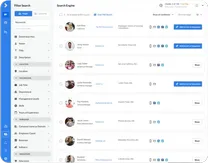
Swordfish AI helps freight brokers find contact details for the leads they’re pursuing, using a database of consumer and business data points.
The platform describes ongoing data checks intended to keep contact information current and help users reach contacts who may still be reachable.
Swordfish AI also uses matching to help connect searches with relevant contacts, which may reduce time spent pursuing unsuitable results.
The platform provides direct cell phone numbers and checks business emails for accuracy. Contact details can still change, so verify information before relying on it.
Features of Swordfish AI for Freight Broker Leads
Swordfish AI offers tools for people in freight brokerage who want to find and connect with leads.
Here’s how each feature is described as helping —
Prospector Tool

The Prospector Tool is built to make searching for freight leads easier. You can filter by industry, company size, and location to quickly find contacts that match your criteria, so you spend less time sorting through irrelevant results.
Reverse Search

If you have a bit of information on a potential lead but aren’t sure how to get the complete picture, Reverse Search helps fill in the blanks. It’s useful for finding more leads in particular areas or industries with less guesswork.
API Access

Integrating Swordfish AI’s data into your existing sales tools through API Access means you’re working with recent contact details inside the systems you already use, instead of switching between tools.
Bombora Intent Data

This feature uses Bombora Intent Data to spot companies that may currently be in the market for freight services. Reaching out while a company is actively researching options can improve your odds of getting a response.
Chrome Extension

With the Chrome Extension, finding verified contact info becomes part of your regular browsing routine. It’s useful for researching leads on social platforms and reaching facility managers or business owners directly.
File Upload

Uploading files lets you process contact info in bulk, keeping your lead lists current with less manual work. It integrates with CRM and ATS systems, so your database stays fresh with minimal extra steps.
 Try Swordfish Ai
2. Networking and Industry Events
Networking and attending industry events can help expand a freight brokerage’s reach. You can meet potential leads face-to-face and learn about industry trends through conversations.
A few approaches worth building into your routine —
-
Attend Trade Shows and Conferences
Trade shows and conferences offer opportunities to learn about industry trends and meet shippers and carriers who may be looking for brokerage partners.
Securing a booth at a logistics conference, for instance, can put you in front of many potential leads.
-
Join Industry Associations
Industry associations can offer networking opportunities. Many maintain member directories and host events built for making connections.
Active participation can also build credibility. Speaking on a panel at an association event, for example, puts your name in front of attendees and gives you a chance to share your expertise.
Forming alliances with trucking companies can also support referrals. Carriers may hear from shippers needing brokerage services and refer those leads to you; you can return the favor and help grow both businesses’ pipelines.
-
Using Interactive Opportunities
Every interaction at these events can be an opportunity to make a connection. Coffee-break conversations, Q&A sessions, and casual gatherings may lead to business opportunities.
Be ready to describe your services in a few concise sentences. Carry business cards and know what makes your brokerage worth remembering.
-
Follow Up After Events
The work doesn’t stop when the event ends. Following up with new contacts can turn a brief conversation into the start of a business relationship.
A personalized email thanking someone for their time and connecting your services to a challenge they mentioned shows you were listening, rather than just collecting business cards.
-
Engage in Cross-Promotions
Cross-promoting with businesses offering complementary services — such as warehousing, logistics software, or freight auditing — can help expand your reach.
Promoting each other’s services to your respective client bases may introduce you to leads through a partner they trust.
-
Educational Workshops and Seminars
Hosting workshops or seminars on logistics or transportation management positions you as knowledgeable and gives businesses a reason to engage with you directly, rather than through a cold pitch.
3. Digital Marketing
A strong online presence gives potential freight broker leads another way to find you. Some shippers research providers online before picking up the phone.
Here’s how to build that presence —
-
Search Engine Optimization (SEO)
Optimizing your site for search engines can help it appear when potential clients search for freight brokerage services. Using relevant keywords can improve the odds of showing up for those searches.
Phrases like “freight broker services in [Your City]” can pull in local traffic. A well-optimized site doesn’t just get more visitors — it attracts visitors who are actively looking for what you sell.
-
Content Marketing
Content marketing can help demonstrate expertise in the freight brokerage space.
Sharing articles, blog posts, or white papers on relevant topics demonstrates expertise and starts solving a prospect’s problem before they’ve even contacted you, which can help lift click rates on related campaigns.
A guide titled “How to Reduce Transportation Costs with Efficient Freight Brokerage” speaks directly to a business owner wrestling with shipping expenses. Content like that draws traffic and builds trust at the same time.
-
Utilize Social Media Platforms
Social media offers another route to potential leads. LinkedIn can be useful for B2B connections.
Participating in industry groups and sharing useful content builds visibility and positions you as someone worth following.
Facebook and Twitter can be used to share updates, promote blog content, and engage directly with your audience. Sharing a story about solving a tricky logistics problem can highlight your capabilities in a way a sales pitch can’t.
-
Email Marketing
Email marketing lets you reach potential leads who’ve already shown some interest in your services directly.
Personalized emails that address a recipient’s specific needs may earn more engagement than generic messages.
Including case studies, testimonials, or links to useful resources makes an email feel like more than a sales pitch.
A monthly newsletter with industry news, tips for shippers, and updates on your services keeps your brokerage top of mind between actual sales conversations.
4. Make the Most of Social Media
If you’re trying to build a list of potential customers for your brokerage, using social media well can help you generate and connect with relevant leads.
A few tactics that tend to work —
-
LinkedIn for Professional Networking
LinkedIn can be a place to meet potential leads. A detailed profile that clearly shows what you do and what you’ve accomplished makes it easier for people to find and connect with you.
Getting involved in industry groups and contributing to discussions — offering a take on solving a logistics problem, for instance — helps you stand out as someone who knows the space.
-
Engage with Your Audience on Facebook and Twitter
Facebook and Twitter allow for a more casual back-and-forth with potential leads. Share field-related news, updates on your services, and useful tips.
Client success stories build trust and encourage others to reach out. These platforms also let you respond directly through comments and messages, giving you room for one-on-one conversations with potential clients.
Read More: Find someone’s email on Twitter
-
Use Instagram for Visual Storytelling
Instagram lets you tell your story through images and video. Posting about shipments you’ve handled or sharing a behind-the-scenes look at your operation can make your brokerage feel more tangible.
Showing your team or a challenge you solved grabs attention in a more personal way than a text-heavy post ever could.
-
Create Content Worth Sharing
Content built around your target market’s interests may be shared, extending your reach beyond your immediate followers.
Practical advice or insights into the shipping industry that businesses can actually use tends to perform best.
When someone shares your content, it can introduce your expertise to their network.
-
Stay Active and Responsive on Social Media
Monitoring your channels and replying quickly to interactions shows you’re attentive, which matters to businesses evaluating a dependable freight brokerage partner.
5. Referral Programs
Referral programs can help grow your freight broker lead list. Encouraging satisfied clients to spread the word may bring in new business.
A few tips —
-
Set Up a Simple Referral Program
Create an easy-to-understand referral program, such as a discount or another incentive for every new customer a client brings your way. It thanks clients and gives them a reason to talk about your brokerage.
-
Clearly Communicate Your Referral Program
Make sure clients actually know the program exists. Mention it when meeting new clients, include it in your emails, or post about it on social media.
The clearer you are about how it works and what’s in it for them, the more likely they are to participate.
-
Offer Rewards That Matter
Choose incentives your clients value. A discount on future service or a small gift may encourage participation, depending on what appeals to your clients.
-
Track and Appreciate Referrals
Tracking who refers whom matters, both for rewarding the referrer and for understanding how well the program performs overall.
Thanking clients for referrals with a personal note or small token reinforces the behavior and encourages more of it.
6. Cold Calling
Cold calling and email outreach can feel dated, but they are still options for reaching potential freight leads when handled with care.
A few things worth building into the process —
-
Personalize Your Cold Calls and Emails
Skip the generic message. Research each company before reaching out and mention specific challenges their industry faces and how your brokerage addresses them.
If you’re contacting a company that regularly ships to a particular region, mention your expertise in that lane.
-
Focus on Providing Solutions
Frame your services around solving a specific problem rather than listing features.
For example, if your brokerage handles temperature-controlled logistics, explain how that service relates to a prospect’s refrigerated shipping needs. Avoid promising a particular outcome unless you can support it.
-
Use a Clear Call to Action
Every email or call should end with a clear next step — visit your website, schedule a call, or reply with questions.
Giving potential leads an obvious next step can make it easier for an initial contact to continue into a sales conversation.
-
Follow Up, But Don’t Pester
People are busy and often forget to respond, so following up matters. But there’s a line between persistence and becoming a nuisance.
If you haven’t heard back after a couple of attempts, consider moving on. Respectful persistence shows interest while knowing when to stop respects the other person’s time.
7. Updated Online Directories
Listing your brokerage in relevant online directories and keeping those listings current can help potential leads find you.
-
Choose the Right Directories
Start with directories relevant to freight and logistics — general business directories with a logistics section, as well as niche directories focused specifically on freight and transportation.
A listing in a directory such as Transport Reviews or Logistics List may put your brokerage in front of companies searching for freight services.
-
Keep Your Listings Updated
An outdated listing can mislead potential leads. Keep contact information, services, and other details current.
Set a reminder to check listings every few months, or whenever something in your business changes, so leads always have the right information.
-
Encourage Reviews and Feedback
Positive reviews strengthen your directory listings. Encourage satisfied clients to leave feedback.
A follow-up email after a successful shipment, with a direct link to your listing, makes it easy for clients to leave a review.
Some prospective clients check reviews to help assess a brokerage before reaching out.
-
Engage with Your Listings
Don’t set up listings and walk away. Respond to comments and questions left by visitors.
A prompt, informative reply to a question about your services may help turn a casual browser into a potential lead.
8. Paid Advertisements
Paid advertising can help reach potential freight broker leads by targeting audiences searching for brokerage services.
Here’s where to focus —
-
Choose the Right Platforms
Identify where potential clients actually spend time online — industry-specific sites, forums, and platforms like LinkedIn.
Google Ads can target search queries related to freight brokerage services. Choose platforms that fit your audience and campaign goals.
-
Craft Targeted Ad Campaigns
Specificity can help make paid advertising more relevant. Design campaigns around businesses searching for brokerage services, using keywords and phrases they may type.
A phrase like "reliable freight brokers for SMEs" is one example of a keyword to test for a campaign aimed at small and medium-sized businesses.
-
Monitor and Adjust Your Campaigns
Paid advertising requires ongoing attention. Regular monitoring can show what’s working and what isn’t.
If an ad isn’t producing leads, consider adjusting the messaging or trying another platform. Use campaign results to guide changes to your ad spend.
-
Utilize Retargeting Techniques
Retargeting can show ads to people who’ve visited your site but didn’t act. It may remind them of your services and encourage them to return.
-
Offer Clear Value Propositions
Your ads should clearly state what sets you apart, such as specialized services, pricing, or customer service.
A clear value proposition helps explain why someone might click through and learn more.
Conclusion
Freight broker leads can support brokerage growth. A tool like Swordfish AI may help speed up prospecting and contact verification.
Combine tools with other tactics, such as networking at industry events, improving your online presence, and offering a referral program.
Balancing prospecting tools with genuine relationship-building can help maintain a healthy pipeline over time.
Using these approaches can help your brokerage build a steadier flow of qualified leads in a competitive freight marketplace.
FAQS
How do I select the right freight broker leads?
To determine if a freight broker lead is suitable for your business, evaluate their shipping volumes, types of goods transported, budget constraints, decision-making process, and preferred start date for services.
This can be assessed through your website’s inquiry form, direct calls, or in-person meetings, focusing on leads that align with your services.
What are best practices for following up with freight broker leads?
Effective follow-up with freight broker leads involves prompt responses to inquiries, maintaining clear and professional communication, and offering detailed insights into your services. Tailor your follow-ups to address the specific concerns and preferences of each lead, ensuring you clearly define the next steps.
How can I increase the conversion rate of my freight broker leads?
Boosting the conversion rate of your freight broker leads requires a deep understanding of their needs. Provide competitive solutions, demonstrate your industry knowledge and reliability, and ensure every interaction is marked by exceptional customer service. Trust and perceived value are essential for turning leads into committed clients.
Can digital marketing aid in generating freight broker leads?
Absolutely, digital marketing is a powerful tool for generating freight broker leads. By employing SEO to improve your online visibility, engaging with your audience on social media, and creating targeted advertising campaigns, you can attract more businesses in need of freight brokerage services.
Related Post:
- Auto Repair Leads: Where and How Can You Get Them?
- Golf Courses Email List: Maximize Sales in the Golfing Industry
- Realtor Email Lists: Connect, Communicate, and Convert with Experts
- Jewelry Stores Email List: Connect with Top Jewelry Retailers Today!
- Hospital CEOs Email List: Connect with Top Hospital Leaders Today!
- Automobile Industry Email List to Reach Parts and Dealership Owners