
 View Products


Key takeaways
- A hematologist email list can include professional contact details such as names, email addresses, locations, and specialties.
- Useful list segments may include hematology subspecialties, location, and institution type.
- Evaluate providers on data freshness, verification methods, available fields, and fit for your intended use.
- Ask how contact data is obtained, secured, and permitted to be used; legal requirements vary by jurisdiction and campaign.
- Relevant, personalized outreach and appropriate handling of opt-outs can support more responsible communication.
Last updated: September 3, 2026
Hematologists work across hospitals, private clinics, cancer centers, and research institutions, and their contact details rarely sit in one convenient directory. For pharmaceutical companies, device makers, recruiters, and researchers, that fragmentation makes outreach slow and often inaccurate.
A well-built hematologist email list can help you reach relevant specialists without spending weeks cross-referencing hospital staff directories, state license boards, and conference attendee lists. This guide covers what a quality list may include, how to evaluate providers’ compilation and verification practices, who uses this kind of data, and how to conduct outreach that respects recipients and applicable privacy rules.
About Swordfish Hematologist Email Lists: What’s in It for You?
Swordfish AI’s hematologist contact data is built for healthcare networking and outreach where precision matters more than volume.
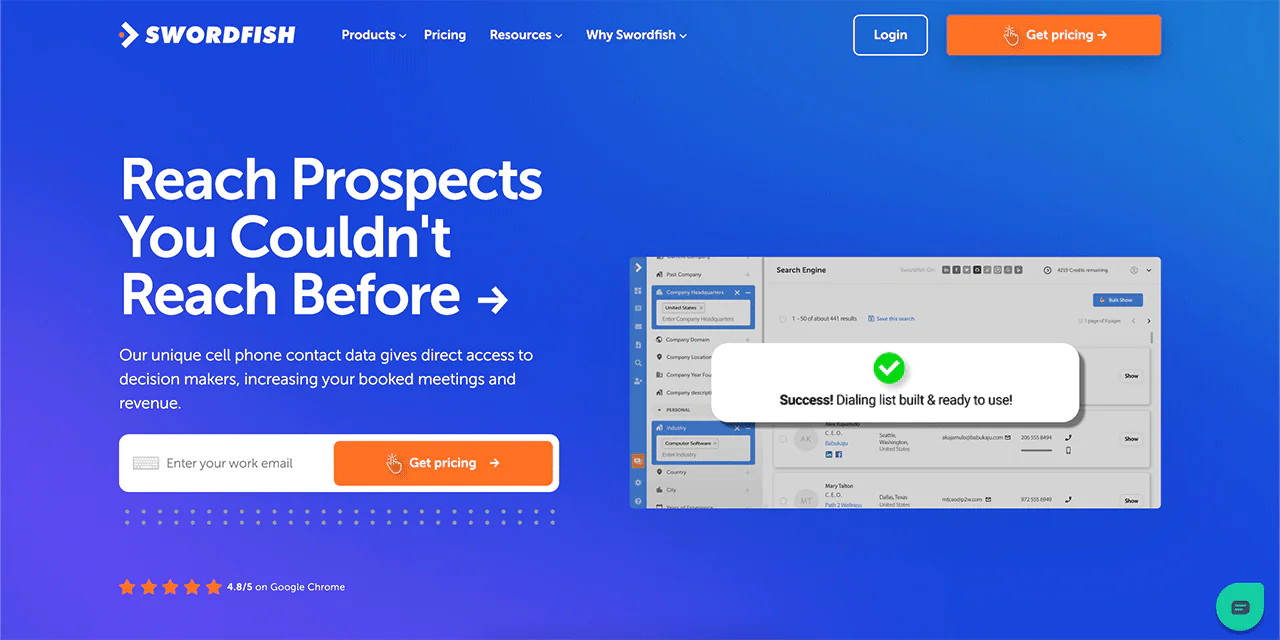
- Direct Access to Hematologists: You can get access to the email addresses of hematologists for partnerships, product introductions, or research outreach.
- Time-Saving Contact Retrieval: Skip the manual search across hospital directories and professional networks. A ready-made list lets you spend your time on the message, not the hunt for a working address.
- Better Marketing Efforts: Segmented, specialty-specific contact data helps you tailor campaigns instead of sending the same generic message to every recipient, which tends to raise engagement and reduce unsubscribes.
- Expanded Networking Potential: Access to a wider professional network opens doors for joint research, referral relationships, and career moves that would otherwise depend on chance introductions.
- Regularly Updated Contacts: Hematologists change practices and institutions more often than you’d expect. Lists that are refreshed on a routine basis cut down on bounces and outdated titles.
Types of Data Included in Hematologist Email Lists:
- Names of Hematologist
- Location
- Contact Numbers (Work, Cell, Mobile)
- Email Address
- Specialization
- Years of Experience
- Sole Proprietor Status
- Licensed States
- License Number
- Fax
- Address
 Try Swordfish Ai
Who’s Included in Our Hematologist Email List by Specialization?
Hematology covers a range of subspecialties, and a useful list should let you target by focus area rather than treating every hematologist as interchangeable. Here’s the breakdown of specializations covered:
How Do We Compile and Verify Our Hematologist Mailing List?
Building a reliable hematologist mailing list requires more than scraping public directories. Here’s the process behind it:
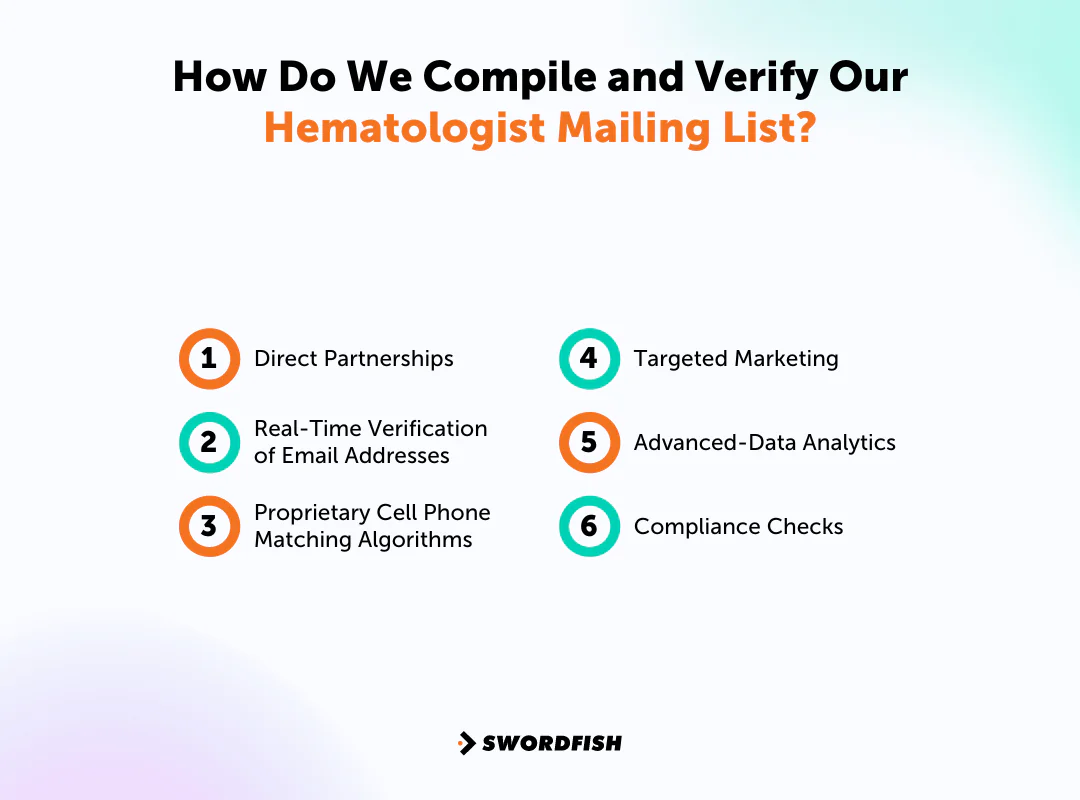
Direct Partnerships
A wide network of data suppliers feeds a broader, more current pool of professional contact information than any single source could provide on its own. Applying business development rep success tips also helps maintain working relationships with healthcare professionals over time.
Real-Time Verification of Email Addresses
Ask providers when and how they verify email addresses, and how often they refresh their data. Verification methods and update schedules can affect how many contacts are current.
Proprietary Cell Phone Matching Algorithms
Where available and appropriate for your outreach, phone numbers can provide another contact channel. Ask providers how they match and verify those numbers before relying on them.
Targeted Marketing
Segmented data supports a more deliberate approach to sending a cold email to potential clients, rather than a one-size-fits-all blast.
Advanced Data Analytics
Data analysis may help identify professionals by specialty or region. Ask providers how their filters are created and whether the available fields fit your use case.
Compliance Checks
Commercial email and contact-data use may be subject to different privacy and marketing requirements depending on the jurisdiction and circumstances. Ask a provider how it obtains and maintains professional contact data, and have counsel review the rules that apply to your campaign. HIPAA concerns protected health information handled by covered entities and their business associates; professional contact details are distinct from patient health records, but that distinction alone does not establish that a particular data use is compliant.
Why Choose Swordfish AI’s Hematologist Email Database?
Choosing a database comes down to a handful of practical factors: coverage, verification method, ease of use, and support for compliant outreach.
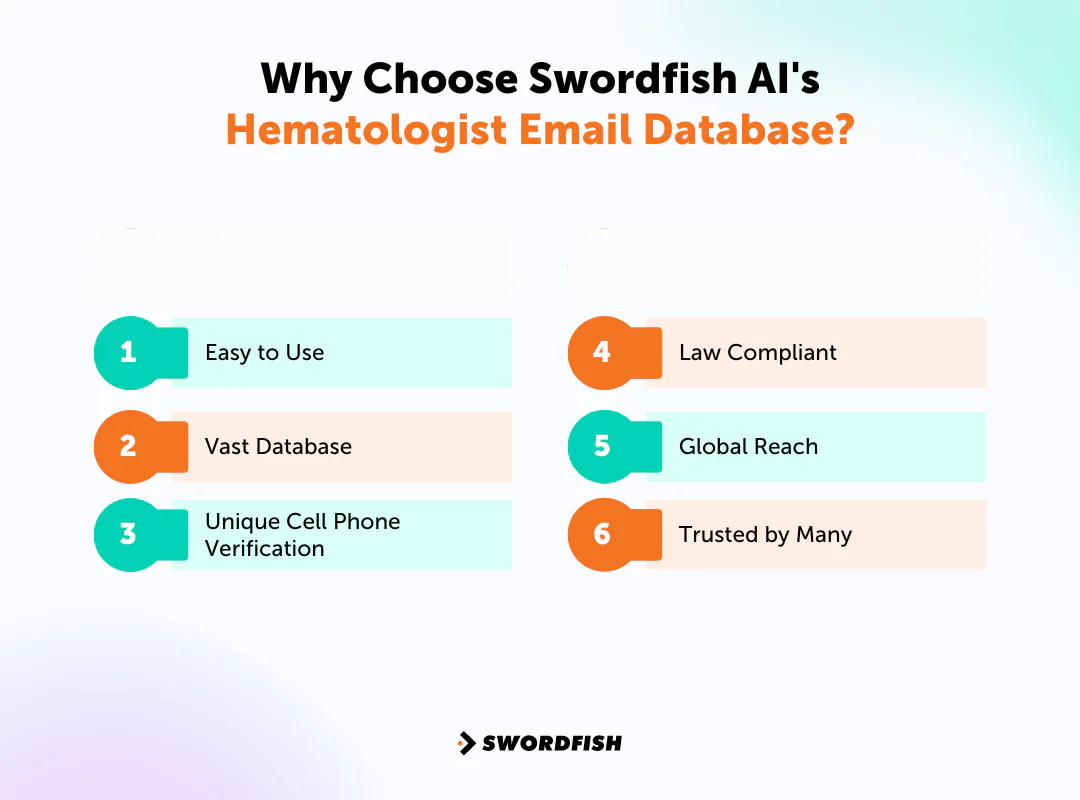
Easy to Use
A straightforward interface means less time spent learning the platform and more time on actual outreach, regardless of your technical background.
Vast Database
Broad coverage across data profiles increases the odds that the specific hematologist contact you’re looking for is actually in the system, rather than requiring a separate manual search.
Unique Cell Phone Verification
Ask how phone numbers are matched and validated, and how recently they were checked. Verification methods cannot guarantee that every number is current or reachable.
Law Compliant
Ask the provider to explain its data-collection practices and identify the privacy and marketing requirements it considers relevant. Do not assume that a provider’s compliance claims establish that your particular use is lawful.
Global Reach
A broader geographic footprint means access to hematologist contacts beyond your immediate region, which matters for international recruitment or sales efforts.
Trusted by Many
A provider’s stated track record may be one factor to consider. Evaluate data freshness, verification methods, and match rates for your specific use case before committing.
What Should You Consider When Getting a Hematologist Mailing List?
When evaluating a hematologist mailing list, focus on the details that determine whether your outreach actually lands and stays compliant.
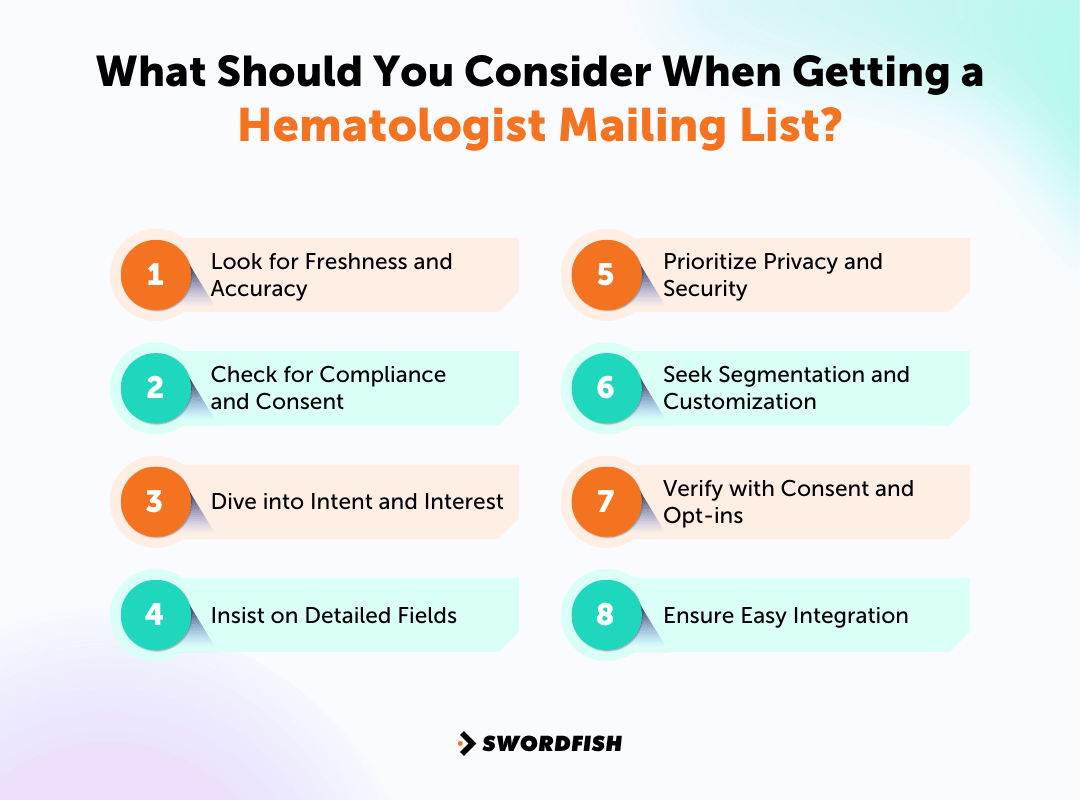
Look for Freshness and Accuracy
A list refreshed on a regular cadence removes outdated titles and defunct addresses, which keeps bounce rates down and protects your sender reputation.
Check for Compliance and Consent
Ask which laws apply to your campaign and whether they require consent, notice, or other steps. Requirements vary by jurisdiction and message type, so confirm them with qualified counsel rather than assuming a list’s sourcing makes your outreach compliant.
Dive into Intent and Interest
If a provider offers interest-based segments, ask how those interests were determined and whether the data can appropriately be used for your campaign. Tailor messages to recipients’ professional work rather than relying on unsupported assumptions about their interests.
Insist on Detailed Fields
Names and emails alone aren’t enough. Job titles, specialization, and workplace details let you tailor outreach and avoid sending irrelevant pitches to the wrong subspecialty.
Prioritize Privacy and Security
Ask how the provider secures contact data. Weak security practices put both the contacts and your organization’s reputation at risk.
Seek Segmentation and Customization
The ability to filter by specialty, location, or institution type turns a static list into a tool you can actually run targeted campaigns against.
Verify with Consent and Opt-ins
Ask the provider to explain the basis for collecting and sharing the contacts and whether that basis supports your intended marketing use. Requirements vary, so confirm applicable obligations before contacting people.
Ensure Easy Integration
A list that plugs into your existing CRM or email platform without manual reformatting saves time and reduces errors during campaign setup.
Who Can Benefit from the Hematologist Email Address List?
A number of roles across healthcare and life sciences rely on this kind of targeted contact data.
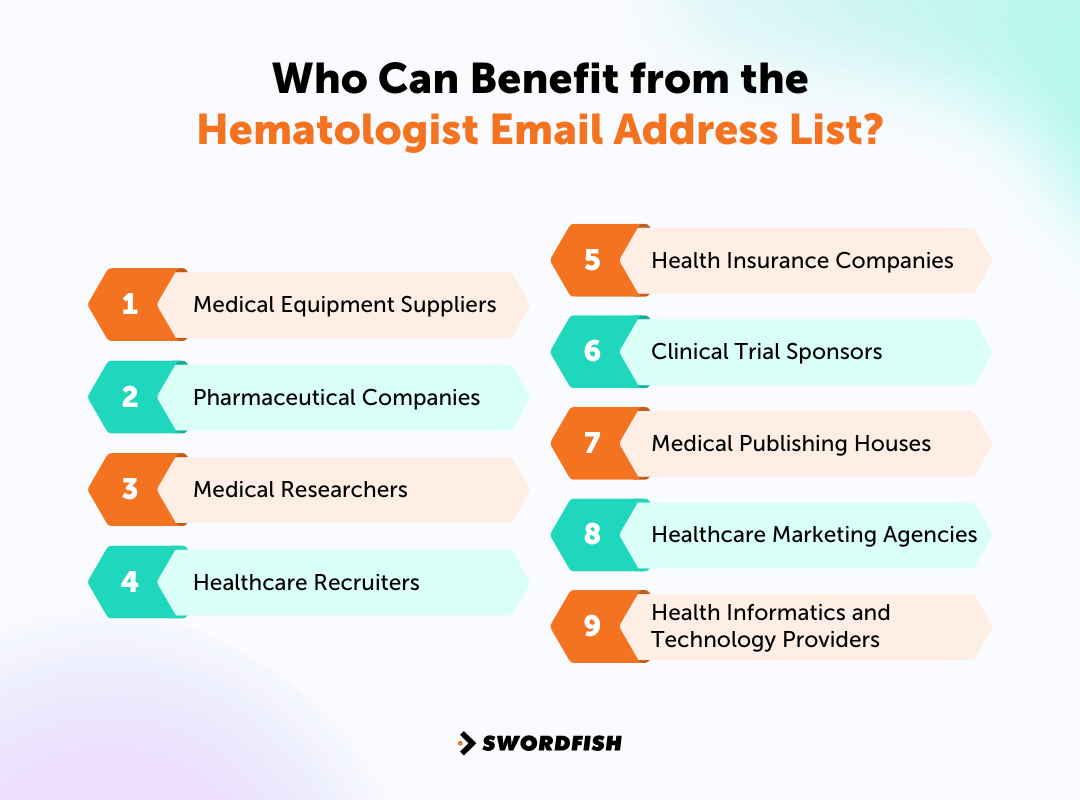
Medical Equipment Suppliers
Vendors selling devices or supplies used in blood disorder diagnosis and treatment can reach the specialists who use these tools directly, without going through general hospital procurement channels.
Pharmaceutical Companies
Companies developing therapies for blood disorders need a direct line to hematologists to share clinical data and new treatment information that can influence patient care decisions.
Medical Researchers
Researchers can use targeted contact data to recruit collaborators for studies, trials, or to gather practitioner insight on emerging challenges in hematology.
Healthcare Recruiters
Recruiters filling hematology positions at hospitals or clinics can reach candidates directly, shortening the hiring cycle.
Health Insurance Companies
Insurers offering products tailored to medical professionals, including malpractice coverage, can use this data to reach hematologists with relevant policy options.
Clinical Trial Sponsors
Sponsors recruiting for blood disorder trials need to identify hematologists who can refer eligible patients or participate as investigators.
Medical Publishing Houses
Publishers of hematology journals and research can use targeted contacts to promote new publications to practitioners actively working in the field.
Healthcare Marketing Agencies
Agencies running campaigns for clients targeting hematologists, whether for products, services, or events, benefit from precise contact segmentation.
Health Informatics and Technology Providers
Vendors of EMR, LIMS, and other health IT systems can reach hematologists who influence technology adoption decisions at their institutions.
How Can You Make the Most of Hematologist Email Lists Effectively?
Owning the list is only half the work. How you use it determines whether it produces results.
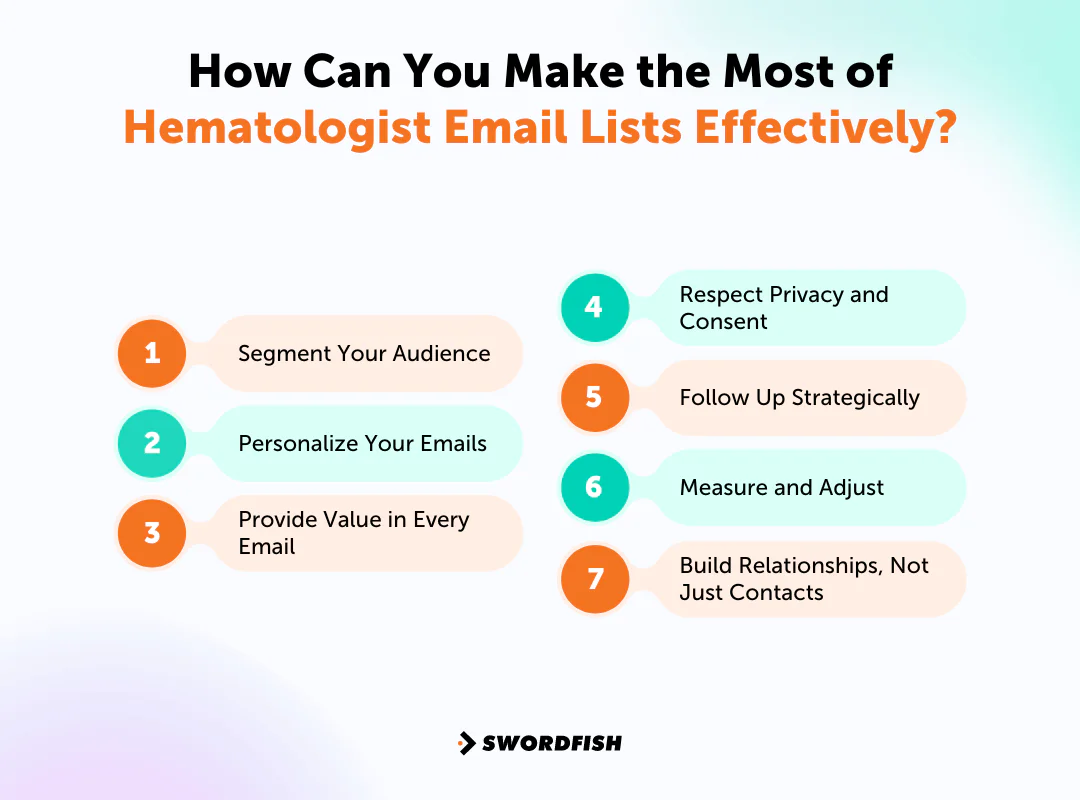
Segment Your Audience
Hematologists work in different settings and subspecialties, so a single generic message rarely lands well. Segmenting by specialization, location, or institution type lets you write to what the recipient actually cares about.
Personalize Your Emails
Reference the recipient’s specialty or institution where relevant, and be specific about why you’re reaching out to them rather than sending an obviously mass-produced message.
A personalized email signals that you’ve done a bit of homework, which tends to earn a more favorable read.
Provide Value in Every Email
Make the benefit clear early, whether it’s a product update, event invitation, or research collaboration. Keep the message specific and relevant to the recipient.
Respect Privacy and Consent
Include a clear opt-out where required, honor opt-out requests, and handle recipient data only in ways permitted by applicable rules and your agreements. These practices can help support trust and responsible outreach.
Follow Up Strategically
If you follow up, reference the earlier message and restate the value proposition rather than repeating the same pitch verbatim. Set the number and timing of follow-ups based on the recipient’s response and applicable requirements.
Measure and Adjust
Track replies and other relevant campaign metrics to assess what is working. Use the results to refine subject lines, formats, and calls to action, while following applicable privacy rules for tracking.
Build Relationships, Not Just Contacts
Treat the first email as the start of a relationship, not a one-off transaction. Ongoing value through relevant updates or networking opportunities turns a cold contact into a long-term professional connection.
Conclusion
A hematologist email list can help organizations reach specialists through targeted professional outreach. Its usefulness depends on factors such as data accuracy, relevant segmentation, and appropriate collection and use—not simply the number of contacts.
Before committing to a provider, weigh data freshness, verification methods, and how well the list fits your existing outreach workflow.
Swordfish AI offers hematologist contact data. Before using or purchasing a list, evaluate its verification practices, data freshness, and fit for your intended outreach, and confirm your own compliance obligations.
FAQs
What is a hematologist email list?
A hematologist email list is a database of contact details, including email addresses, for specialists who treat blood disorders. Businesses and professionals use these lists for sales outreach, research collaboration, and recruitment.
How accurate is this hematologist email list?
Swordfish AI verifies email addresses in real time as they’re added to the database, aiming to keep bounce rates low. Ask any provider for their current verification methodology and match rate before purchasing, since accuracy claims vary by vendor and change over time.
How can I find a hematologist email provider?
Look for data providers with a clear verification process, regular refresh cycles, and documented compliance practices. Comparing providers on these criteria matters more than comparing list size alone.
Why should I buy an email list of hematologists?
Buying a list gives you direct access to specialists without building contact data from scratch. This is useful for marketing medical products, recruiting for trials, or sharing research updates, and it saves significant time compared to manual sourcing.
Does your hematologist email database include phone numbers?
Yes. Swordfish AI’s hematologist database includes phone numbers alongside email addresses, supporting outreach through either channel depending on the message and situation.
Should a free hematologist email list help me?
Free lists tend to lack verification, regular updates, and documented compliance practices, which increases bounce rates and legal risk. A paid, professionally maintained list is generally a safer investment for serious outreach.