
 View Products


Last updated: September 3, 2026
A working business owner email list still matters for anyone trying to reach a decision-maker directly instead of going through a general inbox or a receptionist. Marketers, salespeople, real estate agents, and recruiters all rely on this kind of contact data to get their message in front of the person who actually signs off on a deal.
The hard part isn’t finding a list. It’s finding one that’s current, correctly matched to the right person, and built for the audience you actually need. A list that’s outdated or mismatched wastes time and can hurt deliverability on top of that.
Below, we break down what goes into a usable business owner email list, who tends to benefit most from one, and what to check before you buy or build one, along with where Swordfish AI fits into that process.
About Swordfish Business Owner Email Lists: What’s in It for You?
Reaching decision-makers directly usually beats working through gatekeepers. Swordfish’s business owner data covers a wide network of contacts across the United States, built for direct mail and email outreach aimed at owners and executives.
Here’s what that looks like in practice —
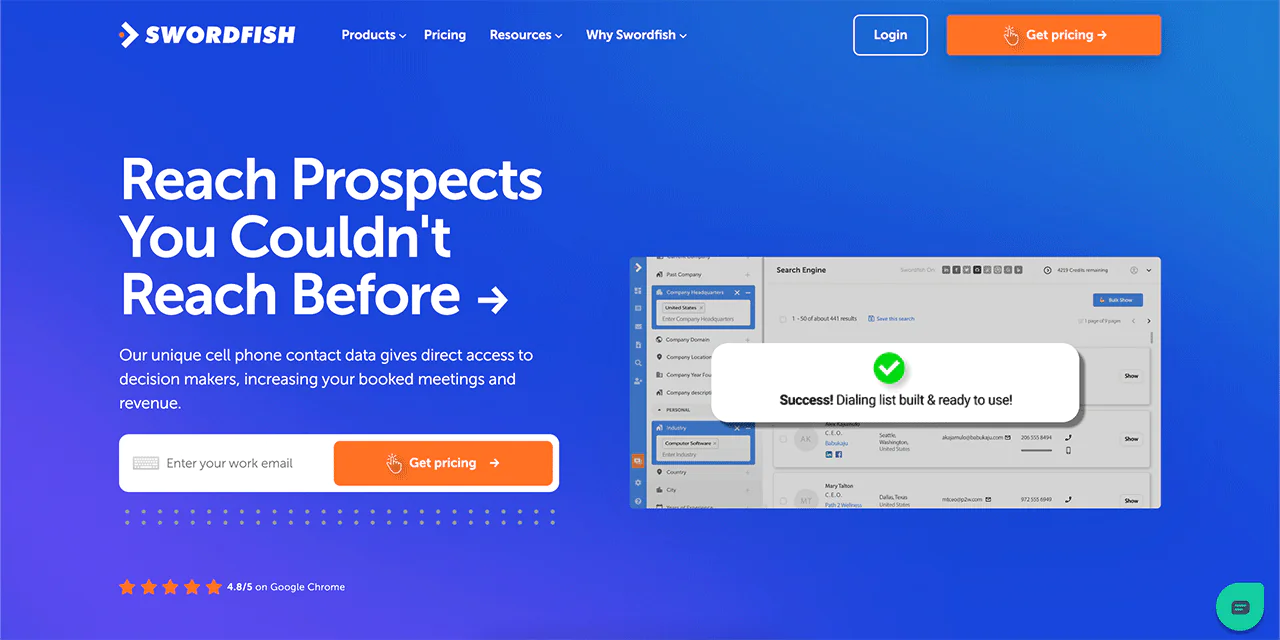
- Contact data sourced from partnerships: Swordfish pulls contact information from data partnerships rather than relying solely on scraped or self-reported sources, which helps when you’re trying to reach owners without going through an intermediary.
- Verification against carrier data: Matching technology and carrier connections are used to check contact accuracy, which matters for anyone running outbound campaigns where bad numbers or dead emails waste time.
- Fewer wasted contacts: Cleaner contact data generally means fewer dead-end calls and bounced emails, which translates to more time spent on real conversations.
- Direct routing to owners: The goal is getting your message to the person who owns the decision, not a general mailbox.
Types of Data Included in Business Owner Email List:
- Names of Business Owners
- Location
- Contact Numbers (Work, Cell, Mobile)
- Email Address
- Specialization
- Years of Experience
- Sole Proprietor Status
- Licensed States
- License Number
- Fax
- Address
 Try Swordfish Ai
Who’s Included in Our Business Owner Email List by Specialization?
Business owner email lists are typically organized by category so you can target the right vertical instead of buying one undifferentiated list. Below are the categories covered.
How Do We Compile and Verify Our Business Owner Mailing List?
Getting a usable list isn’t a single step. It’s a layered process meant to catch errors before they reach your outreach tools.
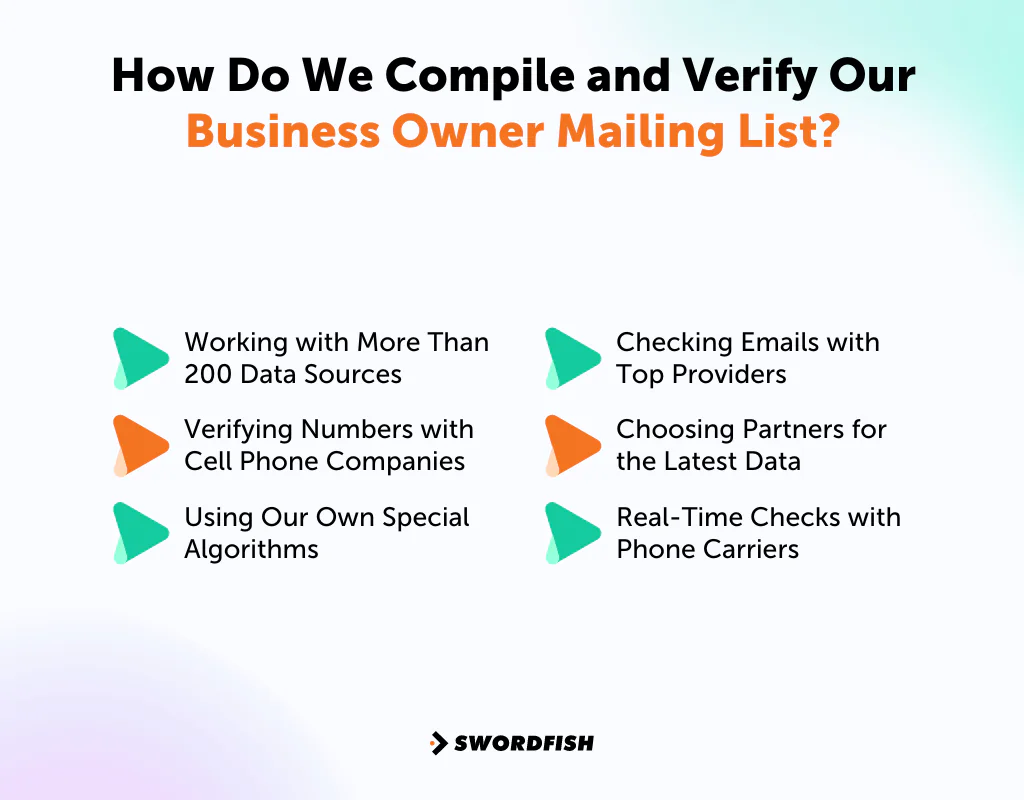
Working with More Than 200 Data Sources
Pulling from a wide range of data providers builds a broader contact base across sectors, which matters when you’re targeting a specific niche rather than a generic buyer.
Verifying Numbers with Cell Phone Companies
Direct connections with carriers help confirm that a number is still active before it goes into a campaign, cutting down on dead calls and disconnected lines.
Using Our Special Algorithms
Matching algorithms tie business owner details to the correct contact record, which reduces the risk of reaching the wrong person entirely.
Checking Emails with Top Providers
Cross-checking with email service providers adds a layer of validation on deliverability and activity, which helps cut down bounce rates before a campaign goes out.
Choosing Partners for the Latest Data
Working with partners who supply live, current data helps keep stale or irrelevant contacts out of the list, so outreach stays focused on people who are actually reachable.
Real-Time Checks with Phone Carriers
Real-time carrier verification adds one more check on connectivity, so a number that shows up in a list is more likely to still be in service.
Why Choose Swordfish AI’s Business Owner Email Database?
Here’s what tends to matter most when weighing a data provider for this kind of outreach.
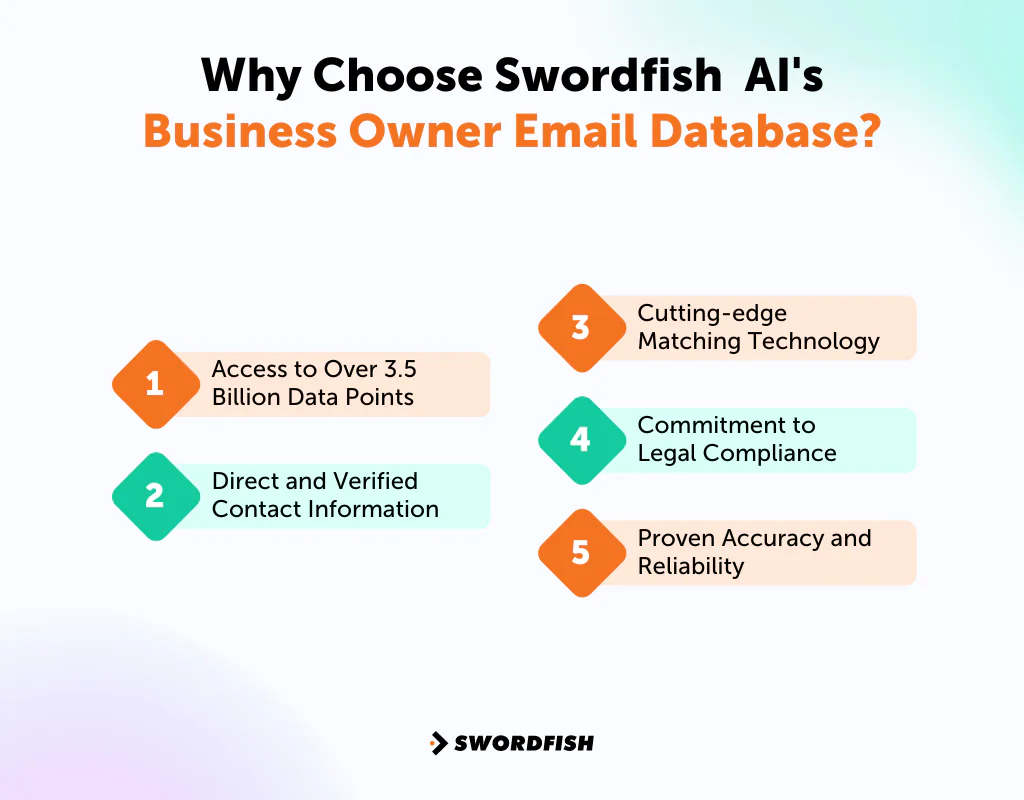
Access to Over 3.5 Billion Data Points
A large underlying dataset means more coverage across industries, whether you’re targeting a narrow niche or a broad sector.
Direct and Verified Contact Information
Partnerships with data providers and carriers support contact details that have been checked rather than pulled from a static, unverified list.
Matching Technology
Matching technology ties owners to their correct contact records, which is the part of the process that most affects whether your list is actually usable.
Commitment to Legal Compliance
Data practices built around GDPR and the CAN-SPAM Act matter for anyone running email or direct mail campaigns where compliance failures carry real legal risk.
Accuracy and Reliability
Swordfish AI reports a first-dial accuracy rate and an overall accuracy figure that reflect ongoing verification work, and the platform is used by a large base of sales and marketing professionals. If accuracy numbers matter to your decision, confirm current figures directly with Swordfish before relying on them in your own materials.
What Should You Consider When Getting a Business Owner Email Mailing List?
Not every list provider operates the same way, so it’s worth checking a few things before you commit budget to one.
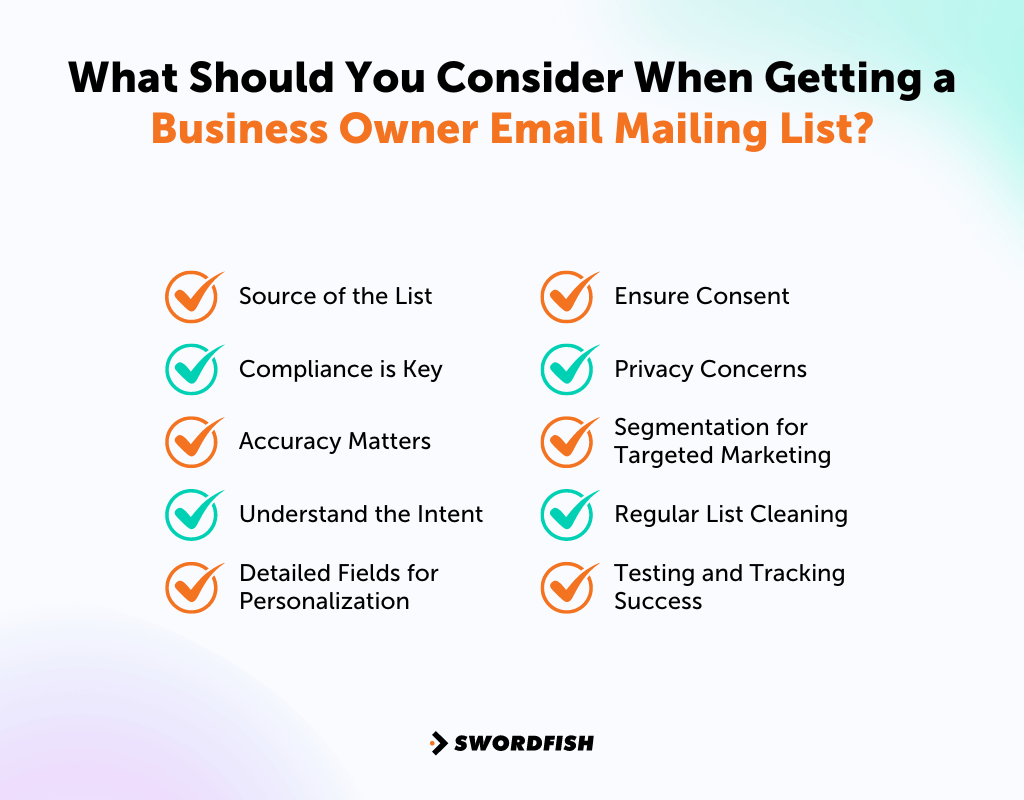
Source of the List
A provider that’s transparent about how it sources data is easier to trust with your budget and your sender reputation.
Compliance is Key
Confirm the list meets requirements like GDPR or the CAN-SPAM Act before you use it. This protects your brand and keeps your campaigns defensible.
Accuracy Matters
Ask how often the provider updates and re-verifies contacts. Stale data is one of the most common reasons outreach underperforms.
Understand the Intent
Knowing why a contact is on a list, whether by purchase intent or interest area, sharpens how you target and message them.
Detailed Fields for Personalization
Fields like industry, company size, and role give you more to work with when personalizing outreach beyond a first name.
Ensure Consent
Whether a list is free or paid, contacts who’ve agreed to be approached are more likely to respond well to outreach.
Privacy Concerns
A provider that respects privacy laws and individual preferences keeps you legally safer and builds trust in your brand over time.
Segmentation for Targeted Marketing
Detailed segmentation lets you align messaging closely with specific campaign goals instead of sending one message to everyone.
Regular List Cleaning
Ask how often the list gets cleaned. A list that isn’t maintained regularly accumulates dead contacts fast.
Testing and Tracking Success
Look for providers whose data supports clear testing and metrics tracking, so you can refine your approach based on real results.
Who Can Benefit from the Business Owner Email Address List?
A business owner email list serves a range of professionals and organizations differently depending on their goals.
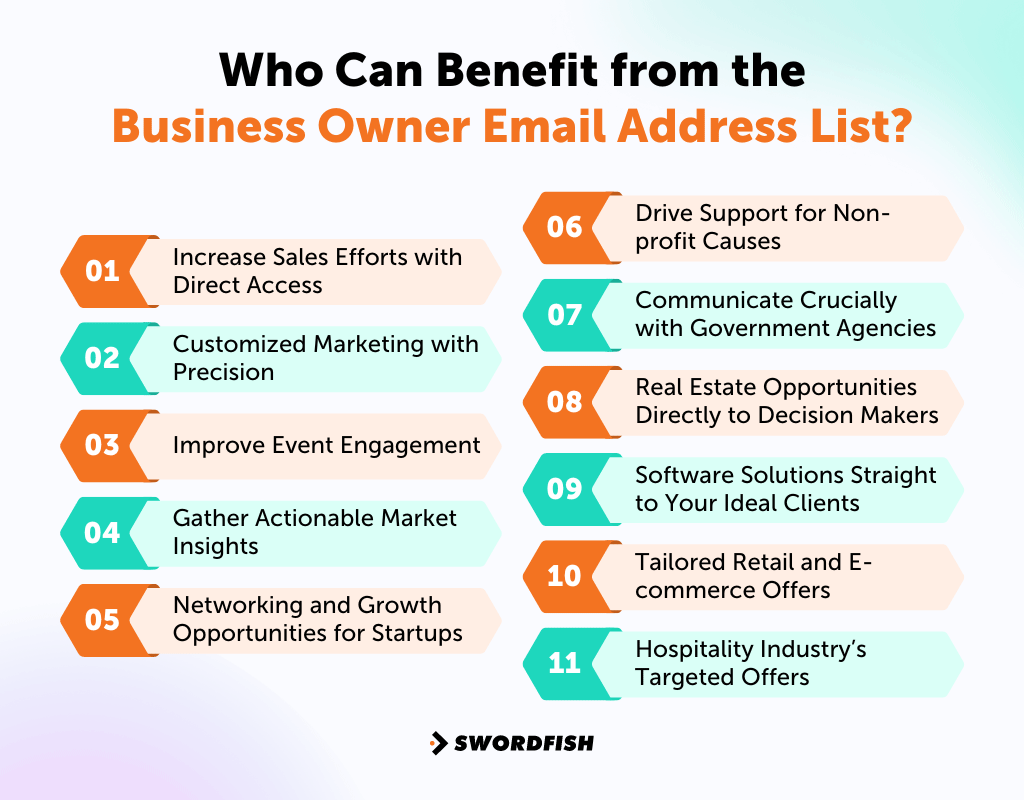
Increase Sales Efforts with Direct Access
Sales teams benefit from bypassing gatekeepers to present offers directly to the decision-maker, which can shorten the sales cycle and improve close rates.
Customized Marketing with Precision
Marketing agencies can use detailed contact information to tailor campaigns for owners in different sectors, improving relevance and conversion.
Improve Event Engagement
Event organizers can use a focused list to invite the right business leaders, improving both networking value and turnout quality.
Gather Actionable Market Insights
Market research firms depend on accurate, current contact information to reach industry leaders and collect first-hand insights.
Networking and Growth Opportunities for Startups
Startups and entrepreneurs can use a list to find mentors, seek advice, or pitch products, which can accelerate growth and open doors to partnerships or investment.
Drive Support for Non-profit Causes
Non-profit organizations can identify potential donors and supporters within the business community, tailoring outreach around specific philanthropic interests.
Communicate Crucially with Government Agencies
Agencies can use email lists to send updates on new rules, compliance requirements, or support programs, keeping businesses informed and compliant.
Real Estate Opportunities Directly to Decision Makers
Real estate agencies can present commercial properties, office space, and investment opportunities directly to interested owners, which can shorten time to close.
Software Solutions Straight to Your Ideal Clients
Software companies can identify and reach businesses most likely to benefit from their product, improving adoption and reducing wasted outreach.
Tailored Retail and E-commerce Offers
Retailers and e-commerce platforms that understand business clients’ specific needs can build stronger partnerships and customer loyalty.
Hospitality Industry’s Targeted Offers
Hotels, conference centers, and catering services can market directly to businesses planning corporate events or retreats, which can help increase bookings.
How Can You Make the Most of Business Owner Email Lists Effectively?
Whether you’re in sales, marketing, recruitment, or running a sector-specific campaign, a few practices consistently make outreach more effective.
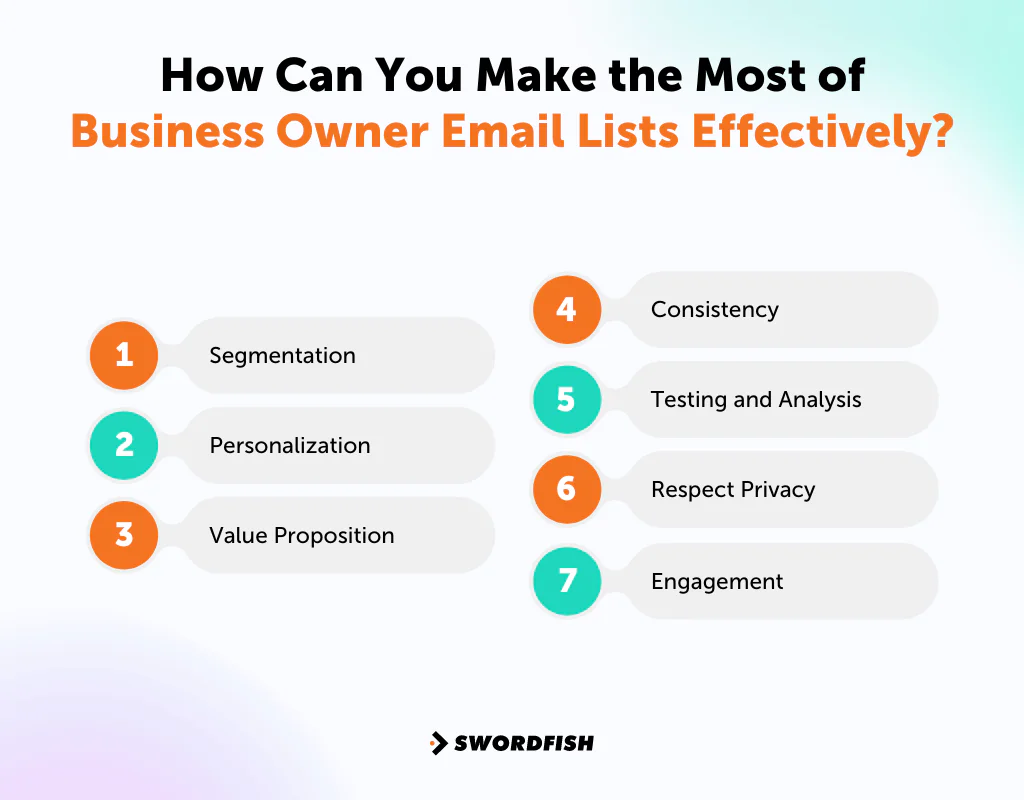
Segmentation
Breaking your list into smaller groups by industry, company size, or geography lets you tailor messaging instead of sending one generic version to everyone.
Personalization
Using a recipient’s name, referencing their business, or aligning content with their interests tends to lift open and conversion rates.
Value Proposition
Every email should offer something useful, whether that’s industry information, a relevant offer, or a genuine insight. Value is what keeps people opening your emails over time.
Consistency
A predictable sending schedule builds familiarity, but sending too often risks fatigue and unsubscribes, so balance matters here.
Testing and Analysis
Testing subject lines, send times, and messaging, then acting on the results, is how outreach improves over multiple campaigns instead of staying flat.
Respect Privacy
Following privacy law and making it easy to opt out isn’t just a legal requirement. It protects your sender reputation and keeps your list responsive.
Engagement
Questions, requests for feedback, and clear calls to action all encourage recipients to respond rather than skim and delete.
Conclusion
A business owner email list is a tool for making direct connections, not just a spreadsheet of names and addresses. Used well, it can support everything from sales outreach to finding a mentor or investor.
But the value of any list depends entirely on how accurate and current it is. A poorly maintained list wastes time and money regardless of how large it is. That’s why it’s worth working with a provider like Swordfish AI that treats verification as an ongoing process rather than a one-time step.
FAQs
What is a business owner’s email list?
A business owner email list is a collection of email addresses belonging to business owners, used by marketers, sales teams, and other professionals to contact owners directly to promote products, run surveys, or invite them to events.
Can I use a business owner email list to hunt for jobs?
Yes. You can reach out to business owners directly to ask about open positions or express interest in working for their company.
What are some common challenges when using a business owner email list?
Common challenges include outdated information, privacy concerns, and difficulty reaching the right audience. These can be reduced by updating the list regularly, respecting privacy laws, and using segmentation and personalization.