

 View Products


Last updated: September 3, 2026
By Ben Argeband, Founder & CEO of Swordfish.AI
Who this is for
This is written for buyers and ops teams evaluating “verified mobile” claims, particularly in healthcare outreach where a misrouted text or a stale number isn’t just wasted spend, it’s a compliance headache. If you’re comparing vendors and want a methodology you can actually audit rather than take on faith, this is the place to start.
Quick verdict
- Core answer
- To verify mobile numbers in a way that holds up in production, “verified” has to mean confidence of usability, not a permanent guarantee. Verification is more than a format check; it’s a confidence signal you can route decisions on. The only defensible approach layers four signals: line type → validity → recency → confidence levels.
- Key stat
- There is no universal “verified” standard across vendors; results vary with seat count, API usage, list quality, and industry. If a vendor won’t explain what drives that variance, you can’t forecast cost or outcomes with any confidence.
- Ideal user
- Teams running outbound, enrichment, or compliance-sensitive workflows, including provider outreach and patient-adjacent contact programs, that need phone number validation plus line-type interpretation and a confidence model they can act on.
Decision guide
Most verification failures aren’t mysterious once you look closely. They come from vendors collapsing several distinct questions into a single label, then leaving you to absorb the fallout: misrouted SMS, wasted dials, and brittle CRM rules nobody wants to own.
Verification Signals Stack: Type → Validity → Recency → Confidence
- Type (line type): Is it mobile vs VoIP vs landline? This changes how you’re allowed to use the number and how your systems should route it.
- Validity: This goes beyond formatting. A number can parse correctly and still be unusable for your workflow. In practice, validity is inferred from evidence categories like consistency signals, type signals, and recency signals, not just the fact that it looks like a phone number.
- Recency: Evidence ages. Older records carry higher reassignment exposure and more operational waste, which matters a lot when you’re contacting healthcare providers whose numbers change with staffing and practice moves.
- Confidence levels: A single yes/no forces you to treat every number the same. Confidence levels let ops set policies instead of arguing over anecdotes after a bad quarter.
Definitions (so procurement doesn’t get sold a synonym):
- Verified: A confidence statement about usability based on available evidence.
- Validity: The number is plausible and supported by signals beyond formatting (for example: consistency signals, type signals, and recency signals).
- Connectability: Whether a call or SMS will reach the intended person right now, which no database can guarantee.
- Confidence level: The control knob that lets you route, suppress, or review numbers based on risk.
Type detection changes interpretation. If your workflow requires mobile-only outreach, a “valid” VoIP number is still a bad record because it drives the wrong channel choice and creates compliance review work. That’s why mobile vs VoIP classification isn’t a cosmetic field; it prevents misrouting and cuts down on wasted touches.
Recency and source reliability shape confidence too. If a vendor can’t tell you how recency affects the output, you’re buying a static label in a world where numbers get ported and reassigned constantly. That’s how data decay quietly becomes a budget line item.
What Swordfish does differently
Swordfish treats “verified” as a set of signals you can audit and operationalize, not a badge you’re expected to trust blindly. We expose confidence levels so teams can route numbers differently instead of pushing everything into the same dialer or SMS path and hoping for the best.
We also give you a practical audit path. Swordfish Reverse Search is the manual spot-check tool: you can look up a number and see its current verification status signals, as observed by available type, validity, and recency evidence at lookup time. Spot-checking reduces support tickets and integration thrash because you can reproduce outcomes on a single record instead of arguing over bulk exports.
On coverage and usage: Swordfish prioritizes direct dials and mobile numbers where available, and supports unlimited usage under fair use controls. During procurement, get the fair use triggers in writing so your API usage model doesn’t become a surprise constraint later.
Checklist: Feature Gap Table
| Capability buyers think they’re buying | What many tools actually do | Hidden cost when it fails | What to require instead (audit question) |
|---|---|---|---|
| “Verified mobile” | Format check + basic carrier lookup, then label as verified | SMS sent to non-mobile lines; wasted sequences; compliance review time | Do you provide line type and explain how mobile vs VoIP is determined? |
| Phone number validation | Validation equals “number parses” | High connect failure; reps blame the dialer; ops adds brittle rules | What does “valid” mean beyond formatting, and what evidence supports it? |
| Decay control | No recency model; old records treated as equal to new | Reassigned number risk rises as records age; wrong-party contacts; escalations | How is recency represented, and how does it change the output? |
| Predictable outcomes across lists | One-size scoring; no variance explanation | Pilot looks fine; production degrades; budget expands to compensate | What drives variance (seat count, API usage, list quality, industry), and how do you report it? |
| Auditability | No way to spot-check individual numbers with the same logic as bulk | Procurement can’t audit; ops can’t debug; disputes become subjective | Can I manually verify a number’s status and see the underlying signals? |
Decision Tree: Weighted Checklist
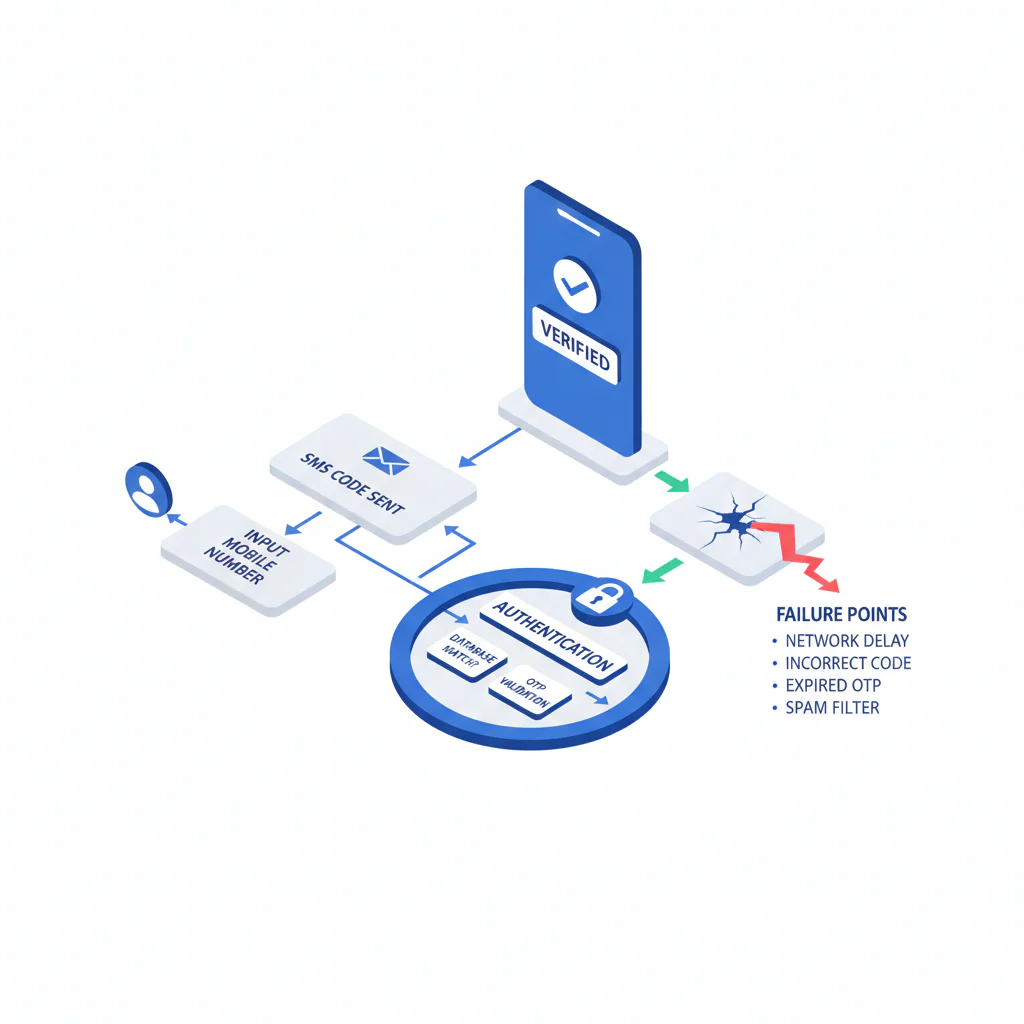
This checklist is weighted by the failure points that actually create cost: misrouted outreach from type errors, wasted touches from validity errors, and decay from recency blindness. The weights are relative priorities, not performance claims.
- Highest weight: A definition of “verified” that separates line type, validity, recency, and confidence levels. If a vendor can’t define it, you can’t govern it.
- Highest weight: Mobile classification that is usable for policy (mobile vs VoIP) and explains how type detection changes interpretation, including SMS eligibility, routing rules, and suppression logic.
- High weight: Confidence levels available in both UI and API so ops can route records instead of treating everything as equal risk.
- High weight: Variance explanation tied to your reality: seat count, API usage, list quality, and industry. If they can’t explain variance, you’ll discover it after rollout, the expensive way.
- Medium weight: Spot-check tooling that matches bulk logic, so you can debug without opening support tickets for every disagreement.
- Medium weight: Integration clarity: field mapping to CRM or dialer, update behavior when confidence changes, and how stale records are handled over time.
- Lower weight: Usage terms that don’t collapse under scale. “Unlimited” only matters if fair use triggers are clear enough to plan around.
Troubleshooting Table: Conditional Decision Tree
- If “verified” is a single boolean with no confidence levels, then expect downstream rules, manual QA, and internal debates about what the label actually means.
- If the vendor can’t explain line type determination, especially mobile vs VoIP, then expect misrouted SMS and inconsistent routing outcomes.
- If recency isn’t part of the output, then plan for decay: your “verified” list will drift and reassignment exposure will rise as records age.
- If the vendor claims consistent accuracy but won’t discuss variance drivers such as seat count, API usage, list quality, or industry, then treat the claim as non-auditable.
- Stop condition: If you cannot manually spot-check a number and see the same verification status signals you get in bulk, stop the evaluation. You won’t be able to debug production issues without vendor intervention.
- If you need a spot-check path, then use Swordfish Reverse Search to verify the status of specific numbers during evaluation and ongoing QA.
How to test with your own list (5–8 steps)
- Pull a real sample: Export a slice that matches production reality, including old records, mixed sources, and duplicates. Clean pilot lists hide decay and inflate confidence.
- Define your policy first: Decide what “mobile” must mean for your workflow, what recency window is acceptable, and how you’ll use confidence levels, whether that’s auto-use, review, or suppress.
- Run verification and keep raw outputs: Don’t just store a “verified” flag. Store line type, recency indicators, and confidence so you can audit later.
- Segment results by risk: Compare outcomes for newer vs older records and mobile vs non-mobile classifications. This is where variance shows up.
- Log disagreements: When a record looks wrong, tag it as a type issue, a recency issue, or a confidence and routing issue. This stops “the data is bad” from becoming the only diagnosis.
- Spot-check edge cases: Use Swordfish Reverse Search on numbers that look wrong or high-value. Confirm you can see the verification status signals you’re expected to trust in bulk.
- Test integration mapping: Verify that your CRM and dialer use the same field you’re enriching, and that routing rules respect line type and confidence. Many “data problems” are actually mapping problems.
- Decide refresh behavior: Set a process for re-checking older records. If you don’t plan for decay, you’ll pay for it later in failed connects and escalations.
Limitations and edge cases
No vendor can guarantee connectability because the real world changes faster than any database. Numbers get reassigned, users port carriers, and businesses swap providers. Treat verification as risk management, not certainty, especially when contacting healthcare organizations where staff and lines turn over often.
- VoIP that behaves like mobile: Some numbers are operationally “valid” but still wrong for mobile-only policies. Type errors create immediate routing waste.
- Stale records: Older numbers can still parse and appear valid. Without recency, you can’t control reassignment exposure.
- List hygiene issues: Duplicates and recycled leads can inflate “valid” counts while lowering real outcomes. That’s why variance explanation matters.
- Integration drift: If your CRM stores one phone field and your dialer reads another, verification can be correct while your routing is wrong. You still pay for it either way.
Evidence and trust notes
This page avoids made-up accuracy percentages because they don’t transfer between buyers. Outcomes vary with seat count, API usage patterns, list quality, and industry. A single benchmark number without a variance model isn’t something you can budget against.
Methodology boundaries (what “verified” is and isn’t): Verification is more than format; it’s confidence of usability based on signals like line type, validity evidence, and recency. It is not a promise of permanent ownership or guaranteed reachability. That’s why we expose confidence levels and expect teams to set routing and refresh policies instead of treating verification as a one-time cleanse.
What you can audit without trusting marketing:
- Definitions: Does the vendor define mobile number verification as more than formatting?
- Signals: Do they expose line type, validity, recency, and confidence level?
- Reproducibility: Can you spot-check individual numbers and see the verification status signals used in bulk workflows?
- Variance explanation: Can they explain why results change with seat count, API usage, list quality, and industry?
If you can’t see per-record signals, you can’t audit variance. That’s a black box, and black boxes create rollout delays when something breaks.
For related governance, see data quality. For adjacent methodology, see phone number validation. For a buyer-oriented walkthrough, see how to verify a phone number.
FAQs
What does it mean to verify mobile numbers?
It means assigning a confidence statement that a number is usable as a mobile contact, based on signals like line type, validity evidence, and recency. It should not mean “the number has the right number of digits.”
Is phone number validation the same as mobile number verification?
No. phone number validation often covers plausibility checks. Verify mobile numbers also requires correct mobile classification and a confidence model you can route on.
Why does mobile vs VoIP matter operationally?
Because it changes routing and policy. Treating VoIP as mobile can send SMS down the wrong path, create compliance review work, and waste rep touches. Correct classification reduces misrouting.
How should I use confidence levels in my systems?
Use them to set rules: auto-use high confidence, review medium confidence, suppress low confidence. That prevents your dialer and SMS workflows from treating every record as equal risk.
How can I spot-check a number’s verification status?
Use Swordfish Reverse Search to look up a number and review its current verification status signals at lookup time. Spot-checking is how you catch variance before you scale.
Does verification eliminate reassigned number risk?
No. It can reduce exposure, but reassignment is ongoing. The control is recency plus a refresh policy for older records.
Next steps
Week 1: Write your internal definition of “verified mobile,” including required line type, acceptable recency, and how you will use confidence levels. Pull a representative sample from production lists.
Week 2: Run verification, segment by source and record age, and document variance. Spot-check disagreements using Swordfish Reverse Search.
Week 3: Implement CRM and dialer mapping and routing rules by confidence level. Decide refresh behavior for older records to manage decay.
Week 4: Roll out to a controlled segment, monitor failure reasons such as type misroutes vs invalid vs stale, then expand. If outcomes shift when API usage scales or list sources change, treat it as a variance problem to govern, not a mystery.
About the Author
Ben Argeband is the Founder and CEO of Swordfish.ai and Heartbeat.ai. With deep expertise in data and SaaS, he has built two successful platforms trusted by over 50,000 sales and recruitment professionals. Ben’s mission is to help teams find direct contact information for hard-to-reach professionals and decision-makers, providing the shortest route to their next win. Connect with Ben on LinkedIn.