
 View Products


Last updated: September 3, 2026
Building a reliable list of contacts is still one of the hardest parts of running an email marketing program, especially in healthcare, where job titles, credentials, and organizational structures change constantly. An email extractor won’t fix a bad targeting strategy, but it can take a big chunk of manual research off your plate. This guide covers what these tools actually do, where they fall short, how to evaluate one, and what to watch out for when your list includes clinicians, administrators, or other healthcare professionals.
What Is an Email Extractor?
An email extractor is software that pulls email addresses from public sources such as websites, directories, and social platforms, then compiles them into a usable list. Instead of copying addresses one at a time from a hospital directory or a professional association site, you point the tool at the source and let it do the scanning.
For healthcare-focused outreach, this matters because provider contact information tends to live in scattered, inconsistently formatted places: practice websites, NPI registries, conference speaker pages, and association member directories. A decent extractor cuts down the hours spent hunting across those sources.
How Does an Email Extractor Work?
Most tools rely on web scraping or crawling technology to scan pages for email patterns and pull them into a list. More advanced extractors use natural language processing techniques to identify addresses hidden behind contact forms or rendered dynamically through JavaScript, which is common on hospital and health system websites.
It’s worth being direct about the limits here. Scraped addresses are only as current as the page they came from, and healthcare staff turnover means a scraped list can go stale faster than in other industries. There’s also a legal and ethical dimension: extracting addresses is not the same as having permission to email them, and misuse leads to spam complaints, domain reputation damage, and potential regulatory exposure depending on how the data is used.
Benefits
Manually searching for email addresses across dozens of provider websites is slow. An extractor automates that first pass, freeing up time for outreach and follow-up instead of research.
Purchasing pre-built lists can be expensive and the data quality is often uneven. Extracting addresses yourself, from sources you trust, tends to be more cost-effective, though it requires more hands-on verification work.
Pulling addresses directly from relevant sites, such as specialty association pages or practice directories, gives you a more targeted starting list than a generic purchased database.
Email remains one of the more cost-efficient outreach channels when the list is accurate and relevant. Extraction tools help build that relevance, provided the output is verified before use.
Types of Email Extractors
Hosted online, these require no installation and are easy to start with, though they often come with fewer advanced features.
Installed locally, desktop tools generally offer more configuration options but cost more and need regular updates to keep working reliably.
- Plugin
- Browser plugins extract addresses from pages as you browse. They’re convenient for quick lookups but limited in scale and functionality compared to dedicated platforms.
Choosing the Right Tool for Your Business
The right choice depends on budget, list size, and required features. For teams building healthcare-specific outreach lists, it’s also worth asking whether the tool can differentiate between generic organizational inboxes and direct provider contacts, since the latter tend to perform better for outreach.
Pricing ranges from free tools to enterprise platforms costing thousands per month. Match the tool to what you can realistically justify given your list volume.
A browser plugin might be enough for small, occasional list-building. Larger campaigns generally need a desktop or platform-based solution built for volume.
Decide what you actually need, such as extraction from social platforms, built-in verification, or CRM integration, and choose accordingly rather than paying for capabilities you won’t use.
Best Practices
Pull addresses from sites and directories genuinely tied to your target audience. Scraping unrelated sources just for volume produces a low-quality list.
Don’t send unsolicited email to every address you extract. Beyond damaging your sender reputation, unsolicited outreach to healthcare professionals can also raise compliance concerns depending on the content and context.
Extractors frequently pull the same address more than once, especially from sites with multiple staff listing pages. Clean duplicates before loading a list into your outreach platform.
Extracted addresses can be outdated or malformed. Run a verification pass before sending anything, particularly for healthcare contacts where inboxes change hands often due to staff turnover.
Common Mistakes to Avoid
Casting too wide a net produces a list full of contacts who have no reason to engage with your outreach.
Duplicate entries inflate your list size without adding value and can hurt engagement metrics.
Sending to unverified addresses raises bounce rates, which can hurt domain reputation over time.
Email Campaigns Worth Running
Regular updates keep your list engaged and familiar with your organization over time.
Discounts or limited-time offers can drive conversions when sent to a well-targeted list.
Invites to webinars, conferences, or product demos tend to perform well with professional audiences, including healthcare contacts.
Measuring Success
Reflects how compelling your subject line was and how well your list matches your intended audience.
Shows whether the content inside the email actually resonated once someone opened it.
Tracks whether recipients took the action you wanted, such as booking a call or filling out a form.
Notable Email Finder Tools
1. Hunter
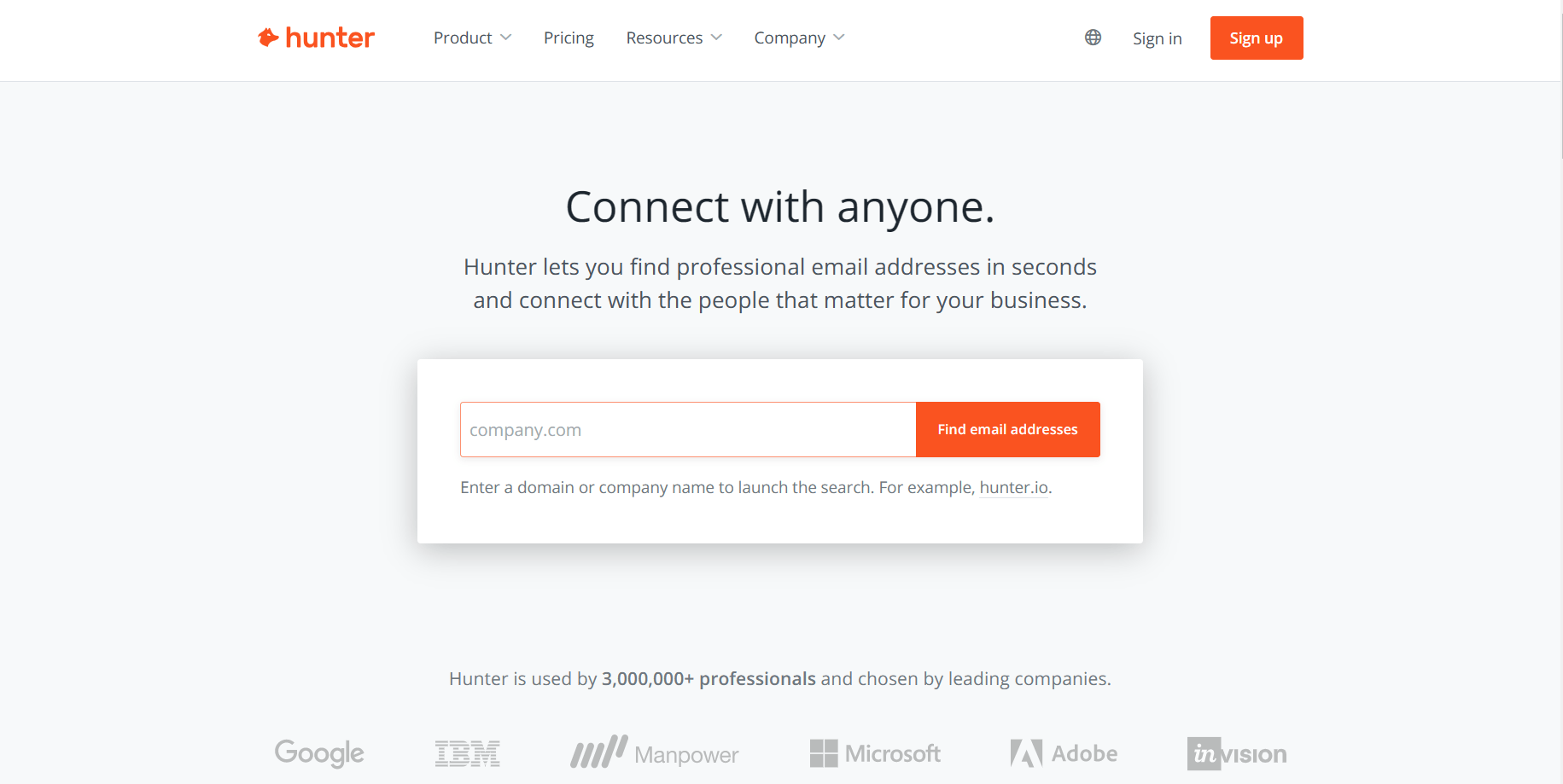
Hunter is a web-based tool that extracts email addresses from websites and social platforms. It’s widely used, but it has clear tradeoffs worth knowing before you commit.
Pros
- Large database: A sizeable index of email addresses makes it a reasonable starting point for lookups.
- Easy to use: The interface is straightforward for users at any skill level.
- Email verification: A built-in verification feature helps confirm contact accuracy.
Cons
- Accuracy gaps: Some generated addresses turn out to be outdated or invalid.
- Limited support channels: Support is email-only, with no phone or chat option, which can slow down urgent issues.
- Narrow search filters: Filtering options make it harder to zero in on very specific contacts.
2. Snov.io
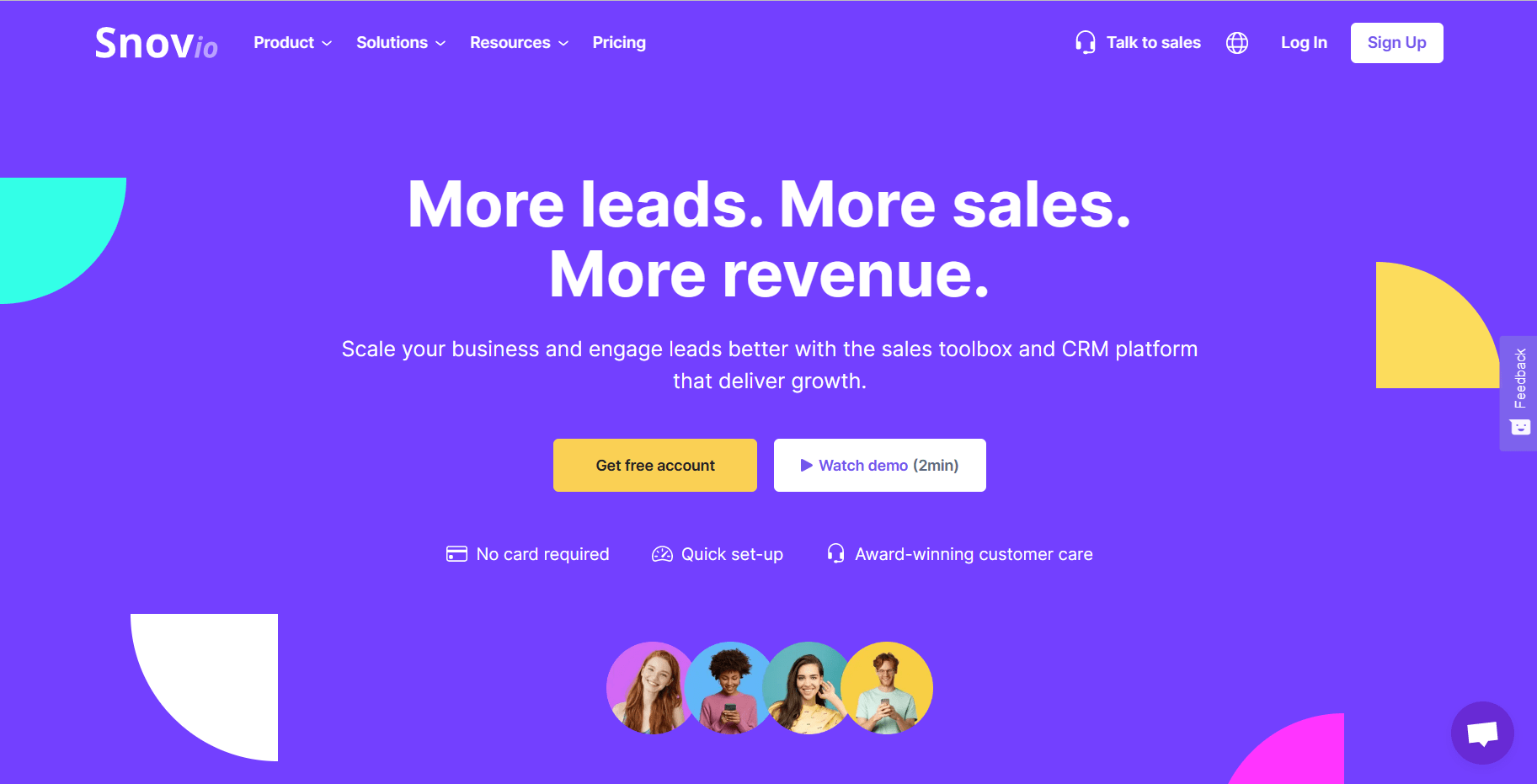
Snov is a web-based application for extracting email addresses from websites, social platforms, and directories.
Pros
- Advanced filters: Search results can be narrowed by job title, company size, and location.
- Integrations: Connects with tools like Salesforce, Zapier, and HubSpot for smoother workflows.
Cons
- Verification inconsistencies: Some verified addresses still turn out incorrect or outdated.
- Pricing: Snov’s pricing can feel steep for users who only need occasional, low-volume searches.
Read More: Competing Solutions for Snovio
3. Swordfish
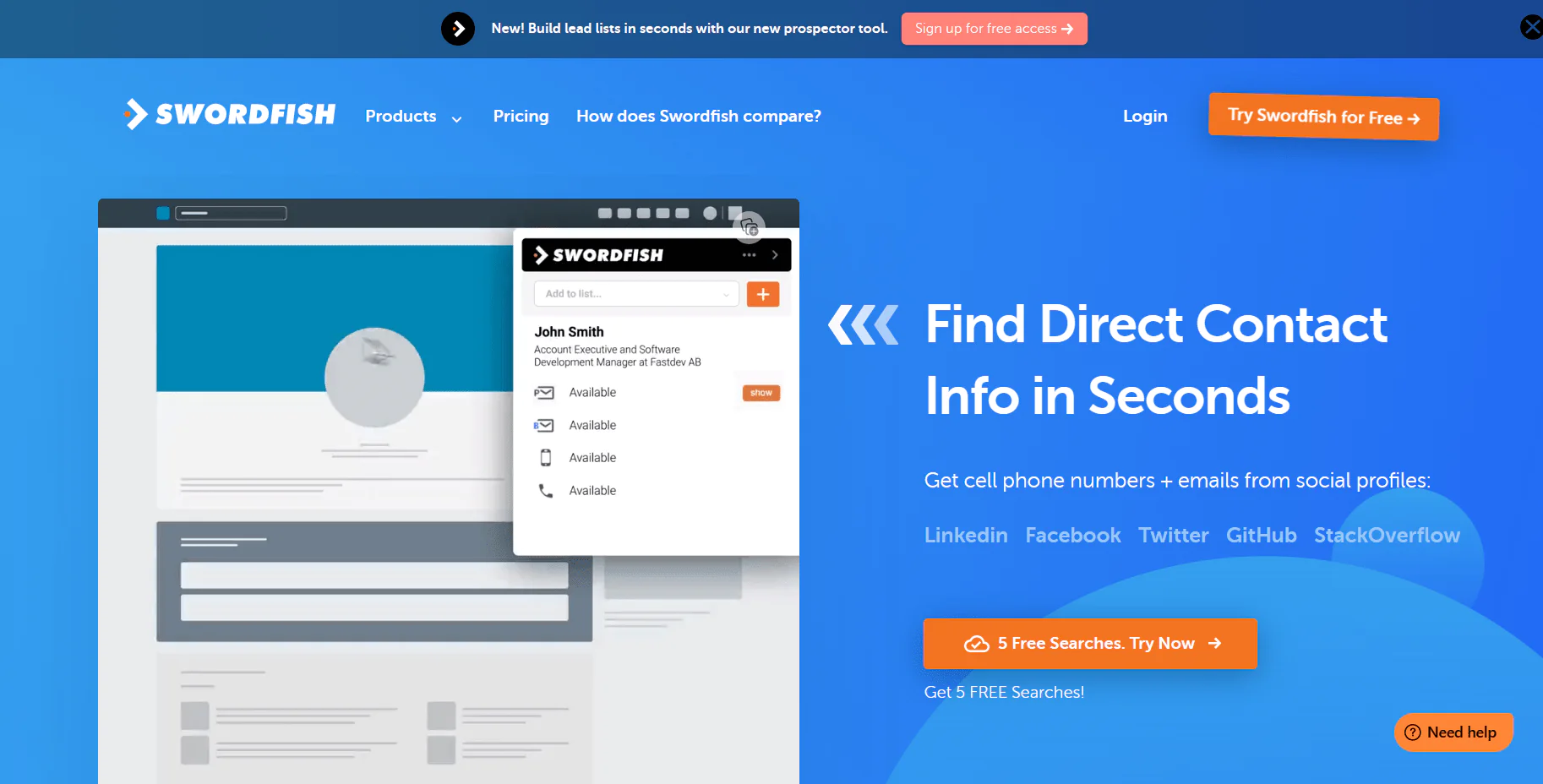
Swordfish helps you find and verify contact information, including mobile numbers and emails, which is useful when building healthcare provider outreach lists that need direct-dial accuracy rather than generic front-desk contacts.
Pros
- Accuracy focus: Verification steps are built into the finding process to reduce bad data.
- Pricing: Plans are positioned to be accessible relative to comparable tools.
- Customizable filters: Search criteria can be tailored by location, position, organization, and more.
- Support availability: Email and chat support are available for troubleshooting.
- Integrations: Connects with tools like Zapier, Zoho, Pipedrive, and HubSpot.
Cons
- No phone support: Phone-based support isn’t currently offered.
Where This Leaves You
An email extractor solves one part of the problem: getting raw addresses off the internet faster than doing it by hand. It doesn’t solve the harder part, which is making sure those addresses are current, permission-appropriate, and attached to the right decision-maker, particularly in healthcare, where contact turnover and compliance considerations add extra friction.
Treat extraction as the first step, not the last. Verify before you send, remove duplicates, and match your source selection to who you’re actually trying to reach.
Ready to see how verified provider contact data compares to raw extraction? Try Swordfish’s email extractor tool and check the results against your current list.