
 View Products


Last updated: September 3, 2026
Cold calling is still one of the fastest ways to turn a name on a list into a booked meeting, but it rewards preparation more than confidence. For sales reps and recruiters working healthcare or clinical audiences specifically, the margin for error is even smaller: providers are busy, gatekeepers are trained to screen calls, and a wrong number wastes a dial that could have gone to a decision-maker.
Below is a practical framework for building a cold-calling process that holds up against real objections, not just the ones in a training deck.
What is cold calling?
Cold calling means reaching a prospect by phone who hasn’t previously contacted your company or opted in to be contacted. It has a reputation for being intrusive and low-yield, but with accurate targeting and current contact data, it remains a viable channel for generating qualified conversations, particularly in industries like healthcare where email inboxes are crowded and a live conversation can move a deal forward faster.
How to cold call: the process and strategy
Dialing a stranger will always feel a little uncomfortable at first. That discomfort fades once you have a repeatable process behind you, so build the foundation before you start dialing.
Know your goal and objectives
Every call needs a clear purpose going in. For most reps and recruiters, that means:
- Highlighting the prospect’s pain point
- Positioning your product or service as the answer
- Qualifying the prospect and booking a meeting
Strategy and technique matter more than volume when it comes to actually hitting that goal.
Research your prospect
Matching someone to your ideal customer profile is only half the work. The real objective is building rapport, and that starts with understanding who the person is, not just their title. Check their LinkedIn profile, their organization’s website, and anything else they’ve published publicly before you dial.
For healthcare-focused outreach, this also means understanding the provider’s specialty, practice setting, and likely time constraints, a physician between patient appointments has a very different attention span than an administrator at a desk.
Use accurate contact data
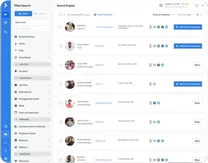
Once your prospect list is built, it’s time to enrich your prospects with contact data and put together a dialing list.
? Accurate contact data is the single most important factor in successful cold calling. Accurate data means higher connect rates, and in healthcare specifically, verified direct-dial and mobile numbers matter more than most other sectors because switchboard and front-desk lines are built to filter out sales calls.
Hint: avoid the gatekeeper and increase connect rates by using cell phone data. Direct access to your prospects gives you the best shot at a successful cold call.
 Get Accurate Contact Data
 Dial at a good time
This sounds obvious, but timing gets overlooked constantly. There’s no universal best time to call; it depends on the prospect. When working out your own optimal window, consider:
- the prospect’s time zone
- whether they’re likely to be working at that hour
- whether it’s a common break period, like lunch
There’s no single perfect time to cold call. Multiple industry studies point to late afternoon, roughly 4 to 5 PM in the prospect’s time zone, as a strong window, with midweek days like Wednesday and Thursday outperforming Mondays. Treat these as starting benchmarks, not rules, and adjust based on your own results once you have enough call data to compare.
What are the best cold-calling scripts?
There’s no single cold-calling script that works on every call. The best approach treats a script as a guide, not a transcript, and stays flexible enough to adapt mid-conversation.
?What people call scripts are really frameworks. Reading from the screen word-for-word is the fastest way to lose a prospect’s attention.
Here’s what to consider when building your own framework:
First impressions matter – nail the intro
Once someone answers, you have a few seconds to make a strong impression. A good introduction has two parts: a creative opener and a pattern interrupt. The goal is to introduce yourself, state your purpose, and keep the conversation moving forward. A pattern interrupt helps reframe the exchange before the prospect can reach for an automatic objection.
Value proposition – how you’re going to solve their problems
Your script should include a concise statement of what you’re offering and why it matters to this specific prospect. Tie it directly to their pain point rather than a generic feature list.
Qualifying questions
During the call, you need to understand the prospect’s current situation and whether they’re actually in a position to move forward.
Remember your CTA
It’s easy to lose track of your goal mid-conversation, so keep your call-to-action ready. That might mean booking a meeting, scheduling a follow-up, or setting up a demo.
Don’t be a robot
Rapport is what makes a cold call successful, and reciting a script word-for-word undermines that. Treat the script as a reference point, not a transcript. Ask open-ended questions and adjust your flow to the prospect in front of you.
Handling common objections
Rejection is part of the job, but it’s easier to manage when you’ve anticipated the pushback. Here are three common objections and how to prepare for them.
“We already have a solution”
An existing vendor relationship doesn’t disqualify a prospect. Focus on what isn’t working with their current solution and where yours might be a better fit. Battle cards built around specific competitors make this easier to handle in the moment.
“We don’t have the budget”
This objection usually falls into one of two categories. Either the prospect genuinely can’t afford your solution under any circumstance, which likely disqualifies them, or they don’t have budget available right now, which leaves room to keep the conversation going. In the second case, focus on how your product creates value through cost savings or revenue.
“It’s not the right time…”
First, figure out whether this is a genuine timing issue or a polite way of saying no. If it’s genuine, ask what the right time would look like. Try reframing around the cost of waiting, or shift your CTA toward booking a follow-up call for later.
Top 6 Cold Calling Tips
Ready to sharpen your cold-calling approach? These six habits consistently separate reps who hit quota from reps who don’t.
#1 Use accurate and contact data
Low connect rates are one of the biggest, and most avoidable, causes of missed quota. Use accurate contact data to reach your prospects on the first dial instead of burning attempts on disconnected or outdated numbers.
#2 It’s not just what you say, it’s how you say it
Tonality matters. A flat, scripted delivery reads as insincere even over the phone.
#3 Be expressive and move
Your physical state comes through in your voice. Stand up, move around, smile even though no one can see you. The energy carries through the call.
#4 Don’t give up – be persistent
Persistence is the difference-maker here. Industry research consistently puts the average at around eight call attempts before you actually reach a prospect, and most reps quit long before that point.
#5 Record, review and reflect
Record your calls, review them with peers or a manager, and look specifically for moments where the conversation stalled or an objection caught you off guard.
#6 There’s always another prospect
Rejection is part of the job. Keep your momentum, don’t take a no personally, and move on to the next call.