

 View Products


Last updated: September 3, 2026

Generating a steady flow of qualified prospects is one of the hardest parts of running a law practice. Recent industry surveys back this up: one 2026 study found that lead follow-up ranks as one of the top operational challenges for law firms, cited by half of the firms surveyed, right behind customer service training.
Part of the difficulty is structural. The legal market is crowded, many people don’t recognize they have a legal issue until it’s urgent, and once someone does reach out, slow or inconsistent follow-up can cost the firm the case entirely. Speed and targeting both matter more than most firms assume.
This guide walks through what legal leads are, who actually needs them, and ten practical ways to generate and convert them, including where tools like Swordfish AI fit into the process.
What are Legal Leads?
Legal leads are details about people or businesses that need legal help. These details often include names, phone numbers, and sometimes more information about what kind of legal support they seek.
That extra context, the type of case, the urgency, the practice area, helps lawyers figure out the right way to approach a potential client.
Generating good legal leads isn’t simple. It depends heavily on what specific help a person needs and how soon they need it. Lawyers who invest time in qualifying leads before reaching out tend to see better conversion rates, because the outreach actually matches what the prospect is looking for.
How Do Legal Leads Work?
Getting and using legal leads is a step-by-step process. Firms typically source leads through online ads, referrals, or by working with legal lead generation services and data providers.
Once a lead comes in, the firm checks whether it’s a good fit and likely to convert. Then someone on the team reaches out, usually by email or phone, to start building a relationship and move the person toward retaining the firm.
The goal throughout is to turn interest into a signed client. Response time matters here more than firms often realize: research on lead response management shows that leads contacted within minutes are far more likely to move forward than those contacted after even a short delay.
Who Needs Legal Leads?
Legal leads matter to nearly everyone working in law who wants to grow a client base. Here’s who relies on them most:
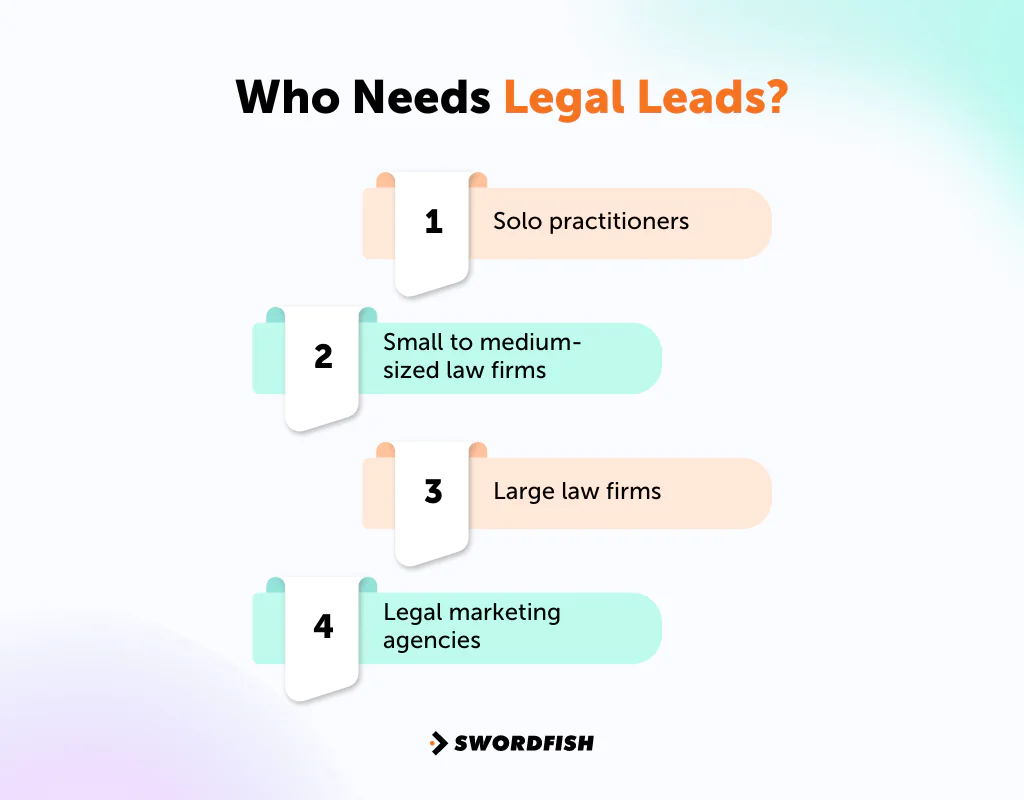
- Solo practitioners: Lawyers working alone need leads to start and grow their own practice. Leads help them find people who need legal help so they can offer their services.
- Small to medium-sized law firms: These firms want to bring in more clients to grow the business. Legal leads give them a way to reach more people who need advice or representation.
- Large law firms: Big firms use leads to find new client segments and enter new practice areas, helping them keep growing and stay competitive.
- Legal marketing agencies: These agencies work to help law firms get more clients. They use legal leads to understand who needs legal help and how to connect them with the right lawyers.
How to Generate Legal Leads Perfectly: 10 Ways
To get the best legal leads, use online tools like Swordfish AI to find contact details quickly. You can also join legal directories, build a presence on social media, and publish content that draws prospects to your website.
Beyond that, there are several proven ways to generate legal leads effectively. Let’s go through them.
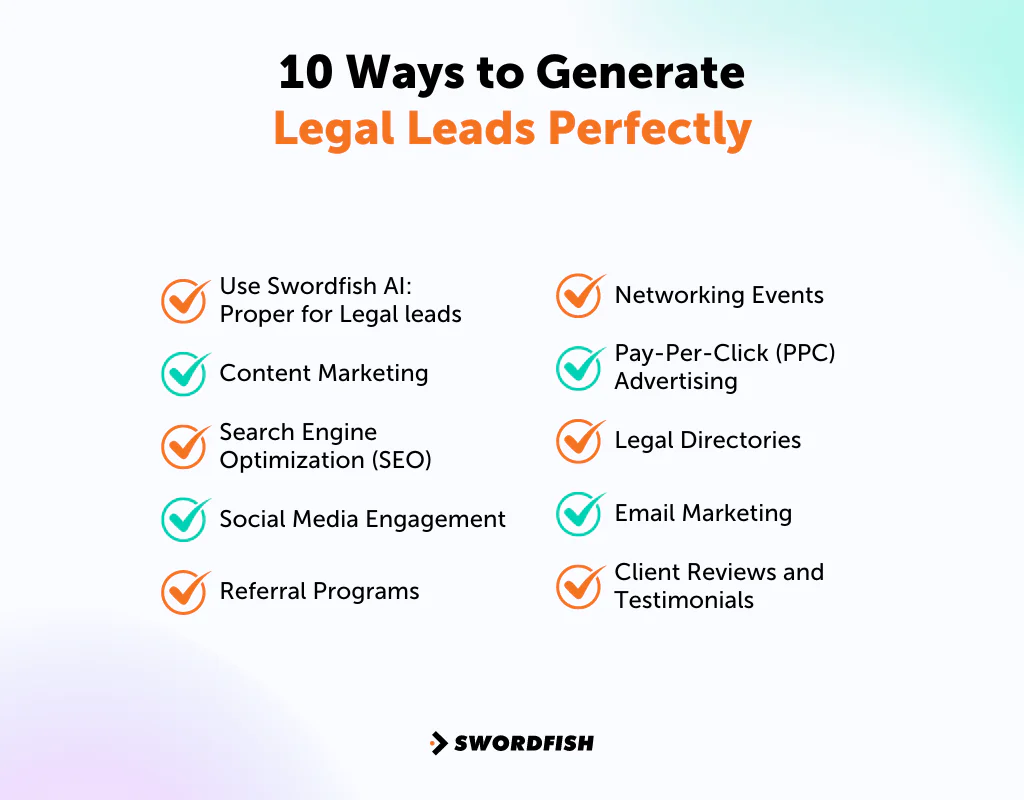
1. Use Swordfish AI: Get the Best Legal leads
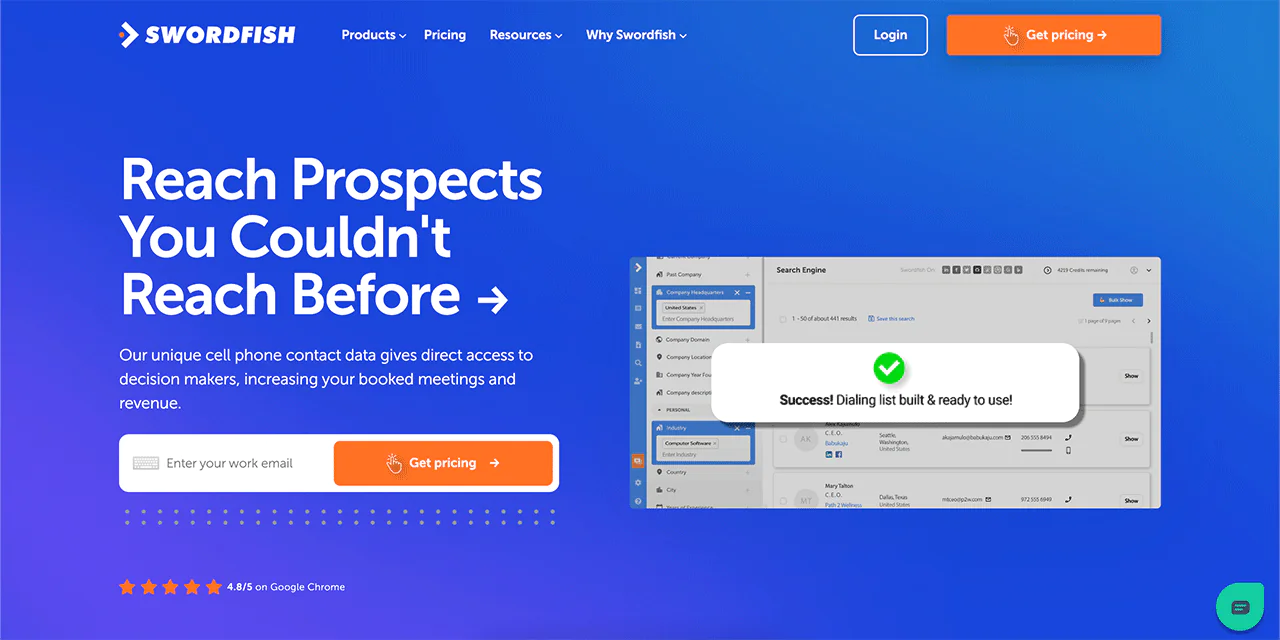
Swordfish is a solid option for legal professionals looking to generate quality leads. It provides verified contact data, including cell phone numbers and emails, which makes it easier for firms to reach decision-makers directly instead of relying on generic contact forms.
With Swordfish, you can expand lead generation efforts by pulling accurate contact information in real time, which helps you connect with potential clients before a competing firm does.
The platform is built to support a law firm’s sales pipeline in a market where speed and accuracy of outreach genuinely affect conversion.
Here’s how Swordfish AI supports legal lead generation in practice:
-
Chrome Extension for Easy Access
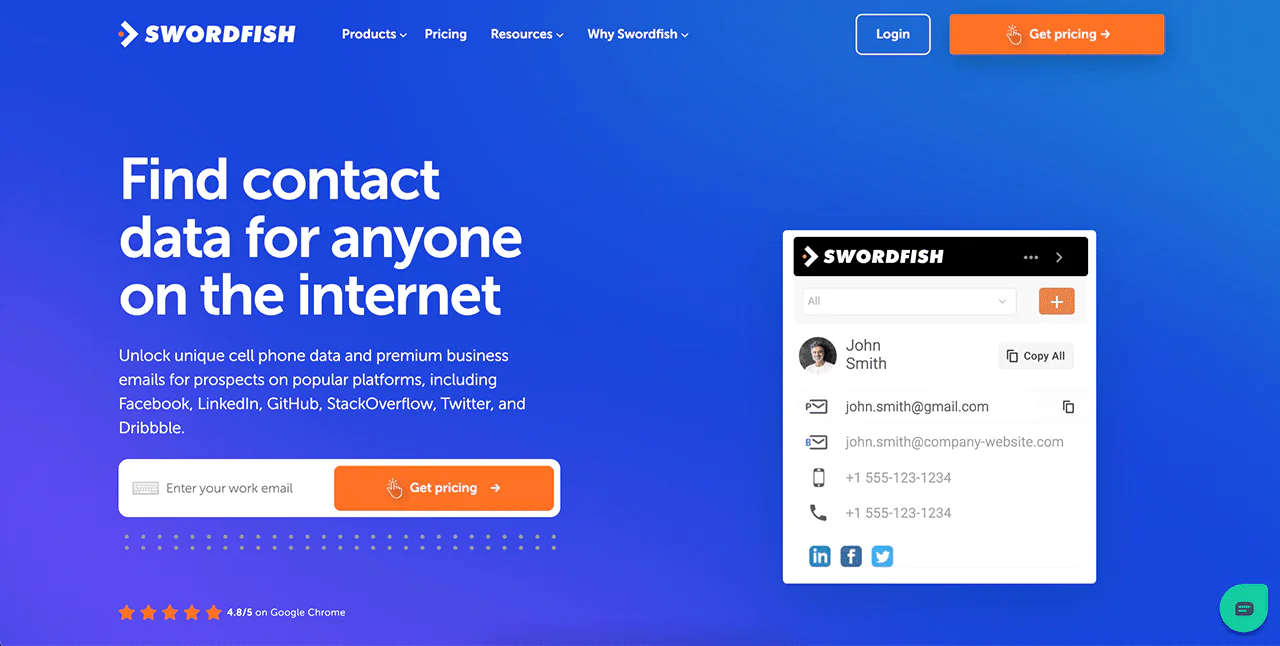
Swordfish AI offers a Chrome extension that simplifies finding contact information directly from web browsers.
While researching potential clients on LinkedIn, Twitter, or Facebook, you can use the extension to pull contact details instantly, making it faster to reach out and offer your services.
-
Prospector for Bulk Lead Generation
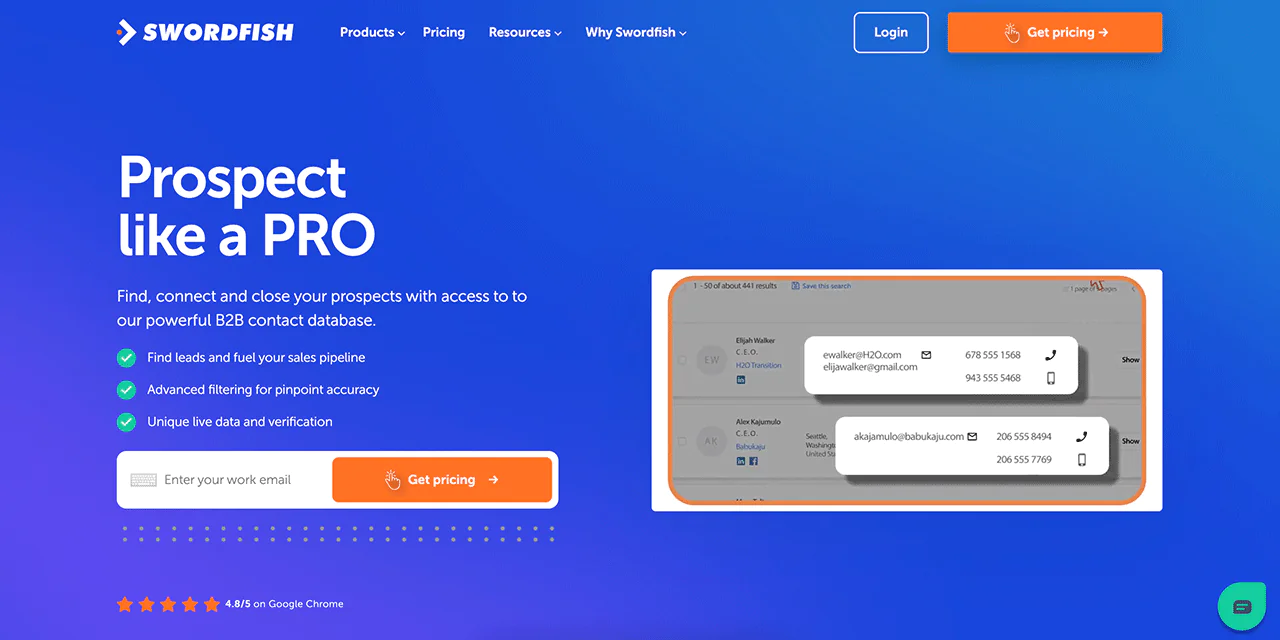
The Prospector feature lets you build targeted lists for calling or emailing, using filters to narrow the search.
You could, for example, search for individuals who may need legal help in a specific area, like real estate or personal injury, and quickly compile a list of prospects to contact.
-
File Upload to Complete Contact Databases
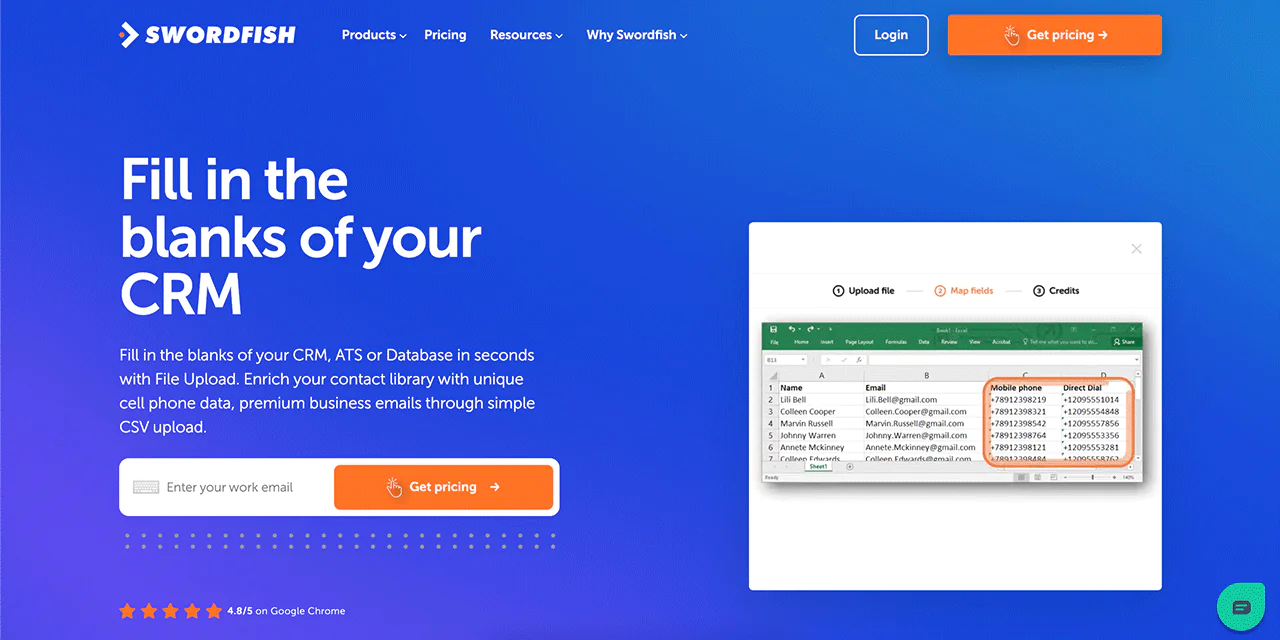
Swordfish AI’s File Upload feature fills in missing contact information in your CRM. If you have a list of leads but lack phone numbers or email addresses, uploading the file lets Swordfish populate those fields, making your database more useful.
-
Reverse Search for Detailed Information
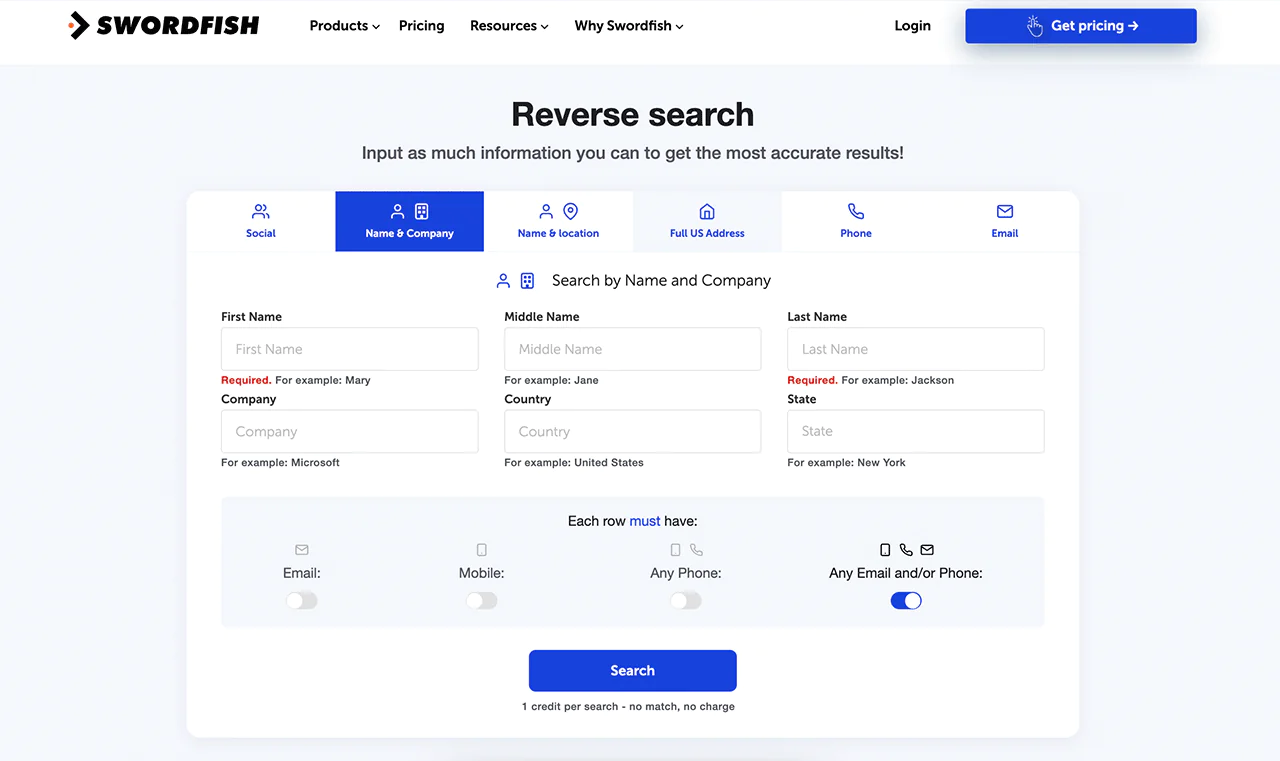
With minimal information, Swordfish AI can run a Reverse Search to fill in the rest. If you only have a name and a company, Swordfish can use that to find the person’s phone number and email, so you can reach out more effectively.
-
API Integration for Automated Processes
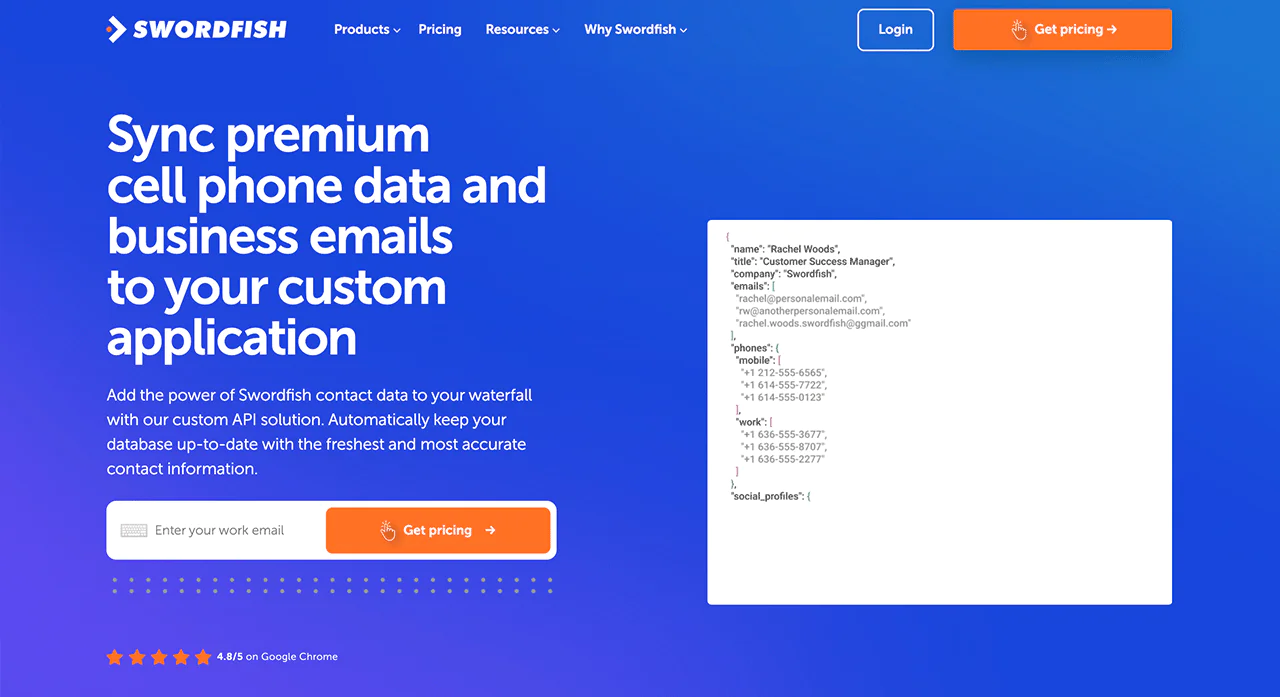
Swordfish AI’s API can integrate with your existing systems, automating the lead generation process. By connecting the API to your firm’s website or intake system, you can automatically collect and validate the contact information of visitors expressing interest in your services.
-
Bombora® Intent Data for Targeted Outreach
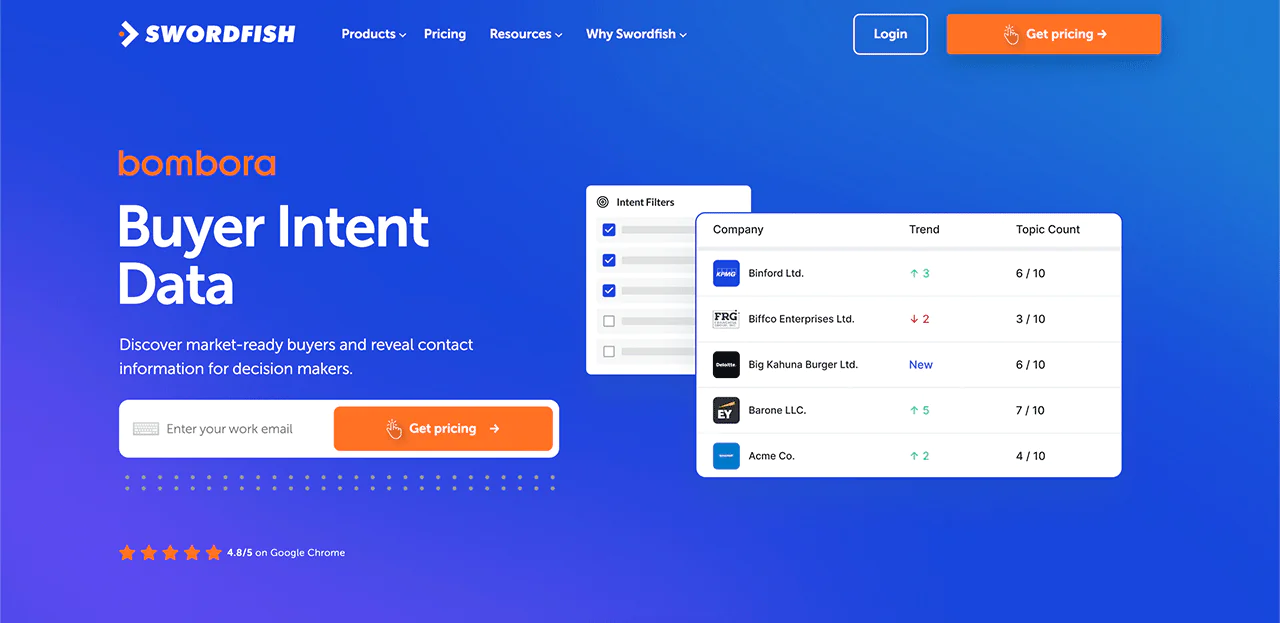
Access to Bombora® intent data through Swordfish AI helps identify businesses actively researching legal products or services, so you can spot organizations in the market for legal advice.
This lets you shape outreach around prospects who are most likely to need your services right now, rather than casting a wide net.
 Try Swordfish Ai
2. Content Marketing
Sharing useful legal information online establishes you as someone who knows the subject, which draws in people already dealing with the problem. A blog post walking through how to file for divorce, for instance, gives you something concrete to share on your site and social channels to reach people facing that exact issue.
3. Search Engine Optimization (SEO)
SEO improves your visibility when people search for legal help online. Using specific, localized phrases, such as “best divorce lawyer in [City],” in your website’s content increases the odds your site shows up when someone is actively looking.
This makes your site easier to find at the exact moment someone needs it, which is a large part of why SEO remains one of the more cost-effective ways to bring in new leads over time.
4. Social Media Engagement
Being active on social media helps you connect with potential clients before they ever call you. Platforms like LinkedIn work well for posting legal tips and joining relevant discussions.
This kind of visibility lets you demonstrate expertise directly, making it easier for people who need legal help to find you and trust you before the first conversation even happens.
5. Referral Programs
Referral programs work because satisfied clients are often willing to recommend you, especially with a small incentive attached. Offering something like a discount on future services for each new client someone refers gives clients a reason to actively mention you rather than just thinking about it.
Just make sure clients actually know about the offer, whether through an email or a mention during a meeting, since referral programs only work if people remember they exist.
6. Networking Events
Attending networking events puts you in front of potential clients directly and gives you a chance to demonstrate expertise in person. Offering a free consultation as a raffle prize at a local business event, for example, gets your name in front of a wider audience than a typical introduction would.
This kind of direct engagement tends to build trust faster than digital outreach alone.
7. Pay-Per-Click (PPC) Advertising
PPC ads target people actively searching for legal services, and you only pay when someone clicks. Setting up Google Ads for a specific service, like “estate planning lawyer,” and targeting your city or region keeps spend focused on people who are likely to convert.
8. Legal Directories
Listing your practice in legal directories makes it easier for people to find you when they’re already looking for a lawyer. Sites like Avvo are a common starting point, but the value depends on keeping the listing detailed and current, including every service you offer and how to reach you.
9. Email Marketing
Regular emails keep your firm top of mind between the moments a prospect actually needs a lawyer. A monthly newsletter with legal tips, updates on relevant law changes, and firm news, paired with a clear call to action like scheduling a consultation, keeps the relationship warm.
10. Client Reviews and Testimonials
Positive feedback from past clients builds trust with people who haven’t worked with you yet. Asking satisfied clients to leave a review on your Google Business Profile, and featuring standout testimonials on your website and social channels, gives new prospects social proof before they ever pick up the phone.
Conclusion
Generating and managing legal leads is central to growing and sustaining a law practice. No single channel does the job on its own; firms that combine a few of the methods above, and follow up quickly once a lead comes in, tend to convert better than those relying on one tactic.
Being findable online matters more each year, so investing in the systems that make lead generation and follow-up faster isn’t optional if you want to compete for the same prospects as everyone else in your market.
Want to take your law firm to the next level? Try Swordfish for a more efficient way to find and reach legal leads.
FAQs
How can I improve the quality of my legal leads?
Improve lead quality by sharpening your ad targeting and using tools that give you detailed insight into potential clients before you reach out. This helps you focus on people genuinely interested in your services, which improves conversion rates.
Are there free ways to get legal leads?
Yes. Networking, client referrals, and active engagement on social media can all generate leads without direct cost. These methods build your reputation over time and connect you with people who may need your expertise.
How do I follow up with legal leads?
Follow up quickly, ideally within minutes to a few hours, by calling or emailing. Offer useful information and suggest a specific next step, like a consultation. Fast, informative follow-up signals that you take the inquiry seriously and meaningfully improves the odds of converting the lead.