
 View Products


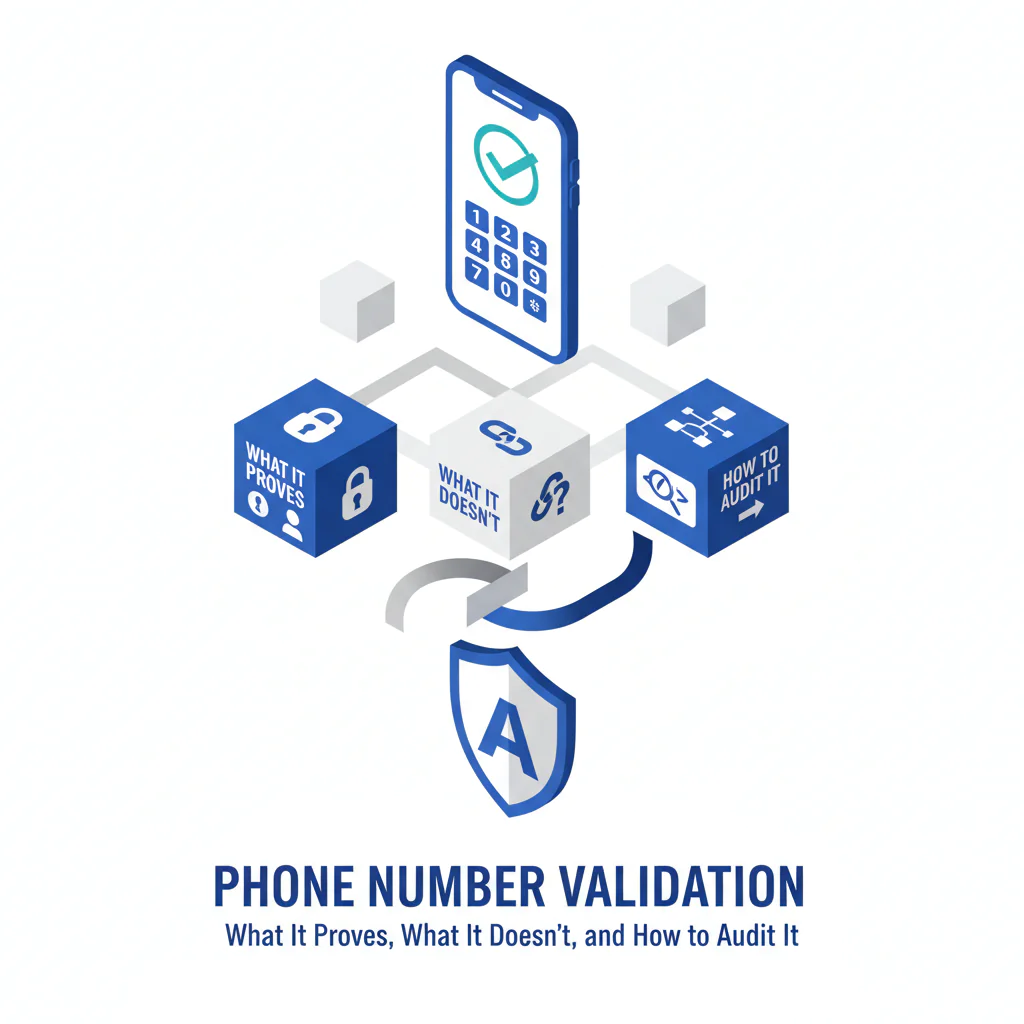
Phone number validation checks whether a number is plausible and how it should be routed; it does not prove reachability.
Byline: Ben Argeband, Founder & CEO of Swordfish.AI
Who this is for
This is for ops-minded teams troubleshooting bad lists and trying to reduce wasted attempts. If you’re cleaning a CRM, migrating a dialer, or trying to stop paying for retries caused by data decay, this is the practical version of phone number validation.
Quick verdict
- Core answer
- Phone number validation is a set of checks (syntax, carrier/type, activity signals, reassignment risk) that filters obvious failures and improves routing decisions, but it does not guarantee a number is reachable or belongs to the intended person.
- Key stat
- Results vary by seat count, API usage, list quality, and industry; porting and VoIP mean “valid” can still be wrong for outreach.
- Ideal user
- Teams that want fewer dead dials and fewer wrong-party contacts by treating validation as a decision input, not a promise.
Myth-bust: “Valid = reachable.” A number can pass formatting and even carrier checks and still be disconnected, reassigned, routed to a virtual line, or simply not the person you think it is. In practice, validation vs verification is mostly marketing unless the vendor can name which checks they run and what they return.
Decision guide
Most teams buy “phone validation” and then discover they bought a formatting check with a nicer UI. The fix is to define the level of proof you need and wire it into routing and suppression rules.
Level 1: Syntax (format) validation. This checks whether the number is structurally plausible (country code, length, characters). Business outcome: fewer immediate failures caused by bad formatting. Hidden cost: if you stop here, you still pay for downstream attempts that fail for non-format reasons.
Level 2: Carrier/type intelligence (carrier lookup + line type lookup). This attempts to identify the carrier and whether the number looks like mobile, landline, or VoIP. Business outcome: better channel routing, which reduces wasted SMS attempts on non-mobile lines and reduces manual triage. Variance explainer: porting and VoIP complicate certainty, so treat type as “current best guess,” not a permanent truth.
Level 3: Activity signals (what people call an active number check). Some tools claim they can tell if a number is active/inactive. Treat it as a risk signal. Business outcome: fewer attempts on clearly dead inventory. Variance explainer: list age and churn-heavy industries create more false confidence because numbers change status faster than datasets refresh.
Level 4: Number reassignment risk. This estimates whether a number may have changed hands. Business outcome: fewer wrong-party contacts and fewer internal escalations when outreach hits the wrong person. Variance explainer: reassigned number signals lag reality; the longer the time between capture and outreach, the wider the valid vs reachable gap gets.
Operational example (routing policy): If line type lookup says mobile and reassignment risk is not flagged, route to SMS; otherwise route to call; if activity signals look bad, suppress until re-enriched. This reduces wasted attempts by preventing “spray and pray” dialing on records that only look complete.
Checklist: Feature Gap Table
| Capability | What it actually proves | What it does NOT prove | Hidden cost if you assume too much | Where variance comes from |
|---|---|---|---|---|
| Syntax / formatting checks | The number is structurally plausible for a region | That the number exists, is assigned, or is reachable | You still pay for dial/SMS attempts that fail immediately | International formats, missing country codes, user-entered junk |
| Carrier lookup | Likely carrier at time of lookup | That the carrier is current or that the person is correct | Misrouted workflows and bad attribution in reporting | Porting frequency, data source refresh cycles, geography |
| Line type lookup (mobile/landline/VoIP) | Likely line type classification | That SMS will deliver or that a call will be answered | SMS spend on non-mobile lines; manual cleanup after failed sequences | VoIP masking, ported numbers, provider classification differences |
| VoIP detection | Probability the number routes through VoIP infrastructure | That it’s disposable, fraudulent, or unreachable | Over-filtering removes reachable prospects; under-filtering increases retries | Provider churn, DID resellers, inconsistent labeling across datasets |
| Activity signals | Heuristic likelihood a number is in service | That it will connect now, or that it belongs to your target | False confidence increases attempt volume and agent time waste | List age, regional carrier behavior, temporary suspensions |
| Reassigned number risk | Likelihood the number changed ownership | Exact current owner identity | Wrong-party contact risk and brand damage | Time since capture, high-churn segments, reporting lag |
What Swordfish does differently
Here’s what I’d audit for in a tool like Swordfish when the goal is fewer wasted attempts and fewer integration arguments.
Prioritized direct dials and mobile numbers. Outreach fails when teams treat every phone field as equal. Swordfish prioritizes returning phone numbers intended to be usable for outreach (including mobile where available), which supports routing decisions that reduce retries and manual cleanup.
Batch workflows with validation flagging. If you’re cleaning a list, you need batch outputs you can join back to your CRM and dialer logic. Swordfish Bulk Upload supports validation flagging so ops teams can segment records for call, SMS, re-enrichment, or suppression. For batch use cases, use Batch Validation via File Upload to process lists without building a custom pipeline first.
Unlimited usage under fair use (read it like an auditor). “Unlimited” often turns into throttles, exclusions, or surprise constraints once you integrate. Swordfish offers unlimited usage under a fair use policy; confirm the policy matches your seat count and API usage before you commit engineering time. Variance explainer: your effective cost still depends on seat count, API usage patterns, and how messy your source lists are.
Fits a contact data quality program. Validation is one control in a broader contact data quality system. The operational win comes from using validation outputs to drive routing, suppression, and refresh rules. If you’re building the program, start with contact data quality to align definitions and failure modes across teams.
Decision Tree: Weighted Checklist
This checklist is weighted by standard failure points that create real cost: wasted attempts, wrong routing, reassignment risk, and integration overhead. Use it to evaluate a vendor or your internal approach.
- High priority: Clear definition of valid vs reachable in docs and outputs (prevents false confidence and wasted attempt volume).
- High priority: Multiple levels of phone number validation (syntax + carrier/type + reassignment risk) (prevents buying a formatting check and calling it “verification”).
- High priority: Usable line type lookup for routing (reduces SMS attempts to non-mobile and reduces manual triage).
- High priority: Explicit handling notes for VoIP and porting (reduces misclassification and downstream disputes between ops and sales).
- High priority: Bulk processing with validation flagging (reduces labor cost during list cleanups and migrations).
- Medium priority: Predictable API behavior under load (reduces integration rework and campaign-day failures).
- Medium priority: Auditability: exportable results and stable field definitions (reduces “we can’t reproduce it” QA loops).
- Medium priority: Workflow fit: suppression tags for risky records (reduces repeat outreach to likely-bad numbers).
- Lower priority: UI polish (it doesn’t fix data decay).
How to test phone number validation with your own list (5–8 steps)
- Pull a representative sample from your CRM: recent leads, older leads, and any purchased/imported segments. List quality drives outcomes, so don’t cherry-pick.
- Freeze the input (same file, same formatting) so you can reproduce results during QA and vendor discussions.
- Run batch validation and capture outputs you can join back to records. If you’re using Swordfish, use Batch Validation.
- Segment by validation level: syntax failures, type unknown, VoIP-flagged, reassignment-risk flagged, and “clean” records. Store validation outputs in separate fields; don’t overwrite the original phone field until you’ve audited downstream impact.
- Route each segment differently for a short pilot: SMS only where line type supports it; call fallback where it doesn’t; suppress high reassignment risk until refreshed.
- Track operational waste using your own system outcomes: failed attempts, retries, wrong-party responses, and agent time spent on cleanup.
- Re-run after a delay on the same sample to observe decay and porting effects. If outputs swing wildly, plan for refresh cadence and budget accordingly.
- Decide based on integration cost: field mapping, exportability, and whether the vendor can explain discrepancies without hand-waving. Write a simple data contract: which system owns the phone field, and which fields store validation outputs.
Limitations and edge cases
Porting breaks certainty. Carrier lookup and line type lookup can be wrong when numbers move between carriers or when datasets lag. Business outcome: routing based on stale type increases retries and agent time.
VoIP complicates classification. VoIP detection is a routing signal, not a verdict. Business outcome: over-filtering can remove reachable prospects; under-filtering can increase wasted attempts if your audience uses disposable lines.
“Active” is not the same as “reachable.” Even if a number is in service, it may not connect, and it may not belong to your intended contact due to number reassignment. Business outcome: you still need suppression rules based on outcomes, not just validation outputs.
Reassignment risk is time-sensitive. The longer the gap between capture and outreach, the less your original validation means. Business outcome: long nurture cycles and old CRM records need refresh, or you pay for decay later.
Integration overhead is a cost center. If your CRM, dialer, and enrichment tools disagree on field definitions (mobile vs VoIP vs landline), you’ll spend time reconciling instead of executing. Business outcome: define a single internal contract for phone fields and map vendor outputs to it once.
Troubleshooting Table: Conditional Decision Tree
- If your main failure is obvious junk (bad formats, missing country codes), then implement Level 1 syntax validation at ingestion and reject/repair records before they hit the CRM.
- If you run SMS or need channel routing, then require Level 2 outputs: carrier lookup + line type lookup, and route SMS only when the line type supports it.
- If you’re seeing wrong-party contacts or complaints, then add Level 4 reassigned number risk handling and suppress or re-enrich high-risk records before outreach.
- If you suspect VoIP masking, then use VoIP detection as a routing/suppression signal, not an automatic delete rule, to avoid throwing away reachable inventory.
- If you need to clean thousands of records quickly, then use Batch Validation to flag records in bulk and feed the results into your suppression and routing rules.
- Stop condition: If a vendor cannot explain valid vs reachable in plain terms and cannot describe how porting and VoIP affect certainty, stop the evaluation. You’re buying ambiguity that shows up later as wasted attempts and internal blame.
Evidence and trust notes
This is a technical explainer, not a promise that any provider can guarantee reachability. Beyond syntax checks, phone number validation is probabilistic because carrier data changes, numbers get ported, and numbers get reassigned. That’s why outcomes vary by seat count (how many users operationalize the data), API usage (how often you refresh), list quality (how old and how sourced), and industry (churn rates differ).
If you can’t export raw outputs, you can’t audit drift, and drift is where costs hide. If the vendor changes field definitions without versioning, your historical comparisons break and you’ll waste time reconciling dashboards.
What to demand as outputs (so you can audit it):
- syntax_valid (pass/fail)
- carrier (value returned by carrier lookup)
- line_type (mobile/landline/VoIP/unknown from line type lookup)
- voip_indicator (flag from VoIP detection)
- reassignment_risk (flag or bucket indicating reassigned number risk)
If you want a practical walkthrough of phone number verification in an ops workflow, see how to verify a phone number. If your routing depends on mobile vs landline, see how to find out if a number is a cell phone or landline.
FAQs
What is phone number validation?
Phone number validation is a set of checks that can include syntax validation, carrier/type intelligence, activity signals, and reassignment risk. It reduces obvious failures and improves routing decisions, but it does not guarantee reachability.
What does “valid vs reachable” mean?
Valid usually means the number looks plausible and may map to a carrier/type. Reachable means a call or message will connect to the intended person at the time you try. Porting, VoIP, blocking, and number reassignment are why those two concepts diverge.
Is phone validation the same as phone number verification?
Teams use the terms interchangeably, but vendors often use “verification” as a label for the same underlying checks. Ask which level is being performed: syntax only, carrier/type, activity signals, or reassignment risk.
Can line type lookup tell me whether a number can receive SMS?
Line type lookup helps route SMS to likely-mobile numbers, which reduces wasted SMS attempts. It still won’t guarantee delivery because porting and VoIP can blur classification.
How should I treat VoIP detection results?
Use VoIP detection to adjust routing and risk, not to automatically discard records. The business tradeoff is between reducing retries and keeping reachable inventory.
How often should I re-validate numbers?
Re-validate when the time gap between capture and outreach is large enough that reassignment risk becomes plausible. The older the list, the more you should budget for refresh, because data decay is predictable even when exact rates aren’t.
Next steps
- Day 0–1: Write down your internal definition of “validated” (syntax vs carrier/type vs reassignment risk) and document valid vs reachable for stakeholders.
- Day 2–3: Run a representative sample through Batch Validation and segment outputs into: route now, re-enrich, suppress.
- Week 1: Map outputs into your CRM/dialer fields once, then enforce ingestion rules so bad formats don’t re-enter.
- Week 2: Treat this as phone number hygiene: add a refresh cadence for older records and track wasted attempts and wrong-party contacts as the costs you’re trying to buy down.
About the Author
Ben Argeband is the Founder and CEO of Swordfish.ai and Heartbeat.ai. With deep expertise in data and SaaS, he has built two successful platforms trusted by over 50,000 sales and recruitment professionals. Ben’s mission is to help teams find direct contact information for hard-to-reach professionals and decision-makers, providing the shortest route to their next win. Connect with Ben on LinkedIn.