
 View Products


Last updated: September 3, 2026
ZoomInfo maintains one of the largest B2B databases on the market, covering professional and company profiles across nearly every industry. Ask ten different teams what they use it for and you’ll get ten different answers, ranging from sales prospecting to account-based marketing to recruiting.
ZoomInfo is primarily used to improve sales, marketing, operations, and recruitment strategies with its deep database and analytics. It excels in account-based marketing, unlocking insights, enrichment, engaging customers, and accelerating success.
Below, we break down exactly how each department puts ZoomInfo to work, from finding potential clients to tightening up recruitment pipelines.
What is ZoomInfo?
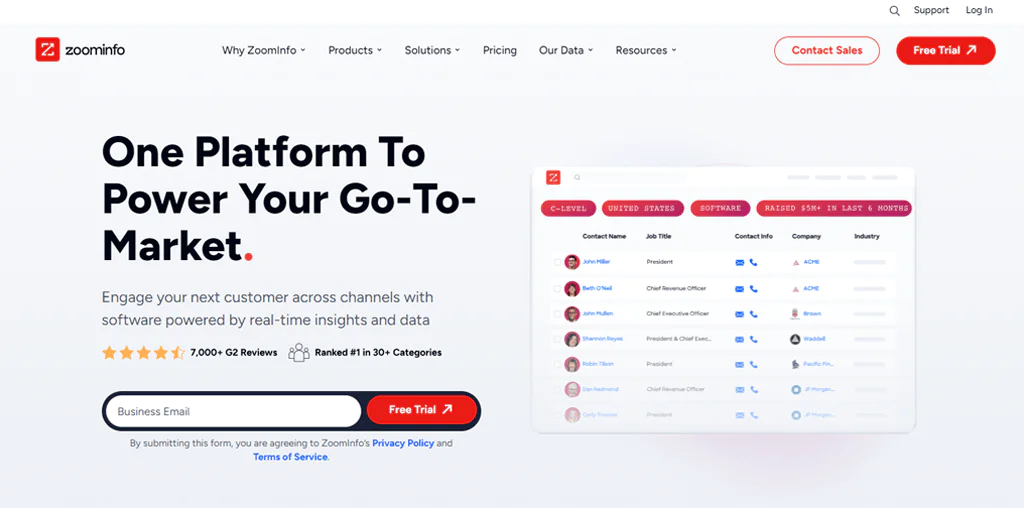
ZoomInfo is a cloud-based, lead generation platform that provides comprehensive information on businesses and professionals. It helps users find, connect, and engage with their target audience through detailed company profiles, contact data, and market insights.
The company traces its roots to 2007, when Henry Schuck founded DiscoverOrg with the goal of helping businesses grow through better data. In 2019, DiscoverOrg acquired Zoom Information Inc. and adopted the ZoomInfo name, combining both companies’ datasets into a single B2B intelligence platform. The following year, ZoomInfo went public on the Nasdaq, a listing widely described at the time as one of the largest software IPOs of that decade.
Today, ZoomInfo equips go-to-market teams to reach out, win over, and grow at scale by providing unified tools for sales, marketing, and operations. The platform grants access to a wide range of company, contact, and intent data, making it easier for teams to run joint campaigns and automate outreach worldwide.
How Does ZoomInfo Get Their Data?
ZoomInfo’s database is built from a mix of sourcing methods rather than a single feed, which is worth understanding before you rely on it for outreach. Here’s how the process generally works.
Collecting Broad Information
ZoomInfo pulls data from online platforms, specialized third-party providers, and contributions from a community network. This layered approach is meant to produce a database filled with business information and buying signals rather than a single static list.
Refining and Verifying Data
Raw data points on their own aren’t useful until they’re checked. ZoomInfo applies natural language processing, AI, machine learning, and human data scientists to verify accuracy, with much of that verification happening close to real time so records don’t go stale.
Keeping Data Current
Contact and company information changes constantly, so ZoomInfo tests, updates, and rechecks records on an ongoing basis, adjusting or removing entries as changes occur.
In our review of ZoomInfo, we’ve noted its commitment to data quality, reinforced by security and privacy standards intended to keep the data both accurate and compliant with applicable privacy laws.
What is ZoomInfo Used for?
ZoomInfo is primarily used by sales, marketing, operations, and recruitment teams to access comprehensive business and contact data for lead generation, market analysis, data enrichment, and talent sourcing.
Here’s a closer look at each use case.
1. ZoomInfo is Used for Sales
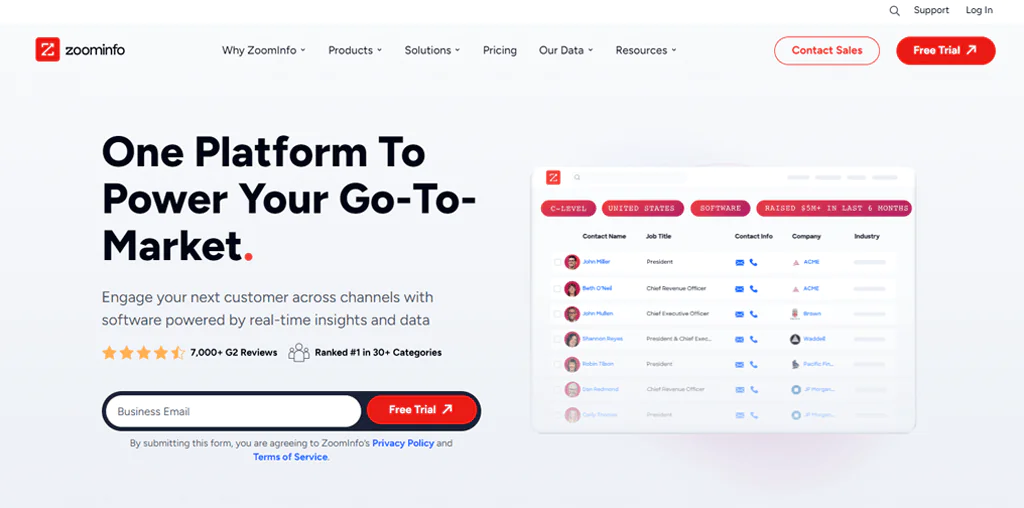
ZoomInfo SalesOS gives sales teams a set of features built around efficiency and reach, anchored by a contact database that includes direct dial phone numbers and verified email addresses at scale.
That resource lets sales professionals sharpen their account lists so outreach lines up with a defined Ideal Customer Profile (ICP) and reaches actual decision-makers rather than generic inboxes.
Here’s what ZoomInfo SalesOS is typically used for.
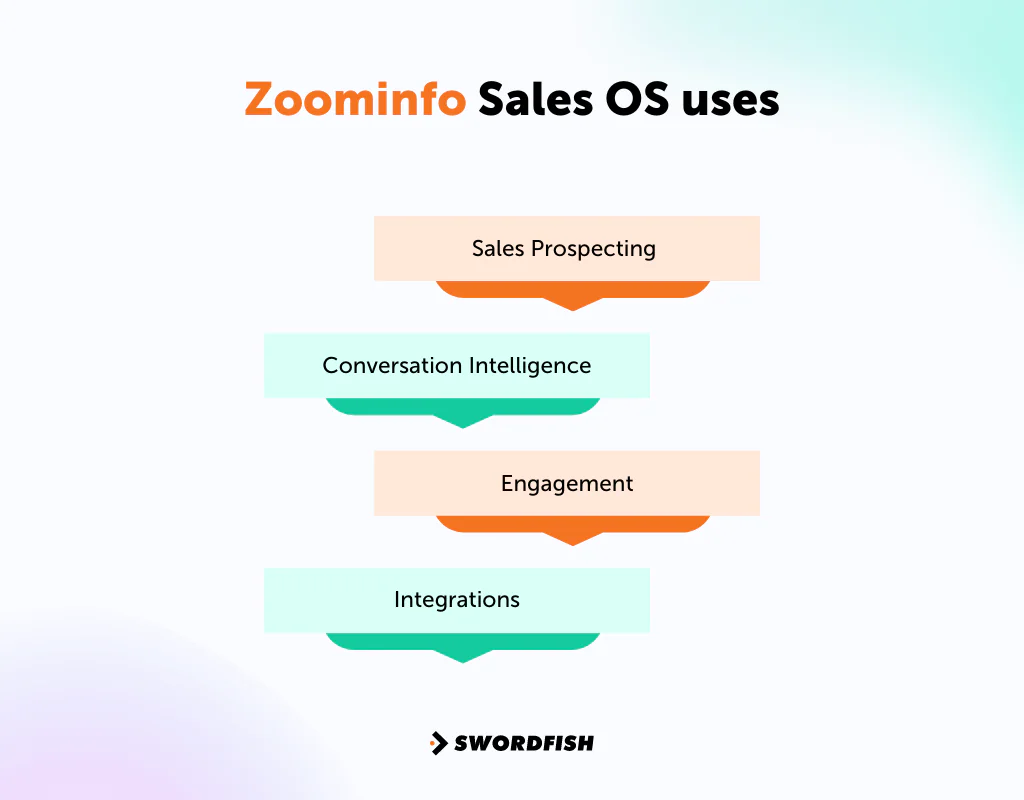
Sales Prospecting
Sales Prospecting is built to narrow your search for new customers using data and behavioral signals that flag companies likely to buy soon, which keeps prospecting efforts focused instead of scattershot.
ZoomInfo Intent goes further, surfacing buyers actively researching solutions in your category by tracking a large volume of professional connections and search activity. That signal helps a team prioritize prospects who are already in a buying window.
ZoomInfo’s WebSights tool works differently: it identifies which companies are visiting your website anonymously and turns those visits into named leads, giving reps a reason to reach out while interest is fresh.
Conversation Intelligence
Conversation intelligence turns customer calls, meetings, and emails into a feedback loop. Instead of guessing what worked in a pitch, you can review the actual exchange and adjust.
Chorus, ZoomInfo’s conversation intelligence product, analyzes customer interactions to flag which talk tracks are landing and which aren’t, which is useful for refining messaging over time.
It’s also a practical onboarding tool. New reps can study recordings tied to closed-won deals to learn what worked faster than they would by shadowing calls alone, which shortens ramp time for a growing team.
Engagement
SalesOS engagement tools cover email and phone automation as well as website chat, giving reps a way to reach prospects across channels without juggling separate tools.
Contact tracking lets teams monitor key accounts closely, which matters for spotting personnel changes or budget shifts that could affect an existing deal or open a new one.
ZoomInfo Chat adds a data-driven layer on top, engaging best-fit visitors on your site in real time and shortening the path from visit to conversation.
Integrations
Here’s a table categorizing four tools each for sales, marketing, recruiting, and team preferences with their respective features.
|
Category |
Tool |
Features |
|
Sales |
Salesforce |
CRM |
| Zoho CRM |
CRM |
|
|
People.ai |
Relationship Intelligence, Sales Engagement & Intelligence, CRM | |
| Gong Engage |
Sales Engagement & Intelligence, Revenue Intelligence |
|
|
Marketing |
Marketo |
CRM, Marketing Automation |
|
Eloqua |
CRM, Marketing Automation | |
| HubSpot |
Dialer Automation, CRM, Marketing Automation |
|
| Recruiting |
Salesforce for TalentOS |
CRM |
| JazzHR |
Applicant Tracking System (ATS) |
|
|
JobAdder |
Applicant Tracking System (ATS) | |
| Zoho Recruit |
Applicant Tracking System (ATS) |
|
|
Team Picks |
Gong Engage |
Sales Engagement & Intelligence, Revenue Intelligence |
| People.ai |
Relationship Intelligence, Sales Engagement & Intelligence, CRM |
|
|
Databricks |
Data Warehouse | |
| Eloqua |
CRM, Marketing Automation |
This table shows a selection of tools available in the ZoomInfo Marketplace.
Integrations matter because they let sales teams automate routine data entry and focus energy on selling rather than admin work.
Workflows extend this further, letting a team respond automatically to market signals like buyer intent or funding news, triggering outreach without a manual trigger.
Data enrichment rounds this out, pushing ZoomInfo’s B2B data into your CRM or marketing automation platform so records stay current without manual updates.
2. ZoomInfo is Used for Marketing
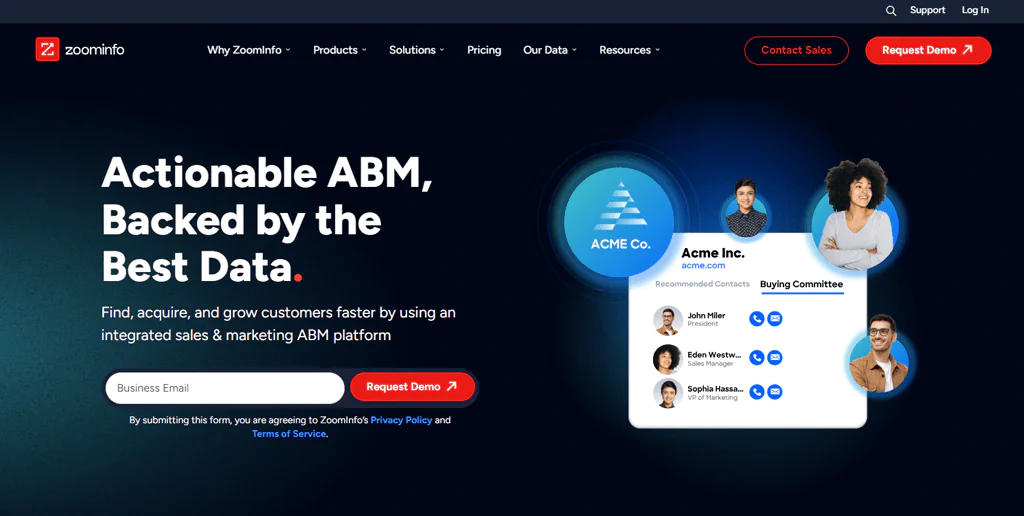
ZoomInfo for Marketing is built around getting the right message to the right person at the right time, backed by company and contact profiles along with detailed firmographic attributes that help teams build campaigns around actual buying behavior rather than guesswork.
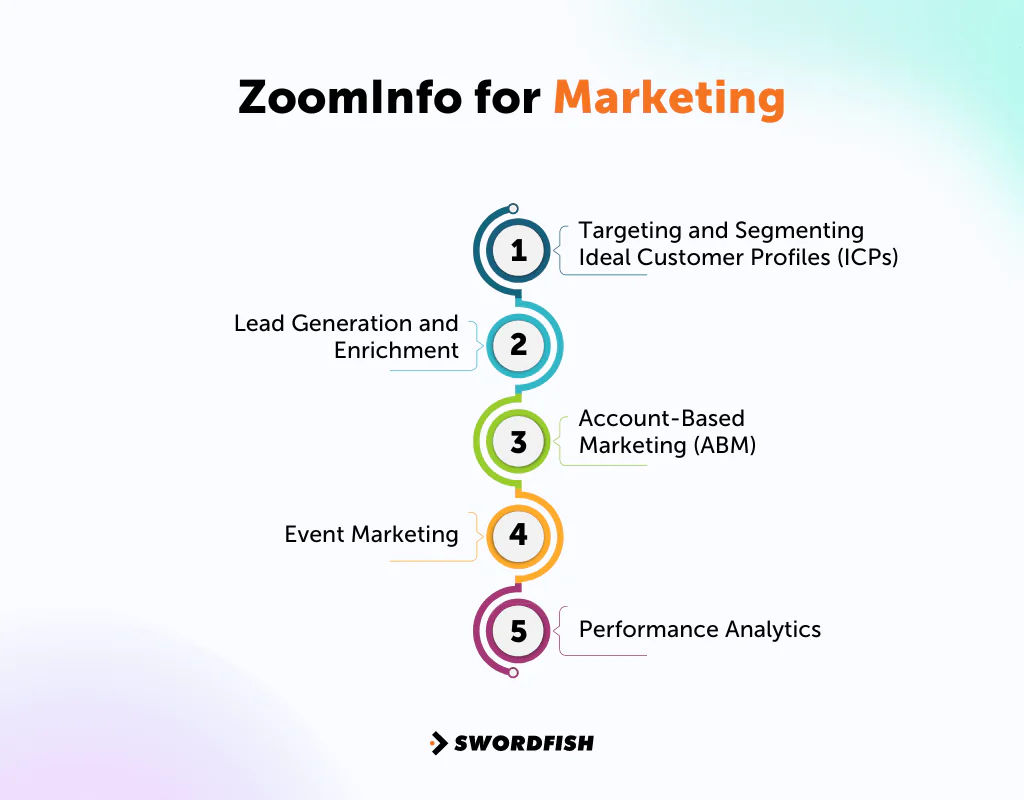 Targeting and Segmenting Ideal Customer Profiles (ICPs)
Working from ZoomInfo’s database, marketers can define ideal customer profiles with more precision, which keeps spend focused on segments most likely to convert instead of broad, unqualified lists.
Once that profile is clear, it’s easier to tailor messaging to the specific interests and pain points of that audience, which tends to improve campaign performance.
Lead Generation and Enrichment
Generating a lead list is just the starting point. Enrichment adds detail, current phone numbers, verified emails, and firmographic context, so outreach stays relevant instead of going stale within weeks.
Account-Based Marketing (ABM)
ABM depends on precision, and ZoomInfo supports that by surfacing companies most likely to convert so marketers can build personalized plans around them. A tighter, account-specific approach tends to strengthen relationships with key accounts and shorten the sales cycle.
Event Marketing
Knowing who to invite matters as much as the event itself. ZoomInfo helps identify likely attendees based on interest and engagement history, and its IP-to-company mapping capability supports more accurate post-event follow-up, which improves the odds of turning attendees into leads.
Performance Analytics
ZoomInfo’s analytics tools let marketing teams track campaign performance in real time, which helps identify what’s resonating with an audience and where to adjust strategy going forward.
3. ZoomInfo is Used for Operations
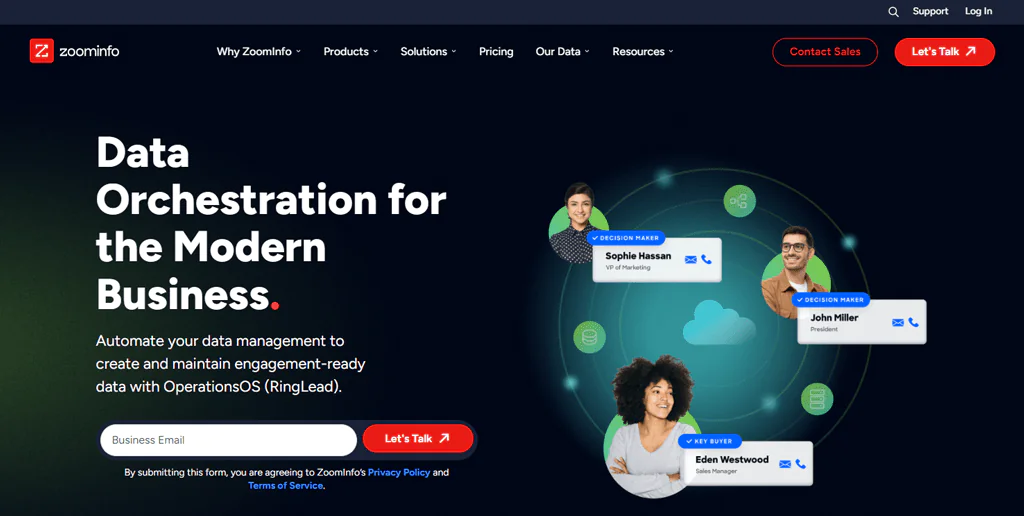
ZoomInfo OperationsOS is aimed at simplifying data management so records stay ready for outreach without constant manual cleanup. It’s particularly useful for businesses trying to automate data orchestration across systems.
Here are its core uses.
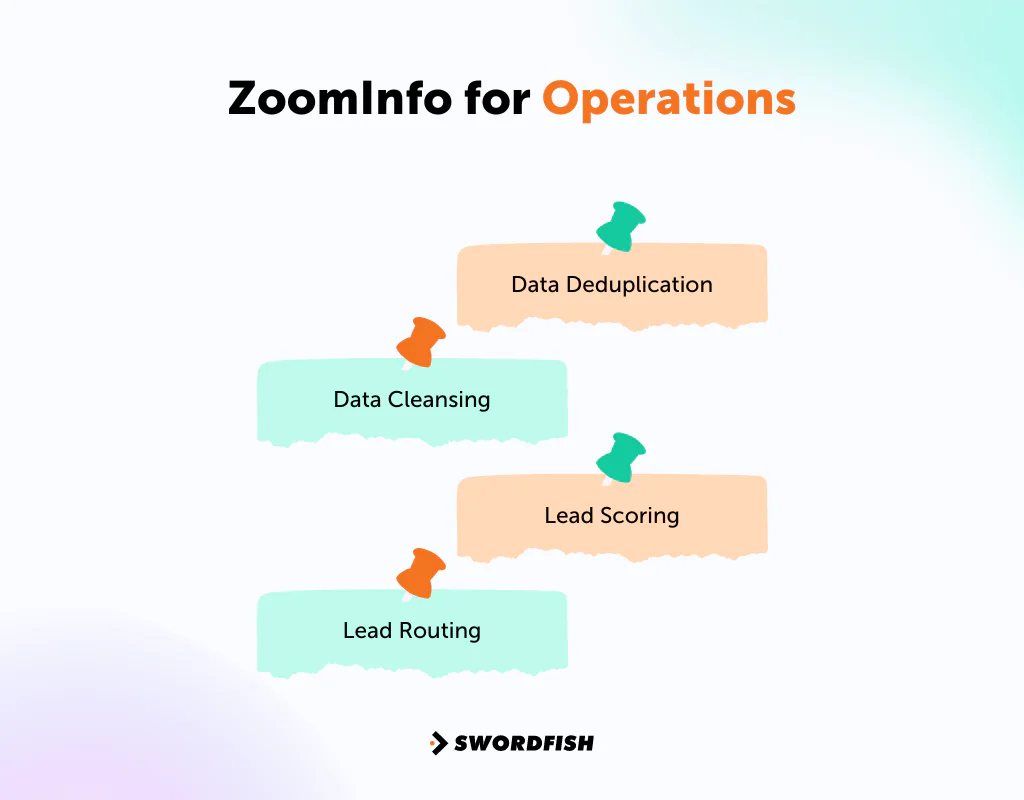
Data Deduplication
Data Deduplication automatically finds and merges duplicate records, which keeps the database organized and avoids the confusion of multiple copies of the same contact or account.
Because you can set your own rules for how duplicates are identified and merged, OperationsOS gives teams control over how strict or loose that matching should be. This attention to data quality is one reason ZoomInfo’s pricing tends to run higher, though for teams with messy CRM data it can be a worthwhile investment.
Data Cleansing
The data cleansing feature corrects errors and inconsistencies across records. A drag-and-drop interface standardizes elements like phone numbers and company names so the end result is uniform and usable.
Automated cleansing means teams aren’t second-guessing whether the data in front of them is accurate.
Lead Scoring
Lead Scoring prioritizes leads and accounts based on potential value, segmenting by criteria such as job function, seniority, and industry so effort goes toward the contacts most likely to convert.
Something many ZoomInfo competitors don’t offer is a choice of scoring models, including account-based and intent-based scoring, which lets teams customize their approach across different market segments and tighten a sales funnel.
Lead Routing
Lead Routing removes the guesswork from assigning leads to reps. It automates territory management and uses round-robin distribution to keep assignments fair, which supports a shorter sales cycle and optimized conversion rates.
Real-time monitoring of the distribution process means leads get followed up on promptly instead of sitting in a queue.
ZoomInfo for Recruitment
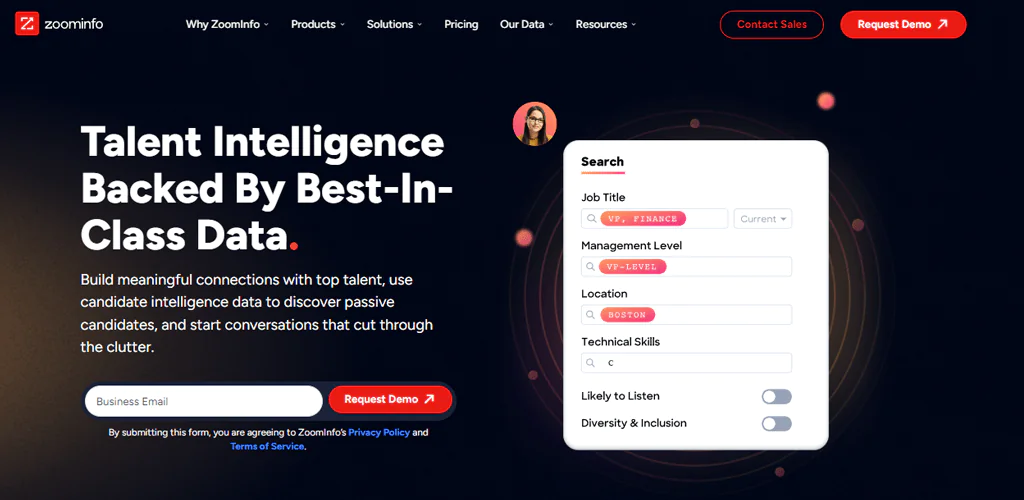
ZoomInfo TalentOS changes how recruiters source talent by giving direct access to detailed candidate and company intelligence.
Recruiters can pinpoint individuals likely open to new opportunities using search filters like company firmographics and organizational charts, or identify organizations that appear to be actively staffing, then connect with decision-makers through the recruiting database.
TalentOS also surfaces detailed company pages, revenue figures, notable updates, and employee counts, giving recruiters business development context alongside candidate data.
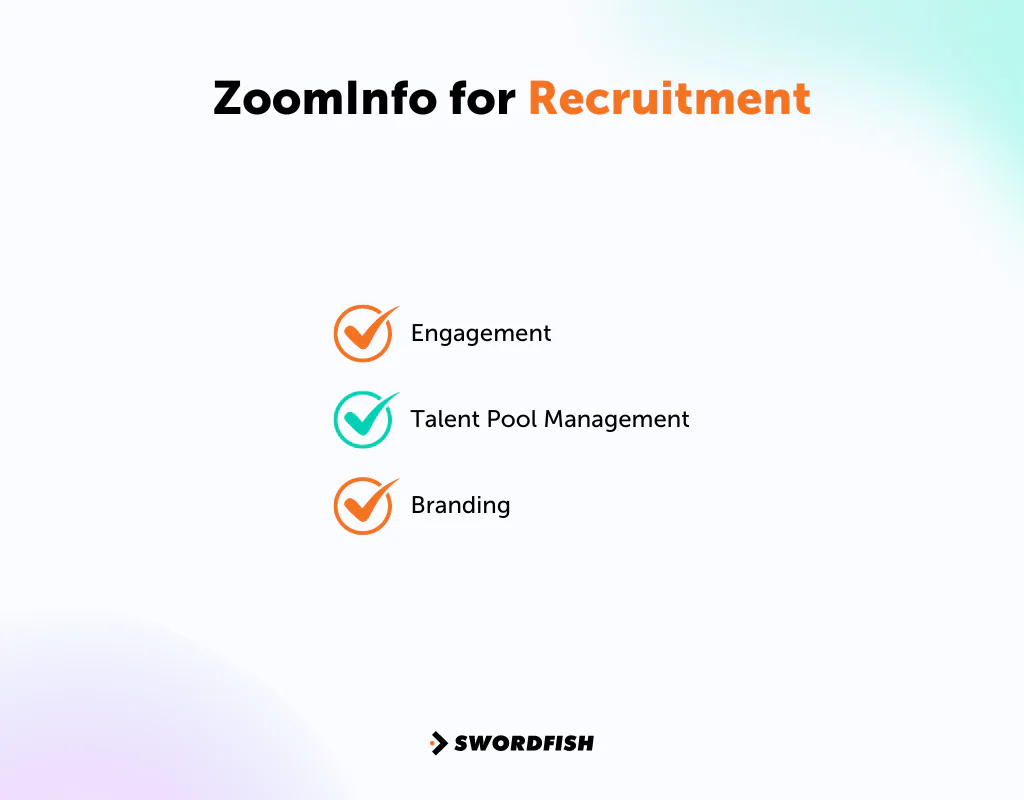
Engagement
Engagement in recruitment is about making meaningful connections, and TalentOS supports that with automated touchpoints designed to increase hiring odds and reduce time-to-fill.
Personalized emails, auto-dialer calls, and drip campaigns that combine multiple channels into automated sequences all help keep candidates engaged instead of going cold after the first outreach.
Talent Pool Management
Managing a talent pipeline efficiently matters just as much as sourcing candidates in the first place. Projects let recruiters organize searches by open role and build separate talent pools per job, which supports collaboration and tracking as candidates move through hiring stages.
The TalentOS Chrome Extension lets recruiters view candidate data while sourcing across the web and act on strong candidates immediately, while ATS integrations let top candidates be exported directly into an ATS or CRM without manual re-entry.
Branding
In a competitive hiring market, employer brand matters. TalentOS helps companies collect employee reviews and testimonials to strengthen their online reputation and build recruitment marketing material.
By combining sourcing, engagement, and branding tools into one platform, TalentOS is meant to reduce the number of separate tools a recruiting team has to juggle.
ZoomInfo Pricing
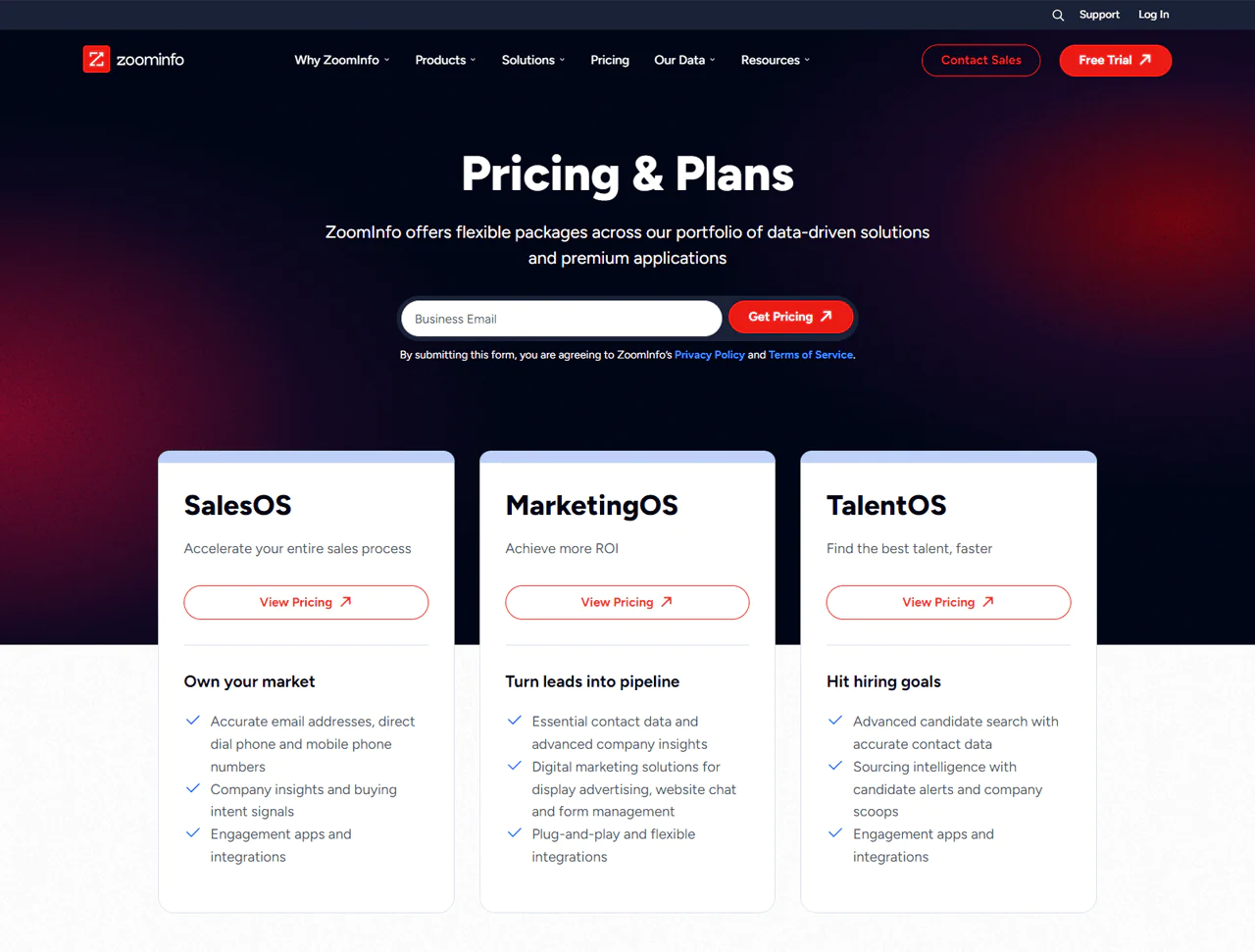
ZoomInfo’s pricing depends on the chosen features, number of licenses, and how much credit is used. It offers SalesOS for contact information and buyer insights, MarketingOS for digital marketing data and tools, and TalentOS for recruitment support with candidate information and alerts.
Exact pricing isn’t publicly disclosed by ZoomInfo, but based on figures we’ve gathered from various sources, plans have generally started around the following tiers:
- The Pro+ Plan, aimed at meeting a variety of business requirements, beginning around $8,000 per year.
- The Advanced Plan, which offers more benefits including 1,000 monthly credits per user, priced around $12,000 annually.
- The Elite Plan, offering the highest level of data access and features, priced around $40,000 annually.
Because ZoomInfo doesn’t publish pricing directly, it’s worth confirming current figures with a sales rep before budgeting, since packaging and credit allowances shift over time.
Looking for a Better Alternative to ZoomInfo? Try Swordfish AI
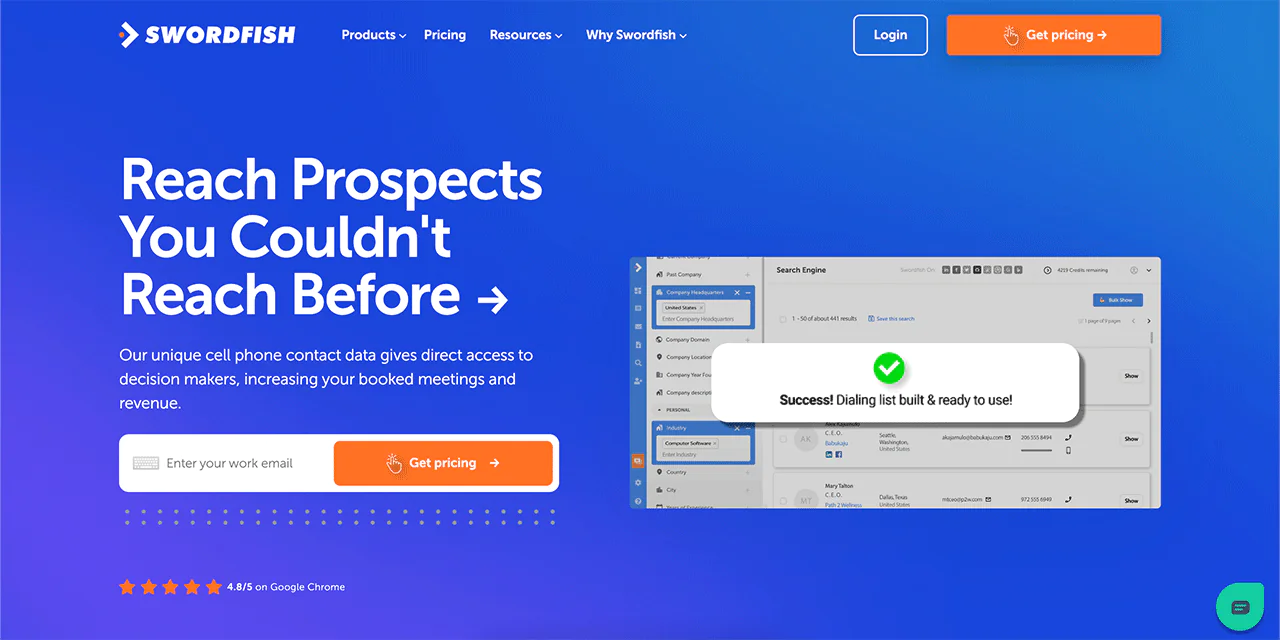
Swordfish AI is one of the top lead generation tools on the market, built around a verification process that prioritizes accurate cell phone numbers before anything else.
Where ZoomInfo leans heavily on company-level and desk-line data, Swordfish AI focuses on verified, up-to-date cell phone numbers alongside business email data, filtered through a matching process built to surface the most relevant records rather than the largest possible list.
For teams working with healthcare providers specifically, this distinction matters. Reaching a physician, nurse practitioner, or clinical decision-maker often depends on a direct mobile number rather than a shared front-desk line, and outreach also needs to account for provider-specific compliance considerations around consent and communication channels.
Swordfish AI reports high first-call and overall connection rates across its provider network, and is used by sales development representatives who need precise contact information paired with responsive support and flexible pricing plans.
Comparison Table: ZoomInfo Vs Swordfish AI
Here’s a table showing how the two compare.
|
Aspect |
Swordfish AI | ZoomInfo |
| Pricing | Custom pricing available |
Varies based on functions, licenses, and credits. Options include SalesOS, MarketingOS, and TalentOS. |
|
Database Size |
Large dataset with exclusive cell phone data and premium business emails. | Extensive professional and company profile database. |
| Sales Prospecting | Emphasis on direct cell phone numbers for sales prospecting. |
Features Conversation Intelligence; prospecting backed by patented technology. |
|
Chrome Extension |
Seamless syncing with CRM and ATS. | Supports sales engagement, Dialer Automation. |
| Marketing Campaigns | Includes Bombora® Intent Data for identifying ready-to-purchase businesses. |
Uses an intent engine built on IP-to-org and keyword-to-device signal pairings. |
|
CRM Integration |
Integrates with CRM platforms; features include Salesforce Sync, Zapier, Pipedrive. | Extensive ATS integration; categorized apps like People.ai, Marketo, Cloudtalk, with an app market available. |
| Unique Features | Cell phone verification system, Chrome Extension, API, Reverse Search. |
Website chat, Data as a Service, API and Webhooks, Employer Branding. |
Key features of Swordfish AI
Compared against ZoomInfo, Swordfish AI’s feature set centers on filling in the contact gaps that broader B2B platforms sometimes leave. Here are the key features.
-
Chrome Extension
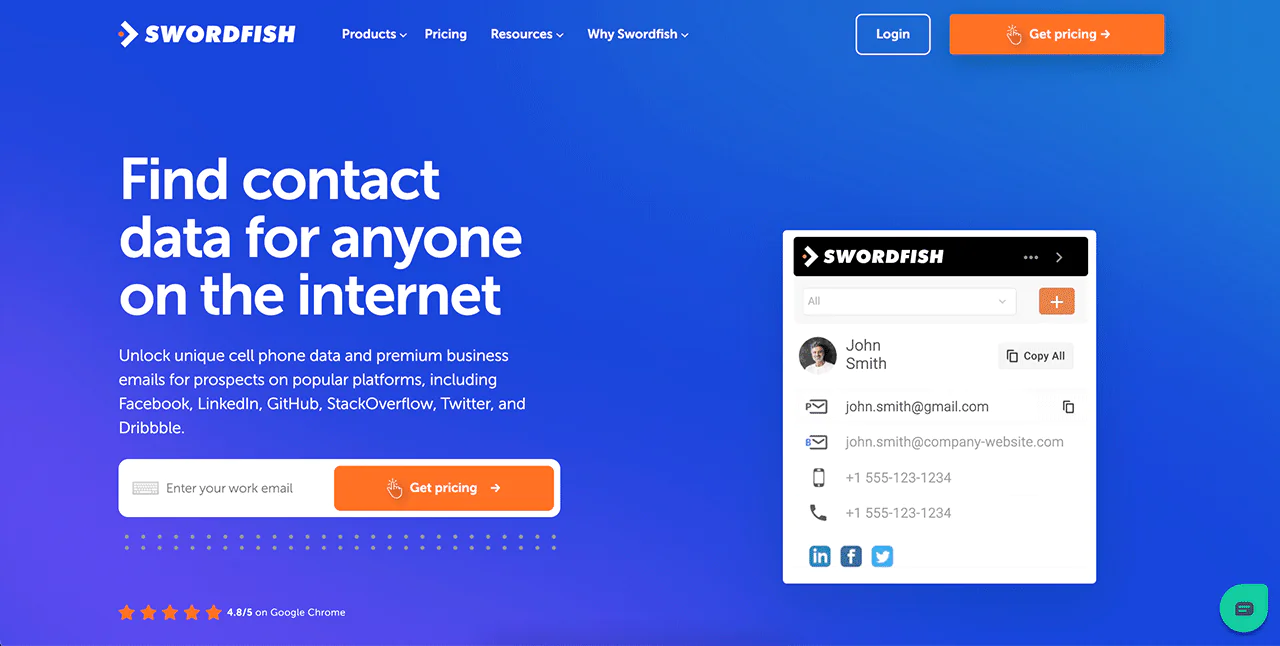
The Chrome Extension lets you extract contact details directly from platforms such as Facebook, Twitter, and LinkedIn, without switching between tabs.
-
Prospector Tool
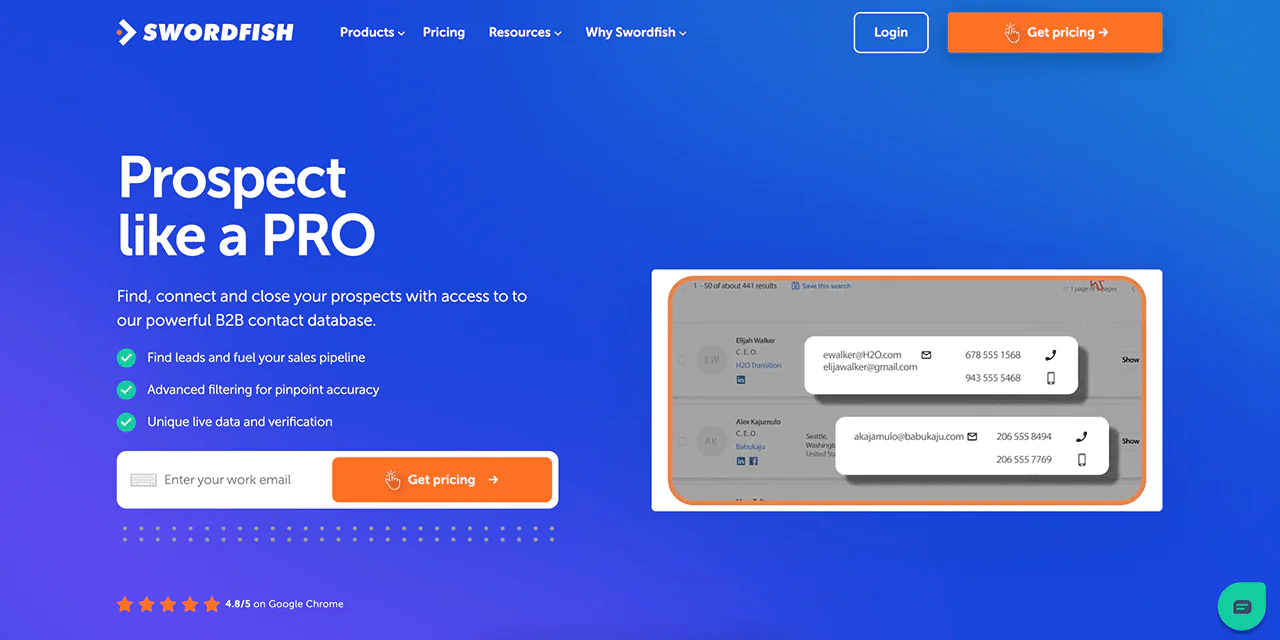
Beyond just finding contacts, the Prospector Tool lets you generate dialing or email lists using filters tuned to your specific criteria.
-
Bombora Intent Data
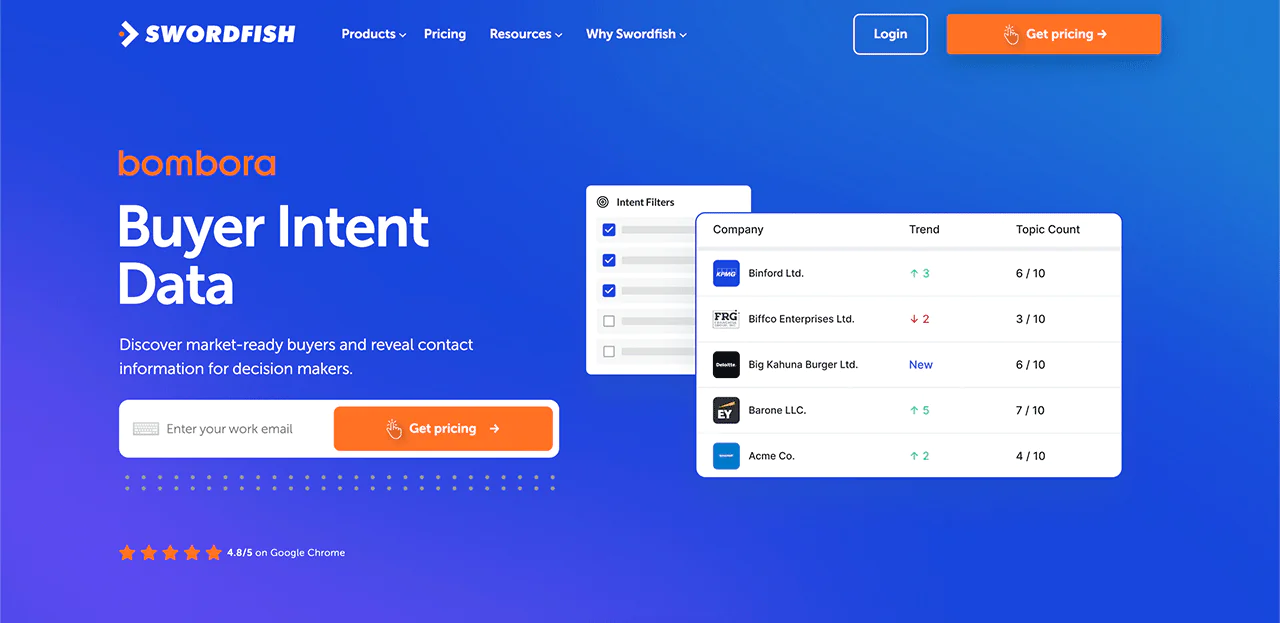
Swordfish AI uses Bombora Intent Data to identify companies showing buying signals, helping sales teams prioritize leads more likely to convert.
-
File Upload
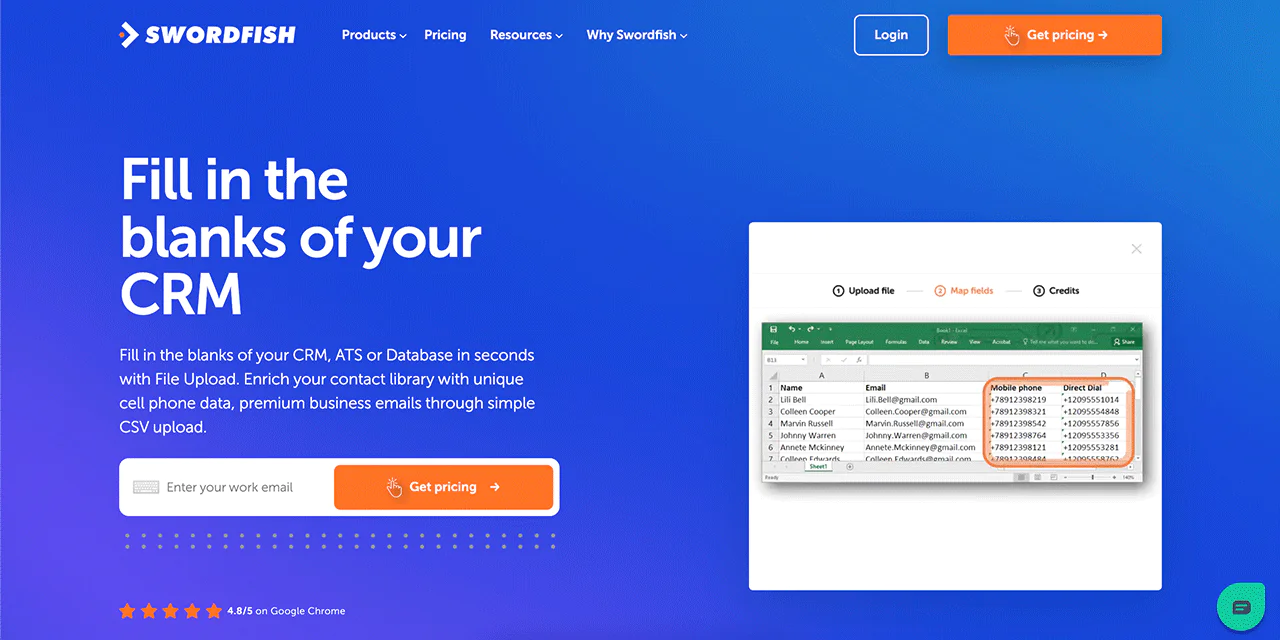
If your CRM has gaps in contact details, Swordfish can help. By uploading a CSV file, the platform fills in missing pieces of information to build out a more complete B2B contact database.
-
Reverse Search
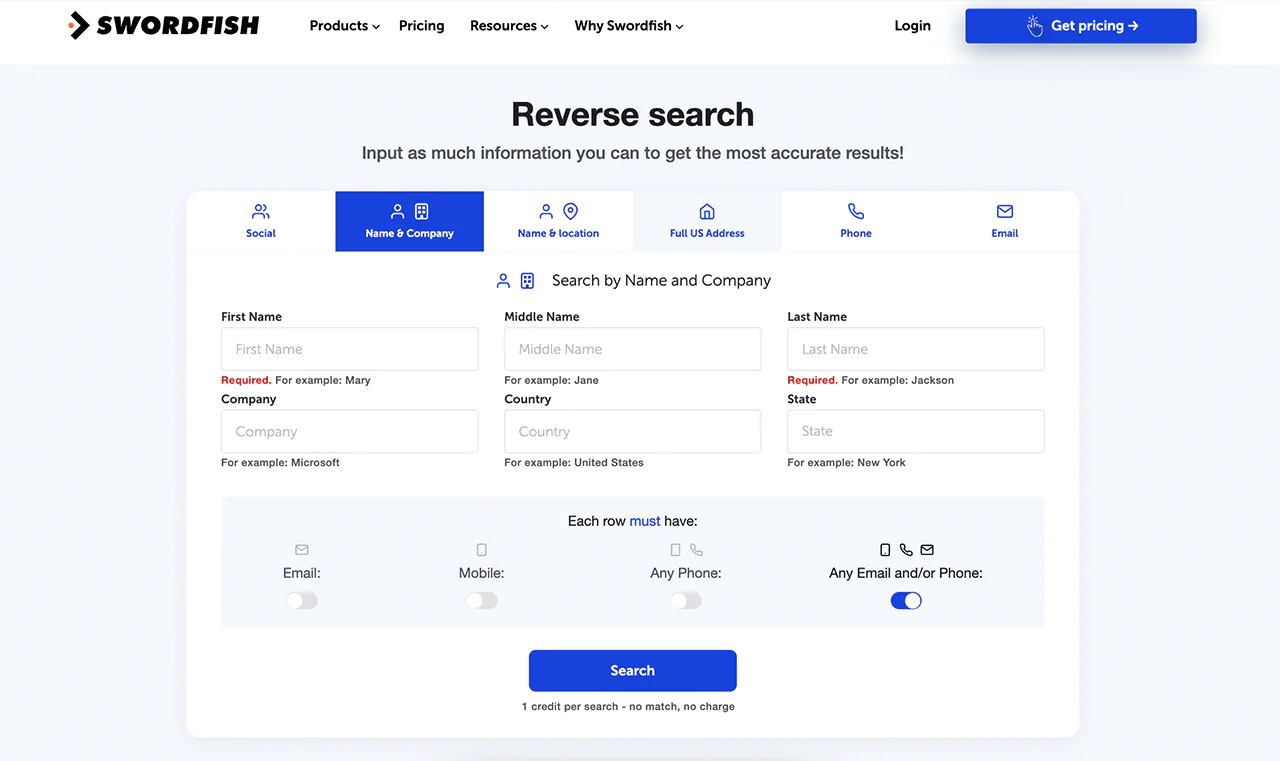
It’s not just about finding new contacts but also enriching what you already have. The Reverse Search feature lets you input existing data and retrieve additional information about a contact.
-
API Integration
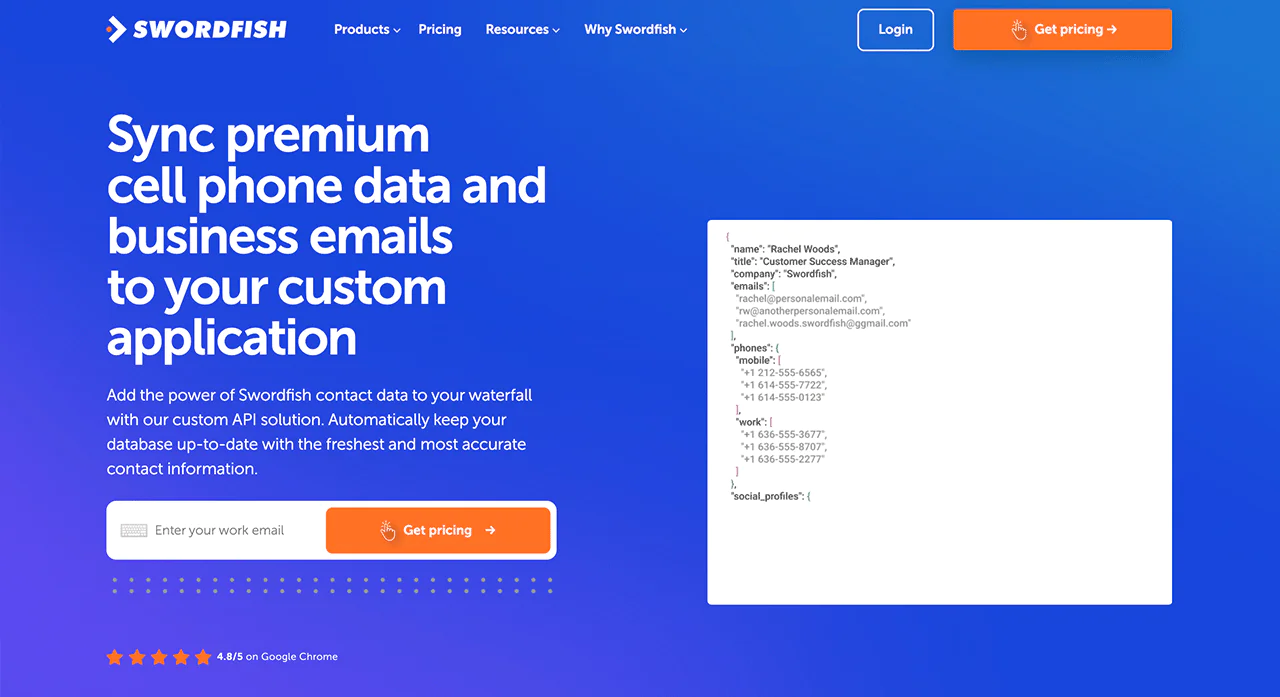
For businesses looking to scale and build Swordfish’s data into their own applications, the API integration ensures a steady data flow between systems.
Best Use Cases of Swordfish AI
Compared against ZoomInfo, Swordfish is generally used for the following.
- Direct Access for Sales Teams: Sales professionals can use Swordfish to reach decision-makers directly, bypassing intermediaries and improving the odds of closing deals.
- Recruitment and Talent Acquisition: Recruiters can find accurate contact details for potential candidates, making outreach easier.
- Marketing Campaigns: Marketing teams can enrich contact lists with current information for more targeted campaigns.
- Business Development: Business developers can identify and connect with key stakeholders in target industries to build partnerships.
- Customer Research: Companies can gather detailed contact information for market research and customer outreach programs.
Pricing
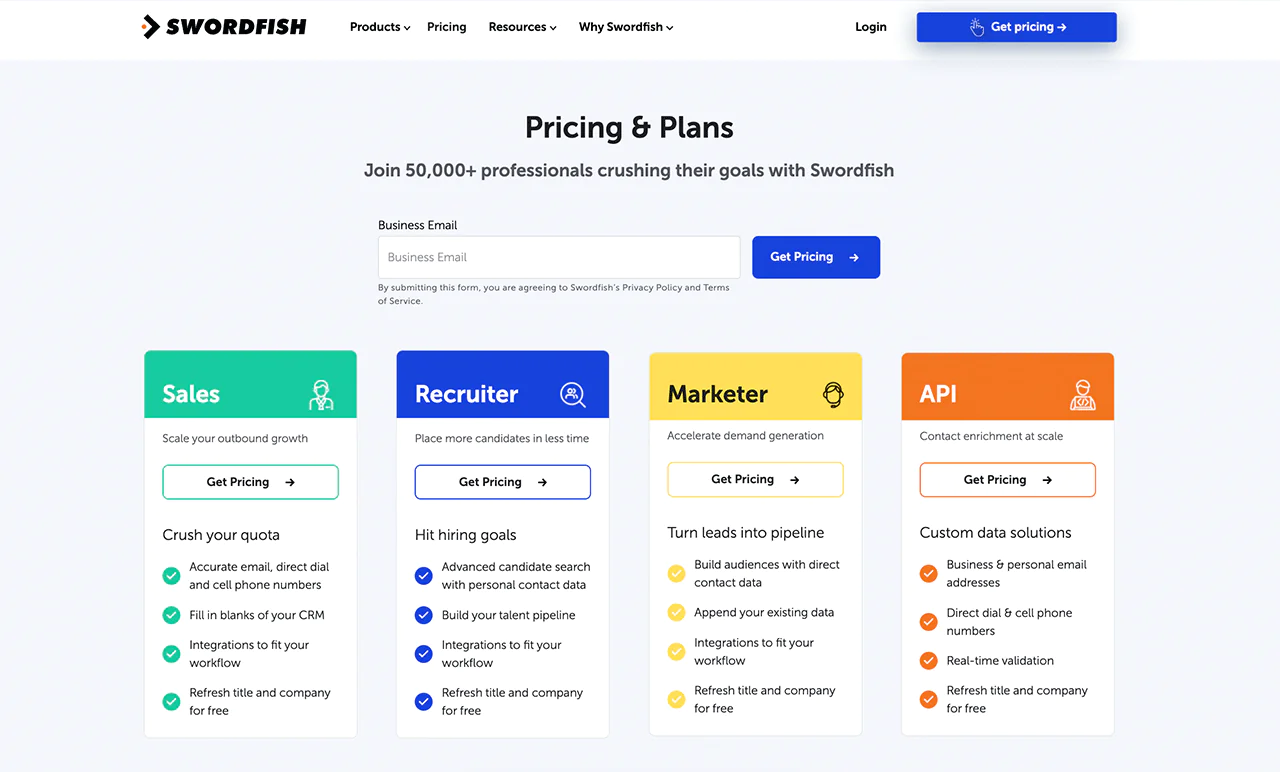
Swordfish AI offers customized pricing suited to different needs, including sales, recruitment, marketing, and API access. You can choose a package built around your goals, whether that’s outbound activity, recruitment, campaigns, or a specific data solution.
Each plan is built around accurate email addresses, direct phone lines, and mobile numbers, along with regular updates on job positions and company details. To find a plan that matches your needs, reach out directly for current pricing.
 Try Swordfish Ai
Conclusion
So, what is ZoomInfo used for? In practice, it touches sales, marketing, operations, and recruiting, with teams relying on its database of enriched B2B contacts and companies to find and reach the right people. Whether the goal is closing more deals, reaching the right audience, cleaning up messy data, or sourcing talent, ZoomInfo gives businesses a structured way to work through those problems.
If cell phone accuracy and business email coverage matter more to your workflow than broad company-level data, Swordfish AI is worth evaluating as a complementary or alternative option, particularly for teams that need to reach individuals directly rather than route through a switchboard.
Note: You can also try to get started with LinkedIn Sales Navigator.
FAQs
Is ZoomInfo legal?
ZoomInfo operates within legal boundaries, adhering to data privacy laws like GDPR and CCPA, by obtaining data through compliant methods and offering opt-out options for individuals.
How does ZoomInfo get their data?
ZoomInfo gathers its data from a combination of proprietary web-crawling technology, public databases, direct partnerships, and user contributions, aiming for a broad and updated dataset while complying with data privacy regulations.
How does ZoomInfo ensure the accuracy of its data?
ZoomInfo employs machine learning and artificial intelligence to continuously update and verify its database, combined with proprietary technology and human verification to maintain data accuracy and reliability.
Is ZoomInfo a CRM?
ZoomInfo is not a CRM (Customer Relationship Management) system. It’s a B2B database and sales intelligence platform that provides detailed information on businesses and professionals.
While it can integrate with various CRM systems to enrich and update contact and company data within those systems, ZoomInfo itself does not serve as a CRM platform.