
 View Products


Last updated: September 3, 2026
If you’ve ever searched your own name and landed on a ZoomInfo profile, or had a colleague mention finding your work email and phone number there, you’re far from alone. It’s one of the most common questions people ask once they realize how much of their professional life is sitting in a database they never signed up for.
Short answer: ZoomInfo builds its records by combining automated web scanning, a large network of contributors who share email signature data, human research teams, and licensed third-party data. Put together, these methods produce a searchable profile of business contacts that sales and marketing teams pay to access.
The rest of this piece breaks down exactly how each piece works, what kind of information ends up in your profile, the privacy questions this raises, and how to get your listing removed.
What is ZoomInfo?
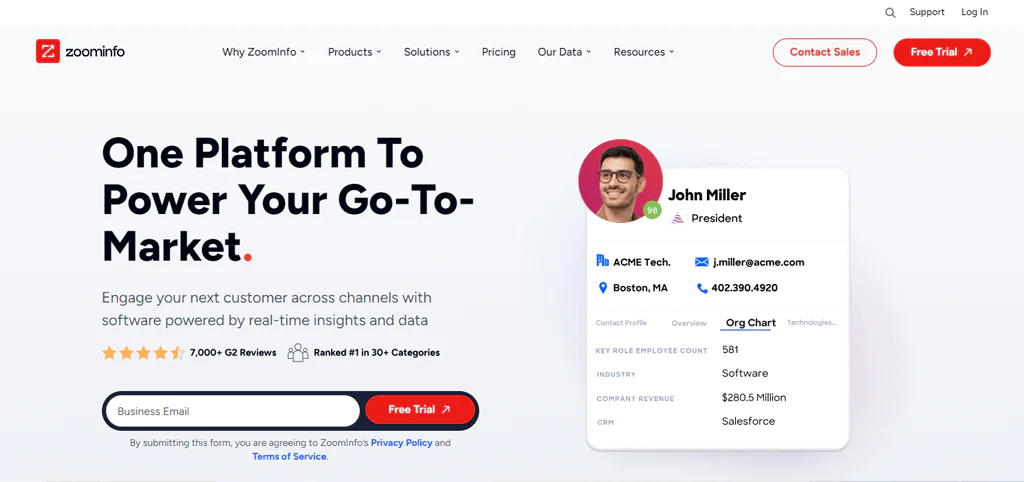
ZoomInfo is a sales intelligence platform built to help sales and marketing teams find contact details for potential customers. It started life as DiscoverOrg, co-founded in 2007 by current CEO Henry Schuck, and took on the ZoomInfo name after acquiring Zoom Information, Inc. in February 2019, a deal that broadened its market intelligence and industry coverage. The company completed its IPO in June 2020.
The platform is best known for supplying current business emails and phone numbers, which makes it easier for companies to build lead lists and reach decision-makers. ZoomInfo also offers various pricing tiers, including standard, preferred, and premium options built around different team sizes and budgets.
Its scale and the depth of its company and contact profiles are the main reasons it’s become a default tool for many B2B teams, even as questions about how that data gets there persist.
How Does ZoomInfo Get My Information?
ZoomInfo doesn’t rely on a single method to build its database. It layers several data collection channels on top of each other, so a gap in one source gets filled by another. Here’s the breakdown:
Contributory Network
ZoomInfo uses a large network of contributors who share data from their email interactions. This helps validate and update contact information across the platform.
Machine Learning Analysis
The platform employs machine learning to continuously scan online sources such as corporate websites, news articles, and SEC filings, pulling in data about industries, locations, revenue, and other company attributes.
Human Research and Verification
An in-house research team works on verifying the data collected by automated processes and improving the database’s overall accuracy.
Third-Party Data Sources
ZoomInfo supplements its own collection with information from trusted third-party sources, including public company records, government data, and social media feeds.
Email Signature Tracking
Through integrations with email systems, ZoomInfo captures data straight from email signatures, which is one of its richer sources for contact information.
Role of Contributory Networks in ZoomInfo’s Data Collection
ZoomInfo’s data collection leans heavily on its contributory network, a large group of participants who allow the platform’s technology to scan email signatures directly from their inboxes.
This approach is a big part of how ZoomInfo keeps records on millions of people and companies from going stale.
Even with many alternatives on the market, this contributory model is a key differentiator. Reports on the network describe it processing tens of millions of email signatures each month, which is how the platform keeps updating contact and company records at scale.
If you’re on the receiving end of that process, it means your listed contact details are being cross-checked and refreshed on an ongoing basis, whether you’re aware of it or not.
What Type of Information Does ZoomInfo Collect?
Here’s what typically shows up in a ZoomInfo profile:
- Contact Details: Phone numbers and email addresses tied to business professionals.
- Professional Profiles: Detailed profiles covering job titles, work history, and company affiliations.
- Email Signatures: Signature line data tracked and analyzed through the contributory network to extract and update contact information.
- Company Information: Industry type, company size, revenue, and location.
- Technographics: Data on the technologies and tools a company uses, giving insight into its tech stack.
- Public Records and Third-Party Data: Records and third-party datasets integrated to enrich existing profiles.
- Social Media Feeds: Profiles and activity scanned for additional professional detail.
- Machine Learning Analysis: Automated scanning of corporate websites and news articles to keep records current.
How Does ZoomInfo Work in Machine Data Extraction?
ZoomInfo relies on machine learning to gather and process data from across the web. Here’s the general workflow:
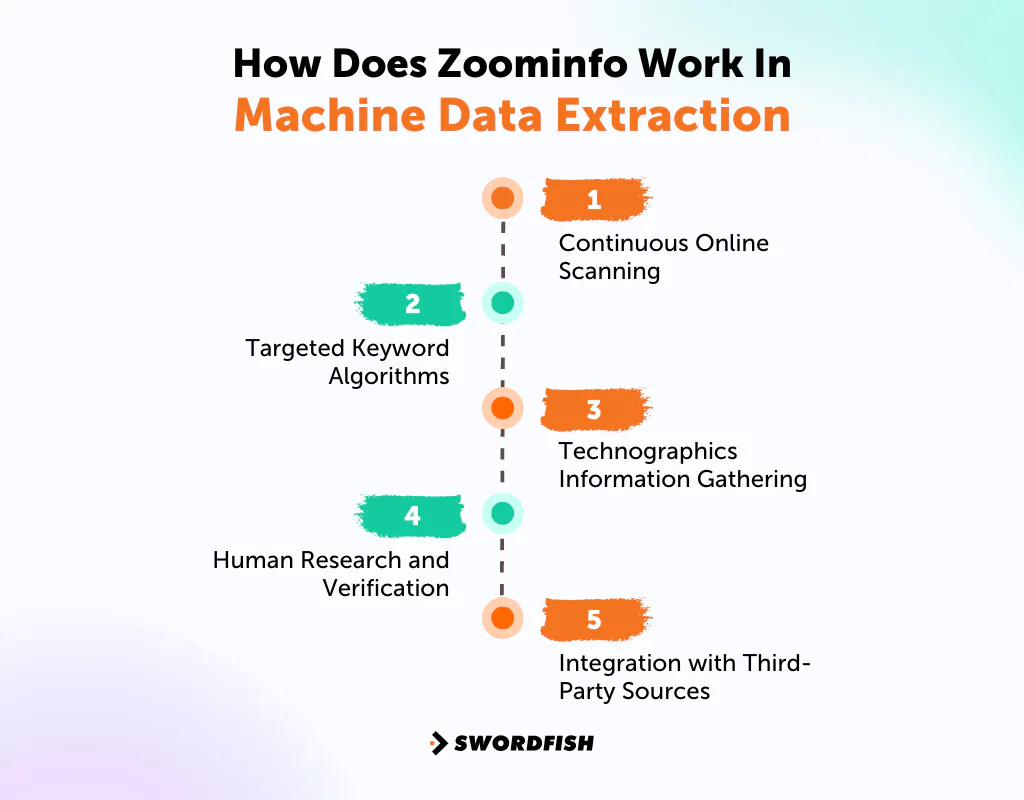
Continuous Online Scanning
ZoomInfo’s systems continuously scan corporate websites, press releases, news articles, and SEC filings to surface new or updated information about companies and business contacts.
Targeted Keyword Algorithms
To make searches more efficient, ZoomInfo runs algorithms tuned to specific keywords, which helps pinpoint data on industries, locations, revenue, and other business attributes faster.
Technographics Information Gathering
The system also gathers technographic data, tracking which technologies companies use by scanning a large number of site domains on a daily basis.
Human Research and Verification
Machine learning handles volume, but a human research team checks the data the machines collect to confirm it’s accurate and usable.
Integration with Third-Party Sources
ZoomInfo doesn’t rely solely on its own collection. It also draws on trusted third-party sources, including data from public companies, government sources, and social media.
Ensuring Data Accuracy with Human Verification at ZoomInfo
Human verification is worth covering in more depth because it’s the layer that’s supposed to catch what automation misses. ZoomInfo pairs its technology with human review teams to try to keep accuracy in check.
Here’s how that process generally works:
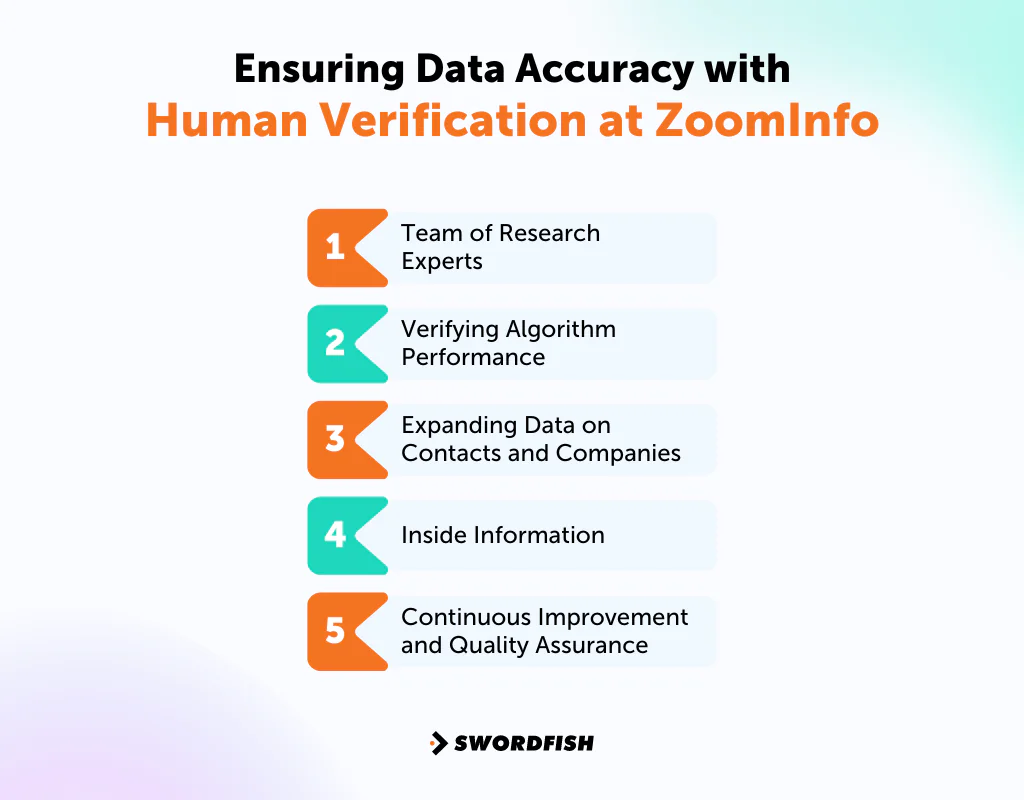
Team of Research Experts
An in-house team is dedicated to checking data collected by the machine learning systems, working continuously to keep the database useful and accurate.
Verifying Algorithm Performance
The research team also verifies that the automated systems themselves are working correctly and gathering data as intended, not just spot-checking individual records.
Expanding Data on Contacts and Companies
This team adds new details on contacts, funding events, and conferences, deepening the insight available on companies beyond what automation alone would surface.
Inside Information
From the ZoomInfo review, this team’s role often extends to surfacing insider details about companies, the kind of context that gives sales teams an edge automated scraping alone can’t provide.
Continuous Improvement and Quality Assurance
The verification process is ongoing rather than a one-time check, with the team working to raise data quality and reliability over time.
ZoomInfo’s Integration of Third-Party Data Sources
ZoomInfo also builds out its database using external data sources. Here’s a closer look at how that integration works:
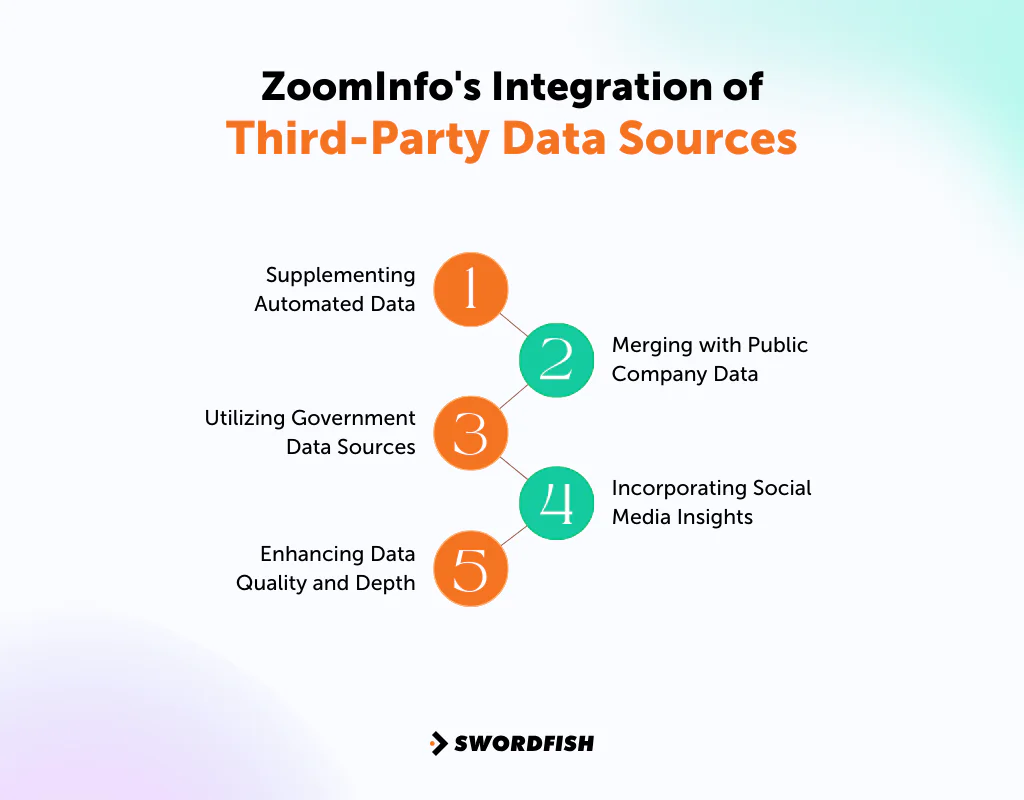
Supplementing Automated Data
Trusted third-party sources, including public company records, government data, and social media feeds, are used to add to what automated processes collect, giving a fuller picture of businesses and individuals.
Merging with Public Company Data
Public company information adds detail such as financials, mergers, and acquisitions, enriching profiles beyond basic contact data.
Utilizing Government Data Sources
Government records provide an authoritative layer that helps verify the accuracy of what’s already in the database.
Incorporating Social Media Insights
Social media feeds add current updates, trends, and public sentiment, information that’s useful to sales and marketing teams tracking a company’s activity.
Enhancing Data Quality and Depth
Combining third-party data with proprietary collection is meant to make the resulting profiles both broader in coverage and more detailed in substance.
Ethical and Privacy Concerns in ZoomInfo’s Data Practices
ZoomInfo’s data collection model raises real questions worth weighing before you rely on it, or before you decide how to respond to being listed in it:
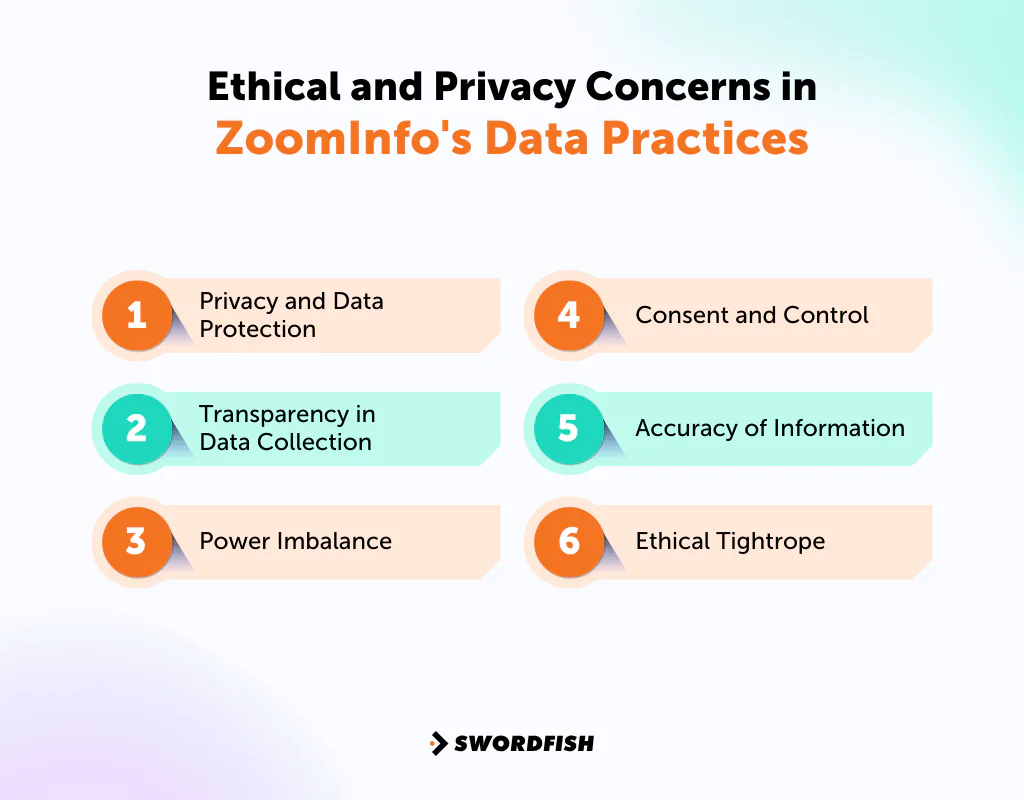
- Privacy and Data Protection: ZoomInfo states it prioritizes privacy and data protection, and it provides mechanisms to check data accuracy and opt out.
- Transparency in Data Collection: Clearer transparency about collection methods would help both customers and the people whose data is being gathered understand what’s happening and why.
- Power Imbalance: ZoomInfo profits from aggregating this data, while the individuals whose information is used typically see none of that value, raising fairness questions.
- Consent and Control: Whether individuals meaningfully consented to having their data collected, and how much control they retain over it, remains a central issue.
- Accuracy of Information: Inaccurate records can lead to misleading business insights and flawed outreach decisions.
- Ethical Tightrope: Balancing the aggregation of publicly available data against individual privacy is genuinely complex, and ZoomInfo sits squarely in that tension.
How Did ZoomInfo Vacuum Up and Sell My Information?
A lot of users specifically want to know how their private phone number ended up for sale on ZoomInfo. Here’s what’s generally understood about that process:
Data Broker Practices
As a data broker, ZoomInfo collects information from public sources or purchases it from companies that users have, at some point, permitted to sell or share their data.
Public and Purchased Data
The information gathered can include details made publicly available as well as data sold by other companies, which may include contact information like phone numbers.
Legal Concerns
Some users question the legality of this practice, particularly whether employers or other companies have the right to share or sell personal data without explicit consent.
Lack of Profit Sharing
A recurring criticism is that data brokers like ZoomInfo profit from personal data without sharing any of that value with the individuals whose information is being used.
Privacy and Consent
This reflects a broader problem in the digital economy: personal information can move between companies and platforms with little visibility for the person it actually belongs to.
How to Remove Yourself from ZoomInfo
If you’d rather not be part of ZoomInfo’s database, here’s the general opt-out process:
- Visit the Opt-Out Page: Go to ZoomInfo’s opt-out page.
- Enter Your Work Email: Provide the work email address listed on ZoomInfo’s website, complete the CAPTCHA, and click “Get code.”
- Email Confirmation: Check your work email inbox for a confirmation email from ZoomInfo.
- Enter the Received Code: Use the code sent to you via email and click “Confirm.”
- Request Deletion: Check the box stating “I would like to delete my information,” select your reasons for deletion, complete the CAPTCHA, and click “Remove.”
Pro Tip: If ZoomInfo doesn’t have a record of your current work email on file, you’ll typically be asked to fill out a supplementary form and separately opt out of the sale of your personal information. Keep your confirmation email, since profiles can reappear if ZoomInfo re-scans public sources or a new employer uploads contact lists that include you, so it’s worth checking back periodically rather than treating this as a one-time fix.
Conclusion
If you’re still asking how ZoomInfo got your information, the honest answer is that it’s a layered process: a contributory network, machine learning, third-party licensing, and human review all feeding the same database.
That combination is what keeps the data current, but it’s also exactly why privacy and consent questions keep coming up around this kind of platform. There’s no clean resolution here, just a trade-off between data freshness for buyers and control for the people being listed.
Understanding that trade-off is the first step toward deciding whether to opt out, monitor your listing, or simply be aware of how visible your professional contact details already are.
FAQs
Does ZoomInfo get data from other companies?
Yes. ZoomInfo integrates data from third-party sources, including public company records, government data, and social media, to expand its database.
How does ZoomInfo handle privacy and individual consent?
ZoomInfo offers an opt-out process for individuals who want to be removed from its database and states that it aims to be transparent about its data collection practices, though experiences with the process vary.
How did ZoomInfo get my phone number?
Typically through its network of contributors who share contact details pulled from email interactions, combined with machine learning that scans publicly available online sources and data integrated from third-party partnerships.