
 View Products


Last updated: September 3, 2026
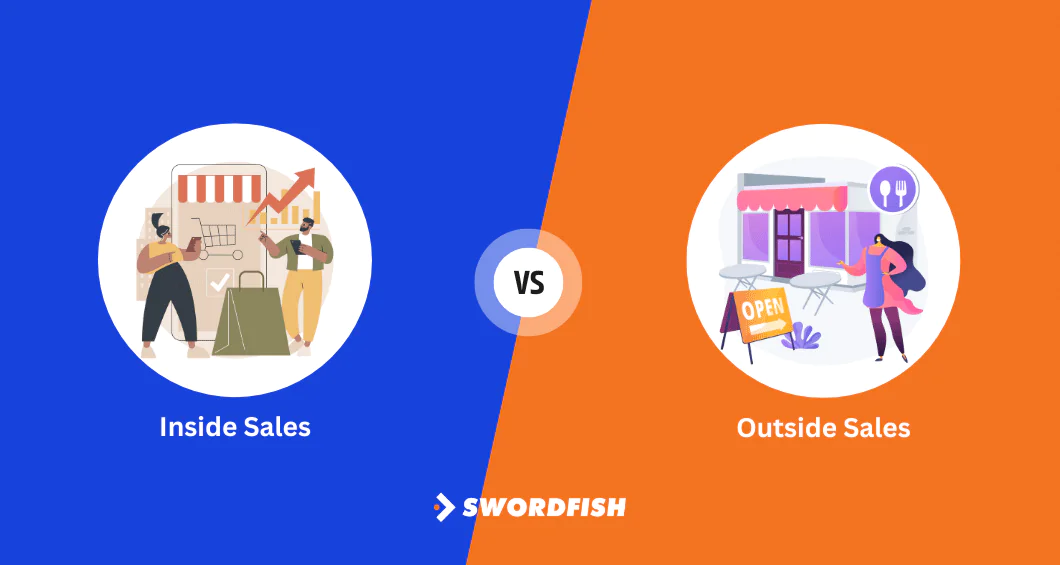
Sales leaders rarely get to choose a single model and stick with it forever. Most organizations, including those selling into hospitals, clinics, and health systems, run a blend of inside and outside sales depending on deal size, territory, and buyer preference. Understanding where each model works best helps you build a team structure that fits your product and your prospects.
The difference between inside and outside sales is simple: Inside sales involves remote selling via phone and internet with a focus on digital communication, while outside sales requires in-person meetings and travel for face-to-face interactions. Digital sectors benefit from inside sales, while high-value personalized sales are better for outside sales.
Below, we break down both approaches, their responsibilities, costs, required skills, and how to decide which one (or which combination) fits your business.
What is Inside Sales?
Inside sales is selling products and/or services via the telephone, email, and other digital channels, rather than in person. Representatives focus on potential customers who have already shown interest in the company’s products and services.
That interest might show up as an ad click, a question submitted online, or a newsletter signup. This distinguishes inside sales from telemarketing, which relies on scripted outreach to people with no prior connection to the company.
Inside sales can still involve cold calling, but the tactics tend to be more personalized and consultative, whether the target is a business (B2B) or an individual consumer (B2C).
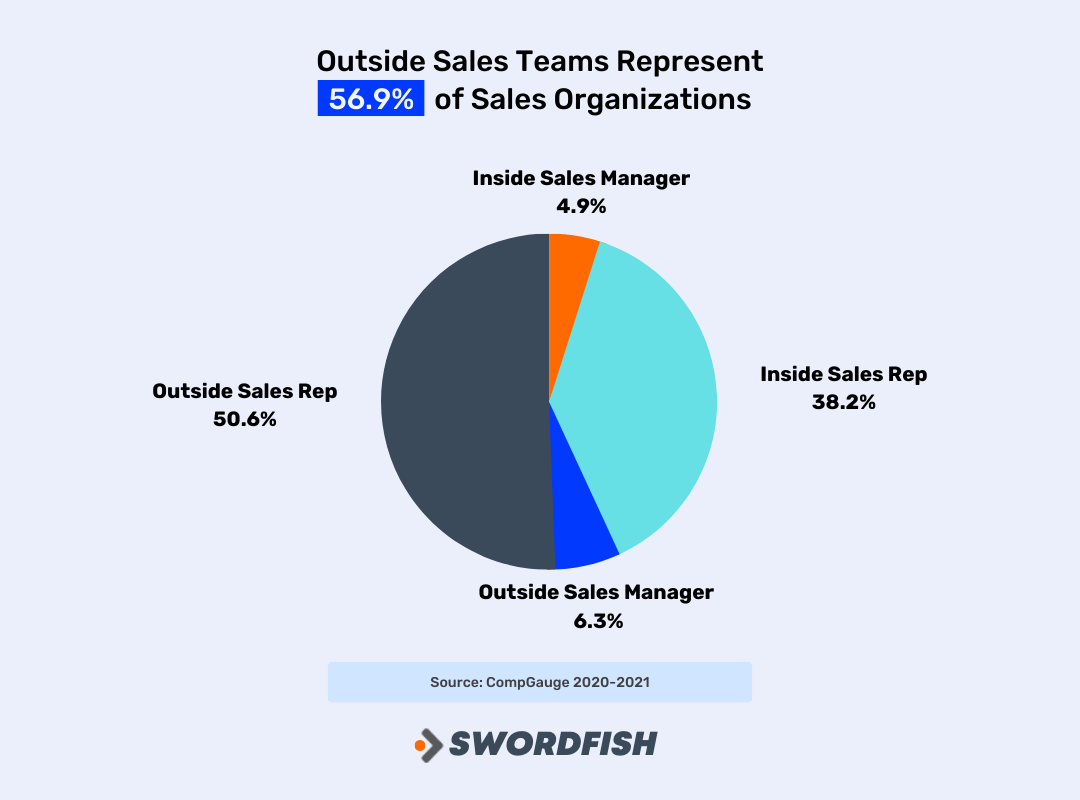
Data from 2019 put the U.S. professional sales workforce at roughly 5.7 million people, with about 45.5% working in inside sales and 52.8% in outside sales roles that involve face-to-face meetings.
Responsibilities and Duties of Inside Sales
Inside sales teams focus on creating new leads and nurturing them until they’re ready to buy or hand off to an external salesperson or account manager. Their tasks include —
- Developing relationships with new or current customers to explain products or services.
- Identifying the needs of potential customers to suggest suitable products or services.
- Responding to product or service inquiries.
- Inquiring about customer needs to better understand them.
- Updating customer information in sales databases.
- Handling incoming calls from potential or existing customers.
- Making outgoing calls to follow up on leads.
- Addressing concerns and finalizing sales.
Advantages of Inside Sales
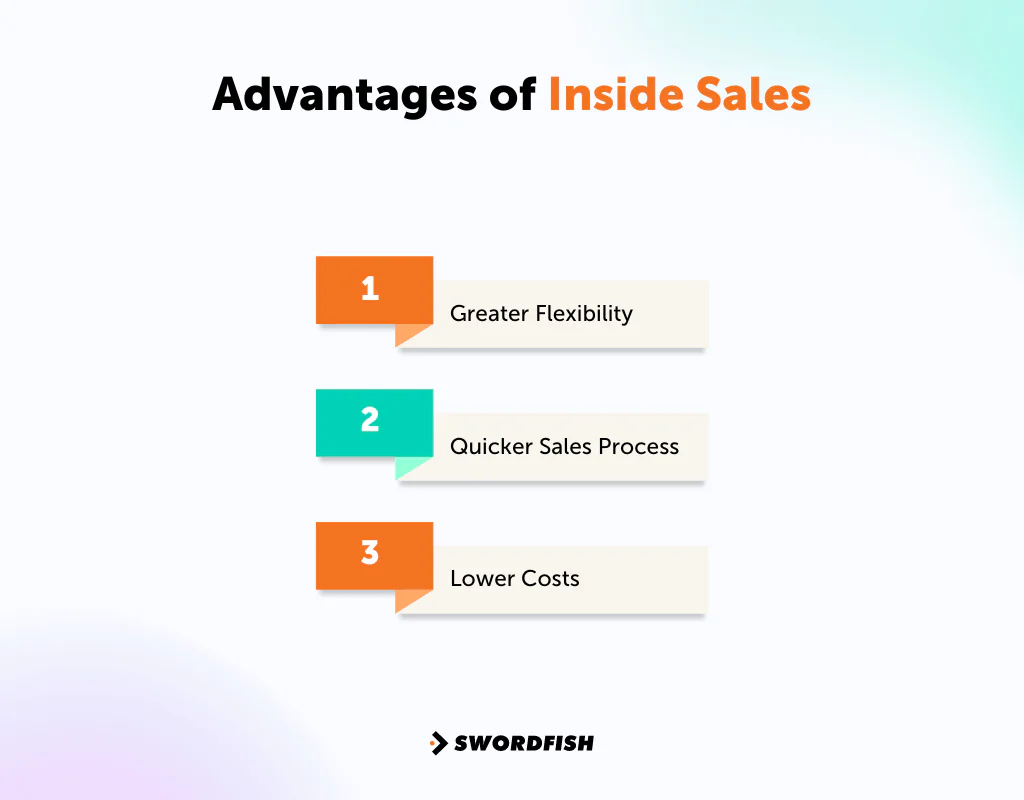
Here are some key advantages —
1. Greater Flexibility:
Inside salespeople often enjoy more adaptable daily routines compared to outside sales staff. They can work from various locations and use different methods to communicate with clients.
2. Quicker Sales Process:
Inside sales representatives tend to complete sales faster than their outside counterparts. This is often because they deal with products that are less expensive, simplifying the sales process.
Plus, they can use quicker communication methods like email, which reduces the pressure associated with each sale.
3. Lower Costs:
Positions in inside sales, like account executives, are less expensive for companies. Inside salespeople don’t have travel expenses such as fuel, plane tickets, and hotel stays. Making calls from the office or home is far more cost-effective than traveling to meet clients in person.
What is Outside Sales?
Outside sales is meeting and selling to customers face-to-face in various places such as trade shows, business meetings, or even door-to-door visits.
This face-to-face approach often leads to more effective communication, allowing for immediate answers to questions and the ability to close sales on the spot.
Responsibilities and Duties of Outside Sales
As an outside salesperson, your main task is to generate new leads and opportunities by engaging with people directly. Often, in-person meetings and presentations are required to maintain and secure client relationships.
Interestingly, outside sales reps are finding themselves selling remotely 89% more often nowadays.
Your responsibilities include —
- Building and sustaining customer relationships
- Understanding and addressing customer needs with effective solutions
- Seeking out new sales opportunities through active prospecting and lead follow-up
- Managing a specific sales area, client list, or event-driven sales efforts
- Meeting sales goals on a monthly, quarterly, and yearly basis
- Engaging with potential clients at events to finalize sales
- Providing in-depth knowledge of your product or service to match client requirements
- Conducting face-to-face presentations and product demonstrations for prospects
Advantages of Outside Sales
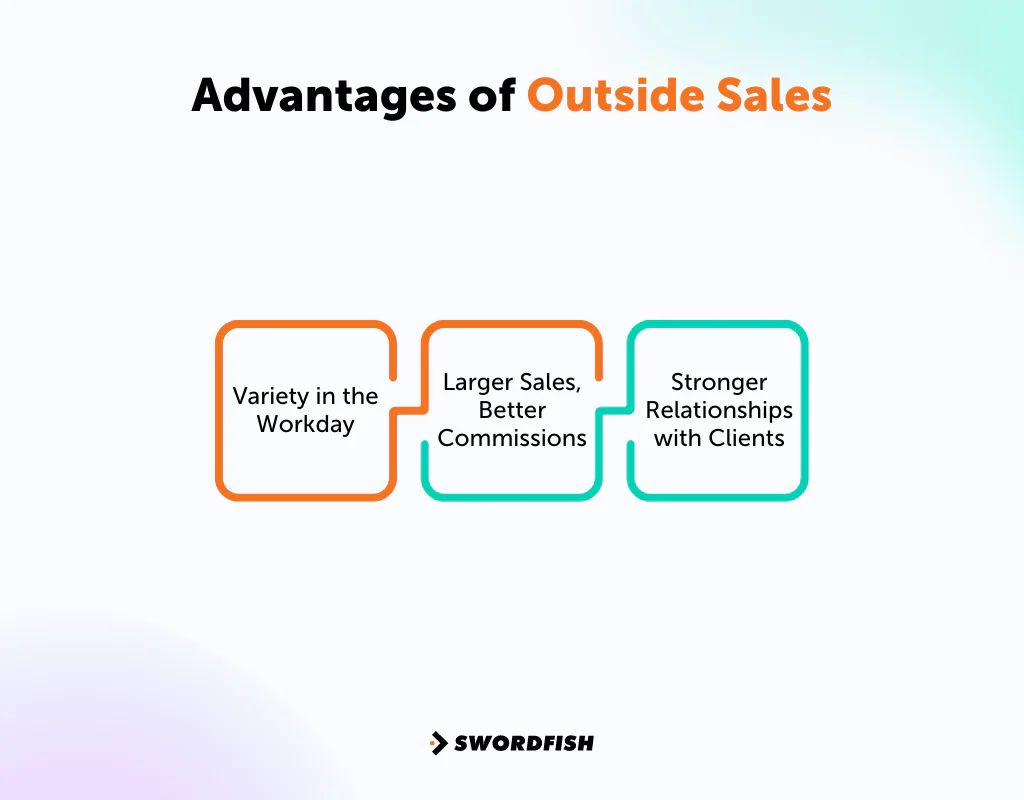
Why choose a career in outside sales? Consider these three benefits —
1. Variety in the Workday:
An outside sales rep’s day is full of variety. They’re out and about, meeting new people, and traveling to different places at the company’s expense. Plus, they often have the flexibility to manage their own schedules, which is a significant bonus.
2. Larger Sales, Better Commissions:
Typically, outside sales involve higher-priced products or services. This can mean more profit for the company and, in turn, better pay for you. Imagine the satisfaction of receiving a substantial commission for every major deal you close!
3. Stronger Relationships with Clients:
Being in outside sales means you can forge more meaningful connections with clients. Strong relationships can lead to bigger sales. This not only helps in achieving sales targets but can also lead to more consistent sales performance.
Comparison Table: Inside vs Outside Sales
Take a look at our table to understand the difference between inside sales vs outside sales.
|
Factors |
Inside Sales |
Outside Sales |
|
Location |
Remote locations like company headquarters or personal office spaces |
Face-to-face interactions, often at the client’s location |
|
Sales Activities |
Sourcing leads, engaging via digital channels (phone, email, social media), recording data in CRM |
Managing sales territories, traveling to meet customers, building deep relationships, inputting data into CRMs |
|
Length of Sales Cycle |
Shorter due to lower-priced products and services, decisions made by fewer people |
Longer due to higher-priced items and the involvement of multiple decision-makers |
|
Revenue Potential |
Lower-priced products/services, cost-efficient due to remote selling |
Higher due to selling expensive items, potentially leading to bigger deals |
|
Flexibility |
More flexibility in day-to-day operations, can work from various locations |
Less monotonous, reps often set their own schedules, travel involved |
|
Expenses |
Fewer expenses, no travel required |
More expensive due to travel and longer sales cycles |
|
Relationship Building |
Challenges due to lack of face-to-face interaction |
Deeper relationships due to personal meetings |
|
Impact of External Factors |
Less affected by external factors like natural disasters |
More affected by external factors, travel can be disrupted |
Required Skill Sets of Outside vs. Inside Sales Reps
Regardless of the role, both inside and outside sales reps share a core set of skills necessary for success in sales —
|
Skill Area |
Inside Sales Reps |
Outside Sales Reps |
|
Communication |
Must be skilled in remote communication via phone or online channels. |
Require proficiency in public speaking and in-person presentations. |
|
Relationship Building |
Need to form connections without face-to-face interaction. |
Must build relationships in person, often while traveling. |
|
Autonomy and Self-Management |
Work from a centralized location, less travel required. |
Should self-manage and stay motivated while working independently on the go. |
|
Sales and Negotiation |
Understand customer needs, propose solutions, and close deals. |
Same as inside sales, with added on-the-spot negotiation. |
|
Account Management |
Manage various prospects, maintain organized customer profiles, and ensure prompt follow-ups. |
Similar to inside sales, with added management of a sales territory or events. |
|
Customer Service |
Provide accessible, personalized interactions, and clear communication. |
Same as inside sales, with the added dimension of face-to-face service. |
|
Product Knowledge |
Must know the product thoroughly to address customer issues. |
Same as inside sales, with the ability to demonstrate products in person. |
|
Problem-solving |
Address issues to keep the sales process moving. |
Same as inside sales, with a focus on resolving in-person concerns. |
|
Teamwork |
Collaborate with the sales team and adapt to different situations remotely. |
Must work well with both the sales team and clients in various locations. |
|
Prospecting and Lead Generation |
Skilled with lead generation tools and CRM software for managing leads. |
Use similar tools with a focus on in-person lead generation and qualification. |
While their approaches differ, the foundational skills required for inside and outside sales are quite similar.
Inside Sales Vs. Outside Sales Team Structure
Here’s a broad idea of the team structure for each sales model.
|
Role |
Inside Sales Team Structure |
Outside Sales Team Structure |
|
Territory |
Geographically based, but generally managed centrally. |
Locations and in-person engagement are required. |
|
Sales Manager |
Oversees a team for a specific region, focuses on daily operations and sales goals. |
Similar role, but also strategizes on territory management and in-person visits. |
|
Sales Director |
Handles overall sales operations, strategy, and revenue growth. |
Same responsibilities with an additional focus on field sales strategies. |
|
Sales Representative |
Engages with prospects remotely, nurturing leads into customers. |
Engages with prospects in person, traveling to different locations. |
|
Sales Engineer |
Provides technical expertise and handles product issues remotely. |
Expert in product knowledge and on-site support. |
|
Customer Service Rep |
Manages post-sale inquiries and issues from a central location. |
Supports outside sales visits, as well as inside sales. |
Inside vs. Outside Sales Models
Here’s a simplified breakdown of how the two models typically operate.
Inside Sales Approach —
- Sales representatives engage with potential and current customers through online channels.
- The aim is to gather new leads.
- The sales process is usually quick, often less than 90 days.
- This method is more affordable and easier to grow.
Outside Sales Approach —
- Sales representatives go out to meet with clients in person.
- The focus is on developing relationships with leads and turning them into customers.
- The sales process is typically longer, taking more than 90 days.
- This method involves higher costs and is harder to expand.
Inside or Outside Sales: Which One to Choose?
Deciding whether to use inside or outside sales depends on several factors, including —
Evaluating Product or Service Type:
Inside sales are often more effective for selling simple, low-cost items that address immediate needs and don’t require much buyer-seller interaction. Conversely, outside sales are better suited to high-value, complex products, where a longer decision-making process is necessary. A vendor selling a clinical software subscription to a small practice, for example, often closes faster through inside sales than a vendor selling capital equipment to a hospital system, where multiple stakeholders and a longer evaluation cycle are typical.
Industry Considerations:
The digital sector, where speed and reach are paramount, tends to favor inside sales. In contrast, industries that deal with physical products or cater to a niche market may benefit more from the personalized approach of outside sales. Selling to healthcare organizations often blends both: inside teams handle initial outreach and qualification using accurate provider contact data, while outside reps handle in-person demos, compliance discussions, and contract negotiations with administrators.
Aligning with Sales Strategy:
Choose inside sales if your strategy leverages digital automation for quick transactions. Opt for outside sales if your approach involves demonstrations or in-person interactions that digital channels can’t replicate.
There’s no definitive answer to which is better between inside sales and outside sales.
Your choice of inside or outside sales should be fluid, reflecting your current business needs, market trends, and customer preferences. Make sure you regularly assess your sales effectiveness so you can adjust your strategy.
How to Develop Your Inside and Outside Sales Teams Effectively
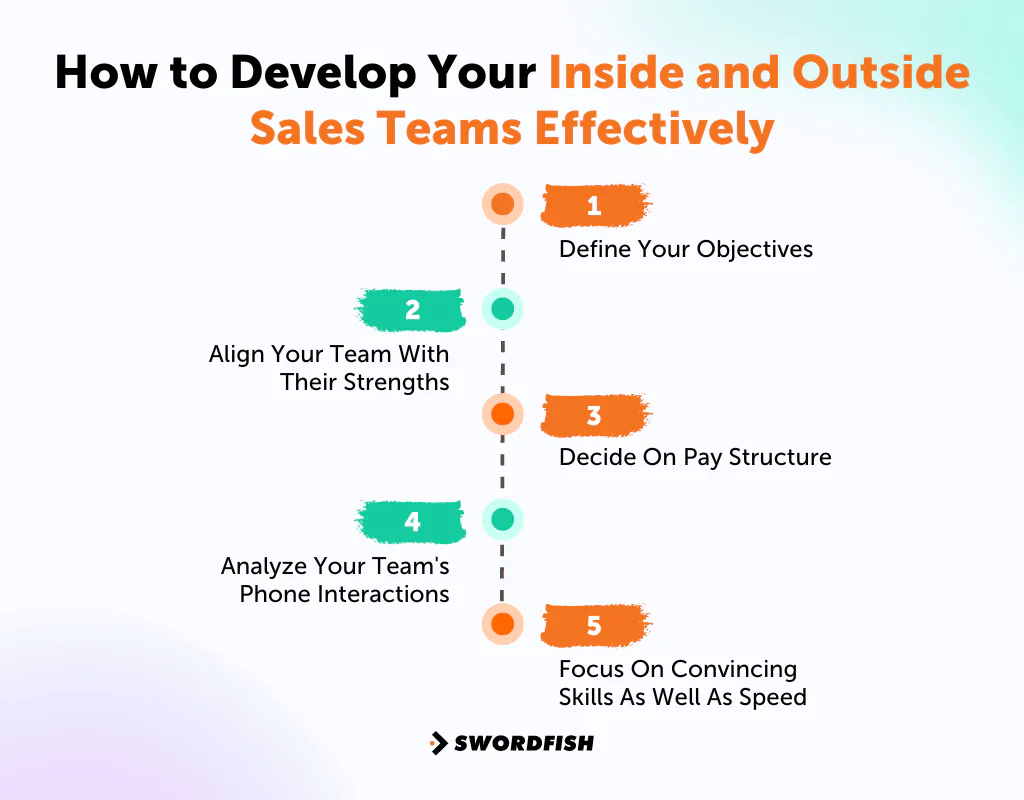
Many businesses face the challenge of organizing their sales teams effectively. Here’s a five-step plan to structure your internal and external sales groups.
1. Define Your Objectives
The initial step is to pinpoint the targets you aim to achieve with your sales teams.
For digital engagement with prospects and customers, bolster your internal sales team.
However, sometimes you need direct, in-person interactions to nurture and convert leads.
In such cases, you should hire field sales representatives who are willing to visit various locations to meet with clients.
2. Align Your Team With Their Strengths
For optimal performance, organize your sales teams based on their skills.
Team members who are tech-savvy may excel in internal sales roles.
Meanwhile, those with strong interpersonal skills and a readiness to travel are ideal for external sales positions.
3. Decide On Pay Structure
Choose if you prefer to pay your team through commissions or a fixed salary.
Outside sales representatives often earn commissions, incentivizing them to close more sales.
Conversely, internal sales representatives typically receive a regular salary.
4. Analyze Your Team’s Phone Interactions
For internal sales representatives who primarily engage with customers over the phone, recording their calls can foster a habit of attentive listening.
Managers can then review these calls to guide the sales representatives on improving their communication and to highlight any important product details that may have been missed or not clearly conveyed to customers. In regulated industries such as healthcare, it’s also worth confirming that call recording and outreach practices align with applicable telemarketing and privacy rules before scaling a calling program.
5. Focus On Convincing Skills As Well As Speed
Sales representatives need to be quick to meet their goals promptly, but being persuasive is just as crucial. Being persuasive means gaining the customer’s trust for future loyalty to the company.
This is often the responsibility of the external sales team, who meet with clients and executives face-to-face. These team members should therefore be trained to win new customers as well as to encourage repeat business.
Comparing Salaries: Inside Sales vs. Outside Sales
Compensation for inside and outside sales roles varies widely by source, industry, seniority, and location, but outside sales roles generally command higher base pay and total compensation than comparable inside sales roles, largely because outside reps tend to work larger, higher-value deals.
Some inside sales roles, especially in IT and specialized software sales, can offer comparable total earnings once commissions are factored in. Reps in these roles may start with a lower base salary but can significantly increase their earnings through commissions for each sale they close.
Typical US Salaries for Inside Sales Roles —
|
Roles |
Salary |
|
Sales Associate |
$49,823 |
|
Inside Sales Representative |
$69,987 |
|
Account Manager |
$72,038 |
|
Business Development Representative |
$75,073 |
|
IT Software Sales |
$119,106 |
Typical US Salaries for Outside Sales Roles —
|
Roles |
Salary |
|
Field Sales Representative |
$90,340 |
|
Territory Sales Representative |
$99,303 |
|
Key Account Sales Manager |
$124,550 |
|
National Sales Representative |
$104,418 |
|
Outside Sales Representative |
$108,663 |
Inside vs. Outside Sales Meeting Quotas
Historical data from The Bridge Group has shown that only about two-thirds of sales representatives meet their sales targets annually.
Outside sales representatives have also tended to carry sales targets somewhat higher than those of inside sales reps, as reported by Spotio. Full target achievement across the board remains uncommon, though quota attainment tends to improve as teams refine their processes.
Sales reps are often given specific areas to focus on, depending on whether they work inside or outside sales. While inside sales reps handle smaller deals independently, outside sales reps may assist with larger, more strategic accounts.
As sales teamwork, communication tools, and AI-assisted prospecting continue to mature, quota attainment and overall sales results are likely to improve further.
Key Tools for Both Inside and Outside Sales Representatives
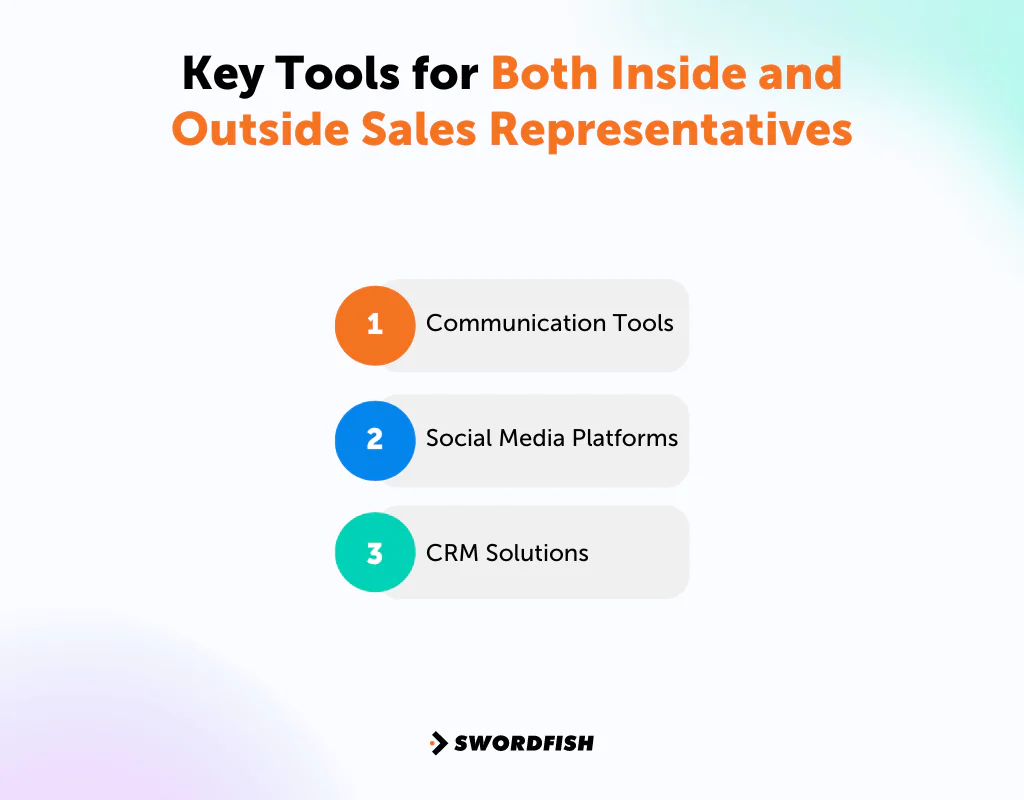
Whether you work in inside or outside sales, there are essential tools you need to manage your day-to-day activities effectively. In general, these tools fall into three categories: communication tools, social media tools, and CRM systems.
Communication Tools
To make sales, you need to communicate with interested leads. There are many ways to do this: phone calls, emails, text messages, or even video calls through apps like Zoom.
Additionally, there are specialized software options for field sales. We’ve compiled a list of crucial communication tools that can help you sell more this year.
Social Media Platforms
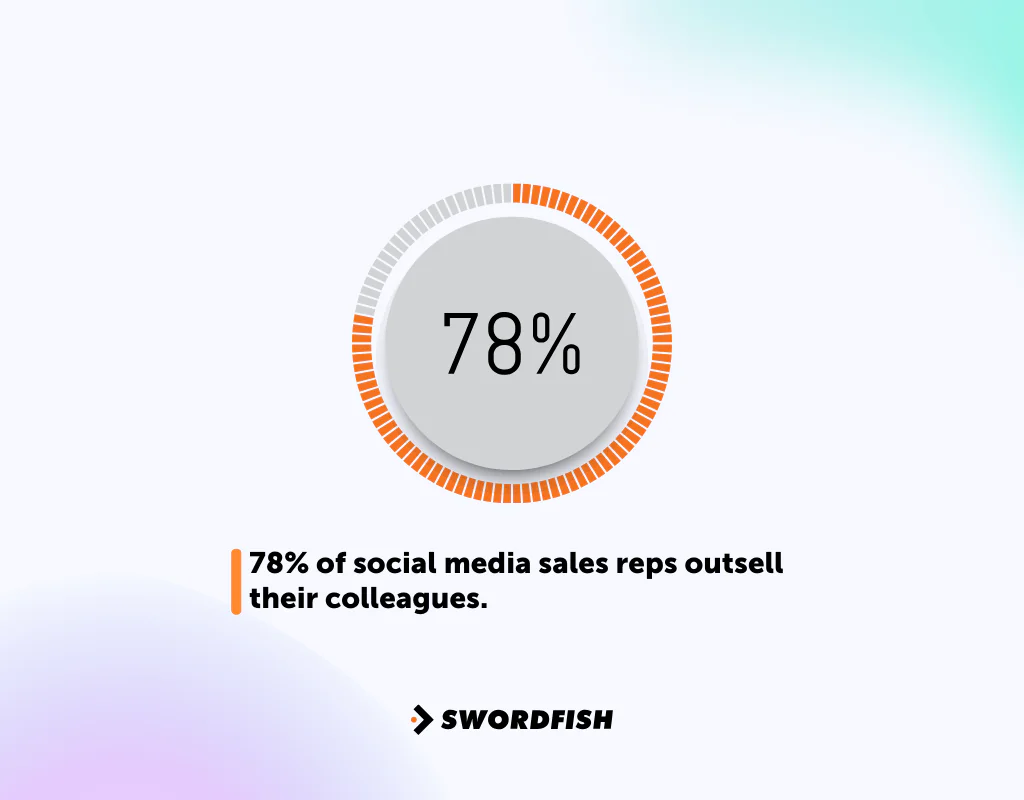
Salespeople are increasingly turning to social media to reach out to potential customers. According to research, 78% of social media sales reps outsell their colleagues.
LinkedIn, for example, is particularly valuable for B2B sales professionals, helping with lead generation and communication. For those in B2C sales, platforms like Instagram and TikTok can be powerful for connecting with buyers.
CRM Solutions
CRMs are vital for both inside and outside sales professionals, as well as their managers. You can track leads through their purchasing journey, automate parts of the sales process, and improve your sales tactics with these systems.
The top CRMs for sales teams often include integrated communication features such as phone, email, SMS, and video calling capabilities.
Comparing Inside and Outside Sales: Tracking Metrics and Performance
When it comes to inside versus outside sales, the key to measuring performance is to monitor their distinct activities. Sales performance metrics are crucial to assessing your tactics, salespeople’s performance, and your sales targets.
Keep an eye on these metrics consistently to spot areas for improvement and to make smarter business choices.
For outside sales, you might look at the territory coverage rate, which shows the number of client locations visited within their area. Route-planning tools are handy for keeping tabs on your reps’ past and planned visits.
For inside sales, you could measure performance by tracking the number of calls made and the level of engagement reps have with potential clients.
Common metrics for both sales types include —
- The proportion of successful appointment bookings
- How quickly reps follow up on leads
- The success rate of sales conversions
- The cost to acquire a new customer
- The percentage of sales opportunities that result in a sale
- The projected revenue a customer will bring over time (LTV)
- The rate at which customers stop using your service (churn rate)
Swordfish AI: Best Tool to Improve B2B and B2C Outreach
Your sales campaign will be successful if you’re equipped with the right tool. Swordfish AI is a tool designed to improve your B2B and B2C outreach efforts, whether your team sells remotely, in the field, or both.
It gathers contact details from social and professional networks in real time, including verified cell phone numbers, helping inside and outside teams alike reach the right decision-makers faster.
This tool integrates with Chrome and pulls information directly from LinkedIn, Facebook, and search engines like Bing and Google. It’s built for teams that want to add verified phone numbers and emails to their contact lists without manual research.
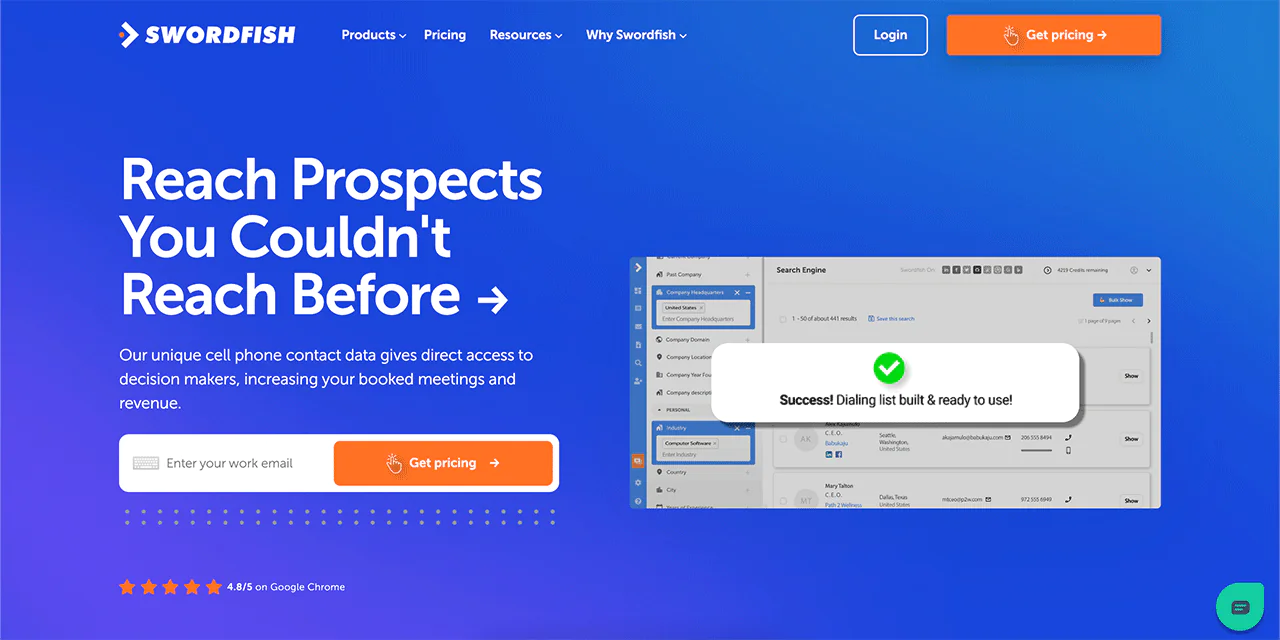
Key Features of Swordfish AI that Helps in Outreach
Below are the major features —
Real-Time Contact Extraction
With Swordfish AI, you can search across multiple platforms, giving you access to current contact information as you prospect.
Chrome Integration
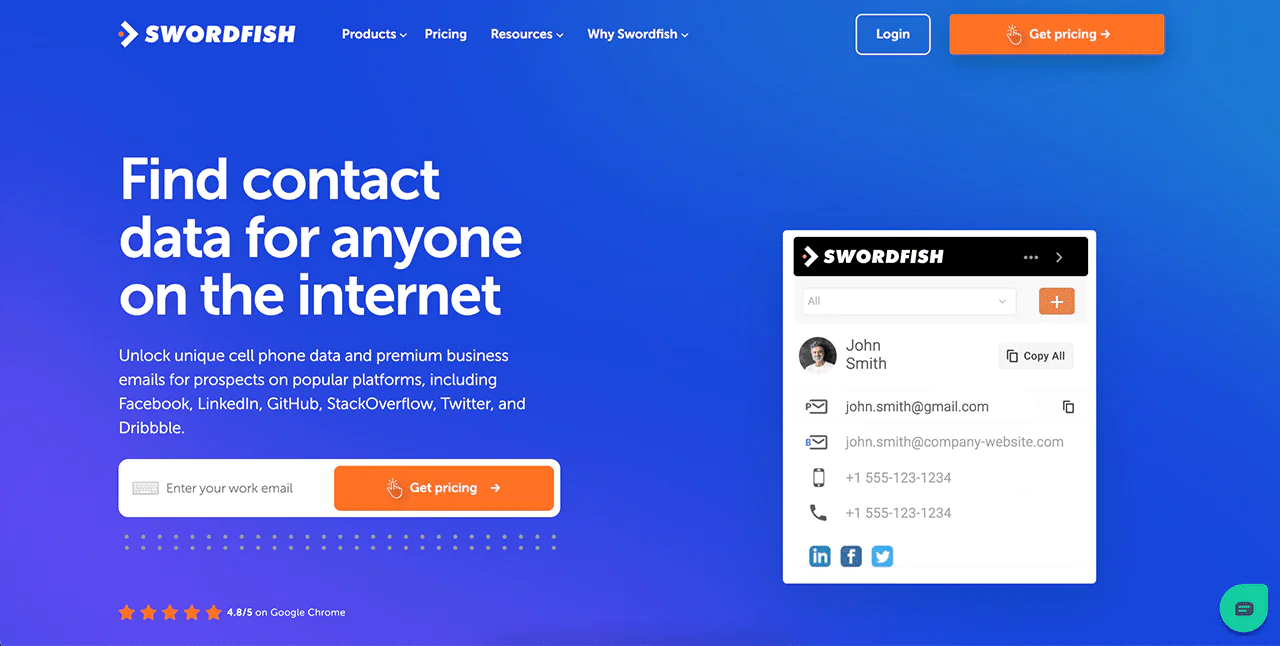
You can extract contact details from social media profiles using the Chrome Extension, which streamlines outreach for both inside and field reps.
Bulk Contact Enrichment
You can enrich lists with missing emails and phone numbers in bulk, saving time and increasing the potential for successful connections.
Reverse Search Capability
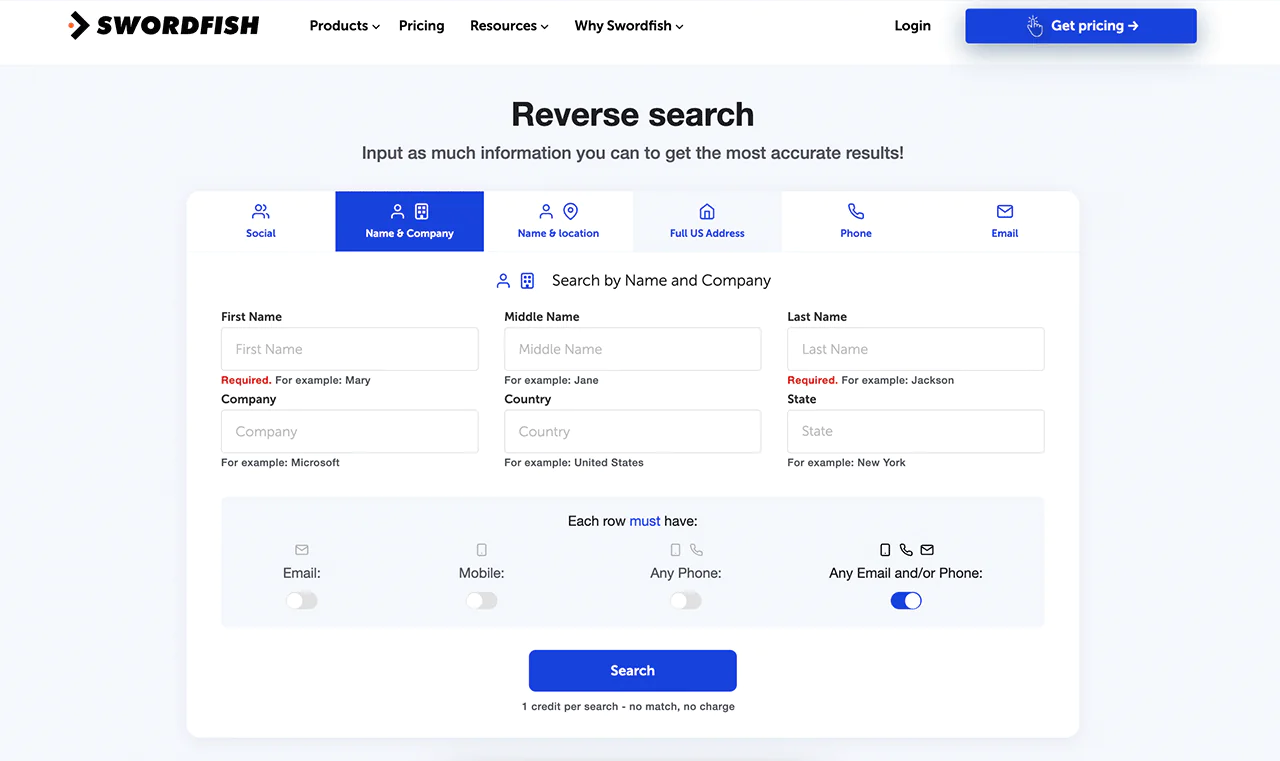
By entering a phone number or email, you can receive a detailed profile through reverse search, making it easier to identify and follow up with potential leads.
Machine Learning Accuracy
By combining machine learning algorithms with premium data vendors, Swordfish AI cross-checks and verifies the extracted data, offering a high level of accuracy.
 Try Swordfish Ai
Conclusion
Inside sales and outside sales aren’t competing philosophies so much as complementary tools. Inside sales brings speed, digital reach, and lower cost per contact. Outside sales brings the depth of in-person trust-building that larger, more complex deals often require.
Most growing sales organizations, particularly those selling into healthcare and other relationship-driven markets, end up running both models side by side, with inside reps handling volume and qualification while outside reps handle strategic accounts.
Whichever mix you choose, accurate contact data underpins both.
A tool like Swordfish AI can help your team spend less time hunting for phone numbers and emails and more time actually selling.
Frequently Asked Questions
What do inside sales reps do?
An inside sales representative focuses on gaining new customers and growing sales. They typically spend their day making many phone calls, collaborating with partners, assessing leads, engaging potential clients’ interest, and finalizing sales.
What do outside sales reps do?
An outside sales representative handles sales directly, meeting with prospective and current customers in person. Their job is to ensure customers have a positive experience and to demonstrate new or updated products in detail when needed.
Is it better to outsource my sales team?
For startups and small businesses, the decision to outsource sales can depend on factors like company size and budget. Outsourcing can be cost-effective, allowing these smaller entities to save on expenses.
Larger companies might outsource to gather leads, freeing up their internal sales teams to focus on engaging with potential customers.
Can you give examples of inside and outside sales?
Inside sales involve engaging with potential customers through online or digital means to foster sales relationships. An example of outside sales is visiting a client’s office to demonstrate a product and explain how it can solve their specific problems.
What are the advantages and disadvantages of inside versus outside sales?
Inside sales teams are ideal if your sales reps can effectively reach and sell to prospects online, which is often the case for fast-selling, widely-used products. On the other hand, if your product typically has a longer sales process, lasting 90 days or more, an outside sales approach might be more suitable.