
 View Products


Last updated: September 3, 2026
Small and medium-sized businesses make up the vast majority of companies worldwide, and that population keeps growing. Global estimates put the number of SMEs at roughly 358 to 359 million as of 2023–2024, up from around 328 million in 2020. For any small business, including independent healthcare practices and clinics competing for patients and referral partners, that growth means more competition for the same pool of attention.
Finding qualified leads is still one of the hardest parts of running a small operation. Limited staff, tight budgets, and the moving target of digital marketing make it easy for outreach to stall. This guide walks through 12 practical ways to build a small business lead pipeline, from referrals and social media to purpose-built data tools like Swordfish AI, with an eye toward what actually works for lean teams.
What are Small Business Leads?
Small business leads are potential customers who have shown interest in the products or services offered by small businesses. These leads assist the growth and sustainability of small enterprises, as they represent the first step in converting an interested individual into a paying customer.
Small business leads usually demand a more personal touch than leads for large enterprises. Because small businesses tend to have closer relationships with their customers, direct engagement built around a clear ideal customer profile tends to outperform broad, impersonal campaigns.
That difference shows up in where leads actually come from. Community involvement, local events, and word-of-mouth referrals often produce better results for small businesses than large-scale advertising pushes.
Many small businesses also serve local or niche markets, which narrows the profile of a qualified lead considerably, in terms of both interest and need.
Why is Small Business Leads Database Important?
A small business leads database is important because it organizes potential customer information, making it easier for businesses to target and communicate with prospects. This database supports marketing efforts and helps in converting leads into paying customers.
Here’s why a structured database matters in practice.
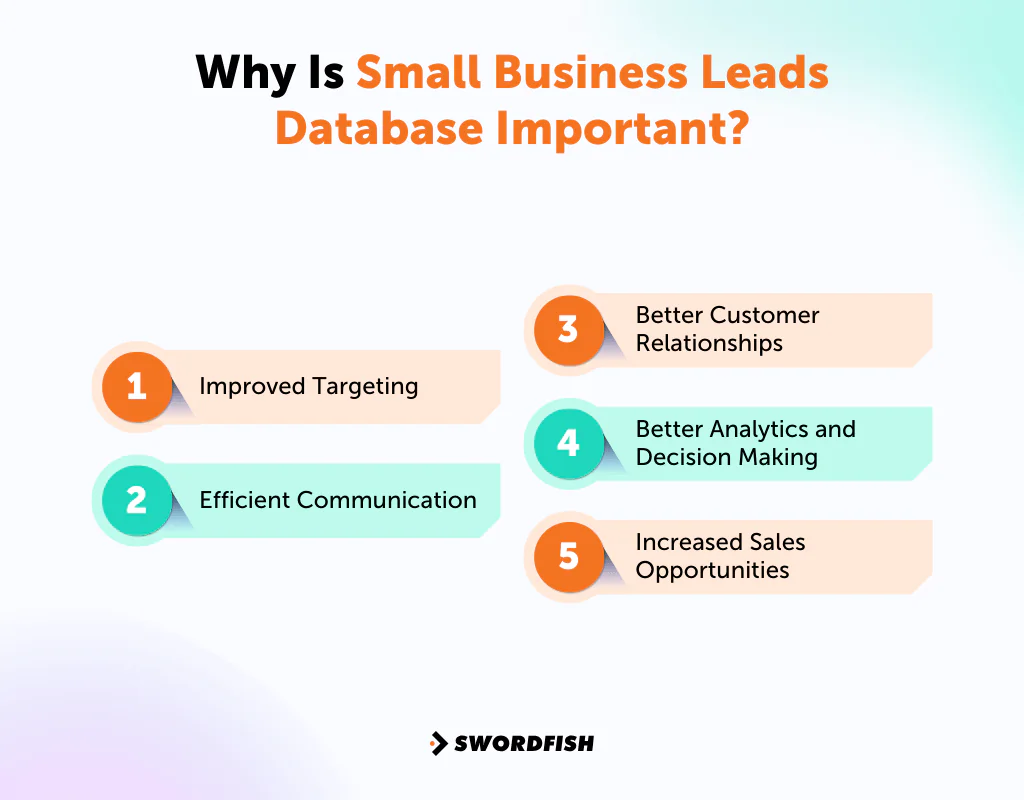
Improved Targeting
A leads database lets you group prospects by interests, demographics, or past interactions. That segmentation makes it far easier to tailor messaging that actually resonates with each group, which raises the odds of converting a given lead.
Efficient Communication
A well-maintained database or email list means your team can pull up contact details quickly and follow up while interest is still fresh. That includes timely check-ins, promotional offers, or updates about new products or services.
Better Customer Relationships
Tracking interactions and preferences lets a business personalize its approach to each qualified lead. That kind of personalization tends to build satisfaction and loyalty, since prospects feel recognized rather than treated as a number.
Better Analytics and Decision Making
Analyzing data from a current leads database shows which marketing efforts are producing results and which aren’t. That visibility helps a small team decide where to put limited time and budget for the best return.
Increased Sales Opportunities
Detailed prospect information also surfaces upselling and cross-selling opportunities as part of a broader sales methodology. That can grow revenue from existing relationships without the cost of acquiring brand-new customers.
Who Needs Small Business Leads?
Small business leads are essential for entrepreneurs, startup founders, and small business owners looking to grow their customer base, increase sales, and expand their market presence.
Here’s a closer look at who relies on a steady lead pipeline.
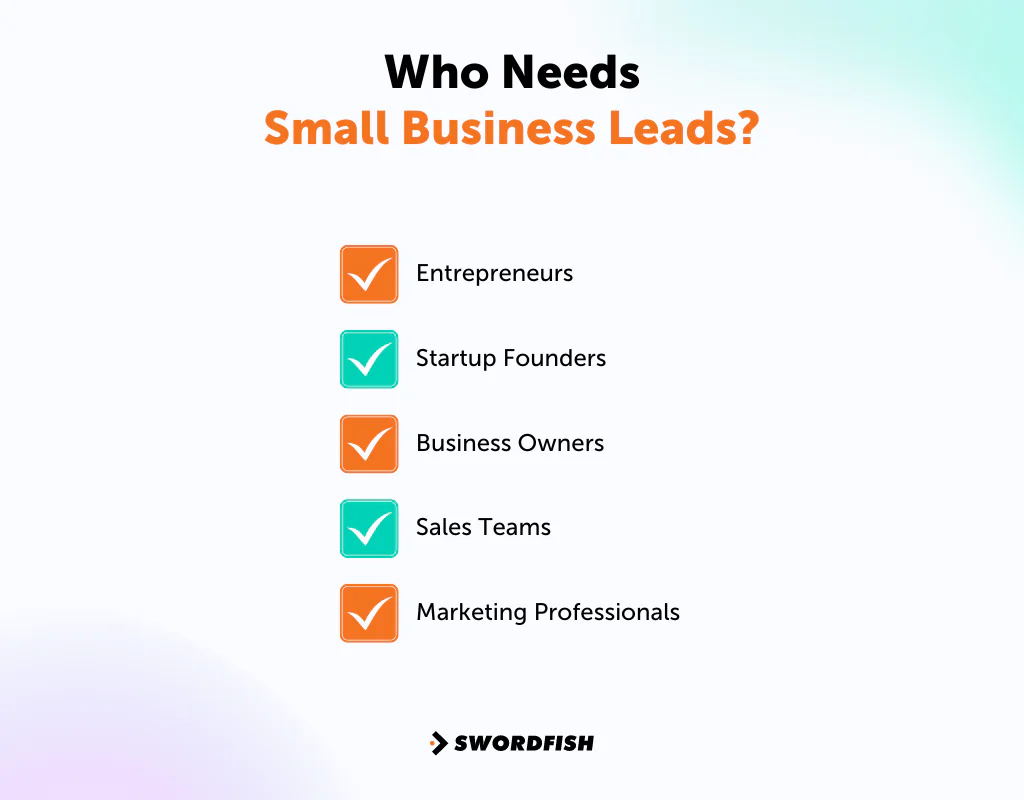
Entrepreneurs
Entrepreneurs launching new ventures need a business leads database to get their sales process and customer engagement off the ground. Leads provide the initial customer base needed to validate a business model, refine an offering, and start generating revenue.
Startup Founders
Founders in competitive markets need leads to establish a foothold quickly and start building a brand, which is why many look for small business leads at little or no cost early on.
Early leads also help test product-market fit, attract first adopters, and build the traction needed to draw further investment.
Business Owners
Owners of established small businesses rely on sales leads lists to sustain and grow operations. For them, leads aren’t just about survival, they’re about expanding into new markets and increasing profitability over time.
Sales Teams
Sales teams need sales leads databases on a rolling basis. Small businesses depend on a steady stream of business lead lists to hit targets, and leads are what let a rep engage prospects, close deals, and move revenue forward.
Marketing Professionals
Marketing professionals often buy leads lists to gauge how well a campaign is performing. Leads reveal which channels and messages are working, which lets a team refine its approach for stronger engagement and conversion.
How to Get Small Business Leads: 12 Best Ways
From social media to email marketing, here are 12 strategies worth building into a small business lead generation plan.
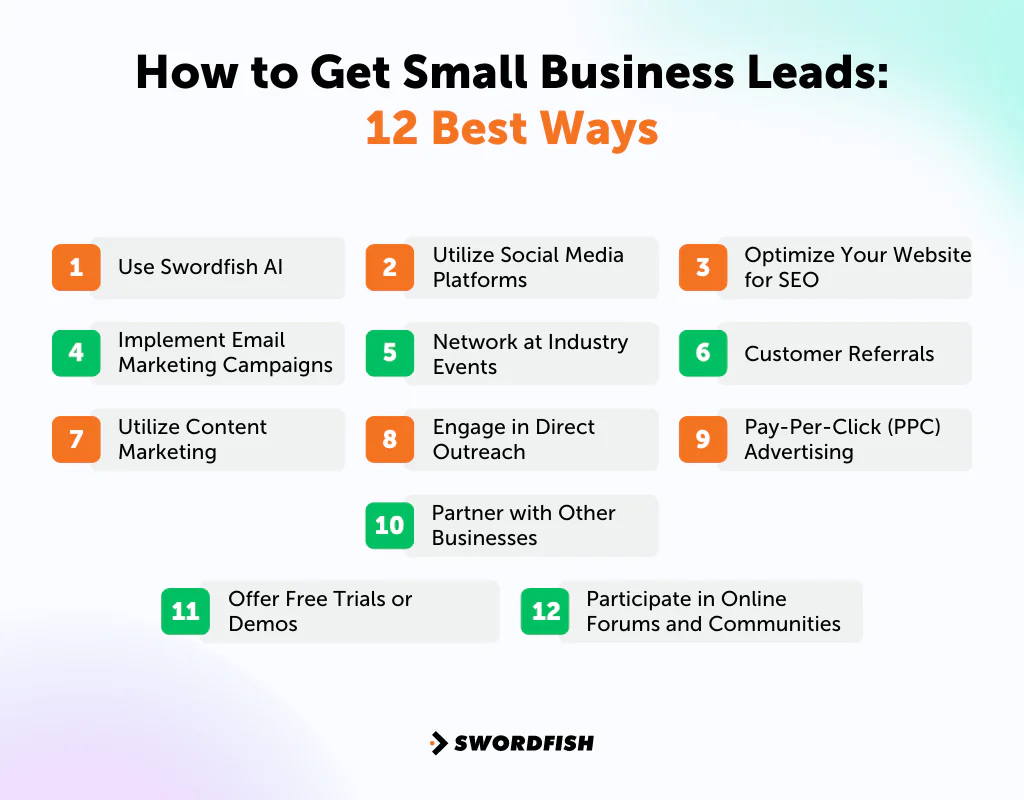
1. Use Swordfish AI: The Best Lead Generation Tool
Swordfish AI is built to give small businesses an affordable way to find quality leads at scale, with access to a large pool of contact data points so you’re not limited to a narrow slice of your market.
Real-time verification is one of the more useful pieces of the platform: it keeps information current, which matters when phone numbers and email addresses change as often as they do.
Behind that verification are proprietary matching algorithms designed to sort through large volumes of data and surface the records most relevant to a given search.
The same verification process also cuts down on bounced emails, which directly improves the odds of an email campaign actually reaching its audience.
Swordfish AI also works with a network of data partners, which broadens the range and depth of records available when you’re prospecting for small business leads.
Features of Swordfish AI for Small Business Lead Generation
Swordfish AI offers a set of features aimed at small business lead generation. Here’s what each one contributes.
-
Prospector Tool
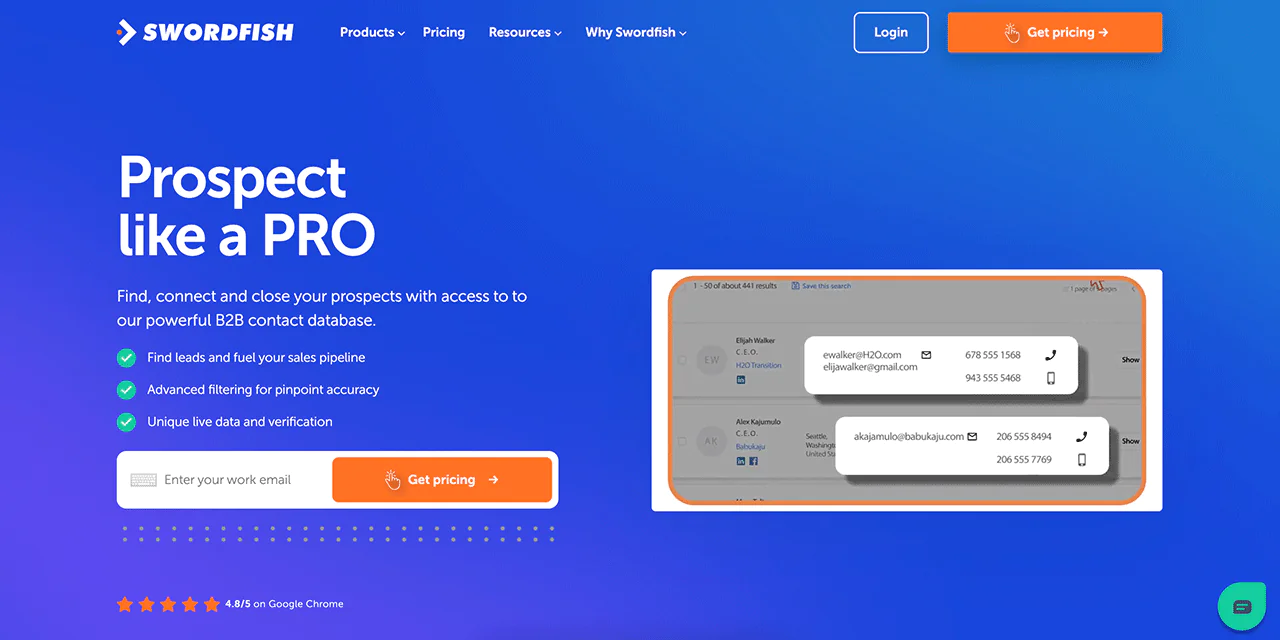
Swordfish AI’s Prospector feature makes it easy to find small business leads through targeted search and real-time data. Advanced filters narrow searches by industry, company size, and location, which keeps prospecting focused instead of scattershot.
-
Reverse Search
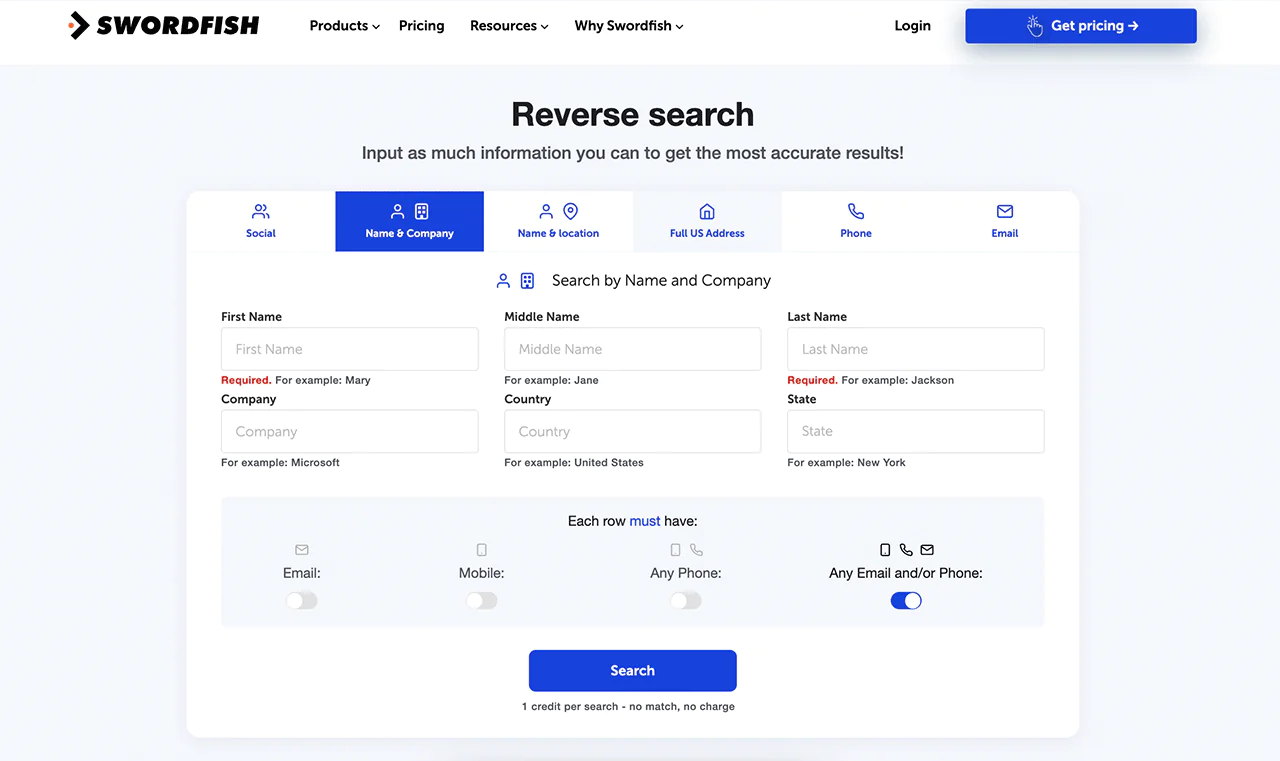
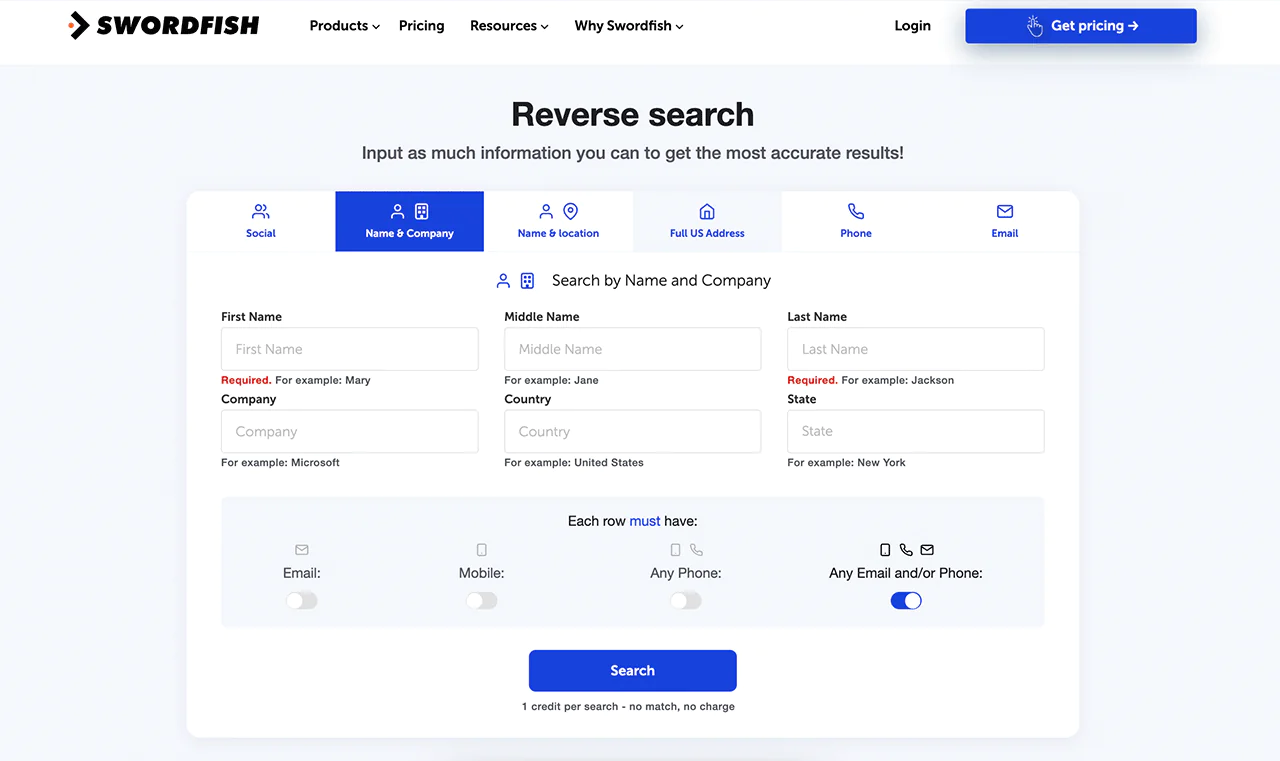
The Reverse Search feature builds out full contact details starting from minimal initial data, which is useful for small businesses trying to expand outreach within a specific sector or set of companies using known contacts as a starting point.
-
API Access
API integration automates lead generation by feeding Swordfish AI’s data directly into sales tools, so outreach is always working from current, accurate information rather than a stale export.
-
Bombora Intent Data
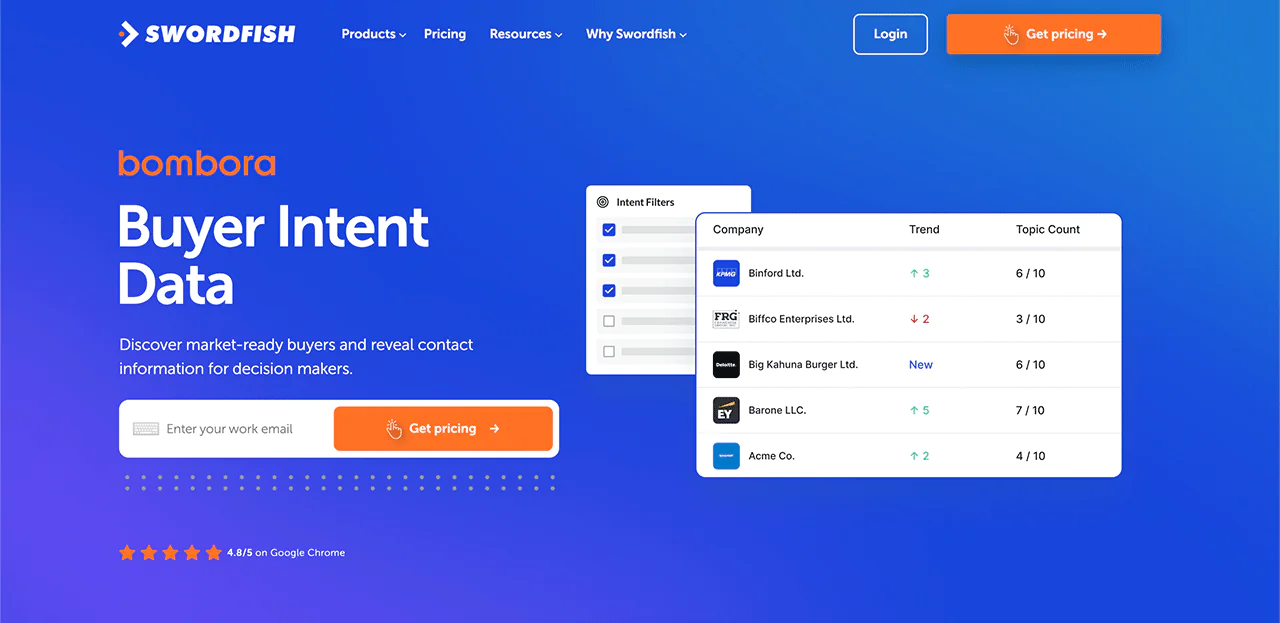
By utilizing Bombora® Intent Data, Swordfish AI helps small businesses identify companies actively researching relevant solutions. That signal lets a team prioritize the b2b lead list companies most likely to be ready for a conversation, rather than reaching out cold.
-
Chrome Extension
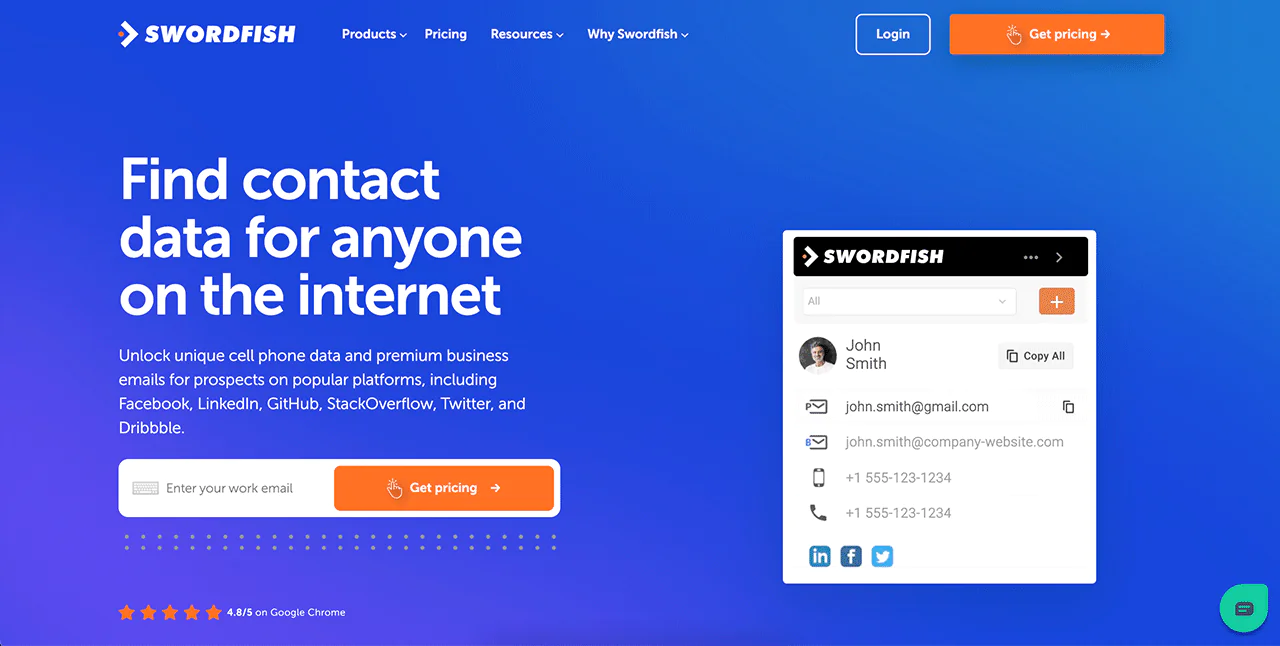
Swordfish AI’s Chrome Extension surfaces verified cell phone data and premium business emails while you browse. It works on individual profiles and lists across platforms like Facebook and LinkedIn, so prospecting can happen without switching tabs.
-
File Upload
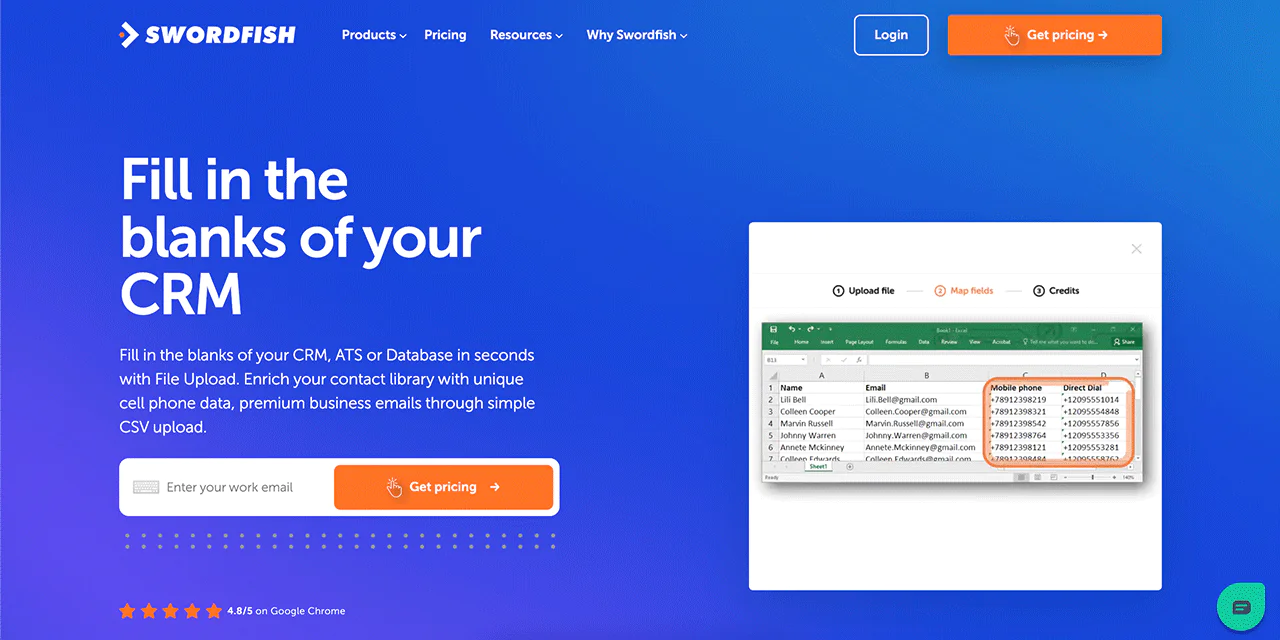
Swordfish AI integrates with CRMs and ATS systems. The file upload feature updates your existing contact database automatically and fills in missing fields with unique cell phone data and premium business emails, so records stay complete without manual cleanup.
-
Email Verifier
With the Email Verifier feature, you enter the addresses you want checked, and the tool evaluates each for authenticity, helping you strip out invalid or inactive emails before a campaign goes out.
 Try Swordfish Ai
2. Utilize Social Media Platforms
Social media remains one of the most direct ways to generate small business leads. Engaging your audience, running targeted ads, and working with influencers all help increase visibility and pull in interested prospects.
-
Engage with Your Audience
Post regularly, reply to comments, and join relevant conversations. This builds a community around your brand and attracts new leads through genuine interaction, the way a local bakery might build a following just by sharing daily specials.
-
Run Targeted Ads
Use a platform’s targeting tools to reach people based on interests and location. An online bookstore, for example, can target literature enthusiasts in a specific region to bring in leads who already have relevant interests.
-
Influencer Marketing
Partner with influencers whose audience overlaps with your target market. A company selling eco-friendly products might work with sustainability-focused creators, using their credibility to introduce followers as potential leads.
3. Optimize Your Website for SEO
For startups looking to build a lead pipeline, SEO is one of the more durable investments. Ranking higher in search results drives organic traffic that converts into leads over time, without the ongoing cost of paid ads.
-
Keyword Research and Implementation
Identify and use keywords relevant to your business in website content and meta descriptions. A local coffee shop, for instance, might target phrases like “best espresso in [City Name]” to reach nearby customers already searching.
-
Content Marketing
Create content that speaks directly to your audience’s needs. A home improvement business blogging about DIY tips demonstrates expertise while drawing in homeowners who are actively looking for guidance, which naturally generates leads.
-
Local SEO Strategies
Optimize for local search by listing your location and service area clearly. A pet grooming service that names the specific neighborhoods it serves makes it easier for nearby pet owners to find and choose them.
4. Implement Email Marketing Campaigns
Email marketing gives small businesses a direct channel to reach potential leads, nurture them with relevant content, and move them toward becoming customers.
-
Newsletter Sign-ups
Offer an incentive for website visitors to subscribe. That creates an ongoing channel for nurturing leads with updates, offers, and useful information over time.
-
Personalized Email Content
Write emails that reflect a subscriber’s actual interests and past interactions. Personalized messaging tends to get more engagement simply because it feels relevant rather than generic.
-
Automated Follow-up Sequences
Set up automated sequences triggered by subscriber behavior, whether that’s welcoming a new signup or re-engaging someone who’s gone quiet, so your business stays top of mind without manual follow-up.
5. Network at Industry Events
In-person and virtual networking still generates leads by letting a small business build relationships and showcase what it offers directly to potential customers and partners.
-
Attend Trade Shows and Conferences
Attend industry-relevant trade shows and conferences to meet potential customers, size up competitors, and stay current on trends. This exposure showcases your expertise and can generate leads directly.
-
Host or Sponsor Local Events
Hosting or sponsoring local events raises your visibility within the community and positions your business as a recognized player in your space, while giving you a more personal setting to engage prospects.
-
Utilize Virtual Networking Opportunities
Webinars and online industry meetups let you reach leads outside your immediate geography, extending your reach beyond what local events alone can offer.
6. Customer Referrals
Referrals remain one of the most reliable lead sources for small businesses, since satisfied customers naturally become advocates who recommend you to people they know.
-
Create a Referral Program
Set up a referral program that rewards existing customers for bringing in new leads. Discounts or free services as incentives encourage customers to actively share their experience with others.
-
Incentivize Word-of-Mouth Marketing
Recognize and reward customers who promote your business on social media or through personal recommendations. Over time, this can turn loyal customers into informal brand ambassadors.
-
Showcase Customer Testimonials
Feature testimonials on your website and social channels. Positive reviews and success stories build trust with prospects and make the value of your offering concrete.
7. Utilize Content Marketing
Content marketing attracts and engages potential leads by giving them information they actually find useful, ahead of any sales conversation.
-
Blog Posts and Articles
Write posts that address common questions or concerns in your industry. This supports SEO while establishing your business as a credible authority in its field.
-
Infographics and Videos
Turn complex information into infographics and videos that are easier to follow and more likely to be shared, which extends your reach and your lead pipeline at the same time.
-
Ebooks and Whitepapers
Offer in-depth resources like ebooks and whitepapers, gated behind a contact form. This gives prospects something genuinely useful while giving you a way to capture leads.
8. Engage in Direct Outreach
Direct outreach targets prospects who are more likely to have a specific interest in what you offer, rather than casting a wide, impersonal net.
-
Cold Calling
Cold calls let you introduce your business and address questions in real time. It’s a direct approach, and for many small businesses it still produces results when targeted well.
-
Direct Mail Campaigns
Send personalized letters or postcards to a targeted list. In a digital-heavy landscape, physical mail stands out simply because it’s tangible and harder to ignore.
-
LinkedIn Outreach
Connect with potential leads through personalized LinkedIn messages, including by finding email addresses on Linkedin. This is especially useful for B2B businesses looking to reach professionals directly.
9. Pay-Per-Click (PPC) Advertising
Pay-Per-Click (PPC) advertising lets small businesses pay only when someone clicks their ad, which gives a direct, budget-controlled way to drive traffic and generate leads.
-
Google Ads
Appear in search results for keywords tied to your business. This puts you in front of people actively searching for what you offer, which raises the odds of conversion.
-
Social Media Ads
Target ads by demographics, interests, and behavior on social platforms. This keeps your budget focused on the people most likely to care about your message.
-
Retargeting Campaigns
Show ads to people who’ve already visited your site but didn’t convert. Retargeting keeps your brand visible and gives hesitant visitors a reason to come back.
10. Partner with Other Businesses
Partnering with complementary businesses lets a small business tap into someone else’s customer base and expand its reach without a big ad spend.
-
Cross-Promotion Opportunities
Find businesses offering complementary products or services and collaborate on cross-promotion, whether through co-hosted events, bundled services, or shared social content, which effectively doubles your visibility.
-
Joint Venture Partnerships
Team up on a specific project or offering. Joint ventures let both businesses use each other’s strengths and resources to reach a wider audience and generate leads for both sides.
-
Affiliate Programs
Set up an affiliate program that pays a commission for sales other businesses or individuals generate on your behalf. Make sure yours is one of the trusted affiliate programs in your industry, since a reputable program is what attracts serious bloggers, influencers, and affiliate marketers.
11. Offer Free Trials or Demos
Letting prospects try before they buy lowers the barrier to conversion and gives them firsthand proof that your product or service solves their problem.
-
Product Demonstrations
Live or virtual demos show exactly how your product works and how it solves a specific problem, which moves hesitant prospects further along in the sales process.
-
Limited-Time Offers
Pairing a free trial with a limited-time offer creates urgency and encourages leads to act sooner rather than putting off a decision indefinitely.
-
Free Consultations
Free consultations let you engage one-on-one, understand a prospect’s actual needs, and offer tailored solutions, which builds trust and shows commitment to customer satisfaction.
12. Participate in Online Forums and Communities
Contributing genuinely useful insight in online communities builds brand awareness and trust with potential leads over time.
-
Engage in Relevant Discussions
Participate actively on platforms like Reddit, Quora, or industry forums. Answering questions with real expertise positions your business as a helpful authority, which attracts leads organically.
-
Share Expertise and Advice
Focus on genuinely helping people rather than pitching your business outright. Credibility built this way tends to generate more durable interest than direct promotion.
-
Build Brand Awareness
Consistent participation builds recognition over time. As you become a known, respected contributor, community members are more likely to recommend your business to others.
Conclusion
Generating small business leads is a constant requirement for SMEs and startups trying to grow in a competitive market.
The strategies that work best combine a clear understanding of your audience, the right tools, and consistent follow-through. Quality tends to beat quantity, which means focusing effort on prospects who are genuinely likely to convert rather than chasing volume for its own sake.
Among the approaches covered here, Swordfish AI stands out for making it straightforward to find and connect with potential leads at scale.
By combining verified contact data with tools built specifically for prospecting, Swordfish AI gives small businesses a more manageable, more accurate way to reach the audience they’re actually trying to reach.
FAQs
How often should I update my content marketing strategy to generate leads?
Review your content marketing strategy at least quarterly. Market trends, customer preferences, and business goals shift, so a regular review keeps your content relevant and effective at attracting leads.
Can customer feedback directly impact my lead generation efforts?
Yes. Positive feedback and testimonials strengthen credibility, while addressing negative feedback publicly shows you take customer concerns seriously. Both can attract new leads by demonstrating commitment to customer satisfaction.
What’s the role of analytics in improving my lead generation strategy?
Analytics show which tactics are actually working. Reviewing data on website traffic, conversion rates, and customer behavior lets you make informed decisions instead of guessing where to focus.
How can I measure the success of my lead generation strategy?
Track key performance indicators like new leads generated, conversion rate, cost per lead, and return on investment for your lead generation activities.
Is it necessary to use paid advertising for lead generation?
Not necessarily. Many small businesses generate leads successfully through organic methods like SEO, content marketing, and social media engagement. Whether paid advertising makes sense depends on your goals, budget, and target audience.