

 View Products


Last updated: September 3, 2026

Distressed properties move fast, and they rarely sell at full price. A homeowner facing foreclosure, a tax lien, or a messy probate case usually needs a buyer who can close quickly, not one who wants to negotiate for months. That urgency is exactly why distressed homeowner leads have become a core part of many real estate businesses, and why foreclosure activity has been climbing again after several years of historic lows.
So how do you actually find these homeowners before your competitors do?
Start with online platforms and real estate databases like Swordfish AI that specialize in surfacing distressed properties. These tools help you locate and reach homeowners facing financial pressure. Pair that with direct mail, real estate investor clubs, and targeted outreach, and you have a repeatable system for sourcing deals.
Below, we break down what these leads are, where they come from, and how to build a pipeline that actually converts.
What are Distressed Homeowner Leads?
Distressed homeowner leads are properties tied to owners in financial trouble, often facing foreclosure, bankruptcy, or an inability to keep up with mortgage payments. These leads represent potential buying opportunities for investors, agents, and flippers.
Foreclosure activity has been rising again since 2022 as pandemic-era protections expired and higher interest rates, inflation, and insurance costs squeezed household budgets. Nationwide, roughly one in every 1,400 to 4,700 housing units has had a foreclosure filing in a given quarter over the past two years, depending on market conditions, and filings in the first half of 2026 were up sharply from the year before. For investors and agents, that translates into a steady, if uneven, supply of properties selling below market value.
These situations don’t come from foreclosure alone. Divorce, tax liens, and sudden relocations all push homeowners into selling under pressure. Knowing which type of distress you’re dealing with changes how you approach the homeowner and how quickly you should expect to close.
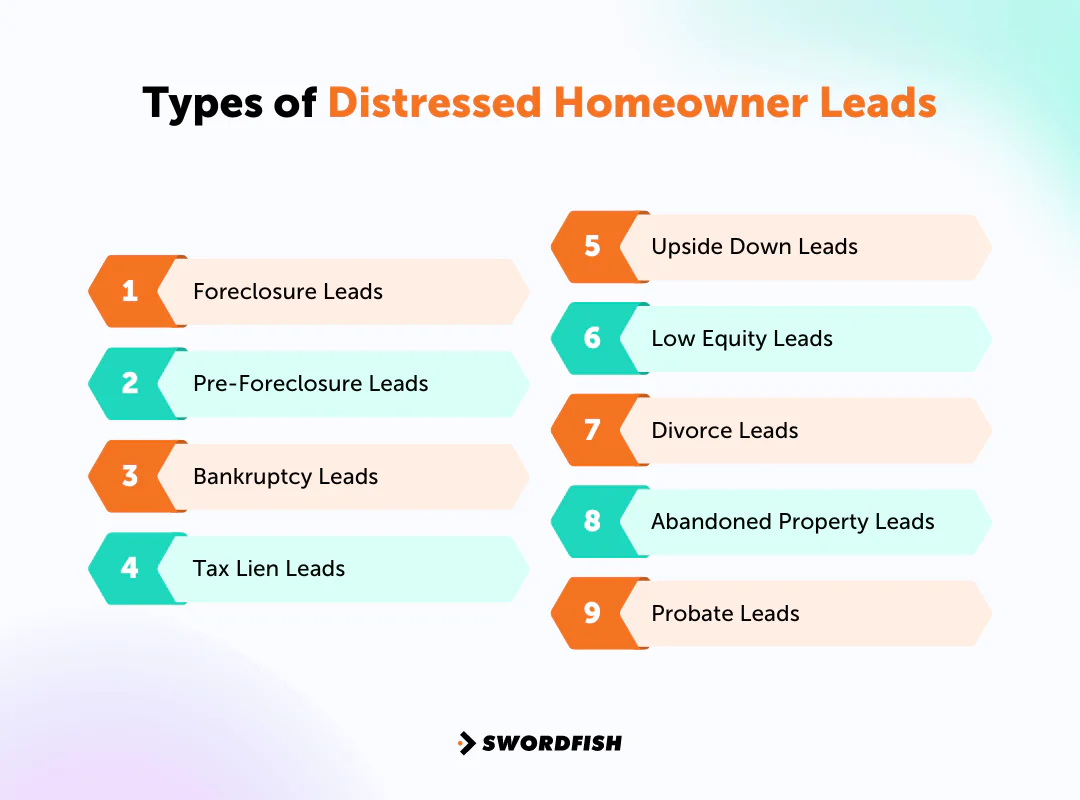
Types of Distressed Homeowner Leads
Distressed leads come from a range of situations, each with its own timeline and negotiating dynamics.
Foreclosure Leads
These come from homeowners who have already stopped making mortgage payments and are at risk of the bank reclaiming the property. Because they’re trying to avoid losing the home and damaging their credit, they’re often motivated to negotiate.
Pre-Foreclosure Leads
Pre-foreclosure leads occur when a homeowner has missed payments and received a formal warning from the lender. The property hasn’t been foreclosed on yet, which gives you a window to negotiate directly with an owner who may prefer a private sale over the foreclosure process.
Bankruptcy Leads
Homeowners filing for bankruptcy sometimes need to sell their property to settle debts. The financial and emotional pressure of this process can lead to below-market sales as owners try to resolve things quickly.
Tax Lien Leads
Tax lien leads come from homeowners who’ve fallen behind on property taxes, prompting the government to place a lien on the home. Investors can purchase these liens and, in some cases, eventually gain ownership if the taxes remain unpaid.
Upside Down Leads
These homeowners owe more on their mortgage than the property is currently worth. Some will still sell to escape the financial strain, often at a loss relative to what they owe.
Low Equity Leads
Homeowners with little equity left in their property have limited room to maneuver if money problems hit. That usually pushes them toward a quick sale at a lower price rather than risking a longer, more expensive process.
Divorce Leads
Divorce often forces a property sale as couples divide assets. These sellers frequently want a fast transaction to move the separation forward, sometimes accepting less than full market value to get there.
Abandoned Property Leads
Properties get abandoned for a range of reasons, including financial distress or relocation. These homes often need significant repair work, which can make them attractive to investors focused on rehab projects.
Probate Leads
Probate leads come up when a property owner passes away and the estate moves through probate. Heirs frequently prefer to liquidate rather than manage or maintain the property, creating opportunities to buy at a discount.
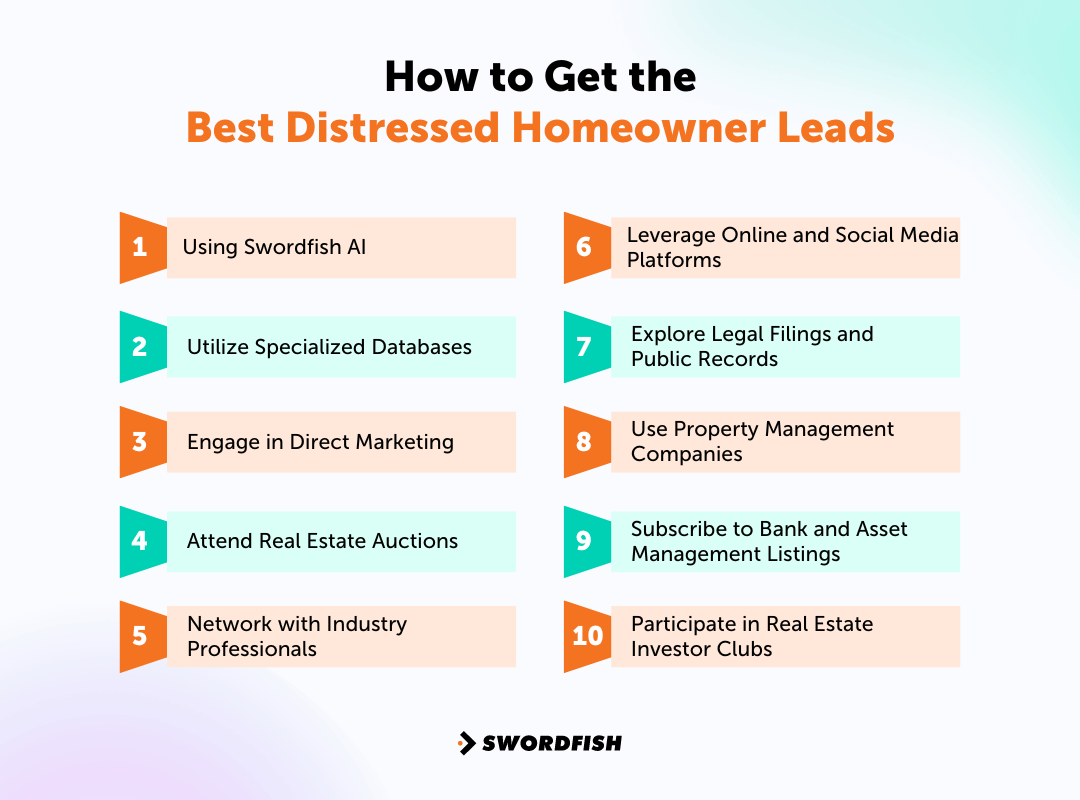
How to Get the Best Distressed Homeowner Leads
Here are the strategies that consistently produce results for sourcing distressed homeowner leads.
1. Using Swordfish AI: Get the Best Distressed Homeowner Leads

When you’re targeting distressed property owners, speed and accuracy matter more than volume. Swordfish AI is built to help you find personal contact information, including cell phone numbers and mailing addresses, without wasting time on stale or duplicate records.
Swordfish AI’s database and matching process are designed to surface verified contact details, so you’re not chasing disconnected numbers or outdated addresses.
The platform’s database of 3.5 billion profiles gives you a wide net to work with, and its Chrome extension pulls contact data directly from LinkedIn, Facebook, and other sites while you browse.
Beyond the basics, Swordfish AI supports advanced search filters that go past location and property type.
You can refine searches using criteria such as potential equity, historical property data, and seasonal trends, which helps narrow a broad list down to homeowners who are actually likely to sell.
Key Features of Swordfish AI
Swordfish AI offers several tools to help streamline distressed homeowner lead sourcing across the US. These best contact finding tools can help you connect with motivated homeowners more efficiently.
Chrome Extension

The Swordfish Chrome Extension lets you pull contact data directly from platforms like LinkedIn, Facebook, and Twitter. For distressed homeowner leads, that means grabbing contact information from a social profile without switching tools.
Prospector
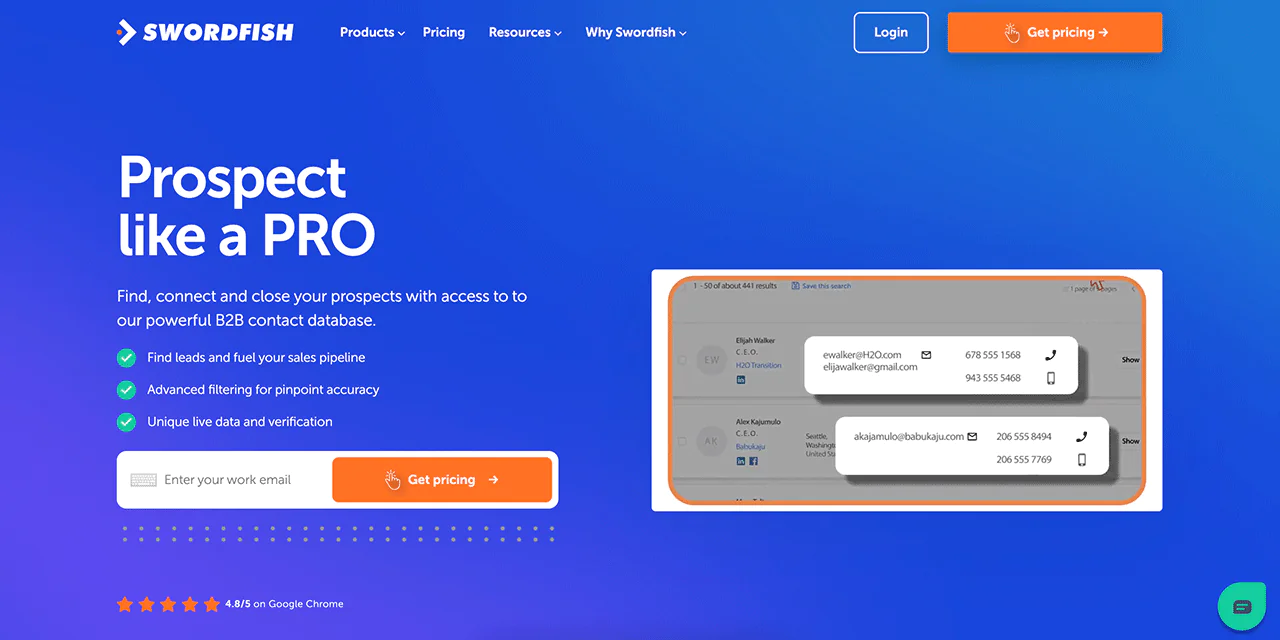
Prospector lets you build and export lists based on specific criteria. For distressed property leads, that means filtering for prospects in financial difficulty or pre-foreclosure across any state.
File Upload
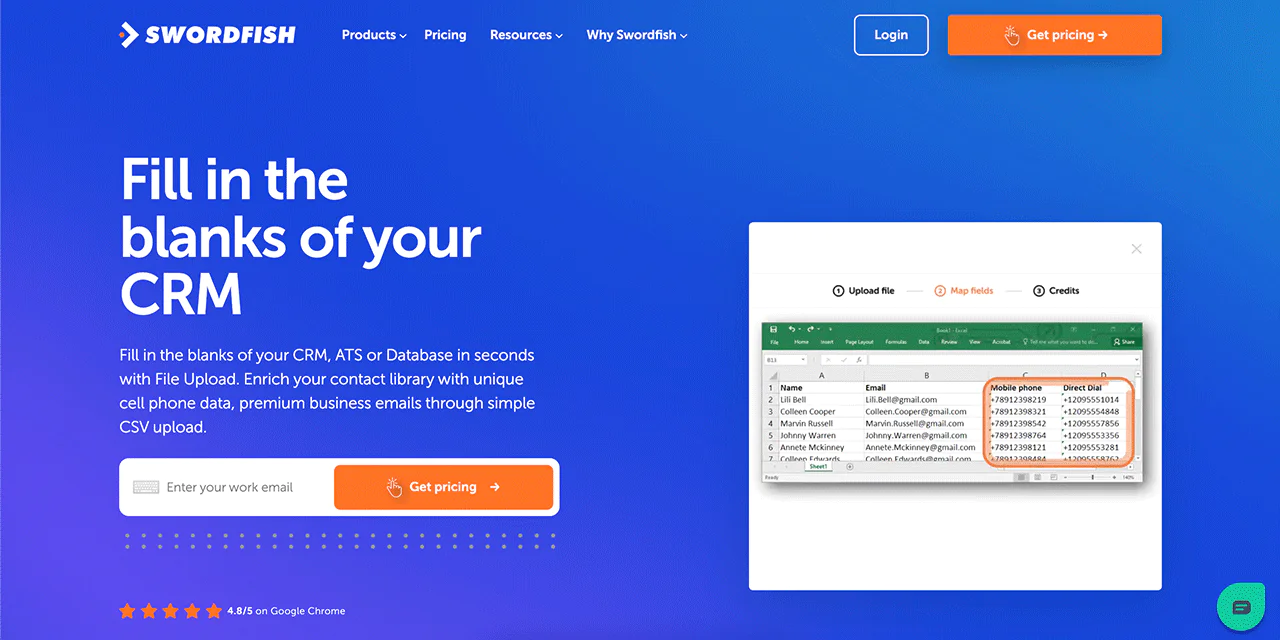
File Upload lets you upload a CSV and fill in missing contact details automatically. It’s useful for real estate professionals maintaining a running list of distressed homeowners.
Reverse Search
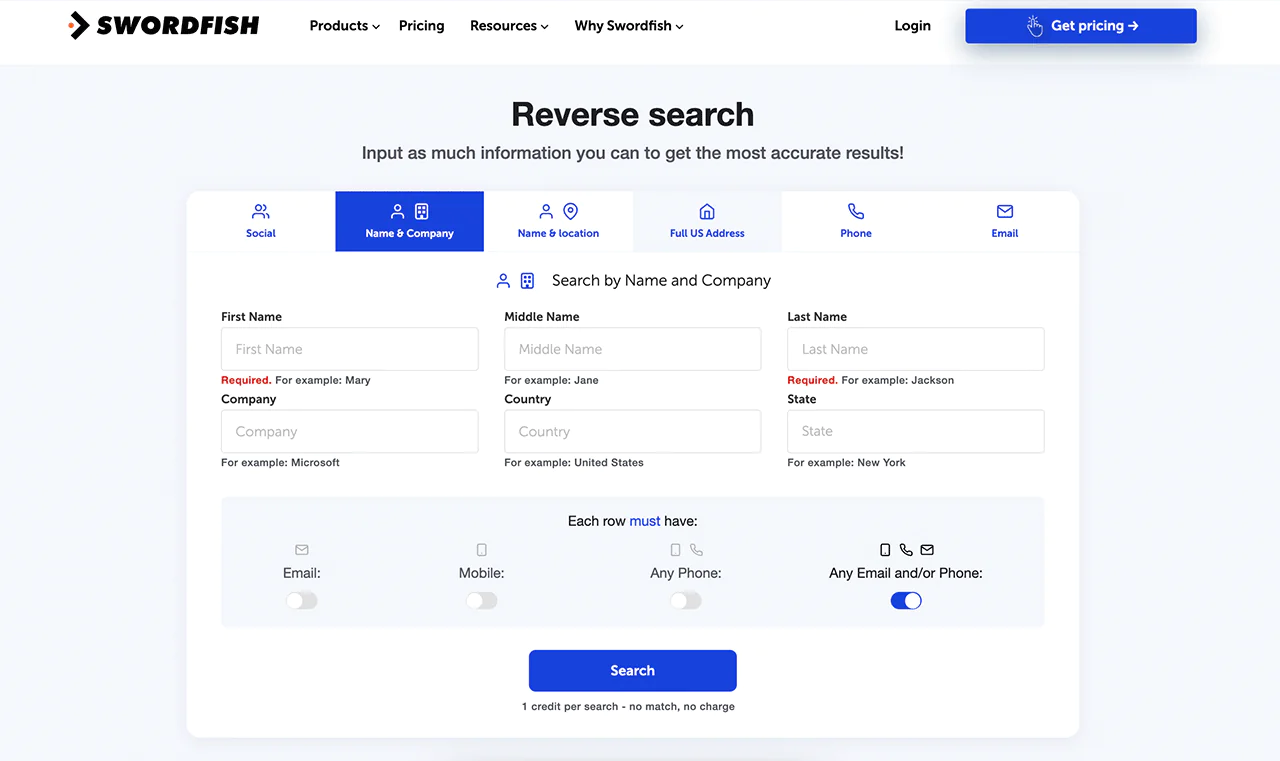
Use Reverse Search to fill in the gaps on a lead when you only have a partial name, phone number, or location. It can help you piece together enough detail to make contact with a distressed homeowner.
Bombora
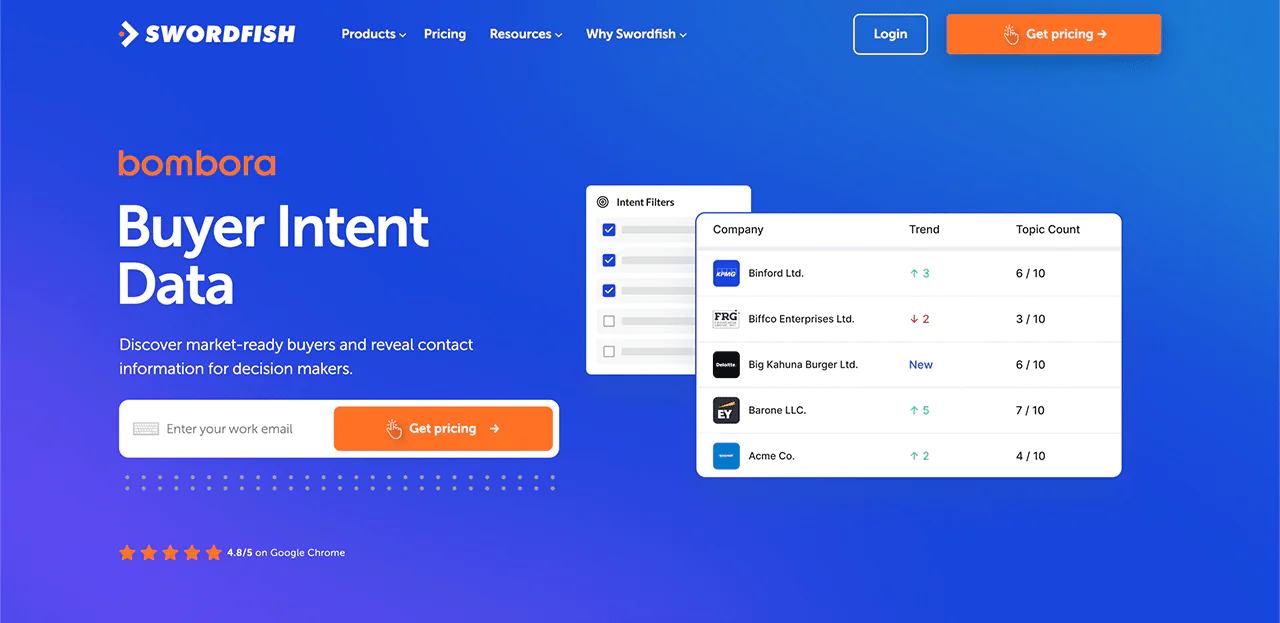
Swordfish’s integration with Bombora surfaces intent data that can point to businesses likely to need real estate solutions, including companies that may need to liquidate property.
API

The Swordfish API connects to other platforms and applications, giving agents working distressed properties a way to pull current homeowner contact data into their existing workflow.
 Try Swordfish Ai
2. Utilize Specialized Databases
Specialized databases list distressed properties such as foreclosures, bank-owned homes, and properties with tax liens. These are a practical starting point if you’re trying to find properties priced below market value.
Many investors report finding usable leads through these tools, and filtering by location, property type, and urgency can help you narrow results to deals that actually fit your investment criteria.
This method isn’t just fast; it also lets you scan multiple markets for potential deals efficiently.
3. Engage in Direct Marketing
Direct marketing means reaching out personally to homeowners in distress, whether they’re facing foreclosure, dealing with unpaid property taxes, or need to sell quickly for personal reasons.
Personalized letters or postcards that speak to their specific situation and offer a real solution tend to open more conversations than generic mailers. With foreclosure filings up meaningfully over the past two years, there’s a growing pool of homeowners to reach this way.
Done well, this approach helps homeowners in a tough spot while surfacing deals that other buyers might overlook entirely.
4. Attend Real Estate Auctions
Auctions give you direct access to distressed properties, often sold by banks or financial institutions trying to recover debt. Prices at auction can run well below market value, though the exact discount varies by market and property condition.
Success at auctions requires being ready to make quick decisions and accurately estimate both property value and repair costs. Being prepared matters more here than almost anywhere else in the process, since the competitive setting leaves little room to renegotiate.
By attending real estate auctions, you can quickly generate leads by connecting directly with sellers, giving you a shot at securing deals on the spot.
5. Network with Industry Professionals
Strong relationships with real estate agents, attorneys, and court officials can surface insider information on distressed properties before they hit the open market.
These professionals often know about financial distress, upcoming foreclosures, or probate estates well before public listings appear. Referrals from industry contacts remain one of the more reliable sources of off-market deals in many local markets.
Nurturing these relationships over time tends to produce a steadier flow of leads than any single marketing tactic.
6. Utilize Online and Social Media Platforms
Digital platforms and social media can be effective for identifying and connecting with distressed homeowners. Targeted ads on Facebook, LinkedIn, or Google let you reach specific groups of homeowners who may be under financial pressure.
These platforms allow detailed targeting by demographics, location, and interests, which lines up well with the profile of a distressed property owner.
You can also optimize LinkedIn for sales prospecting to expand your network and surface more distressed homeowner leads through targeted outreach.
7. Explore Legal Filings and Public Records
Public records and legal filings are a reliable source for finding distressed properties. Regularly checking foreclosure notices, divorce records, and probate filings can turn up properties that never make it to traditional listing sites.
This approach takes consistent research and a working knowledge of local laws, but it can uncover deals that other buyers simply miss.
8. Use Property Management Companies
Property management companies oversee rental portfolios that can turn into distressed sales due to unpaid rent or a landlord’s own financial trouble.
Building a relationship with these companies can give you an early heads-up on properties that might soon come up for sale, letting you negotiate directly with the owner before the listing goes public.
That early access can be the difference between competing for a deal and getting first crack at it.
9. Subscribe to Bank and Asset Management Listings
Banks and asset management firms frequently list distressed properties before those listings go public.
Subscribing to their newsletters or staying in regular contact with asset managers can get you early notice of new inventory.
This keeps you ahead of the broader market rather than competing with everyone else once a listing goes live.
10. Participate in Real Estate Investor Clubs
Local real estate investor clubs are a good way to tap into partnerships and insider tips on distressed homeowner leads that haven’t gone public. Regular meetings often cover local market conditions, investment strategies, and upcoming deals.
Active participation expands your network and gives you insight into securing leads before they reach the broader market, which matters a lot in a competitive niche like this.
Who Needs Distressed Homeowner Leads?
If you work in real estate or an adjacent field, distressed homeowner leads can shift how you find and close deals.
These leads matter most to anyone trying to connect with homeowners under financial pressure or properties heading toward foreclosure.
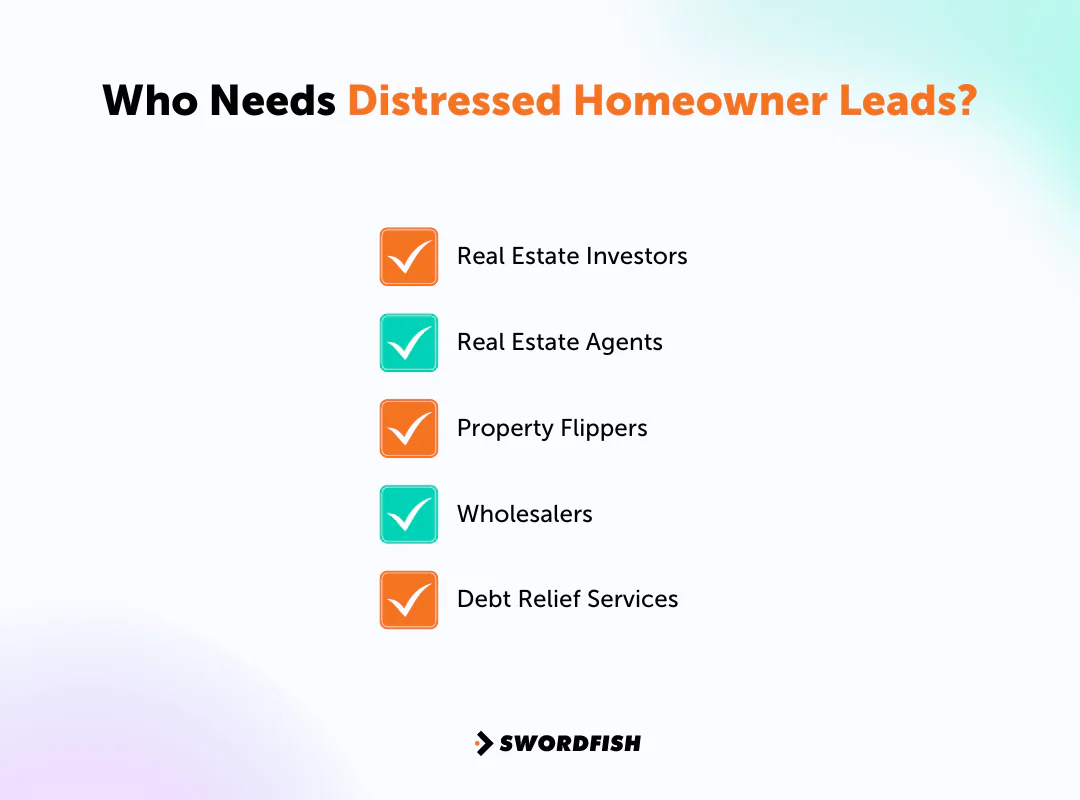
Real Estate Investors
If you’re looking to buy below market value, distressed homeowner leads are hard to replace.
These leads point to properties, foreclosures and bank-owned homes among them, that are likely to sell for less than they’re worth, which can mean stronger returns for the buyer.
Real estate agents and investors can benefit from these enterprise sales prospecting tips tailored to the distressed property market.
Real Estate Agents
For agents, these leads open the door to new listings and sales. Helping homeowners navigate a difficult sale can lead to faster closings, earned commissions, and a reputation as someone who handles tough situations well.
Property Flippers
Flippers rely on distressed properties as their core deal source. These homes typically need renovation and can be bought at a discount, leaving room for a solid margin once the work is done and the property is resold.
Wholesalers
Wholesalers use distressed homeowner leads to lock in properties at a low price and assign the contract to an end buyer for a quick profit, without ever taking title to the property themselves.
Debt Relief Services
Companies offering debt relief or financial services can use these leads to identify homeowners who might benefit from their offerings, potentially helping prevent a foreclosure altogether.
How Much Do Distressed Homeowners Leads Cost?
Pricing varies widely depending on how the leads are sourced and how targeted they are. Here’s a general breakdown to help with budgeting.
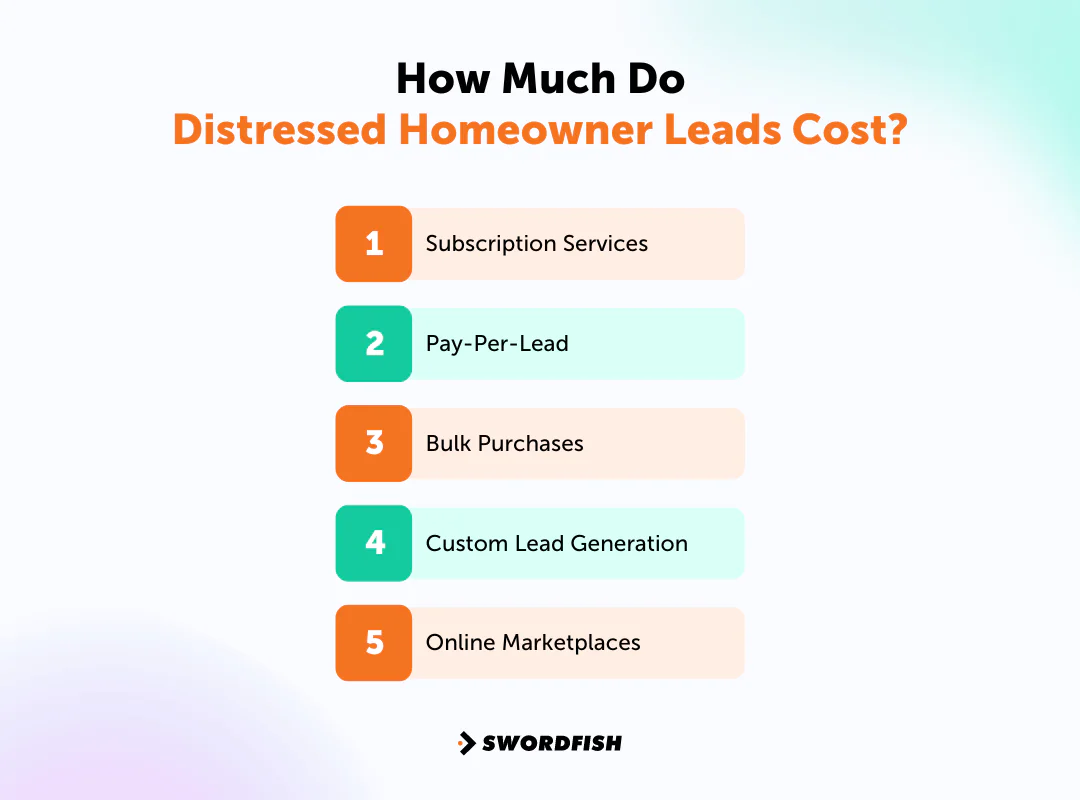
Subscription Services
Monthly subscription packages typically run from $50 to $500 per month, depending on lead volume and data depth. Most include tools and support to help you get more value from the list.
Pay-Per-Lead
Pay-per-lead pricing usually falls between $1 and $5 per lead. This works well if you’d rather buy only what you need without a recurring commitment.
Bulk Purchases
Buying in bulk can push the per-lead cost down significantly, sometimes to under a dollar per lead when a package contains hundreds of records.
This is a common approach for larger teams or companies running high-volume outreach.
Custom Lead Generation
Custom lead generation, built around your specific criteria, tends to cost more, often $500 to over $1,000 for a highly targeted batch.
It makes sense if you’re working a narrow, well-defined segment where generic lists won’t cut it.
Online Marketplaces
Online marketplaces price leads based on competitiveness and local demand, generally somewhere between $2 and $10 per lead depending on market conditions and exclusivity.
Conclusion
Finding good distressed homeowner leads is harder than it sounds, mainly because the data goes stale fast and pulling accurate information from multiple sources takes real effort.
That’s where Swordfish AI fits in, by helping you work from current, reliable contact data instead of outdated lists. Try Swordfish AI to connect with distressed homeowners more efficiently.
Frequently Asked Question
What is a distressed seller?
A distressed seller is a homeowner who needs to sell quickly due to financial difficulty, such as foreclosure, bankruptcy, or another economic hardship. These situations often push the sale price below market value.
What are distressed homeowner leads for sale?
These are lists of properties or homeowners facing financial pressure who may need to sell quickly. They’re valuable to investors and agents looking for opportunities to buy at a reduced price.
Will I need free distressed homeowner leads?
Free leads can be a reasonable starting point, but paid platforms like Swordfish AI generally offer more current and reliable contact data. Quality leads tend to produce better outcomes and make better use of your time than free lists that are often outdated.
How can I find a distressed property list?
Online databases, real estate websites, and foreclosure listing services are common starting points. Tools like Swordfish AI can also provide detailed, current information on distressed properties across different regions.
Why should I buy distressed property leads?
Buying leads gives you a direct line to homeowners who are motivated to sell quickly, often below market value, which can improve your odds of closing a profitable deal.
How often should I follow up with leads of distressed homeowners?
Follow up diligently but respectfully. A reasonable pattern is an initial contact followed by check-ins every few weeks, adjusted based on their response and readiness to move forward. Persistent, thoughtful follow-up builds trust over time.
What are off market motivated seller leads?
These are contacts for property owners who haven’t listed publicly but are open to selling. They often involve sellers looking for a fast transaction, which can mean better pricing for the buyer.
Sources retained from the original article: HUD report.