
 View Products


Last updated: September 3, 2026

A meaningful share of U.S. property owners don’t live in the homes they own, and many of them struggle to keep up with maintenance, tenants, or paperwork once a listing expires. Recent Census Bureau data puts renter-occupied single-family homes at roughly 22% nationally, a rough proxy for the absentee-owner population once second homes and snowbird properties are factored in.
Finding these owners the traditional way means pulling records from the MLS and county assessor sites, then cross-checking outdated phone numbers and mailing addresses by hand. It’s slow, and stale contact data wastes outreach effort before it even starts.
This guide walks through practical ways to identify absentee owners faster and reach them with current cell phone numbers, so you spend less time chasing dead ends and more time having conversations.
What are Absentee Owner Leads?
Absentee owner leads are contact information for property owners who do not reside in the properties they own. These leads are particularly valuable for businesses targeting property investors or those seeking properties that aren’t actively on the market.
Owners who don’t live in their properties are often more inclined to sell, which is why these leads matter to real estate professionals hunting for off-market opportunities. A typical lead record includes the owner’s name, mailing address, and contact details, useful for direct marketing or one-off outreach.
Across nine major city areas, the number of homes sold to absentee owners has doubled since 2020, rising from 18% to 36%. That shift points to a growing pool of investment and off-market sale opportunities tied to absentee ownership.
Understanding this trend matters if you’re trying to time acquisitions, price outreach campaigns, or decide which markets deserve more attention.
How to Get the Best Absentee Owner Leads
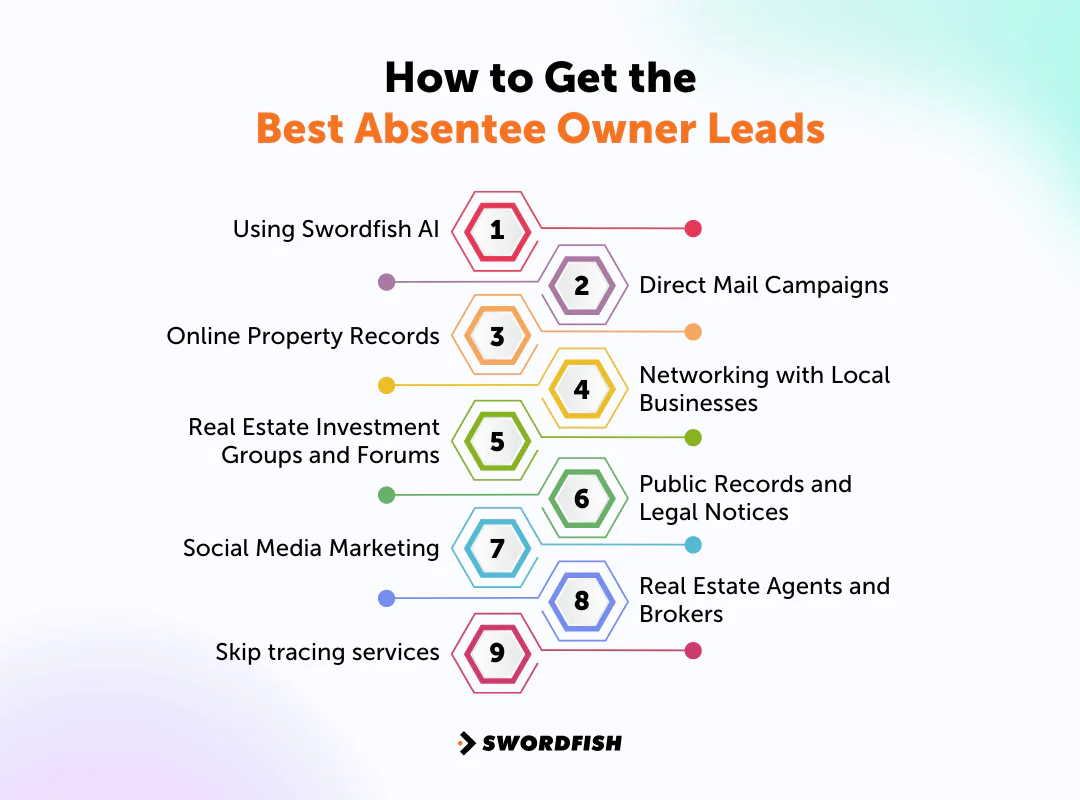
Sourcing quality absentee owner leads usually starts with real estate databases and public property records. From there, targeted email marketing campaigns and direct mail extend your reach, and networking with local agents fills in gaps that databases miss.
Those are the basics. The methods below go further, covering the strategies that tend to separate a thin lead list from one that actually converts.
1. Using Swordfish AI: Get the Best Absentee Owner Leads
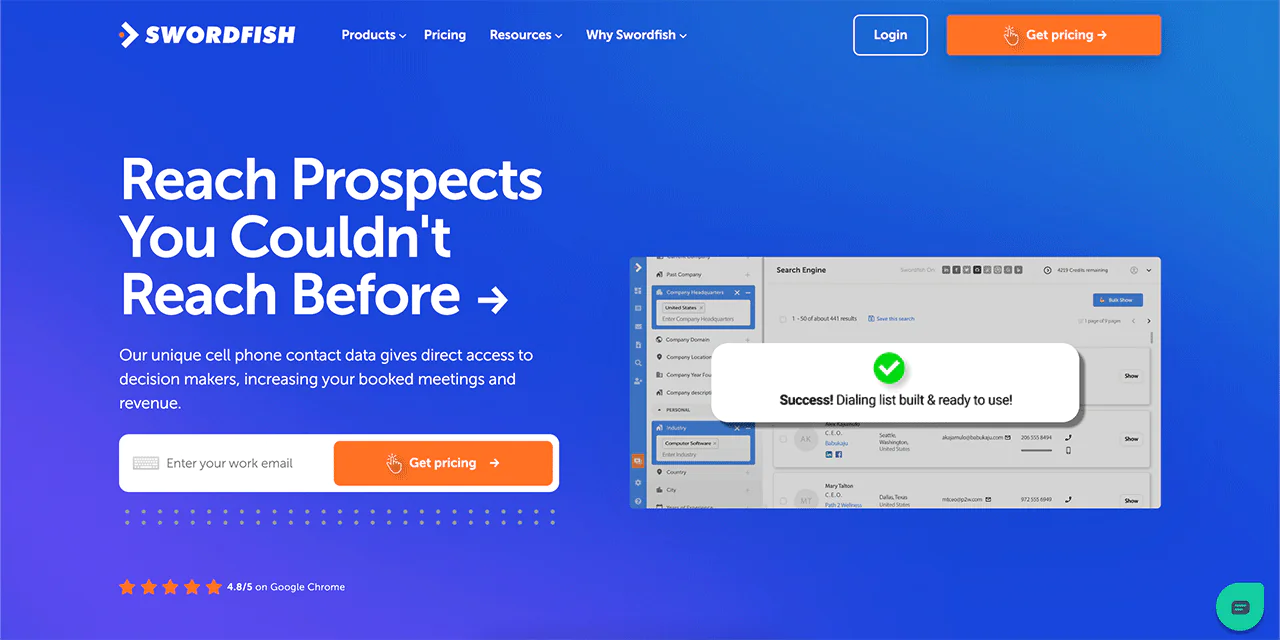
Swordfish AI is built for sourcing absentee owner leads, giving sales and recruitment teams a way to run personalized contact searches that return cell phone numbers and mailing addresses alongside property data.
The platform draws on a large contact database and cross-references multiple sources to reduce the number of disconnected or outdated numbers you encounter, which matters when your entire strategy depends on reaching people who don’t live at the property address.
Search filters go beyond location and property type. You can generate your leads based on estimated equity, ownership history, and other property signals, which helps narrow a large list down to owners actually worth contacting.
Swordfish AI also includes campaign tools with templates and tracking to help you nurture leads over multiple touchpoints instead of a single cold outreach attempt.
Together, these features are meant to help you connect with absentee owners more efficiently, which matters most when the property list is large and outreach time is limited.
Key Features of Swordfish AI
Here are the key features of Swordfish AI:
Prospector
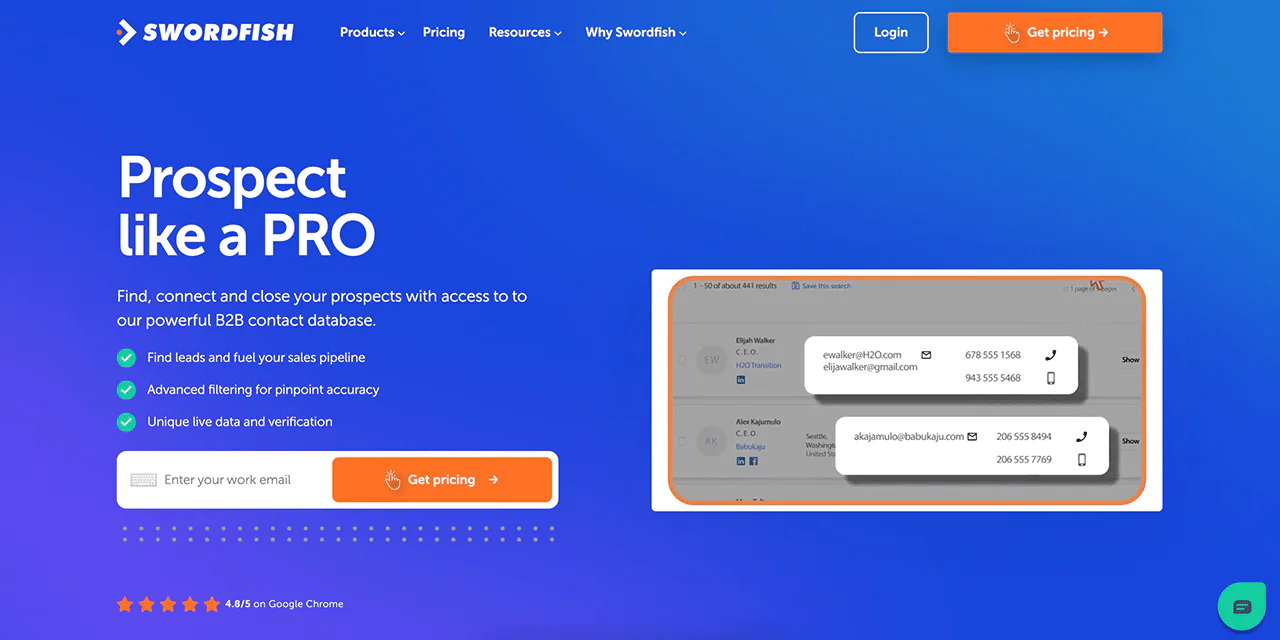
Use the Prospector to search directly for absentee owner leads inside Swordfish AI’s database. Enter criteria like location and property type to surface potential opportunities quickly.
Chrome Extension

Install the Chrome Extension to pull contact information on absentee owners as you browse property listings or social platforms, without leaving your browser.
Bombora Intent Data
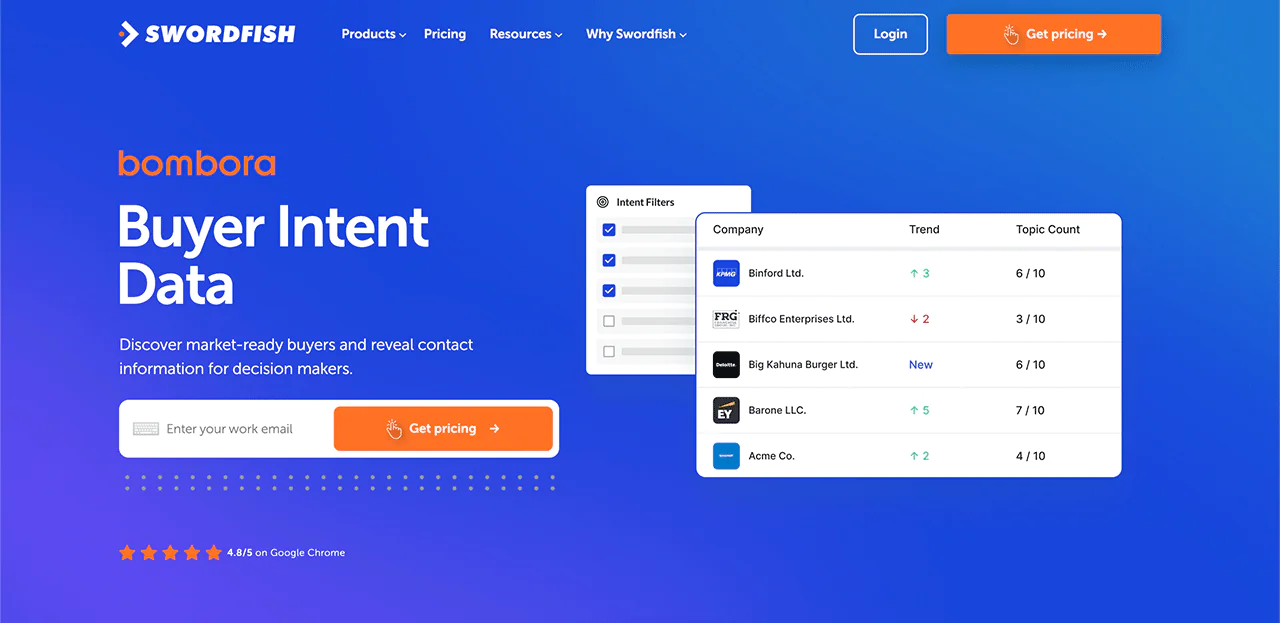
Use Bombora® Intent Data to flag absentee owners who show signs of actively wanting to sell or manage their properties, so you can prioritize outreach toward people most likely to respond.
Reverse Search
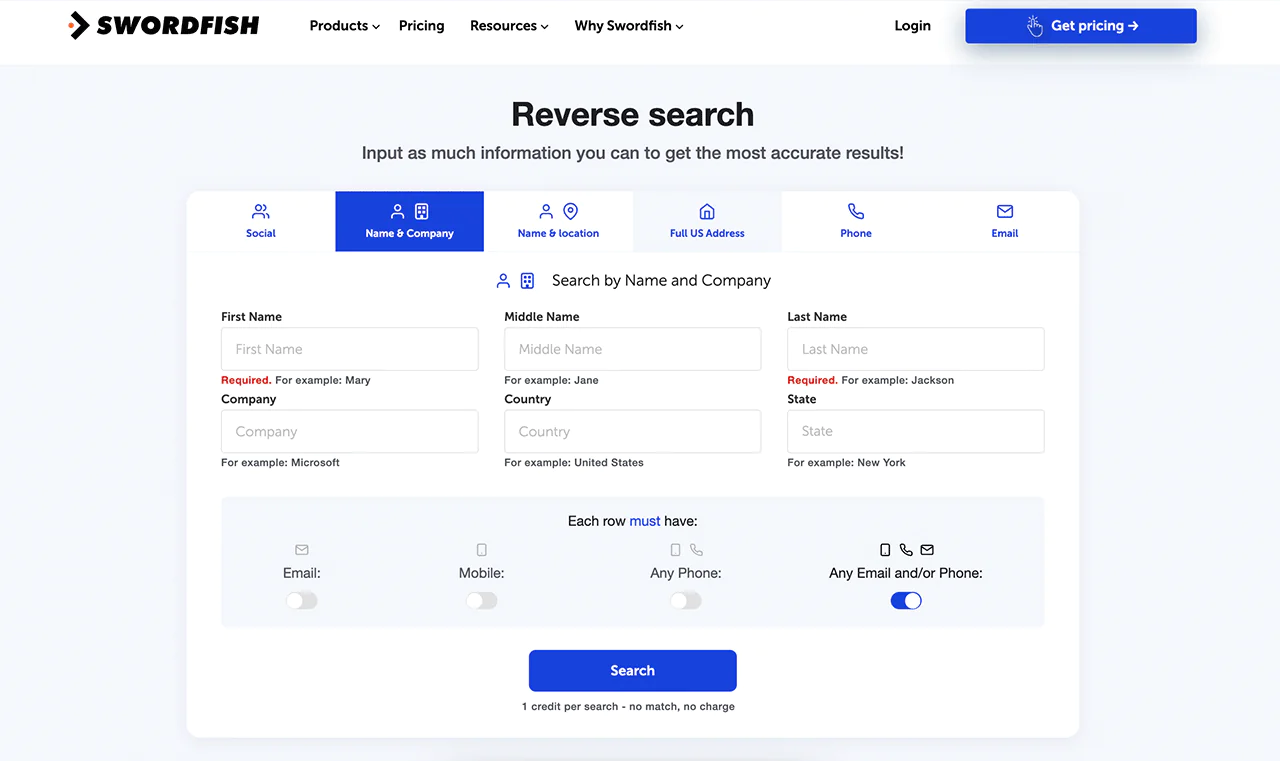
With Reverse Search, input a phone number, email, or social profile to trace it back to property ownership records. It’s useful when you already have contact details and need to confirm the property link.
File Upload
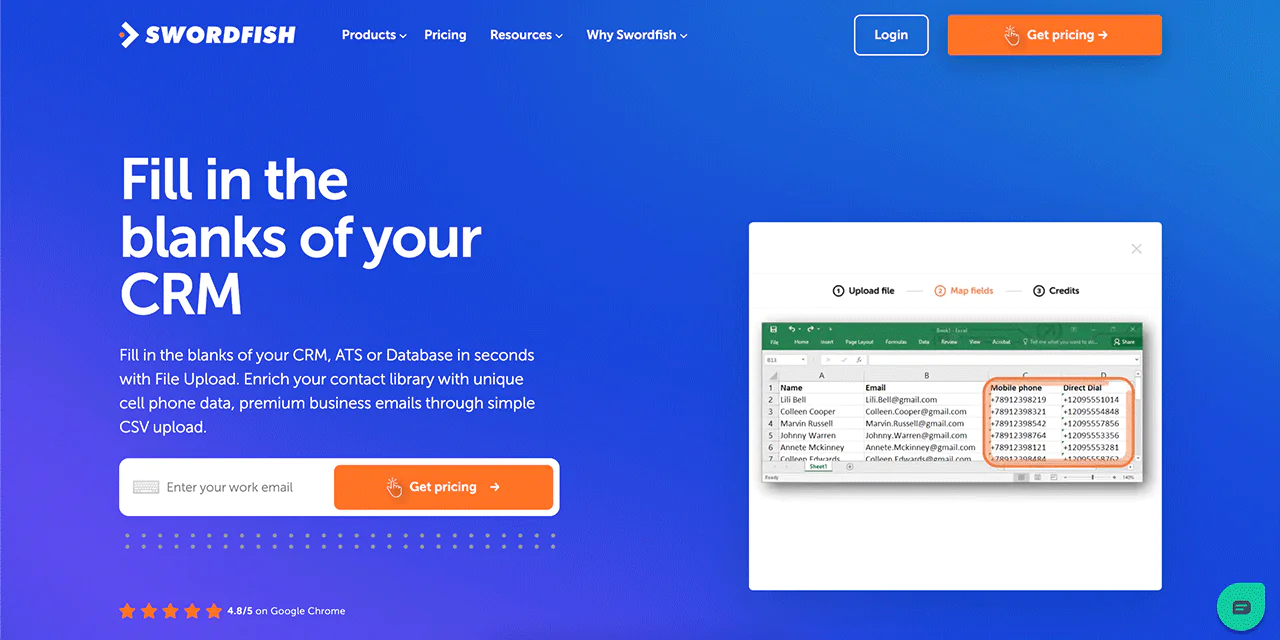
Bulk upload a contact list through File Upload. Swordfish AI matches names and existing contact details against its property owner database and returns leads in bulk.
API Integration

Connect Swordfish AI to your CRM or other systems through the API, which lets you automate the lead generation process and keep absentee owner data flowing directly into your existing workflow.
 Try Swordfish Ai
2. Direct Mail Campaigns
Direct mail remains one of the more reliable ways to reach absentee owners, particularly when you target properties that look unoccupied or that show up as rental units in county records. Personalizing the message to an absentee owner’s actual situation makes a real difference.
Letters or postcards that address concerns like property upkeep, safety, or shifts in the local market tend to get more attention than generic pitches. Offering something concrete, like a free property analysis or a market consultation, gives the owner a reason to respond.
Direct mail response rates have historically outperformed most digital channels. The Data & Marketing Association has reported 5.3% for house lists and 2.9% for prospect lists, which suggests real engagement potential when the message speaks directly to what the recipient needs.
Make your contact information easy to find on the piece itself. That small detail often determines whether an interested owner actually follows through.
3. Online Property Records
County and city property records remain one of the most direct ways to spot absentee owners. When the mailing address on file differs from the property address, that’s usually a sign of absentee ownership, and it may signal an owner who’s more open to selling or in need of property management help.
Some jurisdictions charge a small fee to access these records, but the leads they surface are often worth it. Once you’ve flagged a property as absentee-owned, you can tailor your outreach around what that specific situation suggests.
A personalized mailer or a targeted phone call, addressing the owner’s likely needs directly, tends to get a better response than a generic pitch sent to everyone on a list.
4. Networking with Local Businesses
Local service businesses are an underused source of absentee owner referrals. Property management firms, landscaping companies, and utility providers regularly deal with owners who don’t live nearby but still need someone to handle upkeep.
A landscaper familiar with an absentee owner’s frustrations might point that owner toward your services without you ever running an ad. Building those relationships takes time, but the referrals tend to be higher quality because they come with built-in trust.
Showing up at community business events, trade shows, and local associations helps build that network. These connections do double duty: they surface leads and lend credibility through word-of-mouth from providers the owner already trusts.
5. Real Estate Investment Groups and Forums
Local investing groups and online forums create a space where investors regularly trade information about absentee-owned properties. Someone else’s off-target lead might be exactly what you’re looking for.
If you focus on residential and another investor works commercial, you can swap leads that fit each other’s specialties rather than letting them go to waste.
Beyond the immediate leads, these communities open the door to partnerships and joint ventures you might not encounter otherwise, which can matter as much as any single lead list over time.
6. Public Records and Legal Notices
Probate filings, foreclosure notices, and tax lien records are some of the more reliable indicators of a motivated absentee seller. Most of these are accessible through local government websites or in person at the courthouse.
A property in probate often belongs to an owner who has passed away, and heirs may want a quick sale to settle the estate. Foreclosure or tax lien status points to financial pressure, which can mean an owner willing to accept a lower price to resolve things fast.
Because these situations aren’t always obvious from a standard property search, targeting them directly can mean less competition and better terms than working from a generic absentee owner list.
7. Social Media Marketing
Facebook and LinkedIn ad targeting remains a practical way to reach absentee owners, especially since a majority of agents already use social platforms as part of their marketing mix. Survey data from the National Association of Realtors shows 63% of realtors utilize social media mainly to post listings.
Ad platforms let you target by geography, demographics, and behaviors associated with property investors or people who own multiple homes. You could, for instance, target users who own property in your market but list a different home address, a common absentee-owner signal.
This kind of targeted approach tends to be more cost-effective than broad advertising, since the ad spend goes toward people already showing relevant characteristics.
8. Real Estate Agents and Brokers
Local agents and brokers often know which owners are motivated to sell before that information becomes public. Partnering with them gives you access to leads that never make it to a general database.
A referral agreement, where you pay a fee for leads that close, gives agents a reason to share what they know rather than keep it in-house.
The upside runs both ways: you get access to insight the public doesn’t have, and the agent gets an incentive to route qualified leads your direction.
9. Skip Tracing Services
Skip tracing is the tool of choice when you already know a property’s address but not the owner’s contact information. These services pull from public and private databases to locate phone numbers, email addresses on Facebook or other platforms, and related details that standard property records don’t include.
Once you have verified contact information, a direct call or personalized email lets you speak to the owner’s actual situation instead of sending a generic mailer and hoping it lands.
In practice, skip tracing is what turns a property you’ve identified into an owner you can actually talk to, which is often the hardest step in the entire process.
Who Needs Absentee Owner Leads?
Absentee owner leads serve several different groups, each with a distinct use case:
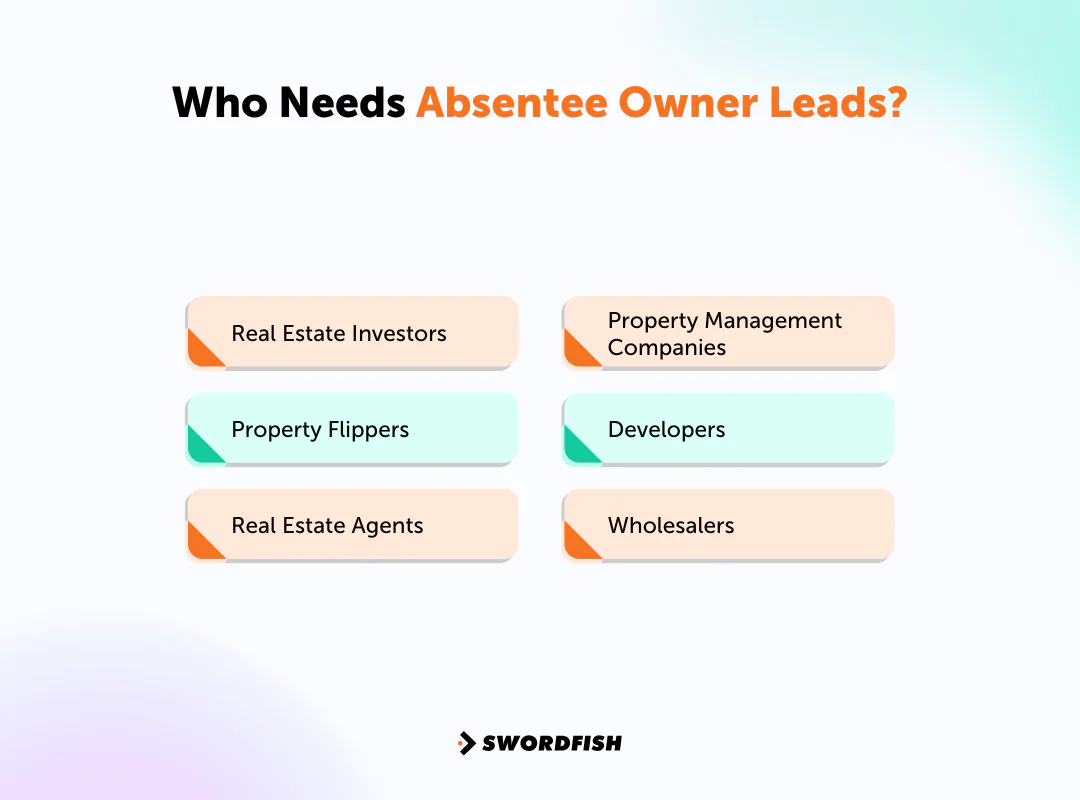
- Real Estate Investors: Real estate investors use absentee owner leads to find neglected properties, buy at lower costs, and profit through renovations and resale.
- Property Flippers: These are investors who buy properties, renovate them, and sell them for a profit. Absentee-owned properties might be ideal targets due to potential neglect or disrepair.
- Real Estate Agents: Agents seek absentee owner leads to find potential lead lists or clients who might want to sell their properties.
- Property Management Companies: These companies might offer services to absentee owners who need someone local to manage their property.
- Developers: Developers look for properties in desirable locations. Absentee owners might be more willing to sell land or properties that are underutilized.
- Wholesalers: Real estate wholesalers find properties under market value, get them under contract, and sell the contract to another buyer. Absentee owners can be a good source for such deals.
How Much Do Absentee Owner Leads Cost?
Pricing for absentee owner leads varies quite a bit depending on the source and how much enrichment the data includes. Here’s a general breakdown:
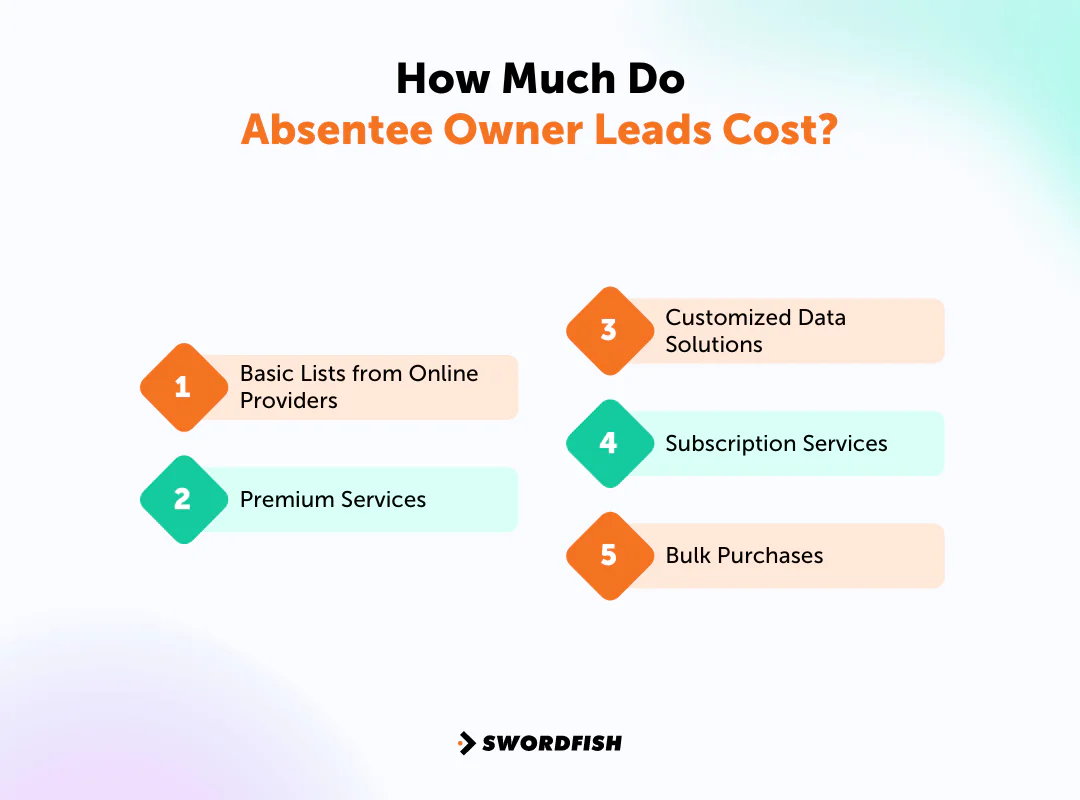
Basic Lists from Online Providers
A basic list of absentee owners can start as low as $0.20 per lead. These lists typically provide basic contact information but may not include detailed property data or owner motivation.
Premium Services
More comprehensive services can charge anywhere from $0.40 to $1.00 per lead. These leads often come with added information like estimated property value, potential equity, and distress signals, which can matter a lot for prioritizing outreach.
Customized Data Solutions
Filtering by specific criteria, like geographic area, property type, or out-of-state ownership status, tends to push prices higher. Customized data solutions might cost upwards of $1.00 per lead depending on the depth of data and exclusivity.
Subscription Services
Some platforms offer monthly subscriptions where you can access a database of leads. These subscriptions can range from $50 to over $200 per month, depending on the richness of the data and the tools provided.
Bulk Purchases
Buying leads in bulk can often reduce the cost per lead. Some providers offer packages where you can buy thousands of leads at a time, potentially lowering the cost to under $0.20 per lead, especially with a long-term commitment.
Conclusion
Finding solid absentee owner leads is worthwhile but rarely easy, mostly because it demands accurate, current information pulled from scattered sources. The real bottleneck is usually filtering out stale contacts and manually reconciling data from multiple databases.
That’s the gap Swordfish AI is built to close, giving you access to more current, actionable absentee owner data without the manual cross-referencing.
Try Swordfish AI today and see how it changes the way you locate and reach absentee property owners.
Frequently Asked Question
How often should I follow up with absentee owner leads?
Follow-up frequency should be based on their initial response but generally, a follow-up every few weeks is reasonable. If they express direct interest, you might follow up more frequently based on their cues.
Are absentee owner lists free?
No, absentee owner lists are typically not free. They usually require a subscription to a data service or purchase from a list provider that compiles such information for real estate marketing purposes.
Why target absentee owners for real estate leads?
Targeting absentee owners for the leads for real estate can be effective because they may be more motivated to sell. This motivation often arises if they are managing the property from a distance, dealing with tenant issues, or facing financial pressures.
What information is included in the absentee owner leads for sale?
Absentee owner leads for sale typically include details like property addresses, owner contact information, property values, and the status of the property (rented, vacant, etc.). They may also provide insights into the owner’s motivation for selling.
Are there specific legal considerations to be aware of when dealing with absentee owners in real estate?
When dealing with absentee-owned real estate, ensure compliance with local laws, verify ownership, and check for liens to avoid legal issues and ensure lawful transactions. Following these guidelines will help protect both your interests and those of the property owner.