
 View Products


Last updated: September 3, 2026
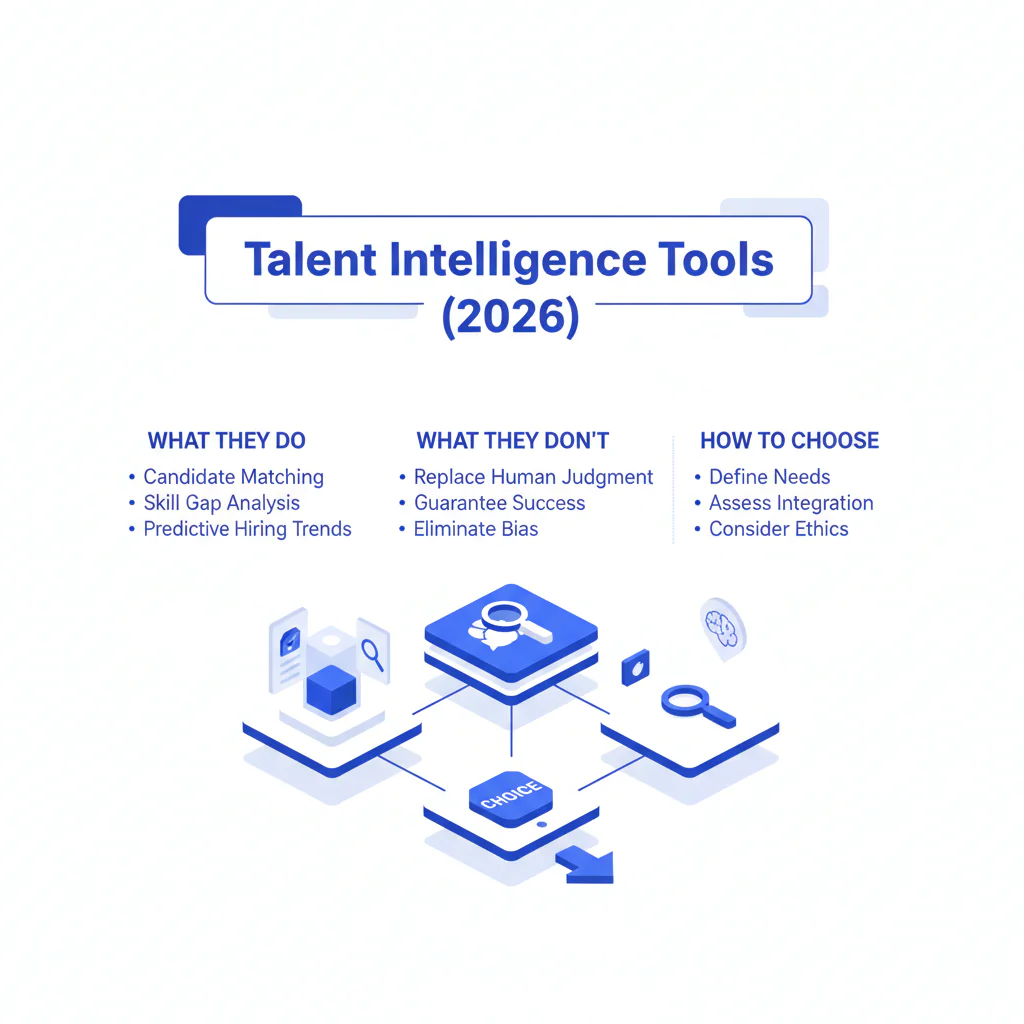
- Core concept
- Talent intelligence tools support candidate discovery and segmentation so recruiters target the right people with fewer, more relevant touches.
- Key stat
- Placement speed is limited by the slowest step between “identified” and “contacted.” If reachability is weak, recruiters burn capacity on retries and candidates experience repeated, low-context outreach.
- Ideal candidate profile
- Recruiting leaders and ops teams building a stack for passive candidates, re-engaging silver medalists, filling hard-to-reach roles, and coordinating internal + agency recruiting.
Byline: Ben Argeband, Founder & CEO of Swordfish.AI (written from the perspective of a Head of Talent Acquisition)
I evaluate recruiting tech the same way I run a funnel: find the constraint, fix it, and measure whether time-to-first-conversation improves without pushing up opt-outs or complaints. Most teams mis-buy in this category because they expect one tool to solve both targeting and reachability, and those are genuinely different problems with different failure modes.
Who this is for
This is for TA leaders, recruiting ops, and sourcers comparing talent intelligence tools and planning the full stack: discovery and segmentation on one side, a reachability plan that protects candidate experience on the other.
What recruiters are trying to accomplish
- Fill hard-to-reach roles faster: reduce time-to-shortlist by improving discovery quality and cutting rework.
- Increase replies from passive candidates: use segmentation to send fewer, more relevant messages instead of broad blasts.
- Reuse pipeline, including silver medalists: re-engage prior near-hires with enough context that outreach feels earned rather than recycled.
Discovery vs reachability (decision heuristic)
Use this framework early: discovery vs reachability.
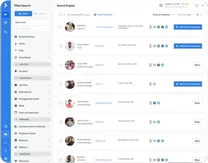
Discovery answers: “Who should we talk to?” This is where talent intelligence earns its keep: search, enrichment for profile context, and segmentation that supports targeted outreach.
Reachability answers: “Can we actually reach them?” This is where contact data and outreach operations matter: usable email/phone coverage, suppression of bad contact paths, and channel selection that avoids repeated failed attempts.
If your constraint is “we can’t find enough qualified profiles,” prioritize discovery. If your constraint is “we find them but can’t reach them,” add a reachability layer and tighten suppression rules so recruiters stop repeating failed contact attempts on the same person.
Talent intelligence tools: category comparison
This is a category guide, not a scored ranking. Use it to match tool categories to the bottleneck that’s actually slowing your placements.
| Category | Primary job | Best for | Where it fails in real workflows | What to pair it with |
|---|---|---|---|---|
| Talent intelligence platform | Discovery + segmentation | Hard-to-reach roles, market mapping, building targeted lists of passive candidates | Doesn’t guarantee contact coverage; recruiters still lose time to non-working channels | Reachability layer for phone/email; ATS/CRM for workflow |
| Talent analytics tools | Reporting + planning | Capacity planning, funnel analysis, source effectiveness | Improves decisions, not day-to-day sourcing throughput | Discovery tool + CRM/ATS hygiene |
| Talent CRM | Nurture + campaigns | Re-engaging silver medalists, event leads, referrals, alumni | Stale segments and stale contact paths reduce response and increase opt-outs | Discovery/segmentation + reachability refresh |
| Recruiting data tools (contact data) | Reachability | Phone-first outreach, reducing time wasted on bad contact paths | Doesn’t tell you who to target; can amplify poor targeting if discovery is weak | Talent intelligence for targeting + compliance controls |
In practice, teams often evaluate a talent intelligence platform for discovery/segmentation, a talent CRM for nurture, and a reachability tool for phone/email coverage. For discovery/segmentation comparisons, teams commonly look at SeekOut and HireEZ; for nurture and campaigns, teams commonly look at Gem. Use the reviews as category references: SeekOut review and Gem review.
If you’re searching for SeekOut alternatives or Gem alternatives, anchor the comparison to a funnel outcome rather than a feature list. Better segmentation reduces irrelevant touches and opt-outs. Better reachability reduces retries and shortens time-to-first-conversation.
How to evaluate talent intelligence tools (what matters operationally)
Evaluate tools against the specific failure points that slow placements or generate candidate complaints, not against a generic feature checklist.
Segmentation quality (not just filters). The outcome you’re buying is fewer irrelevant touches. Ask whether recruiters can build narrow segments that match hiring manager expectations without manual cleanup afterward.
Workflow speed for sourcers. The outcome is recruiter throughput. If it takes too many steps to go from intake to a clean outreach list, adoption drops and your process fragments back into spreadsheets.
Data freshness signals. The outcome is fewer “wrong person” contacts and fewer retries. Recruiters need recency indicators so they can pick the right channel and message.
Integration reality (ATS/CRM + dedupe + ownership). The outcome is fewer duplicate touches. This matters more once you run internal recruiting alongside agency recruiting on the same requisitions.
Reachability plan. The outcome is time-to-first-conversation. If your motion includes phone or SMS, validate how you’ll obtain usable contact paths and how quickly you can suppress bad ones once you find them.
Checklist: Diagnostic Table
| Symptom | Most likely cause | What it does to speed / experience | Fix (operational) |
|---|---|---|---|
| High open rates, low replies | Message relevance is weak due to poor segmentation | More touches per reply; candidates feel spammed | Tighten segments to one role + one differentiator; require a role-specific reason for outreach |
| Low opens and low replies | Deliverability issues or stale emails | Recruiters waste cycles; time-to-first-conversation increases | Refresh contact paths; rotate channels; reduce volume until deliverability stabilizes |
| Replies say “not me” / “wrong person” | Identity mismatch or outdated employment data | Complaint risk and poor candidate experience | Require a recency check; confirm current employer before outreach for sensitive roles |
| Phone calls go to wrong person / disconnected | Low phone coverage quality | Wasted recruiter time; increases complaint risk | Add a reachability layer; log outcomes and suppress bad numbers quickly |
| Good replies, low show rate | Misaligned expectations set in outreach | Slower funnel; candidates feel misled | Include comp band and work model early; confirm constraints before scheduling |
| Strong pipeline, slow hiring manager decisions | Role intake is unclear; scorecard not enforced | Time-to-offer increases; candidates drop | Lock intake criteria; require structured feedback within 24–48 hours |
| Duplicate outreach from multiple recruiters | Weak ownership rules across ATS/CRM and sourcing tools | Candidate frustration; brand damage | Define ownership + suppression rules; enforce dedupe at export/sync |
Decision Tree: Weighted Checklist
This checklist weights criteria based on common implementation failure points: segmentation quality, adoption, integration reliability, and reachability planning. Use it to compare vendors without getting pulled into a feature-volume contest.
| Criterion | Weight | What “good” looks like | How to verify in a pilot |
|---|---|---|---|
| Discovery + segmentation quality | High | Recruiters can build narrow, role-relevant lists that match hiring manager expectations | Run 3 real reqs; measure % of profiles accepted for outreach without rework |
| Reachability plan (email/phone coverage strategy) | High | Clear approach to obtaining usable contact paths and suppressing bad ones | Sample a fixed set of targets; measure working contact rate and time-to-first-response |
| Workflow speed and recruiter adoption | High | Low-friction path from search to outreach list; consistent usage across the team | Time a sourcer from “req intake” to “first 25 contacts ready” |
| Integration reliability (ATS/CRM sync, dedupe, ownership) | High | Clean handoff to ATS/CRM with minimal manual cleanup; prevents duplicate outreach | Test export/sync; confirm unique IDs, dedupe rules, and field mapping |
| Compliance controls and auditability | High | Opt-out handling, suppression lists, and access controls are enforceable | Ask for an admin controls demo; verify logging and suppression behavior |
| Data freshness signals | Medium | Clear indicators of recency/confidence so recruiters can choose channels appropriately | Spot-check a small sample against public signals; record mismatch rate |
| Support for silver medalists and nurture | Medium | Easy segmentation and re-engagement of past finalists without spamming | Build a “past finalist” segment; run a small campaign; measure opt-outs and replies |
| Agency recruiting compatibility | Medium | Ownership rules and reporting work when multiple parties source the same market | Simulate shared req workflow; confirm dedupe and attribution reporting |
| Reporting that changes decisions | Low | Metrics tie to actions: segment performance, channel performance, and time-to-first-conversation | Review dashboards with ops; confirm you can act on them weekly |
Ethical use of phone numbers
Phone outreach can improve placement speed for hard-to-reach roles, but it raises complaint risk fast if you don’t run it with clear controls.
Consent and expectations: Use phone numbers for recruiting outreach tied to a legitimate hiring purpose. Keep the first touch transparent about who you are and why you’re reaching out.
Opt-out and suppression: If a candidate asks not to be contacted, suppress them across ATS, CRM, and outreach tools. Don’t rely on individual recruiter memory to enforce this.
Frequency limits: Cap attempts per candidate and stop when there’s no signal. Repeated calls and texts without response are a candidate experience problem, not a persistence win.
Access control: Restrict who can view or export phone numbers. Fewer exports means fewer compliance headaches down the line.
Sourcing workflow
This workflow connects discovery/segmentation to reachability without creating duplicate outreach along the way.
Step 1: Intake for segmentation. Convert the req into must-haves, acceptable adjacencies, and disqualifiers. For hard-to-reach roles, define adjacencies up front so sourcers don’t over-filter and stall the pipeline.
Step 2: Build the discovery list. Use your talent intelligence platform to produce a list sized to recruiter capacity. Oversized lists lead to rushed outreach and lower relevance per touch.
Step 3: Add reachability before outreach. If your motion includes phone-first follow-up, enrich the list with a reachability tool so recruiters aren’t guessing channels. Swordfish’s Prospector is built for this role as a reachability layer that complements talent intelligence tools.
Step 4: Dedupe and ownership. Dedupe against ATS/CRM and enforce ownership rules before any message goes out. Example policy: assign ownership to the first recruiter who makes contact and hold it for a defined window so candidates don’t get double-touched.
Step 5: Sequence with channel logic. Use email for context and phone/SMS for speed when appropriate. Track outcomes by segment and channel so you can stop doing what isn’t working.
Step 6: Close the loop. Log outcomes in ATS/CRM so future outreach respects prior contact and opt-outs. This is how you keep silver medalists warm without spamming them into disengagement.
Troubleshooting Table: Outreach Templates
Copy/paste templates designed for speed, clarity, and opt-out safety. Replace bracketed fields before sending.
Template A: Passive candidate email (role-relevant, low friction)
Subject: [Role] at [Company] — quick question
Hi [First Name] — I’m [Your Name], recruiting for [Team/Org] at [Company].
I’m reaching out because your background in [Specific Skill/Domain] looks aligned with what we need for [Role]. The work is focused on [1 sentence scope], and the range is [Comp Band] with [Work Model].
Are you open to a 10-minute call this week, or should I send details by email?
If you’d rather not be contacted again, reply “no” and I’ll update my list.
Template B: Phone voicemail (candidate-friendly)
Hi [First Name], this is [Your Name] with [Company]. I’m calling about a [Role] opening that matches your experience in [Skill/Domain]. If you’re open to a quick conversation, you can reach me at [Callback Number]. If not, reply and I’ll stop following up. Thanks.
Template C: Silver medalist re-engagement (context-first)
Subject: Following up — [Role/Team] at [Company]
Hi [First Name] — we spoke previously about [Prior Role/Process] at [Company]. We have a new opening on [Team] that’s closer to [Specific Preference/Strength they showed].
Key details: [1 sentence scope], [Comp Band], [Work Model].
Would you like me to share the full description, or is it better to reconnect for 10 minutes?
If now isn’t the right time, tell me “pause” and I’ll stop outreach.
Template D: Agency recruiting coordination note (avoid duplicate outreach)
Subject: Candidate ownership check — [Candidate Name] for [Req/Role]
Hi [Name] — quick ownership check before outreach. Do you already have contact with [Candidate Name] for [Role/Req]?
If yes, I’ll stand down to avoid duplicate outreach. If no, I’ll proceed and log activity in [System] so we keep candidate experience clean.
Outreach templates
Operational note: Use the templates above as your baseline and enforce two rules: every message must include a role-specific reason for outreach, and every sequence must include an easy opt-out. That combination reduces complaints and improves reply quality, which is what actually moves placement speed.
Evidence and trust notes
Category clarity: Talent intelligence is discovery and segmentation. Contact data is reachability. Teams hiring passive candidates at scale usually need both, not one or the other.
How to validate in a pilot: Use 2–3 live reqs, keep the same recruiters on the same reqs, and run outreach in the same time window so you can compare tools without changing the process mid-test.
What to measure: Accepted-for-outreach rate, time-to-first-conversation, opt-out/complaint rate, and duplicate outreach incidents. These metrics connect directly to placement speed and candidate experience.
What I look for in implementation: Dedupe and suppression rules that work across ATS/CRM and outreach tooling. If you can’t enforce those rules, you’ll create candidate noise even with strong discovery underneath it.
FAQs
What are talent intelligence tools?
Talent intelligence tools support candidate discovery and segmentation. They help you identify who to target and how to group talent pools for relevant outreach.
What’s the difference between a talent intelligence platform and recruiting data tools?
A talent intelligence platform focuses on discovery/segmentation. Recruiting data tools often focus on reachability (usable email/phone). If your team finds candidates but can’t reach them, you need a reachability layer.
Are talent analytics tools the same as talent intelligence?
No. Talent analytics tools focus on reporting and planning. Talent intelligence is used to find and segment candidates for outreach.
Talent CRM vs talent intelligence: do I need both?
A talent CRM is best for nurture and re-engagement, including silver medalists. Talent intelligence is best for discovery and segmentation. If your CRM segments are weak, intelligence improves targeting. If contact paths are stale, reachability improves response.
How should I evaluate Gem alternatives?
Start with the workflow outcome you need: nurture and campaigns (CRM) versus discovery/segmentation (intelligence) versus reachability. Then pilot against time-to-first-conversation and opt-out rate so you don’t trade speed for candidate complaints.
Next steps
Week 1 (Define): Document your constraint using discovery vs reachability. Decide whether you’re fixing shortlist quality, response rate, or both.
Week 2 (Pilot): Run 2–3 live reqs through shortlisted tools. Track accepted-for-outreach rate, time-to-first-conversation, and opt-outs.
Week 3 (Operational controls): Implement dedupe, ownership, and suppression rules across ATS/CRM and outreach tooling. Confirm recruiters can’t accidentally double-contact candidates.
Week 4 (Rollout): Train recruiters on one standard segmentation approach and one outreach sequence. Review outcomes weekly and adjust segments before increasing volume.
About the Author
Ben Argeband is the Founder and CEO of Swordfish.ai and Heartbeat.ai. With deep expertise in data and SaaS, he has built two successful platforms trusted by over 50,000 sales and recruitment professionals. Ben’s mission is to help teams find direct contact information for hard-to-reach professionals and decision-makers, providing the shortest route to their next win. Connect with Ben on LinkedIn.