
 View Products


Last updated: September 3, 2026

A surprising share of property listings expire without ever finding a buyer. That leaves owners searching for a new agent and a new approach, which is exactly the opening a sharp real estate professional can use.
The hard part is finding those owners before someone else does. Digging through MLS records and public filings to track down expired-listing leads takes time, and the contact information you find is often stale by the time you call.
Below are seven practical ways to reach property owners faster, including tools that can shorten the research phase so you spend more time talking to sellers and less time hunting for their phone numbers.
What Are Real Estate Seller Leads?
Real estate seller leads are contacts of property owners who may be ready, or close to ready, to list their home. For an agent, these leads are the raw material of the business: every new listing typically starts as one of these contacts before it becomes a signed agreement.
Building a steady pipeline of seller leads helps agents grow their portfolios, increase sales, and turn cold prospects into clients who are actively preparing to sell.
How To Get The Best Real Estate Seller Leads
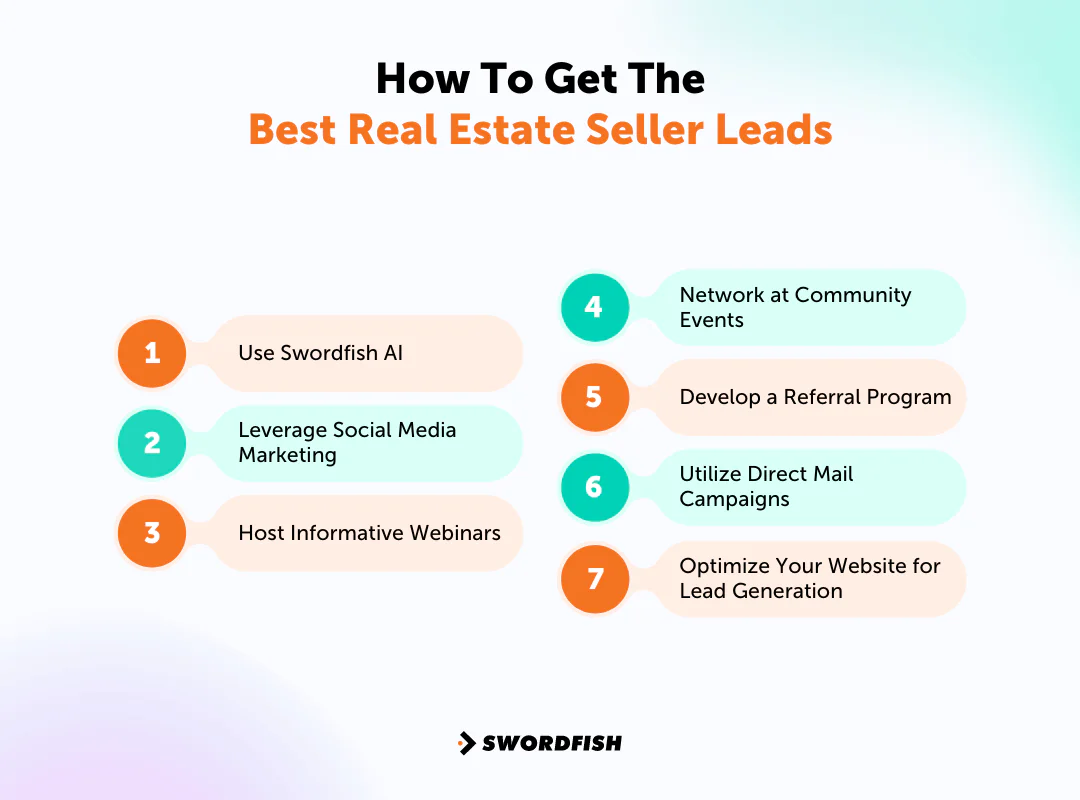
No single channel produces every seller lead you need. The agents who consistently list properties usually combine a data tool for speed with a handful of relationship-building tactics for depth. Here are seven approaches worth building into your routine.
1) Use Swordfish AI
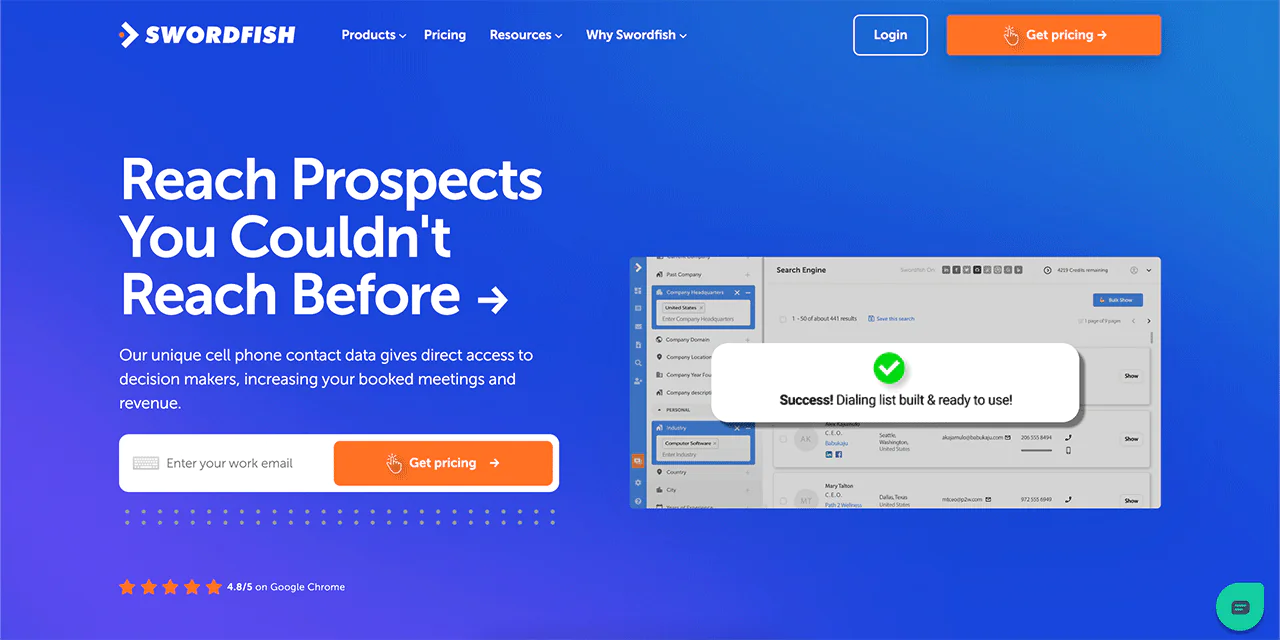
When you already know who owns a property but not how to reach them, a contact-data tool like Swordfish AI can close that gap. It pulls together phone numbers and email addresses from multiple data sources so you can move from a name or address to an actual conversation faster.
Rather than relying solely on public records or paid list purchases, you get on-demand lookups you can run as new prospects surface, whether from an expired listing, a probate filing, or a referral.
The platform is built around a set of features that map to different points in a lead workflow. Here’s what each one does.
Prospector
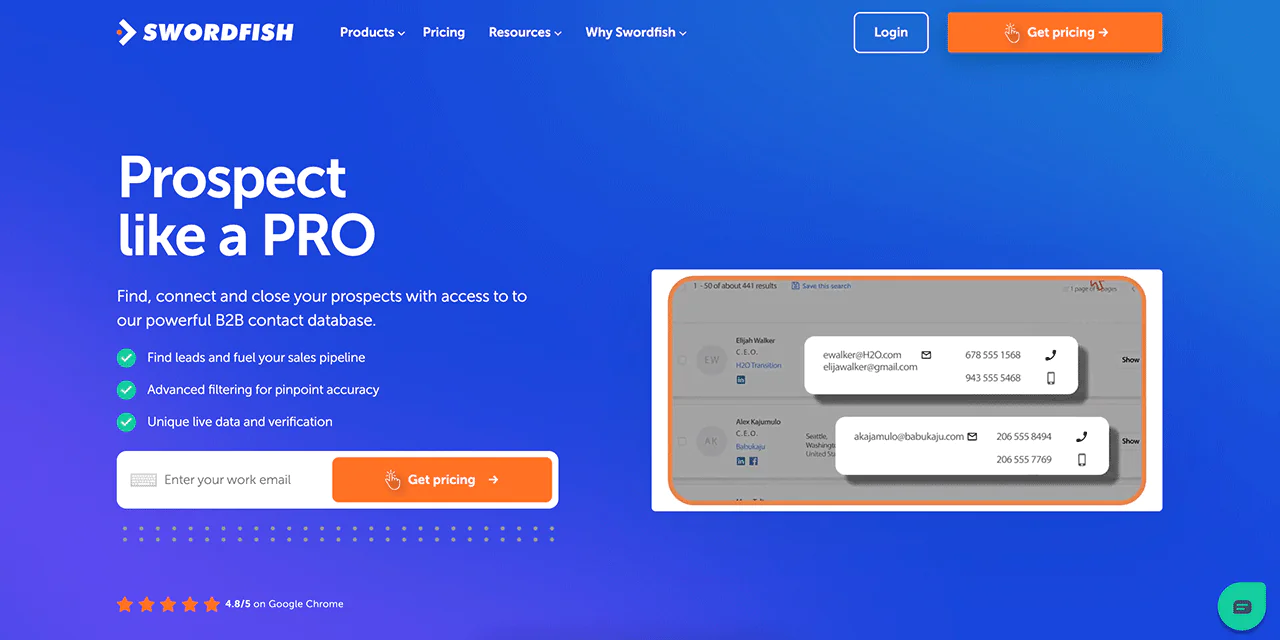
Swordfish AI’s Prospector feature lets you search large data sets against specific criteria, so instead of manually screening records, you get a filtered list of profiles that fit your ideal seller.
Bombora Intent Data
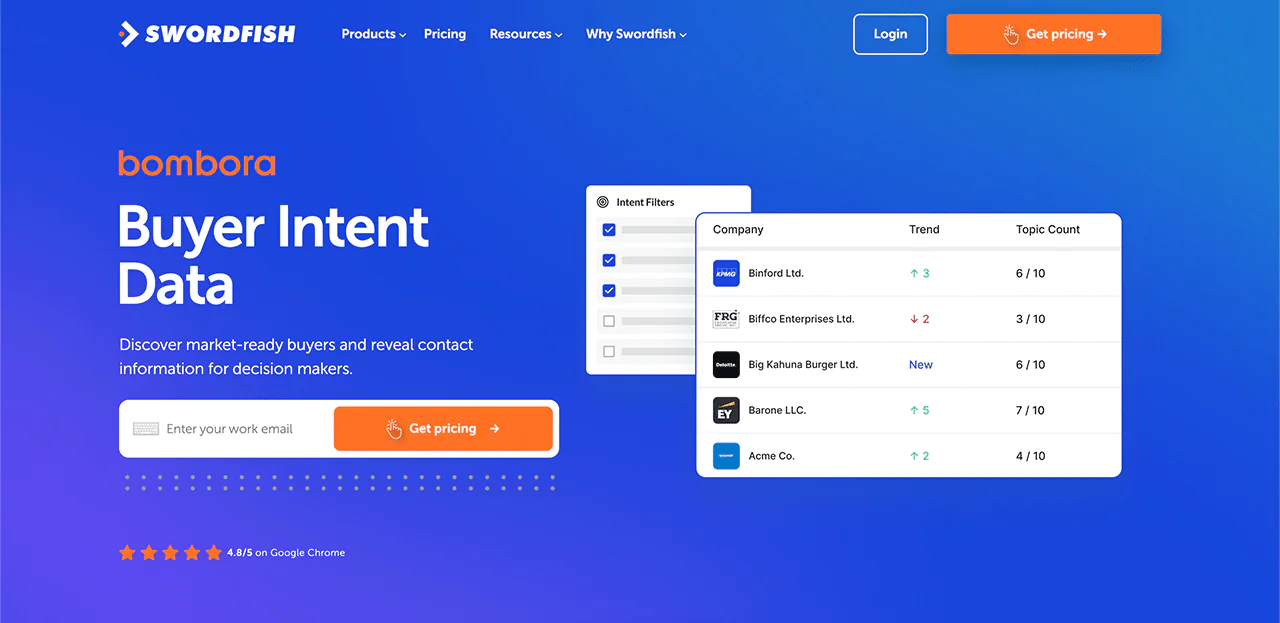
Bombora Intent Data surfaces behavioral signals tied to selling intent, which helps you rank leads by likelihood to act rather than treating every contact the same.
Chrome Extension

The Chrome Extension works inside your browser while you’re already looking at listings or public profiles, pulling contact details without forcing you to switch tabs or tools mid-search.
Reverse Search
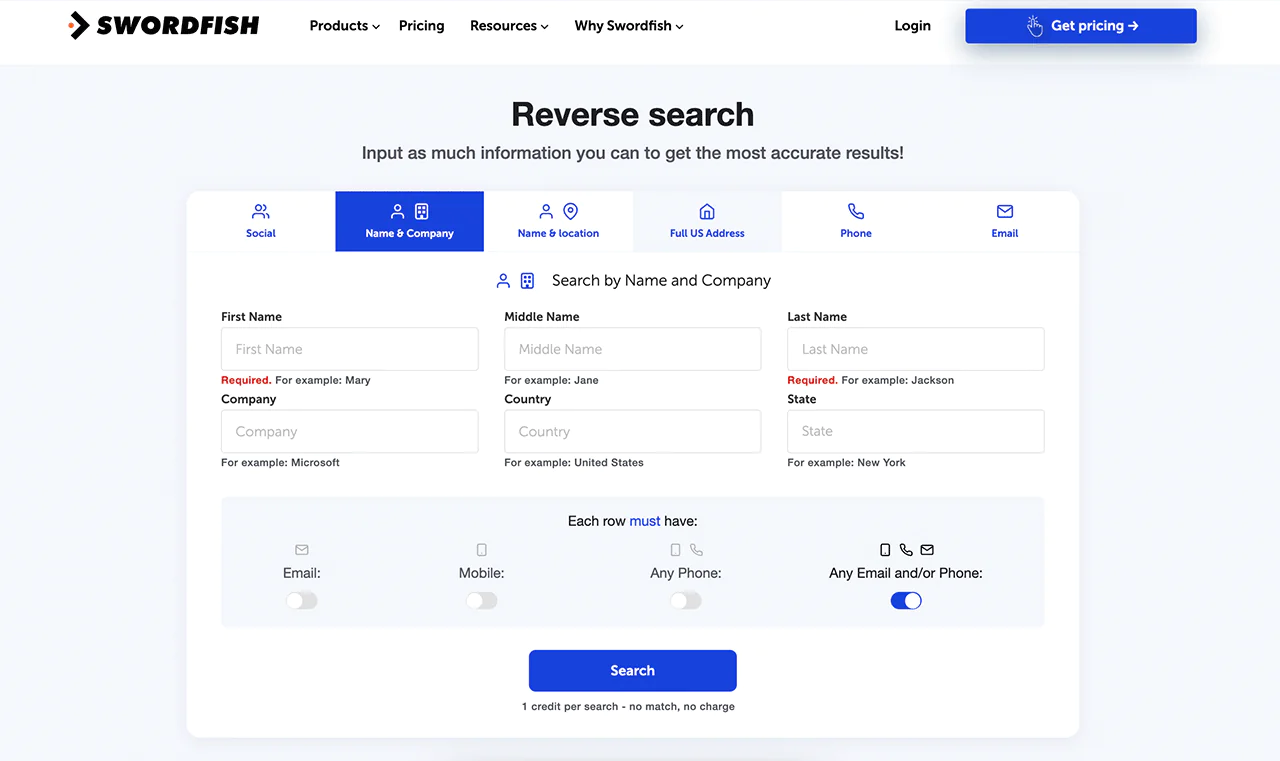
The Reverse Search tool works from partial information, such as a name or an address, to build out a fuller contact profile. That’s useful when a lead comes from a referral and you have only fragments of detail.
API Integration
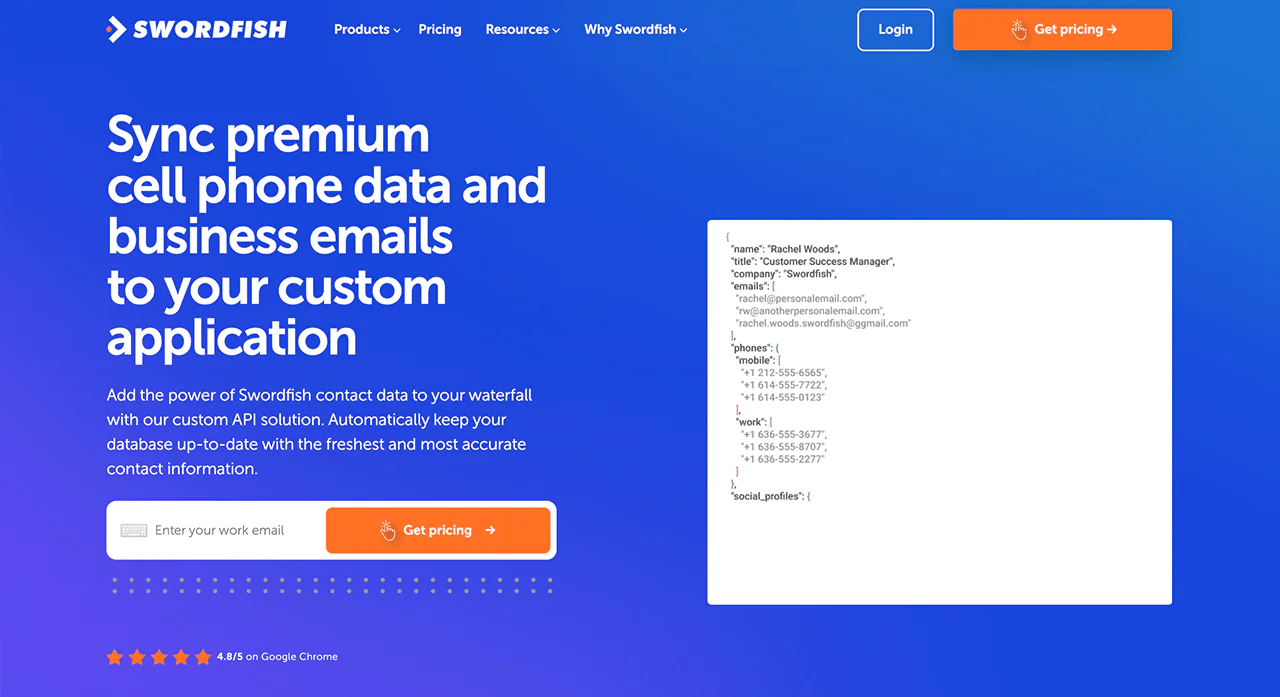
Swordfish AI’s API connects the search functionality directly into a CRM or sales platform, so contact data updates in the system you already work from instead of living in a separate export.
Email Verifier
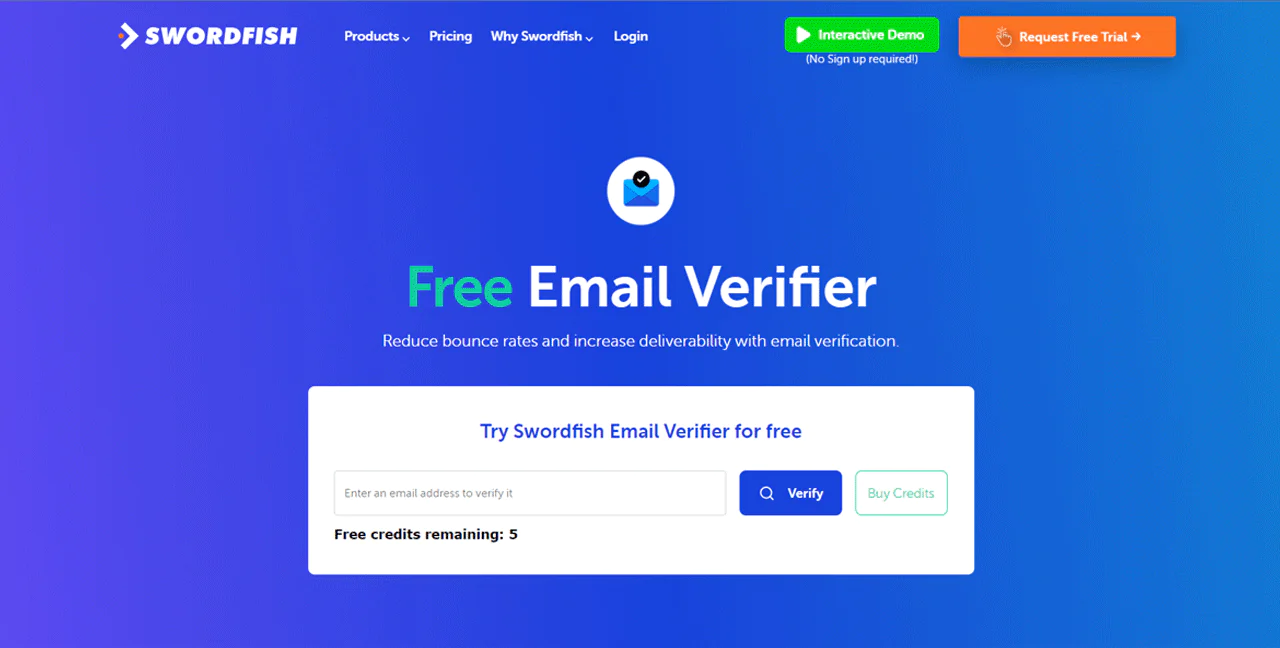
The Email Verifier checks whether addresses in your leads list are still valid before you send to them, which keeps your list clean and protects the results of your email marketing campaigns.
People Search Directory

The People Search Directory is a general lookup for contact information, property ownership records, and historical data that can inform how you approach an outreach.
 Try Swordfish Ai
2) Social Media Marketing
Facebook, Instagram, and LinkedIn remain some of the most direct ways to put yourself in front of homeowners who aren’t actively searching for an agent but will remember you when they are. The value is less about volume and more about consistent, useful presence.
A few practices separate agents who generate leads from social media from those who just post:
- Select Optimal Platforms: Focus your efforts on social media strategies where potential sellers are most likely to engage.
- Develop Engaging Content: Post content that informs and adds value, such as market trends, selling tips, and success stories.
- Implement Targeted Advertising: Use social media advertising to reach specific audiences, ensuring your message gets in front of the right potential sellers.
- Interactive Engagement: Regularly interact with users, respond to comments, and participate in discussions to build relationships and trust.
- Monitor and Adapt: Track your results and adjust your strategies to improve effectiveness and maximize real estate lead generation.
3) Host Informative Webinars
Webinars work because they let a homeowner get real answers before committing to a call. Someone who’s on the fence about selling can watch on their own time, then reach out once they’ve decided the timing makes sense.
A few things make the difference between a webinar that generates leads and one that just fills a calendar slot:
- Choose Relevant Topics: Focus on subjects that are critical to sellers, like market trends, home preparation tips, and selling strategies.
- Promote Widely: Advertise your webinar across all your social media channels, your website, and through email newsletters to ensure a broad audience.
- Engage Participants: Encourage questions and interact with attendees during the webinar to make it interactive and personal.
- Follow-Up: After the webinar, follow up with attendees via email to provide additional resources and set up one-on-one consultations.
- Analyze Feedback: Collect feedback from participants to refine your topics and presentation style for future webinars.
4) Network at Community Events
In-person conversations still convert differently than digital ones. Meeting a homeowner at a school fundraiser or neighborhood event builds a level of familiarity that an ad rarely does, and it plants you as the local agent people think of first.
A few ways to make networking pay off:
- Choose the Right Events: Select events that are likely to attract homeowners, such as local fairs, school functions, or community fundraisers. These gatherings provide a natural opportunity to discuss real estate casually.
- Be Approachable: Wear something that identifies you as a real estate agent, like a badge or a custom shirt. This makes it easier for people to start conversations about real estate with you.
- Follow Up: Collect contact details whenever possible and follow up with a friendly message or email. Mention something you discussed to remind them of your conversation.
5) Develop a Referral Program
A referral from a past client typically arrives with more trust attached than a cold lead, which usually means a shorter sales cycle and less convincing to do. A structured program makes it easier for satisfied clients to actually follow through on referring you.
Building one that people participate in comes down to a few basics:
- Offer Valuable Incentives: Provide rewards that motivate your clients to participate, such as discounts on future services or gift cards. Make sure the incentives are appealing and relevant to encourage participation.
- Promote Your Program: Actively inform every client about your referral program. Use emails, flyers, and social media to explain how the program works and the benefits of participating.
- Track and Appreciate Referrals: Keep a reliable system to track referrals and ensure prompt reward distribution. Always thank your referrers, whether their referrals convert or not, to acknowledge their effort and encourage ongoing participation.
6) Utilize Direct Mail Campaigns
Direct mail can feel outdated, but a physical letter that lands in a mailbox at the right moment, timed to a life event or market shift, still gets read in a way inbox mail doesn’t always manage.
Target the Right Audience
Use available data to identify homeowners who may be motivated by life changes, market conditions, or property equity. Sending mail to the right people increases the likelihood of engagement, so it’s worth analyzing demographic and property data to build a list around decision points like a mortgage payoff or an approaching retirement.
Personalize Your Message
Tailor each piece to the recipient’s likely situation. Reference specific local market trends that might influence their decision to sell, and include statistics or examples that show you understand the neighborhood, not just the industry in general.
Matching tone to the community’s character also matters more than most agents give it credit for. A personalized letter reads as effort; a generic one reads as a mail merge.
7) Optimize Your Website for Lead Generation
Your website is often the first real impression a prospective seller gets of you, before a phone call and before a handshake. Getting the basics right on lead generation pages matters more than most agents assume.
Improve User Experience (UX)
A site that loads quickly and is easy to navigate keeps people around long enough to act. Confirm your site is mobile-friendly, since most visitors will land on it from a phone.
Create Valuable Content
Blog posts, market breakdowns, and practical selling tips answer the questions a homeowner is already asking themselves. That content does double duty: it attracts organic traffic and builds the case that you know the local market well enough to trust with a listing.
Use Effective CTAs
Whether the goal is a market report download, a newsletter signup, or a consultation request, the call to action needs to be visible and specific rather than buried at the bottom of a page.
SEO
Optimize for the terms sellers actually search, and keep meta descriptions, titles, and image alt text aligned with those terms. This is what drives the organic traffic that eventually turns into form fills.
Implement Lead Capture Forms
Keep forms short, and place them on high-traffic pages such as home valuation landing pages. Offering something concrete in exchange, a free valuation or a selling guide, gives visitors a reason to fill it out.
Who Needs Real Estate Seller Leads?
Seller leads matter to more than just the agent trying to close a deal. Several roles in the property market depend on a steady supply of them to keep their business moving.
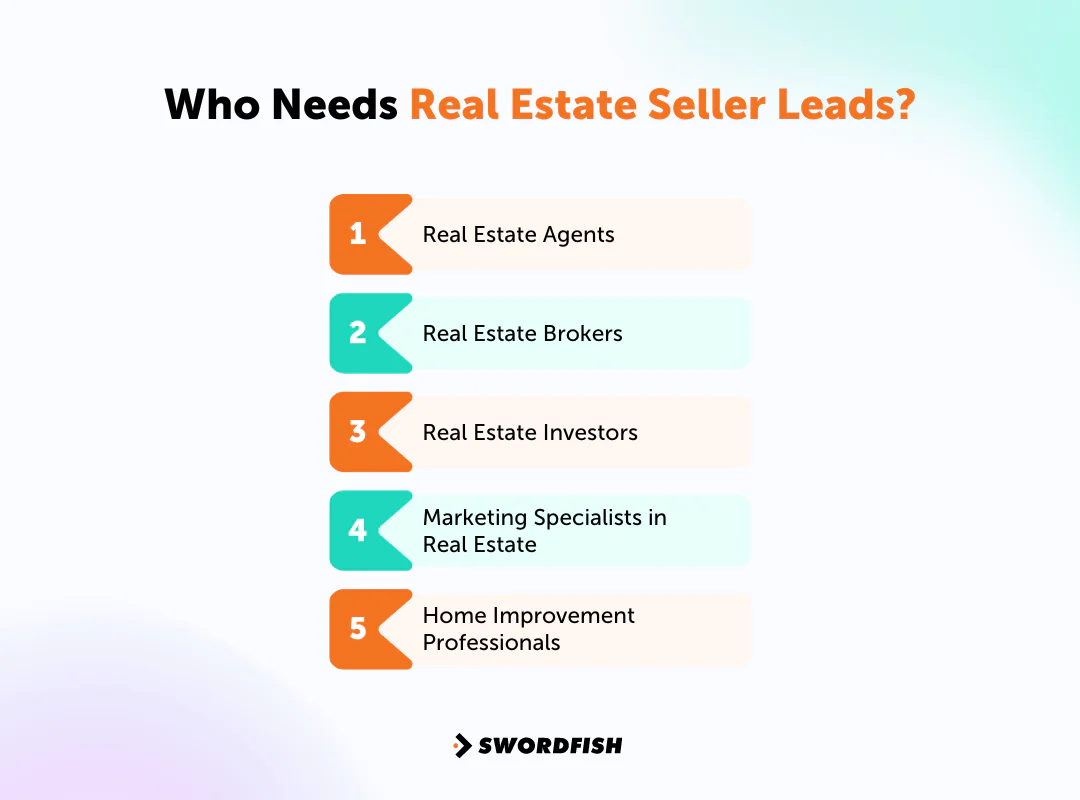
Real Estate Agents
Agents need seller leads to list new properties and grow their sales portfolio. More listings can lead to more sales, enhancing their market presence and reputation.
Real Estate Brokers
Brokers look for seller leads to expand their inventory of available properties, helping them to provide more options to buyers and increase their commission opportunities.
Real Estate Investors
Investors require seller leads to find potential investment opportunities. Quick access to new properties can be crucial for flipping homes or expanding rental portfolios.
Marketing Specialists in Real Estate
These professionals need seller leads to target their campaigns effectively and to ensure that their marketing efforts are directed at the right audience, maximizing return on investment.
Home Improvement Professionals
Contractors and renovators often seek out seller leads to offer their services for pre-sale home improvements. This helps home sellers get the best possible price for their homes.
Why Should You Invest in Real Estate Seller Leads
Putting time and budget into seller leads pays off in a few concrete ways, mainly by getting you in front of a homeowner before another agent does.
- Faster Sales Cycles: When you have direct access to sellers, you can speed up the sales process. This efficiency not only saves time but also increases your potential for higher turnover.
- Higher Profit Margins: Targeting seller leads often leads to transactions with better profit margins. You’re in a better position to negotiate deals that benefit both you and the seller.
- Access to Motivated Sellers: Motivated sellers are easier to work with and more likely to close quickly. By targeting these leads, you streamline your efforts towards more fruitful transactions.
- Strategic Market Positioning: Having a list of seller leads gives you a strategic advantage in the market. It allows you to identify and act on opportunities before they become widely known.
- Enhanced Networking Opportunities: Cultivating relationships with sellers can lead to more referrals and repeat business. Each successful deal can help expand your network and open new doors in the real estate market.
How Much Do Real Estate Seller Leads Cost?
Lead costs swing widely depending on where they come from and how qualified they are. Industry estimates put the overall real estate cost-per-lead somewhere between roughly $20 and $100 on average, with seller leads specifically often landing on the higher end of that range, and both figures climbing well past $200 in competitive metro markets. Location, platform, and how much intent a lead shows before you ever contact them all move the number in either direction.
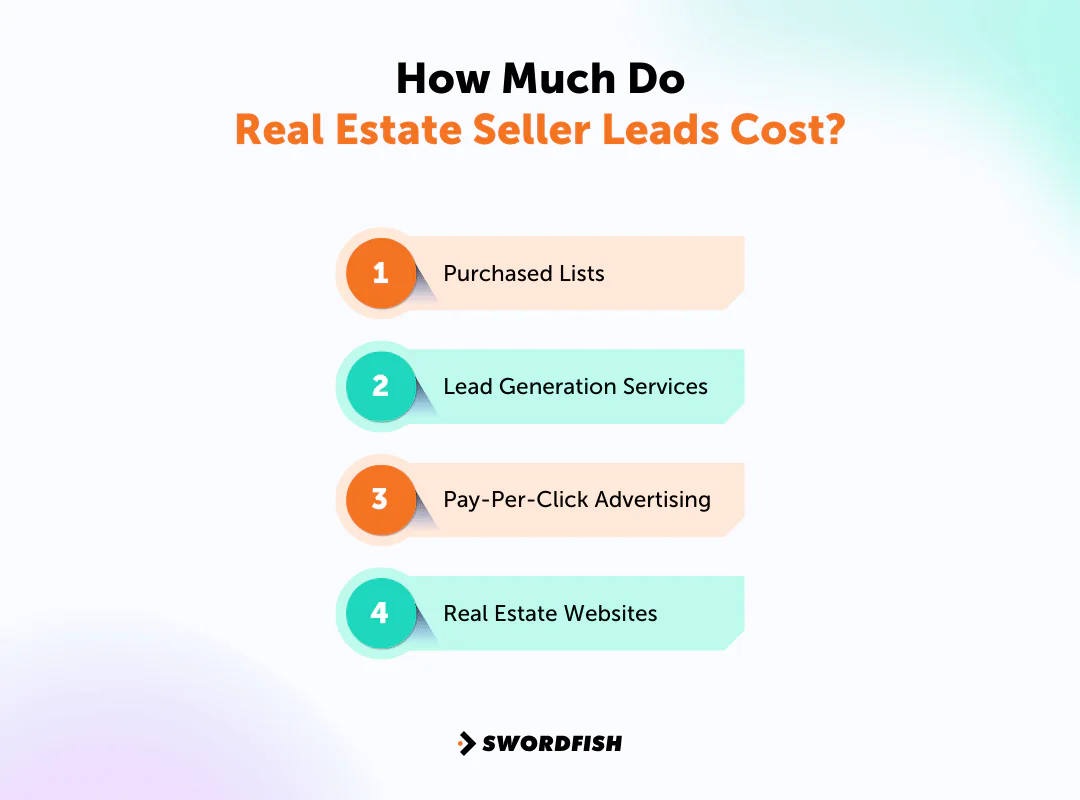
Purchased Lists
Buying lists of potential seller leads from a data provider can range from a few cents to several dollars per lead. The price often reflects the lead’s freshness and accuracy, with more current and detailed information commanding higher prices.
Lead Generation Services
Subscription services built around targeted marketing campaigns can run from roughly $20 up to $100 or more per lead. These services typically deliver higher-quality leads because they’re often pre-qualified and show a clearer intent to sell.
Pay-Per-Click Advertising
Costs for leads generated through PPC campaigns, such as Google Ads or Facebook Ads, vary based on competition for keywords and targeting specifics. Depending on the market and platform, a single lead could cost anywhere from around $5 up to well over $100.
Real Estate Websites
Platforms like Zillow or Realtor offer lead generation programs where costs are typically subscription-based. The subscription starts from $200 to over $1000 per month, depending on the level of exposure and number of leads provided.
Conclusion
Generating quality seller leads isn’t about picking one tactic and running with it. The agents who build a reliable pipeline tend to combine a data tool that speeds up contact discovery with ongoing relationship work, whether that’s social media, referrals, or simply showing up in the community.
For agents looking to cut down the research side of that work, Swordfish AI can help move faster from a name or address to an actual conversation, giving you a head start on capturing and converting seller opportunities.
FAQs
Are real estate seller leads hard to get?
Obtaining real estate seller leads can be challenging, especially in competitive markets. It requires effective strategies and tools to identify and connect with potential sellers who are ready to list their properties.
What are some challenges when dealing with real estate seller leads?
One major challenge is ensuring the accuracy and timeliness of the leads. Another difficulty is effectively communicating value to potential sellers in a way that persuades them to choose your services over competitors.
Why target real estate seller leads?
Targeting real estate seller leads is crucial because these leads represent direct opportunities for listings and sales. Focusing on seller leads can help agents and brokers increase their inventory.