
 View Products


Last updated: September 3, 2026

New agents face a familiar problem: high acquisition costs, inconsistent lead quality, and a market crowded with competitors who’ve been building their pipelines for years. Manually cross-referencing MLS records and county filings eats hours that could go toward actual client work. The agents who break through tend to combine a few traditional tactics with newer, faster ones.
You can find real estate leads by staying active on social media, running targeted PPC ads, showing up at local events, publishing useful content, applying predictive analytics, and offering video tours that give buyers a real feel for a property. A consistent personal brand and disciplined follow-up tie all of it together.
Below is a longer list of tactics, along with some practical notes on where each one tends to work best and where it falls short.
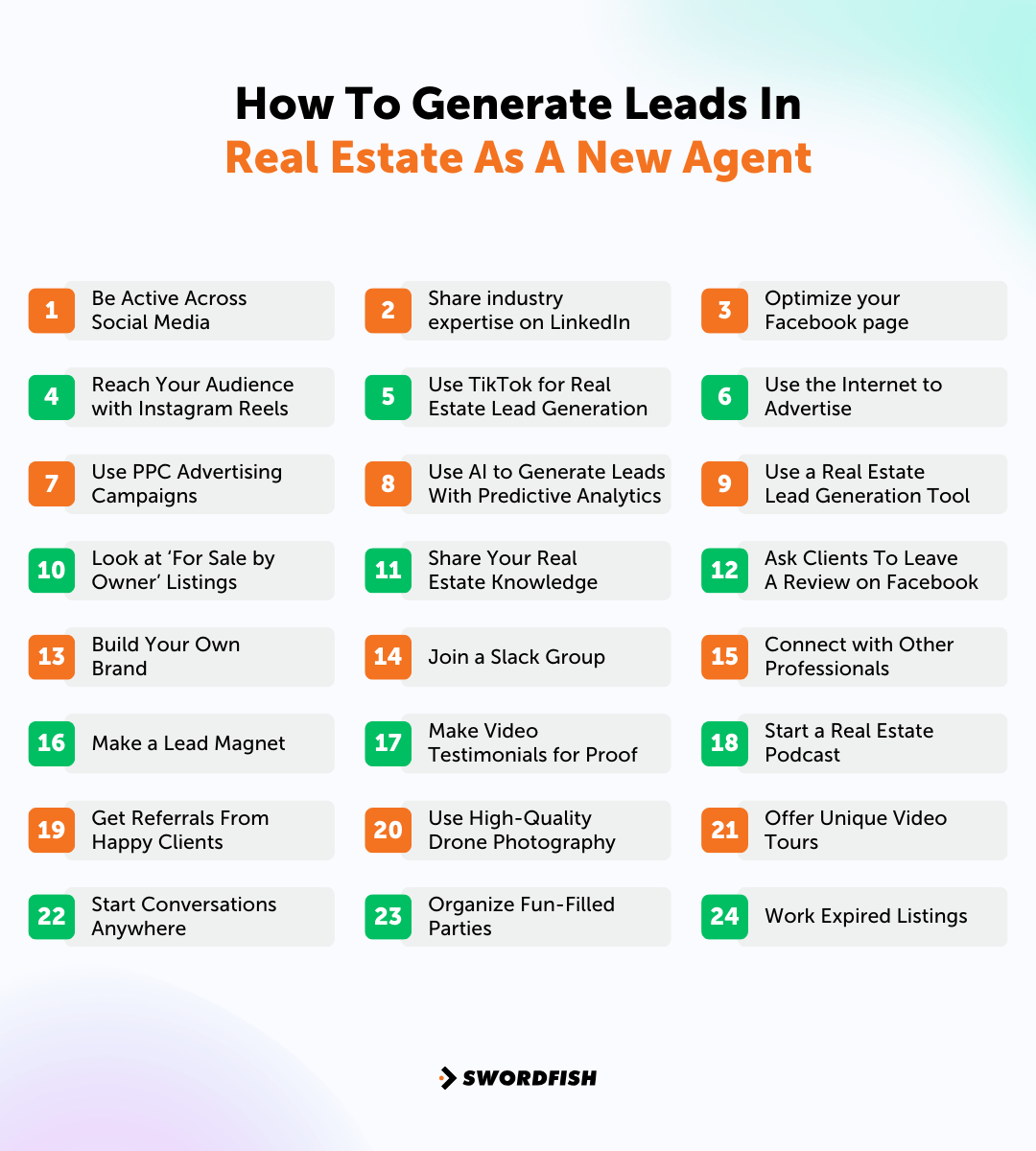
How to Generate Leads in Real Estate As A New Agent
Last year, more than 5 million homes changed hands in the U.S., which means millions of buyers and sellers were actively working with agents. Reaching even a small slice of that pool consistently is what separates agents who build a sustainable business from those who churn through cold leads.
1. Be Active Across Social Media
Social media remains one of the most affordable ways for agents to market themselves and track local market sentiment. Knowing how to find someone’s email on LinkedIn, Instagram or Facebook gives you a direct way to reach people who’ve shown interest in buying or selling.
LinkedIn, Facebook, and Instagram each offer networking value, and a lot of early business comes through friends and family connections made on these platforms.
If you’re new to paid social, start small with targeted ads rather than broad campaigns — you’ll learn what resonates before committing real budget.
2. Share Industry Expertise on LinkedIn
LinkedIn rewards agents who consistently share useful insight rather than just listings. A short post breaking down a local trend or a longer piece on financing options both build credibility over time.
Use relevant hashtags so your content reaches people actually searching real estate topics, and test a few content formats to see what your audience actually engages with.
3. Optimize Your Facebook Page
Your Facebook page functions as a mini storefront — a place to showcase listings and open houses, not just a personal profile.
If you’re looking for how to get leads in real estate for free, a well-optimized Facebook page is a reasonable starting point. Name your page and username to reflect your role and location.
Including phrases like “real estate agent” or “[your city] realtor” in your page title can improve visibility in search results, since Facebook pages often surface in Google searches too.
Add a call-to-action button so visitors can reach you directly through a contact form, email, or Messenger without extra steps.
4. Reach Your Audience with Instagram Reels
Instagram Reels remain one of the lower-cost ways to get in front of people who don’t already follow you.
Use Reels to show off active listings, tease upcoming ones, or run quick virtual walkthroughs. Instagram has 500 million people using it daily, so even modest reach on a Reel can put your listing in front of a meaningful audience. The format allows clips up to 90 seconds with filters, stickers, and captions.
You can layer in trending audio and stitch in multiple clips, all through the same mobile-first editing tools most people already use.
If you’re trying to figure out how to get real estate leads without heavy production costs, a short Reel gives prospects a fast, authentic look at what you do.
5. Use TikTok for Real Estate Lead Generation
TikTok has grown into a serious channel for agents, with 50 million U.S. users and growing. A meaningful share of that audience is actively house-hunting, not just scrolling for entertainment.
You don’t need polished production. A simple 30-second clip filmed on your phone — a day-in-the-life shot or a quick property tour — tends to perform fine.
Posting consistently matters more than any single viral clip. Regular uploads compound your visibility over time.
6. Use the Internet to Advertise
Online advertising matters because most home buyers now start their search online — home buyers aged 23 to 56 use the Internet to search for homes in 2021. A few channels worth testing to find the best real estate leads:
- Use LinkedIn ads to connect with professional buyers.
- Create Facebook ads to reach a wide range of potential clients.
- Post Instagram ads to highlight the visual appeal of your properties.
- Set up Google ads to ensure your listings show up in search results.
- Answer questions on Quora about real estate to build credibility.
- Write for real estate blogs, whether local or national, to share your expertise.
None of these alone will fill a pipeline, but layered together they widen the best way to find real estate leads online.
7. Use PPC Advertising Campaigns
A lot of buyers and sellers start their search with a Google query, which makes PPC (pay-per-click) advertising a useful way to intercept intent early and drive people to your IDX website.
Services like Market Leader place ads across Google, Bing, and other engines that route traffic to appraisal or new-listing pages. Because visitors submit their own contact details, these tend to be warmer, more exclusive leads than cold lists.
Market Leader also commits to delivering a set number of leads monthly, which gives you a predictable volume to plan around and can improve your overall ad ROI.
8. Use AI to Generate Leads With Predictive Analytics
Predictive analytics tools now scan public and behavioral data to flag homeowners who are statistically more likely to list soon — before they’ve contacted an agent.
Getting to a seller early matters. Homeowners frequently go with whichever agent reaches them first with a credible pitch. Predictive tools let you shift effort away from blind cold-calling and toward people who already show signals of moving.
The net effect is fewer wasted calls and a higher hit rate on the outreach you do make.
9. Use a Real Estate Lead Generation Tool
Dedicated real estate lead generation tools give you more control over identifying, qualifying, and reaching prospects instead of relying purely on inbound traffic.
Swordfish AI, for example, lets realtors surface qualified leads through Bombora Intent Data, which flags people showing research behavior tied to buying or selling property.
Given that 73% of buyers go with the first agent they speak to, being fast and prepared on that first contact carries outsized weight.
10. Look at ‘For Sale by Owner’ Listings
The National Association of Realtors reports that only 3% of ‘For Sale by Owner’ (FSBO) listings sell within the owner’s desired timeline, and just 18% sell at the listed price. You’ll find these listings on sites like Craigslist.
Rather than a hard pitch, offer something useful — a short blog post or a few facts on why representation tends to produce better outcomes — then open the door to a conversation about their specific situation.
11. Share Your Real Estate Knowledge with Local Communities on Facebook, Reddit, & Nextdoor
If you’re after the best way to find real estate leads for free, local groups on Facebook, Reddit, and Nextdoor are worth the time investment. The goal is becoming a trusted, recognizable presence, not dropping listing links.
This slower approach has become a primary lead source for a lot of agents precisely because free, honest advice builds the trust that later turns into referrals and deals.
Join relevant groups, participate in threads that matter to residents, and answer questions honestly. Over time, you become the person people think of when a real estate need comes up.
12. Ask Clients To Leave A Review on Facebook
Client reviews are one of the more reliable ways to convert new prospects. Make it a habit to ask every client for a Facebook review once the transaction closes.
A couple of reasons Facebook reviews specifically carry weight:
- Because reviews are tied to personal accounts, they read as more genuine and help build trust with prospective clients.
- Your Facebook rating surfaces when people search for your business on Google.
Being easy to find combined with strong reviews makes it more likely a hesitant prospect reaches out.
13. Build Your Own Brand
Standing out in real estate usually comes down to a clear personal brand. A professional website that explains your services and working style helps prospects know what to expect before they ever call.
Even if most of your business comes from word of mouth, your site still matters — it should describe your services in detail and include reviews that build trust with both buyer and seller leads.
Make sure your SEO for real estate aligns with what you actually specialize in — if you’re stronger on the selling side, weight your content accordingly.
A strong brand extends beyond your website. It’s also about clearly articulating what makes you the better choice in your specific market, including any niche expertise like first-time seller guidance.
14. Join a Slack Group
Slack isn’t just for internal team chat — it’s also a viable answer to how to get real estate leads for free. Slack hosts communities where members discuss networks, deals, and shared interests.
Look for a group focused on your specialty, whether that’s investors or first-time buyers. Consistency and helpfulness are what actually generate leads here.
Answer questions, share knowledge, and be a genuinely useful member. Trust built this way tends to convert into real business over time.
15. Connect with Other Professionals and Businesses
Partnering with businesses that serve your target market without competing against you creates a mutual referral pipeline.
A few worth building relationships with:
- Commercial lenders: Most buyers need financing, and a good lender relationship smooths a critical step in the process.
- Professional cleaners: A clean home shows better, making this an easy referral for new homeowners.
- Landscapers: Curb appeal moves properties, so this referral pays off for sellers.
These kinds of partnerships extend your reach without any direct advertising spend.
16. Make a Lead Magnet
A lead magnet trades something useful for a prospect’s email address, giving you a low-friction way to grow your contact list.
The basic mechanics:
- Make a Resource: Build something genuinely useful, like a buyer’s checklist or neighborhood guide.
- Share It: Promote it across your social channels and website.
- Get Emails: Visitors trade their email for access to the resource.
17. Make Video Testimonials for Proof
Video testimonials carry weight because they’re harder to fake than written reviews — they influence the decisions of 95% of customers according to one survey. Real clients describing real experiences tend to land better than self-promotion.
Two out of three people say they’re more likely to buy after watching a video showing how a business helped someone else.
A few tactical notes on getting these right:
- Collect Feedback Quickly: Ask right after closing, when clients are happiest and most willing to talk on camera.
- Encourage Participation: A small closing gift or a relaxed, interview-style format can improve participation rates.
- Posting on Website and Social Media: Place these strategically on your site, and share them on social where they can prompt new questions from prospects still on the fence.
18. Start a Real Estate Podcast
Podcast listenership has grown steadily — 57% of American adults reported listening in 2021, up from 55% the year prior. Listeners often tune in while commuting, cleaning, or exercising, which gives you passive attention that’s hard to get elsewhere.
Getting started doesn’t require studio gear — a smartphone and a free host like Buzzsprout, Soundcloud, or Podbean will do, and Anchor lets you create and distribute episodes at no cost.
A few things worth building into your episodes:
- Choose Interesting Topics: Cover local market trends pulled from local news, or give concrete buying and selling advice.
- Include Calls to Action: Place a clear CTA near the start, middle, and end of each episode so listeners know what signing up gets them.
- Promote Your Podcast: Lean on guests’ existing social followings by asking them to share and tag episodes, and cross-promote with other podcasters.
Done consistently, a podcast becomes a durable lead channel rather than a one-off marketing experiment.
19. Get Referrals From Happy Clients
Referrals remain one of the most reliable lead sources in the business. 36% of buyers find their agent through a personal recommendation, and 73% would work with that same agent again.
Maintaining relationships with past clients — even a simple check-in months after closing — keeps you top of mind when their friends or family need a recommendation.
20. Use High-Quality Drone Photography
Aerial photography gives listings a visual edge that standard photos can’t match. Make sure your imagery matches the current season — outdated seasonal shots can make a property look neglected.
Refresh visuals as listings carry across seasons; don’t run winter photos on a spring listing.
360° aerial neighborhood tours, a format popularized by agent Trey Langford, can also strengthen your site’s SEO and give visitors a fuller sense of the surrounding area.
Pinning key features within these tours helps demonstrate expertise and can generate leads from people simply exploring the neighborhood online.
21. Offer Unique Video Tours
Video tours give prospects a dynamic sense of a property that photos alone can’t convey.
They also self-filter casual browsers, since a good walkthrough answers common questions upfront and only serious viewers keep watching.
Adding drone footage or other distinctive elements signals extra effort and can differentiate your listings from competitors’.
22. Start Conversations Anywhere
Sometimes the simplest lead generation is just showing up where prospects already are. If you’re working a specific area, local hotspots are a reasonable place to strike up conversations.
Watch for signs of homeowners upgrading — new paint, landscaping work — since these moments often signal they’re preparing to sell. A business card left at the right moment can pay off months later.
If you exchange numbers, make sure you’re only calling the phone numbers the owner is actually using, not an outdated one pulled from an old record.
Treat every interaction, buyer or seller, as a potential connection — you rarely know upfront who’s close to a decision.
23. Organize Fun-Filled Parties in Open Houses for Sale
Traditional open houses can feel flat. Turning yours into an actual event tends to draw more foot traffic and better conversations.
A few ways to liven things up:
- Invite a DJ to provide lively music.
- Arrange a BBQ and establish a snack bar.
- Set up a selfie booth for entertaining photos.
- Serve a variety of local beers or wines.
This approach also tends to attract neighbors who aren’t buying this particular home but are curious about the market — and some of them turn into future sellers.
People wander into open houses for two common reasons:
- Some are searching for a new home and need to sell their current one first.
- Others are neighbors curious about local pricing and staging trends.
Ask visitors about their current living situation and plans — even if most aren’t ready to act, the relationship you build can pay off later.
24. Work Expired Listings
Expired listings remain one of the more reliable lead sources, though competition for them is intense since every agent in the area is likely reaching out too.
A few ways to differentiate your approach:
- Highlight Value: Figure out why the listing actually expired — overpricing, weak marketing, or bad timing — and speak directly to that problem.
- Improve Your Communication: Skip the generic cold-call script and rehearse something that actually sounds like a conversation.
- Broaden Your Outreach: Don’t rely on one channel. Mix social, email, and direct mail. Pairing follow-up email templates with a consistent cadence tends to improve response rates.
Consistent, differentiated outreach on expired listings positions you as the agent worth calling next time.
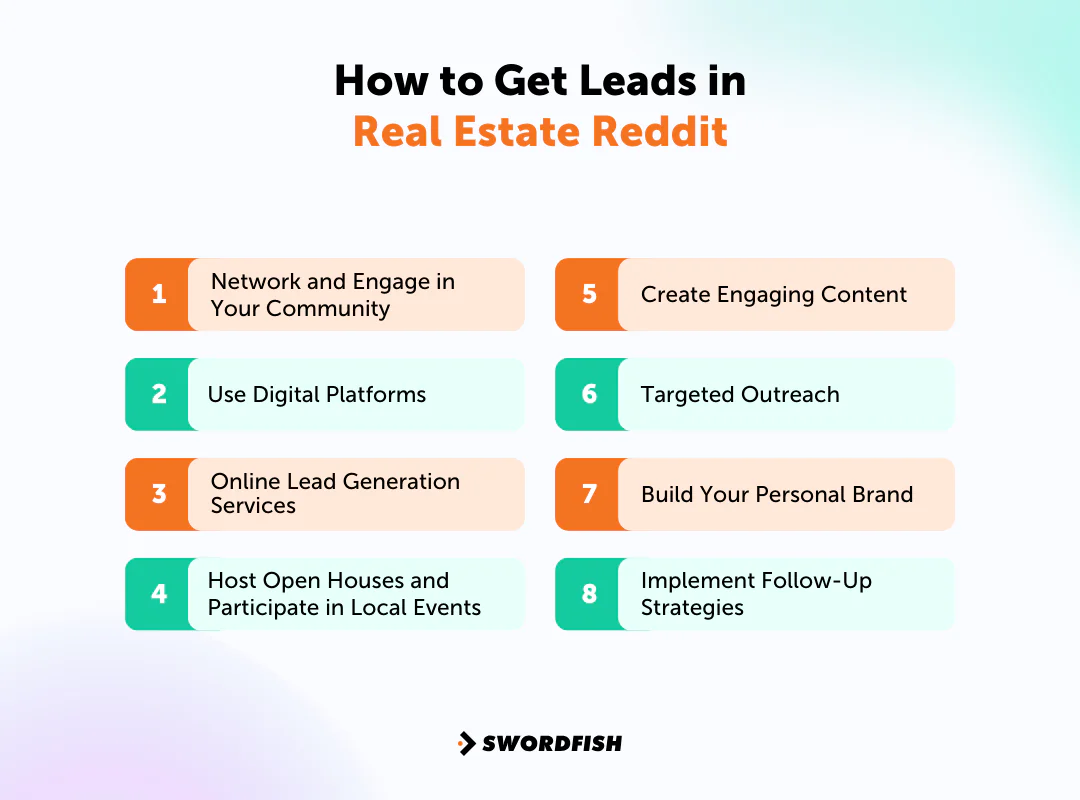
How to Get Leads in Real Estate Reddit
Advice pulled from real estate agents active on Reddit tends to echo a handful of consistent themes.
Network and Engage in Your Community
Reddit users consistently point to community involvement and networking events, but they also suggest branching beyond strictly real estate gatherings — home décor events, landscaping meetups, even unrelated community events can surface leads.
Use Digital Platforms
Investing across Facebook, Instagram, and LinkedIn shows up repeatedly as effective. Most recommend a mix of organic content and paid ads rather than relying on one or the other.
Online Lead Generation Services
Paid lead services aren’t cheap, and pricing varies a lot by provider. Even so, many realtors on Reddit report the returns justify the cost given the scale of the databases and depth of insight these services provide.
Pairing that data with solid inside sales strategies tends to improve conversion further.
Host Open Houses and Participate in Local Events
Open houses remain a direct way to meet buyers face to face, and Reddit users also emphasize getting involved in community events generally to build visibility.
Create Engaging Content
Answering your audience’s actual questions through content — using platforms like YouTube and TikTok to showcase properties and share tips — remains one of the more accessible ways to build a following that eventually converts.
Targeted Outreach
Some Reddit users still focus on using traditional door-knocking and cold calling for personal connections. If you go this route, a few cold calling tips to get a meeting can meaningfully improve your hit rate. Others rely on customized direct mail sent to specific neighborhoods.
Build Your Personal Brand
As with earlier sections, personal branding comes up again on Reddit — consistency across your social presence matters as much as any single post.
Implement Follow-Up Strategies
A structured follow-up system spanning email, phone, and direct mail is a recurring theme. Following proven email marketing strategies helps keep leads warm until they’re ready to act.
How Do Most Real Estate Agents Get Leads?
Understanding how agents actually attract clients means looking at both digital and traditional numbers side by side:
- Organic search converts reasonably well online, averaging around 3.2%.
- Social media is heavily used, with roughly 90% of agents active on Facebook, and LinkedIn and Instagram also common for client outreach.
- Word of mouth remains strong — nearly 47% of buyers choose an agent based on a recommendation from friends, family, or neighbors.
- And 62% of buyers who start their search online still prefer to follow up with a phone call.
The takeaway is straightforward: agents relying on a single channel are leaving leads on the table. Combining digital reach with traditional relationship-building consistently outperforms either approach alone.
Finding Real Estate Lead Generation Strategy that Works for You
Not every tactic above will fit your market, budget, or personality. A practical way to narrow it down:
- Market Analysis: Identify who your realistic leads actually are and where they spend time online and offline.
- Networking: Take stock of existing community connections before deciding you need to build everything from scratch.
- Budgeting: Paid ads move faster but cost more than referral-based growth. Real estate accounting software can help you track what’s actually working.
- Choosing Platforms: Pick channels based on where your specific audience actually spends time, not where everyone else is posting.
- Content Marketing: Build content that answers real questions your prospects are asking — blog posts, videos, infographics — rather than generic listing promotion.
- Personalization: Tailor outreach based on what you actually know about a lead’s preferences and stage in the process.
There’s no universal formula here. The agents who do well stay willing to adjust their mix as their market and client base shift.
Streamline Lead Generation in Real Estate with Swordfish AI Now!
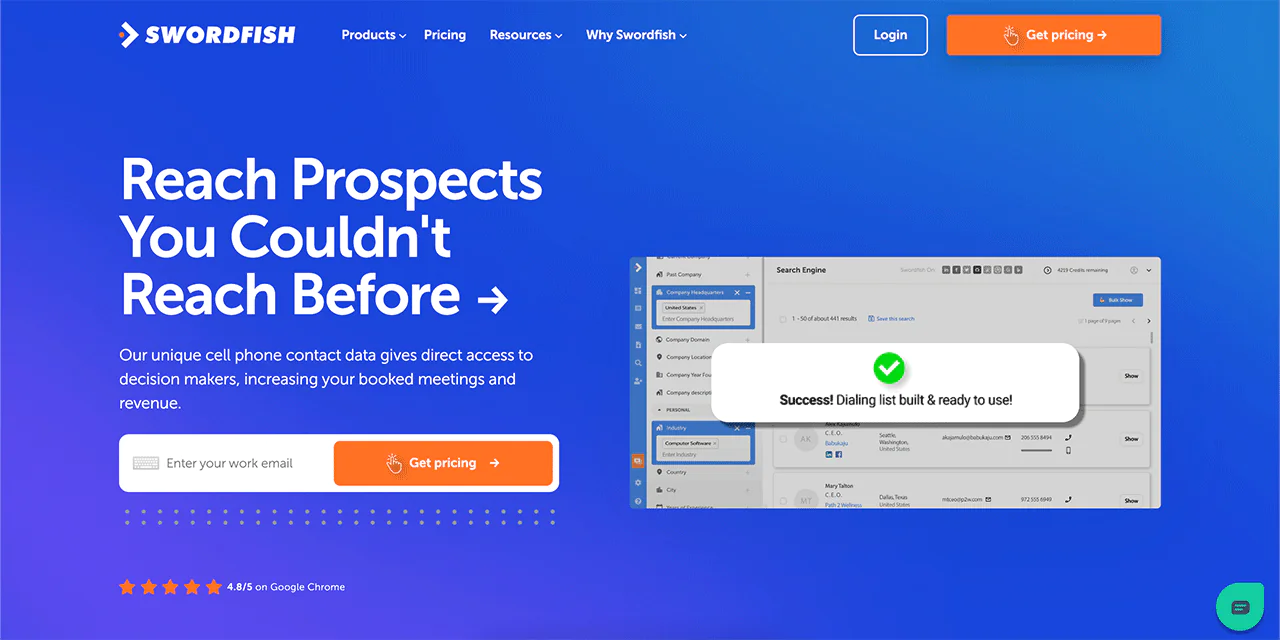
Swordfish AI gives real estate professionals a faster way to find and verify contact details for potential clients. With a database of more than 3.5 billion records and a built-in verification layer, it helps agents move from a name or handle to a usable contact profile quickly.
A reverse search using just an email address or social handle can return a detailed contact profile, cutting down the manual guesswork of piecing together buyer or seller information.
It integrates into existing CRM workflows without much disruption, and its verification process reduces the time agents spend manually confirming whether contact info is current.
Whether you’re trying to grow your network, chase new listings, or connect with specific prospects, the toolset is built around speeding up that first point of contact.
Key Features of Swordfish AI
A closer look at the tools that make up the platform:
-
Reverse Search
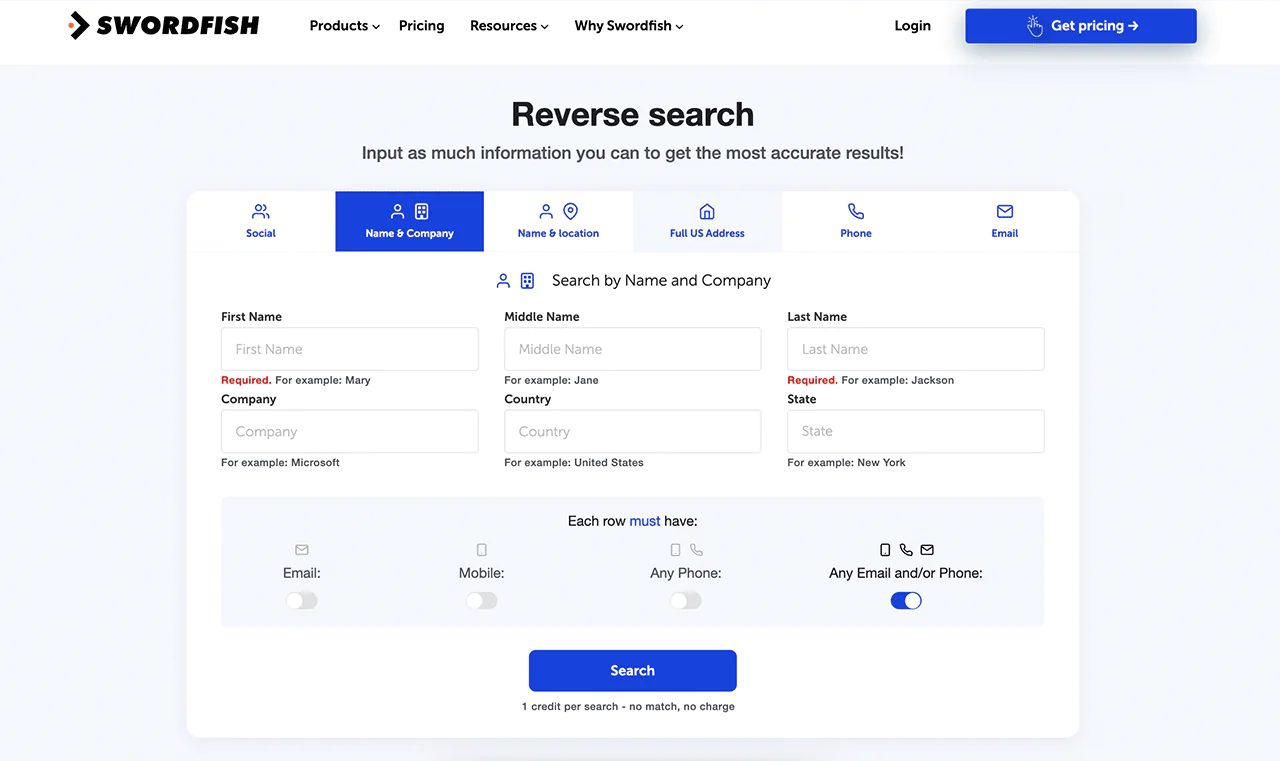
With Reverse Search, entering a name, location, or email returns detailed contact data, helping you find property owners or prospects faster and open conversations sooner.
-
Prospector
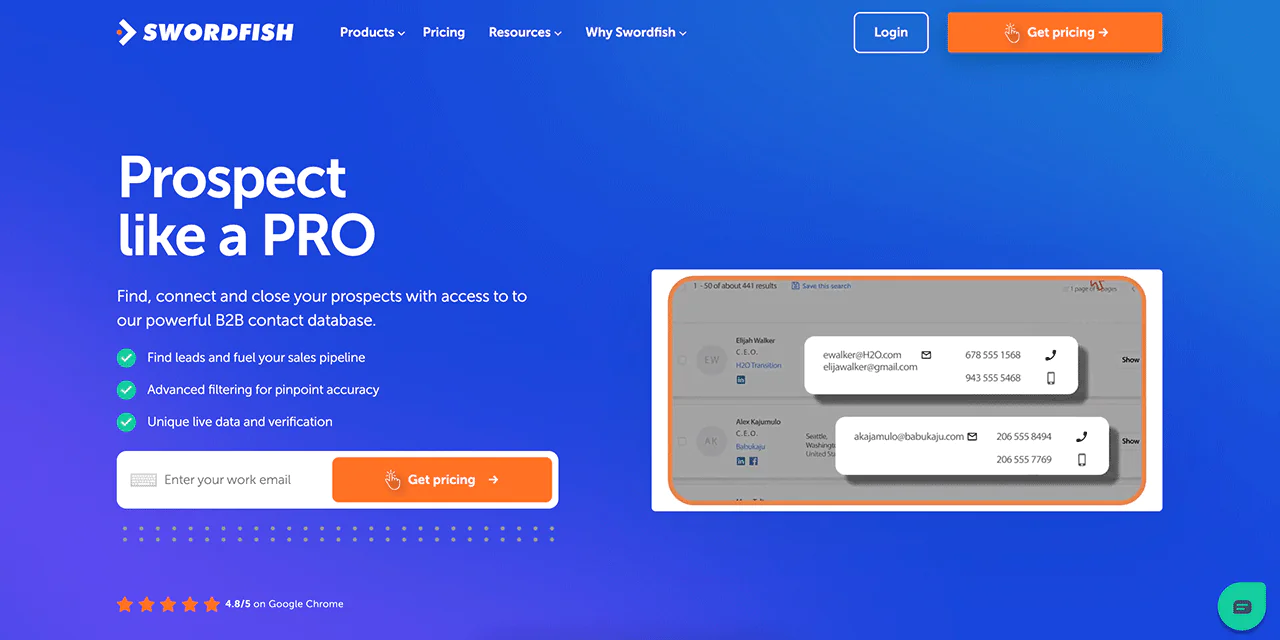
Prospector draws on a large B2B contact database, letting you filter by location, job title, or industry to narrow down prospective buyers, sellers, or investors.
-
Chrome Extension
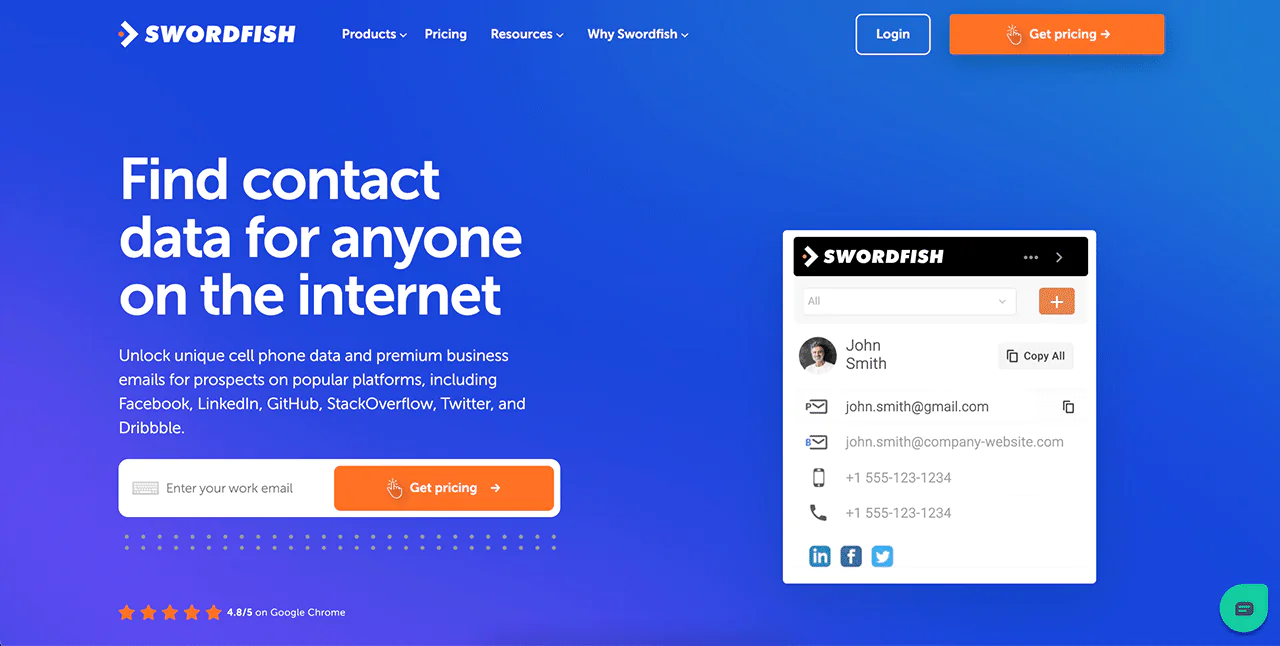
The Chrome extension pulls contact data directly from online profiles, including LinkedIn, giving you immediate access to details without leaving the page you’re on.
-
Email Verifier
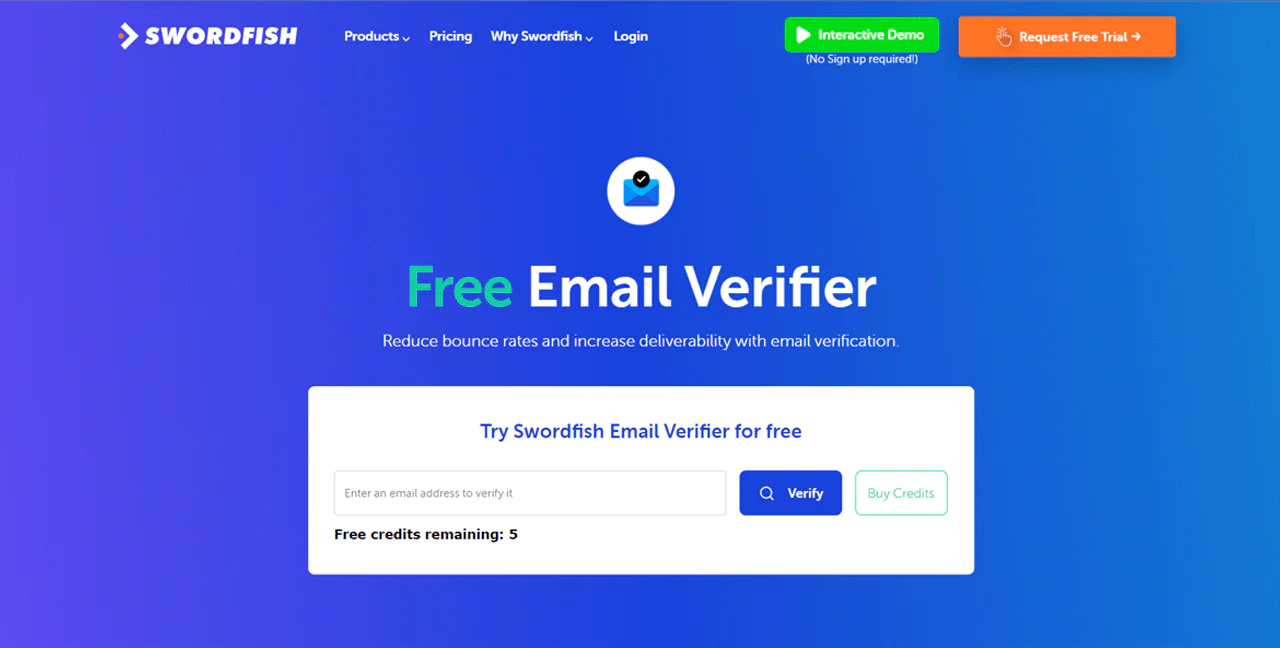
Email Verifier checks addresses before you send, which helps reduce bounce rates and keeps your email marketing campaigns from losing deliverability over time.
-
File Upload
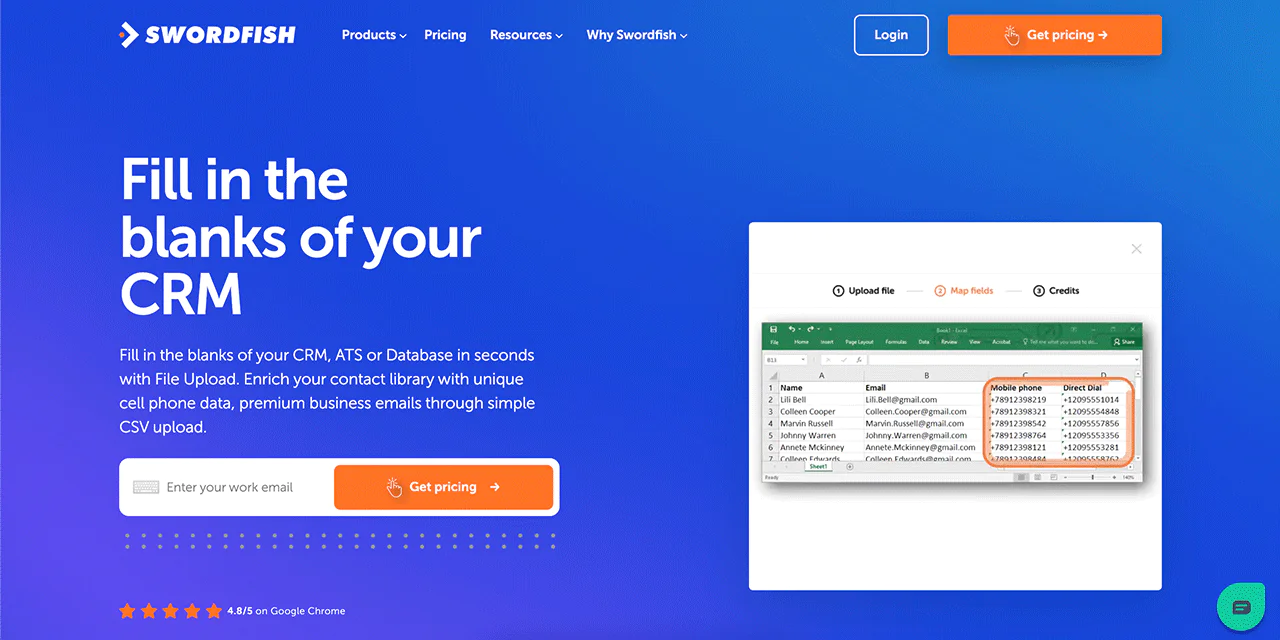
File Upload lets you refresh existing contact lists by uploading a CSV, updating emails and phone numbers so your database stays actionable instead of going stale.
-
Refresh Title and Data
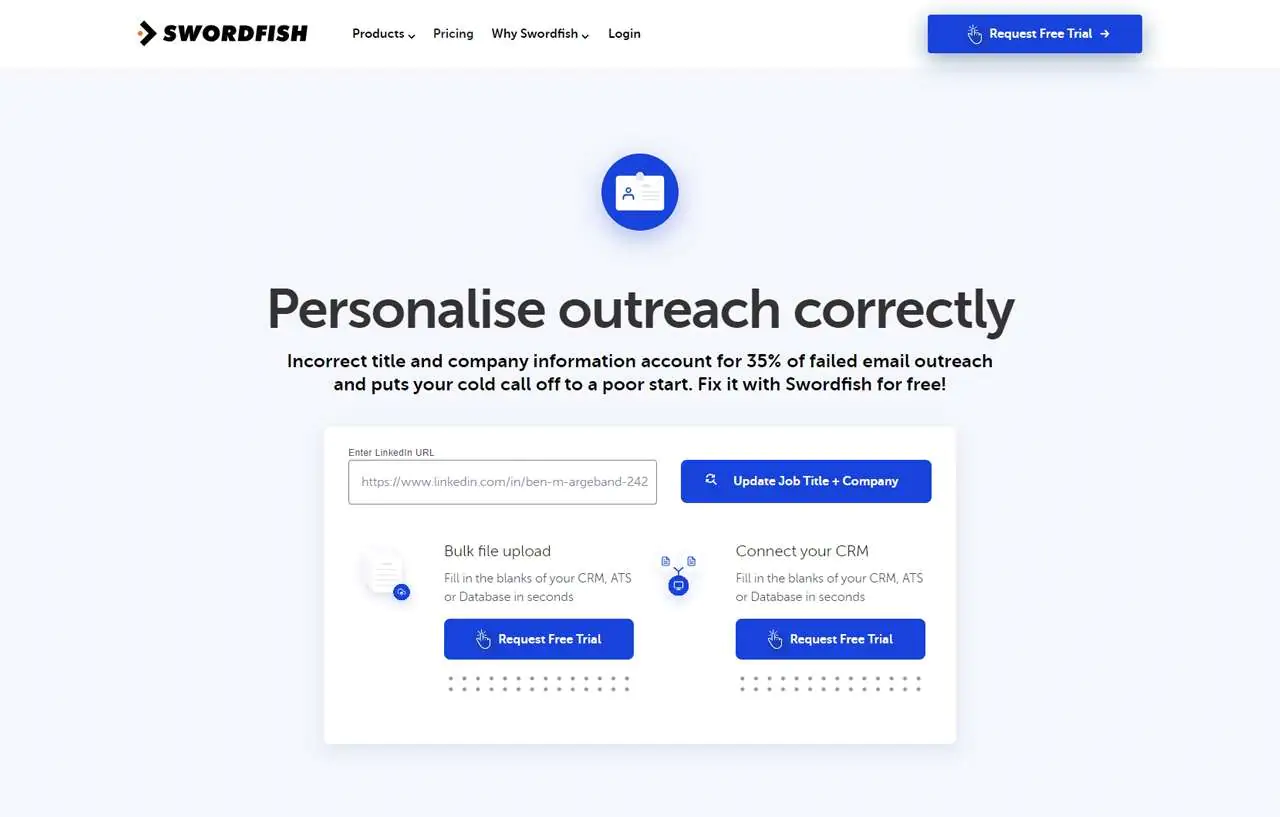
This tool keeps your CRM current with updated job titles and company data, useful for spotting career changes among past clients that could signal new opportunities.
-
API
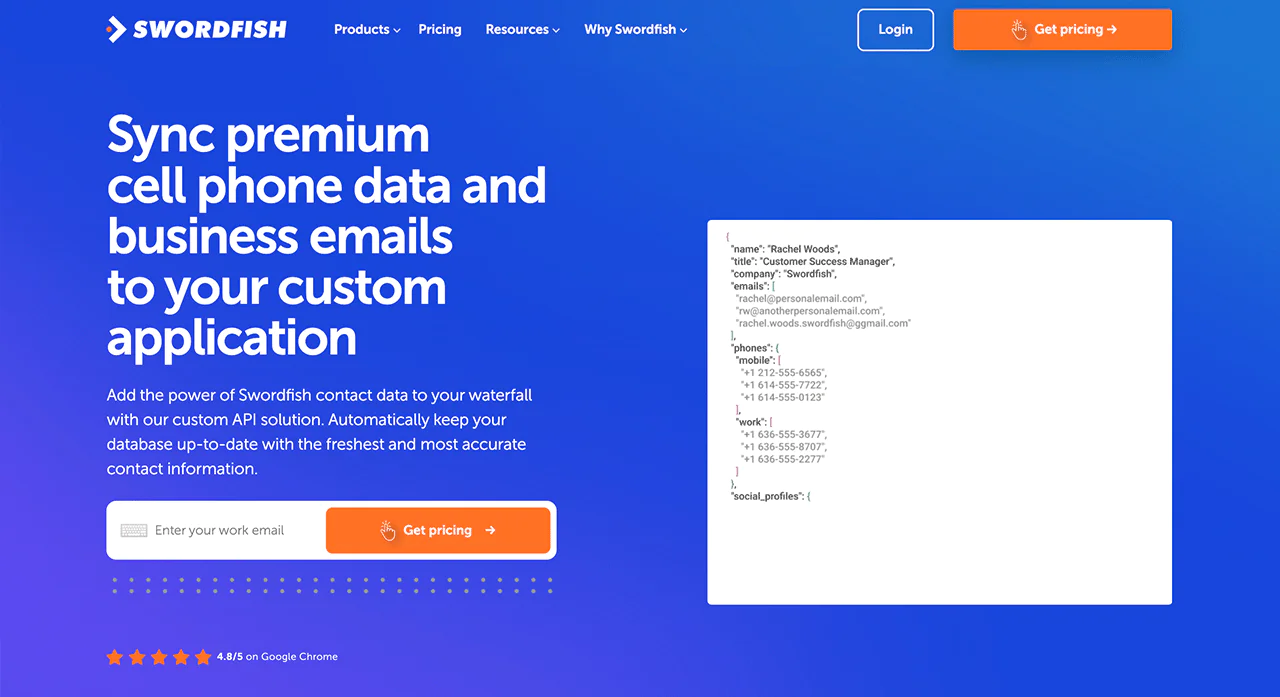
Custom API solutions connect into your existing software stack, including CRMs, automating enrichment so your contact data stays current without manual updates.
-
Bombora Intent Data
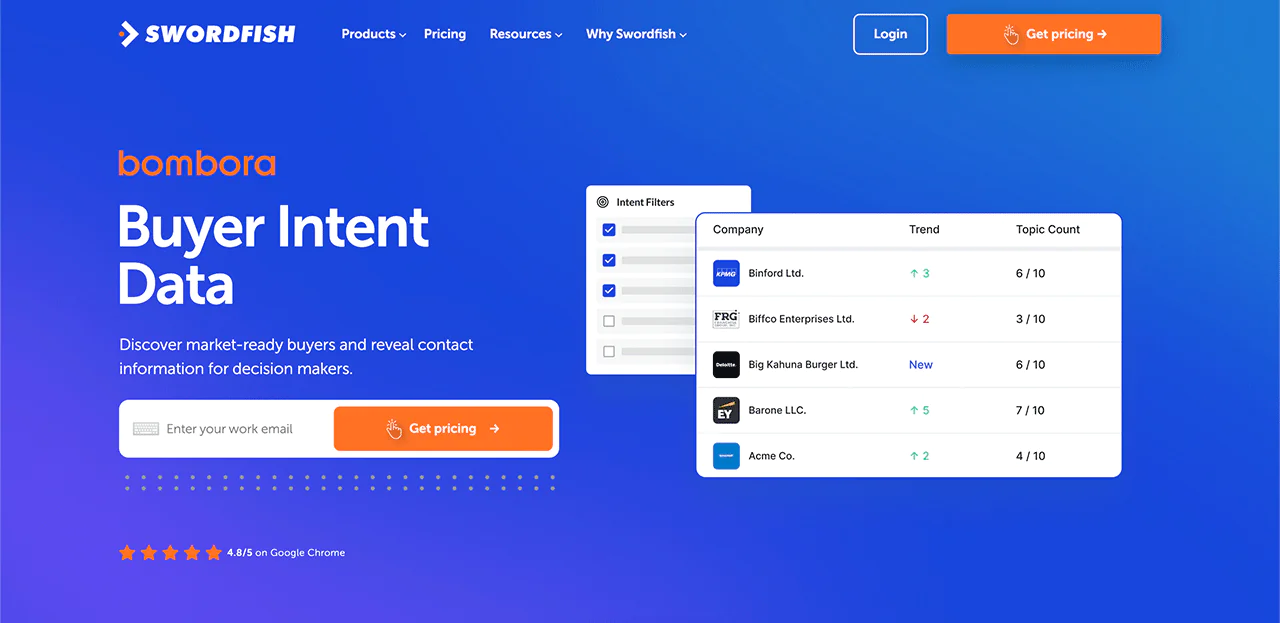
Bombora’s intent data surfaces prospects showing active research behavior tied to buying or selling, letting you prioritize outreach toward people more likely to respond.
-
CRM Integration
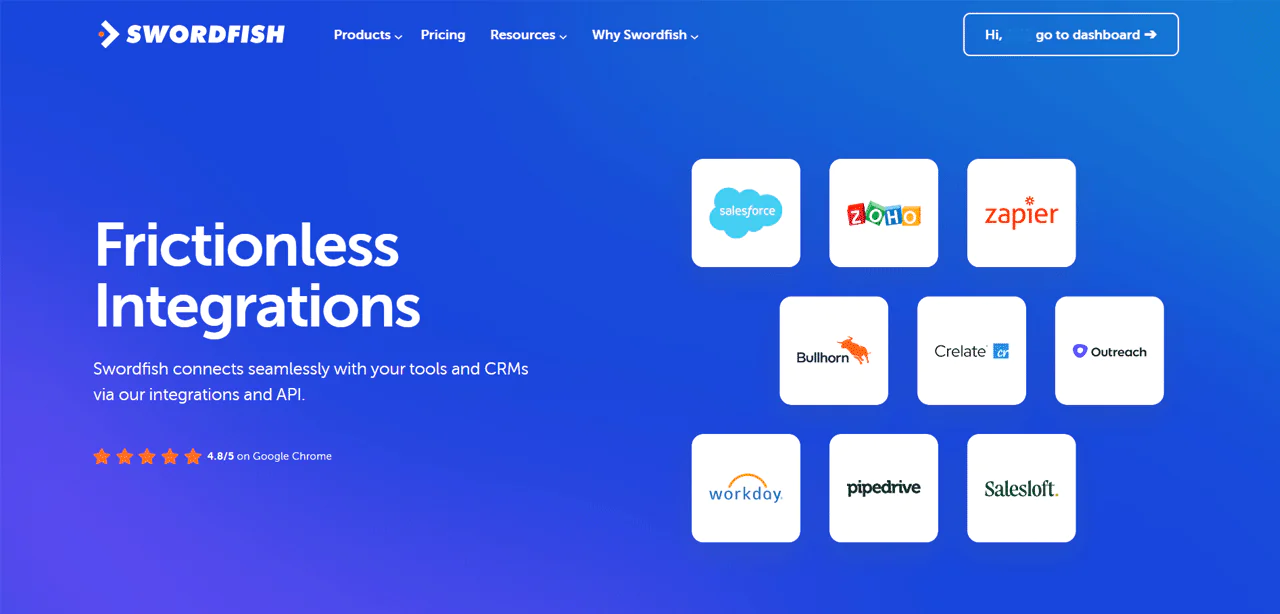
When you integrate CRM tools, contact details Swordfish AI surfaces flow directly into your existing workflow, keeping follow-ups timely and interactions grounded in current data.
Final Words
No single tactic on this list guarantees a full pipeline. The agents who consistently close deals combine a handful of these approaches — usually a mix of digital outreach, an active social presence, and disciplined follow-up — rather than betting everything on one channel.
Tools like Swordfish AI, which can surface intent signals through Bombora data, help narrow that effort toward people who are actually further along in the buying or selling process.
Ultimately, an effective online presence paired with genuine local relationships tends to outperform either approach in isolation. Data-driven targeting gets you in front of the right people; consistent, useful content and follow-up keep you there.
 Try Swordfish Ai
FAQs
Where do realtors get most of their leads?
Referrals from friends, relatives, or neighbors remain the top source for most agents, according to the National Association of Realtors. That’s a strong argument for investing in your local network early.
Does buying leads for real estate work?
Purchased leads can supplement your pipeline, but they rarely work as a standalone strategy. Agents who see the best results usually combine paid leads with strong marketing and professional photography.
How much do realtors spend on leads?
Pricing varies widely — anywhere from under $1 to over $1,000 per lead depending on the provider and exclusivity. Many lead services also charge a monthly subscription, such as roughly $250, plus a few dollars per lead on top.