
 View Products


Last updated: September 3, 2026
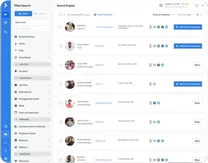
Lead enrichment is the process of gathering, verifying, and organizing information about a prospect to build a fuller picture of who they are and what they need. Lead enrichment involves gathering, organising, and examining data related to a customer’s interest in a company’s offerings, with the goal of improving marketing and sales outcomes. For sales teams working healthcare provider contact data specifically, that usually means turning a bare name or NPI number into a workable profile with a verified mobile number, direct email, specialty, and practice affiliation.
Enriching lead data at scale is not a manual task. It requires pulling from multiple data sources, matching records against each other, and resolving conflicts when one source disagrees with another. The tool then queries multiple data sources simultaneously: public databases, proprietary databases, third-party data providers, and social media platforms. Advanced platforms often use a waterfall approach, checking one source after another until the missing field is filled.
Swordfish handles this process so sales and marketing teams can work from clean, current data instead of building it themselves. Here’s a closer look at how enrichment works and what to expect from it.
What Swordfish Brings to Lead Enrichment
Swordfish focuses on a few core capabilities that matter most when the underlying data changes as fast as it does in healthcare recruiting and sales:
- Real-Time Data Verification: Ensure every lead is accurate and up-to-date.
- Advanced Machine Learning Algorithms: Get latest technology to improve data quality.
- Regulatory Compliance: Rest assured your data practices are compliant with all regulations.
- Seamless Integration: Plug Swordfish into your existing CRM and marketing tools.
How Swordfish Works for Lead Enrichment
The mechanics of enrichment break down into three stages, and understanding them helps explain why data quality varies so much between vendors:
- Verification: Swordfish cross checks data from multiple sources to ensure its accuracy.
- Supplementation: It adds valuable information that might be missing.
- Integration: The enriched data is then plugged into your systems for use.
The integration step matters more than it sounds. A tool that produces accurate data but dumps it into a spreadsheet still leaves someone manually updating the CRM. Enrichment that writes directly into existing systems, without a middle step, is what actually saves a sales team time rather than just shifting the work.
In practice, this changes daily routines in specific ways: reps spend less time chasing bounced emails and disconnected numbers, and marketing can segment healthcare provider lists by specialty, facility type, or region with more confidence that the underlying contact details are current.
Better Conversions with Enriched Leads
Enriched data gives sales teams more than a name and a phone number. Account data enrichment helps sales representatives understand the bigger picture and identify potential cross-selling or upselling opportunities. When a rep can see a provider’s specialty, practice size, and recent activity before the first call, the conversation starts from a more relevant place.
Better segmentation follows from better data. Marketing teams can build campaigns around specific provider types instead of sending the same message to an entire list. That kind of targeting tends to produce higher engagement than broad outreach, simply because the message matches the recipient.
There’s a compliance angle too, and it’s worth taking seriously in a niche built on healthcare contact data. Verified, current information reduces the odds of contacting the wrong person or reaching a number that’s been reassigned, which lowers the risk of complaints and keeps outreach records cleaner if compliance ever needs to review them.
Taken together, complete and current lead information tends to shorten sales cycles because reps aren’t losing time on dead ends. It’s a compounding effect: every verified contact is one less thing standing between a qualified lead and a closed deal.
Cross-Verification: Swordfish’s Approach to Accurate Data
Accuracy in lead enrichment isn’t optional, and it’s not something a single data source can guarantee on its own. Swordfish checks information against multiple databases rather than trusting one feed, which matters because sources disagree more often than most teams expect. One database might mark a phone number active while another flags it as disconnected.
When that happens, the discrepancy has to be resolved rather than passed along as-is. Swordfish works through these conflicts so what reaches a sales or marketing team is the most defensible version of the record, not just the first answer found. That includes de-duplicating records and reconciling mismatched fields like emails marked valid in one place and suspect in another.
The practical benefit is fewer wasted calls and emails. A rep following up on a lead with outdated contact information loses time and, in a regulated space like healthcare outreach, risks a compliance misstep. Cross-verification is the mechanism that keeps that risk lower.
Compliance and Accuracy in Lead Data
Data that’s accurate but not compliant creates its own problems, and the reverse is just as true. Swordfish treats the two as connected rather than separate concerns. Cross-referencing multiple data points is how accuracy gets established; compliance is the framework that determines how that data can be sourced, stored, and used in the first place.
For teams working with healthcare provider contact data specifically, this means paying attention to how records were sourced and whether outreach practices align with applicable telemarketing and communications rules, since enforcement and requirements can shift. Any enrichment vendor should be able to speak clearly to where its data comes from and how it stays current, rather than treating that as a black box.
A short practical checklist for evaluating enrichment quality before relying on it for a healthcare-focused campaign: confirm how recently contact fields were verified, ask whether the vendor cross-checks across multiple sources or relies on one, check how conflicting records are resolved, and verify that enriched data syncs into your CRM without a manual export step.