
 View Products


Last updated: September 3, 2026

The United States has more than 5,700 colleges and universities, and that number shifts every year as schools open, merge, or close. Finding the right contact at any one of them, let alone hundreds, is rarely a matter of a quick Google search. Titles change, staff turn over, and general inboxes often go unanswered.
Building real relationships with university personnel matters for research partnerships, hiring, vendor outreach, and information sharing. A well-maintained university email list narrows that search and puts you in touch with the actual people who can move a conversation forward.
This guide covers how to evaluate and use university email lists, and why Swordfish AI is a resource worth considering for accurate, current contact data.
About Swordfish University Email Lists: What’s in It for You?
Swordfish AI is built to cut down the manual work of finding verified contact details for university outreach and research. Here’s what it offers: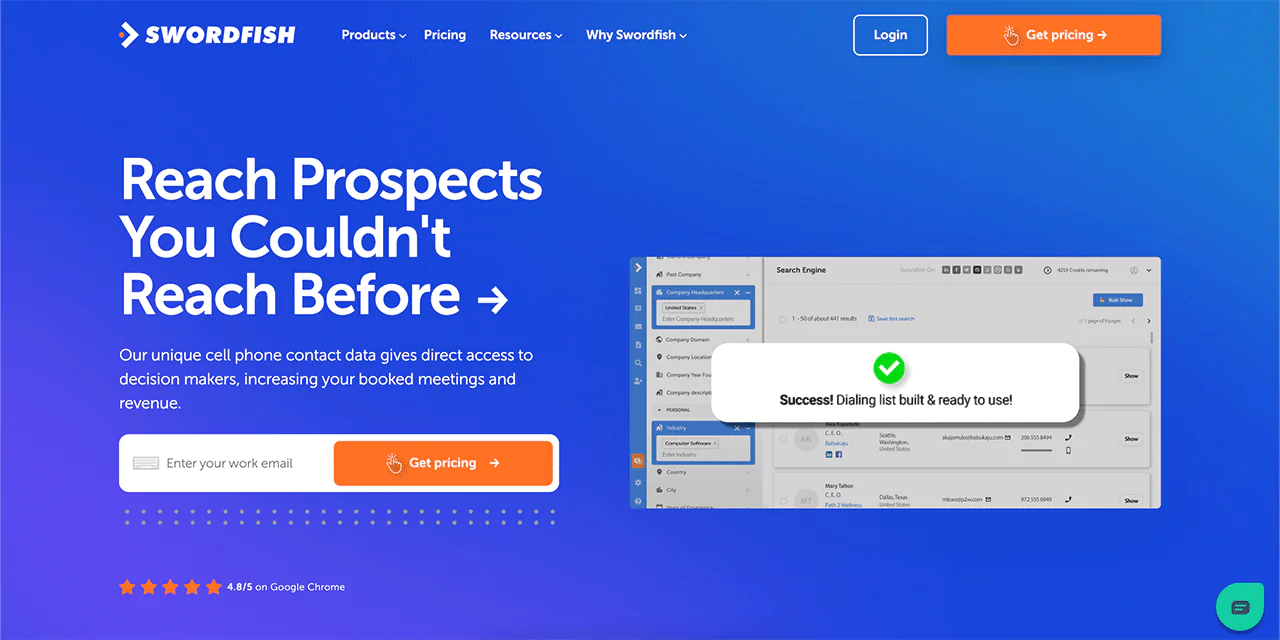
- Direct Contact: You get direct email addresses instead of general department inboxes, so outreach lands with an actual person.
- Time Efficiency: Manual contact research eats hours. Swordfish AI handles the lookup so your team can focus on the outreach itself.
- Custom Lists: Filter by role, whether you need faculty, students, administrators, or alumni, instead of working through an unsorted list.
- Accuracy: You’re getting verified email addresses, which helps keep bounce rates down.
- Easy Integration: Lists export cleanly into common CRM and email platforms, so they slot into workflows you already use.
Types of Data Included in University Mailing Lists
- Name of University
- Location
- Contact Numbers (Work, Cell, Mobile)
- Email Address
- Specialization
- Years of Experience
- Sole Proprietor Status
- Licensed States
- License Number
- Fax
- Address
Who’s Included in Our University Email List by Specialization?
Our university email directory by specialization is organized to cover a range of roles and use cases. Here’s a breakdown of who you’ll find:
| University Categories |
| Academic Faculty |
| Department Heads |
| Administrative Staff |
| Students |
| Alumni |
| Industry Researchers |
How Do We Compile and Verify Our University Mailing List?
Data quality depends on process. Here’s how university mailing list data typically gets compiled and checked for accuracy: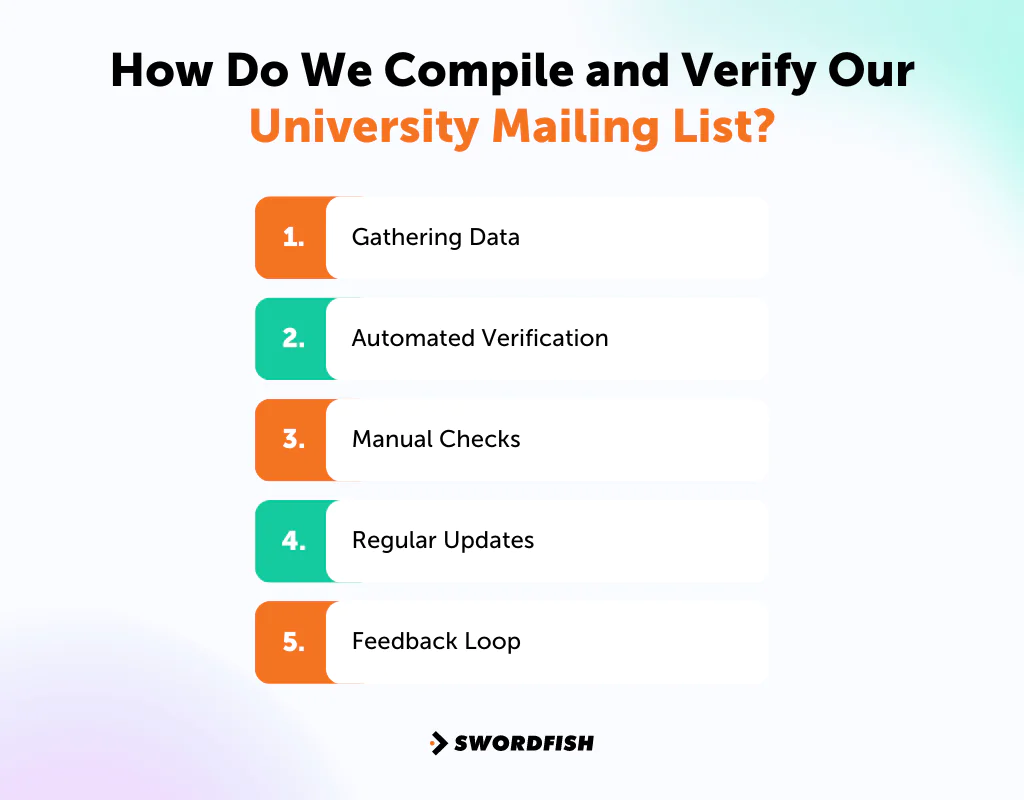
Gathering Data
Data collection draws on university directories, public records, and professional networking sites to build an initial contact base.
Automated Verification
Algorithmic checks flag inconsistencies, duplicate entries, and formatting errors before a record is considered usable.
Manual Checks
Analysts cross-reference flagged records against official university websites and other authoritative sources to confirm the details are current.
Regular Updates
Faculty and staff turnover is constant in higher education, so lists need ongoing refreshes, adding new contacts and retiring ones that no longer apply.
Feedback Loop
User-reported errors or outdated entries get corrected on an ongoing basis, which helps keep the dataset reliable over time.
Why Choose Swordfish AI’s University Email Database?
Here’s what sets Swordfish AI’s approach to university contact data apart: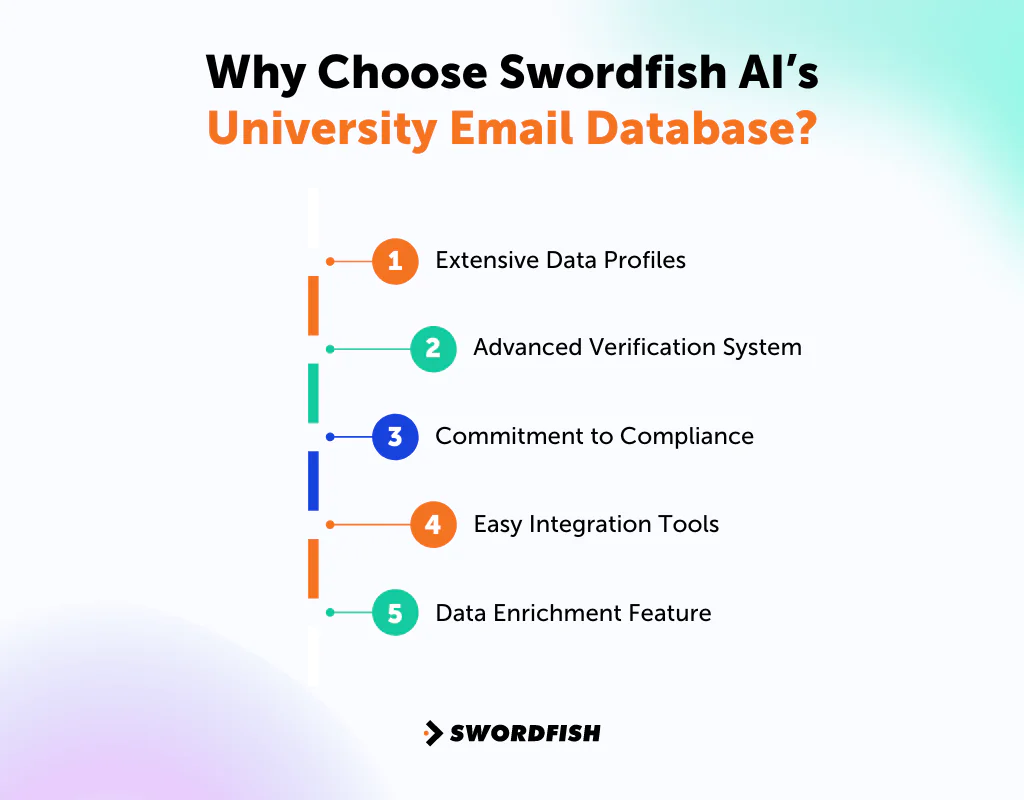
Extensive Data Profiles
Swordfish AI draws on a large, continuously updated contact database, giving you broader coverage of university contacts than most manual research methods can achieve.
Advanced Verification System
Cell phone matching and verification routines are built into the platform to help confirm that contact details are current before they reach you.
Commitment to Compliance
Data privacy rules vary by jurisdiction and can be difficult to track. Swordfish AI’s database practices are designed with these compliance considerations in mind, though you should still confirm your own use case meets applicable requirements.
Easy Integration Tools
A Chrome extension and Prospector tool let you pull contact data without leaving your existing workflow.
Data Enrichment Feature
The file upload feature lets you enrich lists you already have with verified details, turning a basic contact sheet into something more usable for outreach. Try Swordfish Ai
What Should You Consider When Getting an Email List of University?
A few factors decide whether a university email list will actually work for your purpose: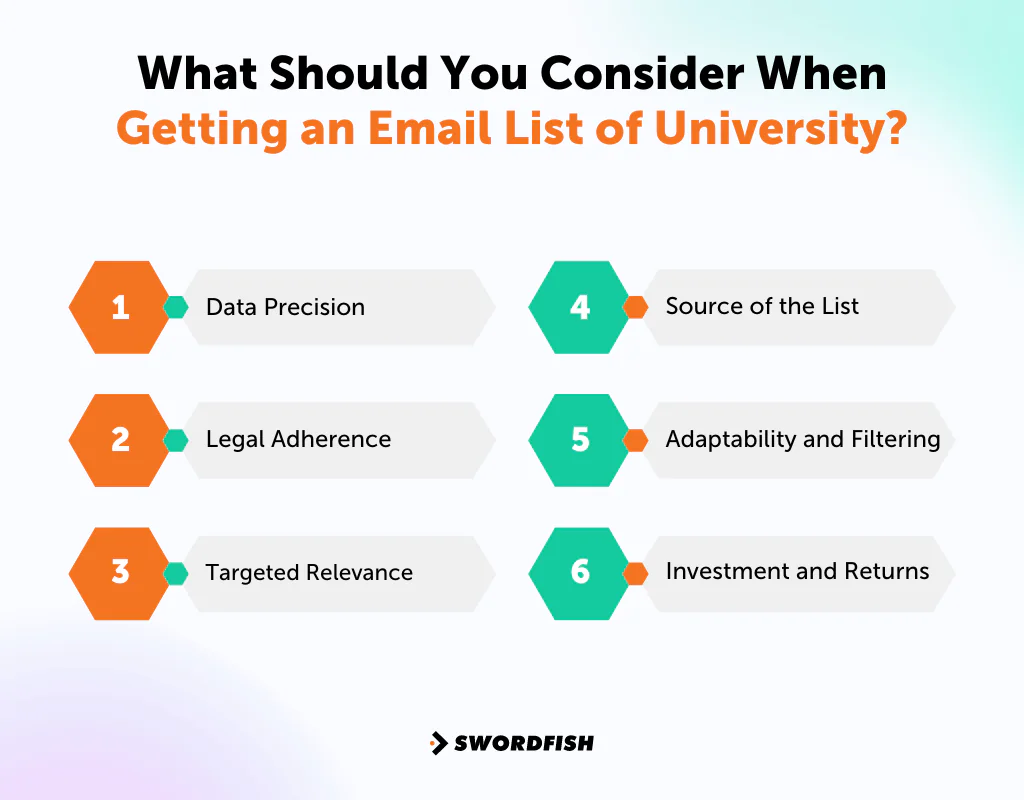
Data Precision
Outdated or mistyped email addresses waste outreach effort and can damage your sender reputation with mail providers. Confirm the provider refreshes data regularly and uses verifiable sourcing methods.
Legal Adherence
The list should be sourced and used in a way that respects privacy regulations like GDPR in Europe or CAN-SPAM in the U.S. Non-compliance carries legal and reputational risk, so check the provider’s practices before you buy.
Targeted Relevance
A list that matches your actual target, specific disciplines, departments, or seniority levels, performs far better than a broad, unfiltered one.
Source of the List
Ask how and where the data was compiled. Providers who are vague about sourcing methods are a red flag, both for data reliability and for legal exposure.
Adaptability and Filtering
The ability to filter by role, department, or region has a direct effect on the results of your email marketing campaigns, so check what filtering options are actually available.
Investment and Returns
Weigh the cost of the list against what it delivers. A cheap list full of stale contacts isn’t a bargain, and the priciest option won’t automatically give you the best ROI. Look for the right balance of cost, quality, and relevance for your specific use case.
Who Can Benefit from the University Email Addresses List?
A university email addresses list serves a range of individuals and organizations connecting with the academic world for different reasons: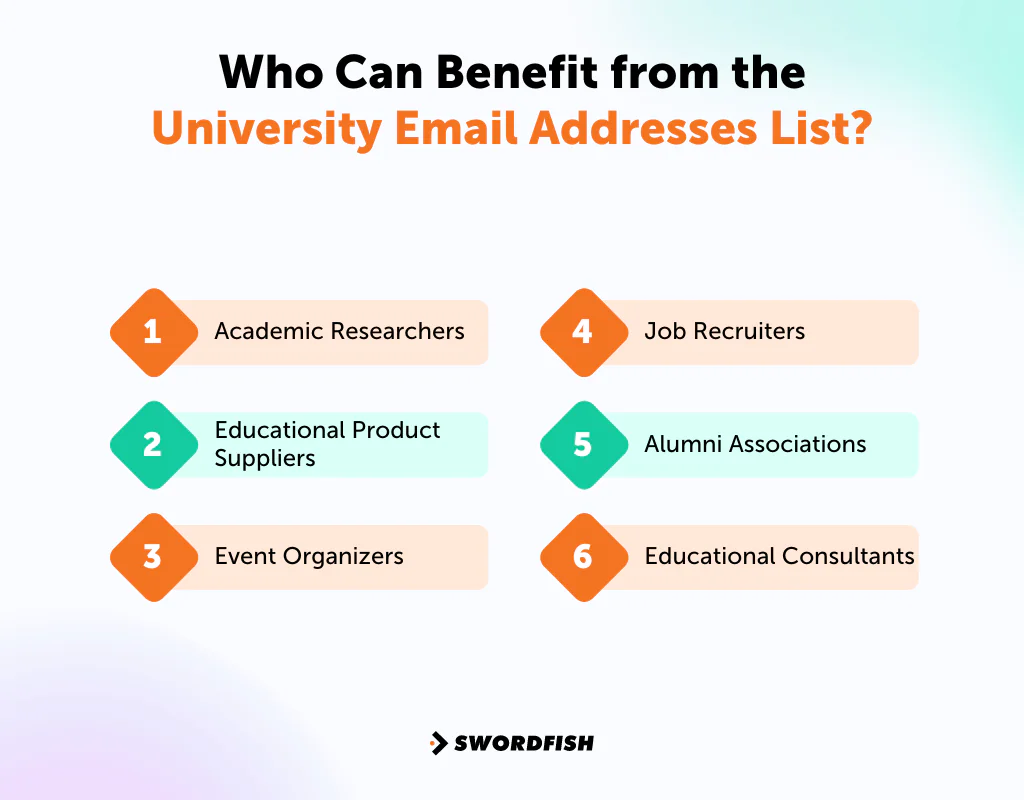
- Academic Researchers: Researchers looking to collaborate on projects, share findings, or explore partnerships can reach peers in their field across different institutions.
- Educational Product Suppliers: Companies offering software, lab equipment, or textbooks for the education sector can market directly to the faculties and departments most likely to need their offerings.
- Event Organizers: Organizers of academic conferences, seminars, workshops, or webinars can promote events to a targeted academic audience and improve turnout.
- Job Recruiters: Recruiters filling roles that require specific academic qualifications can directly reach potential candidates, including recent graduates or experienced faculty.
- Alumni Associations: Alumni groups looking to reconnect with former students for events, fundraising, or networking can benefit from up-to-date contact information.
- Educational Consultants: Consultants working in curriculum development, educational planning, or accreditation can identify and reach potential clients who need their expertise.
How Can You Make the Most of University Email Lists Effectively?
Having accurate contacts is only half the job. Here’s how to use them well: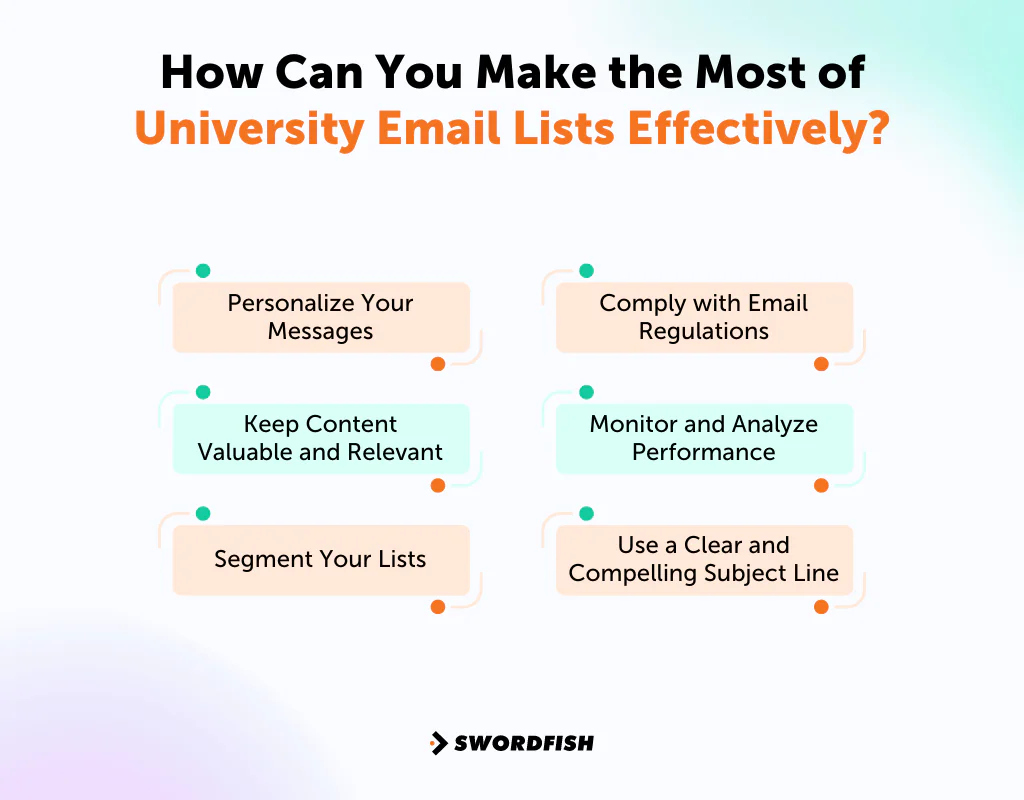
Personalize Your Messages
Emails that speak directly to a recipient’s role or research interest get opened and answered more often than generic blasts.
Keep Content Valuable and Relevant
Whether it’s a webinar invite, a new research tool, or an industry insight, the content should give the recipient a real reason to engage.
Segment Your Lists
Break your list down by department, role, or area of interest. Segmented outreach consistently sees stronger engagement than one-size-fits-all messaging.
Comply with Email Regulations
Follow applicable laws such as GDPR in Europe and CAN-SPAM in the U.S., make sure you have a legitimate basis to email your contacts, and always provide a clear opt-out.
Monitor and Analyze Performance
Track open rates, click-through rates, and conversions to see what’s working, then adjust your approach based on the data.
Use a Clear and Compelling Subject Line
The subject line decides whether the email gets opened at all. Keep it specific and honest about what’s inside.
Conclusion
A well-maintained university email list turns a scattered outreach effort into a targeted one, whether you’re building academic partnerships, recruiting talent, or promoting an event to the right audience.If you’re evaluating tools to manage that outreach, Swordfish AI offers verified contact data along with integration options built for common workflows.Try Swordfish Ai
Frequently Asked Questions
What is a university email list?
A university email list is a collection of email addresses linked to individuals connected to universities, such as faculty, staff, and sometimes students. These lists are commonly used for academic, recruitment, or marketing purposes.
Can anyone purchase a university email list?
Yes, university email lists are available from various providers. That said, using the data ethically and legally usually means having a legitimate purpose, such as academic research or educational marketing, and complying with relevant data laws.
Is it legal to send marketing emails to university email addresses?
It’s legal as long as you comply with relevant laws like CAN-SPAM or GDPR, including offering a clear opt-out and keeping the content relevant to the recipient.