
 View Products


Key takeaways
- The article describes Swordfish AI’s art collectors list as including contact details and profile information, with categories spanning different art interests.
- Swordfish AI says it uses multiple data sources, industry expertise, phone and email checks, and matching algorithms to build and maintain the list.
- Before choosing a provider, ask where the data comes from, how records are verified and updated, and whether the list fits your intended use.
- Artists, galleries, dealers, auction houses, art fairs, and online platforms are among the groups the article identifies as potential users.
- Segmenting contacts, personalizing relevant messages, monitoring engagement, and honoring opt-outs can help guide outreach.
Last updated: September 3, 2026
Many art collectors move in exclusive circles that outsiders rarely get to see. Getting introduced to these networks without the right connections can take years, and even then, contact details are hard to come by.
There’s also a practical problem: unlike businesses, individual collectors don’t publish their phone numbers or emails online. A search engine won’t get you very far.
Swordfish AI describes its art collectors email list as a resource for reaching collectors. The sections below outline the data-gathering and verification processes the company says it uses, along with practical ways artists, galleries, and other art businesses can use a list.
About Swordfish Art Collectors Email Lists: What’s in It for You?
Reaching the right collector gets a lot easier when you’re working from a list built specifically for the art world. Here’s what that looks like in practice.
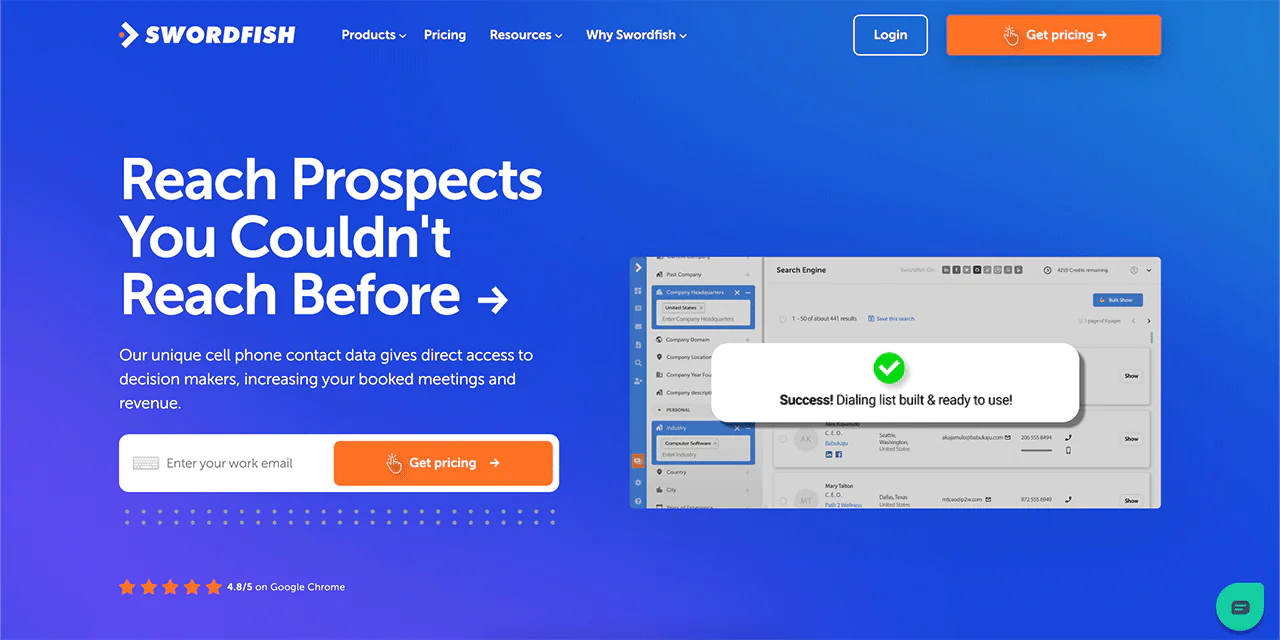
- Personalized Connections: Direct phone numbers and contact details let you build a real conversation instead of shouting into a crowded inbox.
- Fresh and Relevant Contact: The database is refreshed regularly, so when you buy an email list of art collectors, you’re reaching people who are still active and reachable.
- Deliverable Emails: Addresses are checked before they reach you, which matters for email campaigns where deliverability determines whether anyone sees your message at all.
- Customized Communication: Detailed profiles give you enough context to tailor a message instead of sending something generic that gets ignored.
- Strategic Matching: Matching technology surfaces collectors more likely to have an interest in what you’re offering, which cuts down on wasted outreach.
Types of Data Included in Art Collectors Email List:
- Art collector Names
- Location
- Contact Numbers (Work, cell, mobile)
- Email Address
- Specialization/ Job Title
- Years of Experience
- Sole Proprietor Status
- Licensed States
- License Number
- Fax
- Postal Addresses
Who’s Included in Our Art Collectors Email Database by Specialization?
Whether you’re trying to reach contemporary gallery regulars or collectors with a much narrower niche, the categories below cover most of the ground you’re likely to need.
How Do We Compile and Verify Our Art Collectors Mailing List?
Putting together a usable art collectors mailing list takes more than scraping public directories, mostly because there aren’t many to scrape. Here’s the process behind it.
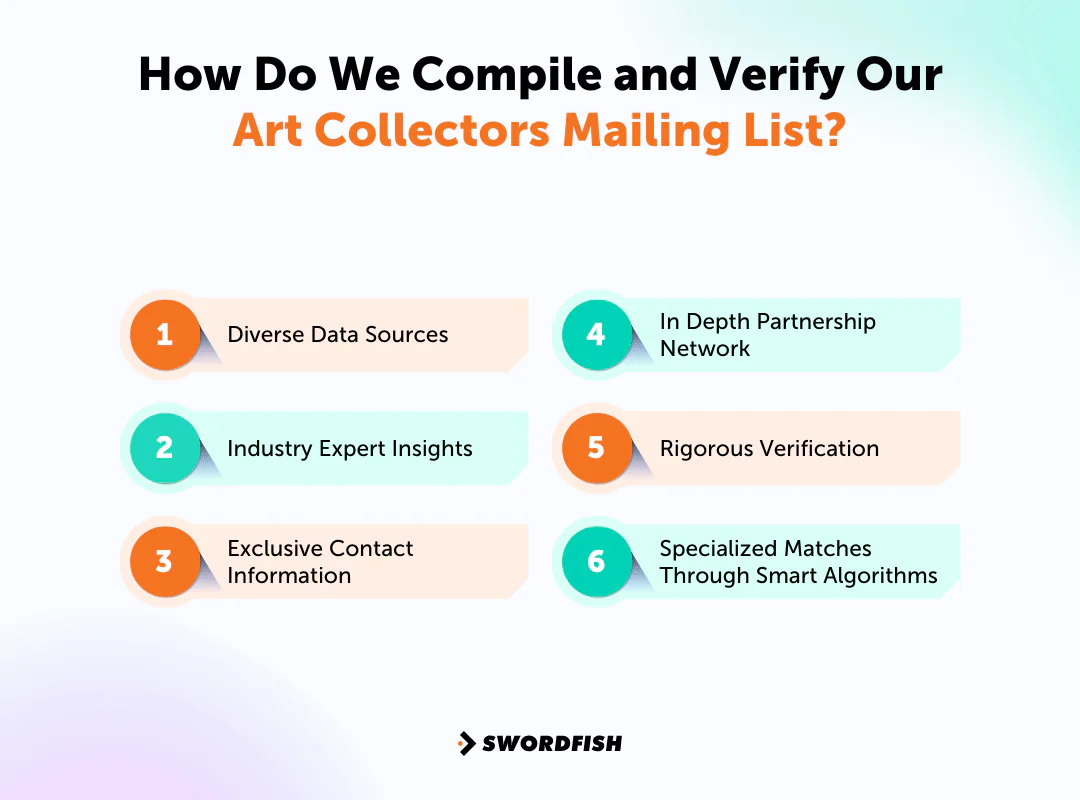
Diverse Data Sources
Swordfish AI says its data comes from a range of sources, including art fair attendee lists and gallery subscription databases. The article does not specify which sources contribute to a particular record.
Industry Expert Insights
The company says industry expertise is used to assess whether contacts appear relevant for outreach. Providers should explain how they determine whether contacts are current and appropriate to include.
Exclusive Contact Information
The list may include details beyond those shown on a business card. Check what information is provided for your intended use and how it was obtained.
In Depth Partnership Network
Swordfish AI says its network includes partnerships with over 200 data providers. The company should be able to explain how those partnerships contribute to the list and what information is available.
Rigorous Verification
Swordfish AI says entries are checked by phone and email before inclusion. Verification can help identify inaccurate contact details, but it does not guarantee that every record will remain current or reachable.
Specialized Matches Through Smart Algorithms
The article says matching algorithms use relevant data points to identify collectors who may be interested in an offer, which can support a more targeted
sales methodology. Try Swordfish Ai
Why Choose Swordfish AI’s Art Collectors Email Database?
Here’s what separates a usable list from one that wastes your time.
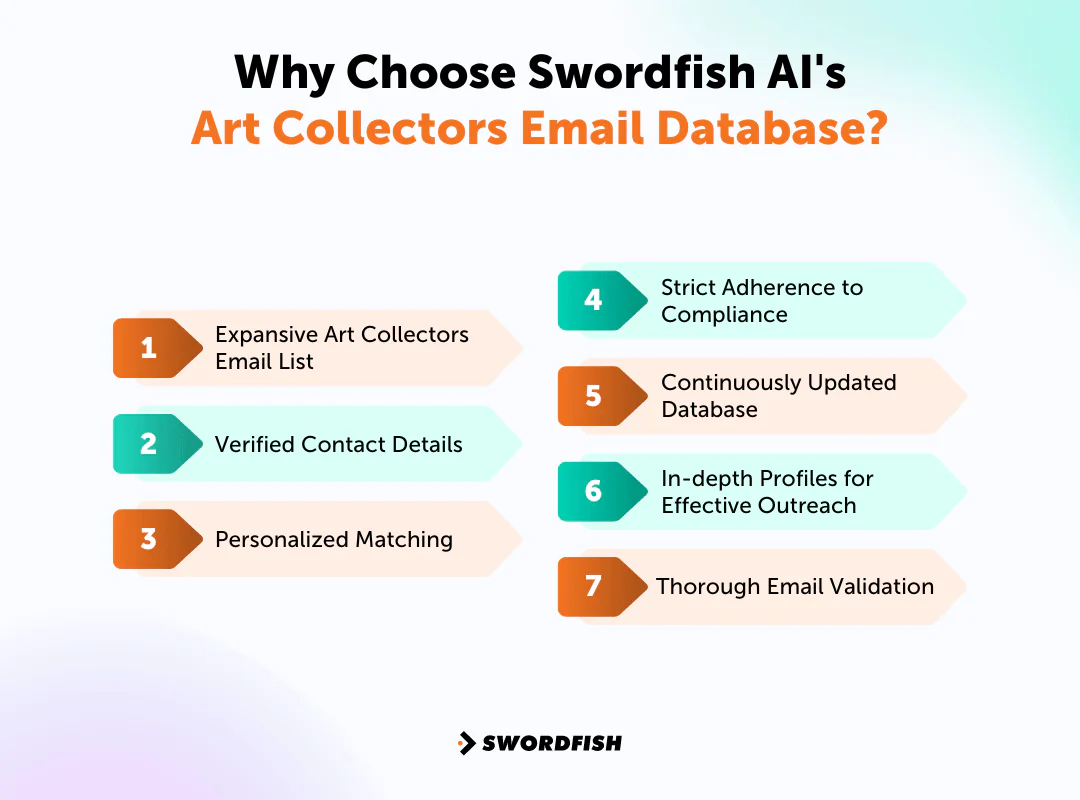
Expansive Art Collectors Email List
The listed categories include contemporary and classical collectors, along with other art interests. Review the available categories to see whether they fit your outreach needs.
Accurate Contact Information
The article describes the emails and phone numbers as verified. Confirm the provider’s verification process and remember that contact details can change.
Customized Contact Matching
Matching can narrow the list to collectors who fit your selected criteria, which may support a more focused
sales funnel instead of a scattershot campaign.
Strict Adherence to Compliance
Using a list does not by itself ensure compliant outreach. Understand
legal standards and data laws that govern how contact data can be collected and used protects your business and respects the people on the list. In the US, commercial email is also governed by the CAN-SPAM Act, which requires accurate sender information, honest subject lines, and a working opt-out mechanism in every message, with penalties that can run into tens of thousands of dollars per violation.
Continuously Updated Database
The company says the database is refreshed and re-verified on an ongoing basis. Ask how frequently updates occur and how recently individual records were checked.
In-depth Profiles for Effective Outreach
More detailed profiles may help you write
professional emails that reference something specific instead of a generic pitch, which tends to lead to more substantive replies.
Thorough Email Validation
The article says email addresses are checked before inclusion. Validation can help identify some invalid addresses, but it cannot guarantee inbox placement or engagement, including
What Should You Consider When Getting an Art Collectors Mailing List?
A few factors are worth weighing before you commit to a provider.
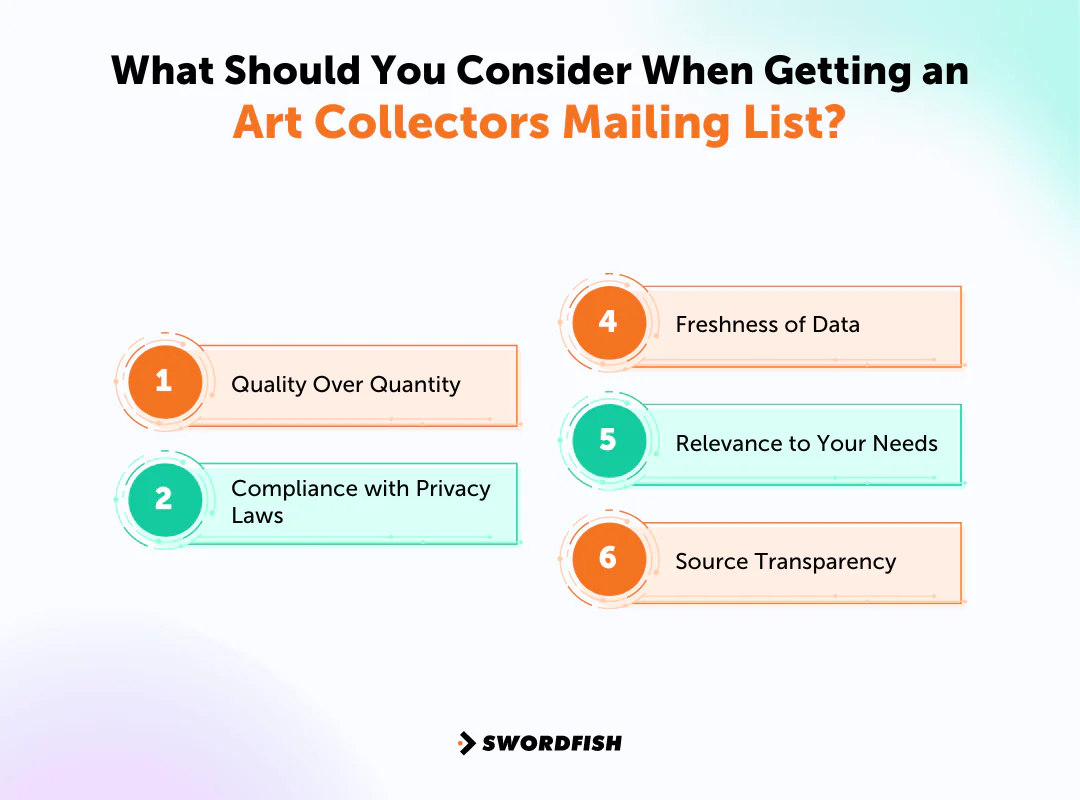
Quality Over Quantity
A long list may look impressive, but a smaller set of relevant, current contacts can be more useful than a larger list containing outdated addresses.
Compliance with Privacy Laws
Before buying an art collectors email list, ask how the provider collects and shares its data, and check which privacy rules apply to your organization, audience, and outreach. Regulations such as GDPR or CCPA may apply in some circumstances; this is not a substitute for legal advice.
Freshness of Data
Contact details and interests can change over time. Ask how the provider maintains its data and when records were last reviewed.
Relevance to Your Needs
Collectors have different interests. A list that can be segmented by interest, such as contemporary work, classical pieces, or a specific medium, can help you tailor outreach.
Source Transparency
Knowing where the data comes from matters more than it might seem.
A provider that explains its collection methods makes it easier to assess the list’s quality and whether its use aligns with your requirements.
Who Can Benefit from the Art Collectors Email Address List?
An email list does more than deliver a message. It opens a channel to people who genuinely care about art. Here’s how different roles tend to use it.
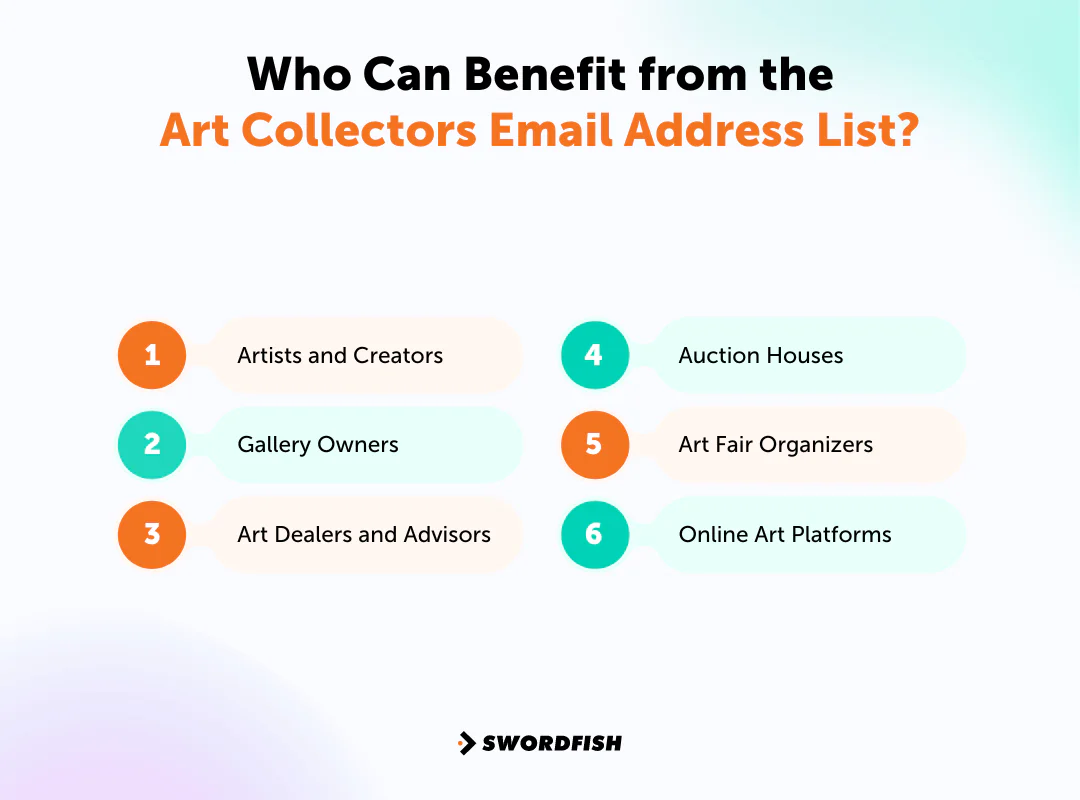
Artists and Creators
For artists, having collector emails on hand isn’t just about selling. It’s a way to share new work with people who genuinely appreciate it, gather feedback, and slowly build a following around the art itself.
Gallery Owners
Gallery owners can use an art collectors email list to promote upcoming shows, send early previews, and invite collectors to private viewings. Make sure the list and the planned outreach are appropriate for the intended recipients.
Art Dealers and Advisors
Dealers and advisors rely on an art collectors email list to send personalized recommendations and share context on emerging artists or shifting market trends, which builds the kind of trust collectors look for in an advisor.
Auction Houses
Auction houses can use a list of art collectors email to announce upcoming sales, spotlight featured lots, and walk collectors through how to bid, whether in person or online.
Art Fair Organizers
Fair organizers can use the list to promote events, highlight key exhibitors, and invite collectors to previews or talks, helping drive attendance from people already interested in what’s on offer.
Online Art Platforms
Online platforms can use an art collectors email list to promote new listings, offers, or artist spotlights. Email can be one part of a broader marketing approach.
How Can You Benefit from Art Collectors Email Lists Effectively?
Having the list is only half the job. Here’s how to actually put it to use.
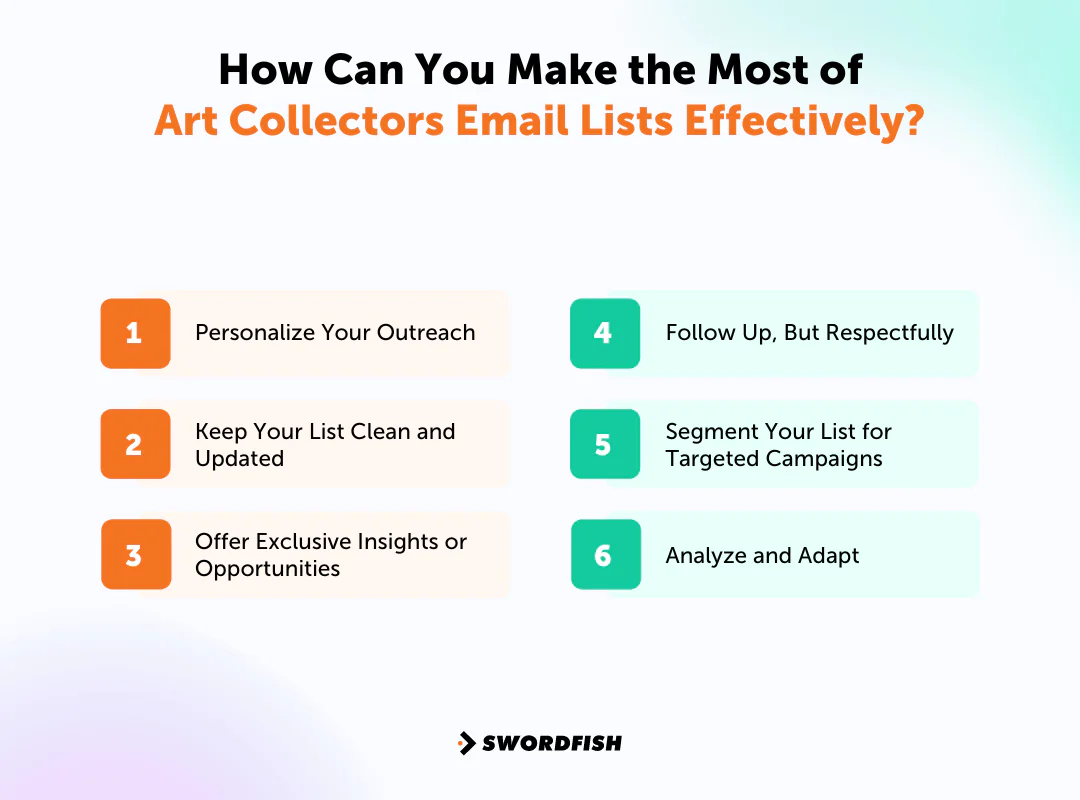
Personalize Your Outreach
Personalize messages where you have a sound basis for doing so. Refer to an artist, style, or piece that is relevant to the recipient, and avoid implying knowledge of a collector’s interests that you cannot substantiate.
Keep Your List Clean and Updated
A collector directory is only as useful as its accuracy. Prune outdated contacts regularly and add new ones so your effort goes toward people who are actually paying attention.
Offer Exclusive Insights or Opportunities
Collectors respond to exclusivity. Use email to offer early looks at new work, invitations to private viewings, or market insight they can’t easily get elsewhere.
Follow Up, But Respectfully
Follow up only when appropriate and in line with applicable rules. Provide an easy way to opt out, and honor opt-out requests.
Segment Your List for Targeted Campaigns
Collectors aren’t a single audience. Segment by interest, past purchases, or other relevant criteria so each campaign speaks to the people it’s actually meant for.
Analyze and Adapt
Track available engagement measures, such as opens and clicks, and use them to inform future campaigns. Results can vary, so treat tests as guidance rather than a guarantee.
Conclusion
An art collector email list can provide a way to contact people who may be interested in the kind of work you’re producing or selling.
Getting value from a list depends on its accuracy, relevance, and suitability for your intended use. Segmentation can help tailor messages to different interests instead of sending the same message to everyone.
Swordfish AI says it works to keep its art collectors data accurate and current. Ask the company about its update and verification processes, and assess whether the list meets your outreach needs.
FAQs
What is an art collectors email list?
An art collector email list is a curated collection of email addresses, and often phone numbers, of individuals known for collecting art across various genres and eras. It’s built for artists, galleries, and art institutions that want to reach serious collectors for exhibitions, sales, or collaborations.
How accurate is the art collectors email list provided by Swordfish AI?
Swordfish AI verifies contact information as part of the compilation process, which is intended to reduce the number of outdated or incorrect entries compared to unverified lists.
How often is the art collectors database updated?
The database is refreshed and re-verified on an ongoing basis to reflect changes in collectors’ contact information and interests.
Can I customize the art collectors email list to target specific art interests?
Yes. The list can be filtered by interest area, such as contemporary work, classical art, or narrower niches, so you can focus outreach on the audiences most likely to respond.