
 View Products


Last updated: September 3, 2026
A single bad email address in a healthcare outreach list can do more than bounce back — it can flag your domain, tank deliverability, and slow down a patient or provider communication that mattered. So before you hit send on a campaign to physicians, clinics, or care coordinators, it helps to know how to check if an email is valid without actually sending a test message.
You have several options: syntax checks, DNS or MX lookups, SMTP verification, API-based checks, or a dedicated email verification tool. Each has trade-offs in speed, accuracy, and technical effort, so the right choice depends on your list size and how much risk you can tolerate.
Below, we walk through what verification actually means, why it matters more in provider-focused outreach than in typical B2C email, and nine practical methods you can use before sending a single message.
What Does a Verified Email Mean?
A verified email is one that has been checked for accuracy and legitimacy — not just that it looks correctly formatted, but that the domain exists and the mailbox can actually receive messages. Verification typically covers three layers: syntax, domain existence, and mailbox responsiveness.
For teams working with healthcare provider contact data, this matters because provider email addresses change often — physicians switch practices, hospital systems consolidate, and staff turnover is high. An address that was valid a year ago may now bounce. Verification reduces the chance you’re sending to a dead or nonexistent mailbox, which keeps your outreach efficient and protects your sending reputation.
Why Should You Verify an Email Address Before Sending Messages?
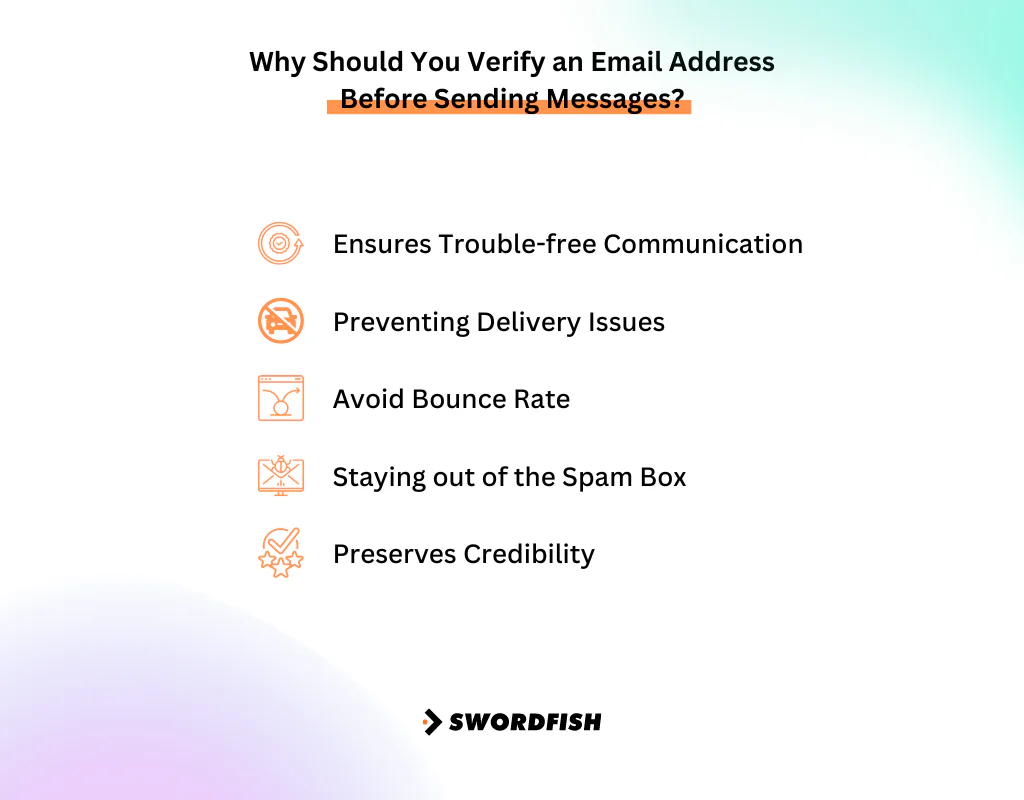
Verifying addresses upfront keeps your campaigns running smoothly, improves delivery rates, and protects your sender reputation from the damage caused by bounces and spam filters. Repeatedly emailing bad addresses eventually drags down deliverability across your entire domain, not just that one campaign.
Here are the main reasons this step is worth the extra effort.
Ensures Trouble-Free Communication
Verifying an email is essentially confirming your recipient is real before you invest time reaching out. It keeps your messages landing in front of an actual person instead of disappearing into a dead mailbox.
Preventing Delivery Issues
Frequent bounces hurt your sending reputation with mail providers. Confirming address validity beforehand is a small step that avoids a much bigger deliverability headache later.
Avoiding a High Bounce Rate
Inaccurate addresses drive up bounce rates, which mail providers use as a signal against you. Verification filters out the bad addresses before they can damage a campaign’s performance.
Staying Out of the Spam Folder
Emails sent from unverified or messy lists are more likely to get flagged as spam. Verification helps preserve your sender reputation so your messages actually reach the inbox.
Preserving Credibility
Routinely checking your contact data signals that you take accuracy seriously. Over time, that consistency builds trust with mail providers and recipients alike.
How to Check If an Email Is Valid Without Sending – 9 Effective Methods

There’s no single “correct” way to verify an email address — some methods are quick and manual, others require more technical setup. Here are nine approaches, roughly ordered from simplest to most comprehensive.
1. DNS Check
DNS (Domain Name System) checkup for email verification involves looking up information about the email’s domain. This starts by extracting the domain from the address, then checking its MX records, confirming their validity, and reviewing priority values.
This confirms the domain is properly configured to handle email. It won’t tell you whether the specific mailbox exists, though — only that the domain itself is legitimate.
2. Syntax Lookup
Check whether the address follows a standard format like “user@example.com.” This method of syntax checking catches obvious formatting errors without ever contacting the mail server — a quick first filter before anything more involved.
3. SMTP Verification
You can connect to the recipient’s email server using the Simple Mail Transfer Protocol (SMTP) to check whether the mailbox exists and is responsive, without actually delivering a message.
4. API-Based Authentication
API-based verification is one of the most popular ways to check addresses without sending anything. These services are purpose-built for validation, tend to be fast, and are useful when you need answers quickly for a large list.
5. Spam Trap Detection
Spam trap detection flags addresses that function as traps — often dormant or fake addresses used to catch senders with poor list hygiene. Catching these before sending reduces the risk of a damaged sender reputation.
6. TLD Validation
TLD validation checks the domain ending against a list of legitimate, recognized top-level domains. It’s a simple way to weed out addresses using obviously fake or unsupported domain endings.
7. MX Record Check
An MX record check confirms that a domain has a properly configured mail path, similar to confirming a mailbox actually exists at an address before mailing a letter there.
8. Disposable Email Check
Disposable email checks flag addresses from known temporary or throwaway email services. This matters in provider outreach especially, where you want a persistent contact point rather than an address someone abandons after a single use.
9. Email Verifier
If you’d rather skip juggling all of the above manually, a dedicated email verifier bundles these checks into one process. Businesses, marketers, and anyone managing an email list commonly rely on these tools to confirm addresses are accurate and deliverable at scale.
A good verifier improves campaign performance, cuts down on bounce-backs, and helps protect your sender reputation over time.
Swordfish AI: Making Email Verification Easy
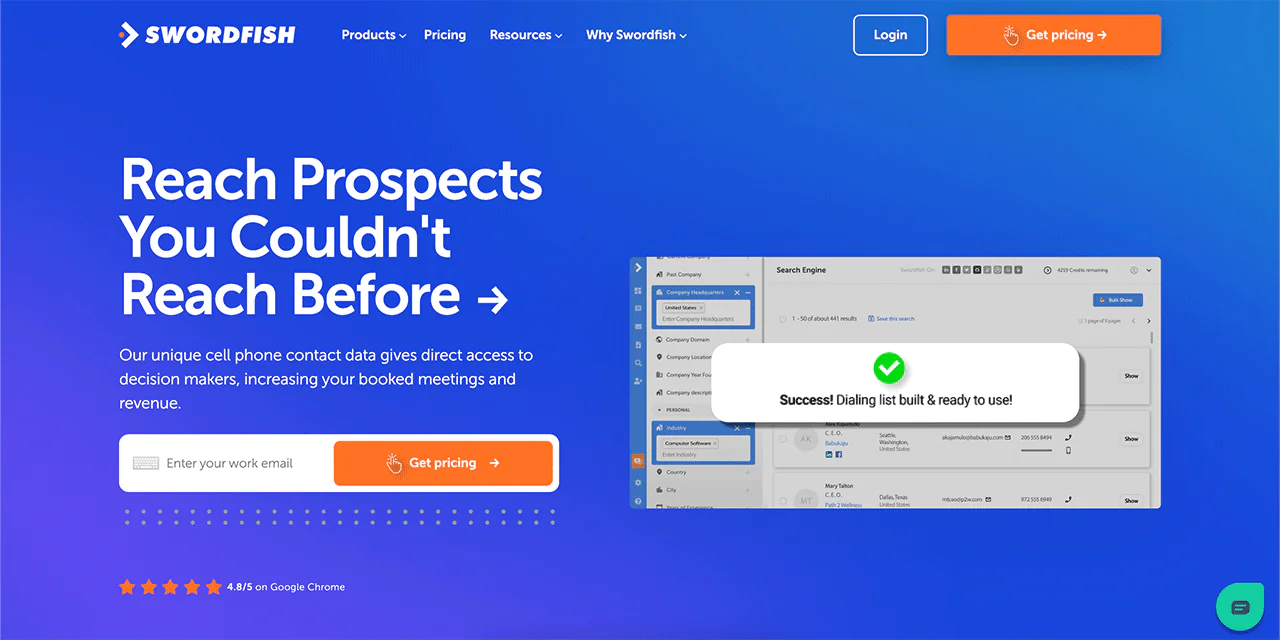
Swordfish AI is built to solve exactly this problem: confirming an email address is valid without sending a test message first. That matters for teams that need to reach providers and healthcare contacts quickly and reliably, without wasting outreach on dead addresses.
Swordfish combines contact verification with a large underlying database of phone and email records, aimed at keeping contact details current and reducing the odds of messages going to the wrong address.
The platform’s database spans billions of consumer and professional profiles, which makes it possible to check whether an email address is valid before you ever send anything. That’s particularly useful for healthcare-focused outreach, where provider directories go stale fast and accuracy directly affects response rates.
With Swordfish, verifying addresses becomes one step in a broader outreach workflow rather than a separate manual task.
Features of Swordfish AI
Here are some of the tools you’ll have access to.
-
Chrome Extension
The Chrome Extension from Swordfish AI lets you look up and check contact details directly from your browser, without switching tools mid-workflow.
-
Prospector Tool
Build targeted calling or emailing lists using detailed filters to narrow down exactly the contacts you need.
-
File Upload for CRM
Upload a CSV file and the platform fills in missing phone numbers and emails, syncing smoothly with your existing CRM.
-
Reverse Search
Enter the contact information you already have to surface additional details, making your research more thorough.
 Try Swordfish Ai
Final Verdict
So, how do you check if an email is valid without sending it? You can run a syntax check, do a DNS or MX lookup, attempt SMTP verification, use an API-based check, screen for spam traps and disposable addresses, or validate the TLD. Each catches a different kind of problem, and combining a few gives you a more reliable picture than any single method alone.
For most teams, though, the more practical route is using an email verifier like Swordfish.AI that bundles these checks together instead of running each one manually every time.
If you’re still weighing your options, it’s worth trying out Swordfish directly to see how it fits your workflow.
Frequently Asked Questions
1. What are the common reasons for email bounces?
Bounces typically happen because of invalid addresses, full mailboxes, or problems on the recipient’s mail server. Verifying addresses beforehand helps flag likely bounces before you send.
2. Is there a difference between email validation and verification?
The terms are often used interchangeably, but they’re not identical. Validation generally refers to checking an address’s format and syntax, while verification confirms the address is legitimate and can actually receive mail.
3. Can email verification guarantee 100% accuracy?
No. Verification substantially improves accuracy, but it can’t guarantee perfection — email statuses change over time, and some checks are limited by privacy protections on the recipient’s server.