
 View Products



Swordfish LinkedIn Extension (linkedin extension): permissions, compliance, and the workflow audit you’ll be stuck doing
This page explains what the Swordfish LinkedIn extension does, what permissions it needs, and how to test it without creating CRM cleanup work.
Byline: Ben Argeband, Founder & CEO of Swordfish.AI
Who this is for
This is for Developers and RevOps teams integrating enrichment into internal systems and CRMs who still need a browser-based LinkedIn workflow for day-to-day prospecting. If you own security review, data quality, or “why did Sales import this?” cleanup, you’re the person who pays for bad tooling twice.
Quick verdict
- Core answer
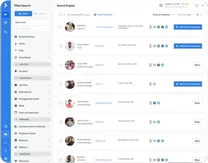
- The Swordfish LinkedIn extension is a linkedin extension that supports a browser enrichment workflow inside LinkedIn; it’s positioned for teams that want contact discovery without building a custom scraper, and it’s described as unlimited with fair use (verify fair use terms and throttling behavior during a pilot).
- Key stat
- There is no single accuracy number that holds across industries and list sources; results vary by seat count, API usage patterns, list quality, geography, and role seniority.
- Ideal user
- Teams that need contact discovery while working in LinkedIn and want a clean export path into a CRM or internal system with documented permissions and compliance expectations.
What Swordfish does differently
Most extensions fail on the boring stuff: unclear permissions, workflow breakage when LinkedIn changes UI, and “unlimited” that becomes a soft cap when usage spikes. Swordfish is positioned around a practical LinkedIn workflow and markets unlimited with fair use, which can reduce campaign stalls caused by hard limits, but only if your usage pattern stays inside fair use and you can operationalize governance.
Treat every capability claim as something you verify in your pilot, not something you assume from marketing. That’s how you avoid buying seats and then discovering the workflow doesn’t match your team’s LinkedIn surfaces.
On contact types, buyers usually want direct dials or mobile numbers because that’s what changes connect rates. If your outcome is “more conversations per rep-hour,” a linkedin phone finder extension only helps when the number is actually reachable for your segment; availability varies by geography, seniority, and how complete the LinkedIn profile is.
Permissions and compliance are the real cost center. If you can’t document what the extension can access and how data moves through your workflow, you’ll lose weeks in review cycles or end up with shadow usage you can’t audit.
Workflow (what actually happens)
This is the minimum workflow you should be able to explain to Security and RevOps: install the extension, authenticate, open a LinkedIn profile, request enrichment, then export/store the result. If any step requires broad permissions you can’t justify, the workflow is not compliant for your environment.
For the official install path for LinkedIn usage: Install for LinkedIn usage.
Decision guide
Don’t evaluate this like a demo. Evaluate it like an operational dependency: permissions, workflow reliability, export hygiene, and how quickly data decays after you enrich it.
If you’re deciding between approaches, here’s the trade: an extension is fast to deploy but fragile when LinkedIn changes UI and it always triggers a permissions review; an API is more stable for automation but costs engineering time and forces you to handle rate limits, retries, and logging; manual research avoids extension permissions but burns rep-hours and produces inconsistent data capture. Pick the failure mode you can afford.
Framework: Is your LinkedIn workflow compliant?
- Permissions: Can you justify the extension permissions requested, in writing, under your internal policy?
- Compliance: Do you have an approved process for how enriched data is stored, retained, and accessed?
- Workflow: Does it work on the exact LinkedIn surfaces your team uses, consistently?
- Data privacy: Can you explain the data flow (browser to service to export to CRM) and who becomes the data owner?
Checklist: Feature Gap Table
| Area | What buyers expect | Where hidden costs show up | What to verify in Swordfish | Variance explainer (why results differ) |
|---|---|---|---|---|
| LinkedIn workflow | Enrich while viewing profiles with minimal steps | Breakage when LinkedIn UI changes; reps revert to manual research | Works on the LinkedIn pages your team actually uses | Different LinkedIn surfaces can behave differently across accounts and roles |
| Phone discovery | Direct dials/mobile numbers when available | Low availability in certain regions; wasted rep time chasing dead ends | How phone fields are labeled and exported; how your team validates reachability | Geography, seniority, and profile completeness drive availability |
| Email discovery | Work emails for routing and outreach | Bounces become your deliverability problem; CRM pollution | How results are exported and deduped before CRM import | Industry domains, company size, and lead source quality affect matchability |
| Unlimited with fair use | Predictable usage without surprise caps | Soft throttles during spikes; campaigns stall mid-quarter | Fair use terms and what triggers throttling or review | Seat count and usage patterns change enforcement risk |
| Export and handoff | Export LinkedIn leads into CRM/internal systems | CSV cleanup, field mapping, and dedupe become recurring labor | Export format, field names, and whether it matches your CRM schema | List quality (duplicates, stale titles) drives cleanup time |
| Permissions and compliance | Clear permission scope and auditable usage | Security review delays; blocked rollout; untracked shadow usage | Documented permissions, data handling expectations, and your internal approval record | Compliance requirements vary by industry and region; internal policy varies by risk tolerance |
Decision Tree: Weighted Checklist
How to weight this: Don’t assign fake points. Weight by failure cost in your environment. The weights below follow standard extension failure points: permissions risk, workflow breakage, and downstream data hygiene.
- High weight: permissions and compliance approval — If you can’t approve permissions, you can’t deploy. Capture the permission prompts at install time and store them with your approval ticket. Re-check after extension updates.
- High weight: workflow reliability on your LinkedIn surfaces — Test on the exact pages your team uses. If it fails there, adoption collapses and reps go back to manual research.
- High weight: export hygiene into your system of record — If you can’t export cleanly, you’ll pay in CSV debt. Validate field mapping, dedupe keys, and ownership rules before rollout. If your goal is to export LinkedIn leads, confirm the export format supports your routing rules.
- Medium weight: data decay plan — Contact data decays. Decide when you re-enrich and who owns stale records. The business outcome is fewer wasted touches; the cost is reprocessing and governance.
- Medium weight: usage governance under fair use — “Unlimited with fair use” still requires internal norms. Define seat count expectations and burst behavior so you don’t trigger throttling during a push.
- Lower weight: auditability — You need to answer “who enriched this and when?” to debug bad imports and reduce incident time.
Troubleshooting Table: Conditional Decision Tree
- If Security cannot approve the extension permissions, then stop and use an API-first enrichment approach instead. Stop condition: permissions cannot be documented and approved in writing.
- If your team lives inside LinkedIn and needs contact discovery without building internal tooling, then run a controlled pilot and measure downstream cleanup time (mapping, dedupe, stale records).
- If your outcome is “reduce manual research time per lead,” then validate the browser enrichment workflow on the exact LinkedIn pages used in your process; otherwise you’ll buy seats that revert to manual steps.
- If you need a linkedin extension for contacts mainly to improve connect rates, then test by segment (geo, seniority, industry) because phone availability varies; don’t generalize from one list source.
Limitations and edge cases
Data decay is guaranteed. Emails and phone numbers change. If you enrich once and treat it as permanent truth, your bounce rate and connect rate will drift. Plan re-enrichment based on your sales cycle length and how often your CRM is used for outreach.
Extensions break when LinkedIn changes. Any extension that depends on page structure can degrade when LinkedIn updates layouts. Your mitigation is operational: keep a small pilot group, monitor failures, and document a fallback workflow.
Compliance is company-specific. “Data privacy LinkedIn” questions are internal policy questions: what data is collected, where it’s stored, and who can access it. If your policy requires DPA review, SSO, or specific audit logs, confirm requirements before rollout.
List quality determines your outcome. If your targeting is messy (duplicates, wrong companies, stale titles), you’ll spend time cleaning exports and blaming the tool. Clean inputs reduce wasted enrichment and reduce CRM pollution.
Evidence and trust notes
This page avoids made-up accuracy rates because they don’t survive contact data variance. Expect differences driven by seat count, usage patterns, list quality, industry, geography, and role seniority.
Separate two problems when you evaluate results: availability (whether a phone/email exists for your segment) and verification/deliverability (whether it still works when you contact it). Both vary with list quality and how stale your targets are.
Permissions audit method: during install, capture the permission prompts and store them with your internal approval record. Then document the data flow: LinkedIn page in the browser, extension action, vendor response, export, and final storage location in your CRM/internal system. If you can’t trace that flow, you can’t defend compliance or debug bad data.
Data ownership note: once you export into your CRM/internal system, your team owns retention, access control, and deletion. If you don’t assign an owner, you’ll fail the next audit.
API fit expectations (if you later automate): define authentication ownership, rate-limit handling, retries, logging, dedupe keys, and a re-enrichment cadence. This prevents the common failure where a browser workflow works for reps but collapses when RevOps tries to operationalize it.
If you need a browser-first option beyond LinkedIn-specific usage, review the Swordfish Chrome extension page to confirm the supported workflow matches your process.
FAQs
Is this an extension or an API?
This page covers the LinkedIn extension workflow. If you need server-side enrichment inside internal systems, evaluate API options separately because extensions and APIs fail differently (UI breakage versus rate limits and integration work).
What permissions does the extension need?
Review the exact permissions shown at install time and confirm they align with your internal compliance policy. Keep a record of what was approved so you can re-audit after updates.
Can I use it as a linkedin email finder extension?
It can be used for email discovery in a LinkedIn workflow, but outcomes vary by industry domains, company size, and list quality. Test on your own segments before you automate anything downstream.
How do I export and operationalize results?
Decide whether you’re exporting to CSV for batch import or pushing into a CRM workflow. If you’re doing CSV, expect mapping and dedupe work unless you standardize fields and ownership rules. For a workflow reference, see export LinkedIn contacts to CSV.
What if I only need phone numbers from LinkedIn profiles?
Then measure connect rate, not “records enriched.” Run a segmented pilot by geography and seniority because phone availability varies. For that narrow use case, see LinkedIn phone number finder.
Next steps
- Day 0–1: Security/IT review: document permissions, compliance requirements, and whether browser extensions are allowed for the LinkedIn workflow.
- Day 2–3: Pilot: install for a small group; test on the exact LinkedIn pages used; log failures and document fallback steps.
- Day 4–7: Data ops: validate export format, field mapping, and dedupe keys; measure cleanup time and CRM pollution risk.
- Week 2: Rollout decision: expand seats only if permissions are approved, workflow is stable, and governance exists for fair use and re-enrichment.
Install from the official listing for LinkedIn usage: Install for LinkedIn usage.
About the Author
Ben Argeband is the Founder and CEO of Swordfish.ai and Heartbeat.ai. With deep expertise in data and SaaS, he has built two successful platforms trusted by over 50,000 sales and recruitment professionals. Ben’s mission is to help teams find direct contact information for hard-to-reach professionals and decision-makers, providing the shortest route to their next win. Connect with Ben on LinkedIn.