
 View Products


Last updated: September 3, 2026
Outbound outreach without a solid prospect list rarely performs the way sales teams expect. A prospect list helps you focus on the contacts most likely to convert, but building one well takes more than pulling names off LinkedIn. For teams selling into healthcare, this matters even more, since provider contact information changes constantly as clinicians switch practices, health systems consolidate, and direct lines get reassigned.
This article walks through what a prospect list actually is, how it differs from a lead list, and a five-step process for building one that holds up over time.
What does Sales Prospecting mean?
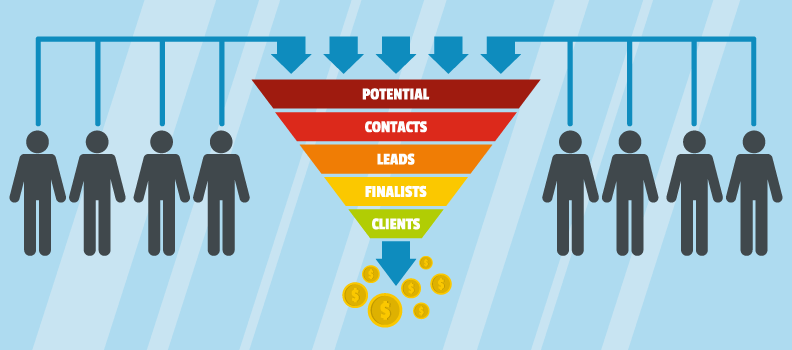
Sales prospecting is the process of identifying potential buyers, or prospects, who have a genuine reason to be interested in what your business offers. In healthcare-focused sales, that often means physicians, practice administrators, or procurement staff at hospitals and clinics who fit a specific specialty, location, or facility size.
The goal of prospecting is to move these contacts into a sales funnel and guide them toward becoming paying customers. It’s the first stage of the sales cycle and the one that determines how efficient everything downstream will be.
Prospecting generally breaks down into five stages:
- Identifying target audience
- Lead Generation and Qualification
- Outbound Marketing
- Lead Nurturing
- Follow-ups
What is a Prospect List?

A prospect list is a curated collection of contact and firmographic information about potential clients your sales team believes could benefit from your product or service. It gives your reps a focused, targeted set of people to reach out to instead of a broad, unqualified pool.
A useful prospect list includes more than an email address and phone number. It should also capture details that shape your ideal customer profile (ICP), such as:
- Industry
- Company
- Job Title
- Company Location
- Company Size
For healthcare sellers, this might extend further, covering specialty, EHR system in use, number of providers on staff, or affiliation with a larger health system. The more context you gather, the easier it is to tailor a pitch that actually addresses a prospect’s day-to-day constraints.
Prospect lists and lead lists get confused often, but they’re not the same thing.
Lead Lists vs Prospect Lists
Building a dedicated prospect list carries real advantages once it’s populated with accurate, current data.
Advantages of Building a Prospect List
A well-built prospect list lets you communicate with qualified leads in a structured way and adjust your approach as you learn what works. Here are the main benefits:
Easy Targeting

A prospect list shows you which lead sources, channels, and methods are actually producing results, which lets you double down on what’s working and cut what isn’t.
It also keeps enough qualified contacts in your pipeline that losing a few here or there doesn’t derail your quota, since replacements are already lined up.
More Conversions
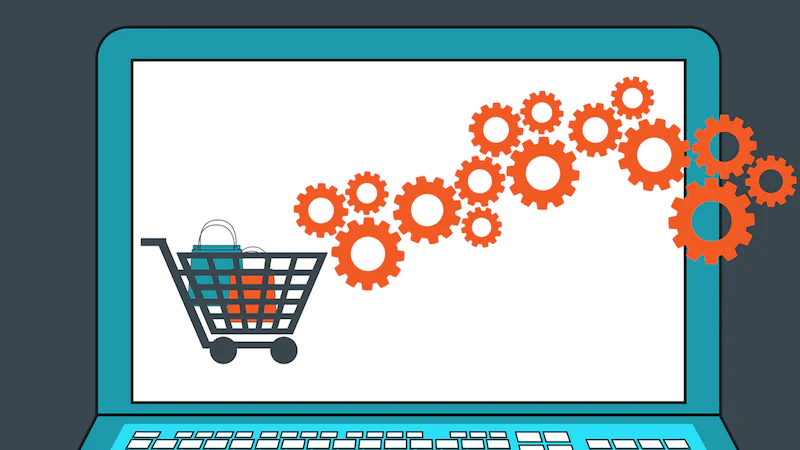
Prospects have already shown some interest in your business, which makes converting them meaningfully easier than working a cold list, and typically improves return on investment.
It also tends to lower cost per acquisition, since your reps spend less time on contacts who were never going to buy.
Better Management

A structured list makes it possible to track interactions, preferences, and where each prospect sits in the buying process, so nobody valuable slips through unnoticed.
Easy Scalability

Once your list is built and organized, adding new prospects as you expand into new markets or specialties becomes far less disruptive.
You can reach a larger audience without a proportional jump in operating cost.
Competitive Advantage

A well-maintained contact list gives you an edge over competitors who are still working off stale spreadsheets. It helps you reach decision-makers first and stay top of mind when a buying window opens.
Now let’s get into the five steps for building one.
5 Steps to Build a Prospect List
A prospect list establishes a concrete customer database that cuts down the time spent sorting and chasing contacts. It also gives you the context to personalize outreach instead of sending generic pitches.
Here’s how to build one that holds up:
Define your goals and Ideal Customer Profile (ICP)
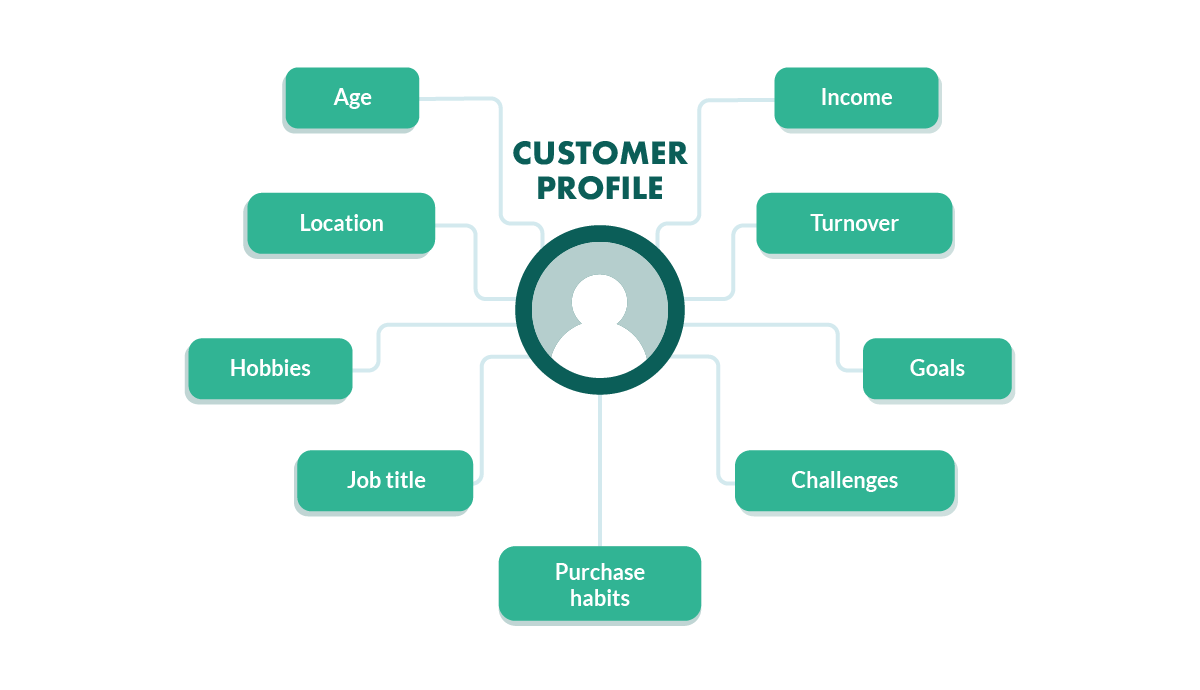
Start by defining what you’re trying to achieve. Are you trying to grow revenue in a specific region, break into a new specialty, or introduce a new product line to existing accounts?
Your goals shape everything downstream, and your ICP narrows the field to contacts worth pursuing. A useful ICP goes beyond basic contact info and includes:
- Industry
- Company Size
- Buying Behavior
- Demographics
- Pain Points
Defining your ICP before you start researching keeps you from wasting time and budget on contacts who were never a fit in the first place.
Gather Potential Leads

Once your goals and ICP are set, it’s time to research the market and collect data on companies or individuals who match. A few reliable methods:
- Referrals
Referrals come from existing customers, partners, or contacts. Word-of-mouth marketing tends to outperform other advertising because it comes from a trusted source rather than a cold pitch.
When someone recommends your product to a colleague, that’s a strong signal of genuine interest.
- Events
Industry conferences and events are a practical way to build relationships with peers and specialists in your target field.
Work the room, exchange contact information, and follow up promptly once you’re back at your desk to keep the momentum going.
- Content Marketing
Publishing content relevant to your audience’s actual problems, through blogs, videos, or whitepapers, draws in leads who are already thinking about the issue you solve.
- Email Outreach
Email outreach remains one of the most effective ways to reach a list of companies or decision-makers you’ve already identified.
Research each contact enough to write something specific to their situation, and track click-through, engagement, and response rates so you can keep refining your approach.
You can use one of these methods or combine several, depending on your resources. Whichever you choose, validate the contact information early using a reliable tool so you’re not discovering bad data weeks into a campaign.
Segment Leads

Segmentation groups leads into categories so you can tailor communication to each one instead of treating every contact the same way.
A solo practitioner has different priorities than a multi-site health system, and your outreach should reflect that.
Common segmentation criteria include:
- Geographic location
- Firmographics and demographics
- Lead source
- Purchase Intent, etc.
Qualify leads into prospects
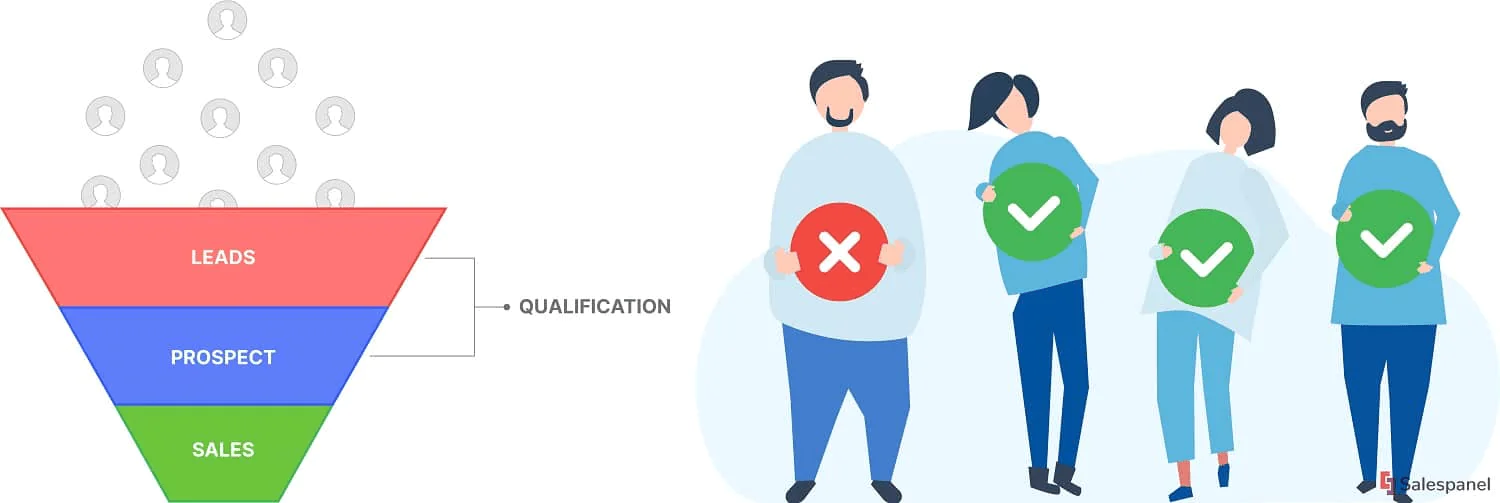
Now it’s time to separate leads from prospects. Look through the results from the steps above and identify who has actually engaged, whether that’s signing up for a newsletter, attending a webinar, or requesting a trial.
Those are your candidates for prospect status. The BANT methodology is a practical way to test them:
- Does the lead have the budget to make a purchase?
- Is the lead in an authoritative position to make a decision?
- Does the lead need this service right now?
- Does your service fit into their timeline currently?
It’s also worth checking whether the lead is weighing a competitor’s offering and what would make you the better choice. This is where you sort contacts into ”hot,” ”warm,” and ”cold” leads.
Hot leads check every box, warm leads need a bit more nurturing, and cold leads are usually best let go so you’re not spending effort on a dead end.
Invest in a good CRM platform to organize and track
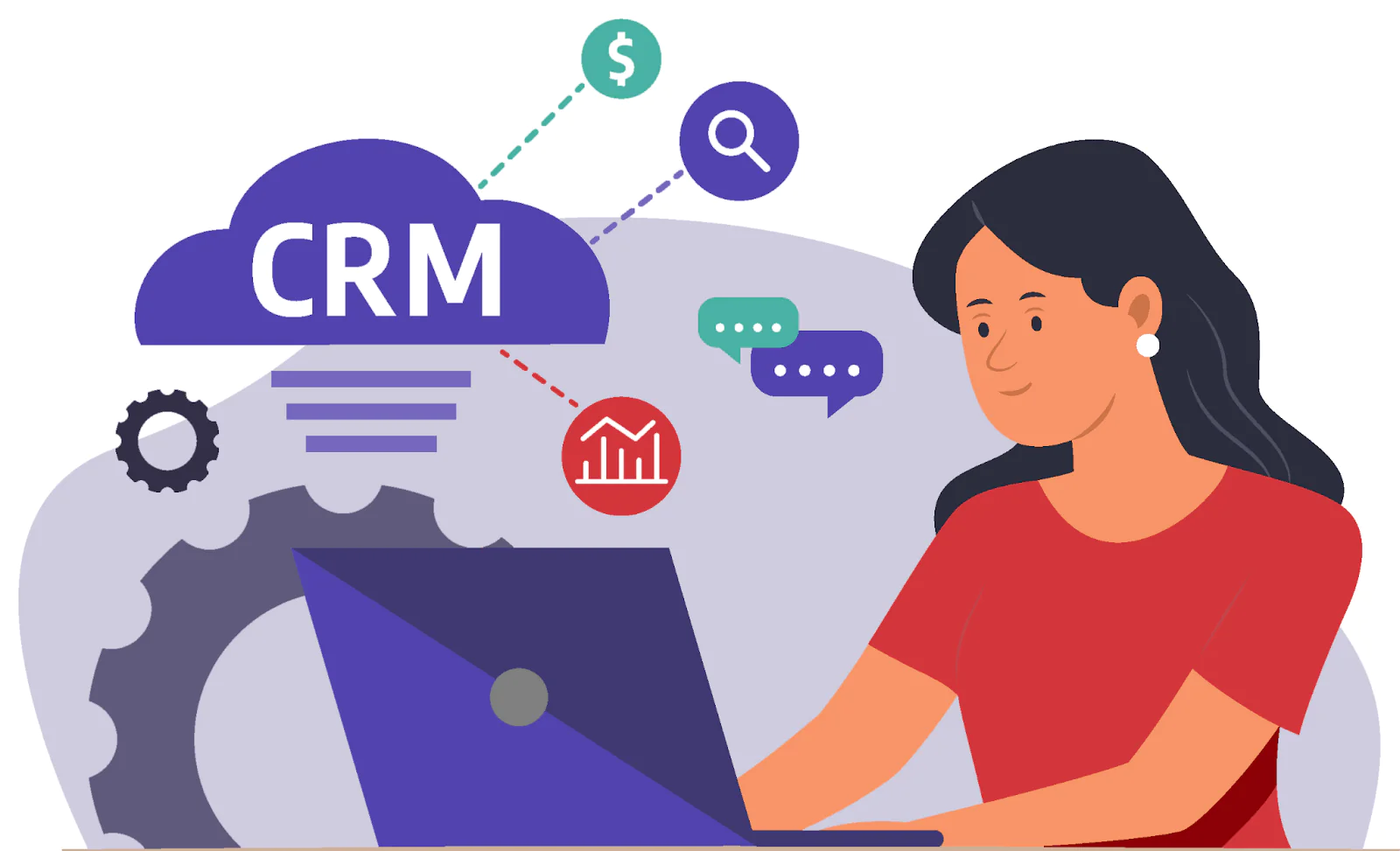
A CRM keeps your prospect list organized in one place: contact details, communication history, purchase history, and anything else relevant to the relationship.
It stores this information by segment, so you can automate workflows instead of manually sorting contacts every time you run a campaign.
A CRM also lets you track campaign performance, schedule follow-ups, and trigger responses based on prospect behavior.
Most CRM platforms automate the routine parts of tracking leads through the funnel, so you can focus your attention on who to nurture and who to drop.
They also scale as your business grows, so you’re not rebuilding your process every time you add a new territory or product line.
Building and maintaining a prospect list isn’t a one-time project. It’s ongoing work, and a well-constructed list is the foundation for durable customer relationships.
Outdated or inaccurate contact information is one of the more common ways this breaks down. Providers change practices, phone numbers get reassigned, and a list that was accurate six months ago can quietly go stale, costing you time and credibility with every wrong number dialed.
Swordfish AI is a contact data provider and prospecting platform built to address exactly this problem, with a database of roughly 3.5 billion profiles containing verified cell phone data and business emails. Here’s how it works.
Prospect Like Pro With Swordfish AI
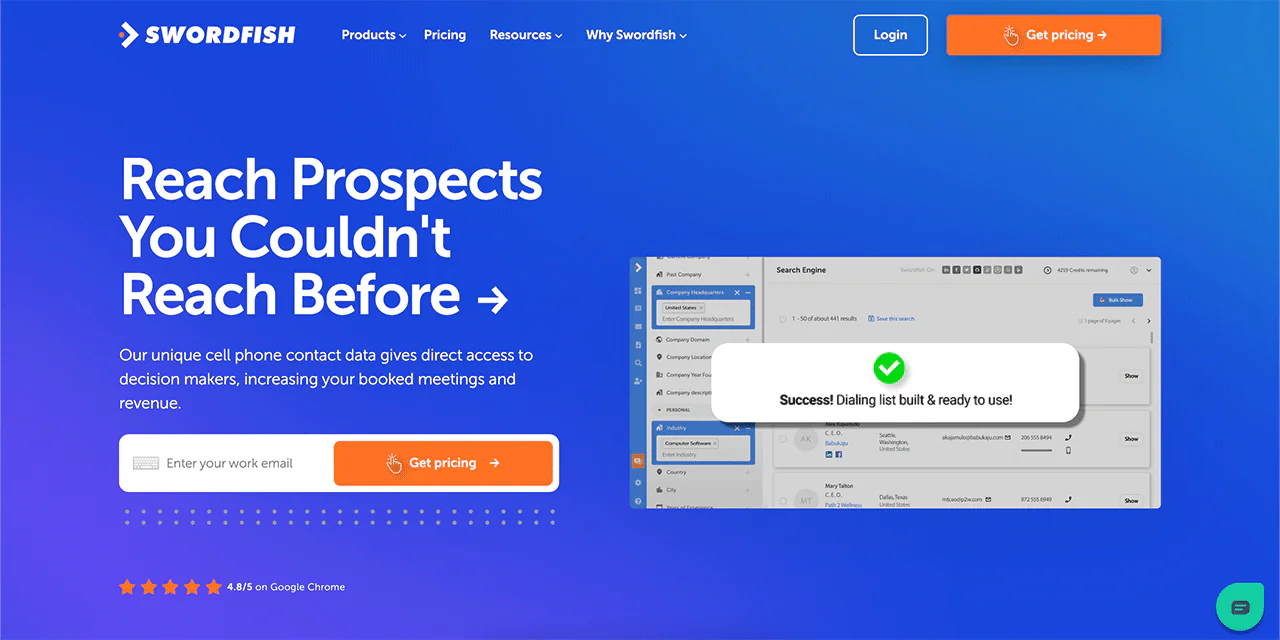
Swordfish is a contact finder platform that surfaces a lead’s phone and email data, individually or in bulk, using advanced filters to narrow results down to the exact profile you’re targeting.
It connects to over 200 live data partners to cross-verify contact information, checking line connectivity and deliverability along the way. Swordfish reports being used by more than 50,000 sales and recruitment professionals.
Swordfish Features
Swordfish includes several tools built to help you reach prospects who’d otherwise stay out of reach:
Chrome Extension
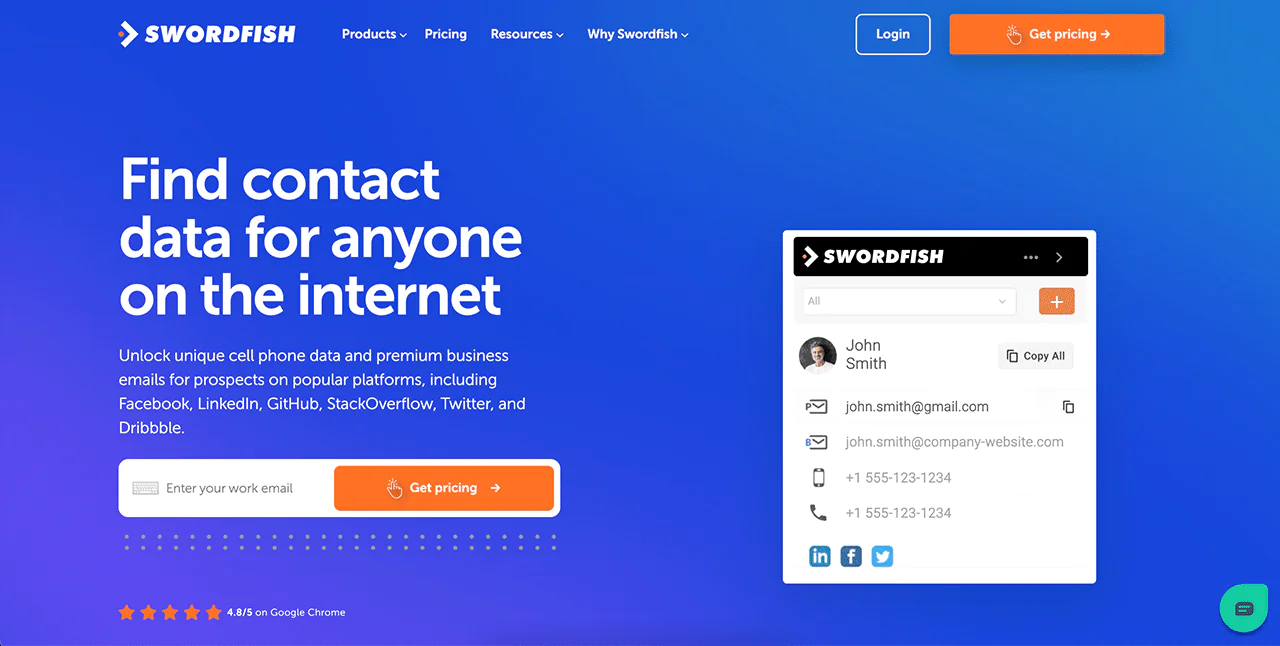
Swordfish’s Chrome extension pulls verified contact data from multiple sources, including LinkedIn, Twitter, Facebook, Dribble, GitHub, StackOverflow, Google, and Bing.
Prospector
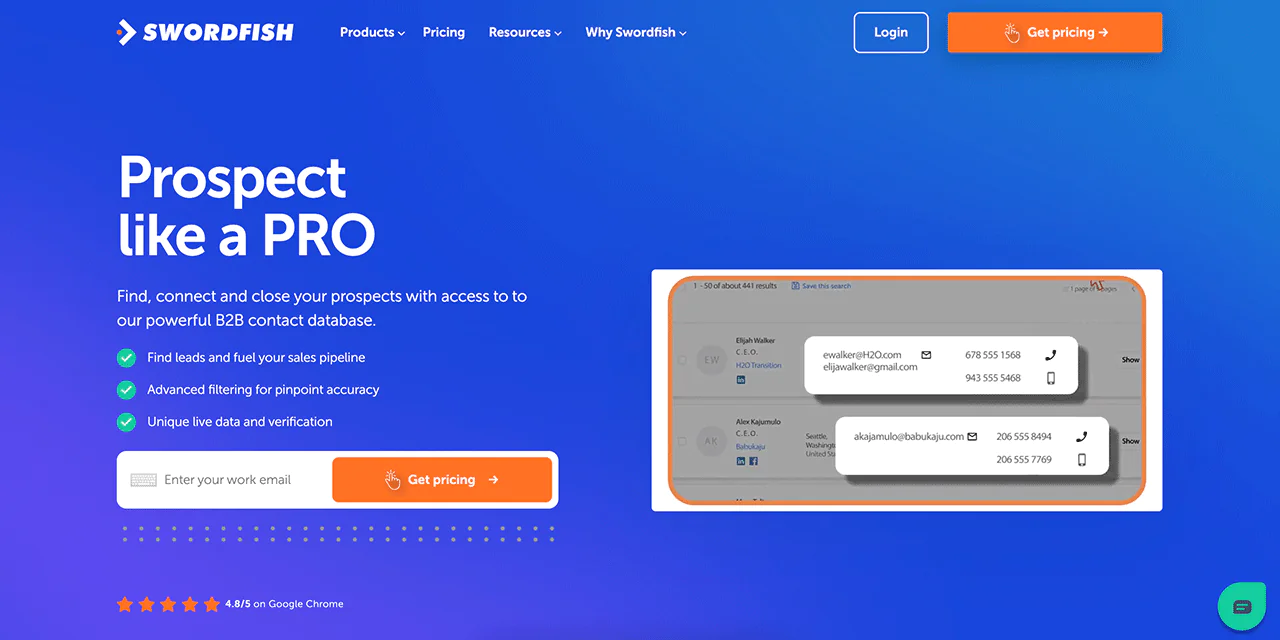
The prospector lets you build dialing and email lists in bulk, using filters and real-time updates from live data partners to keep pipeline volume up.
File Upload
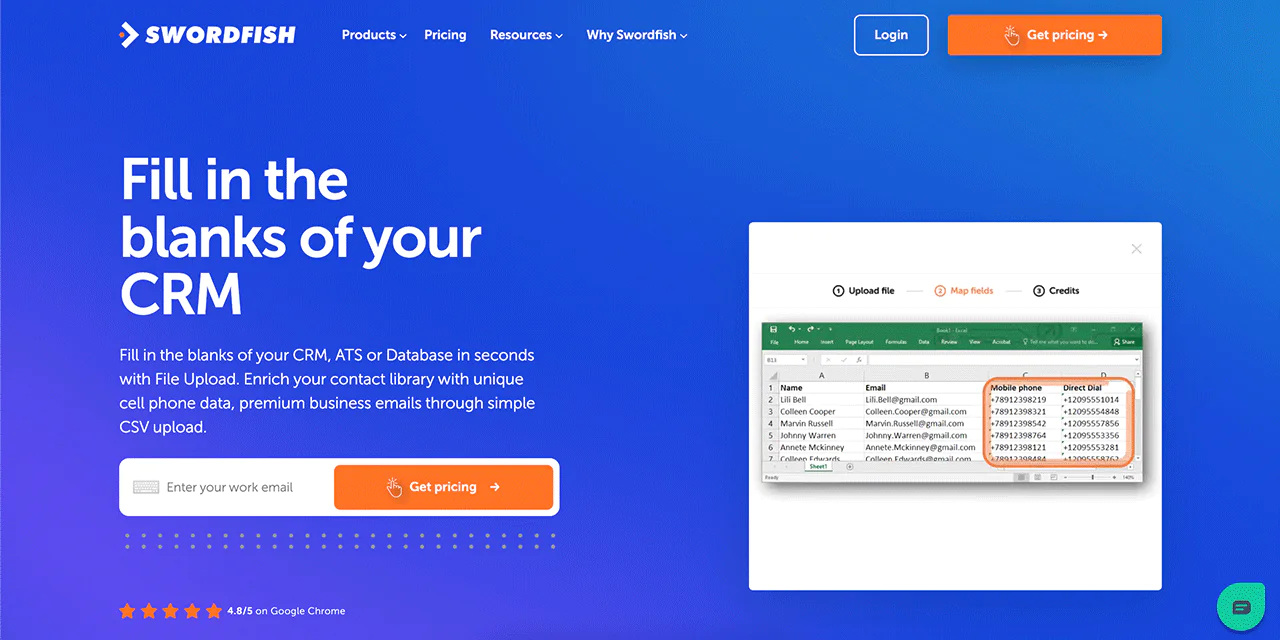
The file upload feature fills in missing details on an existing CSV of contacts, and lets you control how many credits you spend on the enrichment.
Reverse Search

Reverse Search lets you look someone up by name, company, job title, location, and other identifying details.
API
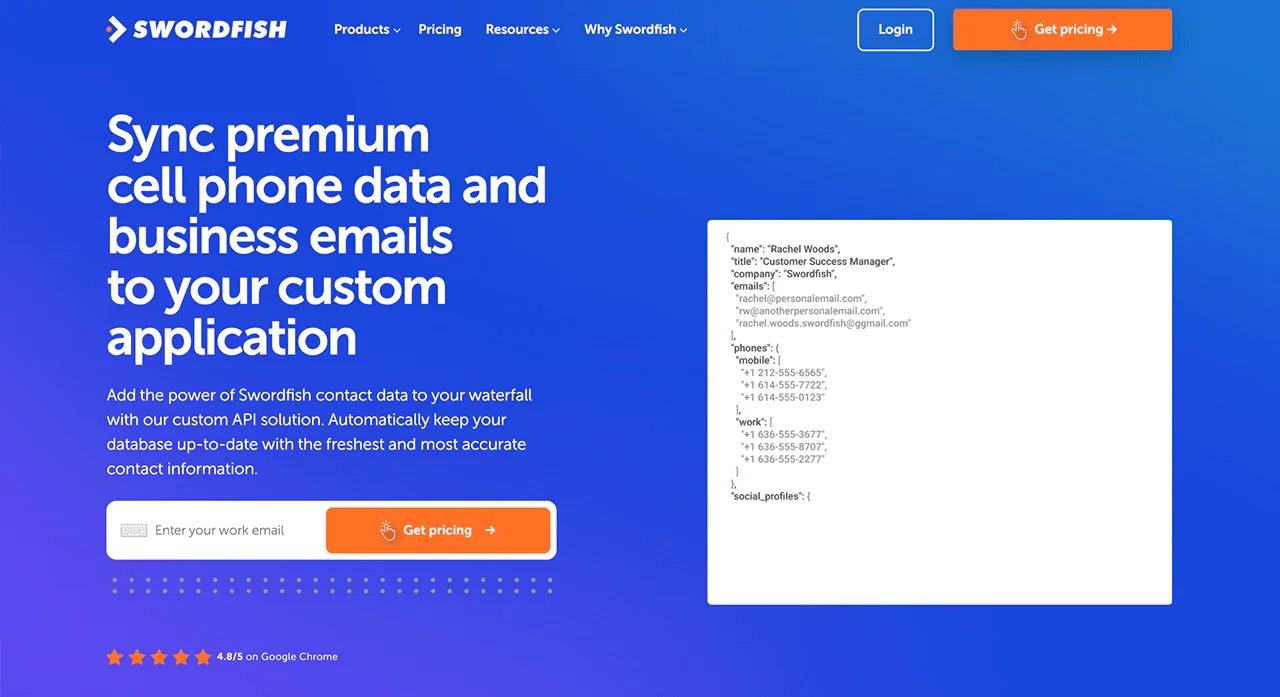
The API syncs cell phone data and business emails directly into a custom application or workflow.
Swordfish also offers buyer intent data from lead provider Bombora, using machine learning to surface signals around which companies are actively researching a purchase.
According to Swordfish, its data reaches roughly 82% first-dial accuracy on cell phone numbers and over 95% accuracy on email data, which cuts down on the manual verification work reps would otherwise do themselves.
Conclusion
A prospect is a different thing than a lead, and building a dedicated prospect list gives you a strategic starting point before you spend a dollar on outreach. The five steps above are a straightforward way to build one while keeping inaccuracies to a minimum.
A prospect list that actually holds up takes effort, a bit of judgment, and tools that don’t add friction to the process. Swordfish AI is a contact finder platform built to provide cell phone and email data that’s verified in near real time, which matters most in fields like healthcare where contact details shift often.
Swordfish’s suite of tools is designed to help fill out your sales pipeline and find leads in bulk. Claim $500 worth of data for free today and give your sales reps the power to sell.