
 View Products


- Core concept
- This hireez review is written for recruiters who measure success by conversations and starts. HireEZ is strong at discovery and list building, but many teams still hit a reachability gap between “found a profile” and “reached the person.”
- Key stat
- The leading indicator of placement speed is time-to-first-live-conversation. If that metric is slow, the constraint is usually contactability and response, not sourcing volume.
- Ideal user profile
- Recruiters hiring for hard-to-reach roles, working passive candidates, re-engaging silver medalists, or running agency recruiting motions who want to predict outreach success, not just generate search results.
HireEZ Review (Hiretual): Strong Discovery, But Watch the Reachability Gap
Byline: Ben Argeband, Founder & CEO of Swordfish.AI
Disclosure: Swordfish.AI offers a reachability product referenced below; this review is written to be workflow-specific and fair.
HireEZ is the product formerly known as Hiretual. Teams use it as a talent intelligence tool to find candidates, enrich profiles, and run a consistent sourcing motion. In day-to-day recruiting, placement speed depends on what happens after discovery: whether you can reach the candidate quickly, compliantly, and with a good candidate experience.
Who this is for
This is for recruiters and TA leaders evaluating HireEZ who care about downstream outcomes: reply rate, connect rate, speed to screen, and offer acceptance. It’s also for teams that already have HireEZ but are seeing low connects on email and InMail and want to close the reachability gap without increasing opt-outs.
What recruiters are trying to accomplish
When a team buys a sourcing tool, they’re trying to (1) build qualified pipelines faster, (2) reduce recruiter hours per hire, and (3) protect candidate experience while scaling outreach. HireEZ supports faster discovery and list building, which can reduce time spent sourcing per req when the role is well-defined. The operational risk is assuming more profiles automatically produce more conversations.
Operator reality: sourcing doesn’t fix reachability. If your team can’t reliably reach the right person, you’ll see longer time-to-fill and more recruiter time spent on follow-ups that never connect. That’s the reachability gap.
HireEZ review: what it does well
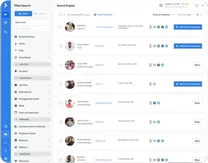
Discovery and market mapping. HireEZ helps recruiters find candidates across sources and organize them into usable lists. For roles with clear titles and common skill patterns, it can reduce sourcing time per req because you spend less time stitching together searches across multiple sites.
Workflow support. Tools that reduce manual steps can improve recruiter throughput. Evaluate “workflow support” by whether it reduces recruiter touches per screen and whether outcomes are logged cleanly enough to prevent recycling bad data.
Re-engagement. If you’re revisiting prior pipelines (including silver medalists), HireEZ can help you rebuild a target list and restart outreach without re-sourcing from scratch.
How I validate discovery quality in a trial. Pick one hard req and one standard req. Measure time-to-shortlist (how long it takes to build a list you’d actually contact) and shortlist-to-screen (how many of those contacts turn into scheduled screens). If time-to-shortlist improves but shortlist-to-screen doesn’t, the constraint is usually reachability and messaging, not discovery.
Pros and cons (operator view)
- Pro: Faster candidate discovery and list building, which reduces time spent searching when req load is high.
- Pro: Helpful for re-engaging prior pipelines, including silver medalists, when you need to rebuild a slate quickly.
- Pro: Supports structured sourcing motions, which can reduce missed steps across a team.
- Con: Discovery does not guarantee contactability; teams can still lose days to the reachability gap.
- Con: If contact data is stale, sequencing increases volume without increasing conversations, which can hurt candidate experience.
- Con: Without tight opt-out handling and suppression, scaled outreach increases compliance and brand risk.
Best for: teams that already run disciplined outreach and want faster discovery. Not sufficient alone: if connect rate and time-to-first-live-conversation are the bottlenecks.
HireEZ features recruiters actually use
- Search and filtering: reduces sourcing time when the role has clear skill and title patterns.
- Projects/lists: keeps pipelines organized so recruiters can run consistent outreach and avoid rework.
- Profile enrichment: adds context for personalization, which can improve reply rate when used well.
- Outreach support: helps standardize follow-ups, but only works when contact data is current and segmentation is tight.
- Reporting: useful when it ties to outcomes like connect rate and time-to-first-live-conversation, not just sends.
Where HireEZ can fall short (the reachability gap)
Most teams don’t lose time because they can’t find profiles. They lose time because they can’t reach the person they found. That shows up as low reply rates, high bounce rates, and sequences that run without producing screens.
The reachability gap usually comes from three failure points: coverage (no usable mobile), recency (number exists but is outdated), and confidence (number exists but recruiters can’t tell which contact path is most likely to connect). The business outcome is wasted recruiter hours and slower scheduling.
If you want to diagnose this quickly, look at four metrics on a single req: (1) wrong-number rate, (2) connect rate, (3) opt-out rate, and (4) time-to-first-live-conversation. When wrong-number rate is high, recruiters stop calling and default to low-yield channels. When opt-out rate rises, your future outreach gets harder because candidates disengage faster.
Sourcing workflow
This workflow keeps HireEZ in its lane (discovery + organization) and closes the reachability gap with a verified mobile layer. The goal is more live conversations per recruiter hour without increasing complaint risk.
Framework: Reachability insight. Treat reachability as a measurable constraint, not a sourcing problem. Track coverage (do we have a callable mobile?), recency (how current is it?), and outcomes (connect rate, wrong-number rate, opt-out rate). When those improve, time-to-first-live-conversation improves.
Step 1: Build the target list in HireEZ. Generate a focused list based on must-have skills, location constraints, and seniority. A tighter list makes personalization easier, which improves reply rate and reduces “why are you contacting me?” responses.
Step 2: Segment by intent. Separate likely-active candidates from passive candidates. This prevents over-contacting passive candidates and reduces opt-outs.
Step 3: Add a verified mobile layer. Sourcing doesn’t fix reachability; add a verified mobile layer so recruiters spend less time dialing dead numbers. The metric impact you’re looking for is lower wrong-number rate and higher connects per hour.
If you want a dedicated reachability layer, Prospector is designed to provide verified candidate mobile numbers so recruiters can move from “found” to “connected” faster.
Step 4: Prioritize outreach by connect likelihood. Use verification and recency signals to set a call-priority order. This reduces time spent on low-probability attempts and shortens time-to-first-live-conversation on competitive slates.
Step 5: Run a two-lane outreach motion. Lane A is phone-first for high-fit, time-sensitive profiles (hard-to-reach roles, late-stage slates). Lane B is email/LinkedIn-first for broader pipelines. This keeps high-touch effort reserved for candidates most likely to convert and reduces sequence fatigue for everyone else.
Step 6: Close the loop in your ATS/CRM. Log outcomes (connected, wrong number, left voicemail, opted out). This protects compliance and prevents recycling bad data, which is one of the fastest ways to waste recruiter time.
How I run a fair workflow test. Keep the req, target list size, and templates consistent. Change one variable at a time (for example, adding verified mobile coverage). Compare connect rate, wrong-number rate, opt-out rate, and time-to-first-live-conversation across the two motions. If you can’t measure those outcomes, you can’t manage placement speed.
Ethical use of phone numbers
Phone outreach can improve candidate experience when it reduces scheduling lag and avoids long message chains. It damages trust when it’s intrusive or when opt-outs aren’t honored.
Standards I expect on my teams: use phone numbers only for recruiting-related communication tied to a role or clear interest area; call during reasonable local hours; limit attempts; and honor opt-out immediately. Maintain a suppression list so an opt-out applies across recruiters and tools.
For compliance, align your process with counsel for your regions, including retention, suppression, and audit expectations, and document how opt-outs are captured and enforced across systems. The business outcome is fewer complaints and fewer deliverability issues, which protects your ability to reach passive candidates over time.
Checklist: Diagnostic Table
| Symptom | Likely cause | What to check | Fix that improves business outcome |
|---|---|---|---|
| High email volume, low replies | Message is generic or role is unclear for passive candidates | Reply rate by template; % of messages with comp range and location | Tighten first message to 3 specifics (role, location/remote, comp band). Improves reply rate and reduces time-to-first-screen. |
| LinkedIn InMails sent, few accepts | Target list too broad; weak relevance | Acceptance rate by segment (title/seniority); time-in-role distribution | Narrow search to recent relevant experience. Reduces wasted outreach and recruiter hours. |
| Lots of calls, few connects | Stale or low-confidence mobile data (reachability gap) | % wrong numbers; connect rate by source; recency of contact data | Add verified mobile layer and suppress bad numbers. Increases connects per hour and speeds scheduling. |
| Voicemails left, no callbacks | Value prop unclear; cadence too aggressive | Callback rate by voicemail script; follow-up spacing | Use a 15-second voicemail with role + one reason you called + opt-out line. Improves candidate experience and reduces complaints. |
| “Stop contacting me” responses | Missing opt-out handling or over-contacting | Opt-out rate by recruiter/template; suppression list coverage across tools | Centralize suppression and cap attempts. Protects compliance and long-term deliverability. |
| Strong pipeline, slow offers accepted | Slow scheduling and too many steps before a live conversation | Time from first outreach to first live conversation; scheduling lag | Phone-first for top profiles and same-day scheduling. Improves placement speed in competitive slates. |
Decision Tree: Weighted Checklist
How to use: Use this to evaluate whether HireEZ alone meets your outcomes, or whether you need to pair it with a reachability layer. The weighting is based on standard failure points: discovery is necessary, but reachability and workflow adoption determine whether you get more screens per week.
| Category | Weight (why it matters) | What “good” looks like | Questions to ask in a trial |
|---|---|---|---|
| Reachability (verified mobile + recency) | Highest weight: reachability is the common bottleneck between sourcing and conversations | High mobile coverage for your target personas; clear recency/confidence signals; easy suppression of bad data | What % of my shortlist has a callable mobile? How do you validate recency? Can I suppress wrong numbers globally? |
| Workflow fit (ATS/CRM logging + team adoption) | High weight: if outcomes aren’t logged, you recycle bad data and lose time | Fast export/sync; clean activity logging; minimal clicks from shortlist to outreach | How many clicks from shortlist to outreach? Can we write back outcomes (wrong number, opt-out) reliably? |
| Discovery quality (search + filters) | Medium weight: improves sourcing speed, but doesn’t guarantee replies | Relevant results with low noise; strong filters for seniority, location, and skills | Can we reproduce our best hires’ profiles? How quickly can a new recruiter build a usable slate? |
| Compliance controls (opt-out, retention, auditability) | Medium weight: protects candidate experience and reduces risk | Suppression lists; retention controls; audit-friendly logging | How do we honor opt-outs across channels? What’s the retention model? What audit logs exist? |
| Sequencing and outreach support | Lower weight: helpful after data quality and segmentation are right | Simple sequences; personalization fields; cadence controls by segment | Can we run different cadences for passive candidates vs active? Can we cap attempts per candidate? |
| Reporting tied to outcomes | Lower weight: reporting matters when it changes behavior | Connect rate, reply rate, and time-to-first-live-conversation by segment and recruiter | Can we see connect rate by source? Can we measure the reachability gap over time? |
Outreach templates
These templates are designed to reduce time-to-first-conversation without increasing pressure. They assume you’re contacting someone who didn’t apply. Keep attempts limited and honor opt-out immediately.
Troubleshooting Table: Outreach Templates
Template 1: First text (high-fit, hard-to-reach roles)
Hi [First Name] — I’m [Your Name], recruiting at [Company]. Quick check: are you open to a brief call about a [Role Title] role focused on [Specific Problem/Domain]? If not, reply “no” and I won’t follow up.
Template 2: First email (passive candidates)
Subject: [Role Title] — [1 specific hook]
Hi [First Name],
I’m hiring a [Role Title] at [Company]. The work is centered on [specific scope], and the team needs strength in [skill 1] and [skill 2].
If you’re open, I can share comp range ([Range]) and the interview steps. If you’re not interested, reply “no” and I’ll close the loop.
— [Name], [Title]
Template 3: Voicemail (15 seconds)
Hi [First Name], this is [Name] with [Company]. I’m calling about a [Role Title] role working on [specific scope]. If it’s worth a quick chat, call me at [Number]. If you’d rather not be contacted, text me “no” and I’ll stop.
Template 4: Follow-up (after no response)
Hi [First Name] — closing the loop. Should I (a) send details and comp range for the [Role Title], or (b) stop outreach? Either reply is helpful.
Evidence and trust notes
This review is intentionally workflow-specific. HireEZ can improve discovery and sourcing workflow consistency, but it doesn’t automatically solve the reachability gap. If your KPI is placement speed, measure what happens after sourcing: connect rate, reply rate, wrong-number rate, opt-out rate, and time-to-first-live-conversation.
To keep this fair: the right setup depends on your roles, regions, and channels. For some teams, email-first works. For many hard-to-reach roles, verified mobile coverage improves speed because it reduces time spent on dead contacts and increases same-day scheduling.
Trust comes from process controls. Document how opt-outs are captured, how suppression is enforced across systems, and how long contact data is retained. Those controls protect candidate experience and reduce compliance risk while you scale outreach.
If you’re comparing options, see HireEZ alternatives.
FAQs
Is HireEZ a good talent intelligence tool?
Yes for discovery and list-building. The operator question is whether your team can consistently turn those lists into conversations. If not, you’re dealing with a reachability gap, not a sourcing problem.
What’s the biggest risk when adopting sourcing automation?
Scaling outreach before you’ve validated contact quality and segmentation. That increases opt-outs and reduces candidate experience, which then lowers reply rates across the team.
How do I know if I need a reachability layer?
If you see high send volume but low connects, frequent wrong numbers, or recruiters spending too much time chasing non-responses, you likely need better verified mobile coverage and recency signals.
Can phone outreach be compliant and respectful?
Yes, with clear purpose, limited attempts, reasonable calling hours, and immediate opt-out handling. Log opt-outs centrally so they apply across tools and recruiters.
Is this a HireEZ (Hiretual) review or a reachability review?
It’s both, because the business outcome is the same: faster conversations. HireEZ can help you find candidates; your reachability process determines whether those candidates turn into screens.
Next steps
Week 1 (baseline): Run a small trial on 1–2 reqs. Track connect rate, reply rate, wrong-number rate, opt-out rate, and time-to-first-live-conversation from your current process.
Week 2 (workflow test): Use HireEZ for discovery, then add a verified mobile layer for the same shortlist. Keep outreach templates consistent. Compare outcomes to Week 1.
Week 3 (scale decision): If connect rate and time-to-first-live-conversation improve without increasing opt-outs, document the workflow, add suppression rules, and roll out to the team.
Week 4 (operationalize): Train recruiters on segmentation (passive candidates vs active), logging outcomes, and opt-out handling. Review metrics weekly until performance stabilizes.
About the Author
Ben Argeband is the Founder and CEO of Swordfish.ai and Heartbeat.ai. With deep expertise in data and SaaS, he has built two successful platforms trusted by over 50,000 sales and recruitment professionals. Ben’s mission is to help teams find direct contact information for hard-to-reach professionals and decision-makers, providing the shortest route to their next win. Connect with Ben on LinkedIn.