
 View Products


Last updated: September 3, 2026
If you work in sales, marketing, or any role that depends on reaching small business owners directly, a solid email list changes how fast you can move. It shortens the distance between finding a prospect and starting a real conversation.
The hard part is finding a list that’s both accurate and current. Small businesses open, close, and change hands constantly, so a stale list wastes time no matter what you’re selling, recruiting for, or promoting.
This guide covers what to look for in a small business email list and how to use one well once you have it. We’ll also walk through Swordfish AI, a tool built to help you reach the right small business owners without wasting outreach on dead contacts.
About Swordfish Small Business Email Lists: What’s in It for You?
Swordfish AI helps you connect with small business opportunities across the United States. Here’s how:
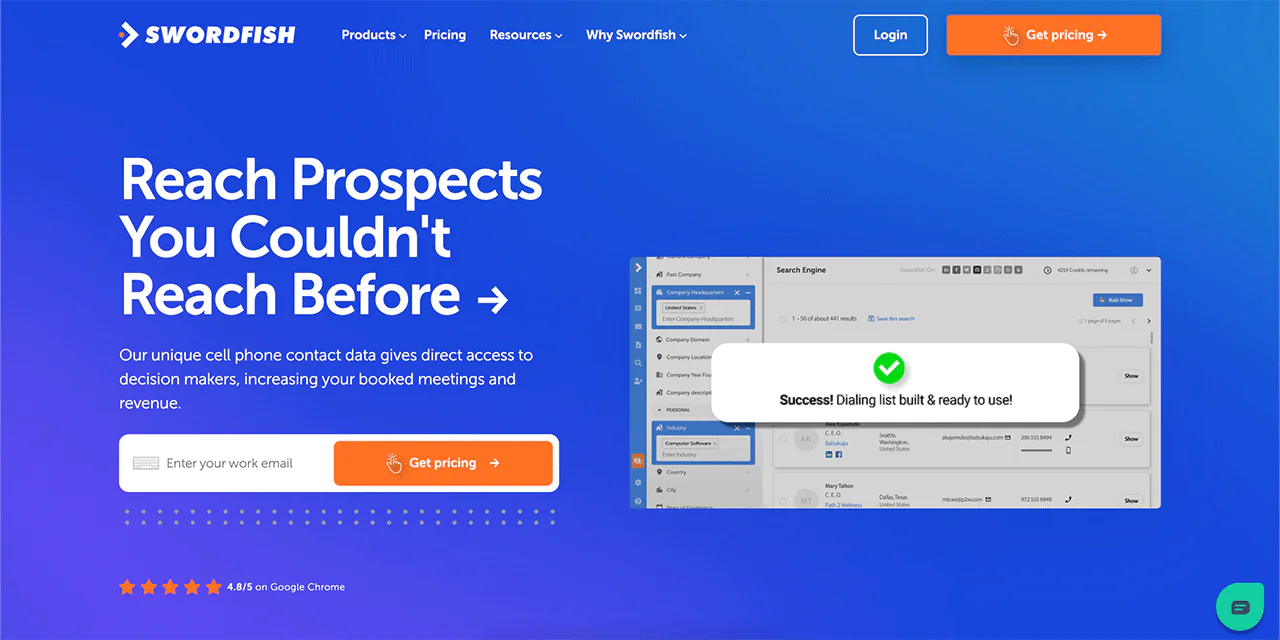
- Bulk Search: gather information on numerous small businesses at once, which cuts down on manual research for larger campaigns.
- Accuracy: Swordfish focuses on keeping contact data current so your outreach is aimed at real, reachable people rather than dead ends.
- Real-Time Verification: data is checked at the point of access, which reduces the chance you’re working from an outdated record.
- Prospecting Tools: tools like the Chrome Extension and File Prospector let you pull and organize contact info directly from your browser or by uploading a file.
Types of Data Included in Small Business Email Lists:
- Names of Small Business
- Location
- Contact Numbers (Work, Cell, Mobile)
- Email Address
- Specialization
- Years of Experience
- Sole Proprietor Status
- Licensed States
- License Number
- Fax
- Address
 Try Swordfish Ai
Who’s Included in Our Small Business Email List by Specialization?
A one-size list rarely fits every campaign. Below is how our small business coverage breaks down by sector so you can target the segment that matches your offer.
How Do We Compile and Verify Our Small Business Mailing List?
Building a reliable small business mailing list takes more than scraping a directory once and calling it done. Here’s the process behind the data:
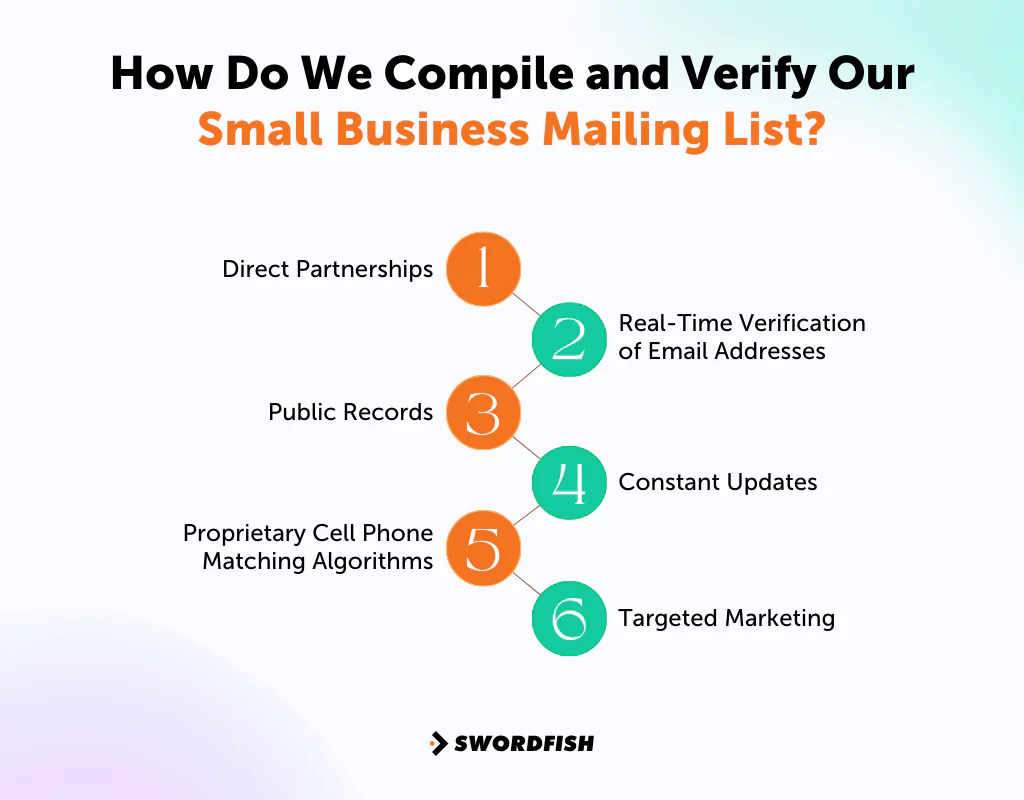
Direct Partnerships
Collaborating with over 200 data providers enriches our database with a wide array of small business contacts. It opens doors to a multitude of sectors, giving you a broader view of potential business opportunities.
Real-Time Verification of Email Addresses
Verifying small business email addresses on receipt helps keep your outreach pointed at active, responsive leads rather than bounced or abandoned inboxes.
Our verification process incorporates the best contact finding tools to help keep the information as accurate and current as possible.
Public Records
Public records provide a useful baseline layer of business data, which we cross-reference against other sources before it’s added to a list.
Constant Updates
Regular updates matter because small business ownership, addresses, and contact details change more often than larger enterprise records. Keeping the data current reduces wasted outreach.
Proprietary Cell Phone Matching Algorithms
Matching businesses to associated cell phone numbers gives you a more direct way to reach a decision-maker instead of relying solely on a general inbox or front desk line.
Targeted Marketing
Organizing lists by sector and business type makes it easier to filter down to the audience that actually fits your offer, rather than working through an undifferentiated list.
Why Choose Swordfish AI’s Small Business Email Database?
Here’s what sets Swordfish AI’s approach to small business data apart.
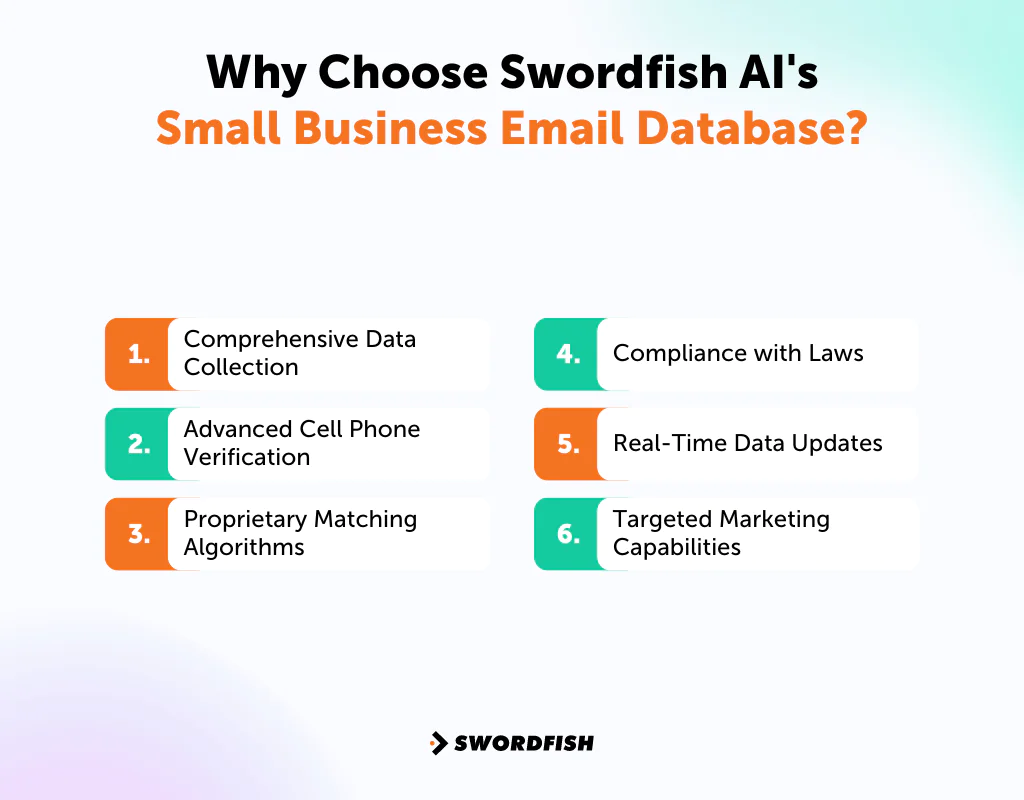
Comprehensive Data Collection
Swordfish AI’s database draws on billions of data profiles covering small businesses across the country, which gives you a wide base of potential connections to work from.
Advanced Cell Phone Verification
Cell phone numbers go through additional verification so you’re not spending time chasing disconnected or reassigned numbers.
Our verification process also draws on enterprise sales prospecting tips to help keep the contacts you’re working with reliable.
Proprietary Matching Algorithms
Cell phone matching algorithms help tie a business record to the correct phone number, which reduces misdirected outreach.
Compliance with Laws
Data handling practices are built around applicable data privacy and marketing regulations, which matters if you want to avoid legal exposure tied to how contact data was sourced and used.
Real-Time Data Updates
Keeping the database refreshed means you’re less likely to be working from a contact record that’s already gone stale.
Targeted Marketing Capabilities
Because the database is organized by sector and business type, you can filter down to the specific small business segment that matches your campaign, rather than sorting through an undifferentiated list yourself.
What Should You Consider When Getting a Small Business Mailing List?
When selecting a small business mailing list, accuracy and legality should guide the decision. Here’s what actually matters when comparing providers.
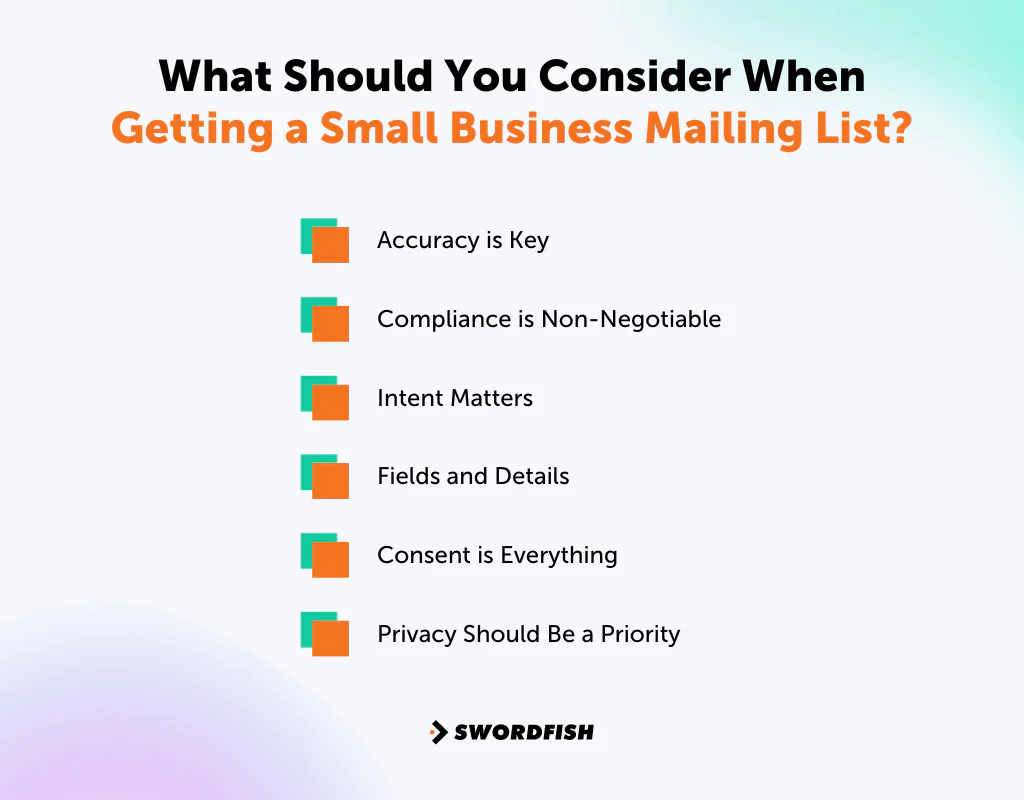
Accuracy is Key
- Freshness: Outdated contacts are a waste. Ensure the list is regularly updated.
- Verification: Look for lists that undergo frequent verification processes to weed out inaccuracies.
- Reliability of Source: Understand the origin of the data. Trustworthy sources lead to a higher success rate.
- Error Margin: Inquire about the error rate. No list is perfect, but aim for the lowest possible inaccuracies.
Compliance is Non-Negotiable
- Follow the Rules: The list must comply with laws like GDPR in Europe and CAN-SPAM in the U.S. Breaking these rules can cost you more than just fines.
- Consent is Important: Ensure the people on the list have agreed to receive emails. No one likes unwanted mail.
Intent Matters
- Right Audience: Make sure the list targets people who are actually interested in what you’re selling. Relevance is the name of the game.
- Engagement Ready: Look for signs that the contacts are ready to hear from you. Did they sign up for something similar recently?
Fields and Details
- More Than Names: A good list offers more than just email addresses. Look for job titles, company sizes, and industry types to customize your message.
- Customization is Key: The more you can personalize your message to the recipient, the better your chances of making a connection.
Consent is Everything
- Permission-Based: Ensure the list consists of people who have opted in. It’s not just polite; it’s effective.
- Transparency Wins: Be clear about where you got their details from if asked. Trust builds relationships.
Privacy Should Be a Priority
- Secure Your Data: Make sure the provider values data security as much as you do. Leaks hurt everyone involved.
- Respect Opt-Outs: Make it easy for people to unsubscribe. If they want out, holding the door open for them leaves a good impression.
Who Can Benefit from the Small Business Email Address List?
This kind of list serves a wide range of roles that all depend on reaching small business decision-makers directly, including anyone refining how to write a follow-up email after a meeting to keep prospects engaged. Here’s a quick rundown of who tends to get the most out of it:
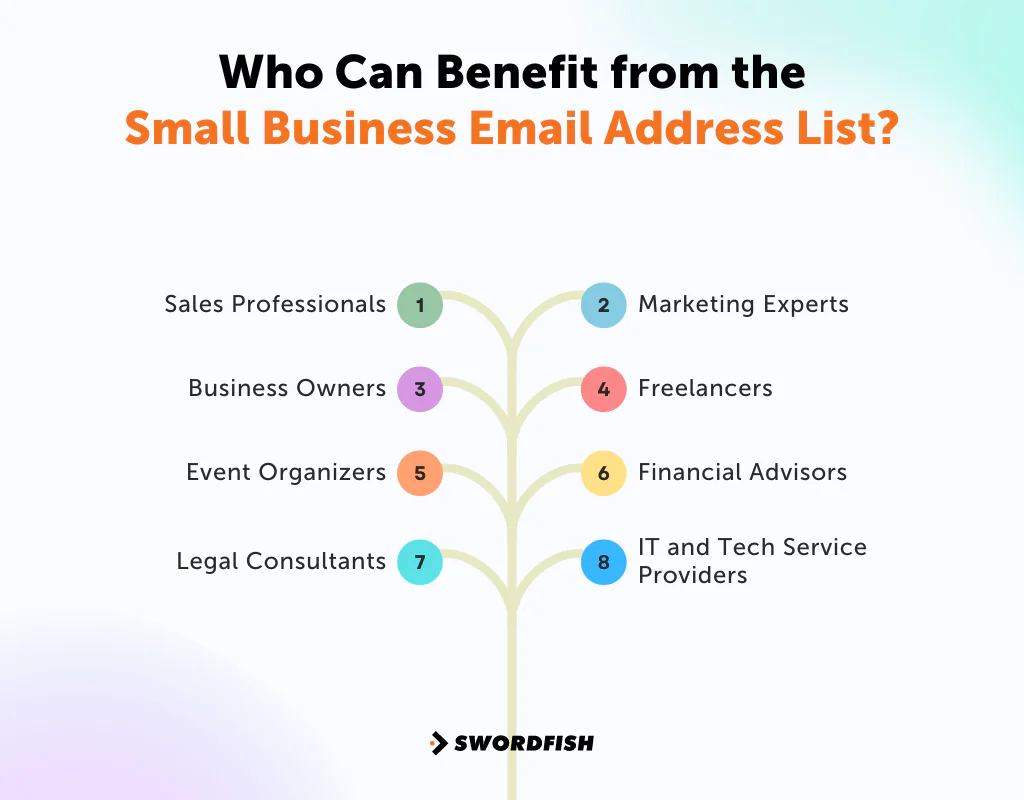
Sales Professionals
If you’re in sales, this list is your compass. It guides you to potential customers who are more likely to be interested in your product or service, making the job of selling not just easier, but more rewarding.
Marketing Experts
For marketers, a targeted email list lets you customize your strategies so messages resonate with the audience, which tends to lift engagement and conversion rates.
Business Owners
Running a small business? This list can be a doorway to finding suppliers, collaborators, or new markets by connecting with like-minded businesses for mutual growth.
Freelancers
Freelancers can use this list to identify small businesses in need of their services, whether that’s design, writing, or digital marketing work, helping keep a pipeline of work steady.
Event Organizers
If you’re organizing events, workshops, or webinars tailored for small businesses, this list can help you directly reach your target audience.
Financial Advisors
For those in financial services, a small business email list can connect you with businesses that might need guidance on managing finances and investments, navigating financial challenges, or expanding a client base.
Legal Consultants
Legal professionals specializing in business law can find this list useful for reaching small businesses that may need legal advice, representation, or help with compliance issues.
IT and Tech Service Providers
Every small business needs tech support at some point. If you offer IT solutions, cybersecurity services, or software, this list can help you reach businesses that are actively looking for tech upgrades or fixes.
How Can You Make the Most of Small Business Email Lists Effectively?
Getting your hands on a small business email list is just the start. Here’s how to put it to work and get results.
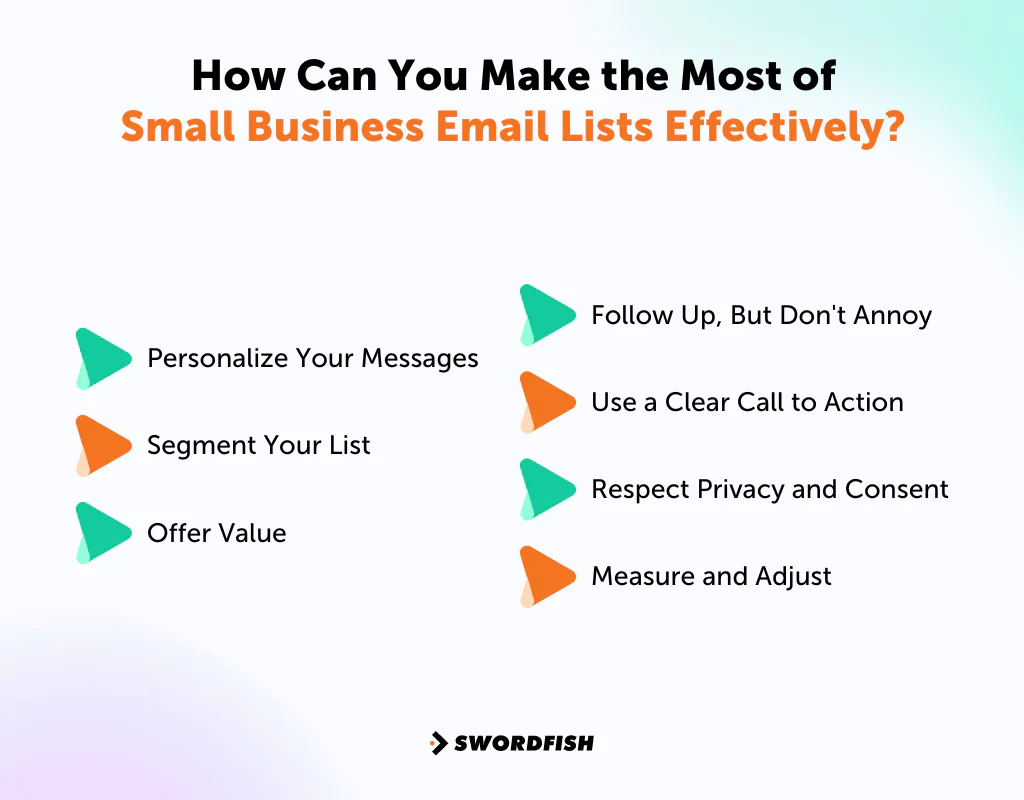
Personalize Your Messages
Don’t just blast out generic emails. Use the info from the list to tailor your messages. Mention their business name, reference their industry, or comment on recent achievements. It shows you’re paying attention and not just sending spam.
Segment Your List
Break down your list into categories like industry, business size, or location. That way, you send more relevant info to each group. A marketing tip that works for a small online retailer might not fit a local bakery.
Offer Value
Always ask, “What’s in it for them?” Share tips, insights, or news that can help their business. Maybe it’s a guide on social media marketing or a webinar on financial planning. If you provide value, they’ll be more likely to engage.
Follow Up, But Don’t Annoy
If someone doesn’t respond to your first email, it’s fine to send a follow-up. But if they still don’t respond, don’t keep pushing. You don’t want to be marked as spam or annoy potential contacts.
Use a Clear Call to Action
Be clear about what you want them to do. Is it to check out your website, sign up for a free trial, or attend an event? A clear call to action increases the chances of them taking the next step.
Respect Privacy and Consent
Only send emails to people who’ve agreed to receive them, and always include an easy way for them to unsubscribe. Respecting their choices builds trust.
Measure and Adjust
Keep an eye on which emails get opened, which links get clicked, and what ultimately leads to a sale or a sign-up. Use that information to tweak your approach. Certain subject lines may perform better, or a particular time of day may get stronger results.
Conclusion
If you’re aiming to reach small business owners directly, a well-built email list is the tool that gets you there. Whether the goal is sales, recruiting, partnerships, or marketing, an accurate list turns cold outreach into direct, targeted communication.
To make it count, personalize your messages and segment your list so what you send actually fits the recipient. That personal touch improves engagement and moves you closer to whatever result you’re after.
Swordfish AI is built to help you reach small business owners with more precision and less wasted effort, whether you’re running a single campaign or building an ongoing outreach pipeline.
FAQs
What is a small business email list?
A small business email list is a collection of email addresses and sometimes additional contact information belonging to small business owners and decision-makers. It’s used to reach potential clients or partners directly through email marketing campaigns.
What is a free small business email list?
A free small business email list is a sample or limited version of a full list that some providers offer at no cost. It lets you test data quality before buying. Keep in mind free lists usually don’t match the accuracy or scope of paid versions.
How accurate is Swordfish AI’s small business email data?
Swordfish AI focuses on keeping small business contact data current through real-time verification and regular updates, though no data provider can guarantee perfect accuracy across every record. Check current accuracy claims directly with Swordfish before relying on a specific figure.
How can I find a small business email provider?
To find a provider for a small business email list, look for reputable data collection and verification services like Swordfish AI. Check their website, read customer reviews, and review their service offerings to confirm they meet your needs for accuracy, compliance, and support.
Why should I buy an email list of small businesses?
Buying an email list of small businesses can save time and effort in reaching your target audience. It lets you communicate directly with potential clients or partners, share your offerings, and grow your network without compiling contacts from scratch.
Does your small business email database include phone numbers?
Yes, Swordfish AI’s small business database also includes phone numbers alongside email addresses, giving you an additional channel to reach potential clients or partners.