

 View Products


Last updated: September 3, 2026

Finding solid investment property deals is only half the battle in real estate. The other half is finding investors ready to act on those deals, and that part trips up more professionals than most will admit. Generating quality leads consistently is one of the most persistent operational headaches in the investment side of the industry.
Lead scarcity isn’t a sign of a weak market. Even investors with a full pipeline of closed deals keep hunting for the next opportunity, because portfolios only grow when new leads keep entering the funnel. This guide walks through practical methods for attracting real estate investor leads and holding your ground in a crowded market.
Let’s get into it.
What are Real Estate Investor Leads?
Real estate investor leads are individuals or entities potentially interested in buying investment properties. These leads matter to real estate professionals and investors looking to sell or market properties, giving them a targeted audience for investment opportunities.
In practical terms, an investor lead is someone with the intent and, ideally, the capital to purchase, invest in, or sell a property soon. Turning that intent into a closed deal is the entire point of lead generation.
Budgets tell part of the story. 24% of Realtors spent under $50 on lead generation monthly, while 25% invested between $50 and $250.
Most agents, in other words, spend under $250 a month chasing leads – which says a lot about how tight margins are and why the strategies you choose actually matter.
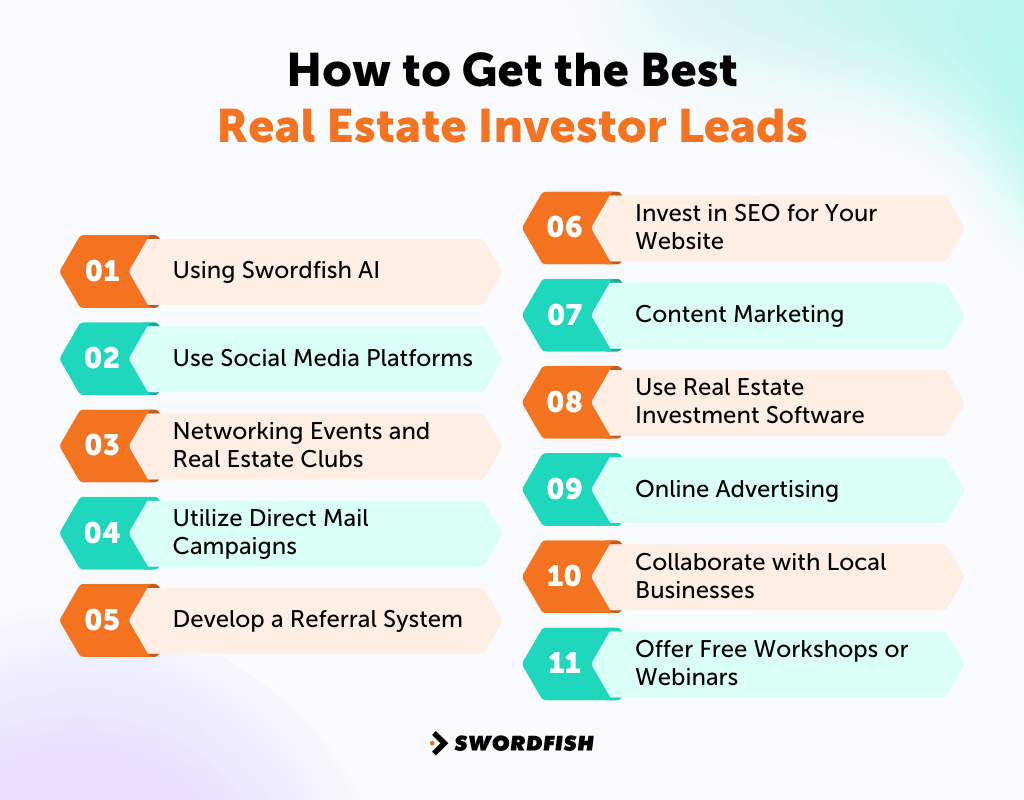
How to Get the Best Real Estate Investor Leads
To buy leads of real estate investors, use platforms like Swordfish AI for quick access to their contact details. You can also join real estate investment directories and use social media to connect with potential leads.
These are just starting points, though. There are plenty of other effective ways for real estate investors to get leads. Here’s a closer look at the techniques worth building into your process:
-
Using Swordfish AI: Get the Best Real Estate Investor Leads
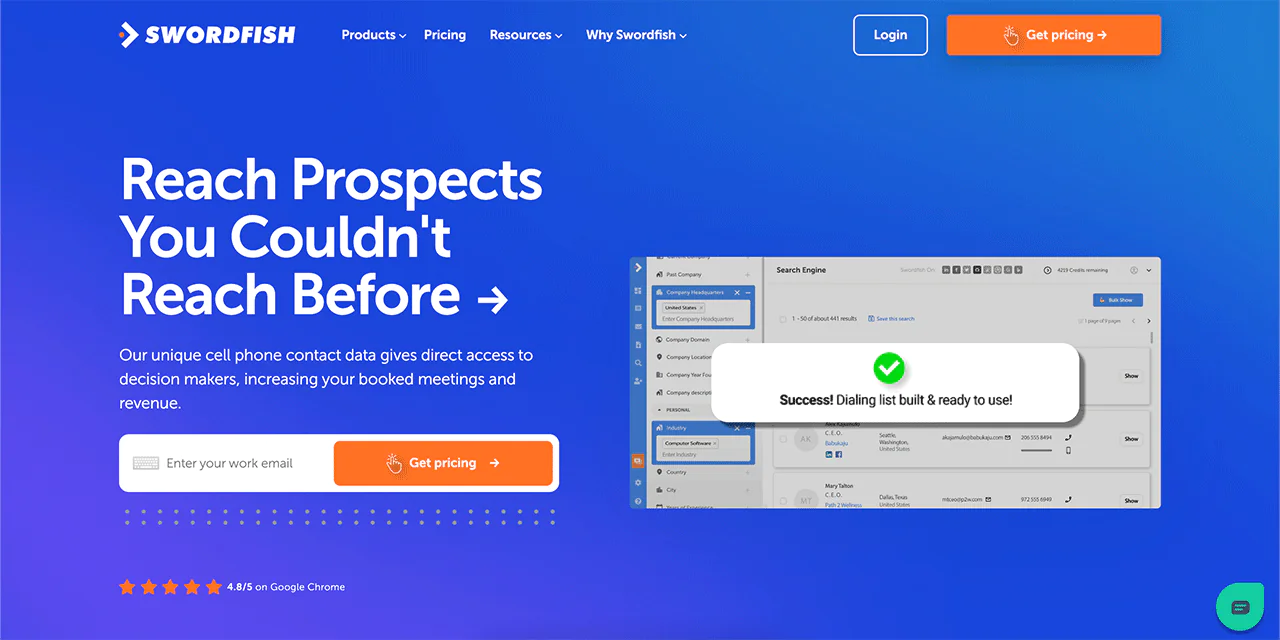
Swordfish AI is built for professionals who need to grow their investor network without burning hours on manual research. Its database draws on billions of data points, giving you a large pool of contact records to pull from rather than a handful of stale leads.
The platform refreshes its data regularly rather than relying on a static snapshot, which matters in a market where contact details go stale fast. It also matches you against the right type of investor, which cuts down on wasted outreach.
Swordfish AI provides direct access to cell phone numbers for easy communication and verifies real estate investor email addresses to minimize bounce-backs. That combination makes it easier to both surface potential deals and actually reach the people behind them.
For investors trying to widen their pipeline, Swordfish AI gives you the contact data you need without a lot of manual digging, backed by tools built around that specific job.
Key features of Swordfish AI
Chrome Extension
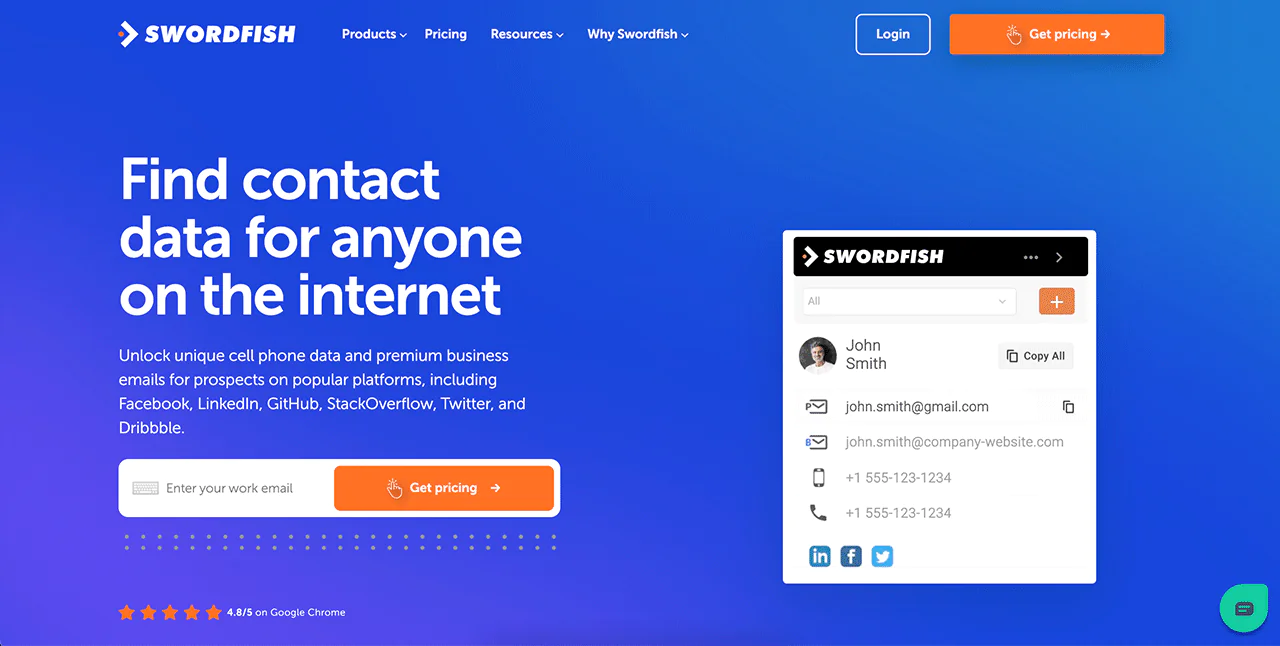
The Chrome extension gives you access to verified property owner contacts and a real estate investor email directory right from your browser. That makes it far easier to work through individual profiles and build prospect lists directly on platforms like Facebook and LinkedIn.
Reverse Search
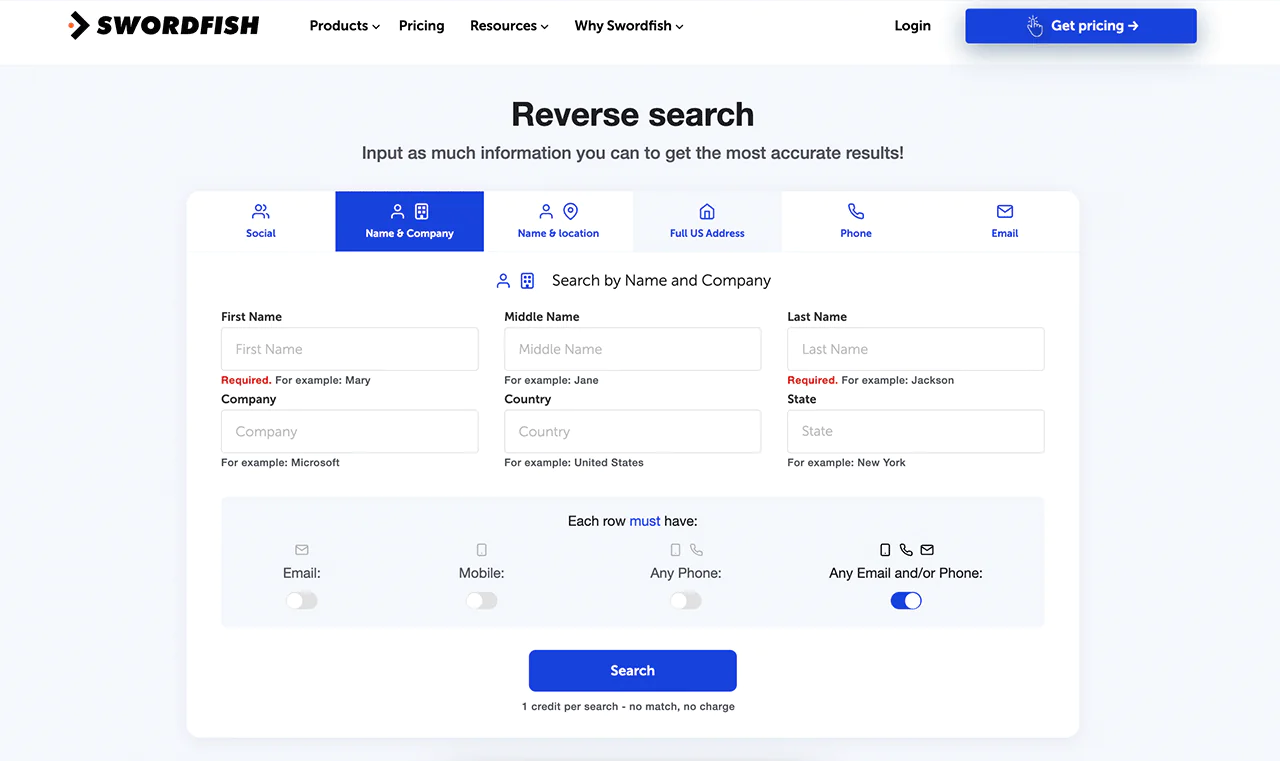
With Reverse Search, you can pull a fuller picture of a contact starting from just a few basic details. That’s useful for narrowing in on individuals tied to specific locales or firms, which opens up more networking opportunities in real estate investing.
Prospector Tool
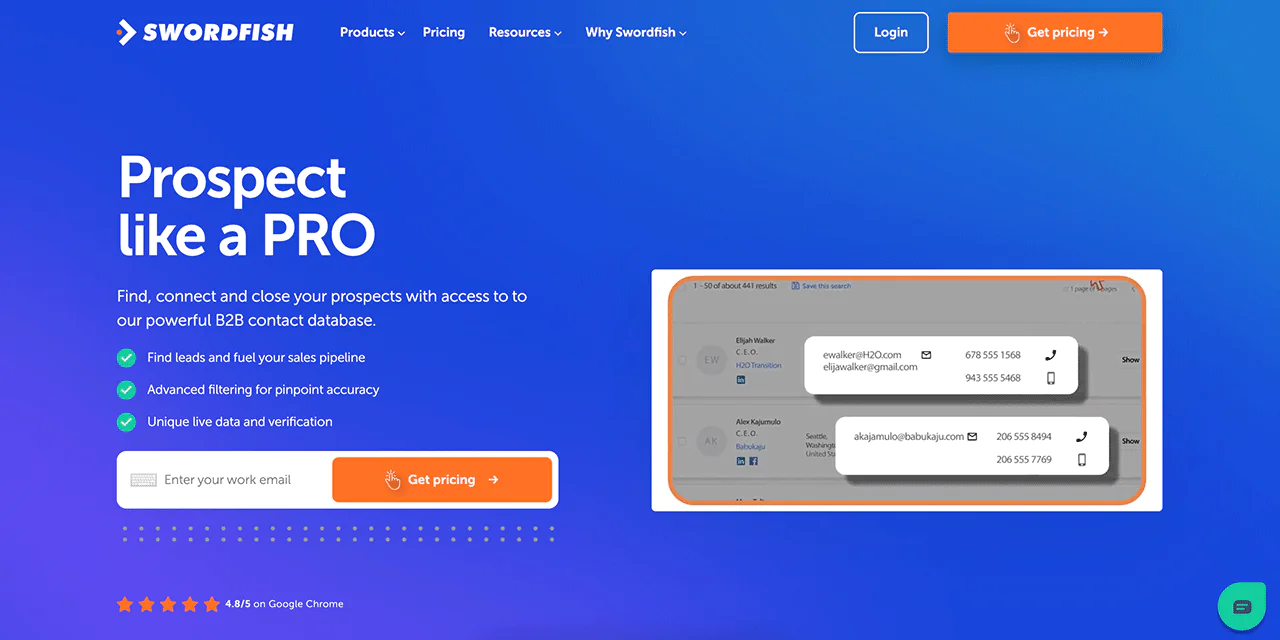
The Prospector tool simplifies how you identify potential investors. You can search by criteria like property type, investment size, and geographic area, which keeps your outreach focused instead of scattershot.
Bombora Intent Data
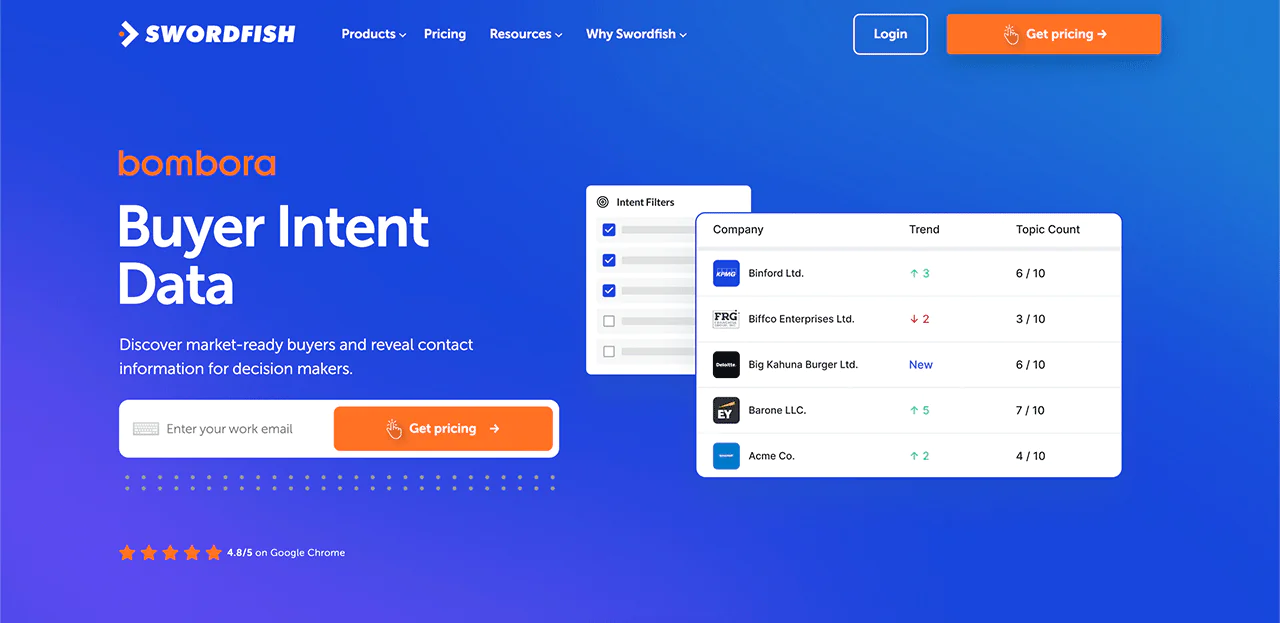
With Bombora® Intent Data, Swordfish AI flags entities actively researching real estate investments. That timing edge means you’re reaching out while interest is warm, not cold.
File Upload
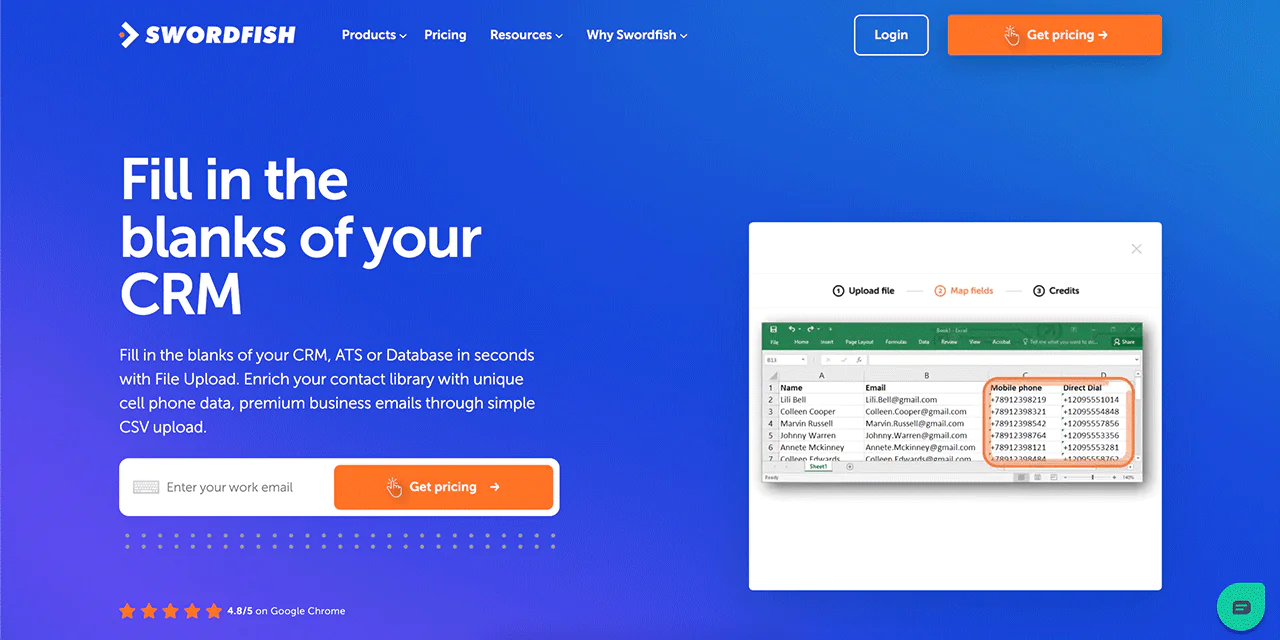
The bulk contact information feature matters most to real estate investment firms handling large prospect lists. The file upload capability integrates with CRM and ATS systems, filling in missing data on existing contact lists and streamlining the whole workflow.
API Integration
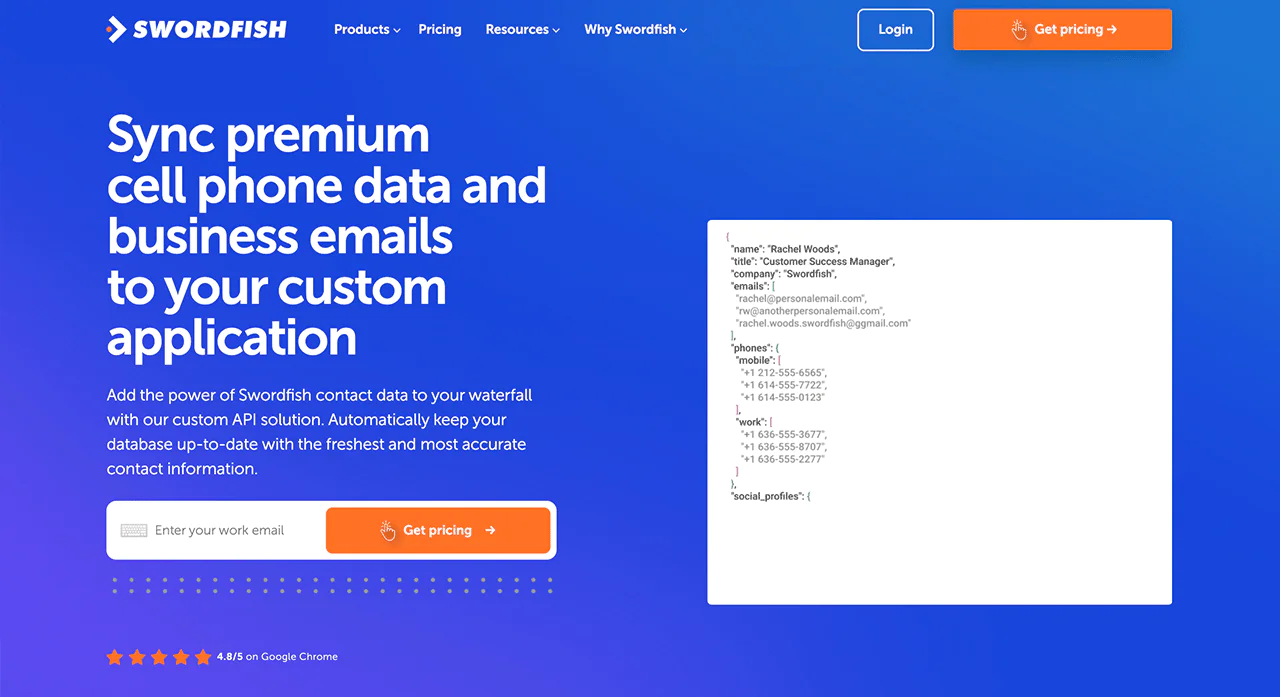
API integration with Swordfish AI keeps your marketing tools stocked with current, accurate data for lead generation in real estate. That improves both the speed and precision of the investment scouting process.
 Try Swordfish Ai
2. Use Social Media Platforms
Social media platforms like Facebook, Instagram, and LinkedIn aren’t just for staying in touch with friends; they’re genuinely useful tools for generating real estate leads.
A survey by the National Association of Realtors (NAR) found that 77% of realtors actively use social media for real estate in some way, which shows how much reach and impact a well-targeted campaign can have.
Facebook’s targeted advertising tools let you reach potential investors based on their interests, behaviors, and geographic location.
An example might be an ad campaign targeting people interested in real estate investment within a 50-mile radius of your city, with interests in property flipping or rental properties. Sharing valuable content regularly – market analyses, success stories – builds engagement and credibility over time.
A real estate professional might post something like “5 Mistakes to Avoid in Your First Investment Property,” which tends to spark shares and comments and extend organic reach.
3. Networking Events and Real Estate Clubs
Attending local real estate investment clubs and networking events puts you in the room with potential investors and partners. Local real estate investors’ meetups, for example, can connect expertise with capital and lead directly to lucrative deals.
Presenting a recent successful project – a before-and-after showcase of a flipped property, say – is a straightforward way to demonstrate expertise and draw interest. Networking works best when you focus on how you can help others reach their goals, not just what you stand to gain.
4. Utilize Direct Mail Campaigns
Direct mail campaigns can be highly targeted and personalized, which makes them an effective way to reach potential sellers or investors.
Public records can help you identify, for instance, homeowners who have owned their property for over 20 years and might be considering downsizing.
A well-crafted, personalized letter that speaks to real concerns – a hassle-free sale, avoiding real estate commissions – tends to resonate more than a generic pitch.
A campaign built around a message like that might land a 5% response rate, which is enough to generate several valuable leads and a couple of closed deals.
5. Develop a Referral System
A referral system gives your network a reason to bring you qualified leads. A study by Nielsen found that 92% of consumers trust referrals from people they know, which makes personal recommendations one of the more reliable marketing channels available.
Offering a $500 referral bonus for any lead that results in a closed deal, for example, gives people a concrete reason to think of you when they hear someone’s looking to sell or invest.
Promoting that referral program through an email newsletter or social media tends to build word-of-mouth momentum over time. Tracking referrals carefully and paying out promptly keeps the trust intact and the referrals coming.
6. Invest in SEO for Your Website
Search Engine Optimization (SEO) helps your website rank higher in search results, which puts you in front of investors who are actively looking.
Research from Moz found that the first page of Google captures 71% of search traffic clicks, with some more recent estimates putting that figure even higher.
Optimizing your site around a phrase like “real estate investment opportunities in [Your City]” can pull in local investors. Publishing high-quality content regularly – market trend breakdowns, investment tips – also helps your ranking over time.
A blog post titled something like “Top Emerging Real Estate Markets This Year” that lands on page one can bring in a steady stream of organic traffic.
7. Content Marketing
Content marketing means creating material valuable enough that your target audience seeks it out.
A monthly video series touring properties, highlighting investment opportunities, or breaking down real estate concepts can establish your authority and build a following.
An investor might put together a case study video on a recent property flip – the investment, the work done, the ROI. That kind of content engages potential investors and shows expertise across whatever platform you post it on.
8. Use Real Estate Investment Software
Real estate investment software simplifies the process of finding and analyzing potential investment properties.
Tools like PropStream or DealMachine give investors access to detailed property data, owner information, and market trends.
An investor using these tools could pinpoint undervalued properties in an up-and-coming neighborhood, then work out potential ROI and reach out to owners directly. That approach saves time and tightens up the whole lead generation process.
9. Online Advertising
Online advertising platforms like Google Ads and Facebook Ads offer strong targeting options.
A Google Ads campaign targeting searches related to “investment properties in [Your City]” could drive traffic to a landing page offering a free investment guide in exchange for contact details.
A campaign like that might run at $2 per click but still deliver several high-quality leads that more than cover the cost.
10. Collaborate with Local Businesses
Partnering with local businesses that serve homeowners or real estate investors can open up new lead-generation opportunities.
A partnership with a local home improvement company, for instance, could involve them referring clients interested in selling newly renovated properties, in exchange for a feature in your investor newsletter.
That kind of symbiotic relationship tends to generate steady referrals from a source people already trust.
11. Offer Free Workshops or Webinars
Free educational events give potential investors something useful while putting your expertise on display.
Webinars remain one of the more effective lead formats across industries. 73% of B2B marketers and sales leaders consider webinars the most effective way to obtain high-quality leads.
A webinar on “How to Identify High-Potential Real Estate Investments” can draw a mix of beginner and experienced investors.
Offering real, actionable insights and engaging through Q&A builds credibility and gives you a natural opening to collect contact information for follow-up.
Who Needs Real Estate Investor Leads?
Real estate investor leads matter to a range of professionals and entities across the industry. These leads represent potential opportunities that drive growth, revenue, and long-term success.

Here are the key groups who rely on real estate investor leads:
- Real Estate Agents and Brokers: Agents and brokers often specialize in working with investors to buy or sell properties. Investor leads can help them find clients looking to invest in real estate, whether it’s residential, commercial, or industrial properties.
- Real Estate Investment Companies: Companies focused on real estate investments need a continuous flow of leads to find new opportunities for growth. These leads can help them identify potential investment properties, development projects, or partnership opportunities.
- Individual Real Estate Investors: Solo investors looking for properties to add to their portfolios need leads to find the best investment opportunities. These could include rental properties, fix-and-flip projects, or land development.
- Real Estate Investment Trusts (REITs): REITs, which are companies that own, operate, or finance income-producing real estate, rely on investor leads to identify new acquisition targets and to attract investment capital from individuals and institutions.
- Property Developers: Developers seek out investor leads to find funding partners or to sell their projects. Leads can help them connect with investors interested in financing new construction or redevelopment projects.
- Real Estate Wholesalers: Wholesalers act as intermediaries between property sellers and potential buyers (often investors). They need leads to find both potential properties to contract and investors to whom they can assign those contracts.
How Much Do Real Estate Investor Leads Cost
Real estate investor lead costs vary significantly based on lead quality, acquisition source, market type, and the depth of information provided. Here’s a breakdown of what drives lead costs and how pricing structures typically work:
Factors Influencing Lead Cost
- Source: Leads can be generated through various means, including online marketing, direct mail campaigns, networking events, or purchased from lead generation companies. The cost can vary greatly depending on the source’s effectiveness and the lead generation method’s complexity.
- Quality and Exclusivity: High-quality, exclusive leads (leads that are sold to you alone) generally cost more than shared or lower-quality leads. Exclusive leads are more valuable because they increase the likelihood of a successful transaction without competing with others for the same lead.
- Lead Details: Leads that come with comprehensive information, such as contact details, investment preferences, budget, and other specifics, can be more expensive. The more vetted and detailed a lead is, the more valuable it becomes, leading to higher costs.
- Market and Niche: The real estate market segment (commercial, residential, luxury, etc.) can also affect lead prices. Leads in markets with higher property values or those targeting specific niches, like luxury real estate or commercial developments, might cost more.
General Pricing Structures
- Subscription Services: Some companies offer lead generation as a subscription service, where you pay a monthly fee to access a certain number of leads. Prices can range from a few hundred to several thousand dollars per month, depending on the service level and exclusivity of leads.
- Pay-Per-Lead: This model charges a set fee for each lead provided. Prices can vary significantly, from as little as $10 to $20 for basic contact information, to several hundred dollars for highly vetted, exclusive leads.
- Commission-Based or Referral Fees: Some lead generation services operate on a commission basis, charging a percentage of the transaction value or a referral fee once a deal is closed. This can be cost-effective but also unpredictable, as costs directly depend on the deal’s success and size.
- Self-Generated Leads: Generating leads through your own marketing strategies (e.g., content marketing, SEO, social media advertising) involves direct costs (ad spend, marketing tools) and indirect costs (time, effort). While potentially more cost-effective in the long run, the upfront investment and cost per lead can vary widely based on the effectiveness of your strategies.
Conclusion
Building a steady flow of quality leads is what separates a growing real estate investment business from one that’s stalled. A strong online presence, paired with a mix of the tactics above, is what keeps new investors finding their way to you.
Swordfish AI is one option worth considering for sourcing targeted, useful investor leads. Picking the right data provider isn’t just about volume – it’s about getting contacts you can actually act on.
Focusing on lead quality over sheer quantity tends to pay off in the long run. Start refining your investment lead strategy with the tools and tactics covered here.
Frequently Asked Question
How do I handle objections from real estate investor leads?
Address objections by listening, empathizing, offering solutions, and persuading through negotiation to effectively engage with real estate investor leads. Building trust and credibility can also help alleviate objections.
What legal considerations should I be aware of when dealing with real estate investor leads?
Compliance with local laws, contract understanding, transparent disclosure, and legal advice when necessary are important when dealing with real estate leads. Additionally, ensure you have a thorough understanding of fair housing laws and ethical practices.
How can I track and manage real estate investor leads effectively?
To track and manage real estate investor leads effectively, consider using CRM software to organize lead information, schedule follow-ups, automate communication, and analyze lead performance. Implementing a systematic approach to lead management can simplify workflows and improve conversion rates.
Related Post:
- Auto Repair Leads: Where and How Can You Get Them?
- Golf Courses Email List: Maximize Sales in the Golfing Industry
- Realtor Email Lists: Connect, Communicate, and Convert with Experts
- Jewelry Stores Email List: Connect with Top Jewelry Retailers Today!
- Hospital CEOs Email List: Connect with Top Hospital Leaders Today!
- Automobile Industry Email List to Reach Parts and Dealership Owners