
 View Products


Key takeaways
- A transportation sales email list can help teams identify prospects at fleets, carriers, brokerages, and logistics firms.
- List fields may include contact details, location, specialization, licensing information, and business information; confirm the available fields with the provider.
- Useful list maintenance can include filtering, updating records, checking contact details, and segmenting contacts by role or other relevant criteria.
- Segmenting and personalizing outreach can make messages more relevant to different transportation contacts.
- Email marketing requirements vary by recipient location and campaign; review the applicable rules before contacting people on a list.
Last updated: September 3, 2026
Accurate contact data can be a bottleneck for transportation sales teams. Chasing incorrect phone numbers and bounced emails takes time away from speaking with decision-makers and may slow pipeline development.
A well-built transportation sales email list can help teams identify relevant contacts at fleets, carriers, brokerages, and logistics firms. Sales reps, marketers, and recruiters can use a targeted list to focus outreach, though results depend on data quality and campaign relevance.
This guide walks through what a transportation sales email list should contain, how it’s typically compiled and verified, who benefits from using one, and how to get more out of a list once you have it. We’ll also cover what Swordfish AI offers for teams targeting this industry.
About Swordfish Transportation Sales Email Database: What’s in It for You?
Swordfish AI says its transportation sales email lists are designed to help users reach transportation industry contacts across the USA. The information below describes the listed features; confirm current coverage and data fields with the provider.
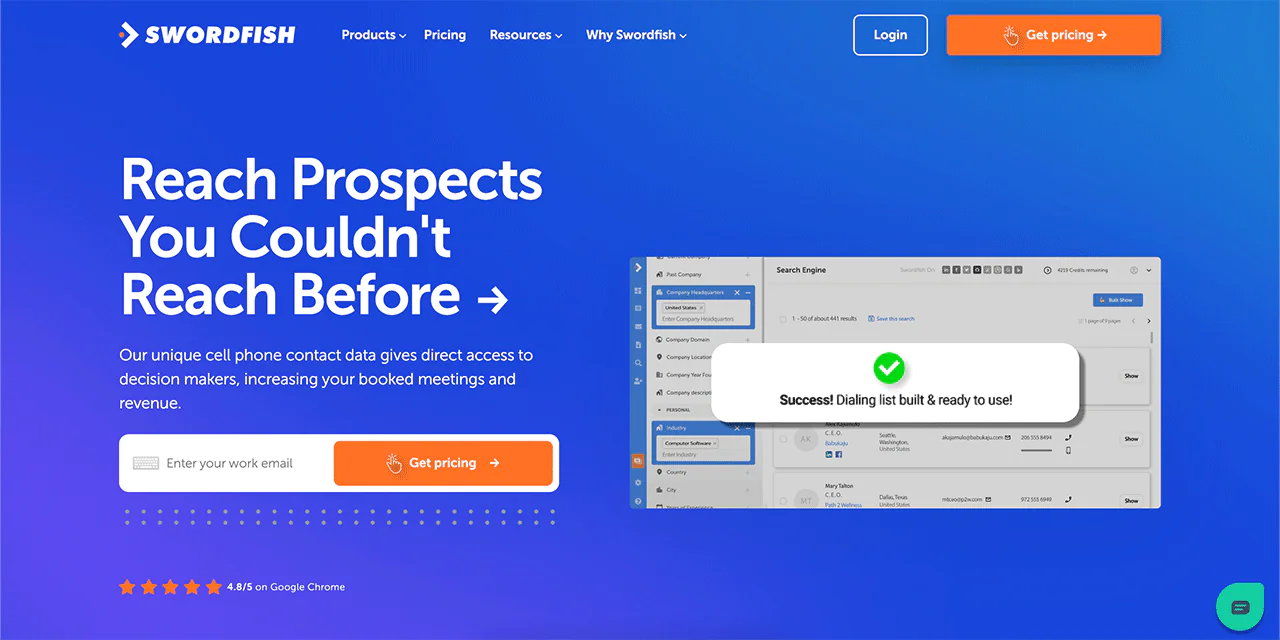
- High-Quality Leads: Access a curated list of contacts, so you’re reaching decision-makers in the transportation industry rather than generic inboxes, which helps tighten your sales funnel.
- Data-Rich Insights: Each entry includes details like company size, geographic location, and key personnel, which makes personalized outreach realistic instead of a guessing game.
- Time-Saving: You can cut down prospecting time by reaching out directly to interested prospects, freeing up more time to actually close deals.
- Increased Conversion Rates: Accurate targeting means your messages land with the right audience, which improves the odds of turning a lead into a customer.
- Competitive Edge: Better data means better visibility into market trends, which helps you adjust sales strategy before competitors do.
Types of Data Included in Transportation Sales Mailing Lists
- Name
- Location
- Contact Numbers (Work, Cell, Mobile)
- Email Address
- Specialization
- Years of Experience
- Sole Proprietor Status
- Licensed States
- License Number
- Fax
- Address
Who’s Included in Our Transportation Sales Email List by Specialization?
The list is described as covering roles and specializations such as fleet management, logistics, freight, and industry groups. Check with the provider to confirm which categories are currently available.
How Do We Compile and Verify Our Transportation Sales Mailing List?
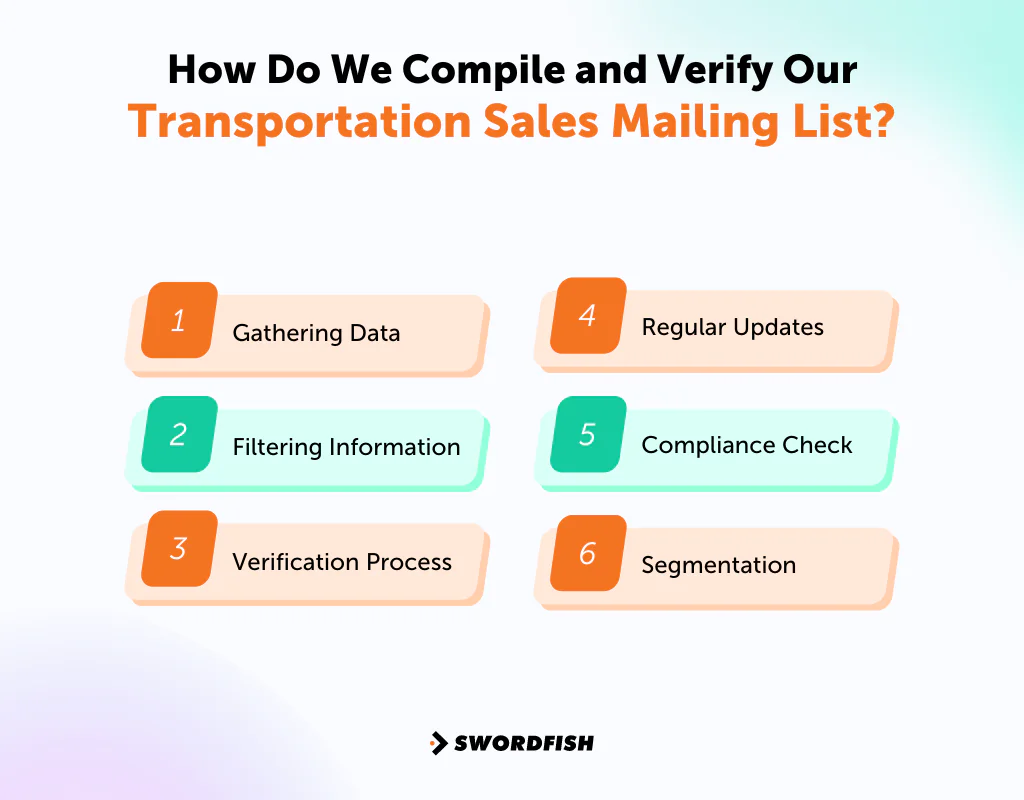
Building an accurate list is an ongoing process rather than a one-time export. Common steps include collecting and filtering data, checking contact details, updating records, reviewing compliance requirements, and segmenting contacts.
Gathering Data
Data collection draws from a wide range of sources, including public records, industry events, conferences, and online platforms that feature companies and professionals in the transportation sector.
Filtering Information
Once a broad list is compiled, it gets filtered down to people directly involved in sales or decision-making, such as fleet managers, logistics directors, or company owners. This step matters because a list padded with irrelevant titles just adds noise to your outreach.
Verification Process
An email verification process may use automated tools and manual checks to assess whether addresses appear deliverable. Ask the provider what methods it uses and how often records are checked; verification does not guarantee future delivery or engagement.
Regular Updates
Job roles and companies change constantly in this industry, so outdated contacts get removed and new ones added on an ongoing basis to keep the list useful.
Compliance Check
Privacy and marketing requirements vary by jurisdiction and outreach method. Determine whether consent or another legal basis is required for your campaign, and provide any required opt-out method.
Segmentation
Contacts get grouped by role or interest area within the transportation sector, which makes it easier to run focused, relevant campaigns instead of one generic blast.
Why Choose Swordfish AI’s Transportation Sales Email Database?
Swordfish AI describes the following features for teams evaluating its transportation prospecting data. Confirm availability, coverage, and verification methods directly with the provider.
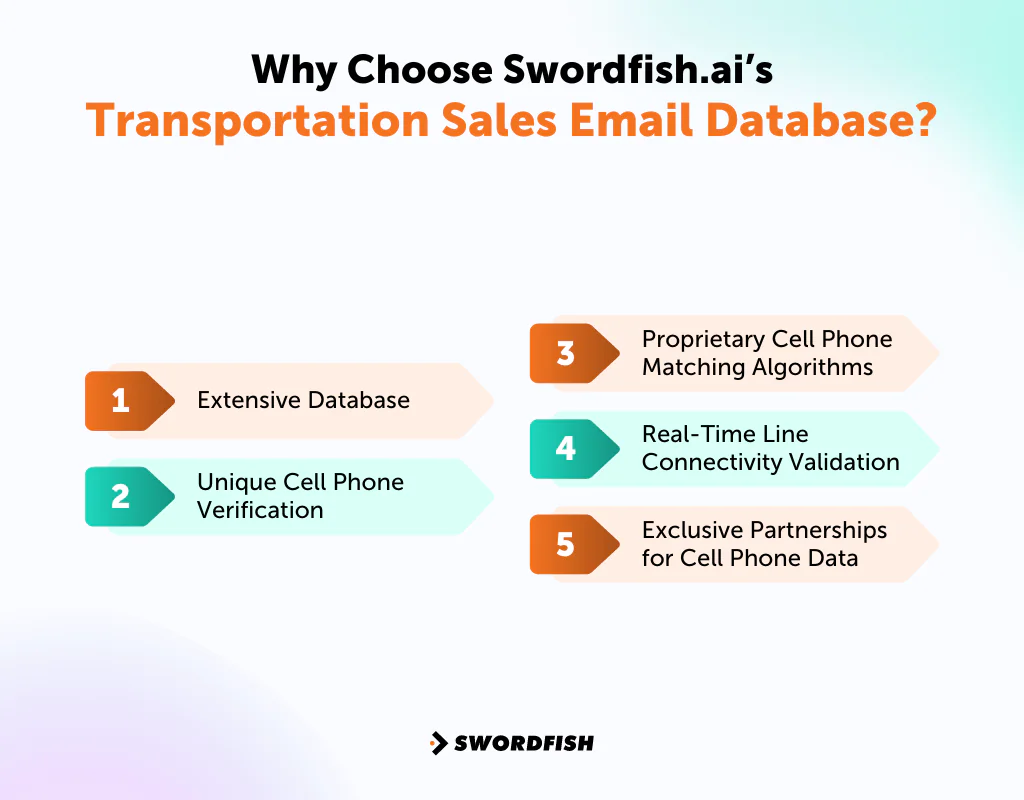
Extensive Database
Swordfish AI describes its database as containing a large volume of contact profiles. Ask the provider for current coverage and the criteria used to identify transportation contacts.
Cell Phone Verification
Swordfish AI says it offers cell phone verification to help assess whether numbers are current. Confirm what the verification checks cover and when they were last performed.
Cell Phone Matching
Swordfish AI describes matching technology intended to associate cell phone numbers with individuals. Ask how the matching process is assessed and how uncertain matches are handled.
Line Connectivity Validation
Swordfish AI says it checks numbers for active line connectivity. A connectivity check does not necessarily confirm that a number belongs to the intended person or that the person is available.
Cell Phone Data Access
Swordfish AI says its data sources can include information beyond typical public listings. Ask the provider how the data is obtained and what restrictions apply to its use.
What Should You Consider When Getting a Transportation Sales Email List?
A few things worth checking before you commit to a provider or a list:
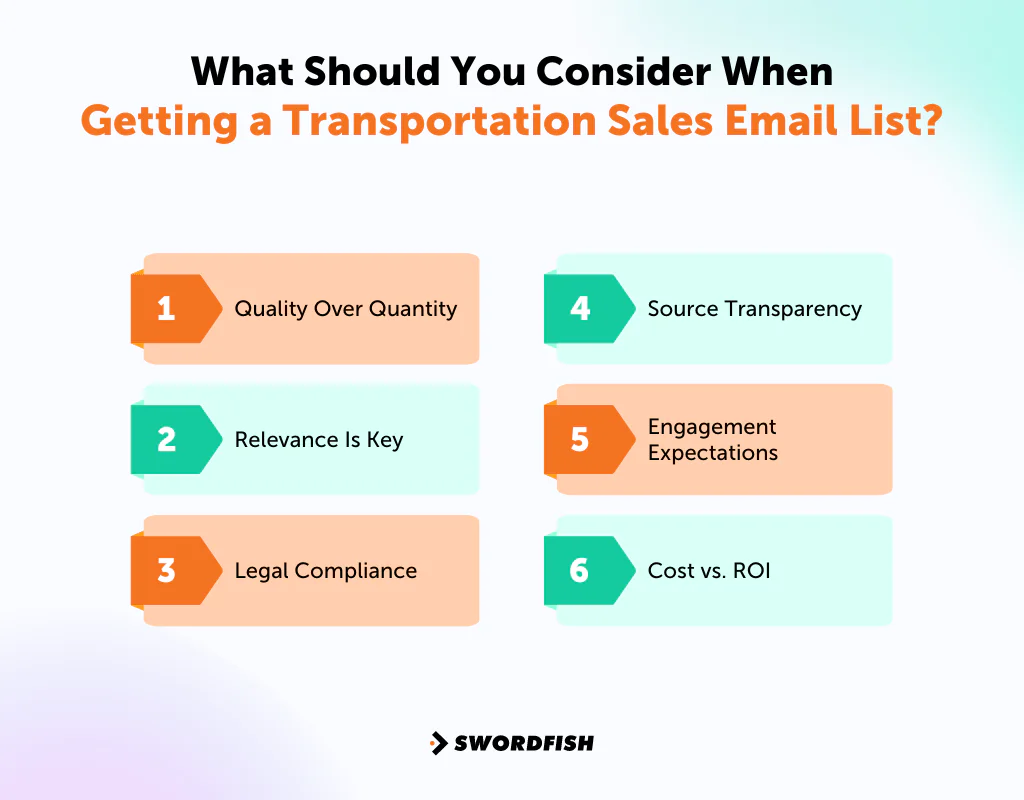
Quality Over Quantity
Relevance matters more than raw volume. A smaller, well-curated list with accurate, current information is worth more than a massive list full of outdated or irrelevant contacts. Look for providers who regularly update and clean their data.
Relevance Is Key
Make sure the list can be customized to your needs. Ask providers whether they can segment by industry niche, company size, or geographic location.
Legal Compliance
Email marketing laws vary by region, including GDPR in Europe, CAN-SPAM in the U.S., and CASL in Canada. In the U.S., CAN-SPAM generally does not require prior opt-in consent for commercial email, but it does set requirements such as accurate sender information, non-deceptive subject lines, and a working opt-out method. Requirements and potential penalties can depend on the circumstances. Confirm which rules apply to your recipients and campaign.
Before contacting people on a list, confirm that your planned use of their data is permitted under the rules that apply to your campaign and recipients. A provider’s assurances do not replace your own compliance review.
Source Transparency
Ask where and how the list was compiled. A reputable provider should be upfront about their sources, which helps you judge both quality and legality.
Engagement Expectations
Even a well-targeted list will include people who are not interested in an offer. Set realistic expectations for response rates and assess campaign results rather than assuming every contact will convert.
Cost vs. ROI
Weigh the cost of the list against the potential return on investment (ROI). Factor in the time and resources you’ll spend running campaigns against the list, not just the sticker price.
Who Can Benefit from the Transportation Sales Email Address List?
Here’s a rundown of who tends to get real value from a list of email addresses built for transportation sales:
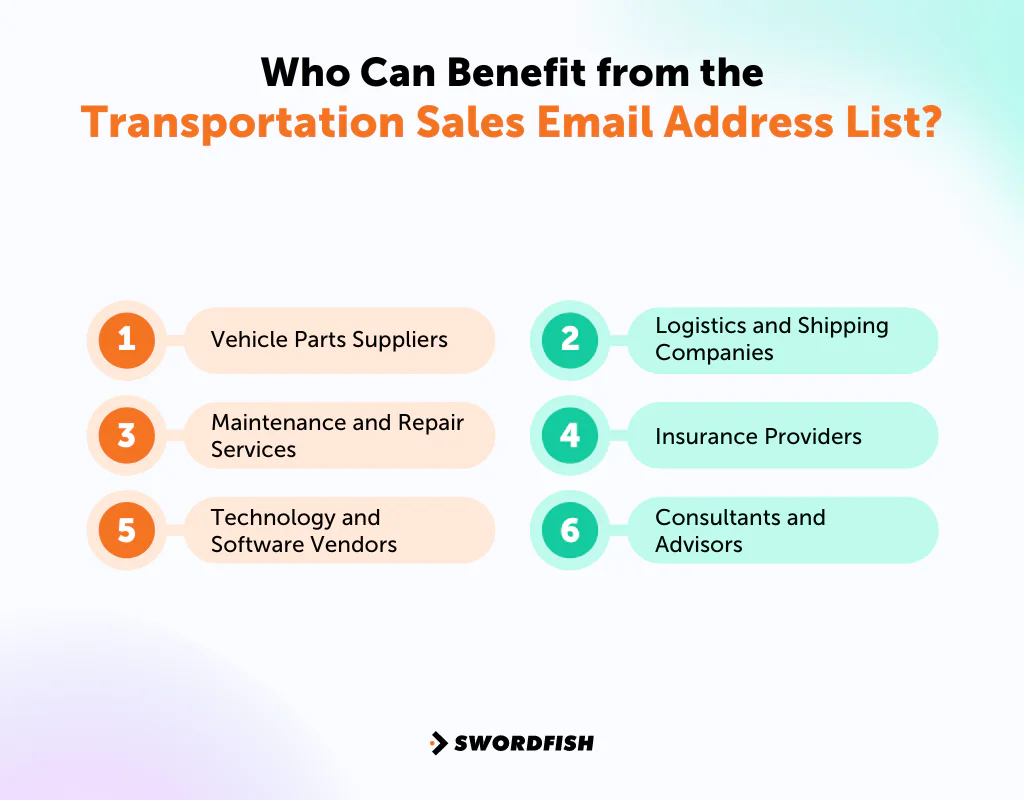
Vehicle Parts Suppliers
If you sell parts for trucks, planes, ships, or any other transportation equipment, this list helps you reach companies that need those parts for repairs or upgrades.
Maintenance and Repair Services
Vehicles constantly need upkeep. If you offer maintenance or repair services, a transportation sales mailing list can connect you with fleet owners and transportation companies looking for dependable providers.
Technology and Software Vendors
From GPS tracking and route management to fleet management software, technology plays a major role in transportation operations. An email list gives tech vendors a direct line to businesses looking to modernize.
Shipping and Logistics Companies
If you offer specialized logistics or shipping solutions, an email list can help you find businesses looking to streamline shipping or expand logistics capacity.
Insurance Providers
Transportation companies face unique risks that call for specialized coverage. If you sell insurance built for this industry, an email list helps you reach the operators who need it.
Consultants and Advisors
If you have expertise in cutting transportation costs, optimizing operations, or navigating regulatory requirements, an email list lets you pitch that expertise directly to businesses that could use it.
How Can You Make the Most of Transportation Sales Email Lists Effectively?
A few practical habits that make a real difference once you have a list in hand:
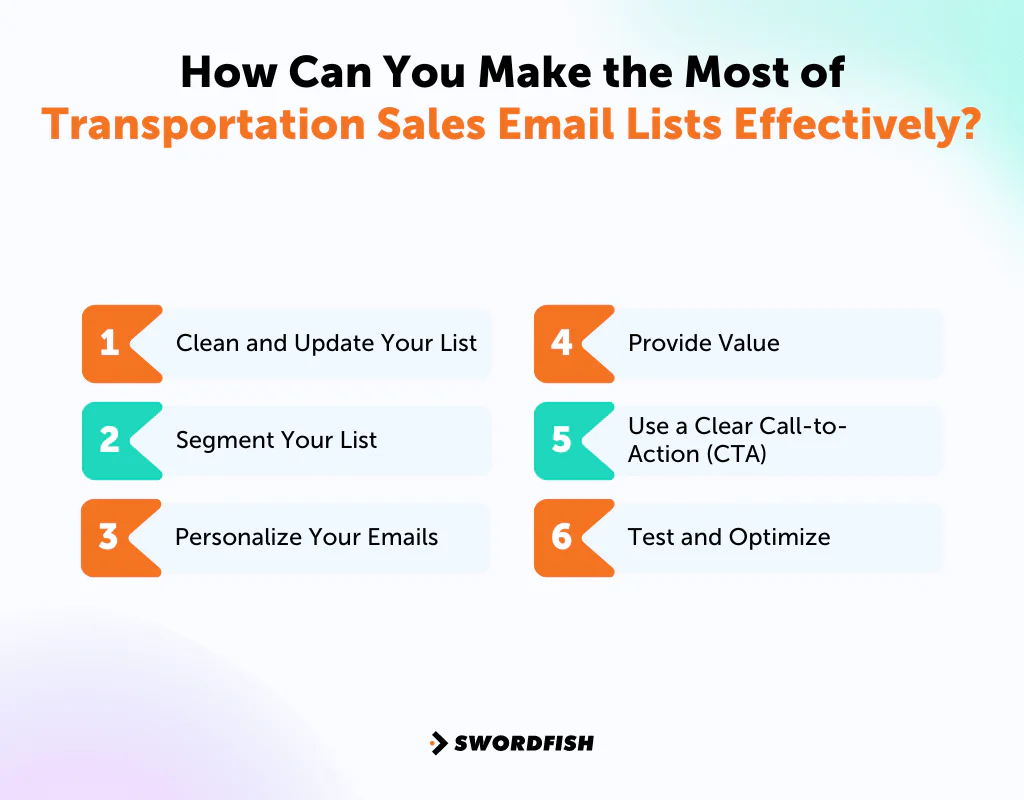
- Clean and Update Your List: Keep your list current by removing outdated contacts and adding new ones regularly. This reduces bounce rates and improves campaign performance.
- Segment Your List: Not everyone needs the same message. Segment by location, business size, or specific need so your messaging stays relevant to each group.
- Personalize Your Emails: Address recipients by name and tailor content to their specific interests. This alone can meaningfully lift open rates.
- Provide Value: Give recipients something useful, whether that’s industry insight, a practical tip, or a relevant offer. Value builds trust and keeps people engaged over time.
- Use a Clear Call-to-Action (CTA): Be explicit about what you want the recipient to do next, whether that’s visiting a page, booking a call, or replying for more information.
- Test and Optimize: Try different subject lines, formats, and send times, then use the results to refine future campaigns.
Conclusion
A well-maintained transportation sales email list can support lead generation, sales outreach, and marketing to contacts such as fleet managers and logistics providers.
A relevant list can help businesses identify transportation contacts involved in purchasing decisions, but it does not guarantee a shorter sales cycle or a closed deal.
Teams considering Swordfish AI can review its data coverage, sourcing practices, verification methods, and compliance information before deciding whether it fits their outreach needs.
 Try Swordfish Ai
Frequently Asked Questions
Is buying a transportation sales mailing list legal?
Yes, buying transportation sales email lists is legal, but campaigns built on them still need to comply with laws like the CAN-SPAM Act, including accurate sender information and a working opt-out option. Confirm your provider sourced the contacts legally.
How can I segment my transportation sales mailing list?
Segment by criteria like geographic location, business size, specific needs, or engagement level. This supports more targeted, effective communication than a one-size-fits-all send.
What’s the importance of a CTA in transportation sales emails?
A clear CTA tells the recipient exactly what to do next, whether that’s visiting a website, making a purchase, or reaching out for more information. It’s a key driver of conversions.