
 View Products


Last updated: September 3, 2026
SaaS sales is its own discipline. The product isn’t a one-time purchase, it’s a relationship that has to be renewed, expanded, or lost every billing cycle. That changes how reps prospect, pitch, and measure success compared to traditional software or hardware sales.
Selling a subscription well means understanding the buyer’s ongoing cost-benefit calculation, not just their initial pain point. Three things tend to separate strong SaaS sales teams from the rest:
- A working grasp of subscription economics and how renewal risk shapes every conversation
- Lead generation that’s built for scale, not one-off outreach
- Good use of contact and firmographic data to reach the right person before a competitor does
Tools such as https://swordfish.ai/ fit into this last piece, giving sales teams verified contact details so they spend more time talking to prospects and less time chasing down who to call.
Accurate contact data doesn’t win deals by itself, but bad data reliably loses them. Wrong numbers and outdated emails are one of the quieter reasons pipelines stall.
What does SaaS mean?
SaaS stands for Software as a Service. Instead of installing software on individual machines, the provider hosts it centrally and customers access it online, typically through a browser. Access is usually sold as a subscription, which is part of why SaaS pricing and sales motions look so different from traditional license sales — customers pay continuously, and the vendor has to keep proving value to keep them.
B2B SaaS Sales Process
The B2B SaaS sales process shares a lot of DNA with traditional B2B sales, but the emphasis shifts toward trials, demos, and building a relationship that survives past the first invoice. Here’s how the stages typically break down:
- Lead Generation: Everything starts with a list of prospects that resemble your ideal customer profile. Inbound tactics — content, SEO, social — work alongside outbound efforts like cold email and calling. Contact data tools like Swordfish can help fill gaps and verify leads before reps spend time on them.
- Lead Nurturing: Not every lead is ready to buy immediately. Consistent, relevant follow-up — case studies, educational content, answers to specific objections — keeps prospects warm until they’re ready to move.
- Product Demonstrations and Trials: This is where SaaS sales diverges most from other B2B categories. A clean, well-run trial or demo often matters more than the pitch deck, because it lets the prospect experience the product’s value directly.
- Proposal and Negotiation: Once interest is confirmed, the deal moves into pricing, contract terms, and differentiation from alternatives the prospect is considering.
- Closing the Deal: Final objections, procurement sign-off, and contract execution. Momentum matters here — delays at this stage are a common place for deals to quietly die.
Marketing and sales usually need to work in lockstep throughout this process, with a CRM tracking contacts, pipeline stage, and performance so nothing falls through the cracks.
SaaS Sales Cycle
SaaS sales cycles vary widely — anywhere from a couple of weeks for simple, low-cost tools to several months for complex enterprise platforms. Product complexity, price point, and the number of stakeholders involved in the buying decision are the biggest variables.
Understanding the SaaS Sales Funnel
The funnel generally moves through four stages, each requiring a different approach:
- Awareness: Content, SEO, and social media bring prospects to your site or product in the first place.
- Interest: Whitepapers, webinars, and free trials help prospects understand whether your solution addresses their specific pain point.
- Decision: Demos, case studies, and direct consultations help prospects compare your solution against alternatives.
- Action: A smooth onboarding process and clear incentives turn an interested prospect into a paying customer.
Factors Affecting the Sales Cycle Length
Higher-priced, feature-heavy products with steep learning curves tend to involve more stakeholders and take longer to close. Simpler or lower-cost tools usually move faster because fewer people need to sign off.
Buyer readiness matters just as much as product complexity. A prospect who already understands their problem and has evaluated alternatives will move through the funnel faster than one who’s still educating themselves.
Utilizing Tools and Data
CRM systems and lead generation tools can shorten cycle times by giving reps visibility into where a prospect actually is, rather than guessing. Accurate contact data — a direct line or verified email instead of a generic contact form — also cuts down the back-and-forth that stretches out early-stage conversations.
SaaS Sales Team Structure
Most SaaS sales teams are built around one of two models, and the right choice depends heavily on deal size and sales cycle length.
Transactional Sales Teams: Built for volume and shorter cycles. Roles tend to be specialized — SDRs qualify leads, Account Executives close, and Customer Success Managers handle retention after the sale.
Enterprise Sales Teams: Built for high-value, complex deals with longer cycles and a more consultative style. These teams often include Senior Account Executives who manage negotiations and custom terms, plus Sales Engineers who handle technical questions during evaluation.
Compensation design matters regardless of model. A mix of base salary and commission, structured around goals that reward long-term customer value rather than just closed-won deals, tends to keep incentives aligned with retention and expansion, not just first-sale volume.
Reducing the time reps spend hunting for contact information is one of the more direct ways to improve team output — every hour an SDR isn’t manually searching for a phone number is an hour spent actually prospecting.
SaaS Sales Strategy
A workable SaaS sales strategy starts with a clear picture of who you’re selling to — small business, mid-market, or enterprise — since each segment responds to a different pitch and buying process.
Choosing the Right SaaS Sales Model: High-touch, consultative selling tends to fit enterprise deals where the stakes and complexity are higher. Low-touch, self-service models work better for smaller customers who want to try before committing to a sales conversation.
A CRM is close to non-negotiable at this point. It keeps customer data, sales activity, and performance metrics in one place, which makes lead nurturing and follow-up far less prone to slipping.
Mapping tactics to each funnel stage — awareness, interest, decision, action — helps keep the buyer’s journey coherent rather than disjointed. Early-stage content should educate; late-stage content should prove value through trials, demos, and case studies.
Personalization becomes more important as deal size grows. Enterprise SaaS Sales Strategy in particular tends to rely on one-on-one conversations and tailored solutions rather than standardized pitches, which means reps need both training and the right insight into each account.
Contact data tools like https://swordfish.ai/ support this by helping reps reach decision-makers directly rather than getting stuck with a generic inbox or gatekeeper.
SaaS Sales Metric
A handful of metrics tend to matter more than the rest for SaaS sales teams:
- Monthly Recurring Revenue (MRR): Predictable monthly revenue, and the clearest short-term signal of sales performance.
- Annual Recurring Revenue (ARR): The annualized view of MRR, useful for tracking longer-term growth and scalability.
- Customer Churn Rate: The percentage of customers who cancel in a given period. Rising churn is usually a sign of product fit or support issues, not just pricing.
- Customer Lifetime Value (CLV): An estimate of total revenue from a customer over the life of the relationship — critical for deciding how much you can reasonably spend to acquire one.
- Lead Conversion Rate: The share of leads that become paying customers. Low conversion usually points to a mismatch somewhere in targeting or messaging.
- Customer Acquisition Cost (CAC): The full cost of acquiring a new customer, including marketing and sales spend. Comparing CAC to CLV tells you whether your acquisition motion is actually sustainable.
Tracking these numbers only helps if they lead to changes in how you prospect, price, or support customers. Metrics that just sit in a dashboard don’t move a sales strategy forward.
Accurate contact data plays into several of these metrics indirectly — better data usually means lower CAC and higher conversion rates, simply because fewer outreach attempts are wasted on bad numbers or old emails.
Swordfish.ai for SaaS Sales Teams
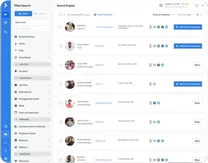
Swordfish.ai is built to help sales teams spend less time hunting for contact information and more time actually selling. It’s aimed at giving reps verified phone numbers and email addresses for the people they actually need to reach.
Lead generation is where this shows up most directly — instead of manually researching a contact’s direct line or current email, reps can pull verified information and move straight to outreach.
Accuracy matters as much as speed. Reaching the right person with a working number or email, rather than a generic switchboard or bounced message, tends to raise conversion rates simply by removing friction from the first touch.
Enrichment data — job role, company details, and relevant context — helps reps tailor a pitch instead of sending the same message to everyone on a list.
Swordfish.ai is designed to integrate with existing CRM and sales enablement tools, so contact data stays current without adding a separate manual step to the workflow.
For SaaS sales teams specifically, where speed to the right decision-maker often determines whether a deal even gets a first conversation, tools like this are meant to remove one of the more common bottlenecks in the process.
Get a free trial → https://swordfish.ai/